
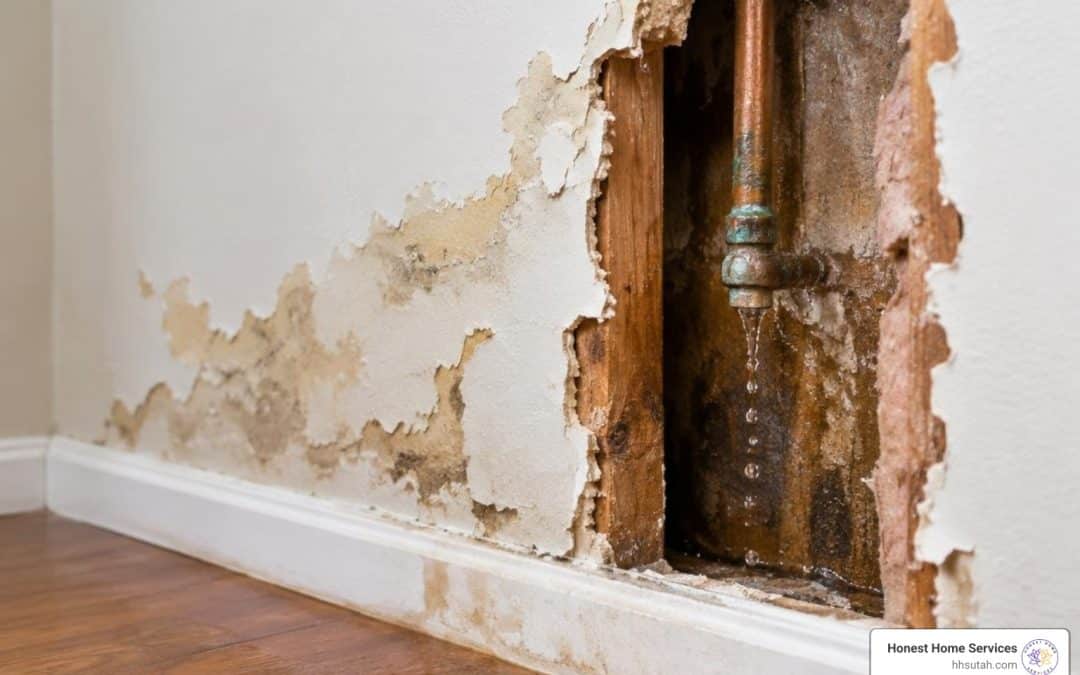
Find a Hidden Leak Before It Causes More Damage
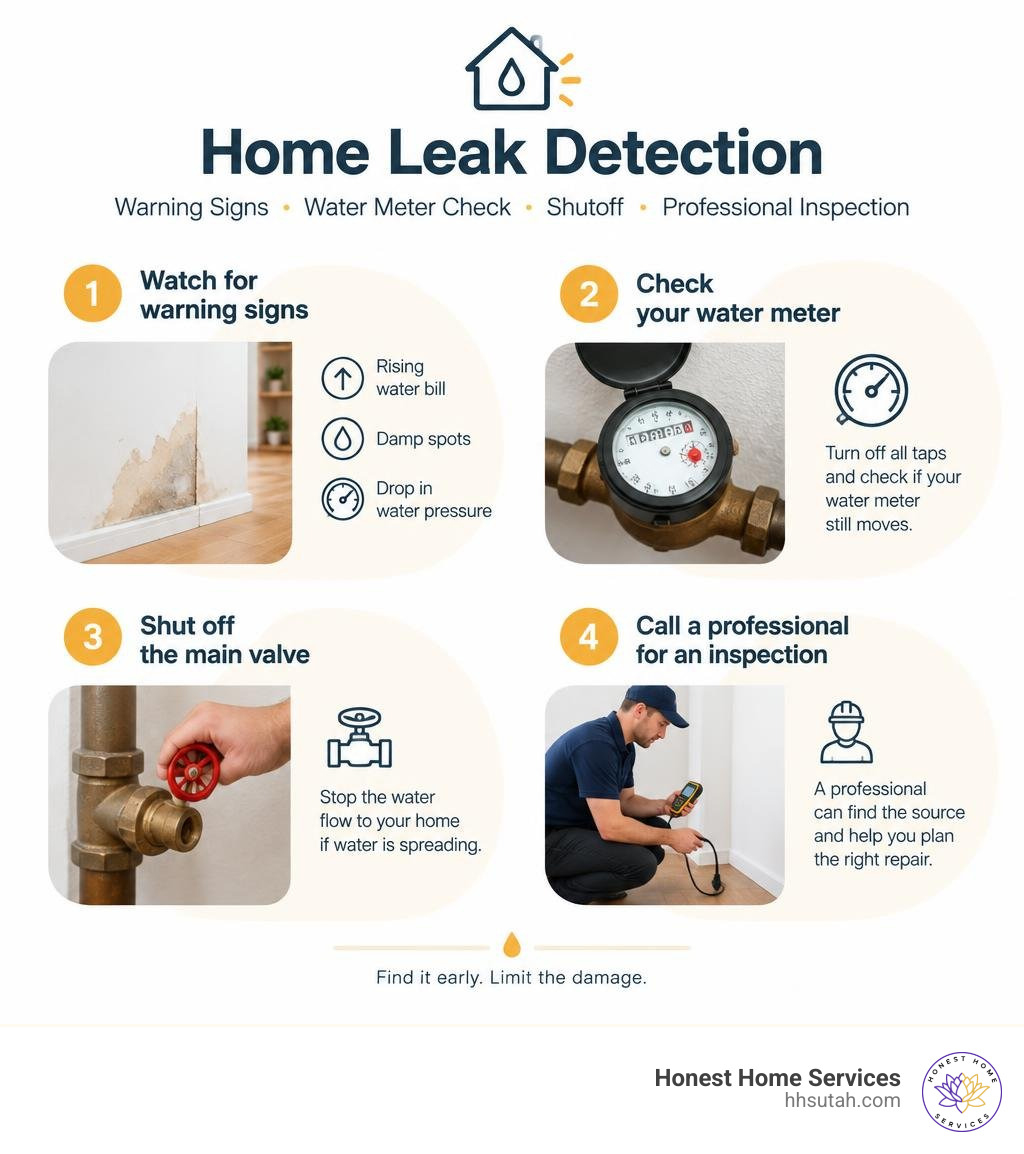
Home leak detection services help find water leaks behind walls, under floors, or in buried pipes without opening up large areas to search. If you notice a rising water bill, damp spots, or a drop in water pressure, turn off all taps and check whether your water meter still moves. If water is spreading, shut off the main valve and call a local plumber.
A professional can narrow down the source and help you plan the right repair. Finding it early can limit damage to your home.
We’re Honest Home Services, a Northern Utah plumbing team with over 20 years of experience repairing pipes, drains, and water lines. We know homeowners looking for home leak detection services need a clear answer and a practical next step.
Learn more about home leak detection services:
Telltale Signs You Need Home Leak Detection Services
Water pipes run through our ceilings, subfloors, and concrete slabs. Because so much of your plumbing system is hidden from view, a pipe breach can run for weeks or months before anyone notices a problem. Even a tiny 0.5mm pinhole leak can waste 20 litres of water every single hour, degrading structural timbers, ruining drywall, and encouraging toxic mold growth.
Across the United States, water infrastructure deals with substantial strain. More than 2 million miles of underground water lines exist across nearly 150,000 public systems, and the American Society of Civil Engineers (ASCE) notes that billions of dollars worth of treated water are lost every year from broken and aging pipes. In residential settings, untreated leaks can lead to costly structural headaches.
Learning how to spot early warning signs can save you thousands of dollars. When finding water leaks in your home, keep an eye out for these common indoor and outdoor indicators:
- Unexplained spikes in your utility bills: If your household water consumption habits haven’t changed, but your monthly bill continues to climb, water is escaping somewhere in your system.
- Persistent drops in water pressure: A steady reduction in pressure across fixtures often signals an ongoing leak along a supply line.
- Warm or damp spots on floors: If you walk barefoot across tile, hardwood, or carpet and feel unexplained warm patches, you might have a hot water slab leak underneath your foundation.
- Musty odors and mold outbreaks: Moisture trapped behind sheetrock creates an ideal breeding ground for mold, often emitting a distinct earthy or sour smell.
- Foundation cracks or shifting soils: Subsurface water escaping near your foundation can cause soil erosion, leading to foundation settling and exterior wall cracks.
- Lush, soggy patches in the yard: If your lawn has an isolated green strip that stays wet even during dry weather, your main underground water service line could be leaking.
Homeowners can also review official resources such as the EPA’s Detect and Chase Down Leaks Checklist for routine maintenance and self-audits.
How to Test If a Leak Is Inside or Outside Your Property
Before scheduling professional diagnostics, you can perform a quick test using your residential water meter to isolate the general location of the leak. Following a structured step-by-step DIY leak detection process helps confirm whether the leak originates inside your home or underground outside.
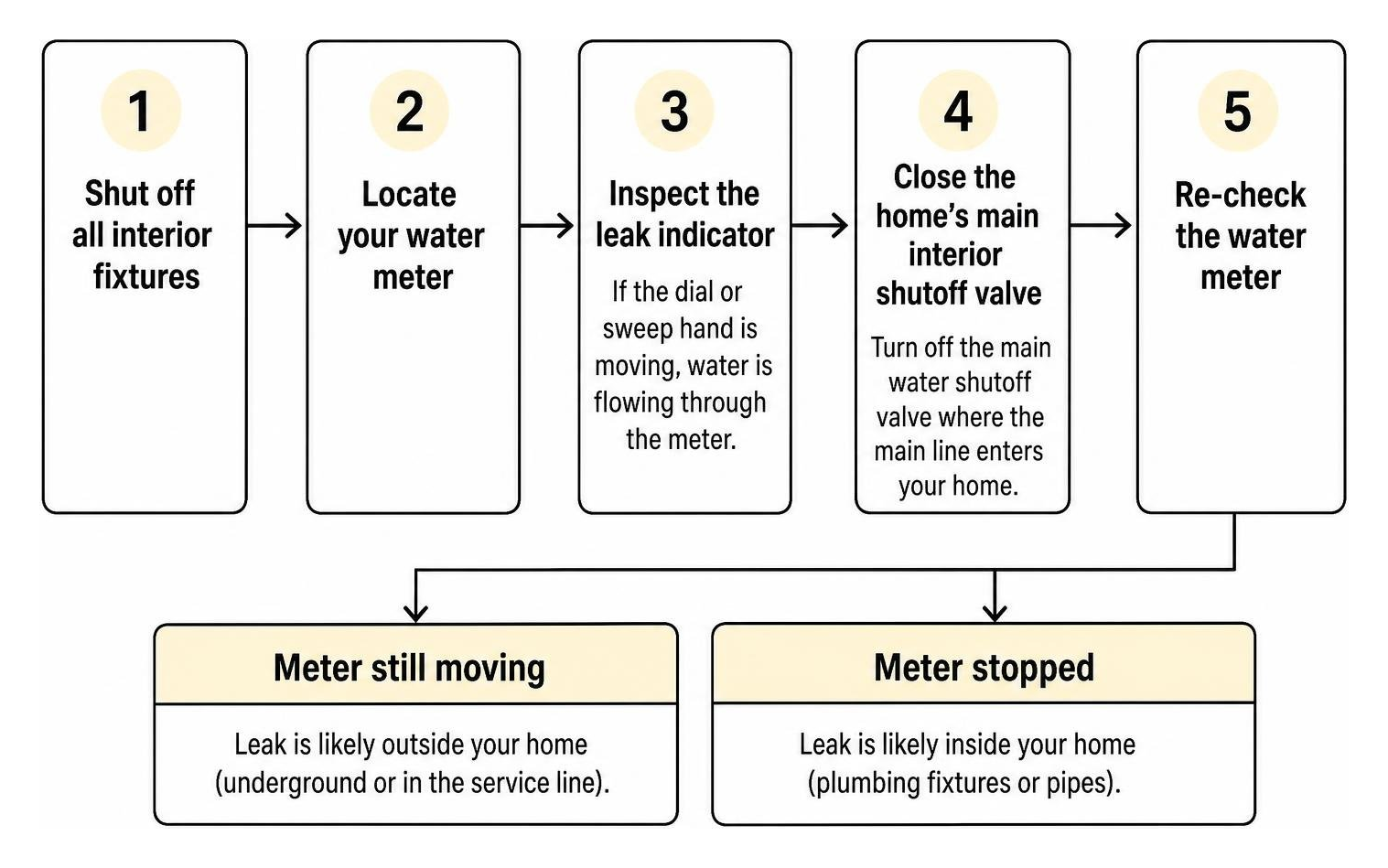
- Shut off all interior fixtures: Ensure all faucets, washing machines, dishwashers, and ice makers are turned off.
- Locate your water meter: Check the meter box, typically found near the curb or front property line.
- Inspect the leak indicator: Look at the low-flow dial or digital register. If the dial or sweep hand is moving, water is flowing through the meter.
- Close the home’s main interior shutoff valve: Turn off the main water shutoff valve where the main line enters your home (frequently in the basement or utility room).
- Re-check the water meter:
- If the meter stops moving: The leak is located inside the house (within interior plumbing walls, fixtures, or appliances).
- If the meter continues to spin: The leak is located outside along the subterranean supply line between the meter box and your home’s main shutoff valve.
Immediate Steps to Take After Discovering a Suspected Leak
Taking fast action when you suspect active water loss helps minimize damage to flooring, walls, and personal belongings.
- Shut off the water main: Immediately close your main shutoff valve to stop the flow of pressurized water.
- Protect against electrical hazards: If water is pooling near outlets, breaker panels, or appliances, turn off the electricity to those zones at the main breaker box. Never step into standing water near electrical sources.
- Document everything: Capture clear photos and video footage of visible moisture, damaged finishes, and the surrounding area. This documentation is crucial for insurance adjusters.
- Extract standing water: Use towels, wet vacuums, or mops to remove standing water, and open windows to increase ventilation while you contact an expert for urgent leaking pipe repair solutions.
Advanced Non-Invasive Technologies for Pinpointing Leaks
The days of tearing down entire drywall runs or jackhammering across a concrete slab just to search for a pinhole leak are gone. Modern diagnostic professionals use non-invasive tools to evaluate plumbing systems without causing unnecessary damage.
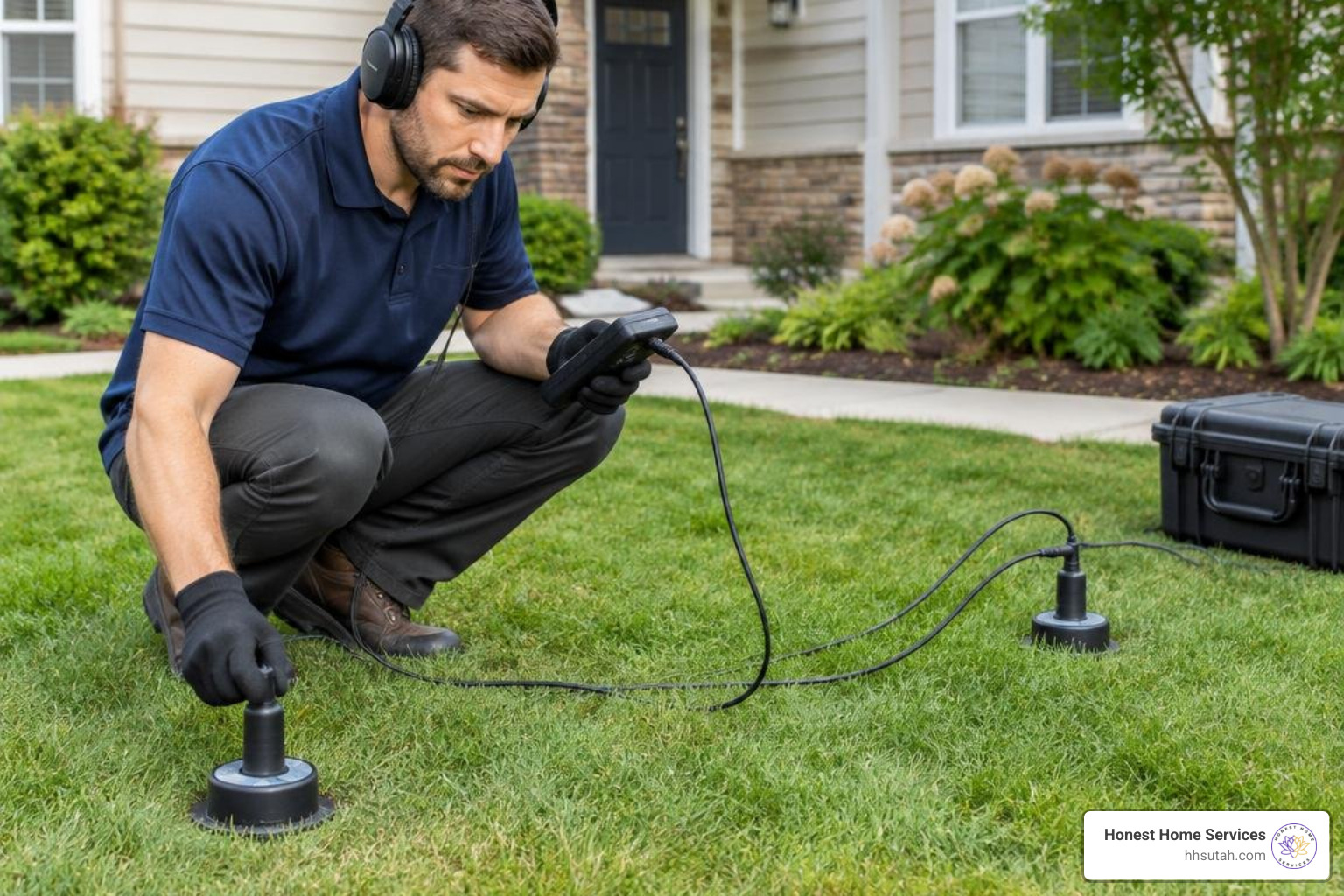
By combining precision pressure decay testing with acoustic and thermal imaging, specialists locate the exact source of a leak down to the inch. Exploring these non-invasive water flow detection techniques allows homeowners to make informed choices without tearing their homes apart.
Acoustic Sensors and Acoustic Leak Correlators
Water escaping from a pressurized pipe generates mechanical vibration and sound frequencies. Technicians use specialized acoustic tools to listen to these distinct sounds through soil, concrete, and building materials.
- Acoustic Ground Microphones: These sensitive listening discs capture high- and low-frequency sounds created by water pushing through cracks. Technicians place the listening sensors along pipe paths to hone in on the loud hiss of escaping water.
- Acoustic Leak Correlators: For buried main supply pipes, dual-sensor correlators attach to two accessible contact points (such as outdoor hose bibs or valves). The correlator measures the exact time it takes sound waves to travel from the leak to each sensor, calculating the leak’s precise location based on the pipe’s material and diameter.
Using specialized sound equipment is one of the most reliable ways of pinpointing leaks acoustically beneath thick concrete foundations or paved driveways.
Thermal Imaging and Tracer Gas Leak Detection
Not all leaks create loud sounds, especially low-pressure drainage leaks or tiny hairline cracks in radiant heating loops. In these cases, technicians turn to temperature and gas diagnostics:
- Infrared Thermography: High-resolution thermal cameras detect minute surface temperature variations caused by moisture behind drywall, ceilings, and underfloor heating systems. Evaporating water cools surrounding drywall, while leaking hot water lines show up as distinct heat plumes. This technique is invaluable for locating hidden pipes behind drywall without putting a single hole in the wall.
- Tracer Gas Testing: When pipes are deeply buried or ambient background noise interferes with acoustic tools, plumbers introduce a safe, non-toxic mixture of hydrogen and nitrogen into an isolated, drained line. Because hydrogen molecules are tiny, they easily escape the leak point and rise directly through concrete, soil, or tile, where specialized handheld gas sensors detect them at the surface.
What to Expect During a Professional Leak Inspection
When a technician arrives at your home, they follow a systematic diagnostic process to identify the issue without guesswork:
- System Assessment: The technician begins by inspecting your water meter, pressure regulators, and visible fixtures to understand your plumbing layout.
- Pressure Isolation Testing: By isolating specific hot, cold, or irrigation loops and monitoring pressure gauges, the technician determines which zone is losing pressure.
- Non-Invasive Pinpointing: Using acoustic listening devices, thermal cameras, or tracer gas sensors, the technician narrows the leak down to an exact spot.
- Damage Inspection: Moisture meters and borescopes evaluate the extent of water intrusion inside wall cavities or beneath subfloors.
- Comprehensive Reporting: The technician provides a detailed diagnostic report explaining where the leak is, what caused it, and the best plan for repair.
Reviewing a comprehensive leak detection company guide helps homeowners understand the value of non-destructive diagnostic tools.
Why Homeowners Invest in Professional Home Leak Detection Services
Pinpointing a hidden pipe failure requires specialized knowledge and equipment. Dedicated acoustic correlators and thermal cameras require substantial capital investment, and effective operation demands extensive classroom and field training to distinguish false positives from true leaks.
Relying on experienced professionals prevents accidental drywall demolition, reduces overall repair costs, and ensures proper identification of the issue on the first visit. Property owners can also integrate permanent smart water leak detection systems on their main supply lines to monitor flow rates and automatically shut off water if a pipe bursts in the future.
The Transition from Detection to Permanent Pipe Repair
Once the leak is pinpointed, the focus shifts to lasting repairs. Depending on the pipe’s depth, material, and accessibility, your plumbing team will recommend a tailored solution:
- Direct Spot Repair: For accessible leaks in drywall or ceilings, a small opening allows technicians to cut out the damaged section and install high-grade copper or PEX couplings.
- Trenchless Pipe Lining / Epoxy Restoration: For certain underground or drain lines, cured-in-place pipe (CIPP) lining restores structural integrity from within, avoiding the need to dig up driveways or landscaping.
- Slab Leak Reroutes: When a pipe fails beneath a concrete foundation, rerouting a new PEX supply line overhead through the attic or walls is often more cost-effective and less disruptive than breaking up the concrete slab.
Following any line fix, completing the essential steps for house water leak repair includes proper structural dehumidification to prevent lingering mold issues.
Costs, Insurance Coverage, and Trace and Access Policies
Diagnostic pricing varies based on several practical factors:
- Leak Location and Depth: Pinpointing a leak behind an interior bathroom wall takes less time than locating a line buried several feet underground beneath a concrete driveway.
- Plumbing Complexity: Multi-story homes, properties with finished basements, radiant floor heating loops, or dedicated irrigation zones require more diagnostic steps to isolate.
- Technology Required: Simple pressure drops can often be traced quickly with thermal cameras, while deep exterior lines may require tracer gas and acoustic correlators.
| Service Category | Diagnostic Focus | Primary Technologies Used |
|---|---|---|
| Interior Supply Line Inspection | Pressurized hot and cold lines behind drywall and ceilings | Infrared thermography, acoustic discs, moisture meters |
| Concrete Slab Leak Detection | Under-foundation pressurized hot/cold lines | Acoustic ground mics, thermal imaging, pressure decay |
| Buried Main Service Line | Outdoor meter-to-house water supply lines | Acoustic correlators, tracer gas sensors, line locators |
| Drainage and Sewer Inspection | Waste lines, underground root intrusion, cracked drains | High-definition CCTV pipe cameras, sonars |
Understanding Trace and Access Insurance Coverage
When dealing with a hidden water leak, reviewing your homeowner’s insurance policy for Trace and Access (often listed under “Escape of Water”) coverage is essential.
- What It Covers: Standard building insurance policies often differentiate between fixing the pipe and the work required to find it. Trace and Access provisions specifically cover the cost of locating and exposing the leak source (such as opening drywall or accessing a subfloor) and restoring those finishes afterward.
- Documentation Requirements: Insurers generally require an evidence-backed diagnostic report with photos and thermal images from a licensed professional to process claims smoothly.
How to Choose Reliable Home Leak Detection Services
When hiring a specialist to inspect your home, look for these key qualifications:
- Proper Licensing and Insurance: Always verify that the company holds valid state plumbing licensing and carry comprehensive general liability coverage.
- Modern Non-Invasive Equipment: Ensure the team uses advanced acoustic listening tools, thermal imaging, and camera equipment rather than relying on exploratory demolition.
- Transparent Diagnostic Pricing: A reputable company provides clear, upfront pricing for inspections before starting any work.
- Experienced Diagnostic Technicians: Look for teams with dedicated experience in expert drain and pipe leak detection who can smoothly transition from finding the leak to completing the permanent repair.
Frequently Asked Questions About Residential Leak Detection
How much does professional leak detection typically cost?
Diagnostic costs depend on whether the leak is located in an accessible interior wall, under a concrete slab, or along an outdoor buried main line. A licensed plumber will evaluate your system’s symptoms and provide an upfront quote before starting diagnostic testing.
How long does a home water leak detection service take?
Most standard single-family residential leak inspections take between one to three hours. Larger multi-story homes, properties with extensive radiant heating systems, or deep underground supply lines may require additional time for tracer gas testing and isolation.
Will homeowners insurance pay for water leak detection and repairs?
Most standard homeowners policies cover sudden, accidental water damage and the associated “Trace and Access” costs needed to locate the leak source. However, repairing the specific broken pipe fitting itself is typically considered standard home maintenance and is handled out-of-pocket. Always check your specific policy terms.
Conclusion
Hidden water leaks can quickly lead to severe structural rot, ruined drywall, and high utility bills. By recognizing the early signs of water loss, isolating your meter, and relying on modern non-invasive diagnostic tools, you can protect your property from avoidable damage.
At Honest Home Services, we take pride in helping homeowners across Northern Utah—including Salt Lake City, Layton, Bountiful, Draper, and surrounding communities—keep their plumbing running smoothly. Whether you’re dealing with an unexplained spike in your water bill or a suspected slab leak, our experienced technicians are ready to pinpoint the source and make lasting repairs.
Contact our team today to schedule professional Salt Lake City leak detection services and restore your peace of mind.