

Water Is Quietly Destroying Homes — Here’s What You Need to Know About House Water Leak Detection
House water leak detection is the process of identifying unwanted water flow or moisture in your home before it causes serious damage. Here’s a quick breakdown of your main options:
| System Type | Best For | Price Range | Key Feature |
|---|---|---|---|
| Point-of-use moisture sensors | Under sinks, near appliances | $15–$60 | Detects puddles and dampness |
| Whole-home flow monitors | Main water line | $269–$449 | Tracks usage patterns, detects hidden leaks |
| Whole-home shutoff systems | Full home protection | $499–$999+ | Auto-shuts water off when a leak is detected |
Water damage is not rare. It affects 40% of homes and costs an average of $15,400 per incident. That’s more common than theft — six times more, in fact. Every single day, around 14,000 U.S. homeowners face a water emergency. And many of those emergencies started as a slow drip that went unnoticed for weeks.
The good news? In 2026, smart detection systems can catch leaks before they become disasters — often alerting you within minutes, from anywhere in the world.
At Honest Home Services, we’ve spent over 20 years helping Utah homeowners find and fix water leaks of every kind, and house water leak detection is one of the most important services we provide. In this guide, we’ll walk you through exactly which systems work best, what they cost, and how to choose the right one for your home.
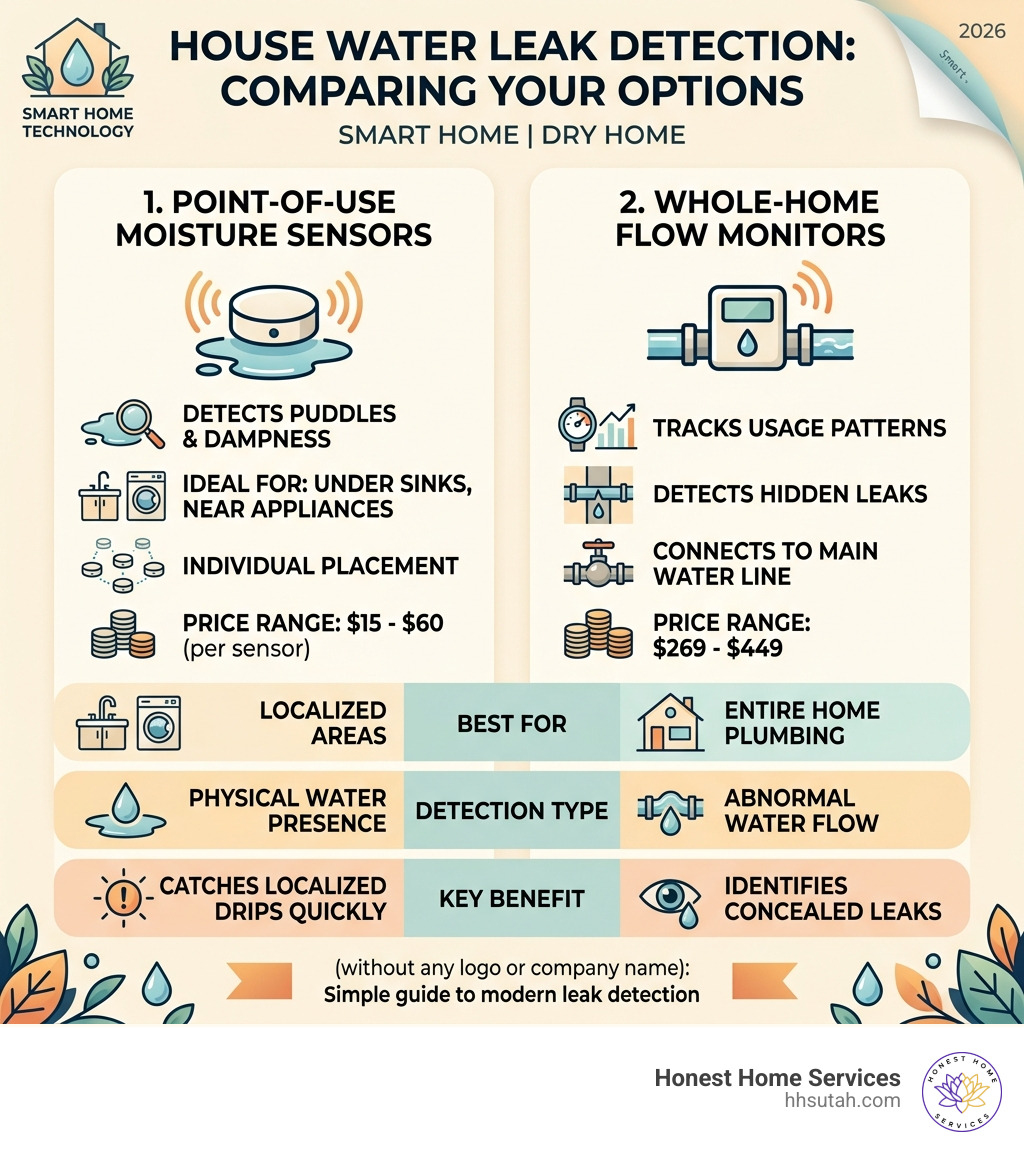
Simple guide to house water leak detection terms:
Why Every Home Needs House Water Leak Detection

We often think of water damage as a dramatic event—a burst pipe spraying water like a geyser. While those happen, the reality is often much quieter and more sinister. Many leaks are “slow burns,” hiding behind drywall or under floorboards for months. By the time you see a brown spot on the ceiling, the structural damage is already well underway.
The EPA’s WaterSense program notes that household leaks can waste thousands of gallons of water every year. In our experience serving Salt Lake City and the surrounding areas, we’ve seen how these “minor” drips lead to massive repair bills. Spotting the drip in your home early is the only way to avoid the average $15,400 cleanup cost.
Beyond the structure of your home, there’s the health factor. Mold and mildew can begin to grow in as little as 24 to 48 hours after a leak starts. For families in Davis or Salt Lake County, this can mean respiratory issues and expensive remediation. Whether it’s a failing appliance line (which can dump 10-12 gallons per minute!) or a cracked irrigation pipe, the risks are simply too high to ignore.
The Financial Impact of Undetected Leaks
The math behind water damage is staggering. Did you know that a mere 1-inch leak is enough to cause roughly $25,000 in damages? Even a dime-sized crack in an irrigation system can waste 6,300 gallons of water per month, sending your utility bill into the stratosphere.
Insurance payouts for water damage average around $14,000, but there’s a catch: most policies exclude “gradual” damage. If a leak has been occurring for months and you didn’t catch it, your provider might deny the claim entirely. This is why non-invasive ways to detect flow are so critical. By monitoring your home’s “pulse,” you can prove to insurance companies that a leak was a sudden, accidental event, which is much more likely to be covered.
Smart House Water Leak Detection Features
In April 2026, house water leak detection has evolved far beyond the simple “beeping puck.” Today’s systems utilize advanced AI and ultrasonic technology to protect your home.
- AI Learning: Modern monitors like the Moen Flo or StreamLabs Control learn your home’s specific water “signature.” They can tell the difference between your 2:00 PM shower and a pinhole leak in the basement.
- Ultrasonic Precision: Devices like the Droplet sensor use ultrasonic waves to measure flow 50 times per second, catching leaks as small as a single drop per minute.
- Freeze Alerts: For our customers in Park City or Bountiful, frozen pipes are a major winter threat. Smart detectors often include temperature sensors that alert you when your home hits a dangerous threshold (usually 45°F), giving you time to turn on a faucet or hike up the heat before a burst occurs.
- Connectivity: WiFi-enabled devices send instant push notifications to your phone. If you’re vacationing in Southern Utah and your water heater starts leaking in Salt Lake, you’ll know immediately.
Top-Rated Systems for 2026: A Comparison Roundup
Choosing the right system depends on whether you want to monitor specific “hot zones” or protect the entire structure from the main line. To help you decide, we’ve put together a comparison of the top players in the market.
| Brand | Type | Best For | Power Source |
|---|---|---|---|
| Moen Flo | Whole-Home Shutoff | Maximum Security | Plug-in (w/ Battery Backup) |
| StreamLabs Control | Whole-Home Shutoff | High-End Features | Plug-in |
| Droplet | Flow Monitor | Easy DIY Setup | Plug-in |
| Eufy | Point-of-Leak | Budget-Friendly | Battery (2-year life) |
| SwitchBot | Point-of-Leak | Small Spaces | Battery |
| GoveeLife | Point-of-Leak | Long Range | Battery (5-year life) |
For a deeper dive into how these technologies differ, check out our guide where leak detectors are demystified.
Choosing the Best House Water Leak Detection for Your Budget
You don’t need to spend thousands to start protecting your home. Entry-level sensors from brands like SwitchBot or Aqara can cost as little as $15 to $20. These are great for placing under a kitchen sink or behind a toilet.
If you’re looking for more robust protection, whole-home monitors usually range from $250 to $500, while automatic shutoff valves can exceed $1,000 when you factor in professional installation. However, these systems often pay for themselves through insurance discounts. Many carriers offer 5% to 10% off premiums for homes with active leak detection. Some, like Moen’s FloProtect, even offer to cover your insurance deductible (up to $5,000) if the device fails to prevent damage.
Don’t forget to keep an eye on your appliances, too. A simple sensor near your heater can save you from a basement flood. If you do find a problem, we have a guide to fixing leaky water heaters to help you manage the situation.
Whole-Home Shutoff vs. Point-of-Leak Sensors
Which one should you choose?
Whole-home shutoff systems (like Moen Flo) are the gold standard. They sit on your main water line and can actually turn the water off if they detect a leak. Research shows the Flo Shutoff can decrease water damage claims by a staggering 96%. These are ideal for vacation homes or for homeowners who want total peace of mind.
Point-of-leak sensors are small devices placed in high-risk zones. They use moisture probes or cable sensors to detect standing water. While they can’t turn off the water, they are incredibly effective at alerting you to a leaking washing machine or a dishwasher overflow. These are perfect for renters or those who want to start small. If you’re worried about hidden leaks, locating pipes behind drywall is much easier when a sensor tells you exactly where the moisture is starting.
Strategic Placement and Installation Requirements
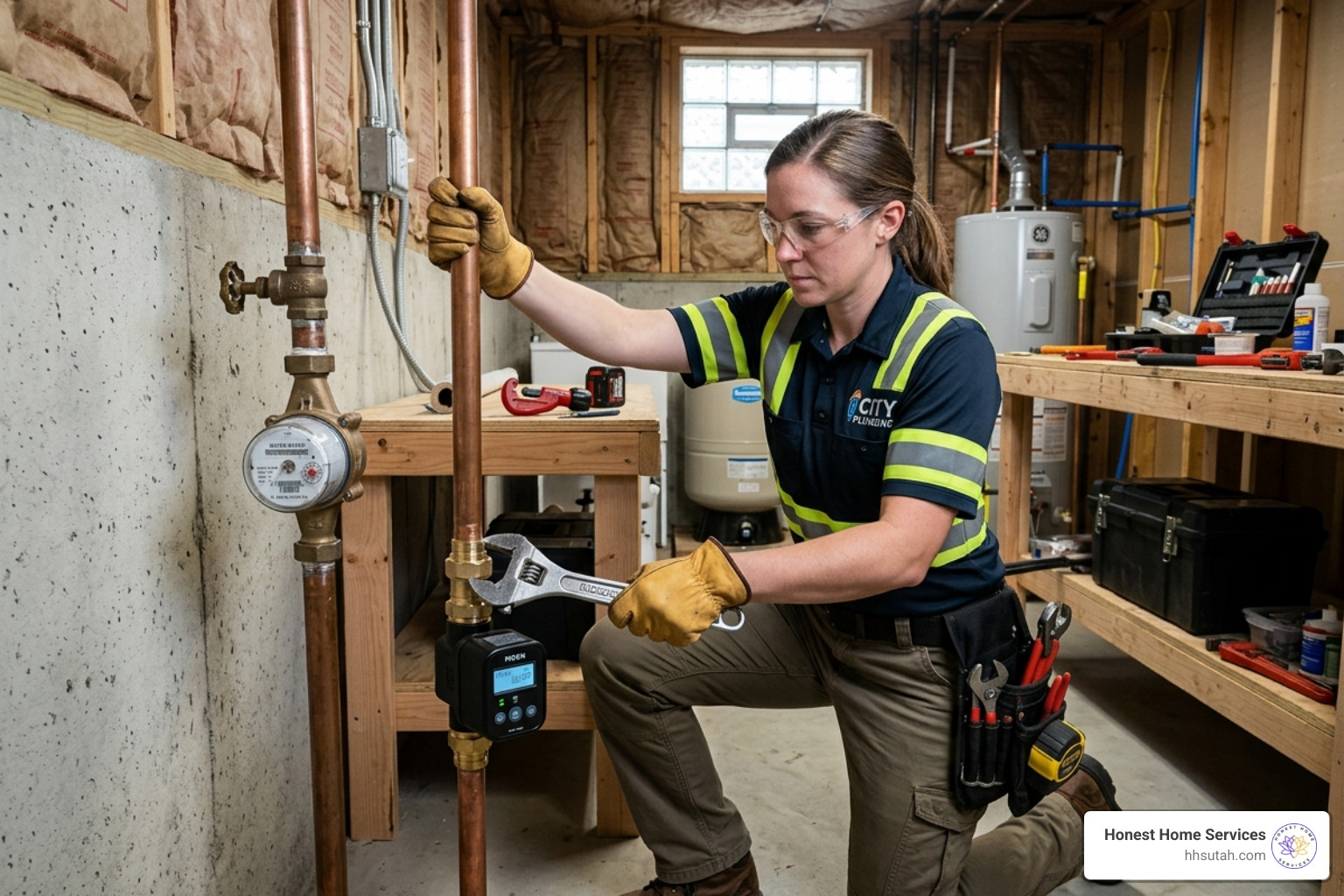
Installation varies wildly depending on the system you choose.
- DIY Monitors: Systems like Flume or Droplet often “clamp on” to your meter or pipe. There’s no pipe cutting required, and you can usually have them running in 10 to 15 minutes.
- Professional Shutoffs: Systems that physically stop the water flow require cutting into your main water line. This is a job for a professional. At Honest Home Services, we ensure these are installed correctly, calibrated to your home’s pressure, and integrated with your WiFi.
When installing these systems, you need to consider power and signal. Most whole-home monitors require a nearby AC outlet. If your main water line is in a crawlspace or a far corner of the garage, you may need a WiFi extender to ensure the device stays connected. For those in Salt Lake City, effective pipe leak repair often starts with ensuring your detection system is positioned where it can do the most good.
Critical Areas for Sensor Placement
If you are using point-of-use sensors, you need to be strategic. You don’t need a sensor in the middle of your living room, but you absolutely need them in these six spots:
- Under Sinks: Kitchen and bathroom vanities are notorious for slow drips.
- Near Water Heaters: Especially if the unit is more than 8-10 years old.
- Behind Refrigerators: Ice maker lines are a common failure point.
- Sump Pumps: To alert you if the pump fails during a heavy Utah rainstorm.
- Washing Machines: Supply hoses are under constant pressure and can burst without warning.
- Dishwashers: To catch leaks before they ruin your hardwood floors or cabinetry.
For more advice on where leaks like to hide, browse our library on finding hidden pipe problems.
DIY Setup vs. Professional Plumbing Integration
While the “5-minute DIY” label on many boxes is tempting, it’s important to know the limits. A clamp-on monitor can tell you that you’re losing water, but it can’t stop the flood.
Professional integration offers “Valve Health Checks”—automated tests where the system closes and opens the valve slightly to ensure it isn’t stuck due to mineral buildup. This is vital for homes in areas with hard water, like Lehi or Draper. Furthermore, a professional can calibrate the AI to ignore your water softener’s regeneration cycle, preventing annoying “false positive” shutoffs. If you’re ready to upgrade, check out the ultimate guide to pipe repair to see how modern tech and expert service work together.
Frequently Asked Questions about Leak Detection
Do water leak detectors require a monthly subscription?
It depends on the brand. Many point-of-use sensors (like Eufy or Govee) have no monthly fees. Whole-home systems like Moen Flo offer a free tier for basic monitoring, but offer optional subscriptions (around $5/month) for extended warranties, advanced data insights, and insurance deductible reimbursement.
Can these systems prevent pipes from freezing and bursting?
They can’t physically stop the ice from forming, but they are excellent early-warning systems. Most smart detectors will send an alert to your phone if the ambient temperature near your pipes drops below 45°F. This gives you time to open a cabinet door or let a faucet drip, preventing the pressure buildup that leads to a burst.
Will a smart leak detector lower my home insurance premiums?
In many cases, yes! Because house water leak detection significantly reduces the risk of a major claim, many insurance providers in Utah offer discounts. We recommend calling your agent and mentioning you are installing a “WiFi-connected water shutoff system” to see what credits are available.
Conclusion
In 2026, there is no reason to let a silent leak threaten your home’s foundation or your family’s savings. From simple $20 sensors to advanced AI-powered shutoff valves, the technology exists to keep your home dry and your mind at ease.
At Honest Home Services, we pride ourselves on being the local experts Northern Utah trusts. Whether you’re in Salt Lake City, Kaysville, or Saratoga Springs, our technicians provide honest, reliable, and affordable solutions. We don’t just fix the leaks—we help you prevent them from ever happening again.
Don’t wait for a wet ceiling to take action. Schedule your Salt Lake City leak detection service today and let us help you build a smarter, safer, and drier home. With our 24/7 emergency support and guaranteed customer satisfaction, you can rest easy knowing your plumbing is in expert hands.