Why an Acoustic Water Leak Detector Could Save Your Home From Hidden Damage
An acoustic water leak detector is a device that finds hidden leaks in pressurized pipes by listening for the sounds water makes as it escapes through cracks or damaged fittings — without any digging or cutting.
Quick answer: How does it work?
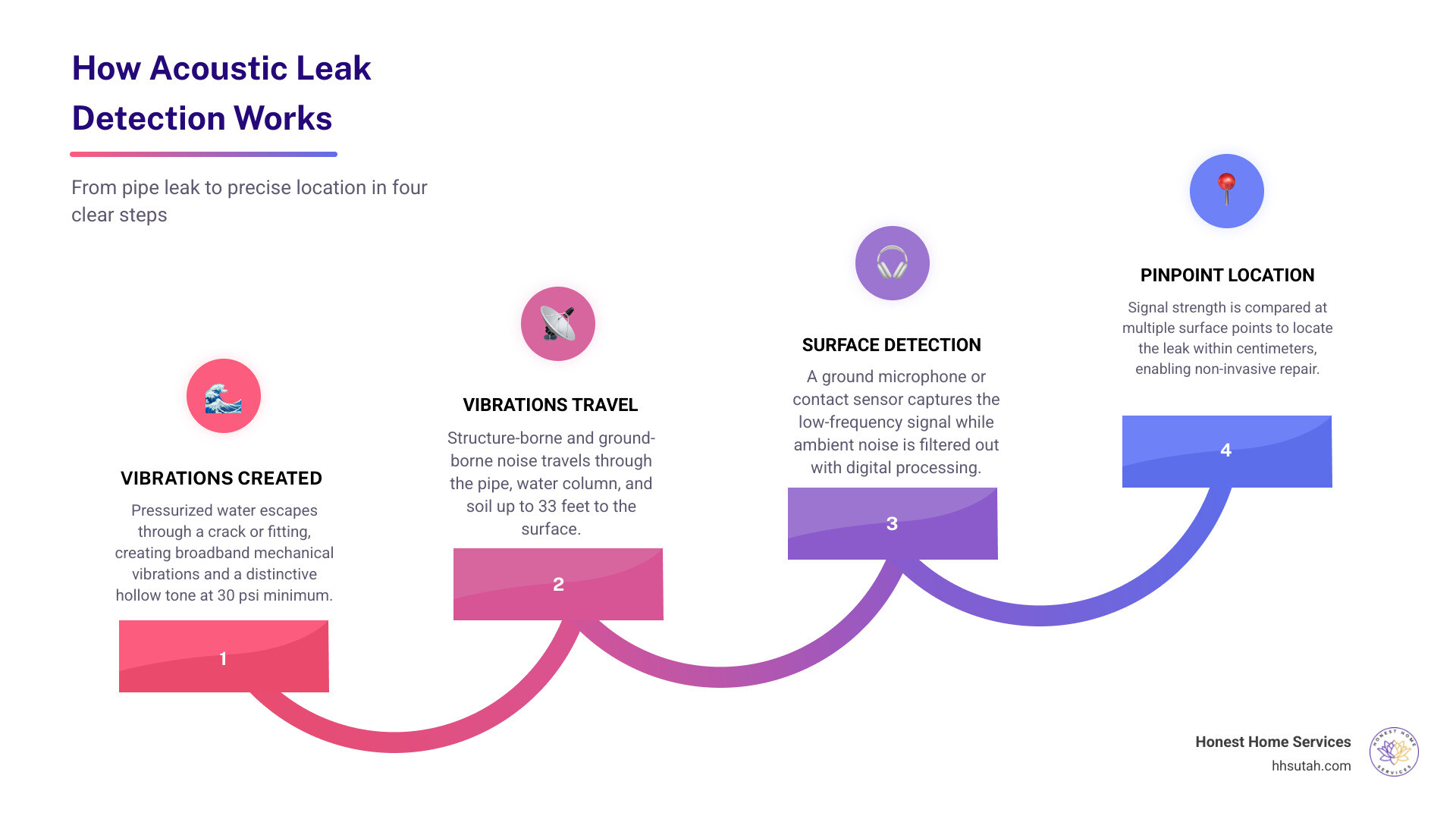
- A pressurized pipe leak creates vibrations that travel through the pipe, water, and surrounding ground
- A sensitive microphone or sensor picks up those vibrations at the surface
- The technician listens for a distinctive low-pitched, hollow sound through noise-cancelling headphones
- Signal strength is compared at multiple points to pinpoint the exact leak location
- Repairs are made only where needed — no guesswork, no unnecessary excavation
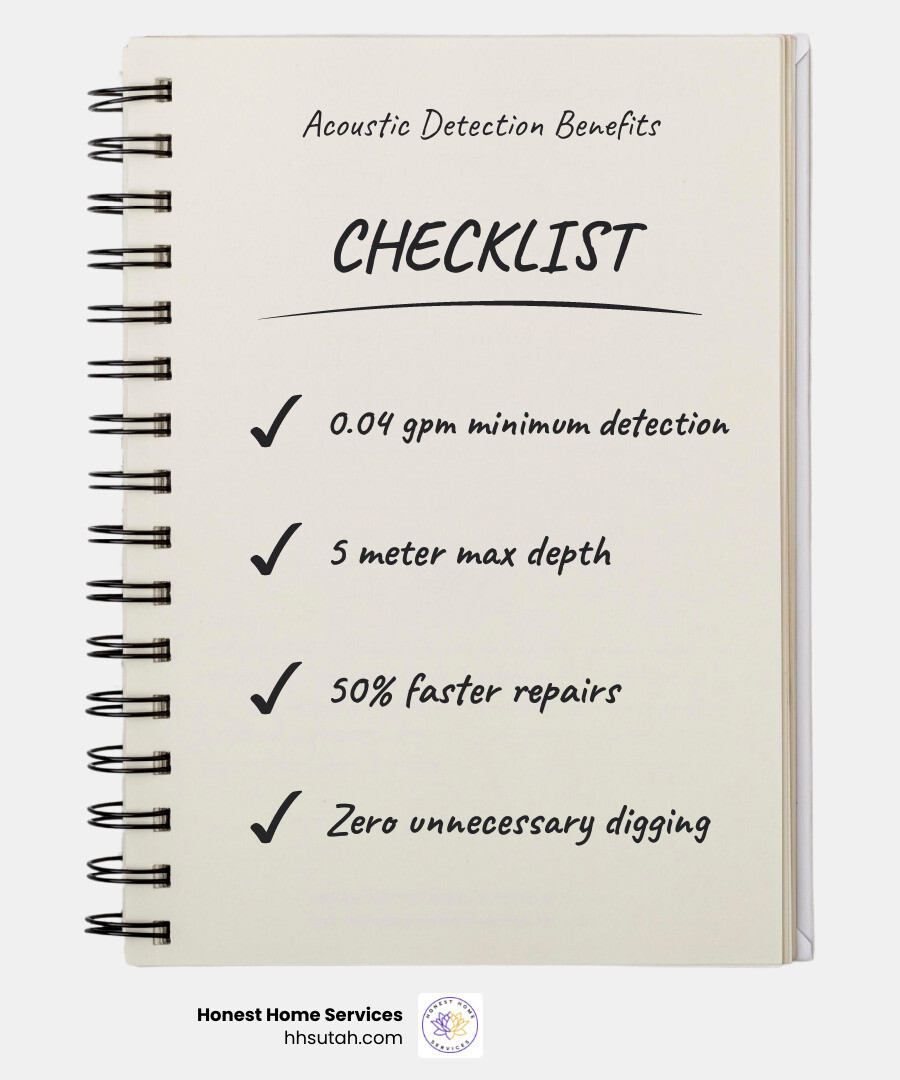
Water leaks can hide for months under concrete slabs, driveways, and walls. By the time you notice a spike in your water bill or a damp spot on the floor, the damage may already be serious. Traditional methods often meant digging up large sections of pipe just to find the problem. Acoustic detection changes that — a small leak as tiny as 0.04 gallons per minute can be detected from up to 33 feet away, without touching a single pipe.
At Honest Home Services, we’ve spent over 20 years helping Northern Utah homeowners and businesses track down and repair hidden plumbing leaks — including hands-on experience with acoustic water leak detector technology on everything from residential slab jobs to commercial main lines. If you suspect a hidden leak, you’re in the right place.
Explore more about acoustic water leak detector:
What is an Acoustic Water Leak Detector and How Does It Work?
At its core, an acoustic water leak detector is a specialized listening device. Think of it as a high-tech stethoscope for your home’s plumbing. When water is under pressure (usually 30 psi or higher) and escapes through a crack, it creates mechanical vibrations. These vibrations aren’t just random noise; they are specific sound waves that travel through the pipe wall and the water itself.
As of May 2026, these devices have become the gold standard for Non-Invasive Ways to Detect Water Flow in Your Pipes. The technology works by capturing these vibrations and converting them into electrical signals. These signals are then amplified and filtered so a technician can hear them clearly through headphones or see them as digital readings on a display screen.
The Physics of Leak Sounds
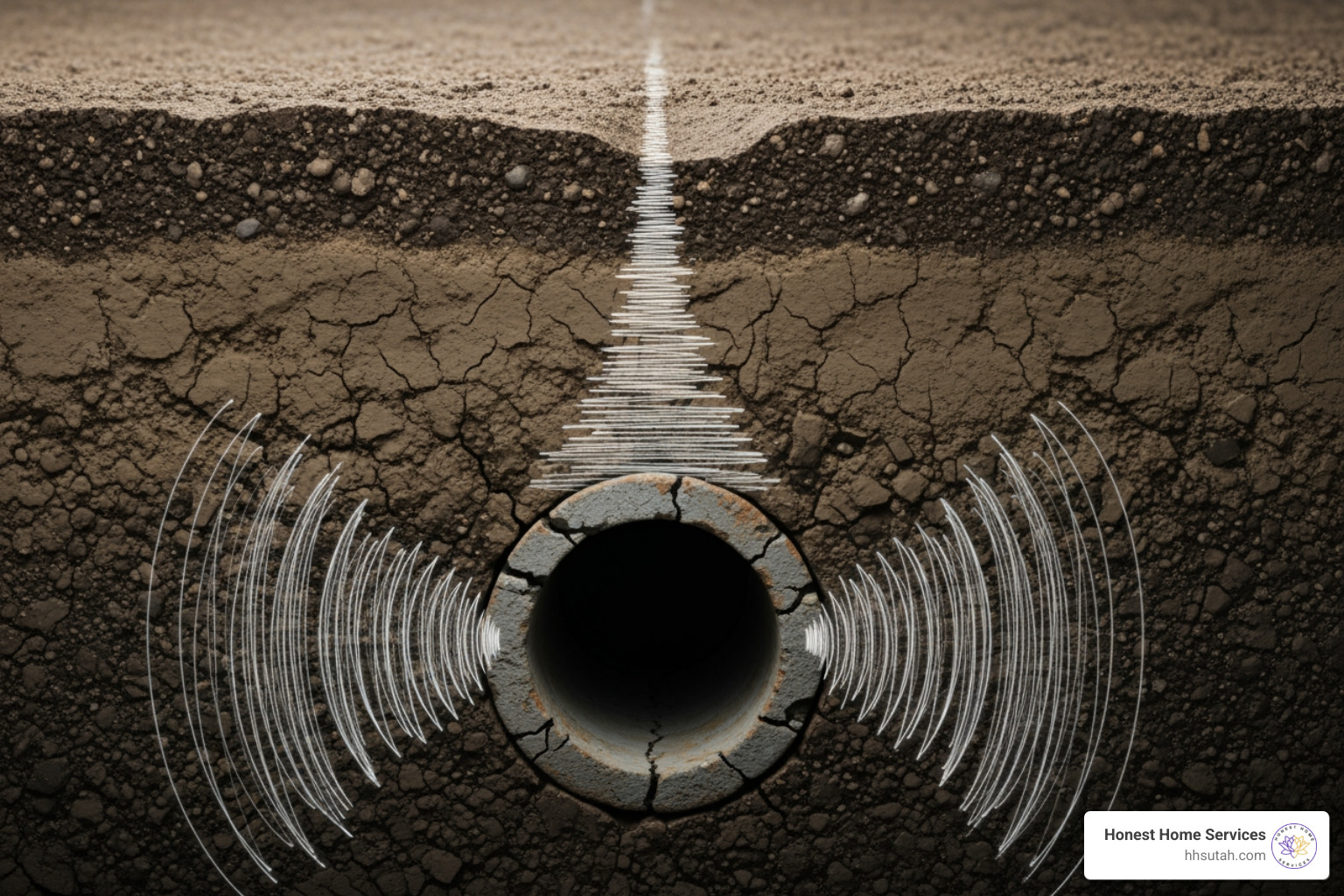
The sound a leak makes is influenced by the physics of the environment. When water sprays out of a jagged hole, it creates a “broadband” frequency. This means the sound covers a wide range of pitches.
- Structure-borne noise: The vibration travels along the pipe itself. Metal pipes (like copper or cast iron) are fantastic conductors of sound, allowing us to hear a leak from a long distance.
- Ground-borne noise: The vibration moves through the soil or concrete surrounding the pipe. This is what we pick up when we use a ground microphone on your driveway or kitchen floor.
In the Salt Lake City area, where many homes feature concrete slab foundations, understanding these physics is vital for Salt Lake City Leak Detection.
Identifying the “Hollow” Leak Tone
Professional technicians are trained to listen for a very specific sound. It is often described as a low-pitched, “hollow,” or baritone tone. This sound is distinct from the rushing sound of normal water flow.
Modern devices use decibel readings to help pinpoint the location. As the technician moves the acoustic water leak detector closer to the source, the decibel level rises. By using frequency filtering, we can “tune out” the sound of the wind, passing traffic on a busy Layton street, or even the hum of your refrigerator. This level of precision is why we consider this a critical part of The Secret Life of Leaks: Expert Drain and Pipe Leak Detection.
Main Types of Acoustic Water Leak Detector Devices
Not all acoustic tools are created equal. Depending on whether we are checking a bathroom wall in Bountiful or a main water line in West Valley, we use different “ears” for the job.
Professional Acoustic Water Leak Detector Systems
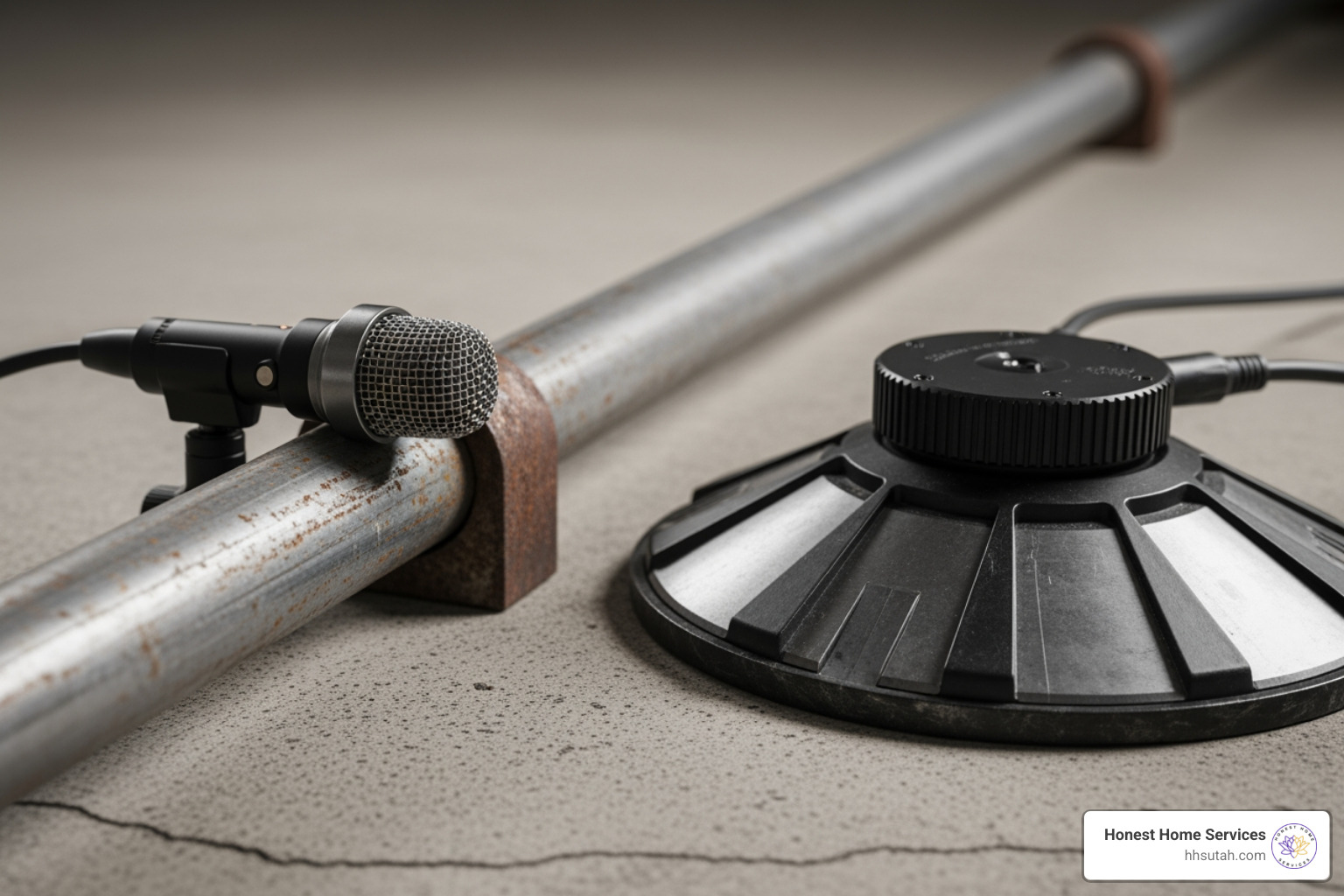
The most common setup for residential use includes an amplifier console, aviation-grade noise-cancelling headphones, and various sensors.
- Ground Microphones: Often called “elephant feet,” these are heavy, shielded sensors designed to sit on the floor or ground. They are built to block out ambient air noise while focusing entirely on the vibrations coming from beneath the surface.
- Contact Microphones: These are used to touch exposed parts of the plumbing, such as valves, faucets, or fire hydrants. They help us narrow down which section of the pipe is leaking before we start ground scanning.
- Wall Sensors: Smaller, high-sensitivity ceramic crystal sensors that can be pressed against drywall to find leaks behind the shower or kitchen sink.
For a deeper dive into how these tools fit into the bigger picture, check out Leak Detectors Demystified: Your Guide to Finding Hidden Pipe Problems.
Hydrophones and Fixed IoT Sensors
For larger properties or municipal “trunk mains,” we use hydrophones. Unlike standard microphones that listen through the ground, a Hydrophone 2 is inserted directly into the water column via a hydrant or fitting. It listens to the water itself, which is incredibly effective for low-frequency sounds that travel long distances in plastic pipes.
In 2026, many systems also incorporate fixed IoT (Internet of Things) sensors like the AQS-Ultra Hydrophone. These are permanently installed and monitor for leaks 24/7, sending an alert to a smartphone the moment a leak sound is detected. This is a game-changer for The Great Leak Hunt: A Homeowner’s Guide to Finding Water Leaks.
Comparing Acoustic Detection to Other Methods
How does the acoustic water leak detector stack up against other ways of finding water?
| Feature | Acoustic Sensors | Moisture Pins | Smart Flow Meters |
|---|---|---|---|
| Detection Type | Sound/Vibration | Conductivity/Dampness | Water Volume/Flow |
| Non-Invasive? | Yes | No (probes material) | Yes (usually) |
| Pinpoint Accuracy | High (within inches) | Low (shows area) | None (shows existence) |
| Best For | Pressurized pipes | Flooded areas | Whole-home monitoring |
Advantages of Acoustic Technology
The biggest “win” for acoustic technology is its ability to find a needle in a haystack.
- Precision: We can often pinpoint a leak to within a few inches, meaning we only have to remove one tile or cut one small hole in the concrete.
- Sensitivity: Research shows that a tiny leak of just 0.04 gallons per minute (gpm) can be detected at a stand-off distance of 33 feet.
- Cost Efficiency: By avoiding “exploratory” digging, homeowners save thousands in restoration costs.
- Speed: A professional can often locate a slab leak in under 30 minutes using tools like the AQUA-L7.
Limitations and Environmental Factors
While powerful, an acoustic water leak detector isn’t magic. Several factors can muffle the sound:
- Soil Density: Loose, sandy soil doesn’t carry sound as well as hard-packed clay or concrete.
- Pipe Depth: The deeper the pipe, the fainter the sound. Most residential devices are effective up to about 5 meters (16 feet) deep.
- Water Pooling: If a leak has been running for a long time and has created a large underground puddle, that water can actually act as an insulator, soaking up the vibrations and making the leak sound quieter.
- Pipe Material: PVC and plastic pipes are “quiet” materials. They don’t vibrate as loudly as metal, requiring specialized low-frequency equipment like the Sewerin Aquaphon A200.
How to Use an Acoustic Water Leak Detector Effectively
Using an acoustic water leak detector is both a science and an art. It requires a quiet environment and a “trained ear.”
The Step-by-Step Process
- Surveying: We start by “listening” at accessible contact points like outdoor hose bibs or indoor valves. This helps us determine which side of the house the leak is on.
- Bracketing: Once we find the general area, we use a ground microphone to follow the path of the pipe.
- Pinpointing: We look for the spot where the sound is loudest. We often use a “Minimum Noise Level” (MNL) function, which filters out intermittent noises (like a car driving by) and only measures the constant “hiss” of the leak.
- Confirmation: Before we cut, we may use a second method, like tracer gas or thermal imaging, to confirm our findings.
Filtering and Data Analysis Features
Modern professional units, such as the AquaScope 3, come with digital signal processing. This allows us to:
- Select Frequency Ranges: We can tell the machine to ignore high-pitched bird chirps and low-pitched traffic rumbles.
- Visual Mapping: Many devices now show a bar graph of sound intensity, making it easier to compare different spots on the floor.
- Wireless Connectivity: Wireless digital microphones allow the technician to move freely without getting tangled in cords, which is great for large properties in Park City or Draper.
Safety and Best Practices for Professionals
While these devices are safe, we always follow strict protocols:
- Hearing Protection: The amplifiers can make a sudden noise (like a dropped tool) very loud. We use aviation-grade headphones with built-in limiters to protect our hearing.
- Environmental Training: We learn to distinguish between the sound of a water leak and the sound of a neighbor’s AC unit or a nearby sewer line.
- Calibration: Equipment must be regularly tested to ensure the sensors are picking up the correct frequencies.
Frequently Asked Questions about Acoustic Leak Detection
Can an acoustic water leak detector find leaks in plastic pipes?
Yes, but it’s more difficult. Plastic pipes (PVC, PEX, PE) tend to absorb sound rather than transmit it. To find these leaks, we use specialized low-frequency sensors and hydrophones that can “hear” the lower vibrations plastic produces.
How deep can these devices detect a leak?
Most high-end professional units can detect leaks buried up to 5 meters (about 16 feet) deep. However, the accuracy depends heavily on the water pressure. If your home has low pressure (under 30 psi), the sound may not be strong enough to reach the surface.
What factors cause false positives in acoustic detection?
The most common culprits are:
- Ambient Noise: Wind, rain, and heavy traffic.
- Mechanical Interference: Humming transformers, running appliances, or even a pool pump next door.
- Sewer Flow: Water moving through a nearby sewer or drain pipe can sometimes mimic the sound of a supply leak. This is why we always look for a constant, unchanging sound profile.
Conclusion
Finding a leak doesn’t have to mean tearing your home apart. With the power of an acoustic water leak detector, the expert team at Honest Home Services can find the “sound of silence” and pinpoint your plumbing problems with surgical precision.
Whether you are in Salt Lake City, Layton, or any of our Northern Utah service areas, we provide honest, reliable, and affordable leak detection. We are available 24/7 for emergency support because we know that a leak doesn’t wait for business hours. With our guaranteed customer satisfaction and fair pricing, you can rest easy knowing your home is in local, expert hands.
If you suspect a hidden leak, don’t wait for the damage to spread. Contact us today for professional Salt Lake City Leak Detection and let us help you save water, money, and your peace of mind.