

Why Leak Detection Can Save You Thousands — Before You Even See a Drop
Leak detection is the process of finding hidden water leaks in your pipes, walls, or underground lines — before they cause serious damage.
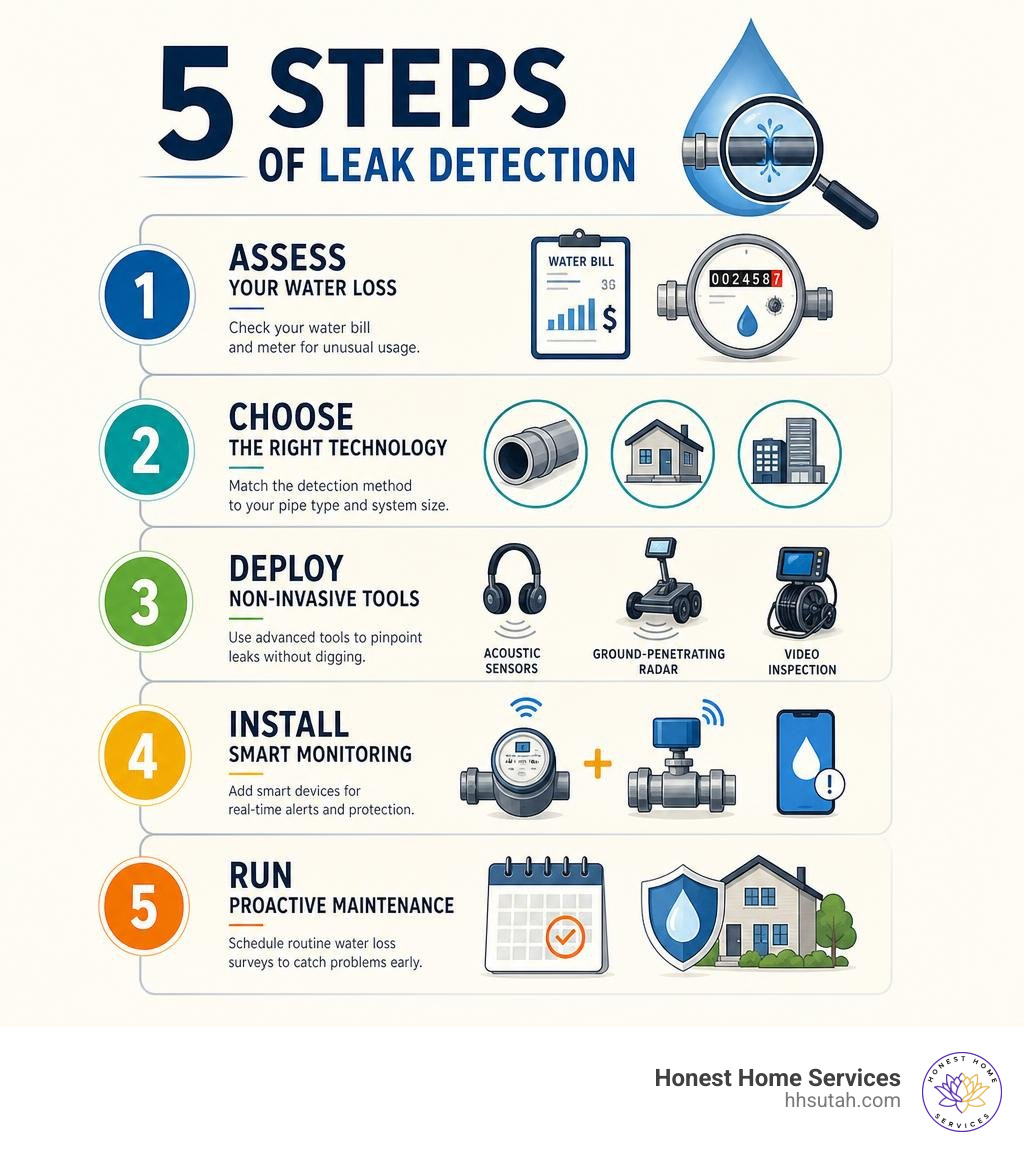
Here’s a quick overview of how to do it in 5 steps:
- Assess your water loss — Check your water bill and meter for unusual usage.
- Choose the right technology — Match the detection method to your pipe type and system size.
- Deploy non-invasive tools — Use acoustic sensors, ground-penetrating radar, or video inspection to pinpoint leaks without digging.
- Install smart monitoring — Add smart meters or automatic shutoff valves for real-time alerts.
- Run proactive maintenance — Schedule routine water loss surveys to catch problems early.
Most leaks are invisible. They hide under slabs, behind walls, and deep underground — quietly draining your water and your wallet. By the time you notice a damp carpet, a sky-high water bill, or a crack in your foundation, the damage is often already done.
The numbers tell a stark story. The United States loses 2 trillion gallons of treated drinking water every year from undetected leaks and water main breaks. For homeowners, water damage costs an average of $15,400 — and it’s the single most common insurance claim filed.
That’s not a small problem. It’s a widespread crisis hiding just beneath the surface.
At Honest Home Services, we’ve spent over 20 years helping Utah homeowners and businesses find and fix leaks using proven detection methods — from acoustic tools to smart monitoring systems. Our team brings that same hands-on leak detection experience to every job, whether it’s a slab leak under your foundation or a slow drip inside your walls. Let’s walk through exactly how it’s done.
Discover more about leak detection:
Step 1 & 2: Assess Water Loss and Choose the Right Leak Detection Technology
Before you start digging up your yard or tearing down drywall, you need a plan. Effective leak detection always begins with an assessment of your water loss, followed by selecting the right technology for your specific plumbing system.
When managing municipal water systems or large commercial facilities in Northern Utah, engineers use a structured “water balance” to calculate exactly how much water is entering the system versus how much is actually reaching the taps. Any discrepancy is flagged as non-revenue water (NRW) — water that is lost to leaks, pipe bursts, or metering errors before it can be billed.
For homeowners in Salt Lake City, Layton, or Bountiful, this assessment is much simpler but follows the exact same logic. You compare your actual water usage against typical seasonal baselines. If your household is suddenly “using” thousands of extra gallons of water while your habits haven’t changed, you have a hidden leak.
Once we establish that a leak exists, we must choose the right technology to find it. This choice depends on system size, pipe material (such as PVC, copper, steel, or cast iron), and operational conditions. High-pressure municipal lines require different diagnostic tools than a residential copper pipe buried under a concrete slab.
Furthermore, industrial and municipal systems must comply with rigorous design and testing standards. For instance, API RP 1130 (“Computational Pipeline Monitoring for Liquids”) in the United States and the TRFL (Technische Regel für Rohrfernleitungen) in Germany govern how leak monitoring systems must operate. These regulations require systems to reliably detect leaks under both steady-state (stable flow) and transient (changing pressure, startup, or shutdown) conditions.
To help you understand your choices, we have put together a comprehensive breakdown of the two main categories of leak monitoring. For a deeper dive into how these tools work on a smaller scale, check out our guide on Leak Detectors Demystified: Your Guide to Finding Hidden Pipe Problems.
Comparing Internal and External Leak Detection Systems
| Feature / Metric | Internally Based Systems (e.g., Pressure, Acoustic Waves, RTTM) | Externally Based Systems (e.g., Fiber Optics, Thermal, Vapor Sensors) |
|---|---|---|
| Primary Method | Analyzes hydraulic data (flow, pressure, temperature) inside the pipe. | Detects physical changes (heat, sound, moisture) outside the pipe. |
| Sensitivity | Moderate to High; can detect small pressure drops or flow discrepancies. | Very High; can pinpoint tiny physical releases or temperature shifts. |
| Localization Accuracy | Typically within 50 meters (using acoustic wave or RTTM methods). | Extremely High; often within 1 to 5 meters of the actual leak. |
| Installation Complexity | Low to Moderate; utilizes existing flowmeters, pressure transmitters, and SCADA. | High; requires physical installation of cables or sensors along the pipe length. |
| Operational Conditions | Works best under steady-state; transient conditions can cause false alarms. | Highly robust; unaffected by internal hydraulic transients or flow changes. |
| Relative Cost Scale | $ to $$ (Leverages existing software and internal sensor networks). | $$$ (Requires specialized external hardware and trenching/retrofitting). |
Evaluating Internal vs. External Monitoring Systems
Internally based systems rely on sensors that measure what is happening inside the pipe. The most common methods include pressure/flow monitoring, acoustic pressure wave analysis, and Real-Time Transient Monitoring (RTTM).
- Pressure and Flow Monitoring: These systems look for sudden drops in pressure or discrepancies between upstream and downstream flow measurements.
- Acoustic Pressure Waves: When a pipe ruptures, it creates a sudden low-pressure wave (rarefaction wave) that travels in both directions at the speed of sound. Internal sensors detect this wave to pinpoint the leak location, often within 50 meters.
- RTTM and E-RTTM: Real-Time Transient Models use advanced mathematical algorithms and “digital twins” of the pipeline to simulate flow. By comparing real-time sensor data with the physical model, E-RTTM can detect leaks during complex pipeline maneuvers, such as startups or shutdowns. Advanced systems like Leak Detection | KROHNE USA combine these physical models with AI-driven pattern recognition to reduce false alarms.
In contrast, externally based systems use sensors placed outside the pipe to detect physical signs of a leak:
- Fiber-Optic Cables: These cables run parallel to the pipeline and measure temperature changes (distributed temperature sensing) or acoustic vibrations caused by escaping fluid.
- Thermal Imaging: Infrared cameras detect the temperature difference between the leaking fluid and the surrounding soil.
- Acoustic Sensors: Ground microphones and acoustic loggers listen for the high-frequency hiss or rumble of pressurized water escaping.
While external systems offer incredible accuracy and sensitivity, they are far more complex and expensive to install, especially on existing pipelines. Internal systems are much easier to deploy because they utilize existing flowmeters and SCADA networks, though they can struggle to distinguish between actual leaks and normal operational pressure changes.
Calculating Cost Savings and Water Balance
How do you justify the cost of professional leak detection? It all comes down to the math of water balance and non-revenue water (NRW).
For municipalities and commercial facilities, water loss surveys are the key to unlocking massive financial savings. For example, in regional water networks, routine surveys frequently identify hidden leaks that save hundreds of thousands of gallons of treated water per day. In the municipal sector, finding and repairing a single cluster of service line leaks can prevent millions of gallons of water loss annually, quickly paying back the initial investment in acoustic monitoring equipment.
For a homeowner in Salt Lake County or Davis County, the financial impact of a hidden leak is just as dramatic. A running toilet or a pinhole slab leak can waste over 10,000 gallons of water a month, quietly inflating your utility bill. If left unresolved, that same leak can rot floor joists, ruin drywall, and undermine your concrete foundation, leading to structural repairs that far exceed the average $15,400 water damage insurance claim.
By conducting a simple home water balance — comparing your winter water bills (when outdoor irrigation is turned off) against your actual indoor usage — you can identify anomalies early. If you suspect a hidden leak in your home, read The Great Leak Hunt: A Homeowner’s Guide to Finding Water Leaks to learn how to track it down step-by-step.
Step 3: Deploy Non-Invasive Technologies to Pinpoint Leaks
Once you know a leak exists, the next step is locating it without turning your property into an active excavation site. In the past, plumbers had to rely on guesswork, tearing open walls or jackhammering concrete slabs just to find a single leaky joint.
Today, we use non-invasive technologies that allow us to “see” and “hear” through solid concrete, soil, and drywall. Whether we are dealing with a suspected slab leak in Kaysville or a mysterious water main drop in West Valley, these tools keep your property intact while we find the exact source of the trouble.
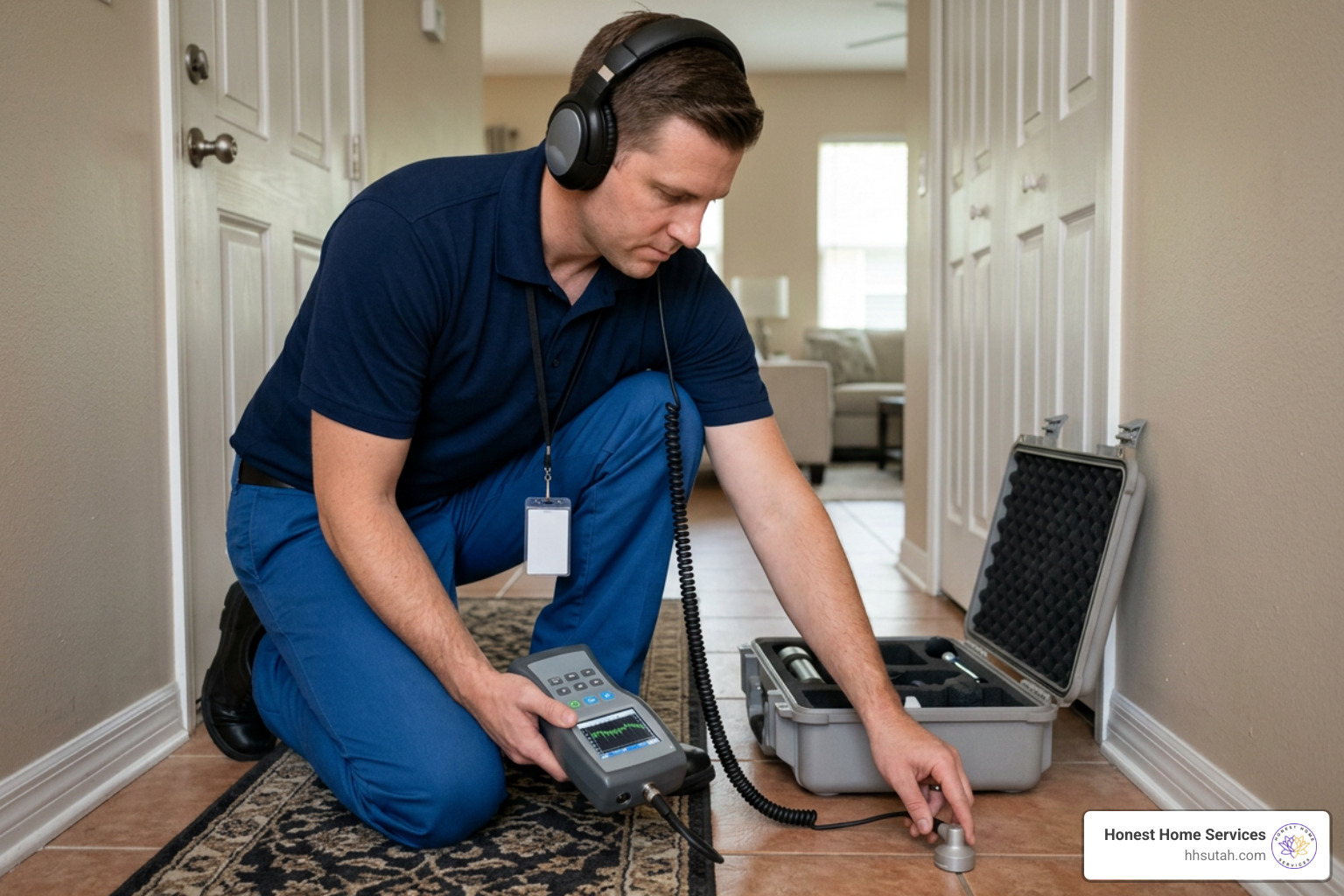
If you want to understand the science behind these non-destructive testing methods, you can read our guide on Non-Invasive Ways to Detect Water Flow in Your Pipes.
Pinpointing Leaks with Acoustic Leak Detection
Acoustic leak detection is the gold standard for locating leaks in pressurized water lines. When water escapes from a pipe under pressure, it creates friction. This friction produces distinct sound vibrations that travel through the pipe wall and the surrounding soil.
Harder materials like steel, copper, and cast iron transmit these high-frequency vibrations over long distances. Softer materials like PVC or polyethylene (PE) absorb sound, producing lower-frequency vibrations that do not travel as far.
To capture these sounds, technicians use specialized equipment:
- Electroacoustic Ground Microphones: These devices amplify underground sounds while filtering out ambient environmental noise (like traffic or wind). Systems such as the Electroacoustic Leak Detection – sebaKMT utilize piezo microphones and adjustable filter curves to isolate the precise hiss of a leak, regardless of the pipe material.
- Leak Noise Correlators: Technicians place two highly sensitive sensors at different access points (like valves or hydrants) on either side of the suspected leak. The correlator measures the exact time delay it takes for the leak sound to reach each sensor. Using the known speed of sound in that specific pipe material, the system mathematically calculates the exact location of the leak.
- Tracer Gas Methods: When pipes are buried deep, have low pressure, or are made of highly sound-absorbent plastic, acoustic methods can sometimes fall short. In these cases, we drain the line and introduce a safe, non-toxic tracer gas (usually a mixture of 5% hydrogen and 95% nitrogen). Because hydrogen is the lightest and smallest gas molecule, it easily escapes through the leak and rises vertically through concrete, asphalt, and soil. Technicians then sweep the surface with a highly sensitive gas detector to find the exact point of escape.
While acoustic tools are incredibly precise, they do have limitations. High ambient noise, deep pipe burial, and low system pressure can make detection difficult. That is why combining acoustics with other subsurface tools is so critical.
Advanced Subsurface Leak Detection Technologies
When acoustic methods need backup, or when we are dealing with non-pressurized lines (like sewer and drain systems), we turn to other advanced imaging technologies:
- Ground-Penetrating Radar (GPR): GPR sends high-frequency electromagnetic radar pulses into the ground. When these pulses hit boundaries between different subsurface materials (like soil, concrete, or water pools), they bounce back. GPR does not see the water leaking directly; instead, it detects the underground voids, soil disturbances, and water-saturated ground caused by a chronic leak.
- Video Pipe Inspection: For drain lines and sewer mains, we feed high-resolution, waterproof fiber-optic cameras directly into the pipe. This allows us to inspect the interior walls in real-time, identifying cracks, offset joints, root intrusions, or structural collapses that are causing water loss and structural damage.
- Fluorescent Dye Testing: In industrial or closed-loop systems, we sometimes use specialized dye kits, such as the LeakTracker™ Complete Fluorescent Leak Detection Kit – LEAKFIX . These highly concentrated, OEM-grade dyes circulate through the system and glow brightly under UV light, making even microscopic leaks instantly visible.
By combining these non-invasive tools, we ensure that we never dig a hole unless we are 100% certain we are in the right spot.
Step 4 & 5: Implement Smart Monitoring and Proactive Maintenance
Finding and repairing a single leak is a great victory, but true water security comes from continuous, proactive protection. The final steps of an effective leak detection strategy involve installing smart monitoring systems and establishing a routine maintenance schedule.
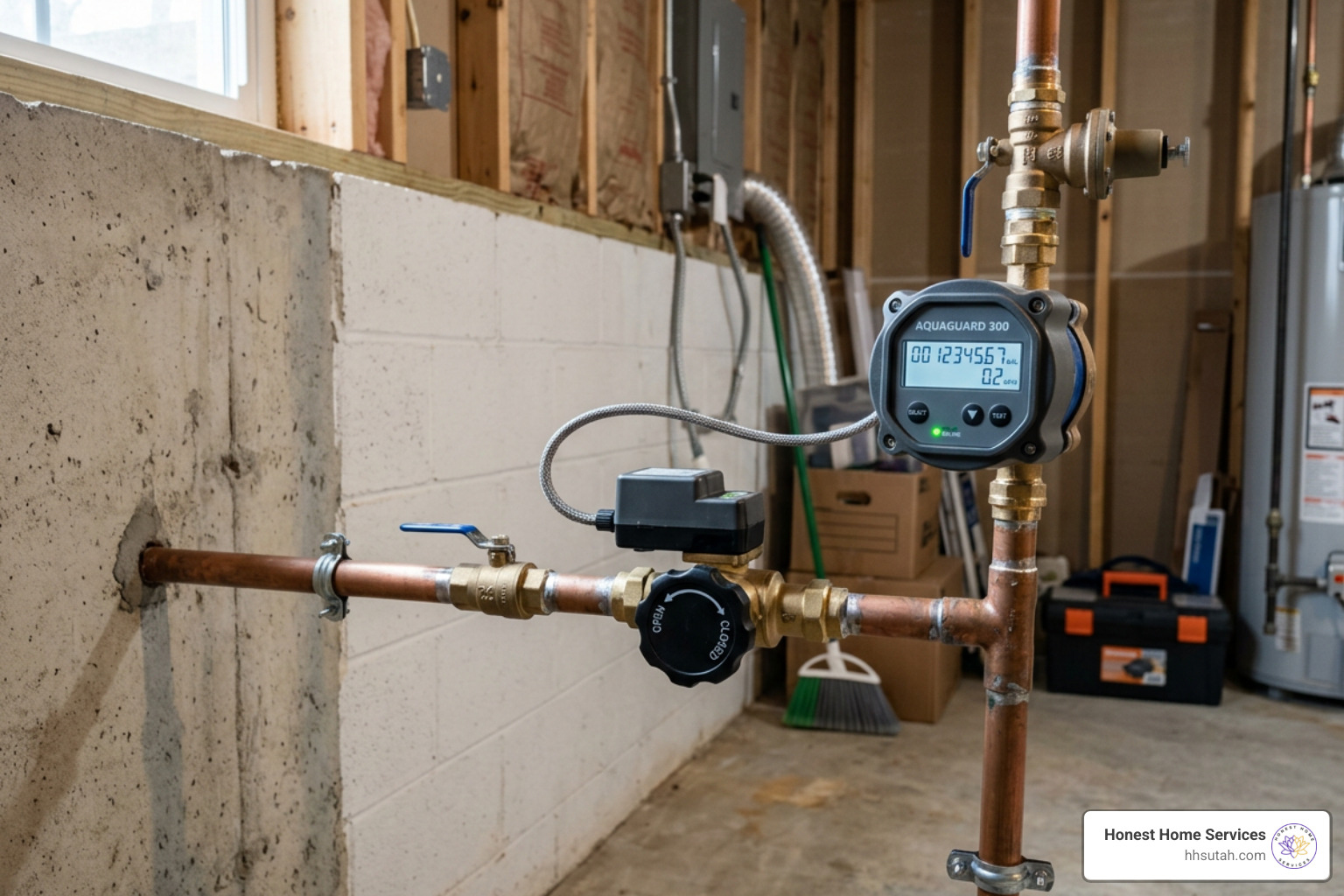
To explore your options for automated home protection, take a look at our comprehensive review of Smart Home Dry Home: The Best Water Leak Detection Systems.
Smart Water Monitoring for Properties
Modern smart water monitoring systems act as a 24/7 digital sentry for your plumbing. Instead of waiting for a visual sign of water damage, these systems monitor your water flow and pressure in real-time, alerting you to abnormalities the moment they occur.
- Smart Water Meters: Devices like the Kamstrup Leak Detector use advanced acoustic sensors inside the meter itself to continuously monitor noise levels in the service connections. An intelligent algorithm analyzes this noise over time, distinguishing between normal water usage (like a running washing machine) and the steady, uninterrupted sound of a leak.
- Automatic Shutoff Valves: Installed on your main water line, these smart valves monitor flow rates and pressure. If the system detects a catastrophic pipe burst or an unusual continuous flow of water (for instance, if a pipe freezes and bursts while you are away from home), it automatically shuts off your main water supply within 15 seconds. This rapid response can turn a potential $15,400 disaster into a minor inconvenience.
- Point-of-Leak Sensors: These small, battery-powered sensors are placed in high-risk areas—such as under kitchen sinks, behind washing machines, or next to water heaters. If water touches the sensor pins, it triggers an immediate notification to your smartphone.
Implementing these smart tools is one of the most effective ways to protect your property. For tips on identifying the early warning signs of a leak before investing in smart hardware, read Spotting the Drip: A Guide to Water Leak Detection.
Proactive Maintenance and Infrastructure Longevity
Whether you are managing a single-family home in Draper or a massive water distribution network in Salt Lake City, proactive maintenance is always more cost-effective than reactive repairs.
For water utilities, routine water loss surveys are essential for reducing non-revenue water (NRW) and extending the life of aging infrastructure. These programs involve systematically inspecting water mains, exercising valves to prevent them from seizing up due to mineral deposits, and updating GIS mapping systems with real-time acoustic data.
For homeowners, proactive maintenance means scheduling annual plumbing inspections, checking water pressure regulators (high pressure is a leading cause of pipe failure), and paying close attention to older water lines. If you live in Lehi, for example, understanding local soil conditions and pipe materials can help you anticipate issues. Learn more about this by reading Why Your Lehi Water Line Might Be Failing.
Frequently Asked Questions about Leak Detection
What are the key performance requirements for a leak detection system?
According to industry standards like API 1155 and API RP 1130, an effective leak detection system must balance four key performance requirements:
- Sensitivity: The system must be able to detect small leaks quickly.
- Reliability: It must minimize false alarms, which can cause operators to ignore real alerts or unnecessarily shut down systems.
- Accuracy: It must pinpoint the exact location of the leak to minimize excavation costs and response times.
- Robustness: The system must continue to operate reliably under changing conditions, such as transient flows, pump startups, and shutdowns.
How do acoustic correlators and tracer gas methods differ?
Acoustic correlators are passive listening devices. They rely on the physical sound vibrations created by pressurized water escaping from a pipe. They are highly effective for hard pipe materials (like copper or iron) under normal operating pressures, and they do not require the water line to be shut down.
Tracer gas detection is an active, non-acoustic method. It requires draining the pipe and filling it with a pressurized hydrogen-nitrogen gas mixture. A technician then uses a gas-sensing probe at the surface to detect escaping molecules. This method is ideal for quiet leaks, low-pressure lines, deeply buried pipes, or plastic pipes (like PVC) that do not transmit sound well.
Why is non-revenue water a major issue for utilities?
Non-revenue water (NRW) represents treated, clean drinking water that is pumped into the distribution system but is lost before it reaches the customer. This water loss is primarily caused by undetected leaks, water main breaks, and deteriorating infrastructure.
NRW is a major issue because it wastes precious natural resources, consumes massive amounts of energy for treatment and pumping without any financial return, and drives up utility rates for consumers. Regular water loss surveys and proactive leak detection programs are the most effective ways for utilities to reclaim these lost resources and extend the lifespan of their underground assets.
Conclusion
Finding a hidden water leak doesn’t have to involve guesswork, stress, or torn-up yards. By following a structured approach — assessing your water loss, selecting the right non-invasive technology, and implementing smart monitoring — you can protect your property from devastating water damage and keep your utility bills under control.
At Honest Home Services, we are proud to provide reliable, affordable, and honest plumbing solutions to homeowners throughout Northern Utah. From Salt Lake City and West Jordan to Layton and Park City, our local, expert technicians use the latest non-invasive leak detection technology to pinpoint issues quickly and accurately.
We back all of our work with a customer satisfaction guarantee and fair, upfront pricing. If you suspect a hidden leak in your home, don’t wait for the damage to spread. Contact us today or visit our Salt Lake City Leak Detection page to schedule a professional diagnostic service with our friendly local team.