

When Should You Call a Clogged Drain Plumber?
If you’re dealing with a clogged drain, here’s a quick answer:
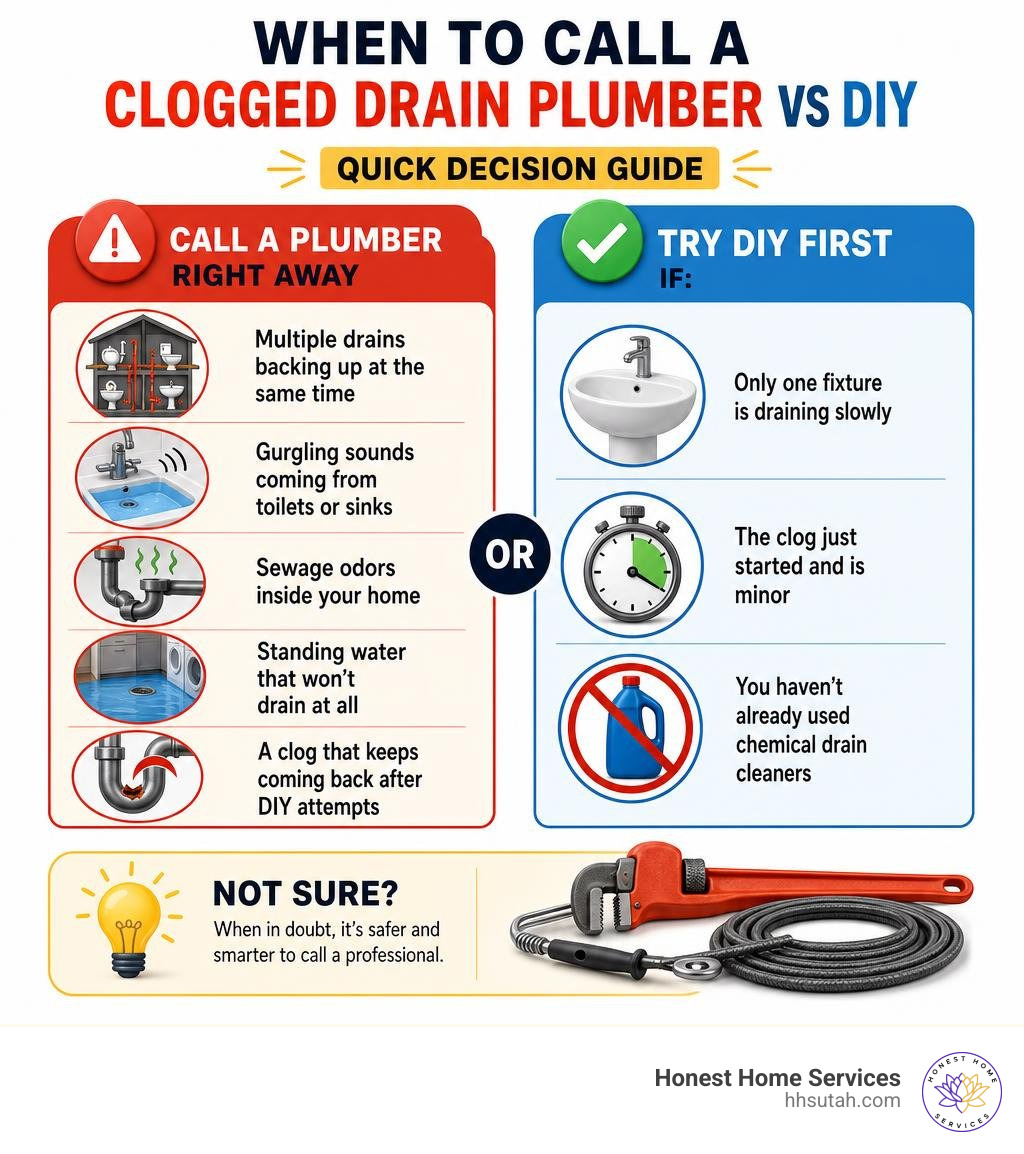
Call a plumber immediately if you notice any of these:
- Multiple drains backing up at the same time
- Gurgling sounds coming from toilets or sinks
- Sewage odors inside your home
- Standing water that won’t drain at all
- A clog that keeps coming back after DIY attempts
Try DIY first if:
- Only one fixture is draining slowly
- The clog just started and is minor
- You haven’t already used chemical drain cleaners
A slow drain seems like a small problem. Then one morning your shower fills up with water, your kitchen sink backs up, and you’re not sure what to do next. Over 60% of homeowners deal with a clogged drain at least once a year — and knowing when to grab a plunger versus when to call a professional can save you serious time, money, and stress.
The truth is, not every clog is the same. Some are simple hair buildups you can clear in five minutes. Others are signs of a deeper problem in your main sewer line that no amount of store-bought drain cleaner will fix.
At Honest Home Services, we’ve spent over 20 years helping Northern Utah homeowners and businesses diagnose and clear all types of drain blockages — from minor sink clogs to full main sewer line repairs. As your local clogged drain plumber, we know exactly what it takes to find the real cause and fix it right the first time.
Clogged drain plumber helpful reading:
Common Causes of Blocked Pipes and Sewer Lines
To understand how to fix a clog, it helps to know what is actually going on inside your pipes. Drains don’t just stop working out of nowhere. Instead, debris builds up slowly over months or even years until water can no longer squeeze past.
Here are the most common culprits we see when clearing drains across Salt Lake County and Davis County:
- Grease and Cooking Oils: It is incredibly tempting to pour warm bacon grease or cooking oil down the kitchen sink. However, as grease cools, it solidifies into a thick, waxy paste that clings to the walls of your pipes. Over time, other food scraps stick to this grease, creating a nearly solid barrier.
- Hair and Soap Scum: In bathrooms, hair is the ultimate pipe-clogging champion. When hair combines with the sticky residue of bar soaps, it creates a web-like net inside the drain that catches everything. If you are struggling with a slow bathtub or shower, learning about hair clog removal can help you keep things flowing.
- Tree Root Intrusion: Tree roots account for approximately 50% of all main sewer line clogs in residential properties. Roots are naturally drawn to the warmth and moisture inside your underground sewer lines. They can slip through tiny cracks or loose pipe joints, growing into massive root balls that completely block sewage flow.
- Foreign Objects and Flushable Wipes: Despite what the packaging says, “flushable” wipes do not break down like toilet paper. They stay intact and easily catch on pipe imperfections. Throw in dental floss, cotton swabs, feminine hygiene products, or even a child’s toy, and you have a recipe for an immediate blockage.
- Mineral Scale Buildup: In many Northern Utah communities, hard water is a daily reality. The calcium and magnesium deposits in our water supply can build up inside metal and plastic pipes over time, narrowing the opening and making it much easier for regular debris to get stuck.
Dealing with these issues requires a targeted strategy. Some clogs can be handled with simple mechanical methods, while others require a professional touch. For serious blockages, scheduling expert drain blockage removal is the safest way to protect your plumbing. If you live anywhere from Salt Lake City up to Bountiful or Layton, our team provides reliable Davis County plumbing services to clear out even the most stubborn blockages.
DIY Drain Clearing vs. Hiring a Clogged Drain Plumber
When a sink or shower starts backing up, most homeowners naturally want to try a DIY fix first. Taking matters into your own hands can save you a few bucks, but it is important to know your limits.

Using the wrong tool or pouring harsh chemical cleaners down your pipes can turn a simple $100 clog into a multi-thousand-dollar pipe replacement project. Store-bought chemical drain cleaners are actually ineffective for 70% of serious clogs, and the harsh acids they contain can severely degrade older plumbing systems.
Before you make a move, let’s look at how DIY methods stack up against hiring a professional clogged drain plumber:
| Feature / Method | DIY Plunging & Natural Remedies | Professional Drain Cleaning |
|---|---|---|
| Best For | Minor, shallow clogs in a single fixture | Stubborn, deep, or recurring blockages |
| Tools Used | Plunger, vinegar & baking soda, hand snake | Sewer cameras, motorized augers, hydro jetting |
| Risk of Pipe Damage | Low (unless using chemical cleaners) | Zero (when performed by licensed plumbers) |
| Effectiveness | Temporary relief for minor blockages | Removes 100% of buildup for long-lasting results |
| Identifies Root Cause | No | Yes (via waterproof sewer camera inspection) |
If you are determined to try resolving the issue yourself, reading a comprehensive DIY drain cleaning guide is a great place to start. However, if you are dealing with a stubborn clog that refuses to budge, knowing when to call a professional plumber will save you from unnecessary frustration and costly pipe damage.
When to Safely Attempt DIY Drain Clearing
It is perfectly safe to try clearing a clog on your own if the problem is limited to a single fixture and the water is draining slowly rather than sitting completely still.
For instance, if your bathroom sink or shower is draining slowly after a morning routine, it is highly likely a shallow hair clog. You can often clear this by removing the drain stopper and using a small plastic drain zip-tool to pull the hair out. If your shower is acting up, check out our guide on unclogging your shower for step-by-step instructions.
Similarly, a single clogged toilet can usually be resolved with a standard flange plunger. Ensure there is enough water in the bowl to cover the rubber cup of the plunger, create a tight seal, and plunge firmly up and down. If you are facing a stubborn toilet blockage, follow these tips on fixing toilet clogs to clear it safely without causing an overflow.
Red Flags That Require a Professional Clogged Drain Plumber
While a single slow drain is a great DIY candidate, there are several red flags that mean it is time to put down the plunger and call in the experts.
If you notice any of the following signs, you are likely dealing with a deep line blockage or a main sewer line issue:
- Multiple Backups: If using the washing machine causes water to bubble up in your kitchen sink, or if flushing the toilet causes water to rise in your shower, you have a mainline clog.
- Foul Sewer Odors: If a persistent smell of rotten eggs or raw sewage is wafting out of your drains, it is a sign that sewer gases are trapped or leaking into your home.
- Gurgling Sounds: Strange bubbling or gurgling noises coming from your toilet or sink drains when water is running elsewhere indicate that air is trapped inside your pipes due to a blockage.
- Standing Water: If a sink or tub is completely full of dark, dirty water and does not drain even a millimeter overnight, DIY methods will not be enough.
These symptoms point to serious issues that require advanced diagnostic tools. Recognizing the signs you need professional drain cleaning early can prevent raw sewage from backing up into your living spaces. When things take a turn for the worse, knowing how to handle a plumbing emergency and having our number on speed dial will keep your home and family safe.
How Professionals Diagnose and Clear Stubborn Blockages
When our professional plumbers arrive at your Northern Utah home, we don’t just guess where the clog is. We use advanced diagnostic technology to locate the exact source and composition of the blockage.
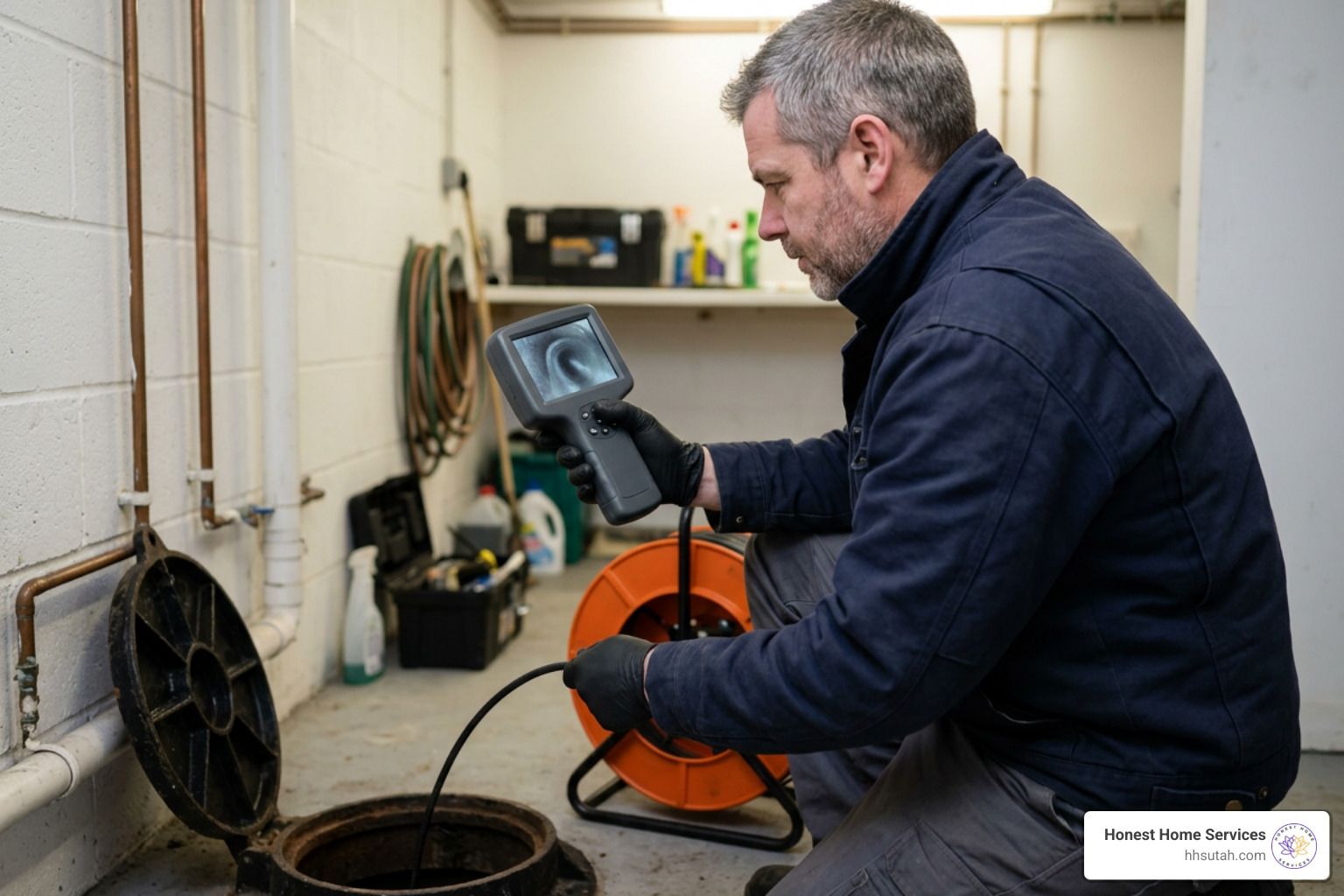
First, we perform a video camera inspection. By feeding a high-resolution, waterproof camera down your drain line, we can see exactly what is causing the issue — whether it is a thick layer of kitchen grease, a collection of flushable wipes, or tree roots breaking through your pipes. Once we see the problem on our monitor, we can choose the perfect tool to clear it without wasting time or risking damage to your pipes.
The Difference Between Drain Clearing and Drain Cleaning
Many homeowners do not realize that “drain clearing” and “drain cleaning” are two entirely different services.
- Drain Clearing: This is a temporary fix. It typically involves using a mechanical drain snake to punch a hole through a blockage so water can flow again. While this restores basic drainage, it often leaves a thick layer of greasy residue or hair behind on the pipe walls, which means the clog will likely reform in a few months.
- Drain Cleaning: This is a comprehensive, long-term solution. Using high-pressure water, we scour the entire inside of the pipe from end to end, removing 100% of grease, soap scum, scale, and debris.
If you want to make sure your pipes stay clear for years to come rather than just weeks, look out for the signs you need hydro jetting for your home’s plumbing system.
Advanced Tools Used by a Clogged Drain Plumber
Professional plumbers have access to commercial-grade tools that homeowners simply cannot rent at a local hardware store. These include:
- Motorized Drain Snakes (Augers): These heavy-duty machines use steel cables to reach deep into your plumbing system, using specialized cutting blades to shred tough clogs.
- Hydro Jetting Machines: These systems blast water at pressures up to 4,000 PSI through specialized nozzles, scraping away grease buildup and slicing through tree roots.
- Sewer Rods and Root Cutters: Specialized mechanical cutters designed specifically to clear out heavy root intrusions in main sewer lines.
By utilizing these professional tools, we can restore your plumbing system to like-new condition. If you are experiencing persistent drainage issues, exploring our professional Salt Lake City drain cleaning options is the best way to find a permanent solution.
Main Sewer Line Clogs: Signs and Solutions
Your home’s plumbing system is shaped like a tree. All the individual drains in your sinks, showers, and toilets are the “branches” that carry waste water down into one single “trunk” — your main sewer line. This main line runs underground beneath your yard, connecting your home to the municipal sewer system or a private septic tank.
When a clog occurs in an individual branch line, only that one sink or shower is affected. But when a clog develops in the main sewer line, every single drop of water you run has nowhere to go, causing sewage to back up into the lowest drains in your home (usually basement showers or floor drains).
Main line clogs are often caused by tree root intrusion, shifting clay soil (which is common across the Salt Lake Valley), or broken underground pipes. If you suspect your main line is blocked, you need to act quickly. Learning the steps for cleaning your main sewer line can help you understand the process, while our comprehensive guide to main line clogs will help you identify the symptoms before raw sewage floods your basement.
Frequently Asked Questions About Professional Drain Services
We know that calling a plumber can raise a lot of questions, especially if you have never had to hire one before. Here are the answers to some of the most common questions we hear from homeowners in Northern Utah.
How much does professional drain cleaning cost?
The cost of professional drain cleaning is influenced by several factors, including the location of the clog, its severity, and the equipment required to clear it. A simple branch line clog (like a kitchen sink or bathtub) is typically faster and less expensive to clear than a deep main sewer line blockage that requires hydro jetting or root-cutting tools.
At Honest Home Services, we believe in fair, upfront pricing with no hidden fees, so you always know exactly what to expect before we begin our work. To get a better idea of local rates, check out our guide on drain cleaning prices.
Can chemical drain cleaners damage my pipes?
Yes, absolutely. Store-bought chemical drain cleaners rely on harsh acids or caustic chemicals to dissolve clogs. While they might occasionally clear a minor hair clog, these chemicals generate extreme heat inside your pipes.
This heat can warp or melt modern plastic (PVC) pipes and corrode older metal plumbing systems, leading to hidden leaks behind your walls. Additionally, chemical cleaners leave behind toxic fumes that are dangerous to inhale. If you want to keep your home safe, learning how to clean drains without a plumber using safe, natural ingredients like baking soda and vinegar is a much better alternative.
How can I prevent future drain clogs?
The best way to handle a clogged drain is to prevent it from happening in the first place! By following a few simple habits, you can keep your plumbing system running smoothly:
- Use mesh drain strainers in all showers and tubs to catch hair before it enters your pipes.
- Never pour grease, oil, or fat down your kitchen sink. Instead, let it cool in a container and throw it in the trash.
- Only flush toilet paper and human waste down your toilets — keep wipes, cotton pads, and paper towels out of the bowl.
- Run plenty of cold water when using your garbage disposal, and avoid throwing fibrous foods (like celery or onion skins) down the drain.
For more helpful advice on keeping your plumbing system in top shape, check out our preventative drain cleaning tips designed for homeowners who want to avoid emergency service calls.
Conclusion
A clogged drain can quickly disrupt your day, but you don’t have to tackle it alone. Understanding when to use a plunger and when to call in a professional clogged drain plumber is the key to keeping your home’s plumbing system safe, clean, and fully functional.
At Honest Home Services, we are proud to serve communities throughout Northern Utah, including Salt Lake City, Layton, Kaysville, Farmington, Bountiful, and the surrounding areas. We are committed to providing honest, reliable, and affordable plumbing services with guaranteed customer satisfaction. Whether you need a simple drain clearing or a complete hydro jetting service, our local, expert technicians are ready to help 24/7.
Don’t let a stubborn clog disrupt your home. Contact us today to schedule your professional Salt Lake City drain cleaning and enjoy clear, free-flowing drains once again!