

When a Clogged Drain Main Line Strikes: What You Need to Know First
A clogged drain main line is one of the most serious plumbing problems a homeowner can face. Unlike a slow bathroom sink or a backed-up shower, a main line blockage affects your entire home’s plumbing system — all at once.
Here’s how to unclog a main sewer line (quick overview):
- Locate your sewer cleanout — usually near your foundation or in the basement
- Remove the cleanout cap with a pipe wrench (have towels ready for overflow)
- Insert a plumbing auger or sewer rod and work it toward the blockage
- Rotate clockwise to dig into the clog, then push and pull to break it up
- Flush the system with hot water, baking soda, and vinegar to clear debris
- Call a professional if water backs up again, or if you suspect tree roots or pipe damage
Not sure if it’s really a main line issue? Watch for these red flags:
- Multiple drains backing up at the same time
- Gurgling sounds from toilets or drains
- Sewage odors coming from floor drains
- Water rising in the shower when you flush the toilet
- Sewage standing in or overflowing from your outdoor cleanout pipe
If any of those sound familiar, keep reading — this guide walks you through every step.
At Honest Home Services, we’ve spent over 20 years clearing and repairing clogged drain main lines for homeowners and businesses across Northern Utah. From simple snaking jobs to full sewer line replacements, our licensed team has seen it all — and fixed it all.
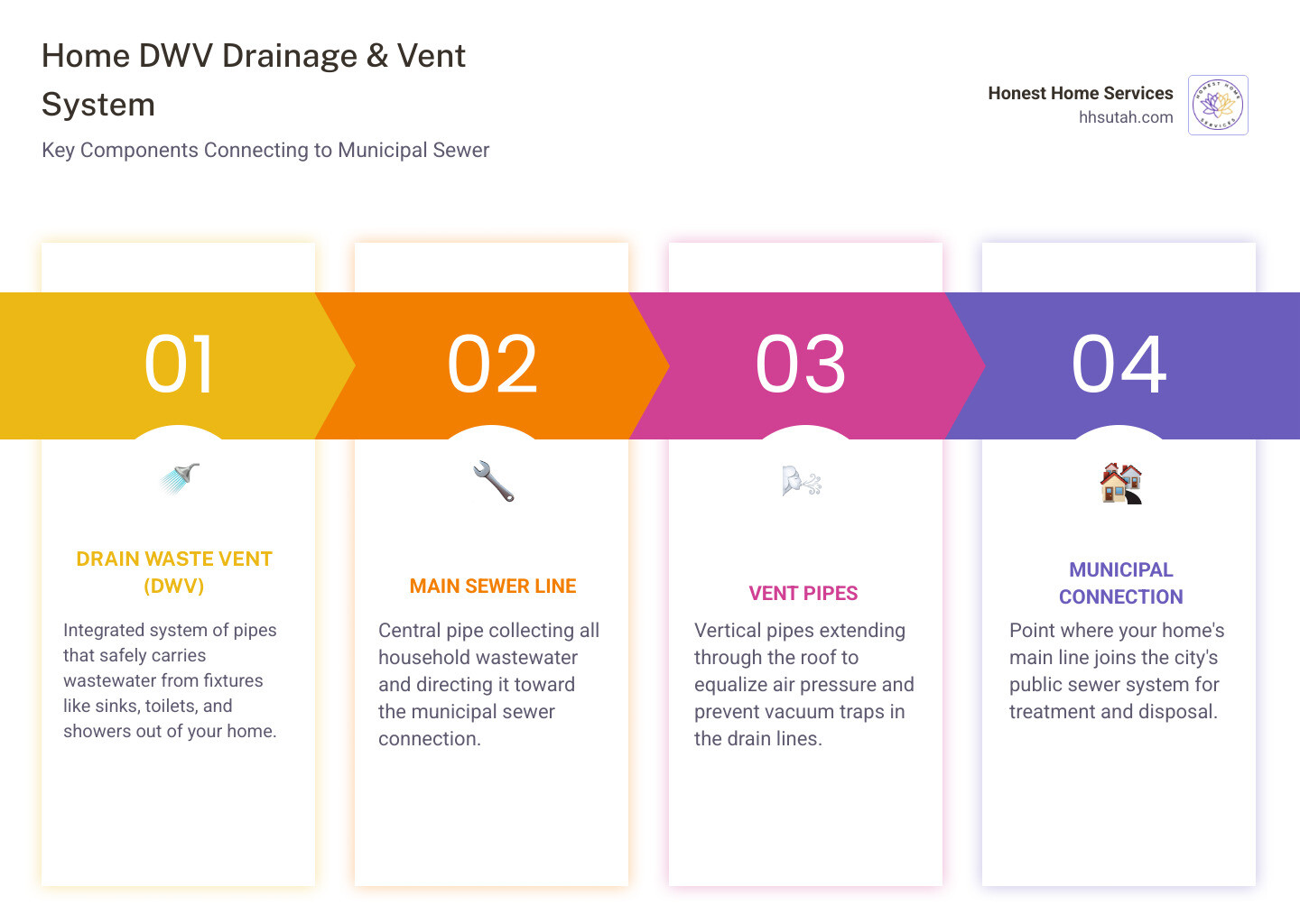
Clogged drain main line vocabulary:
Identifying a Clogged Drain Main Line vs. Localized Issues
When you have a sink that won’t drain, it’s a nuisance. When your clogged drain main line acts up, it’s a household crisis. The primary difference lies in the scope. A localized clog happens in the “branch lines”—the smaller pipes leading from a single sink, tub, or toilet. A main line clog happens in the “artery” of your home, the 3-to-4-inch pipe that carries all waste out to the municipal sewer system in Salt Lake City or your local Utah utility.
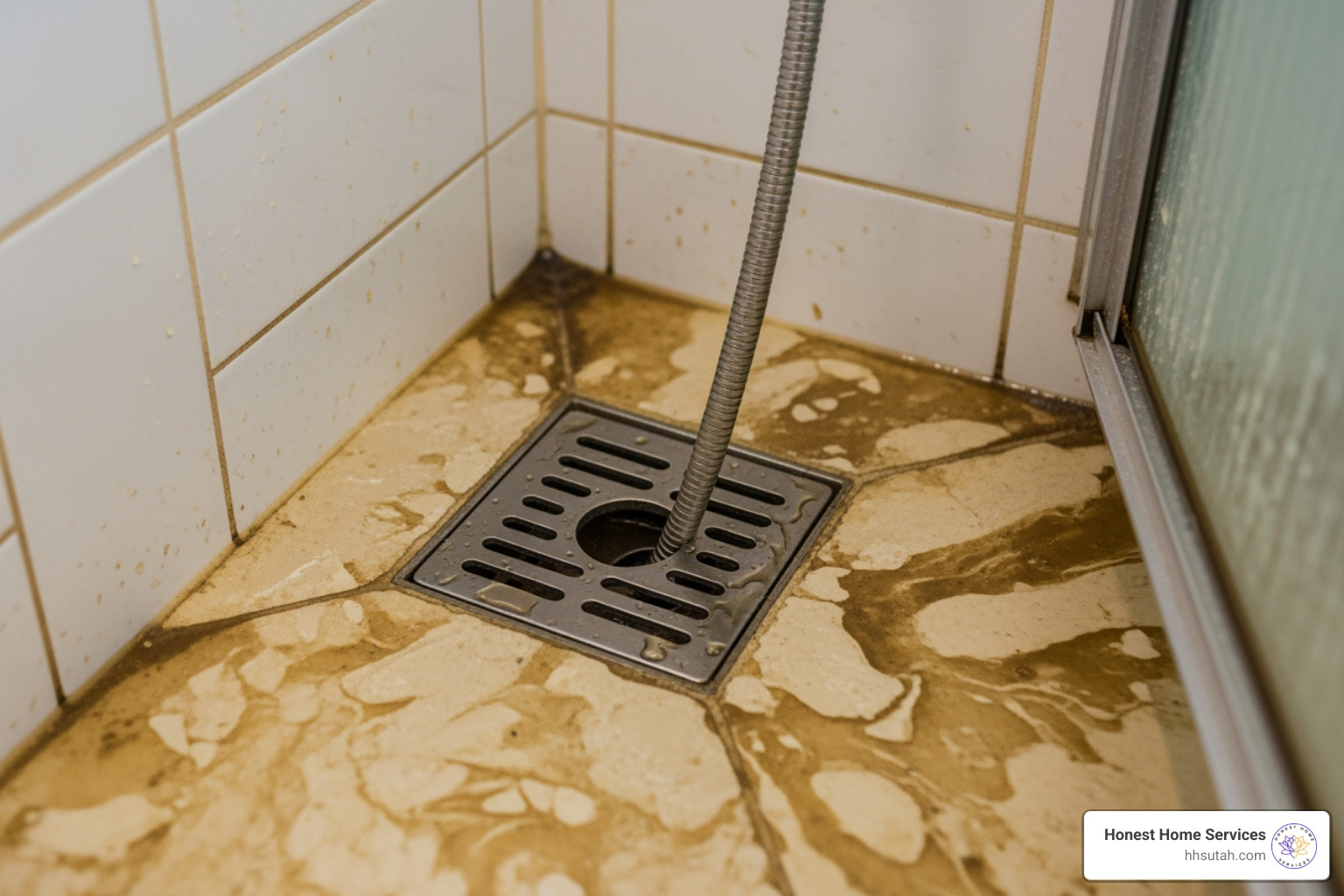
If you notice water backing up in the shower while the washing machine is running, or if multiple fixtures across the house are slow at the same time, you aren’t looking at a simple hair clog. You’re dealing with a main line obstruction. Another tell-tale sign is the presence of air pockets. When waste can’t move past a blockage, air is forced back up through the pipes, creating those distinct, rhythmic gurgling sounds. You might also notice foul sewage odors emanating from your drains, as trapped gases have nowhere else to go. For a deeper dive into these symptoms, check out our guide to main line clogs or learn what to do when your main line backs up.
Symptoms of a Clogged Drain Main Line in the Basement
In many Northern Utah homes, the basement is the first place a clogged drain main line reveals itself. Because water seeks the lowest point, floor drains often act as secondary escape routes. If you see standing sewage or water pooling around a basement floor drain, the main line is likely fully blocked. This is a critical warning sign that requires immediate attention to prevent water damage and health risks. To better understand how your home’s access points work, read about unclogging the mystery of your drain cleanout.
Why Your Toilet Bubbles When the Shower Drains
Have you ever noticed your toilet “talking” back to you while you’re showering? This bubbling happens because of a pressure imbalance. Your home’s Drain-Waste-Vent (DWV) system relies on a specific venting ratio to keep water flowing smoothly. When a clogged drain main line restricts that flow, air gets trapped. As shower water pushes into the pipes, that trapped air is forced out through the nearest available trap—usually the toilet. If this is happening, it’s one of the clearest signs you need professional drain cleaning.
Common Causes of Main Sewer Line Blockages
Understanding what causes a clogged drain main line can help you prevent the next one. While some issues are caused by what we put down the pipes, others are simply a product of time and nature.
- Tree Root Infiltration: This is the leading cause of sewer issues worldwide. Roots seek out the moisture and nutrients inside your pipes, entering through tiny cracks and expanding until they block the flow or cause a structural collapse.
- Flushable Wipes: Despite the name, the EPA encourages flushing only toilet paper because “flushable” wipes don’t break down like they should. Plumbers often pull these wipes out of drains that are up to 30 feet in length, where they act as a net for other debris.
- Grease Solidification: Pouring warm grease down the sink is a recipe for disaster. Once it hits the cold buried pipes, it solidifies into a hard “fatberg” that is incredibly difficult to remove.
- Cast Iron Rust: Many older homes in Salt Lake County have cast iron pipes hitting the end of their 50-year lifespan. Internal rust creates a rough surface that catches paper and waste.
- Pipe Bellies: Ground shifting can cause a section of the pipe to sag, creating a “belly” where waste pools and eventually hardens into a clog.
Clog Material Difficulty Table
| Material | Removal Difficulty | Best Tool for the Job |
|---|---|---|
| Hair/Paper | Low | Manual Auger |
| Grease/Fats | Moderate | Hydro Jetting |
| Tree Roots | High | Hydro Jetting / Root Cutter |
| Mineral Scale | High | Hydro Jetting |
| Pipe Collapse | Extreme | Excavation/Replacement |
How Tree Roots Attack a Clogged Drain Main Line
Tree roots are persistent. They can detect the condensation on the outside of a sewer pipe and will grow toward it. Once they find a microscopic crack or a loose joint—common in older clay pipes—they enter and begin to thrive. Over time, these roots act as a literal wall inside your pipe. If left untreated, the pressure from the growing roots can lead to a total pipe collapse. For more on this, see our guide on effective tree root removal.
How to Unclog a Main Sewer Line: A Step-by-Step DIY Guide
If you’re feeling handy and want to attempt a DIY fix, you’ll need to locate your sewer cleanout. This is typically a 3-to-4-inch pipe with a capped top, located either near the foundation of your home or in the basement floor.
Safety First: Always wear protective gloves and goggles. Sewer lines contain bacteria and, if the line is backed up, the pressure can cause a “geyser” of sewage when you first open the cap.
Step 1: Accessing the Sewer Cleanout
Locate the cleanout pipe. If it’s outside, it might be buried under a bit of dirt or hidden by landscaping. Use a pipe wrench or a large crescent wrench to unscrew the cap. Pro tip: Loosen it slowly. If liquid starts seeping out immediately, stop—this means the pipe is under significant pressure, and you should probably call for mainline plumbing service to avoid a mess in your yard or basement.
Step 2: Using a Manual Auger or Sewer Rod
Once the cap is off, insert the cable of a plumbing auger or a sewer rod into the pipe.
- Push the cable in until you feel resistance (the obstruction).
- Turn the handle clockwise to engage the tip of the auger into the clog.
- Use a combination of twisting, pushing, and pulling to break up the mass.
- Work the tool in both directions—back toward the house and out toward the street—to ensure a thorough drain blockage removal.
Step 3: Flushing the System
After you’ve broken through the main mass, you need to clear the remnants. A classic home remedy involves pouring a half-cup of baking soda followed by a mixture of one cup of vinegar and one cup of hot water. Let the fizzing reaction work for about 10 minutes, then flush the line with several gallons of boiling water. This helps break down remaining grease or soap scum. For more maintenance hacks, see our tips for effective drain cleaning.
Professional Solutions for a Stubborn Clogged Drain Main Line
Sometimes, a manual snake just isn’t enough, especially for deep-seated grease or thick tree roots. That’s where professional technology comes in.
Professional plumbers use two primary tools to diagnose and fix a clogged drain main line:
- Camera Inspections: We feed a waterproof, high-definition camera into your line to see exactly what’s causing the problem. This eliminates guesswork and helps us decide if you need a simple cleaning or a more intensive repair. Learn about the signs you need a camera inspection or view our inspection services.
- Hydro Jetting: This is the “gold standard” for pipe cleaning.
Hydro Jetting vs. Snaking
While a snake or auger simply punches a hole through a clog to get water moving, hydro jetting actually cleans the pipe. Using water pressure up to 4,000 PSI, hydro jetting blasts away grease, mineral scale, and even stubborn tree roots from the pipe walls. It’s like a pressure washer for the inside of your sewer line. If your pipes are structurally sound, this is the best way to prevent future clogs. Check out these 5 signs you need hydro jetting.
Long-Term Repairs and Replacement Costs
If a camera inspection reveals that your clogged drain main line is actually a broken or collapsed pipe, you may need a more permanent solution.
- Professional clearing: Usually costs around $500.
- Full blockages/Excavation: Can cost $1,000 or more just to reach the pipe.
- Section repairs: Often start around $6,000 for areas affected by roots.
- Full replacement/Trenchless lining: Can range from $20,000 to $30,000 depending on the length and depth of the line.
Trenchless lining is a great “no-dig” option where we pull a resin-coated liner through the existing pipe, creating a “pipe within a pipe” that is resistant to roots. For more details on pricing, see our sewer line repair cost guide or our full replacement guide.
Prevention and Maintenance Strategies
The best way to deal with a clogged drain main line is to never have one in the first place. Here is our expert checklist for sewer health:
- Monthly Flushing: Fill your tubs and sinks to the brim and then pull the plugs simultaneously. The sheer volume of water helps “scour” the main line.
- Hair Catchers: Use strainers in every shower and tub to prevent hair clogs.
- Grease Disposal: Never pour fats, oils, or grease (FOG) down the drain. Let them cool in a can and throw them in the trash.
- Root Barriers: If you have large trees near your sewer line, consider installing physical root barriers or using professional root-killing treatments.
- Professional Inspections: We recommend a camera inspection every two years (or every 6-12 months if you have known root issues).
For more proactive advice, read our preventative drain cleaning tips.
Frequently Asked Questions about Clogged Main Lines
How much does it cost to clear a main sewer line?
On average, a professional clearing service costs about $500. However, if the line is completely blocked and requires digging up the yard, costs can quickly exceed $1,000. Factors affecting the price include the location of the clog, the severity of the blockage (roots vs. grease), and the ease of access to the cleanout. For more on managing these repairs, see our mainline mayhem guide.
Can I use chemical cleaners on a main line clog?
We strongly advise against it. Chemical cleaners are often ineffective on large main line clogs. Worse, they can warp PVC pipes, corrode older metal pipes, and create a toxic “sludge” that makes it dangerous for a plumber to work on the line later. If the chemicals sit in the pipe without clearing the clog, they can actually eat through your plumbing.
How often should I have my sewer line inspected?
For most homes in Northern Utah, a camera inspection every two years is sufficient. However, if you live in an older neighborhood with mature trees (like parts of Murray or Salt Lake City) or if your home has original cast iron pipes, an annual check-up is a wise investment to avoid an emergency backup. Learn more about connecting to and maintaining your main line.
Conclusion
A clogged drain main line doesn’t have to be the end of the world, but it does require fast, expert action. Whether you’re trying a DIY fix with an auger or you need the heavy-duty power of hydro jetting, addressing the problem early will save you thousands of dollars in potential water damage and pipe replacement costs.
At Honest Home Services, we pride ourselves on providing the most reliable and fair-priced plumbing support in Northern Utah. We serve Salt Lake City, Davis County, and surrounding areas like Bountiful, Layton, and Draper. If your drains are gurgling or your basement is backing up, don’t wait. We offer 24/7 emergency support to get your home back in flow.
Contact us today for Salt Lake City sewer mainline repair and experience the honest difference!