

The Fastest Ways to Clear a Clogged Drain (Before Calling a Plumber)
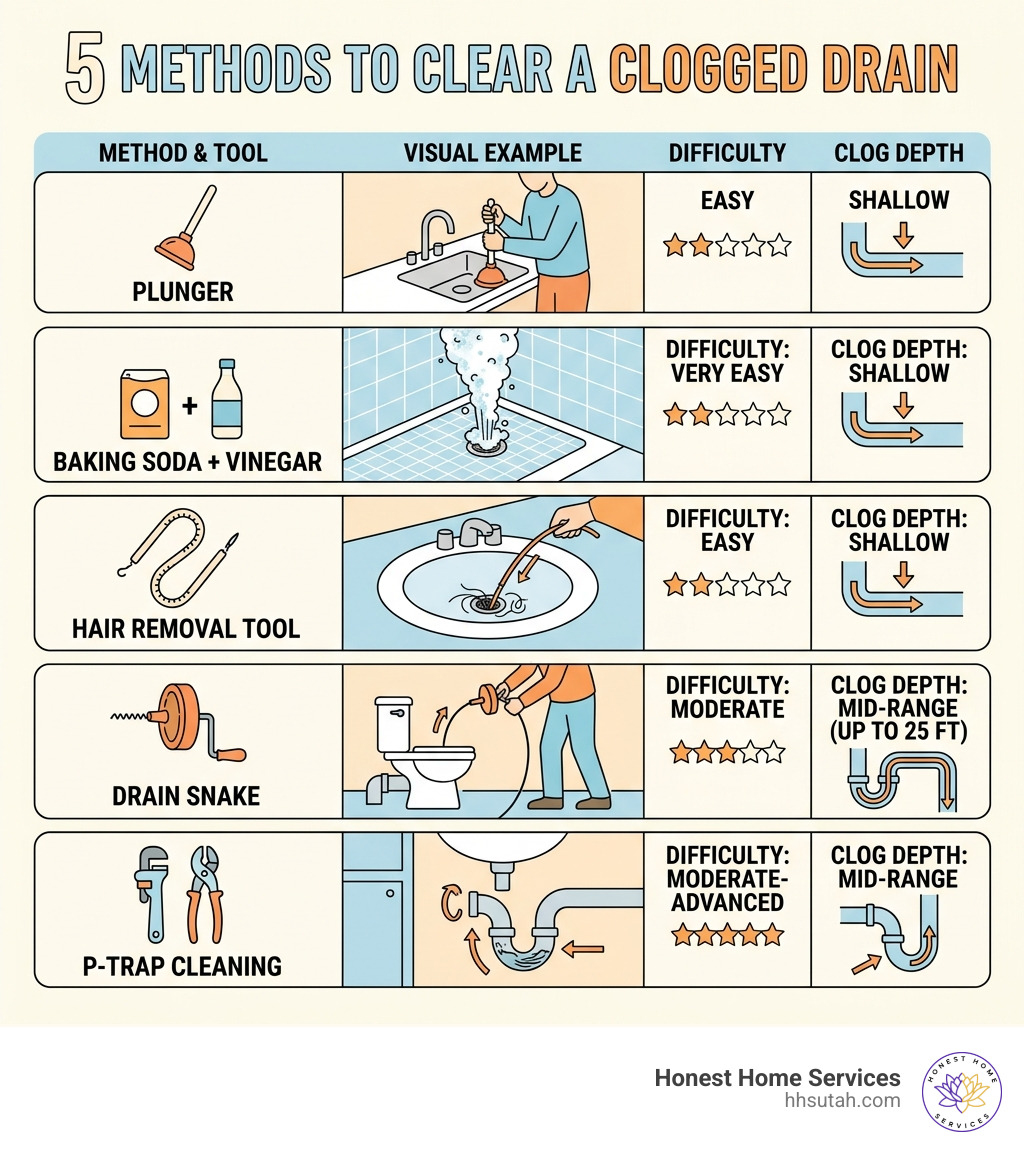
Clear a clogged drain using one of these proven methods, starting with the simplest:
- Plunger – Best first step for most clogs; works on sinks, tubs, and toilets
- Baking soda + vinegar – Pour 1/2 cup baking soda, then 1/2 cup vinegar; wait 10-15 minutes; flush with hot water
- Hair removal tool (Zip-It) – Insert into drain, twist, and pull out hair clogs
- Drain snake – Reaches up to 25 feet for deeper blockages
- P-trap cleaning – Remove and clean the curved pipe under the sink for stubborn sink clogs
- Call a plumber – If nothing works, or if multiple drains are backing up at once
A slow or stopped drain is one of the most common plumbing headaches homeowners face. Grease, hair, soap scum, and everyday debris build up gradually inside your pipes until water has nowhere to go. The good news? Most clogs can be cleared in under an hour with basic tools and a little know-how — no plumber required.
This guide walks you through every method, from the quick fixes to the more hands-on approaches, so you can tackle the problem with confidence.
At Honest Home Services, we’ve spent over 20 years helping Utah homeowners clear clogged drains and keep their plumbing running smoothly — so everything in this guide comes from real-world experience. Whether you handle it yourself or need backup, we’ve got you covered.
Basic clear clogged drain terms:
Common Causes and Safety Precautions for Your Pipes
Before we dive into the “how-to,” it helps to understand what we are fighting. Most clogs aren’t a mystery; they are a collection of our daily habits. In the bathroom, hair is the primary culprit, often binding with soap scum to create a thick, waterproof mat. In the kitchen, grease is the enemy. Even if you don’t pour bacon fat directly down the drain, small amounts of oil and food particles solidify as they cool, narrowing the pipe over time. Mineral deposits from Utah’s hard water can also contribute to this buildup, acting like “plumbing cholesterol.”
Safety is paramount when you attempt to clear clogged drain blockages. We always recommend wearing thick rubber gloves and eye protection. You never know what kind of bacteria or old caustic chemicals might splash back during the process.
Knowing Your Pipes
Before you reach for the tea kettle, identify your pipe material. Boiling water is a classic DIY remedy, but it can be dangerous for PVC (plastic) pipes. High heat can soften the plastic or damage the glue at the joints, leading to leaks behind your walls. If you have older metal pipes, boiling water is generally safe, but for modern PVC systems, stick to hot tap water.
Furthermore, follow these Preventative Drain Cleaning Tips Every Homeowner Should Know to avoid the mess in the first place. Experts often suggest that mechanical methods—like plunging or snaking—are much safer for your plumbing than harsh, acid-based store-bought cleaners. According to 5 Ways to Clear a Clogged Drain, According to Experts, evaluating the severity of the clog before acting can save you from accidentally making the problem worse.
How to Clear Clogged Drain Issues with a Plunger
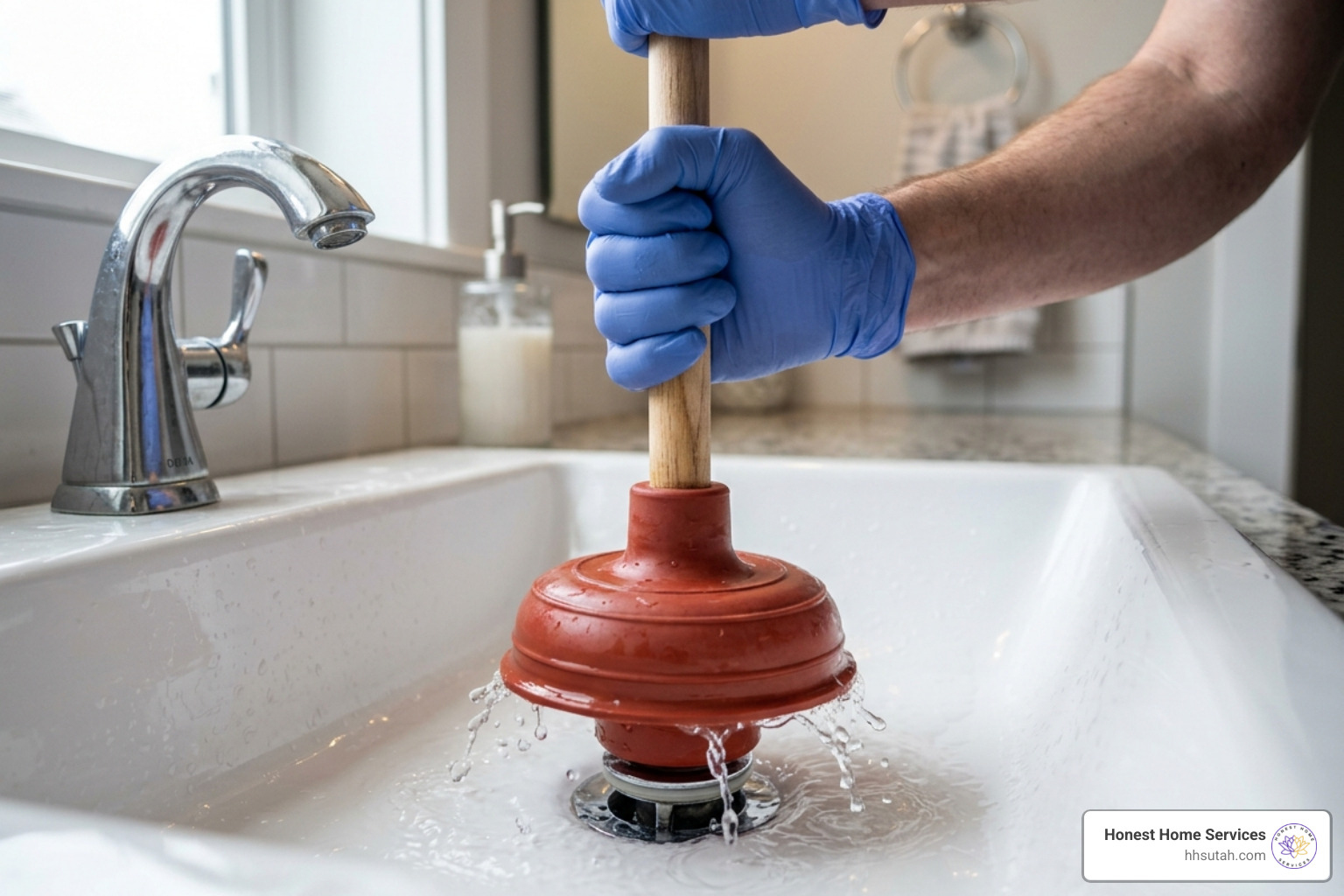
The humble plunger is still the champion of DIY plumbing. However, not all plungers are created equal. For sinks, tubs, and showers, you want a cup plunger (the one that looks like a simple rubber bowl). For toilets, you need a flange plunger, which has an extra fold of rubber to fit into the toilet trap.
To successfully clear clogged drain obstructions with a plunger, you need a vacuum seal. If you are working on a bathroom sink, remember to plug the overflow hole (that little opening near the top of the basin) with a wet rag. If you don’t, the air will just escape through that hole instead of pushing against the clog.
Pro Tip: Apply a thin layer of petroleum jelly to the rim of the plunger. This helps create an airtight seal against the smooth porcelain or stainless steel surface, giving you much more “oomph” with every stroke.
Step-by-Step Guide to Clear Clogged Drain Blockages
- Remove the Stopper: Take out the pop-up stopper or strainer so the plunger can sit directly over the drain opening.
- Add Water: You need enough standing water to cover the head of the plunger. Without water, you’re just moving air, which isn’t nearly as effective at dislodging gunk.
- The “Roll” Technique: Instead of slamming the plunger down, roll it onto the drain. This pushes out trapped air and ensures the cup is full of water.
- Plunge Vigorously: Use a firm, vertical motion. Push down and pull up rapidly for about 20 seconds. The “pulling” motion is often more important than the “pushing” because it sucks the clog upward and breaks it apart.
- Check the Flow: Remove the plunger and see if the water drains. If it gurgles or drains slowly, repeat the process.
| Plunger Type | Best Use Case | Max Effective Depth |
|---|---|---|
| Cup Plunger | Sinks, Tubs, Showers | 1-3 Feet |
| Flange Plunger | Toilets Only | 3-5 Feet |
| Accordion Plunger | Tough Toilet Clogs | 5 Feet |
If the plunger fails, it might be time for more advanced techniques. Check out our guide on how to clear kitchen sink and toilet main line clogs for more specific scenarios.
Natural and Mechanical Methods for Tougher Blockages
If the plunger didn’t do the trick, it’s time to turn to “kitchen chemistry.” The combination of baking soda (sodium bicarbonate) and vinegar (acetic acid) is a favorite for a reason: it’s non-toxic, cheap, and surprisingly effective for minor clogs and hair clog removal.
When these two ingredients mix, they create a fizzing CO2 reaction. This bubbling action physically agitates the clog, breaking up the “glue” that holds hair and soap scum together. To try this, pour 1/2 cup of baking soda down the drain, followed by 1/2 cup of white vinegar. Cover the drain with a plug or rag to keep the reaction inside the pipes. After 15 minutes, flush it with a gallon of very hot water.
For a more long-term approach, consider enzymatic cleaners. Unlike harsh acids, these contain “good” bacteria that literally eat organic matter like grease and hair. They are much slower—often requiring an overnight soak—but they are the safest way to say goodbye to clogged drains without damaging your pipes. You can find more details on these in How to Unclog Any Drain.
Using a Drain Snake to Clear Clogged Drain Debris
When the clog is too deep for a plunger or too solid for vinegar, you need a drain snake (also called a plumber’s auger). A standard home version usually features a 25-foot flexible steel cable.
To use it, feed the cable into the drain until you feel resistance. That’s the clog. Rotate the handle to “crank” the tip of the snake into the blockage. As you twist, the snake will either break the clog apart or hook onto it so you can pull it out. If you’ve never used one, don’t worry—it’s easier than it sounds. Our article Blocked Pipe Blues explains how to handle a snake like a pro.
For simple hair clogs in bathroom sinks, you don’t even need a full snake. A “Zip-It” tool—a thin, barbed plastic strip—is incredibly effective. You just slide it in, wiggle it, and pull. You’ll be disgusted (and satisfied) by the amount of hair it retrieves.
Cleaning the P-Trap for Deep Sink Clogs
Sometimes, the clog is sitting right in the “U” shaped pipe under your sink, known as the P-trap. This pipe is designed to hold a small amount of water to block sewer gases from entering your home, but it also acts as a “catch-all” for heavy debris, jewelry, or thick grease.
To clean it:
- Place a bucket under the sink to catch the water that is sitting in the trap.
- Loosen the slip nuts at both ends of the “U” pipe by hand or with a wrench.
- Remove the pipe and dump the contents into the bucket.
- Clean the inside of the pipe with an old toothbrush or rag.
- Check the O-rings (the rubber seals) for cracks. If they look worn, replace them.
- Reassemble the trap, ensuring a watertight seal.
This is often the most effective drain blockage removal method for kitchen sinks where food particles are the main issue.
Frequently Asked Questions about Drain Cleaning
Is the baking soda and vinegar method safe for all pipes?
Yes! One of the biggest advantages of this method is that it is completely non-corrosive. Unlike commercial “liquid fire” cleaners, it won’t eat away at your metal pipes or weaken PVC joints. It’s also eco-friendly, making it safe for homes in Northern Utah that want to keep chemicals out of the local water system. It is best used for maintenance or unclogging the mystery of slow-moving drains before they become total blockages.
When should I avoid using boiling water to clear a clog?
As mentioned earlier, avoid boiling water if you have PVC pipes. Additionally, never pour boiling water into a porcelain toilet. The extreme temperature difference can cause the porcelain to crack instantly, turning a $20 clog into a $400 toilet replacement. If you’re dealing with gurgles or gushers, stick to hot tap water.
How often should I use enzymatic cleaners for maintenance?
For the best results, we recommend a monthly routine. Applying an enzymatic cleaner once every 30 days keeps organic buildup from ever getting a foothold. It’s a “set it and forget it” way of keeping your drains sparkling clean and preventing emergency backups in the middle of the night.
Conclusion
Learning how to clear clogged drain blockages is a rite of passage for every homeowner. Most of the time, a little patience and a plunger are all you need to get things moving again. However, DIY has its limits. If you find that multiple drains in your home are backing up at once, or if you’ve tried snaking and still can’t break through, the problem might be deeper in your main sewer line.
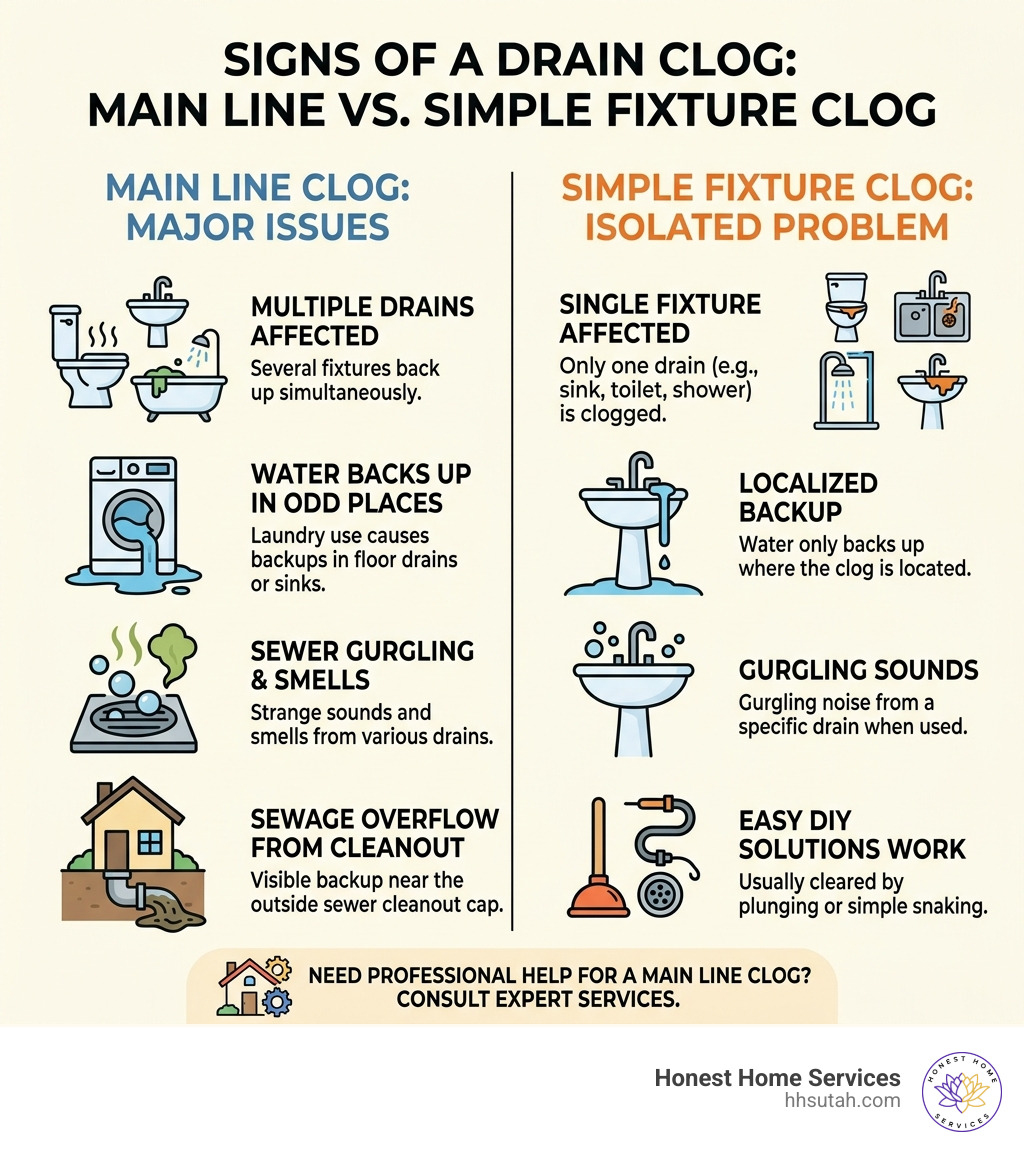
If you see signs you need professional drain cleaning, don’t wait until you have a flood in your basement. Honest Home Services is here to help. We provide expert Salt Lake City drain cleaning and serve all of Northern Utah, from Davis County to Utah County.
Whether you’re in Bountiful, Layton, or West Valley, our local technicians offer fair, up-front pricing and 24/7 emergency support. We’ll get your pipes flowing freely so you can get back to your life. Give us a call today!