

A Clogged Toilet Is More Common Than You Think — Here’s What to Do
Clogged toilet repair is something nearly every homeowner faces at some point. The good news? Most clogs can be fixed quickly with the right approach.
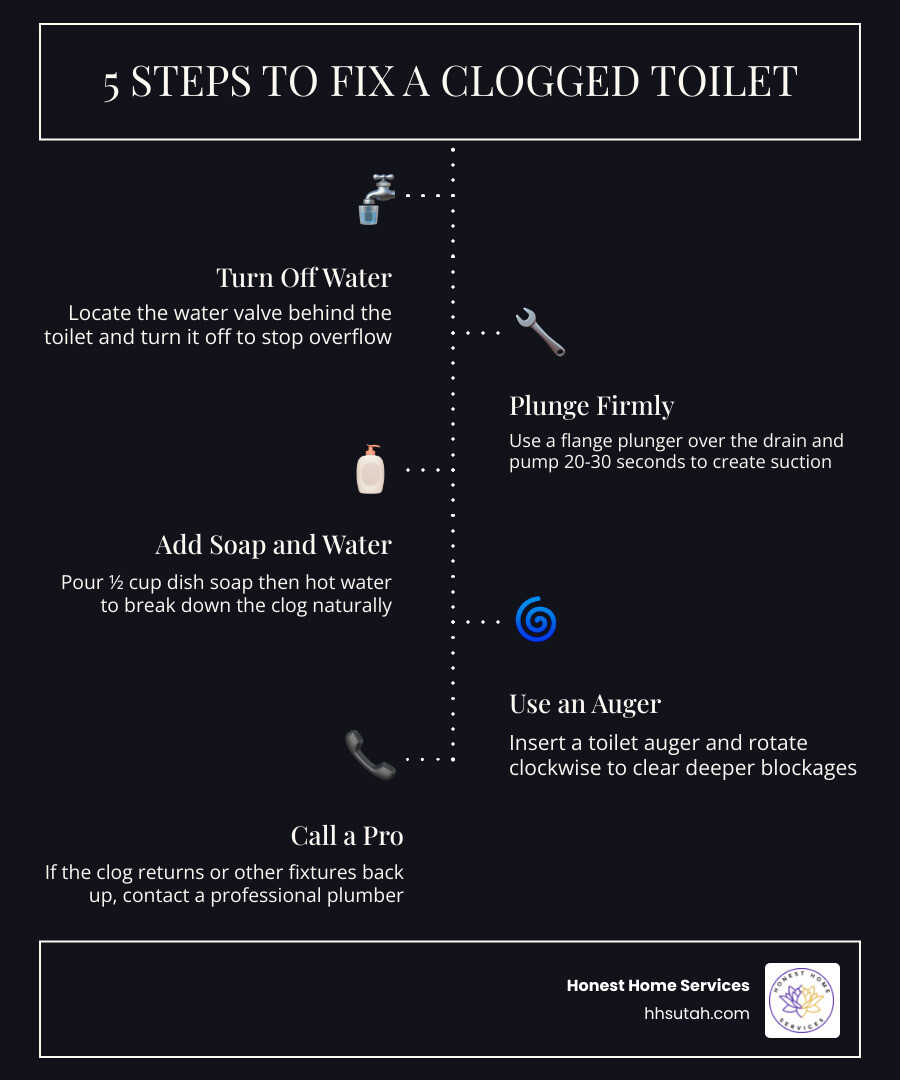
Quick answer — how to fix a clogged toilet:
- Turn off the water supply valve behind the toilet to prevent overflow
- Use a flange plunger — place it over the drain, create a seal, and pump firmly for 20–30 seconds
- Try dish soap + hot water if no plunger is available — pour in ½ cup of dish soap, followed by hot (not boiling) water
- Use a toilet auger for deeper clogs that plunging won’t clear
- Call a plumber if the clog keeps coming back or water backs up in other fixtures
Most clogs clear with a plunger in under an hour. But some point to a deeper problem that needs a pro.
We’ve all been there — you flush and watch the water rise instead of drain. It’s stressful, especially when it happens at the worst possible moment. A clogged toilet is one of the most common plumbing problems homeowners face, and if it’s not addressed quickly, it can lead to overflow, water damage, or a bigger issue hiding deeper in your pipes.
At Honest Home Services, we’ve been helping Northern Utah homeowners and businesses tackle clogged toilet repair and drain cleaning for over 20 years — so we know exactly what works and what makes things worse. Read on and we’ll walk you through everything, step by step.
Clogged toilet repair terms to learn:
Understanding the Common Causes of Toilet Blockages
Before we grab the tools, it is helpful to understand why that water is rising in the first place. Did you know that the average toilet flushes roughly five times a day? That is a lot of work for a single fixture! In our experience serving areas from Salt Lake City to Saratoga Springs, we see the same culprits over and over again.
The Usual Suspects
- Excessive Toilet Paper: It is the most common cause. Even “plumbing-safe” paper can clump together if too much is used at once, creating a dam in the trapway.
- Non-Flushable Items: This is a big one. Baby wipes, feminine hygiene products, paper towels, and cotton swabs do not break down like toilet paper. Even those labeled “flushable” often aren’t—they can lead to massive blockages that require professional clogged toilet repair.
- Low-Flow Toilet Issues: While newer low-flow toilets use as little as 2 gallons per flush (compared to older models that used 6 gallons or more), some older low-flow models lack the necessary pressure to clear the trapway effectively.
- Foreign Objects: We have seen it all—from toddler toys to cell phones. If it isn’t waste or toilet paper, it shouldn’t be in there.
- Mineral Buildup: In many parts of Utah, hard water is a reality. Over time, calcium and magnesium can build up inside your pipes, narrowing the passage and making it easier for clogs to form.
According to This Old House, most clogs occur in the “trap”—that S-shaped curve at the base of your toilet. It is designed to hold water to block sewer gases, but its tight curves also make it the perfect place for a clog to get stuck.
Step-by-Step Clogged Toilet Repair: DIY Methods
When the water starts rising, the first rule is: Don’t flush again! This will only lead to an overflow. Instead, take a deep breath and prepare for a little DIY clogged toilet repair.
Preparation and Safety
First, put on some rubber gloves and maybe some eye protection. You are dealing with wastewater, after all. If the bowl is full to the brim, you might need to bail out some water into a bucket so you have room to work without splashing. Conversely, if the bowl is empty, add enough water to cover the head of your plunger.
Reach behind the toilet and turn the silver handle (the supply valve) clockwise until it stops. This prevents more water from entering the tank while you work. For more on handling these situations, check out our guide on how to clear kitchen sink and toilet main line clogs.
Using a Plunger for Clogged Toilet Repair
Not all plungers are created equal. For a toilet, you need a flange plunger (also called a closet plunger). This type has an extra fold of rubber at the bottom that fits snugly into the toilet’s drain hole.
- Create a Seal: Insert the plunger at an angle so the cup fills with water rather than air. Air compresses, but water doesn’t; water transfers the force of your plunge directly to the clog.
- The Motion: Press down firmly to create a seal, then pump up and down vigorously. Interestingly, experts at Family Handyman suggest that the “pull” is often more important than the “push.” The suction helps break up the clog so it can pass through the narrowing trapway.
- Persistence: Do this for about 20–30 seconds. If the water suddenly drains, you’ve succeeded!

Professional Tools for Clogged Toilet Repair
If the plunger fails, it is time to move up to a closet auger (or toilet snake). Unlike a standard drain snake, a closet auger has a protective rubber sleeve to prevent scratching the porcelain of your bowl.
- Insertion: Pull the handle all the way up, place the business end into the drain, and rest the protective sleeve against the porcelain.
- Rotation: Crank the handle clockwise while pushing down. You’ll feel resistance when you hit the clog.
- Retrieval: Continue cranking to either break the clog apart or “hook” it so you can pull it back out.
For more tips on when to grab the tools yourself, see our article on DIY plumbing vs. calling a pro.
Unclogging Without a Plunger: Effective Home Remedies
Sometimes a clog happens when you don’t have a plunger handy—perhaps you’re a guest or you just moved in. Don’t panic! There are a few “kitchen chemistry” methods for clogged toilet repair that actually work for minor organic blockages.
The Dish Soap and Hot Water Trick
Dish soap acts as a lubricant, helping the clog slide through the pipes.
- Pour about ½ cup of liquid dish soap into the bowl.
- Let it sit for 10–15 minutes to sink down to the clog.
- Follow up with a gallon of hot water. Crucial Safety Tip: Never use boiling water. Boiling water can crack the porcelain or melt the wax ring that seals your toilet to the floor. Use hot tap water instead.
The Baking Soda and Vinegar Volcano
If you remember middle school science projects, you know this one.
- Pour 1 cup of baking soda into the bowl.
- Slowly add 1 cup of white vinegar.
- The fizzing action can help loosen debris. Let it sit for at least 30 minutes before trying to flush.
Enzyme Cleaners
As noted by Consumer Reports, enzyme cleaners are a great, safe alternative to harsh chemicals. These products use bacteria to literally “eat” organic waste. They take longer (often 24 hours), but they are much safer for your pipes and the environment.
When to Call a Professional for Clogged Toilet Repair
While we love a good DIY success story, some clogs are simply beyond the reach of a plunger or a home auger. Forcing the issue can sometimes lead to cracked pipes or damaged fixtures.
Identifying Deep Plumbing Issues
It is time to call us if you notice these “red flag” symptoms:
- Multiple Backups: If your toilet is clogged and your shower or sink is also draining slowly, you likely have a mainline blockage.
- Gurgling Sounds: If the toilet gurgles when you run the bathroom sink, air is being trapped in the system—a classic sign of a deep vent or sewer line issue.
- Sewage Backing Up: If wastewater is coming up into your tub or shower when you flush, stop using water immediately and call for emergency clogged toilet repair.
- Recurring Clogs: If you have to plunge the same toilet every week, there is a structural issue, a partial blockage deep in the line, or perhaps even tree roots invading your sewer pipes.
When DIY Clogged Toilet Repair Isn’t Enough
If you have tried plunging and augering without success, the blockage might be further than 3–6 feet down the line. We use specialized equipment like hydro-jetting and high-definition sewer cameras to find and clear these stubborn messes. Check out the signs you need professional drain cleaning for more details.
When things get serious, you can rely on our ultimate guide to when to call a professional plumber.
Preventing Future Clogs and Maintaining Your System
The best clogged toilet repair is the one you never have to do. A little maintenance goes a long way in keeping your home’s 30% water consumption (which toilets account for!) flowing smoothly.
Maintenance Best Practices
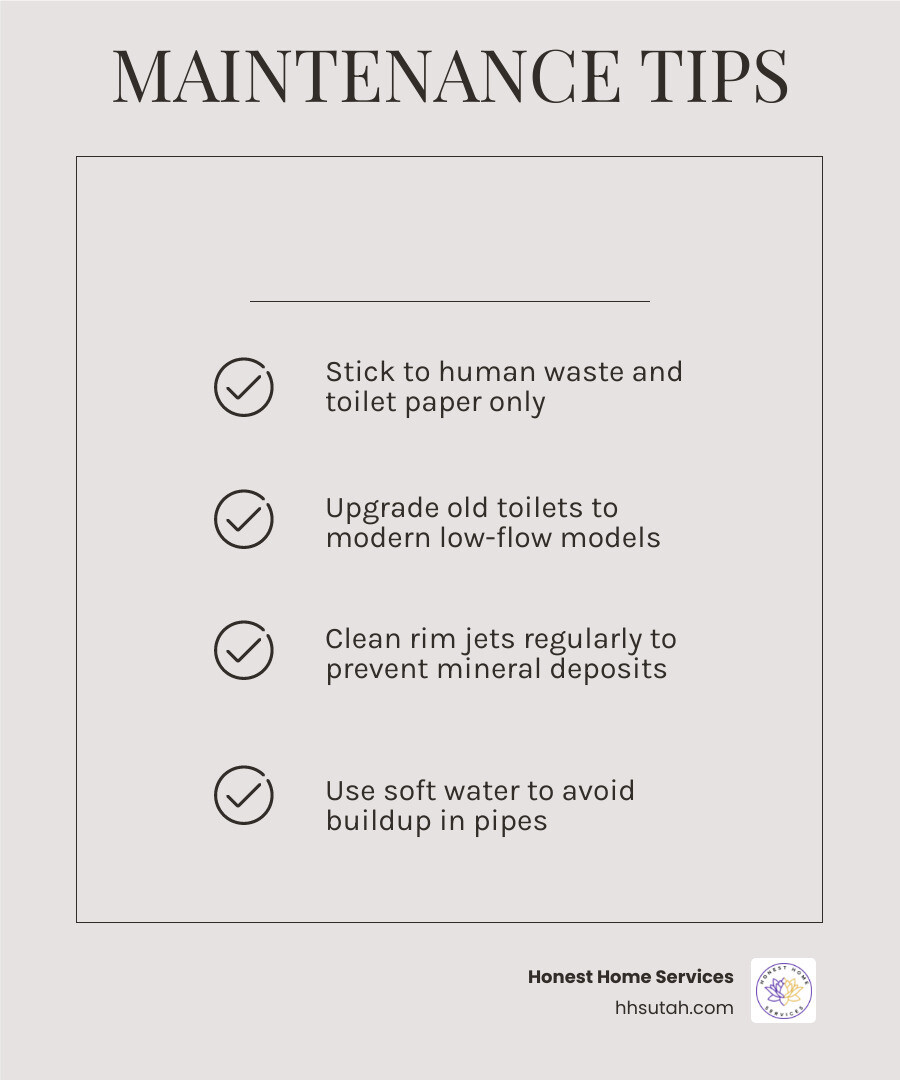
- The “Only Human Waste and TP” Rule: Teach everyone in the house that nothing else goes in the bowl.
- Upgrade Your Toilet: If you have an older 6-gallon “water guzzler,” consider a modern low-flow model. They are much more efficient and modern designs have largely solved the clogging issues of the 1990s.
- Regular Cleaning: Keep the rim jets clean. If these get clogged with mineral deposits, the flush won’t have enough power to clear the bowl.
- Soft Water: Since we live in Northern Utah, consider a water softener to prevent mineral buildup in your pipes.
For a complete look at keeping your home running smoothly, see The Ultimate Guide to Plumbing Maintenance in Your Home.
Frequently Asked Questions about Toilet Clogs
How much does professional clogged toilet repair typically cost?
In 2026, the cost for a professional plumber to clear a standard toilet clog in the Salt Lake City area typically ranges from $150 to $300. This fee usually covers the service call and the use of professional-grade augers. If the issue is a mainline stoppage requiring hydro-jetting or camera inspections, the cost will be higher. At Honest Home Services, we always provide fair, upfront pricing so there are no surprises.
Are “flushable” wipes actually safe for my plumbing?
In a word: No. While they may disappear from the bowl, they do not disintegrate like toilet paper. They can snag on small imperfections in your pipes, leading to “fatbergs” and massive blockages. In septic systems, wipes can cause failures that cost $5,000 to $10,000 to repair. We strongly recommend throwing them in the trash instead.
Can I use chemical drain cleaners in my toilet?
We advise against it. Caustic cleaners (like Drano) generate heat as they work. If they don’t clear the clog immediately, they sit in the trap, where the heat can actually crack the porcelain of your toilet or soften PVC pipes. Furthermore, if the chemical fails and you eventually have to call a plumber, those toxic fumes and liquids make the job much more dangerous for the technician.
Conclusion
A clogged toilet doesn’t have to ruin your day. With a flange plunger, a bit of dish soap, or a closet auger, you can handle most minor issues yourself. However, when the “DIY” stops working and the water keeps rising, you need a team you can trust.
Honest Home Services provides reliable, affordable plumbing to the entire Wasatch Front—from Clearfield and Layton down to Draper and Saratoga Springs. Whether it’s a simple clogged toilet repair or a complex sewer line issue, our local expert technicians are ready to help with 24/7 emergency support.
Don’t let a stubborn drain get you down. Schedule your professional drain cleaning today and experience the peace of mind that comes with guaranteed customer satisfaction!