

Why Your Main Drain Cleanout Matters More Than You Think
A main drain clean out is the access point to your home’s main sewer line. This capped pipe allows plumbers to clear clogs and inspect pipes without costly excavation. Here’s the rundown:
- What it is: A 3-6 inch capped pipe (PVC or cast iron) providing direct access to your main sewer line.
- Where to find it: In your basement, garage, utility room, or outdoors near the foundation.
- Why it matters: It’s the fastest way for a plumber to fix a main line clog.
- When you need it: You see sewage backups, smell foul odors, or hear gurgling from multiple drains.
When your kitchen sink, shower, and laundry all back up at once, it’s not a coincidence—it’s a main sewer line clog. That small capped pipe outside your house is the sewer cleanout, and it’s the key to a quick fix.
Understanding your main drain cleanout can save you thousands by preventing a sewage disaster. It’s the difference between a 30-minute fix and excavating your yard.
Many of the 76 million homes in America with old cast iron lines are prone to failure. Whether your pipes are old or new, knowing your cleanout’s location is essential.
For over 20 years, Honest Home Services has helped Northern Utah homeowners with main drain emergencies. We know that understanding your sewer cleanout is the first step in protecting your home.
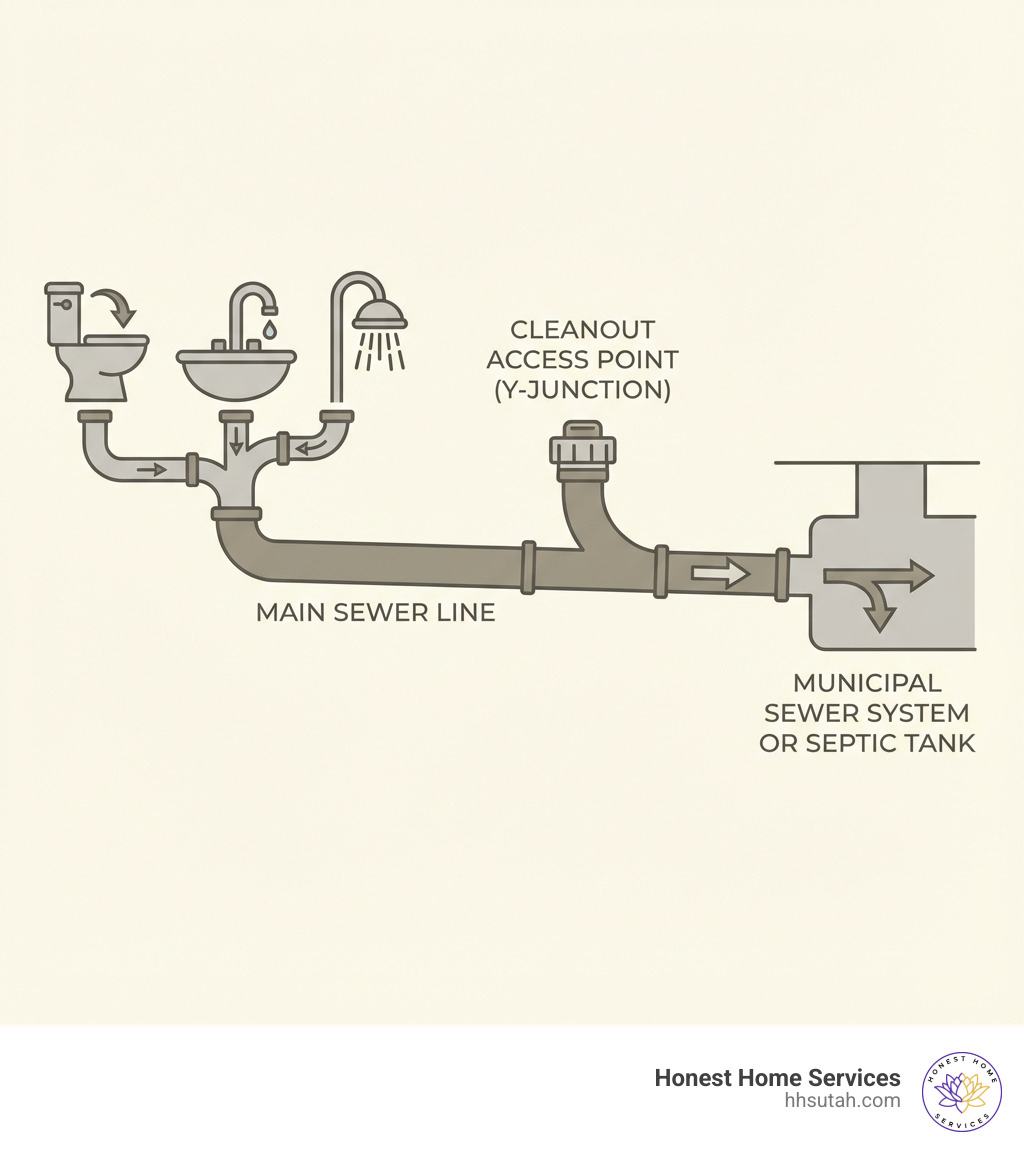
What is a Sewer Cleanout and Why is it Important?
At its core, a sewer cleanout is an access point to your main sewer line—a pipe, typically 3 to 6 inches in diameter, with a removable cap. This cap, often with a square head for a wrench, provides a direct route to your home’s drainage system.
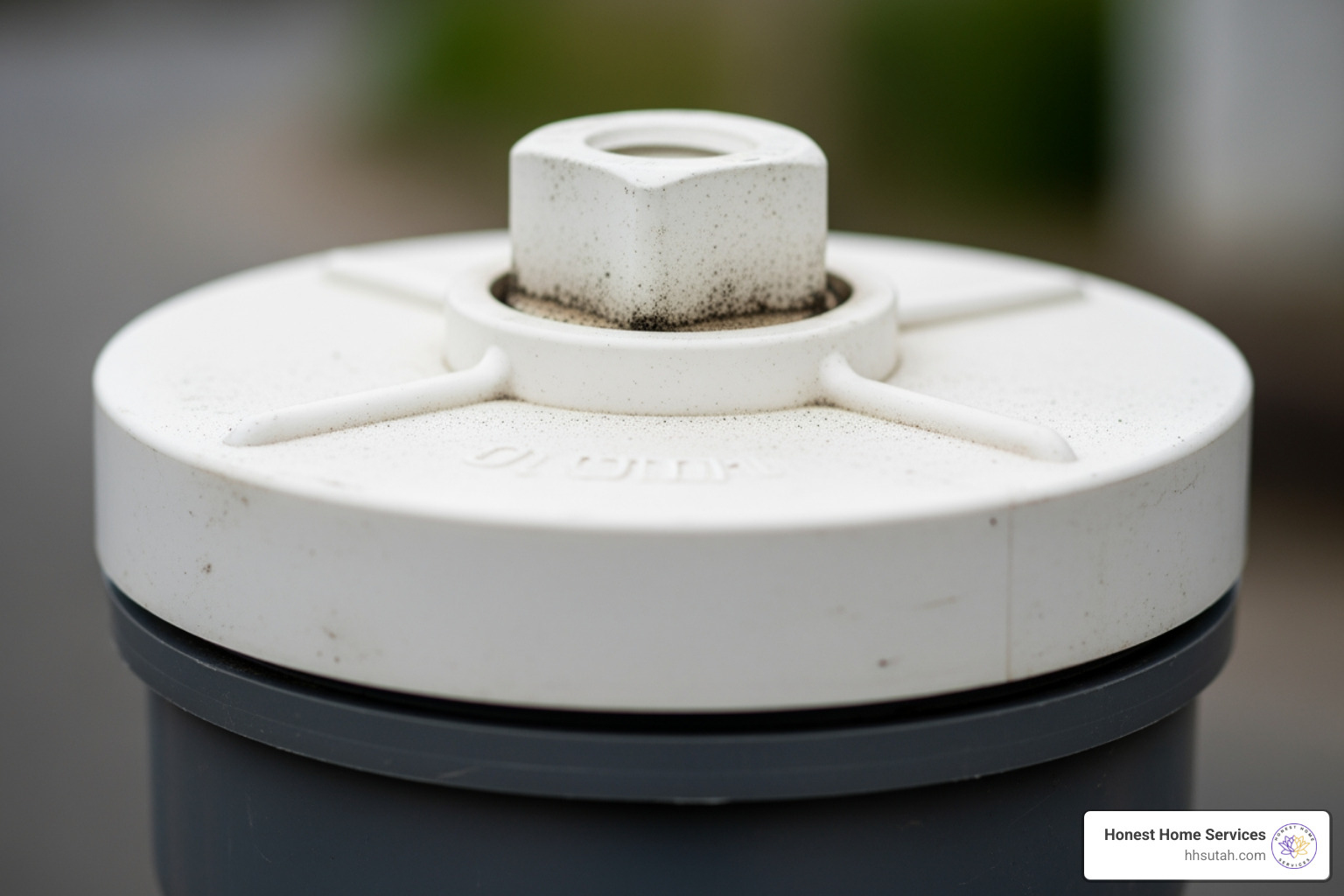
This access is critical. It allows plumbers to address main line blockages without digging up your yard or breaking through concrete, which turns a major project into a manageable repair. As the Lake County Health Department notes, a sewer cleanout is vital for clearing clogs in the main line. You can find more details on their FAQ page.
In older homes, this might be called the “main house trap,” but its function is the same. Newer homes in Northern Utah typically have white PVC cleanouts, while older homes may have brass, cast iron, or copper, which can be more prone to corrosion.
Where to Find Your Main Drain Cleanout
Finding your main drain clean out can be a treasure hunt. Its location varies by your home’s age and foundation.
Indoor Locations: In colder climates like Northern Utah, the cleanout is often indoors to prevent freezing. Look in:
- The Basement or Garage: Usually a large, capped pipe near the foundation wall where the sewer line exits.
- Utility Rooms or Bathrooms: Near major appliances or toilets, often at the lowest point in the plumbing system.
Trace your drainage pipes; they all lead to the main line, where you’ll find the cleanout as a T- or Y-shaped fitting with a cap.
Outdoor Locations: For homes on crawl spaces or in warmer areas, the cleanout is often outdoors:
- Near the Foundation: Look for a capped pipe sticking out of the ground within a few feet of your house, often near a bathroom or kitchen.
- Near the Property Line: A second cleanout may exist where your property meets the city sewer line, helping to determine responsibility for a clog.
- Buried Cleanouts: In older homes, the cleanout might be just below ground. Look for an access panel or gently probe the ground in likely areas. If you find it, mark its location for emergencies.
Older Homes May Lack One: Homes built before the 1940s may not have a cleanout. In this case, a plumber must use other access points, like a toilet flange, which is more difficult.
The Purpose of a Main Drain Cleanout
The main drain clean out is essential for efficient plumbing maintenance and emergencies. It acts as a direct on-ramp to your main sewer line, allowing plumbers to:
- Perform a Camera drain inspection: We can insert a camera to see the exact cause and location of a blockage—be it tree roots, grease, or a collapsed pipe. This visual diagnosis is key to choosing the right solution.
- Clear Blockages Efficiently: The cleanout provides the best entry point for tools like drain snakes (augers) or high-pressure hydro-jetting equipment to tackle the clog head-on.
- Avoid Costly Excavation: This is the biggest benefit. Without a cleanout, accessing a main line clog often requires digging up your yard or breaking concrete. The cleanout allows us to fix the issue with minimal disruption.
- Save Time and Money: Direct access reduces on-site labor time, lowering your costs. It also saves you the expense of restoring your yard or concrete after a repair.
Red Flags: Recognizing the Signs of a Main Drain Clog
When a single drain clogs, it’s an annoyance. When multiple drains act up, you likely have a main drain clean out issue. A blockage in the main sewer line will affect your whole house. Here are the red flags to watch for:
- Multiple Fixtures Clogged Simultaneously: If your kitchen sink, shower, and toilet all drain slowly or not at all, the problem is in the main line.
- Slow Drains Throughout the House: Even if not fully blocked, if all drains are slow, it points to a systemic issue.
- Gurgling Noises: Strange gurgling from drains after flushing a toilet is caused by trapped air trying to get past a blockage.
- Foul Sewage Odors: A persistent sewage smell from drains or your yard means wastewater isn’t flowing away properly.
- Water Backs Up in Shower When Toilet Flushes: A classic symptom. Water can’t pass the clog, so it backs up into the lowest point, often a shower or tub.
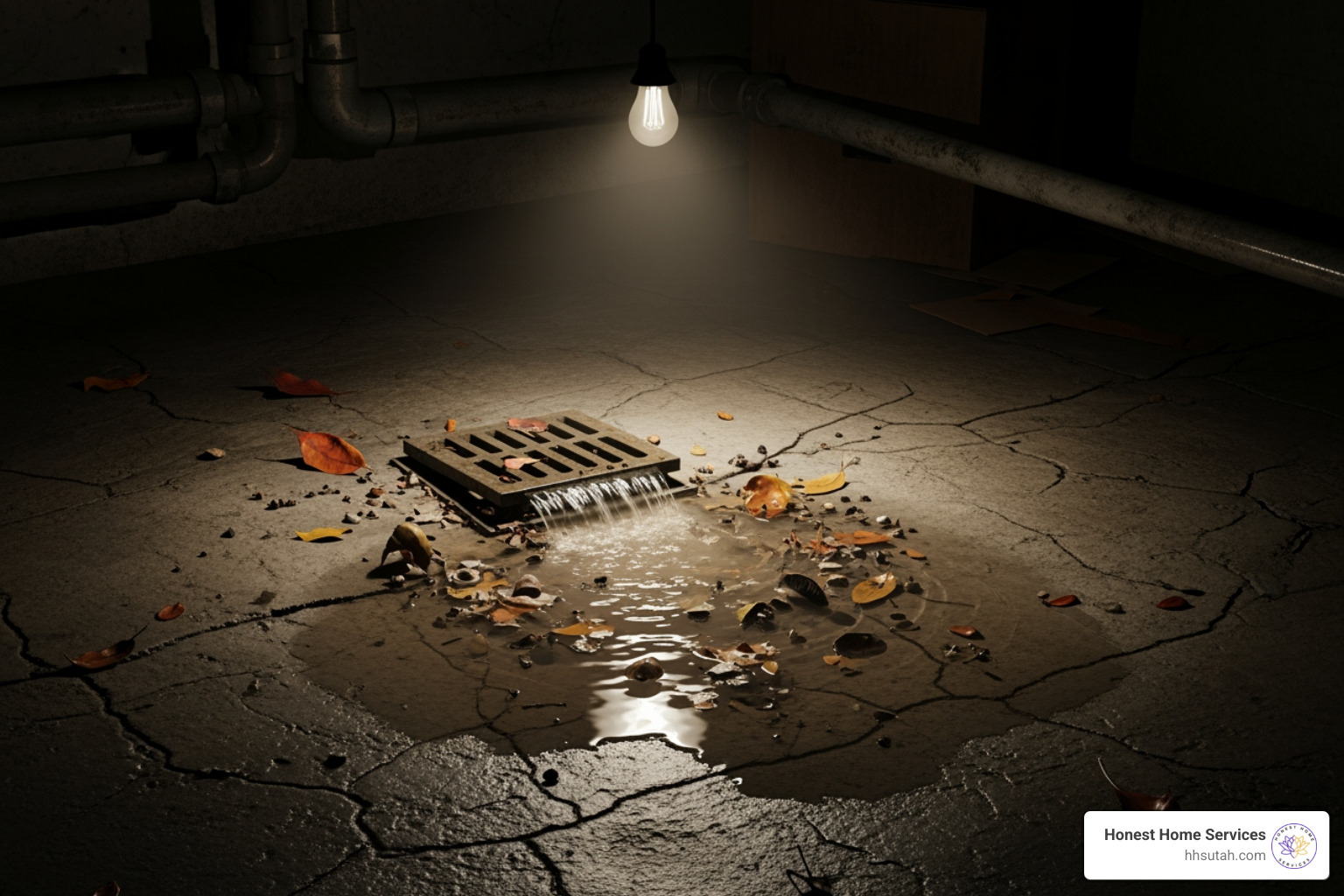
- Sewage in Floor Drains: If wastewater appears in a basement floor drain, it’s a serious sign the main line is blocked and seeking an escape route.
Don’t ignore these signs. Delaying can lead to severe sewage backups, property damage, and health hazards. Learn more about the signs you need professional drain cleaning.
Common Causes of Main Sewer Line Clogs
Several culprits can block your main sewer line. Understanding them is the first step in prevention.
- Grease and Oil Buildup: When fats, oils, and grease cool in your pipes, they solidify, creating a sticky layer that traps debris and forms a hard blockage.
- “Flushable” Wipes and Foreign Objects: Most “flushable” wipes don’t break down like toilet paper and are a leading cause of clogs. The same goes for paper towels, feminine hygiene products, and cotton swabs. Only flush human waste and toilet paper.
- Tree Root Intrusion: A common problem in Northern Utah. Tree roots seek moisture and can invade tiny cracks in sewer pipes, growing into dense masses that block the line.
- Broken or Collapsed Pipes: Older pipes (cast iron, clay) can deteriorate, crack, or collapse due to age or shifting soil, creating an impassable obstruction.
- Sagging Sewer Lines (Bellied Pipes): A section of pipe can sag due to poor installation or ground shifting, creating a “belly” where waste collects and causes recurring clogs.
The Guide to Your Main Drain Clean Out: DIY vs. Professional
When facing a main line clog, your first instinct might be to try a DIY fix. However, with the main drain clean out, this can quickly turn a bad situation into a catastrophe.
First Steps for a Clog: If you suspect a main drain clog (multiple fixtures backing up), stop using all water immediately. No flushing, no showers, no dishwashers. Adding more water will only worsen the backup into your home.
Why DIY is Risky: While we encourage handling minor, single-drain clogs, the main sewer line is different. Attempting a DIY clean out is risky:
- Pipe Damage: Using a hand snake improperly can scratch or puncture pipes, especially older ones, leading to expensive repairs.
- Ineffective Tools: Most DIY tools, like plungers and hand snakes, lack the power and length to clear deep main line clogs caused by roots or grease. They might poke a temporary hole, but the problem will return.
- Chemical Dangers: We strongly advise against chemical drain cleaners. They are often ineffective on main line clogs and can corrode your pipes. If they fail, they leave dangerous chemicals sitting in the line.
- Health Hazards: Raw sewage contains harmful bacteria and pathogens. Without proper protective gear, you risk exposure.
The Professional Advantage: Calling Honest Home Services is the safer, more effective choice. We offer:
- Proper Diagnosis: We use a camera inspection to find the exact cause and location of the clog, eliminating guesswork.
- Specialized Equipment: Our commercial-grade augers and hydro-jetting equipment are designed to clear the toughest clogs without damaging pipes. Learn more about hydro jetting here.
- Long-Term Solutions: We don’t just clear the clog; we address the underlying issue to prevent future problems.
Can I Perform a Main Drain Clean Out Myself?
We generally advise against a DIY main drain clean out. The risks of improper handling are too high. DIY tools are limited, and chemical cleaners can cause more harm than good. If basic methods fail on a single drain, or you see signs of a main line clog, it’s time to call a pro.
One of the biggest risks is opening the cleanout cap yourself during a backup. If the line is under pressure, removing the cap can cause a massive sewage spill in your basement or yard—a messy and serious biohazard.
For these reasons, leave the main drain clean out to the licensed professionals at Honest Home Services. We have the training and tools to handle it safely.
When to Call a Professional for a Main Drain Clean Out
Knowing when to call the pros can save you time, money, and property damage. Contact us for your main drain clean out if you experience:
- Recurring Clogs: If you’re constantly battling backups, there’s a deeper issue that DIY methods won’t solve.
- Suspected Tree Roots: If you have mature trees, root intrusion is a likely culprit. This requires specialized equipment to remove.
- No Visible Cleanout: If you can’t find your cleanout, a professional can locate it or install one. Accessing the line through a toilet is difficult and risky.
- Signs of a Broken Pipe: A camera inspection might reveal a cracked or collapsed pipe, which requires professional repair.
- The Need for a Thorough Cleaning: For preventative maintenance, we use tools like hydro-jetting. Hydro jet drain cleaning uses high-pressure water to blast away years of buildup, including roots and grease, restoring your pipes and preventing future clogs.
When you call Honest Home Services, you get a thorough diagnosis and an effective, long-lasting solution from expert hands.
Prevention and Long-Term Maintenance
An ounce of prevention is worth a pound of cure with your main drain clean out. Proactive habits and regular maintenance can save you from a messy and expensive sewer backup.
- Proper Disposal Habits: This is the most effective preventative measure.
- No Grease Down the Drain: Never pour cooking oil or grease down the sink. Let it cool and throw it in the trash. Grease is a primary cause of main line clogs.
- Use Drain Strainers: Install strainers in sinks and tubs to catch hair, food, and soap scum before they enter your pipes.
- Only Flush Toilet Paper: The toilet is not a trash can. Avoid flushing “flushable” wipes, paper towels, feminine hygiene products, or any other foreign objects.
- Regular Maintenance Schedule: Some buildup is inevitable, making professional maintenance crucial.
- Professional Cleaning Every 18-22 Months: Experts recommend having your main sewer line professionally cleaned every 18 to 22 months. Proactive cleaning, like hydro-jetting, clears minor buildups before they become major blockages.
- Be Mindful of Tree Roots: If you have large trees, consider more frequent sewer line inspections to catch root intrusion early.
For more tips, see our guide on preventative drain cleaning tips every homeowner should know. Following these guidelines will significantly reduce your risk of a main drain emergency.
Frequently Asked Questions about Sewer Cleanouts
We get many questions about main drain clean out services from homeowners in Northern Utah. Here are answers to the most common ones:
How much does it cost to clear a main drain?
The cost varies based on several factors:
- Severity of the Clog: A simple snake job costs less than clearing extensive tree roots or a collapsed pipe, which may require hydro-jetting or excavation.
- Accessibility of the Cleanout: An easily accessible cleanout reduces labor time and cost. A buried or missing cleanout will increase the price.
- Method Used: Snaking is generally less expensive than hydro-jetting, but hydro-jetting provides a more thorough, longer-lasting solution.
- Time of Service: Emergency services outside of normal business hours will incur higher rates.
We always provide a transparent estimate after a full inspection. For more on potential costs, visit our page on main sewer line clog repair cost.
Who is responsible for the sewer line: the homeowner or the city?
This is a key question. Generally, the responsibility is split:
- Homeowner Responsibility: You are responsible for the sewer line from your house to your property line, including any cleanouts in that section.
- City Responsibility: The city or municipality is responsible for the main sewer line from your property line to the main in the street.
A professional camera inspection through your main drain clean out can pinpoint the clog’s location, clarifying who is responsible. This helpful video on sewer lines can help you understand your plumbing system better.
How many cleanouts should a house have?
The number can vary, but here’s a general guideline:
- One Main Cleanout: Most modern homes have at least one main cleanout where the sewer line exits the house.
- A Second Cleanout: Larger homes or properties on a municipal system may have a second cleanout near the property line. This is useful for determining if a clog is on the homeowner’s or city’s side.
- Older Homes May Have None: Homes built before the 1940s may not have a dedicated cleanout. In these cases, plumbers must use other access points.
Having at least one accessible main drain clean out is crucial. If you’re unsure about yours, our team at Honest Home Services can help locate it during an inspection.
Don’t Wait for a Disaster: Trust the Experts
Your home’s main drain clean out is the unsung hero of your plumbing system. It provides direct access to the main sewer line, allowing for efficient clog removal while avoiding costly excavation. We’ve covered where to find it and the red flags of a main line clog—like multiple backups, gurgling sounds, and foul odors.
We’ve also stressed the risks of DIY attempts, from pipe damage to health hazards. For a safe and effective solution, always call a professional. The experts at Honest Home Services use specialized tools like sewer cameras and hydro-jetting to diagnose and clear even the toughest clogs caused by tree roots or grease.
Prevention is key. Proper disposal habits and regular professional cleanings every 18-22 months can dramatically reduce your risk of a plumbing disaster. Don’t wait for wastewater to back up into your home.
Honest Home Services provides reliable and affordable plumbing services to Salt Lake City, Davis County, and all surrounding Northern Utah communities. Our local technicians are available 24/7 for emergencies, and we guarantee your satisfaction. When your drains are in distress, trust us to keep your home’s plumbing flowing smoothly.
Contact us for expert Salt Lake City drain cleaning services today – we’re ready to help!