

A Leaking Drain Pipe Can Cause Serious Damage — Here’s What to Do
Drain pipe repair is something most homeowners will face at some point. The good news? Many repairs can be handled quickly — sometimes even as a DIY fix.
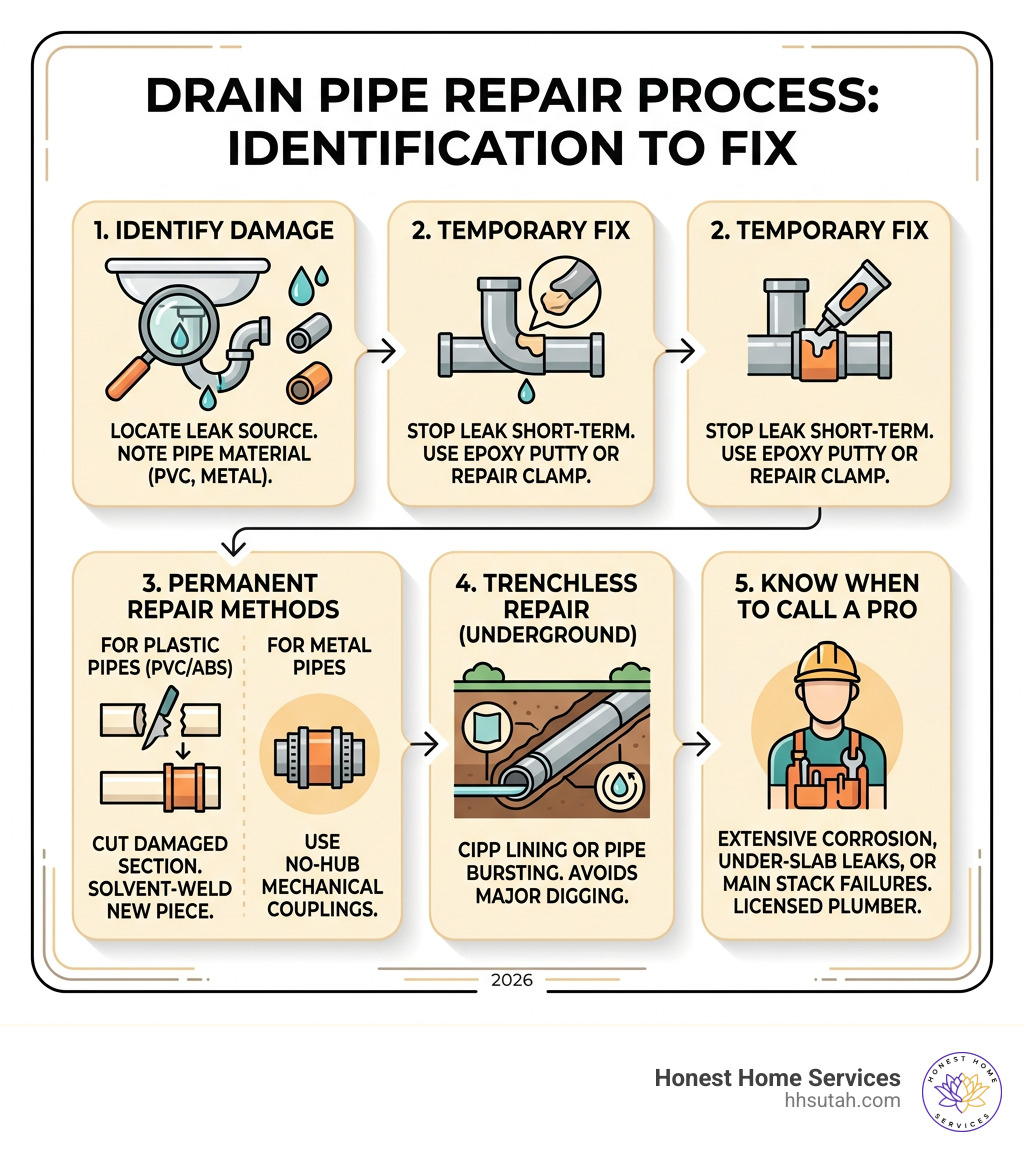
Here’s a quick overview of how to repair a drain pipe:
- Identify the damage — Locate the leak source and note the pipe material (PVC, ABS, cast iron, or galvanized steel)
- Apply a temporary fix — Use epoxy putty, a rubber pipe connector, or a repair clamp to stop the leak short-term
- Choose your repair method — For plastic pipes, cut out the damaged section and solvent-weld a new piece in; for metal pipes, use a no-hub mechanical coupling
- Consider trenchless repair — For underground or hard-to-reach pipes, CIPP lining or pipe bursting avoids major digging
- Call a pro when needed — Extensive corrosion, under-slab leaks, or main stack failures require a licensed plumber
Drain pipes are non-pressurized gravity systems — meaning a small crack or joint failure won’t spray water everywhere, but it will quietly cause water damage, mold, and foul odors over time. Left unaddressed, what starts as a minor drip can turn into a costly structural problem.
At Honest Home Services, we’ve spent over 20 years helping Northern Utah homeowners and businesses with drain pipe repair and everything from minor leaks to full sewer line replacements. If your repair turns out to be more than a weekend project, our licensed and insured team is ready to help — with upfront pricing and no surprises.
Quick look at Drain pipe repair:
Identifying the Damage and Pipe Material
Before you grab a wrench, you need to know exactly what you’re looking at. In Northern Utah, from Salt Lake City to Park City, we see a wide variety of plumbing materials depending on when the home was built. Identifying the material is the single most important diagnostic factor because a fix for plastic won’t work for metal.
Common Pipe Materials
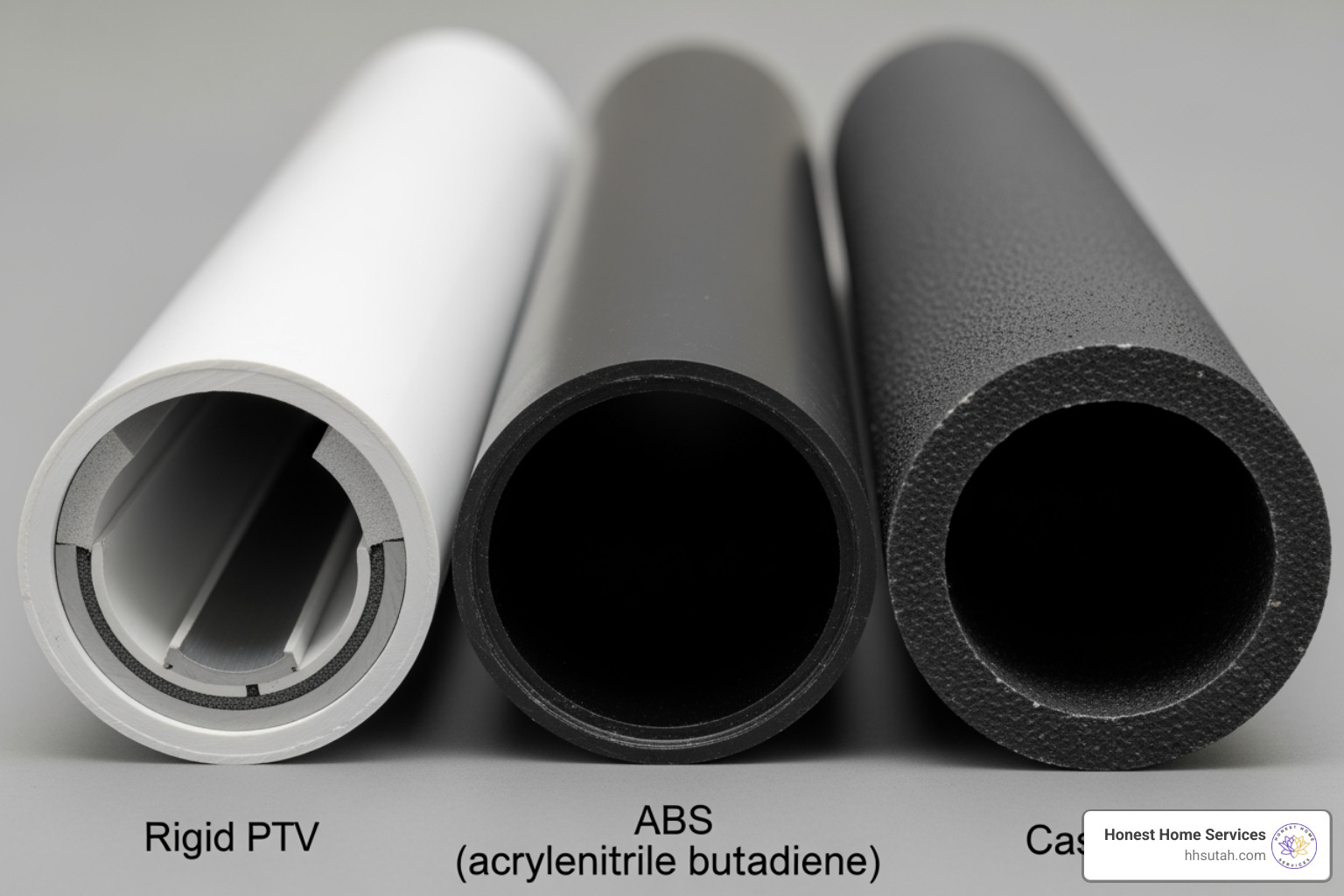
- PVC (Polyvinyl Chloride): These are white, rigid plastic pipes. They are the modern standard for most residential drain systems.
- ABS (Acrylonitrile Butadiene Styrene): These are black plastic pipes. Like PVC, they are common in newer homes but require a different type of solvent glue.
- Cast Iron: Found in older homes (pre-1970s), these are heavy, dark, and often have a bumpy, “orange peel” texture. They are prone to internal rusting and “scaling.”
- Galvanized Steel: These look like dull silver or grey metal and usually have threaded joints. Over time, they corrode from the inside out, often narrowing the pipe until it clogs or leaks.
Warning Signs of a Faulty Drain
Sometimes the signs of a leak aren’t as obvious as a puddle under the sink. Keep an eye (and nose) out for:
- Slow Drains: If multiple fixtures are slow, the issue is likely in the main line.
- Foul Odors: A “rotten egg” smell often indicates sewer gas escaping through a crack or dried-out P-trap.
- Gurgling Sounds: This suggests air is being trapped or pulled through a leak or blockage.
- Lush Lawn Patches: If one spot in your yard is suspiciously green and vibrant, you might have an underground sewer leak providing “extra fertilizer” to the grass.
- Wet Spots or Sinkholes: In areas like West Valley or Murray, shifting soil can cause pipes to crack, leading to soggy patches in the yard.
If you suspect an underground issue, we recommend Effective Pipe Leak Repair in Salt Lake City which often starts with a professional camera scoping. This involves threading a high-definition camera through the line to see the exact location of the break. For more localized issues, check out our Pipe Repair Salt Lake City resources.
Safety First: Preparing for Drain Pipe Repair
Plumbing isn’t just about water; it’s about hygiene. When dealing with drain pipe repair, you are potentially coming into contact with wastewater and sewer gases.
- PPE is Non-Negotiable: Always wear nitrile gloves and safety glasses. If you’re working in a crawlspace or basement, a mask can help protect you from mold spores or sewer gas.
- Ventilation: Ensure the area is well-ventilated to prevent the buildup of methane or solvent fumes.
- Water Shut-Off: While drain pipes aren’t under pressure, it’s a good idea to shut off the water to the affected fixture so no one accidentally flushes or runs the tap while you have the pipes apart.
- Bucket Placement: Always place a bucket under the joint you are disconnecting. There is always “residual” water waiting to surprise you!
Diagnostic Tools for Modern Drains
Identifying a leak in an open wall is easy, but what about pipes behind the drywall or under the slab? We use specialized tools to pinpoint the problem without tearing your house apart:
- Camera Inspections: We use waterproof, high-res cameras to find root intrusions or cracks.
- Hydro-jetting: Sometimes we need to clear the gunk out first just to see the pipe walls clearly.
- Moisture Meters: These help us find leaks hidden behind walls by detecting dampness in the studs or insulation. For deep-dive diagnostics, our salt-lake-city-pipe-repair services utilize the latest technology to save you time and money.
Temporary Quick Fixes and Essential Materials
If you have a leak at 10 PM on a Tuesday, you might just need to get through the night. While these aren’t permanent solutions, they can save your cabinets from rot.
- Rubber pipe connectors: Often called “Ferncos,” these are flexible rubber sleeves with hose clamps on both ends. You just slip it over the break and tighten the clamps.
- Epoxy putty: Great for small cracks or leaks at a fitting. You knead the two-part putty together until it’s a uniform color, then press it firmly into the leak.
- Denso Tape: This is a greasy, waterproof tape that wraps tightly around a pipe. It’s messy to work with but incredibly effective at stopping low-pressure leaks.
- Pipe Clamps: A stainless steel repair sleeve can be bolted over a pinhole leak in metal pipes for a very sturdy temporary fix.
For a more permanent DIY fix, you’ll need:
- A hacksaw or PVC pipe cutter.
- The correct primer and solvent cement (glue) for your pipe type.
- Replacement pipe sections and couplings.
Not sure if a patch is enough? Check out Does Your Salt Lake Home Need a Re-Pipe? to see if your system is reaching the end of its lifespan.
How to Perform a Plastic Drain Pipe Repair
Repairing PVC or ABS is essentially “chemical welding.” You aren’t just gluing the pipes; you are melting the surfaces together so they become one solid piece.
- Cut the Pipe: Use a hacksaw to cut out the damaged section. Make sure your cuts are square (straight).
- Deburr: Use a utility knife or sandpaper to remove the “burrs” (little plastic shavings) from the edges.
- Dry Fit: Assemble the new piece and couplings without glue first to ensure everything fits perfectly.
- Clean and Prime: Apply PVC primer to the outside of the pipe and the inside of the fitting. This cleans the plastic and “softens” it for the glue.
- Apply Solvent Cement: Apply the glue over the primer.
- Push and Twist: Push the pipe into the fitting and give it a quarter-turn. This ensures the glue is spread evenly.
- Cure Time: Wait at least 15–30 minutes before running water through it. Full Pipe Replacement might be necessary if the pipe is brittle from age.
Repairing Metal and Cast Iron Pipes
Metal pipes are much harder to “weld” at home, so we rely on mechanical connections.
- No-Hub Couplings: These consist of a thick rubber sleeve covered by a stainless steel “shield.”
- Installation: You cut out the corroded section of the cast iron (this usually requires a reciprocating saw with a diamond blade), slide the coupling on, and tighten the bands with a torque wrench to about 60 inch-pounds.
- Transitioning: These couplings are also the best way to transition from old cast iron to new PVC.
If you see extensive rust or “weeping” joints, it’s a sign of systemic Pipe Repair needs.
Advanced Solutions: Trenchless vs. Traditional Methods
In the old days, if your sewer line under the driveway broke, we had to bring in a backhoe and dig a giant trench. Today, we have “trenchless” technology.
- CIPP (Cured-In-Place Pipe) Lining: We pull a flexible, resin-saturated fiberglass tube into your old pipe. We then inflate it with an air bladder. After about 90 minutes, the resin hardens, creating a brand-new, jointless pipe inside your old one.
- Pipe Bursting: We pull a large “bursting head” through the old pipe. It breaks the old pipe apart while simultaneously pulling a brand-new HDPE pipe into the space behind it.
Trenchless vs. Traditional Comparison
| Feature | Trenchless Repair | Traditional Excavation |
|---|---|---|
| Time | 1–2 Days | 5–10 Days |
| Disruption | Minimal (1-2 small holes) | Major (Trench through yard/driveway) |
| Lifespan | 50+ Years | 75–100 Years (PVC) |
| Cost | Higher upfront, lower restoration | Lower upfront, high restoration costs |
| Best For | Under landscaping, driveways | Completely collapsed or “bellied” pipes |
If you’re considering a major update, read about the Re-Pipe process to see which fits your budget.
The Benefits of Trenchless Technology
Why do we love trenchless? Because it saves your yard! In places like Bountiful or Draper, where landscaping is an investment, avoiding a trench is a huge win.
- Root Resistance: Since the new liner has no joints, tree roots have nowhere to get in.
- Structural Reinforcement: CIPP liners are strong enough to stand on their own even if the host pipe completely rots away. Our Pipe Repairs Salt Lake City team often recommends this for its long-term value.
When Traditional Excavation is Necessary
Trenchless is great, but it isn’t magic. You still need a Pipe Leak Repair via excavation if:
- The Pipe is Collapsed: If the pipe has flattened, we can’t get a liner through it.
- Orangeburg Pipe: This “tar paper” pipe common in some older Utah areas doesn’t hold its shape well enough for lining.
- Back Pitch/Bellies: If the pipe has sunk and created a low spot (a “belly”), lining it will just result in a lined low spot. You have to dig it up to fix the grade.
Professional Drain Pipe Repair and Prevention
When should you put down the wrench and call us?
- Main Stack Failure: The large vertical pipe that runs through your house is difficult and dangerous to repair yourself.
- Under-Slab Leaks: If your kitchen sink pipe breaks under the concrete floor, you need professional detection and repair.
- Extensive Root Damage: Small roots can be snaked; massive root balls require Pipe Leak Repair Salt Lake City expertise.
Maintenance Tips to Prevent Future Leaks
- Watch What You Flush: Only human waste and toilet paper. “Flushable” wipes are the #1 cause of pipe stress and clogs in Salt Lake County.
- Enzyme Cleaners: Avoid harsh chemical drano. Use enzyme-based cleaners that “eat” organic gunk without corroding your metal pipes.
- Tree Management: Keep large trees at least 10–20 feet away from your main sewer line.
- Regular Inspections: We recommend a camera inspection every 2 years for older homes.
Frequently Asked Questions about Drain Pipe Repair
How much does drain pipe repair typically cost?
For a simple under-sink DIY fix, you might spend $20–$50 on materials. Professional drain clearing specials often run around $29–$99 for accessible cleanouts. However, main line repairs can range from $1,500 to $5,000 depending on the depth and method used.
What is the lifespan of a trenchless pipe liner?
Most CIPP liners are engineered to have a design lifespan of 50 years or more. Because they are jointless and made of epoxy-saturated fiberglass, they are virtually immune to the corrosion and root intrusion that kills standard pipes.
Can I use duct tape as a temporary fix for a leaking drain?
No! Duct tape is not waterproof and will fail almost immediately. Furthermore, the adhesive can degrade and create a sticky mess that makes a permanent repair harder. Use epoxy putty or a rubber repair sleeve instead.
Conclusion
A leaking drain doesn’t have to be a disaster. Whether you’re tightening a slip nut under your bathroom sink in Layton or dealing with a main line issue in Herriman, the key is acting fast. Small drips lead to big bills, but with the right tools and a little know-how, you can keep your home dry and your drains flowing.
At Honest Home Services, we pride ourselves on being the most reliable plumbing team in Northern Utah. We offer 24/7 emergency support because we know pipes don’t just break during business hours. From simple fixes to advanced trenchless technology, we guarantee your satisfaction with fair, upfront pricing.
Need a hand with your drain pipe repair? Contact us today for salt-lake-city-drain-cleaning and expert repair services you can trust!