

The Quickest Way to Tackle Drain Pipe Cleaning at Home
Drain pipe cleaning is something every homeowner faces sooner or later — and most of the time, you can fix it yourself before calling a pro.
Here are the most effective methods to clean a clogged drain pipe, from easiest to most involved:
- Hot water + dish soap — Pour boiling water and a squirt of grease-cutting dish soap down the drain. Best for fresh grease clogs.
- Baking soda + vinegar — Pour 1 cup of baking soda, then 1 cup of vinegar. Let it fizz for 30 minutes, then flush with hot water. Best for organic buildup.
- Plunger — Fill the sink with water, seal the plunger over the drain, and plunge firmly up and down. Best for moderate blockages.
- Hand auger or drain snake — Insert the cable, rotate clockwise to dig into the clog, then pull it out. Best for hair and deep clogs.
- Water-powered drain bladder — Attach to a hose, insert into the drain, and let water pressure blast the blockage clear. Best for main and sewer lines.
- Call a professional — If none of the above work, or if clogs keep coming back, it’s time for hydro-jetting or a camera inspection.
A slow or stopped drain has a way of picking the worst possible moment — right before guests arrive, or halfway through the dinner dishes. The frustration is real. But the good news is that most clogs are caused by a handful of very common culprits, and most can be cleared with tools and supplies you already have at home.
That said, some clogs are a sign of something deeper going on — and pushing too hard on the wrong problem can make things worse.
At Honest Home Services, we’ve spent over 20 years helping Utah homeowners solve every kind of drain pipe cleaning challenge, from simple hair clogs to full main line blockages. We’ll walk you through the best DIY methods first — and let you know exactly when it makes more sense to call in a professional.
Quick drain pipe cleaning definitions:
Common Culprits: Why Your Pipes Get Clogged
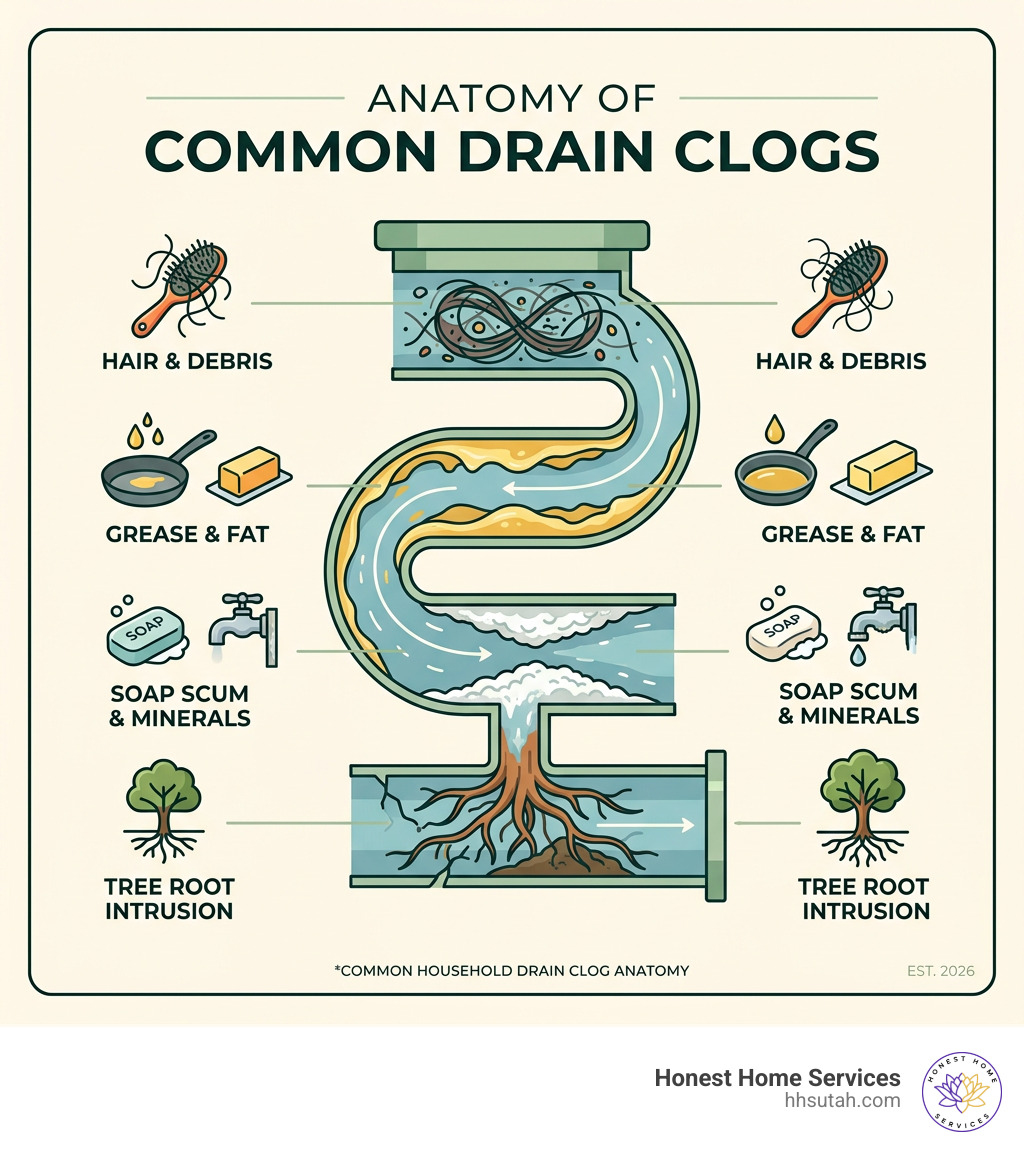
Before you grab the plunger, it helps to know what you’re fighting. Most drain pipe cleaning jobs are necessitated by one of five major offenders.
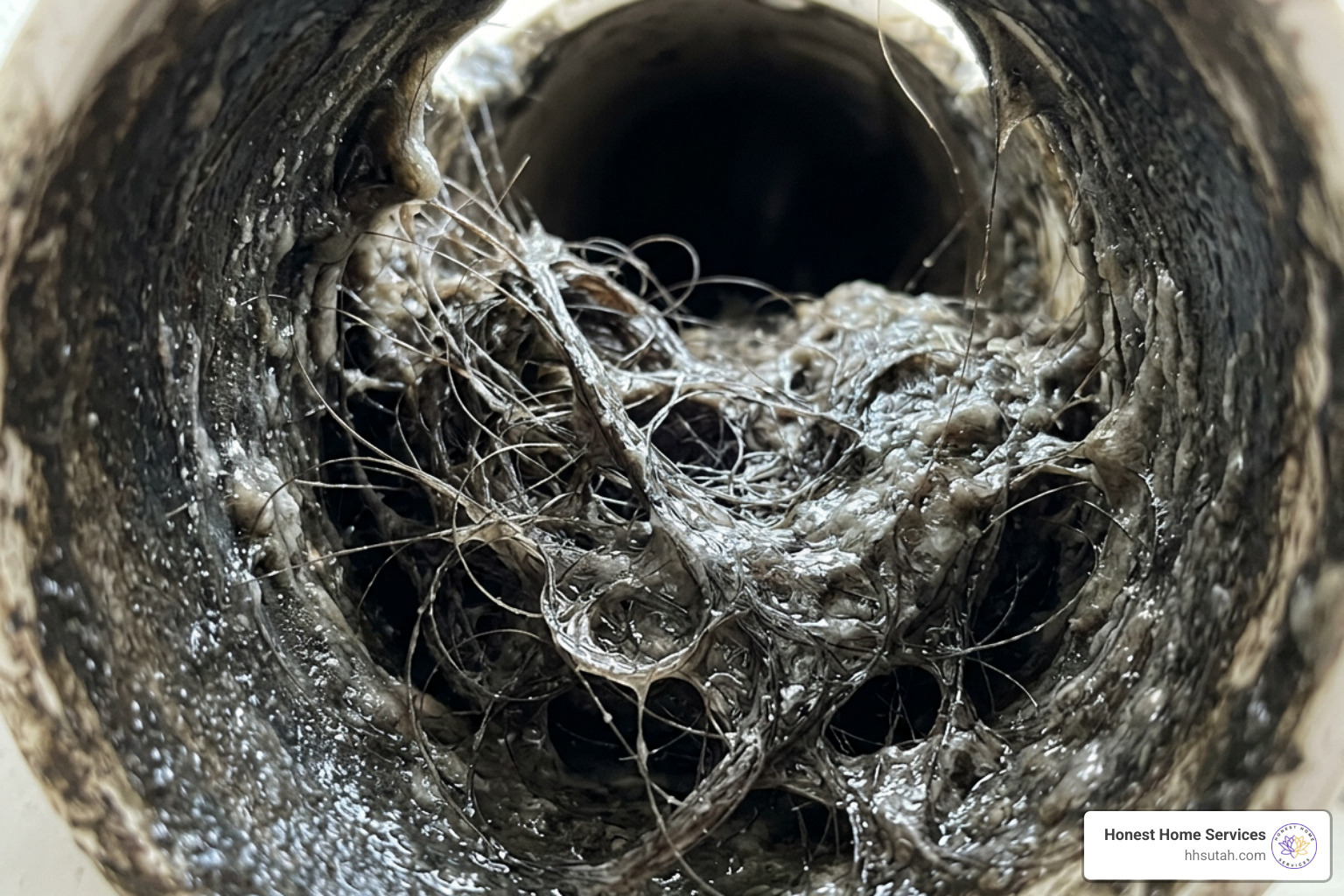
- Hair and Soap Scum: This is the “dynamic duo” of bathroom clogs. Hair binds with sticky soap residue to create a mat that catches everything else. Over time, this mixture can become so dense that it feels like solid rope inside your pipe.
- Cooking Grease and Fats: In the kitchen, grease is the primary enemy. When warm, it flows easily. Once it hits the cool interior of your pipes, it solidifies into a waxy sludge. This “fatberg” traps food particles, eventually sealing the pipe shut.
- Food Particles: Even with a garbage disposal, items like coffee grounds, eggshells, and pasta should never go down the drain. These materials don’t break down easily and can create a thick paste that blocks water flow.
- Mineral Buildup: If you live in Salt Lake City or the surrounding areas, you likely have hard water. Over years, calcium and magnesium deposits can narrow the diameter of your pipes, much like plaque in an artery.
- Tree Roots: For main sewer lines, tree roots are a major threat. Roots seek out moisture and can enter pipes through tiny cracks, eventually filling the entire line.
Knowing these causes helps you choose the right tool for the job. If you notice multiple drains slowing down at once, it might be more than just a simple sink clog. You can check out these signs you need professional drain cleaning to see if your issue is deeper in the system.
The Best Natural Methods for Drain Pipe Cleaning
Many homeowners reach for harsh chemical cleaners at the first sign of a backup. However, we generally advise against this. Chemicals like lye or sulfuric acid can sit in your pipes, generating heat that can warp PVC or corrode older metal lines. Instead, try these natural, safer alternatives for drain pipe cleaning.
The Baking Soda and Vinegar “Volcano”
This isn’t just a 9th-grade science project; it’s a legitimate way to break up organic clogs.
- Pour 1 cup of dry baking soda (sodium bicarbonate) down the drain.
- Follow it with 1 cup of white vinegar (acetic acid).
- The resulting chemical reaction creates carbon dioxide bubbles that physically agitate and loosen the clog.
- Let it sit for at least 30 minutes.
- Flush with a gallon of boiling water.
The Boiling Water and Dish Soap Method
This is the gold standard for kitchen sink drain pipe cleaning. Grease-cutting dish soap acts as an emulsifier, breaking the bond between the grease and the pipe walls.
- Boil a large pot of water.
- Squirt a generous amount of dish soap directly into the drain.
- Slowly pour the boiling water down.
- The heat melts the grease, while the soap helps it slide away.
For more routine maintenance tips, you can explore more info about professional drain cleaning and how natural methods keep your plumbing healthy.
Essential Tools for DIY Drain Clearing
If the “natural” approach doesn’t budge the blockage, it’s time to bring out the hardware. Choosing the right tool is half the battle.
| Tool Type | Best For | How it Works |
|---|---|---|
| Flat Plunger | Sinks and Tubs | Uses suction to pull and push clogs near the drain opening. |
| Flange Plunger | Toilets | Has an extended rubber flap to create a seal in the toilet bowl. |
| Hand Auger (Snake) | Hair clogs, deep sink clogs | A flexible cable that physically hooks or breaks up debris. |
| Drain Bladder | Main lines, heavy sludge | Expands to seal the pipe and uses water pressure to blast clogs. |
When using power tools, it is always a good idea to consult the manufacturer’s guidelines, such as the PowerClear™ Operator’s Manual, to ensure you don’t accidentally damage your fixtures.
Using a Plumber’s Snake for Deep Drain Pipe Cleaning
When a clog is too far down for a plunger, a plumber’s snake (or auger) is the next step. These come in manual versions or drill-powered models like the Model 88™ – General Pipe Cleaners.
How to use it properly:
- Insert the cable: Feed the cable into the drain until you feel resistance.
- Rotate: Turn the handle clockwise. This “screws” the tip of the auger into the clog.
- Push and Pull: Work the cable back and forth. If it’s a hair clog, you’ll likely hook it and pull it out. If it’s a solid mass, the auger will break it into smaller pieces.
- Flush: Once the water starts moving, flush the line with hot water to clear any remaining bits.
High-Pressure Solutions: The Water-Powered Drain Bladder
A “Drain King” or water-powered drain bladder is a fantastic DIY tool for main lines. It’s essentially a heavy-duty rubber balloon that attaches to your garden hose.
The process is simple:
- Insert the bladder into the drain pipe (usually through a cleanout).
- Turn on the cold water slowly.
- The bladder expands to seal the pipe, preventing backflow.
- Pulsating jets of water then blast forward at 40-80 psi, clearing obstructions up to 1000 feet away.
This tool is incredibly effective for clogs that aren’t caused by tree roots. For more on handling these types of blockages, see more info about drain blockage removal.
When DIY Isn’t Enough: Professional Solutions
Sometimes, the “blues” are more than a homeowner can handle. If you’ve tried plunging and snaking to no avail, or if sewage is backing up into your bathtub when you flush the toilet, you have a serious issue.
Professional plumbers use high-tech tools that go far beyond what you can rent at a hardware store. One of the most important is video pipe inspection. We thread a waterproof, high-resolution camera into your lines to see exactly what’s happening. This takes the guesswork out of drain pipe cleaning—we can tell if you have a crushed pipe, a thick root mass, or just a very stubborn grease clog.
If you are seeing multiple signs of trouble, read about the 5 signs you need hydro-jetting for your drains.
Advanced Drain Pipe Cleaning with Hydro-Jetting
Hydro-jetting is the “power washing” of the plumbing world. While a snake just pokes a hole through a clog, hydro-jetting uses ultra-high-pressure water (up to 4,000 psi) to scour the pipe walls completely clean.
Why it’s superior:
- Removes Scale: It blasts away mineral buildup that snakes can’t touch.
- Clears Roots: It can cut through small tree roots and clear them out of the system.
- Long-Lasting: Because it cleans the entire diameter of the pipe, clogs are much less likely to return.
While the upfront cost is higher than a DIY snake, the long-term value is immense. You can find more info about drain cleaning prices to help you budget for professional maintenance.
Prevention and Maintenance: Keeping Your Lines Clear
The best way to deal with a clogged pipe is to never have one in the first place. A little bit of prevention goes a long way in avoiding the need for emergency drain pipe cleaning.
- Use Drain Strainers: Install mesh screens in every sink and shower. These are your first line of defense against hair and food scraps.
- Dispose of Grease Properly: Never pour oil or fat down the sink. Let it cool in a can and throw it in the trash.
- Watch the “Flushables”: Even if a product says “flushable,” it probably isn’t. Only toilet paper and human waste should ever go down a toilet.
- Monthly Hot Water Flushes: Once a month, pour a large pot of boiling water down your kitchen and bathroom drains to melt away any minor grease or soap buildup.
For a deeper dive into protecting your home, check out these preventative drain cleaning tips.
Frequently Asked Questions about Drain Cleaning
Is bleach effective for unclogging drains?
In a word: No. While bleach is great for sanitizing and killing bacteria (which can help with odors), it does not have the chemical properties to dissolve hair, grease, or thick clogs. In fact, relying on bleach can give you a false sense of security while the clog continues to grow. Furthermore, mixing bleach with other household cleaners can create toxic chlorine gas—so it’s best to stick to baking soda and vinegar or mechanical cleaning.
How much does professional drain cleaning cost?
DIY solutions are obviously the cheapest, usually costing under $20 for basic supplies. Renting a professional-grade drum machine might cost $75-$100 per day. Professional drain pipe cleaning services in Utah typically range from $99 to $300 depending on the severity and location of the clog. While it costs more upfront, a professional ensures the job is done safely without damaging your pipes, which can save you thousands in repair costs later.
Can certain cleaning methods damage my pipes?
Yes. Older homes in Salt Lake County often have cast iron or clay pipes which can be brittle. Using a high-powered motorized snake incorrectly can crack these pipes. Similarly, repeated use of caustic chemical cleaners can eat away at metal pipes or soften PVC. If you have an older home, it is always safer to use gentle manual snaking or professional hydro-jetting rather than harsh chemicals.
Conclusion
Dealing with a “blocked pipe blues” doesn’t have to be a nightmare. By starting with simple, natural methods like baking soda and vinegar, and moving up to tools like plungers and hand augers, most homeowners can handle routine drain pipe cleaning on their own.
However, when the clogs become frequent, or when you’re dealing with main sewer line issues, it’s time to call in the experts. At Honest Home Services, we pride ourselves on providing the most reliable and affordable plumbing services in Northern Utah. Whether you are in Clearfield, Layton, or Bountiful, our local technicians are ready to help with upfront pricing and guaranteed satisfaction.
Don’t let a slow drain ruin your day. If you’ve tried the DIY route and still need help, reach out to us for expert Salt Lake City drain cleaning and get your pipes flowing freely again!