

Why Drain Blockage Removal Matters More Than You Think
Drain blockage removal is a critical home maintenance task that every homeowner will face eventually. When water starts pooling in your sink, gurgling sounds echo from your pipes, or unpleasant odors waft up, you need a solution—fast. The good news is that many blockages can be resolved with simple DIY methods, while more stubborn clogs require professional intervention.
Quick Guide to Drain Blockage Removal:
- For Minor Clogs – Try boiling water, dish soap, or a baking soda and vinegar mixture.
- For Stubborn Blockages – Use a plunger or drain snake to physically break up the obstruction.
- For Severe Issues – Call a professional plumber if multiple drains are affected or DIY methods fail.
- Prevention – Install drain strainers, avoid pouring grease down drains, and perform regular hot water flushes.
A blocked drain isn’t just an inconvenience; it can lead to water damage, unpleasant smells, and even flooding. According to industry data, the average cost of a plumbing repair for a clogged drain is $250, but acting quickly can save you money and prevent extensive damage. The first signs—slow-draining water, gurgling sounds, and foul odors—are your cue to take action before the problem escalates.
At Honest Home Services, we’ve spent over 20 years helping Northern Utah homeowners and businesses tackle drain blockage removal challenges, from simple sink clogs to complex main line obstructions. Our licensed and insured team understands that prompt, reliable service can mean the difference between a quick fix and extensive property damage.
This guide will walk you through everything you need to know—from identifying the problem and trying safe DIY solutions to recognizing when it’s time to call in the experts.
Identifying the Problem: Signs and Common Causes of Blocked Drains
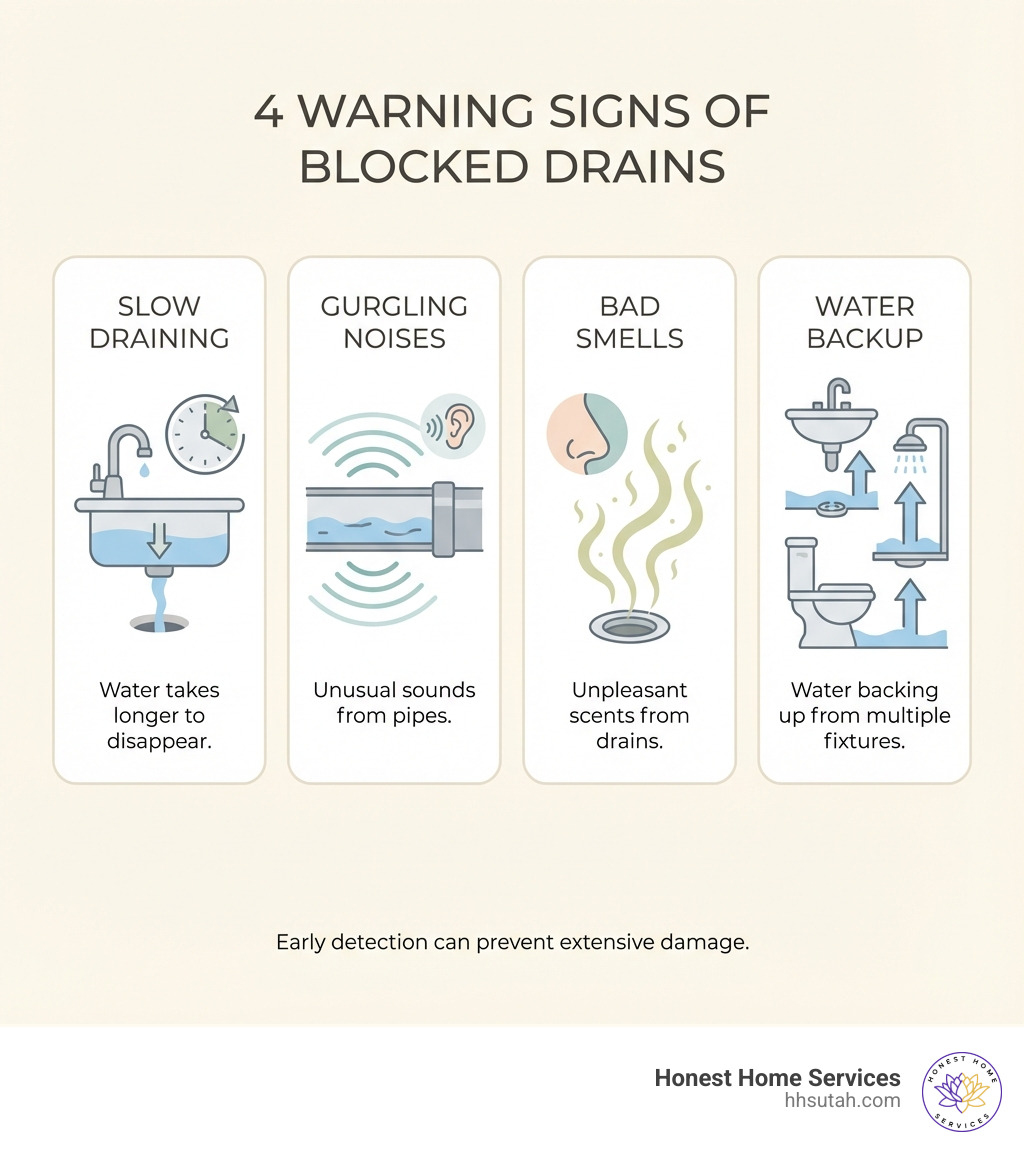
Before we can tackle a drain blockage removal, we first need to understand what’s causing the issue. Recognizing the signs early can save you hassle and expense. If you’re noticing any of these indicators, it’s time to investigate:
- Slow Draining Water: This is often the first and most obvious sign that a partial blockage is forming in your sink, tub, or shower.
- Gurgling Sounds: Strange noises from your drains can indicate air trapped by a blockage within your pipes.
- Unpleasant Odors: Foul smells suggest a buildup of decomposing organic matter, food waste, or sewage trapped in your plumbing.
- Water Backing Up: If water backs up into your sink, shower, or toilet, you’re dealing with a significant obstruction that needs immediate attention.
- Toilet Flushing Issues: A toilet that struggles to flush points to a blockage in the toilet trap or further down the sewer line.
For more detailed information on recognizing issues, check out our guide on Signs You Need Professional Drain Cleaning.
Common Causes of Indoor Drain Clogs
Indoor drains in our Northern Utah homes are prone to specific types of blockages:
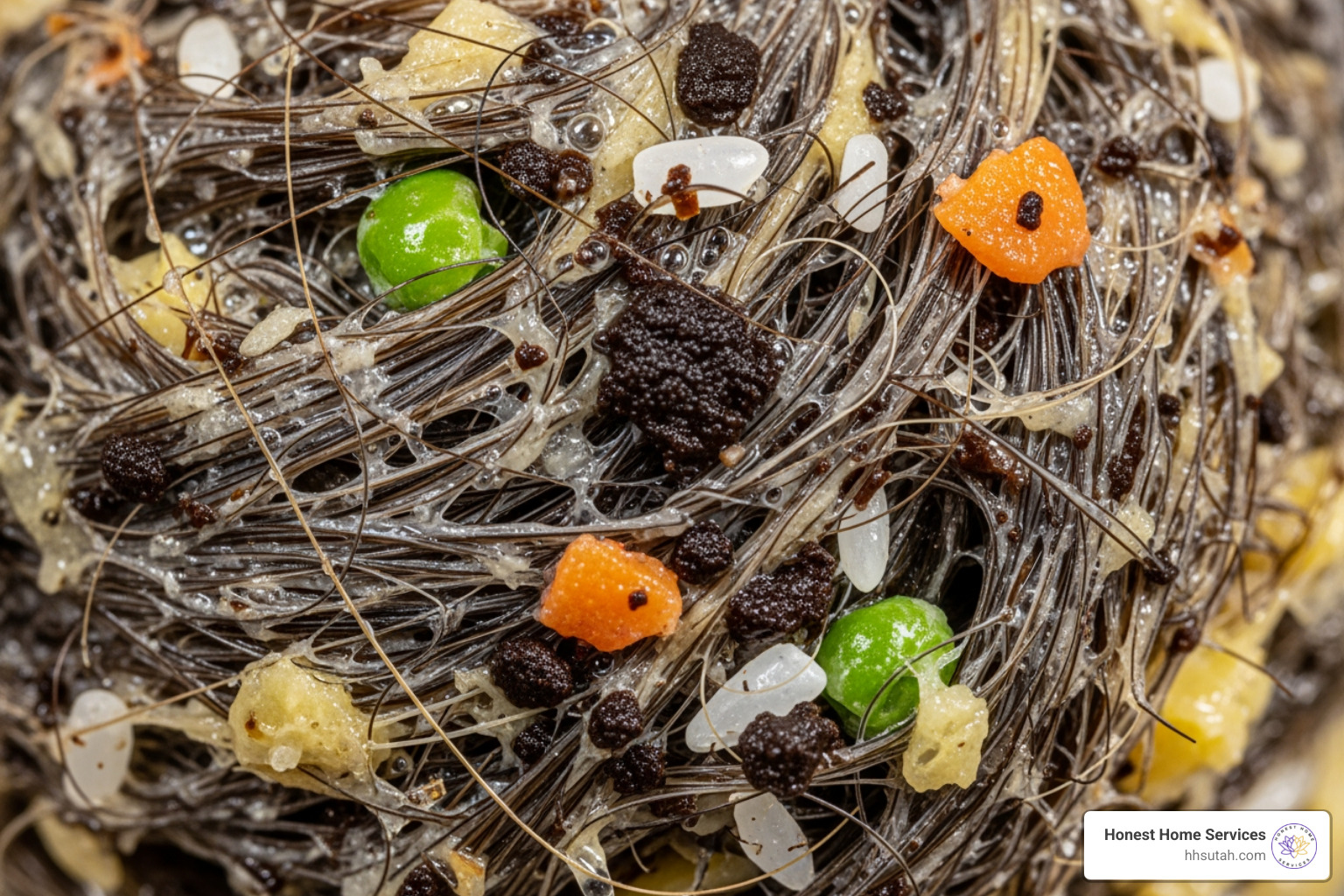
- Hair Buildup: Hair is the most common culprit in bathroom sinks and showers, combining with soap scum to form stubborn mats.
- Soap Scum: Residue from soaps and conditioners can accumulate, creating a sticky film that traps hair and other debris.
- Fats, Oils, and Grease (FOGs): When poured down the kitchen sink, these substances cool and solidify, forming thick, sticky blockages.
- Food Waste: Even with a garbage disposal, small food particles, coffee grounds, and starchy residues can build up and cause clogs.
- Foreign Objects: Small items like jewelry, toys, cotton swabs, or dental floss can easily block indoor drains, especially toilets.
Common Causes of Outdoor Drain Clogs
Outdoor drains face unique challenges from the elements:
- Tree Root Intrusion: Tree roots seek moisture and can invade underground pipes through tiny cracks or loose joints. They grow into dense masses that cause complete blockages and often require professional help.
- Leaves and Garden Debris: Fallen leaves, twigs, and dirt can wash into outdoor drains and gutters, especially during heavy rain, leading to clogs.
- Mud and Soil Buildup: Rainwater runoff can carry mud and soil into outdoor drains, where it settles and hardens into solid obstructions.
- Collapsed or Damaged Pipes: Older pipes can corrode, crack, or collapse due to ground movement or age, causing blockages and requiring extensive repairs.
Your First Line of Defense: Safe and Effective DIY Drain Blockage Removal
For minor clogs, several safe and effective DIY methods can save you money and resolve the issue quickly before you need to call a professional.
The Boiling Water & Dish Soap Method
This is our first recommendation for kitchen sink clogs caused by grease. The heat helps melt solidified fats, while the soap breaks down the greasy residue.
How to do it:
- Remove Standing Water: Scoop out as much standing water from the sink as possible.
- Pour Dish Soap: Squeeze about 1/4 to 1/2 cup of liquid dish soap down the drain. As professional cleaner Karina Toner from Spekless notes, “a good squeeze of dish soap can reach under and around spaces where hands and tools can’t, which is just perfect for tricky, tight drains.” You can find dish soap in handy bulk packs at Amazon.
- Follow with Hot Water: Carefully pour 2-3 cups of very hot (not boiling) water down the drain. Boiling water can damage PVC pipes.
- Wait and Flush: Let the mixture sit for 15-20 minutes, then flush the drain with hot tap water to see if the clog has cleared.
The Natural Approach: Baking Soda and Vinegar
This eco-friendly method uses a chemical reaction to dislodge debris.
How to do it:
- Remove Standing Water: Clear any standing water first.
- Pour Baking Soda: Pour 1 cup of baking soda directly into the drain.
- Add Vinegar: Follow with 1 cup of white vinegar. You can find cleaning vinegar in bulk at Amazon or White House Multipurpose Cleaning Vinegar at Walmart.
- Cover and Wait: Immediately cover the drain with a stopper to contain the fizzing reaction. Let it sit for at least 15-30 minutes. The bubbles help agitate and break up the clog.
- Flush: Flush the drain thoroughly with hot tap water.
This method is detailed in guides like “How to Clean Drains with Baking Soda and Vinegar” from Family of Brands.
Manual Drain Blockage Removal Tools
Sometimes, you need a little mechanical help to physically dislodge or retrieve clogs.
- Plungers: Plungers use suction and pressure to dislodge clogs. Ensure there’s enough water to cover the plunger’s cup and block any other drain openings in a double sink. Plunge vigorously 10-20 times.
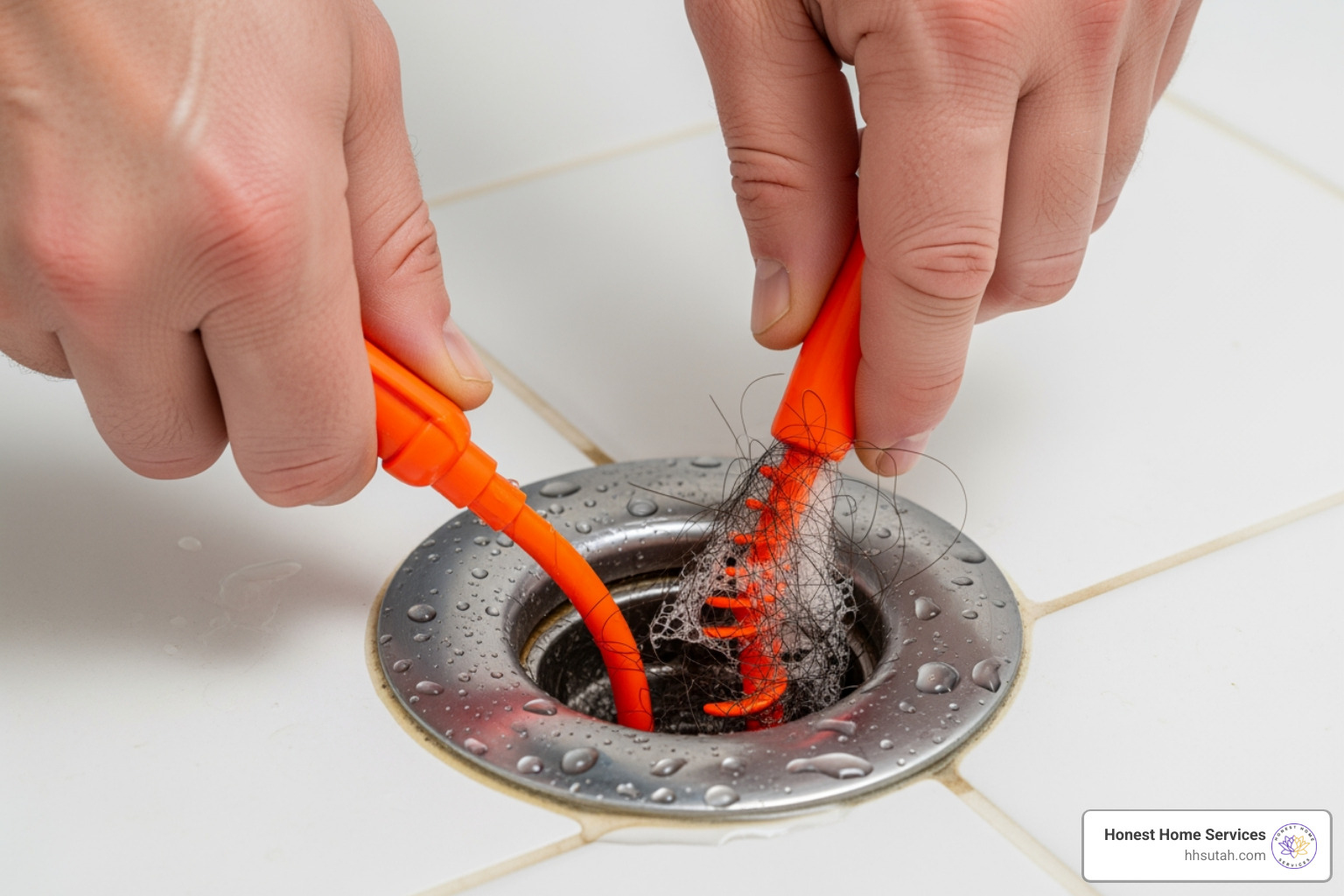
- Drain Snakes (Augers): For deeper clogs, a drain snake is your best friend. Feed the snake into the drain until you feel resistance. Rotate the handle to grab or break up the blockage, then slowly pull it out. Disposable plastic snakes like the FlexiSnake Drain Weasel work “like magic” on hair clogs. You can find more detailed instructions on “How to Use a Drain Snake or Auger” from Home Depot.
- Cleaning the P-trap: The U-shaped pipe under your sink, the P-trap, is a common spot for clogs. Place a bucket underneath, loosen the nuts on both ends, and remove the trap to clean it out. Reattach it securely and check for leaks.
Tips for Effective Manual Removal: Always wear protective gloves and eye protection. Be gentle when snaking to avoid damaging pipes. If you’re unsure, it’s always best to call a professional.
When to Call a Professional for Stubborn Clogs
While DIY methods are great for minor issues, some drain blockage removal jobs require the expertise and tools of a professional. Ignoring these signs can lead to more significant and costly problems.
Here’s when it’s time to put down the plunger and pick up the phone for Honest Home Services:
- DIY Methods Fail: If you’ve tried everything and the clog persists or returns quickly, the blockage is likely beyond a simple fix.
- Multiple Drains Are Clogged: If several fixtures in your home are backing up at once, it usually points to a main sewer line blockage, which needs immediate professional attention.
- Recurring Clogs: A drain that repeatedly clogs suggests an underlying problem like pipe damage or tree root intrusion. This is a common issue for Clogged Drains.
- Foul Sewer Gas Odor: A strong, persistent smell of sewage often means a deep blockage or a broken sewer line.
- Suspected Tree Root Blockage: If you have mature trees and frequent clogs, roots are a likely culprit. DIY methods won’t cut through them.
- Chemical Drain Cleaner Concerns: If you’ve used chemical cleaners like Drano Max Gel and the clog remains, call a professional. Repeated use can damage pipes.
Advanced Professional Techniques
At Honest Home Services, our expert plumbers in Northern Utah use state-of-the-art technology to diagnose and clear even the most challenging blockages:
- Video Camera Inspection: We insert a small, waterproof camera into your pipes to see the exact location and cause of the blockage. This allows us to diagnose the problem accurately and identify any pipe damage without unnecessary digging. Learn more about when you might need one with our 6 Telltale Signs You Need a Camera Drain Inspection.
- High-Pressure Hydro Jetting: This technique uses highly pressurized water (up to 4,000 PSI) to blast away grease, scale, debris, and even tree roots, leaving your pipes thoroughly cleaned. It’s highly effective for main line clogs. If you’re in the Salt Lake area and need this service, check out our Hydro Jetting Salt Lake information. You can also read about 5 Signs You Need Hydro Jetting for Your Drains.
- Specialized Rooter Services: For tree root intrusions, we use specialized augers with cutting heads to slice through roots and clear the pipe. A camera inspection often follows to assess pipe damage and recommend long-term solutions.
Prevention is the Best Cure: How to Avoid Future Blockages
The best way to deal with a drain blockage removal is to prevent it from happening in the first place! With a few simple habits and tools, you can significantly reduce the likelihood of clogs in your Northern Utah home or business.
- Use Drain Strainers and Hair Catchers: This is a simple, inexpensive solution that makes a huge difference. Place strainers in kitchen sinks to catch food particles and hair catchers in bathroom sinks and shower drains. Regularly empty them to prevent buildup.
- Scrape Food into the Trash: Before washing dishes, scrape all food scraps into the trash or compost bin. Even with a garbage disposal, excess food waste can contribute to clogs.
- Avoid Pouring Grease Down the Drain: We can’t stress this enough! Fats, oils, and grease solidify as they cool, forming stubborn blockages. Instead, pour cooled grease into a jar, let it harden, and dispose of it in the trash. This tip is highlighted by Calgary.ca as essential for protecting your pipes.
- Only Flush Toilet Paper: Toilets are designed for human waste and toilet paper only. Never flush “flushable” wipes (they don’t break down like toilet paper), feminine hygiene products, paper towels, cotton balls, or dental floss.
- Regular Hot Water Flushes: Periodically flush your drains with hot water, especially kitchen sinks, to help keep grease flowing freely through your pipes.
- Consider Enzyme-Based Cleaners: For routine maintenance, consider using gentle, eco-friendly enzyme-based drain cleaners. These products use natural bacteria to break down organic matter like grease and soap scum over time, and are much safer for your pipes than harsh chemicals. You can find options like Green Gobbler Drain Cleaner and Deodorizer Sticks for this purpose.
- Annual Drain Inspections: An annual professional inspection can identify potential problems before they escalate, saving you from unexpected emergencies and costly repairs.
For more preventative insights, explore our Preventative Drain Cleaning Tips Every Homeowner Should Know.
Introduction
A blocked drain can bring your whole day to a standstill. Whether it is a kitchen sink full of dirty water or a shower that will not drain, the frustration builds quickly. The good news is that most clogs can be solved if you understand what is causing them and take the right steps.
In this guide, we will walk you through everything you need to know about drain blockage removal in your Northern Utah home:
- How to spot the early warning signs of a clog
- Safe, effective DIY solutions you can try first
- When it is time to call a professional plumber
- Simple habits to help prevent future blockages
At Honest Home Services, we help homeowners in Salt Lake City and across Northern Utah clear tough clogs every day, so you can get your plumbing back to normal as quickly as possible.
Identifying the Problem: Signs and Common Causes of Blocked Drains
Before you can fix a clog, you need to know what you are dealing with. Most blocked drains give you warning signs before they turn into a full backup.
Common signs of a developing blockage include:
- Slow draining water: Sinks, tubs, or showers that take longer than usual to empty often have a partial clog forming.
- Gurgling sounds: Bubbling or gurgling noises from your drains or toilet can mean air is trapped behind a blockage.
- Unpleasant odors: Bad smells coming from drains suggest built-up food, grease, or other organic matter.
- Water backing up: Water that comes back up into sinks, showers, or tubs instead of draining away indicates a significant obstruction.
- Toilet flushing issues: Toilets that struggle to flush or require multiple flushes may have a clog in the trap or farther down the line.
For more detailed information on recognizing issues, check out our guide on Signs You Need Professional Drain Cleaning.
Common Causes of Indoor Drain Clogs
Indoor drains in Northern Utah homes usually clog for a few predictable reasons:
- Hair buildup: Especially in bathroom sinks and showers, hair combines with soap to form dense, stubborn clumps.
- Soap scum: Soap, shampoo, and conditioner leave behind residue that sticks to pipe walls and traps other debris.
- Fats, oils, and grease (FOGs): Grease poured down kitchen sinks cools and hardens, narrowing the pipe and catching food particles.
- Food waste from kitchen sinks: Coffee grounds, rice, pasta, eggshells, and other scraps can build up, even if you have a garbage disposal.
- Foreign objects: Items like cotton swabs, dental floss, toys, and wipes can easily block pipes, especially in toilets and bathroom sinks.
Common Causes of Outdoor Drain Clogs
Outdoor drains and sewer lines face different challenges:
- Tree root intrusion: Roots seek out water and can enter pipes through tiny cracks or joints, eventually filling the line and causing major blockages.
- Leaves and garden debris: Leaves, mulch, and twigs can wash into exterior drains and gutters, especially during storms, and create clogs.
- Mud and soil buildup: Runoff can carry dirt and sediment into outdoor drains, where it settles and hardens over time.
- Collapsed or damaged pipes: Aging or shifting soil can crack, crush, or misalign underground pipes, restricting flow and causing repeated backups.
Your First Line of Defense: Safe and Effective DIY Drain Blockage Removal
For minor clogs, there are several simple, at-home methods you can try before calling a professional. These approaches are affordable, safe for most plumbing systems, and often enough to restore normal flow.
The Boiling Water & Dish Soap Method
This is a great first step for greasy kitchen sink clogs. The hot water helps melt congealed fats, while the dish soap breaks down grease and helps it slide through the pipes.
- Start by removing as much standing water from the sink as you can.
- Squirt a generous amount of dish soap directly into the drain.
- Carefully pour very hot (but not boiling) water down the drain so you do not damage PVC pipes.
- Allow it to sit for a few minutes, then run hot tap water to flush away loosened buildup.
The Natural Approach: Baking Soda and Vinegar
If you prefer an eco-friendly option, baking soda and vinegar can help break up light clogs using a fizzing chemical reaction.
Basic steps:
- Remove any standing water from the fixture.
- Pour about 1 cup of baking soda into the drain.
- Follow with 1 cup of white vinegar.
- Quickly cover the drain with a plug to keep the reaction concentrated in the pipe.
- Wait 15–30 minutes, then flush with hot tap water.
This reaction helps loosen grime and small blockages clinging to pipe walls.
Manual Drain Blockage Removal Tools
Sometimes, you need a bit of mechanical force to finish the job.
- Plungers: Create a tight seal over the drain and plunge vigorously to push and pull water through the pipe, which can dislodge many common clogs.
- Drain snakes (augers): Feed the snake into the drain until you feel resistance, then rotate and gently push to break up or hook the blockage before pulling it out.
- Cleaning the P-trap: Place a bucket under the U-shaped pipe beneath your sink, loosen the slip nuts, remove the trap, and clear out any debris before reinstalling.
Tips for effective manual removal:
- Wear gloves and eye protection.
- Avoid forcing tools if you feel solid resistance that will not budge; you could damage the pipe.
- If you are uncomfortable disassembling plumbing or the clog does not clear, it is wise to contact a professional like Honest Home Services.
When to Call a Professional for Stubborn Clogs
DIY methods are helpful, but they cannot fix every problem. Some drain blockages are signs of deeper issues in your plumbing system and need expert attention.
Consider calling Honest Home Services if you notice any of the following:
- DIY methods fail: You have tried plunging, hot water, and basic snaking, but the drain is still slow or blocked.
- Multiple drains are clogged: When sinks, tubs, and toilets back up at the same time, it often points to a main sewer line issue.
- Recurring clogged drains: Clogs that keep coming back may indicate pipe damage, heavy buildup, or root intrusion.
- Foul sewer gas odor: Strong, persistent sewage smells can signal a deeper blockage or broken sewer line.
- Suspected tree root blockage: Mature trees near your sewer line increase the risk of roots invading and blocking the pipe.
Advanced Professional Techniques
Professional plumbers have specialized tools to accurately diagnose and clear stubborn blockages:
- Video camera inspection: A small camera is fed into the line so we can see exactly what is causing the problem and where it is located, without unnecessary digging.
- High-pressure hydro jetting: A powerful stream of water scours the inside of pipes, removing grease, scale, sludge, and small roots to restore full flow.
- Specialized rooter services for tree root removal: Cutting heads and heavy-duty cables are used to slice through intrusive roots and open up the pipe, often followed by camera inspection to check for damage.
If you are in Salt Lake City or the surrounding Northern Utah areas and suspect a serious clog, professional drain blockage removal can protect your home from leaks, backups, and water damage.
Prevention is the Best Cure: How to Avoid Future Blockages
Once your drains are flowing freely again, a few simple habits can help keep them that way and reduce the need for emergency calls.
- Use drain strainers and hair catchers: Install them in kitchen and bathroom sinks and showers to trap food and hair before they enter the pipes.
- Scrape food into the trash: Clear plates and pans into the trash or compost before rinsing to keep solids out of your drains.
- Avoid pouring grease down the drain: Let fats, oils, and grease cool in a container and throw them away instead of washing them down the sink.
- Only flush toilet paper: Flushing wipes, paper towels, feminine products, or other items greatly increases the risk of clogs.
- Regular hot water flushes: Running hot water down kitchen drains after doing dishes can help keep grease moving through the system.
- Schedule preventative maintenance: Periodic professional drain cleaning can catch buildup and early problems before they turn into full blockages.
For more preventative insights, explore our Preventative Drain Cleaning Tips Every Homeowner Should Know.
Below is a simple comparison of common approaches to keeping drains clear.
| Method | How It Works | Pros | Cons |
|---|---|---|---|
| Chemical Cleaners | Use harsh chemicals to dissolve clogs | Fast, easy to use | Can damage pipes, bad for environment |
| Enzyme Cleaners | Use bacteria/enzymes to break down buildup | Gentler on pipes, eco-friendlier | Slower results, best for maintenance |
| Mechanical Removal (Tools) | Physically dislodges or removes obstructions | Effective on tough clogs, no chemicals | May require more effort or a professional |
Frequently Asked Questions about Drain Blockage Removal
What’s the difference between unclogging an indoor vs. an outdoor drain?
Indoor clogs are typically caused by hair, soap, and grease, often manageable with plungers or snakes. Outdoor drains are blocked by leaves, dirt, and tree roots, which may require more powerful tools like drain rods or professional hydro jetting.
How do I know if the blockage is in my main sewer line?
If multiple drains in your home (e.g., toilets, showers, and sinks) are backing up simultaneously, you hear gurgling from various drains, or water backs up in the shower when you flush the toilet, the problem is likely in your main sewer line.
How much does professional drain blockage removal cost?
The cost varies based on the clog’s location and severity. A simple clog might cost under $200, but according to statistics, the average plumbing repair for a clogged drain is around $250. A severe main line blockage requiring extensive work can cost significantly more.
Conclusion
Blocked drains do not have to derail your day. By recognizing early warning signs, using safe DIY methods, and following simple prevention tips, you can handle many minor clogs on your own and reduce the chance of future problems.
However, some blockages are too severe, too frequent, or too widespread for home remedies. When that happens, calling a professional is the safest way to protect your home and plumbing system.
For stubborn clogs and reliable drain blockage removal in Salt Lake City and throughout Northern Utah, Honest Home Services is here to help 24/7. Our local, licensed technicians provide honest recommendations, fair pricing, and guaranteed satisfaction.
To schedule professional drain cleaning or emergency service, contact us online for expert drain cleaning in Salt Lake City.