

When Something’s Wrong Underground, You Need to See It First
Drain pipe inspection is the process of using a waterproof camera on a flexible cable to visually assess the inside of your pipes — without digging, guessing, or tearing up your floors.
Here’s what you need to know at a glance:
| Question | Quick Answer |
|---|---|
| What is it? | A camera fed through your pipes to find damage, blockages, or defects |
| How long does it take? | Typically 1–2 hours for a residential inspection |
| When do you need it? | Slow drains, recurring clogs, sewage smells, before buying a home |
| What does it find? | Root intrusion, cracked pipes, grease buildup, collapsed sections |
| Who should do it? | A licensed plumber with professional camera equipment |
| What does it cost? | Roughly $100–$1,575 depending on your location and pipe length |
When a plumbing problem is underground, inside a wall, or buried under your foundation, it’s easy to ignore — until it isn’t. Slow drains, mysterious odors, or patches of unusually green lawn can all be early warning signs of serious sewer damage lurking out of sight.
The good news? Modern drain camera technology means you don’t have to guess. A licensed plumber can see exactly what’s happening inside your pipes in real time — no excavation required.
At Honest Home Services, we’ve spent over 20 years helping Utah homeowners and businesses diagnose and solve drain and sewer problems, including hundreds of drain pipe inspections across Northern Utah. Whether you’re dealing with a stubborn clog or just want peace of mind before buying a home, we’re here to give you clear answers fast.
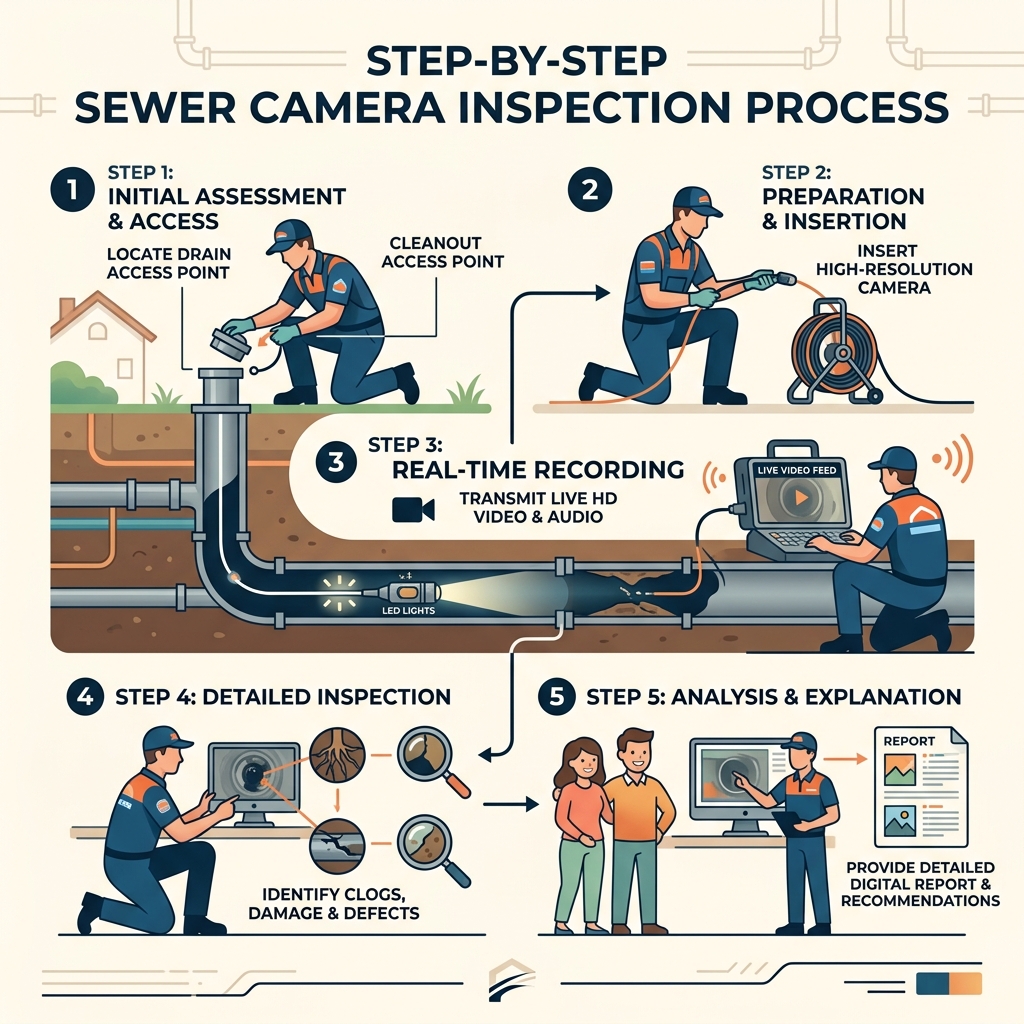
Discover more about Drain pipe inspection:
What is a Drain Pipe Inspection and How Does It Work?
At its core, a drain pipe inspection is like a colonoscopy for your home’s plumbing. Instead of a doctor, a licensed technician uses a specialized CCTV drain camera to travel through the dark, damp reaches of your sewer line. This technology allows us to see exactly what is happening inside the pipes that run beneath your yard, driveway, or foundation.
The equipment consists of a high-resolution, waterproof camera head attached to a long, flexible push-rod. As the rod is fed into the pipe, it transmits real-time video footage to a monitor above ground. This allows us to identify the exact nature and location of a problem—whether it’s a massive root ball or a collapsed section of cast iron—without ever picking up a shovel.
Understanding where to start is key. Most homes have a specific entry point known as a cleanout. If you aren’t sure where yours is, check out our guide to your home’s drain cleanout to get oriented.
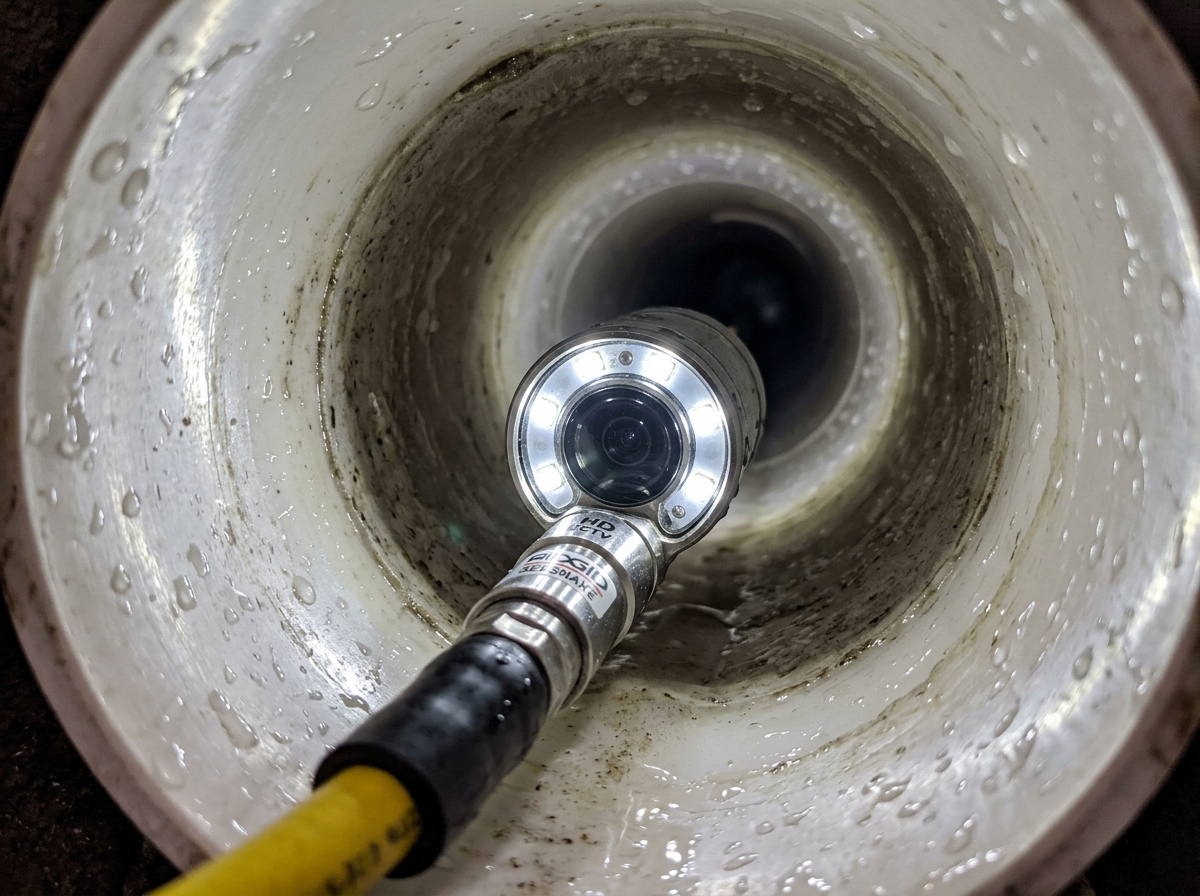
The Technology Behind a Modern Drain Pipe Inspection
We’ve come a long way from the grainy, black-and-white feeds of the past. Modern inspection cameras utilize HD resolution, often providing 1080P quality images. To see in the pitch-black environment of a sewer line, these camera heads are ringed with powerful LED lighting.
This high-definition clarity is vital because it helps distinguish between a minor smudge on the pipe wall and a hairline fracture that could lead to a massive leak. Some systems even use HDR (High Dynamic Range) imaging to ensure that dark corners are visible without washing out the areas closer to the lights.
Understanding the Drain Pipe Inspection Process
The process is straightforward but requires technical precision. First, we locate a suitable access point, such as a roof vent, a floor drain, or the main exterior cleanout. Once the camera is inserted, the technician carefully maneuvers the flexible rod through the system.
As the camera travels, the signal is transmitted to a control hub where the technician can watch the live feed, record the session, and even add voice-over notes. This is a standard part of our mainline inspection services, ensuring that every inch of your pipe from the house to the municipal connection is accounted for.
Essential Features of High-Quality Sewer Cameras
When we perform a drain pipe inspection, the quality of the equipment directly impacts the accuracy of the diagnosis. Professional-grade cameras aren’t just “webcams on a stick”; they are rugged, sophisticated tools designed for the harshest environments.
Key features we look for in professional systems include:
- Self-Leveling Heads: This ensures the image on the screen stays upright even as the camera twists through elbows and bends. Without it, the “bottom” of the pipe might appear at the top of the screen, making it very hard to judge where water is pooling.
- Distance Counters: A digital readout on the screen tells the operator exactly how many feet the camera has traveled. If we find a break at 42 feet, we know exactly where to mark the ground for repair.
- Sonde Transmitters: These are small beacons inside the camera head that emit a frequency (usually 512Hz) that can be picked up by a locator device above ground.
- DVR Recording: Modern systems allow us to save the footage to a USB drive or SD card so you can have a copy for your records or insurance claims.
Handheld Endoscopes vs. Professional Reel-Based Systems
It’s important to distinguish between the small tools you might find at a hardware store and the equipment used by professionals.
| Feature | Handheld Endoscope (DIY) | Professional Reel System |
|---|---|---|
| Cable Length | 5–50 feet | 100–400 feet |
| Cable Rigidity | Very flexible (hard to push far) | Semi-rigid (designed for long runs) |
| Pipe Diameter | 1–2 inches (sinks/tubs) | 2–10 inches (main sewer lines) |
| Locating Ability | None | Built-in Sonde/Radio Transmitter |
| Durability | Light-duty plastic | Steel frames, IP68 waterproofing |
If you’re noticing 6 telltale signs you need a camera drain inspection, such as multiple slow drains or gurgling toilets, a small handheld unit likely won’t reach the main line where the real trouble usually starts.
Advanced Optics and Dual-Lens Functionality
Some of the latest cameras feature dual or even triple lenses. This allows for split-screen viewing, where one lens looks straight ahead while another looks at the side walls of the pipe. This is incredibly helpful for finding “blind” junctions or cracks that might be missed by a forward-facing lens. High-end models use sapphire crystal lenses, which are nearly impossible to scratch, ensuring the image remains clear even after being pushed through abrasive concrete or clay pipes.
Locators and Depth Tracking
The “sonde” is the unsung hero of the drain pipe inspection. By using a radio transmitter in the camera head, we can use a handheld receiver on the surface to pinpoint the camera’s exact location and depth (often up to 15 feet deep). This precision mapping is crucial for handling main line clogs because it prevents us from having to dig up your entire yard just to find one localized break.
Why Every Homeowner Needs a Drain Pipe Inspection
Most homeowners only think about their sewer lines when sewage is backing up into their shower. However, being proactive can save you thousands of dollars. We recommend an inspection as part of regularly scheduled plumbing inspections, especially if you live in an older neighborhood in Salt Lake City or Bountiful where mature trees are common.
Detecting Hidden Structural Damage
Over time, the ground shifts. This can cause “pipe bellies” (low spots where water and waste collect) or “offset joints” where two sections of pipe no longer line up. In older homes, cast iron pipes can corrode from the inside out, leading to “scaling” that catches debris and causes clogs.
Tree roots are another major culprit. Roots are naturally drawn to the moisture and nutrients inside sewer lines. They can enter through tiny cracks and grow into massive “root balls” that eventually shatter the pipe. Identifying this early allows for effective tree root removal before the pipe collapses entirely.
Identifying Blockages and Debris
Not every problem is a broken pipe. Sometimes, the issue is simply what we’ve been putting down the drain. Grease buildup (often called “fatbergs”) can narrow a 4-inch pipe down to the size of a straw. We also frequently find foreign objects—toys, jewelry, and “flushable” wipes that aren’t actually flushable. Recognizing these signs you need professional drain cleaning early can prevent a messy backup.
Professional vs. DIY: Choosing the Right Inspection Tool
With the rise of affordable electronics, many homeowners wonder if they should just buy a $50 “sewer camera” online. While these can be fun for looking behind a wall or down a sink drain, they are generally inadequate for a full mainline drain pipe inspection.
Professional equipment is built to withstand the high pressure of being pushed 100 feet through sludge and around tight corners. More importantly, it takes a trained eye to interpret the footage. A professional plumber knows the difference between a normal pipe seam and a dangerous fracture.
If a DIY camera gets stuck in your line (which happens more often than you’d think), you’ve just created a new, expensive blockage. Entrusting the job to experts ensures you get a detailed report and a clear path forward for Salt Lake City pipe repair. This is especially true when dealing with mainline mayhem and sewage backups, where mistakes can lead to health hazards.
Frequently Asked Questions about Drain Pipe Inspection
How much does a professional sewer camera inspection cost?
In our experience, a standard residential inspection usually ranges from $100 to $1,575. The price varies based on the length of the run, the ease of access, and whether you need a written report and digital copy for a home sale. Often, if you are already having your drains cleaned, an inspection can be bundled for a lower rate.
Can a drain camera find a leak in a concrete slab?
Yes, but with a caveat. The camera can find the structural defect (like a crack or hole) that is causing the leak. By using the sonde and locator, we can mark the exact spot on the floor where the pipe is damaged. This allows for targeted repair rather than jackhammering your entire kitchen floor.
What is the difference between IP67 and IP68 waterproofing?
This is a common question when looking at equipment specs.
- IP67: Can be submerged in up to 1 meter (about 3 feet) of water for 30 minutes. This is okay for shallow drains but risky for main sewer lines.
- IP68: Designed for long-term submersion at depths greater than 1 meter. Professional sewer cameras are almost always IP68 rated because they need to operate while fully submerged in a backed-up mainline.
Conclusion
A drain pipe inspection is the ultimate “peace of mind” tool for any property owner. It turns an invisible, stressful problem into a clear, manageable plan. Whether you are buying a new home in Layton, dealing with a slow drain in Murray, or just want to ensure your plumbing is in top shape, seeing is believing.
At Honest Home Services, we pride ourselves on providing the most reliable diagnostics in Northern Utah. We don’t just show you the problem; we provide honest, fair-priced solutions to fix it. If you’re worried about what’s going on under your home, don’t wait for a flood. Reach out to us for expert Salt Lake City drain cleaning and inspection services today. We serve the entire Wasatch Front, from Bountiful down to Draper and beyond, ensuring your home stays dry and your drains stay clear.