
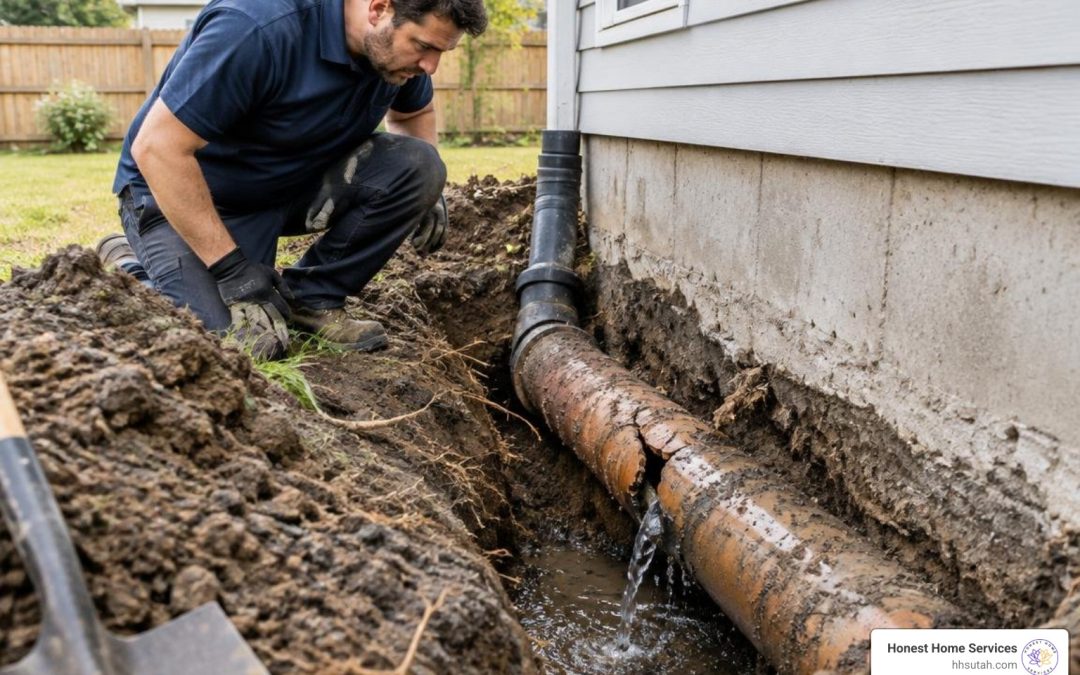
What to Do When You Suspect a Broken Sewer Pipe Under Your House
If you suspect a broken sewer pipe under house, stop using water-heavy fixtures, keep people and pets away from any sewage, and call for a professional sewer camera inspection. A camera and locator can identify the damaged section before anyone breaks concrete, digs up your yard, or chooses a repair method.
Watch for these early signs:
- Several drains become slow, gurgle, or back up at once.
- A sewer odor appears indoors, in a crawl space, or near the foundation.
- Toilet water levels change unexpectedly.
- You see damp areas, unusually green grass, settling soil, or new foundation cracks.
A damaged line below a slab can leak wastewater into surrounding soil. That may create unhealthy conditions, encourage mold and pests, and in serious cases wash away or shift soil that supports the foundation. The fastest path to the right fix is diagnosis first, then choosing between a targeted excavation, pipe lining, or pipe bursting based on the pipe’s condition and location.
Honest Home Services has more than 20 years of plumbing experience serving Northern Utah homes and businesses. Our licensed and insured team helps identify and repair a broken sewer pipe under house with clear recommendations focused on restoring safe, reliable drainage.
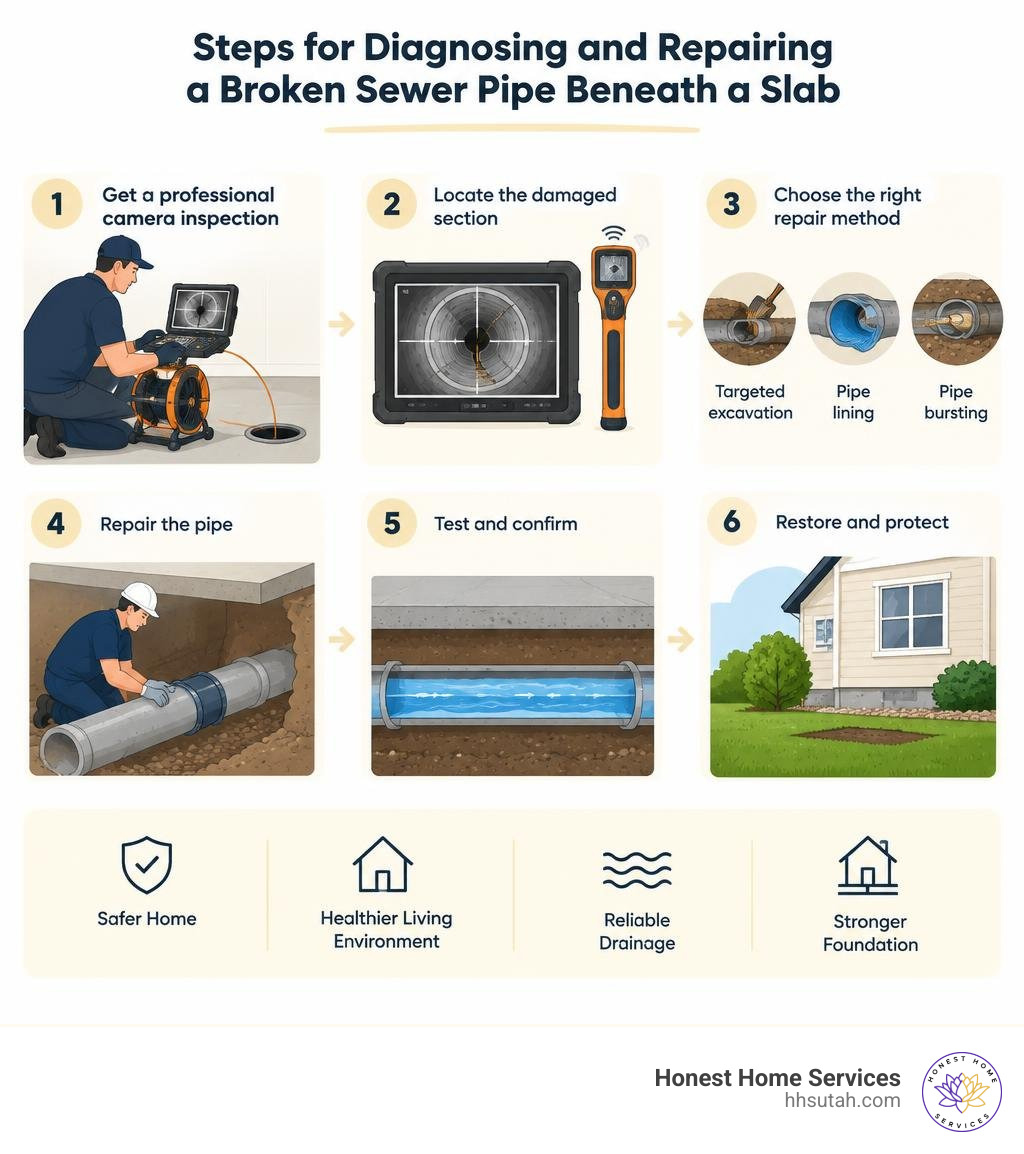
Broken sewer pipe under house definitions:
Telltale Warning Signs of a Broken Sewer Pipe Under House
A subterranean sewer breach works quietly under your floors. Unlike a supply line burst that sprays pressurized water across the utility room, a fractured wastewater pipe leaks by gravity. Homeowners frequently mistake the early stages for standard clogged drains until multiple symptoms emerge.
Recognizing the telltale signs of main sewer line clogs and pipe fractures saves thousands in secondary structural repairs. Key indicators include:
- Pervasive Sewer Gas Odors: A persistent scent of rotten eggs (hydrogen sulfide) in crawl spaces, basements, or near floor drains signals that sewer gases are escaping through a compromised pipe wall rather than venting out the roof stack.
- Widespread Fixture Drainage Problems: When running the bathroom sink causes the shower drain to bubble, or flushing a toilet pushes wastewater up into a basement tub, the mainline restriction is forcing displaced air and water back up the line.
- Unexplained Floor Warmth or Moisture: Concrete slab foundations can absorb escaping wastewater through capillary action, causing warm, damp patches on flooring, warped hardwood, or damp carpets.
- Sudden Structural and Landscape Changes: Escaping wastewater saturates foundational soil. Outside, this manifests as isolated, unnaturally green grass patches or sunken depressions. Inside, it can cause drywall cracks, sticking doors, or uneven subfloors as the foundation settles.

Pipe Material Vulnerabilities and Common Causes
Underground sewer pipes face continuous stress from internal wastewater chemistry and external soil dynamics. In many older communities across Salt Lake County and Davis County, original pipe materials are reaching or exceeding their intended lifespans:
- Vitrified Clay Pipes: Common in homes built between the 1950s and 1970s, clay piping resists chemical corrosion but is brittle. These pipes typically last 50 to 60 years before shifting soils crack the hubs and allow aggressive tree roots to infiltrate the joints.
- Cast Iron Pipes: Widely installed in homes from the 1950s through the 1980s, cast iron offers a 50-to-75-year service life. Over decades, channeling along the bottom of the pipe from acidic buildup and rust in older home plumbing weakens the metal, resulting in longitudinal cracks.
- Orangeburg (Bituminized Fiber) Pipe: Installed between the 1950s and 1970s, this pressed wood fiber and coal tar pitch material carries an expected lifespan of only 30 to 50 years. By now, remaining Orangeburg lines are almost universally deformed, blistered, or completely crushed under standard ground weight.
- Expansive Soils and Seismic Shifts: The clay-heavy soils along the Wasatch Front expand when wet and contract during dry periods. This movement places severe bending pressure on rigid sub-slab piping, shearing aging joints.
Immediate Safety Risks of a Broken Sewer Pipe Under House
A sewer line failure under a building isn’t just an inconvenience; it introduces real health and environmental hazards:
- Air Quality Degradation: Escaping sewer gases contain methane, ammonia, and hydrogen sulfide. Continuous inhalation can trigger headaches, dizziness, nausea, and chronic respiratory irritation.
- Biohazard Exposure: Raw sewage carries harmful pathogens, including E. coli, Salmonella, and enteric viruses. When wastewater leaches beneath living areas, it creates a vector for bacterial growth and insect infestations.
- Mold and Fungal Spores: Saturated soil beneath concrete slabs drives moisture into floor joists and drywall framing, creating an ideal breeding ground for toxic black mold (Stachybotrys chartarum). Following essential house water leak repair steps promptly minimizes these hazardous indoor air conditions.
Accurate Methods for Pinpointing Hidden Sub-Slab Sewer Breaks
Guesswork has no place beneath a concrete foundation. Smashing through a concrete slab without confirming the location of the break results in unnecessary expense and property disruption. Modern plumbing diagnostics allow us to locate sub-slab breaches with pinpoint accuracy.

Professional diagnosis relies on specialized non-destructive testing:
- High-Definition Sewer Camera Inspections: A flexible fiber-optic camera with a self-leveling optical head is inserted directly into the mainline via an accessible cleanout. These high-definition sewer camera inspections provide real-time, 4K footage of internal pipe conditions, identifying root penetration, cracked hubs, scale buildup, and pipe collapse.
- Electromagnetic Sonde Locating: Modern inspection cameras contain an integrated 512 Hz radio transmitter (sonde). As the camera navigates the pipe, a technician sweeps a digital receiver wand over the concrete floor to trace the signal. This determines the exact physical location and depth of the damage beneath the slab.
- Acoustic and Hydrostatic Isolation: In tricky configurations, technicians utilize advanced non-invasive leak detection equipment. By sealing sections of the drain system with inflatable test balls and monitoring pressure decay, we isolate the exact run of damaged pipe before formulating a repair strategy.
Modern Repair and Replacement Options for Under-Foundation Pipes
Fixing a sub-slab line historically required a jackhammer, wheelbarrows of broken concrete, and weeks of dust. While traditional excavation remains necessary in instances of total pipe collapse, trenchless technologies now provide alternatives that preserve your home’s flooring.
| Repair Method | Disruption Level | Average Project Timeline | Structural Integrity / Longevity | Best Suited For |
|---|---|---|---|---|
| Cured-in-Place Pipe (CIPP) Lining | Minimal (access via cleanouts) | 1 to 2 Days | 50+ Years (Seamless Epoxy) | Cracked cast iron, separated clay joints, root infiltration |
| Pipe Bursting | Low (two small entry pits) | 1 to 2 Days | 50+ Years (Seamless HDPE) | Collapsed pipes, severely degraded Orangeburg, full upgrades |
| Traditional Trench Excavation | High (cutting through slab) | 3 to 5 Days + Floor Restoration | 50+ Years (New PVC/ABS) | Back-pitched lines, fully crushed pipes under tight crawlspaces |
Using durable underground pipe repair sleeves allows technicians to reinforce localized fractures without disturbing the surrounding foundation.
Trenchless Pipe Lining (CIPP) and Pipe Bursting
Trenchless sewer repairs have transformed sub-slab remediation:
- Cured-in-Place Pipe (CIPP): Technicians insert an epoxy-saturated felt tube into the damaged host pipe. The tube is inflated using compressed air, pressing the resin against the inner walls of the existing pipe. Once cured, this forms a smooth, jointless “pipe-within-a-pipe” that resists root intrusion and chemical degradation.
- Pipe Bursting: When the existing pipe has lost its structural shape or requires sizing adjustments, pipe bursting replaces damaged sewer lines by pulling a high-density polyethylene (HDPE) pipe directly through the old line. A heavy-duty conical bursting head fractures the old host pipe outward into the surrounding soil while installing the new HDPE line in its place.
Both methods eliminate the extensive interior demolition associated with traditional methods, keeping home structures intact.
How to Fix a Broken Sewer Pipe Under House: Step-by-Step DIY vs Professional
Fixing an underground sewer line involves strict mechanical and regulatory considerations. While minor, accessible crawl-space patches might tempt a dedicated DIY homeowner, sub-slab repairs present significant safety and engineering demands.
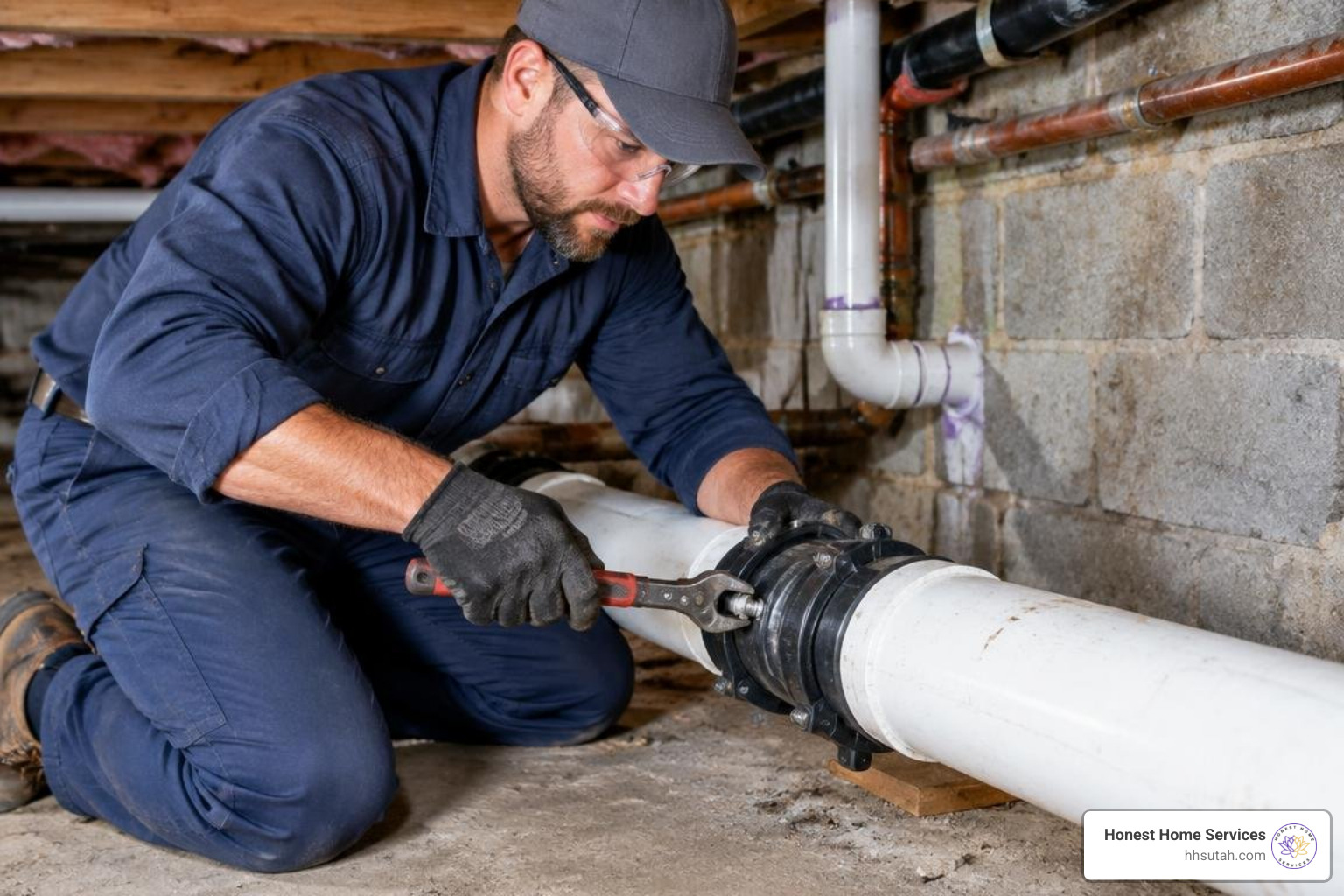
For exposed or accessible crawlspace lines, the repair workflow follows this sequence:
- Isolation and Utility Locating: Turn off the main water supply to stop wastewater flow. Contact Call 811 to mark underground power and gas lines before digging.
- Excavation and Shoring: Expose the damaged pipe section, maintaining clear access around the circumference. Any excavation deeper than four feet requires proper trench shoring standards to prevent wall collapse.
- Damage Removal: Using a snap-cutter for cast iron or a reciprocating saw with a carbide blade, cut out the cracked section at least six inches past visible damage on both sides.
- Fitting Replacement Pipe: Measure and cut a matching length of Schedule 40 PVC or ABS pipe. Clean and deburr all edges thoroughly.
- Securing Connections: Join the new pipe section to the host pipe using heavy-duty shielded rubber couplings (Fernco transition bands) or PVC primer and solvent cement for plastic-to-plastic joints. Tighten the stainless steel bands to specified torque ratings using a torque wrench.
- Hydrostatic Testing and Bedding: Run continuous water through all upstream fixtures to confirm leak-free joints before backfilling. Bed the pipe in clean pea gravel or sand before compacting the structural backfill in 6-inch lifts.
For detailed DIY considerations and technical plumbing guidelines, consult a step-by-step broken sewer pipe repair guide or explore professional drain and sewer replacement options to evaluate complex repairs. If foundation movement or deep slab cutting is involved, review structural risk management guidance before proceeding.
Costs, Insurance Coverage, and Long-Term Prevention
Sub-slab repairs vary in total scope depending on depth, pipe material, and access limitations. When evaluating repair expenses, look beyond the direct plumbing invoice:
- Demolition vs. Restoration: Traditional excavation through a slab often requires repouring concrete, replacing subfloors, and reinstalling hardwood or tile flooring. These restoration expenses can double or triple the total project cost. Trenchless solutions have higher equipment-use profiles up front but virtually eliminate interior reconstruction bills.
- Insurance Coverage Specifics: Standard HO-3 homeowner insurance policies generally exclude damage caused by normal wear and tear, age, ground settling, or root intrusion. However, policies often cover the cost of tearing out and replacing the slab if the leak caused sudden, accidental physical damage. Adding an optional “Water Backup and Sump Overflow” endorsement or an underground service line rider can provide extra financial protection.
- Proactive System Maintenance: Review our realistic main sewer line replacement guide to plan your long-term plumbing maintenance. Schedule a camera inspection every two to three years, keep non-flushable wipes and fats out of drains, and avoid planting deep-root trees within 30 feet of your sewer alignment.
Frequently Asked Questions About Under-Slab Sewer Pipe Leaks
How do I know if the sewer leak is under my foundation or out in the yard?
A break out in the yard typically creates spongy patches of grass, sinkholes, or foul odors across the lawn, while the home’s interior drains may only back up during heavy water use. A break located directly under the foundation often triggers localized floor warmth, damp flooring, moldy smells indoors, or foundational drywall cracks. A camera inspection with an electromagnetic locating wand is the definitive way to confirm the leak’s exact position.
Does homeowner’s insurance cover repairing a sewer pipe under a slab?
Standard policies typically exclude coverage for the pipe repair itself if failure is due to aging, corrosion, or tree roots. However, if the leak causes sudden, accidental water damage to your finished home, insurance may cover secondary property restoration and the cost to access the pipe through the slab. We recommend checking your policy for specific sewer backup riders and service line endorsements.
Can I stay in my home while a broken sewer line under the slab is repaired?
Yes, in most cases involving trenchless pipe lining or pipe bursting, homeowners can stay on-site because the work is completed from outside access points in just one to two days with only brief water shutoffs. If extensive traditional excavation through the slab is required, the noise, concrete dust, and temporary water service disruptions may make staying elsewhere more comfortable.
Conclusion
A sub-slab sewer break is a serious issue, but catching it early and using modern diagnostics keeps it manageable. Left unchecked, escaping wastewater can compromise indoor air quality, invite pests, and damage your home’s foundation.
Trenchless technologies make it possible to repair or replace subterranean lines without tearing up your home. If you notice slow drains, foul odors, or damp floors anywhere in Salt Lake City or the surrounding communities—from Draper and Murray to Layton and Bountiful—our licensed team is ready with 24/7 emergency service.
Protect your home’s value and foundation with expert pipe repair and trenchless sewer solutions from Honest Home Services. Schedule an inspection today to ensure your plumbing runs cleanly, safely, and efficiently for decades to come.