

Understanding What You’ll Pay for Main Sewer Line Replacement
Main sewer line replacement cost is a major concern for homeowners. Here’s what you need to know:
Quick Cost Overview:
- Cost per linear foot: $100-$300
- Typical 40-foot project: $2,000-$10,000
- Basic repairs (small clogs): Around $150
- Method matters: Trenchless costs more upfront but saves on restoration
- Additional expenses: Permits, landscaping, driveway restoration
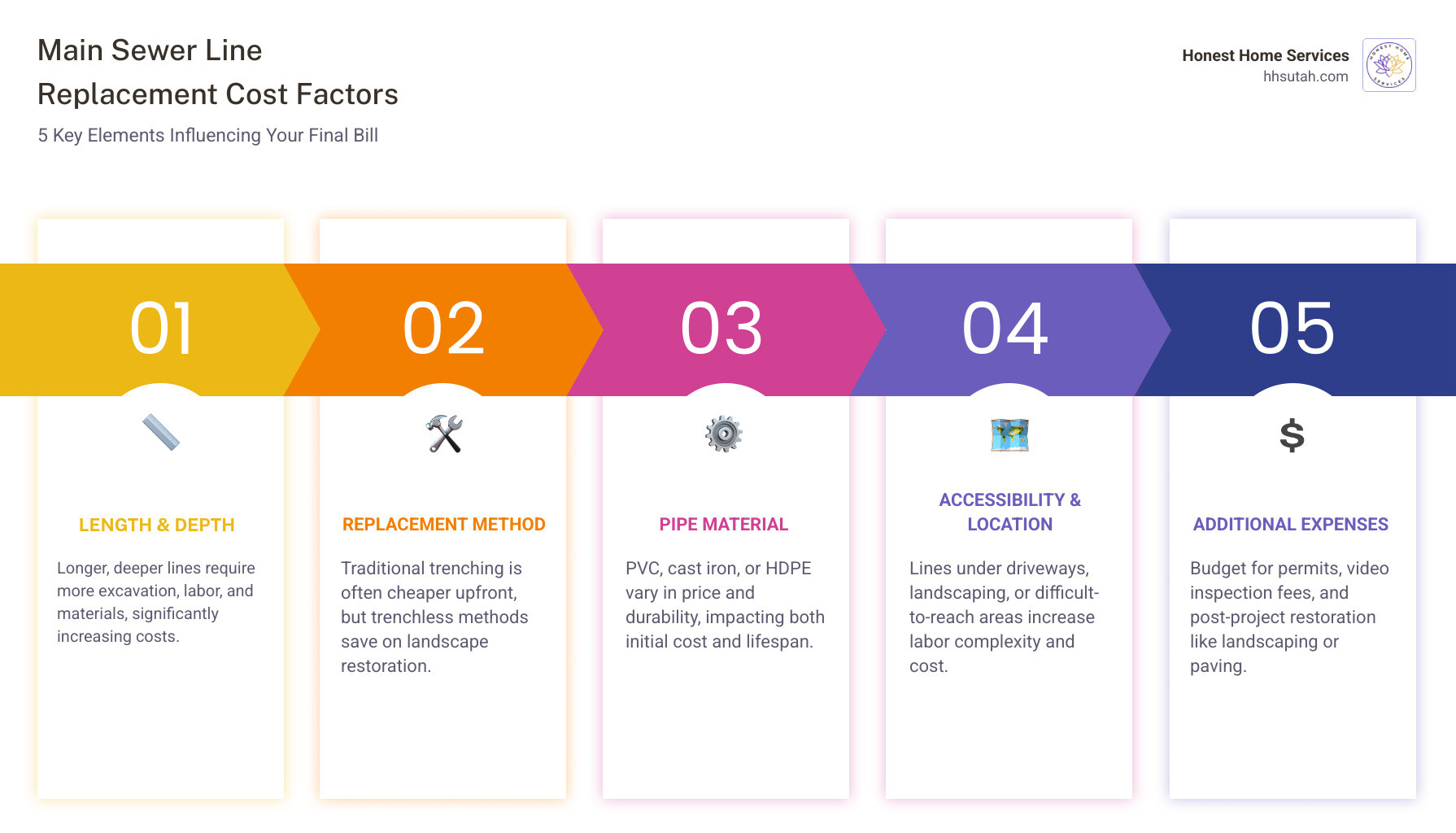
Main cost factors include:
- Length and depth of the sewer line
- Replacement method (traditional vs. trenchless)
- Pipe material (PVC, cast iron, HDPE)
- Accessibility and location
- Local permit requirements
- Post-project restoration needs
Few home repairs feel as urgent—or as expensive—as a failed main sewer line. You might have noticed foul odors, persistent drain backups, or a plumber may have already delivered the bad news after a camera inspection revealed cracked pipes or tree root intrusion.
The uncertainty around the main sewer line replacement cost can be as stressful as the failure itself. Will it be $3,000 or $15,000? What hidden expenses might appear? How do you know if a quote is fair?
This guide provides real numbers backed by industry data. You’ll learn what drives costs, how to compare replacement methods, and what to ask before signing a contract.
At Honest Home Services, we’ve helped countless Northern Utah homeowners steer main sewer line replacement cost decisions with transparent pricing and guaranteed work. With over 20 years of experience in sewer and mainline repairs, we know what goes into these projects and are here to help you understand your options.
7 Telltale Signs Your Sewer Line Needs Replacement
Recognizing the signs of a failing sewer line early can prevent extensive damage and higher main sewer line replacement cost. Here are the red flags we see in homes across Salt Lake City and Northern Utah:
-
Foul Odors: The unmistakable stench of raw sewage in or around your home is a primary indicator of a broken line. This allows unpleasant and unhealthy Volatile Organic Compounds (VOCs) to escape.
-
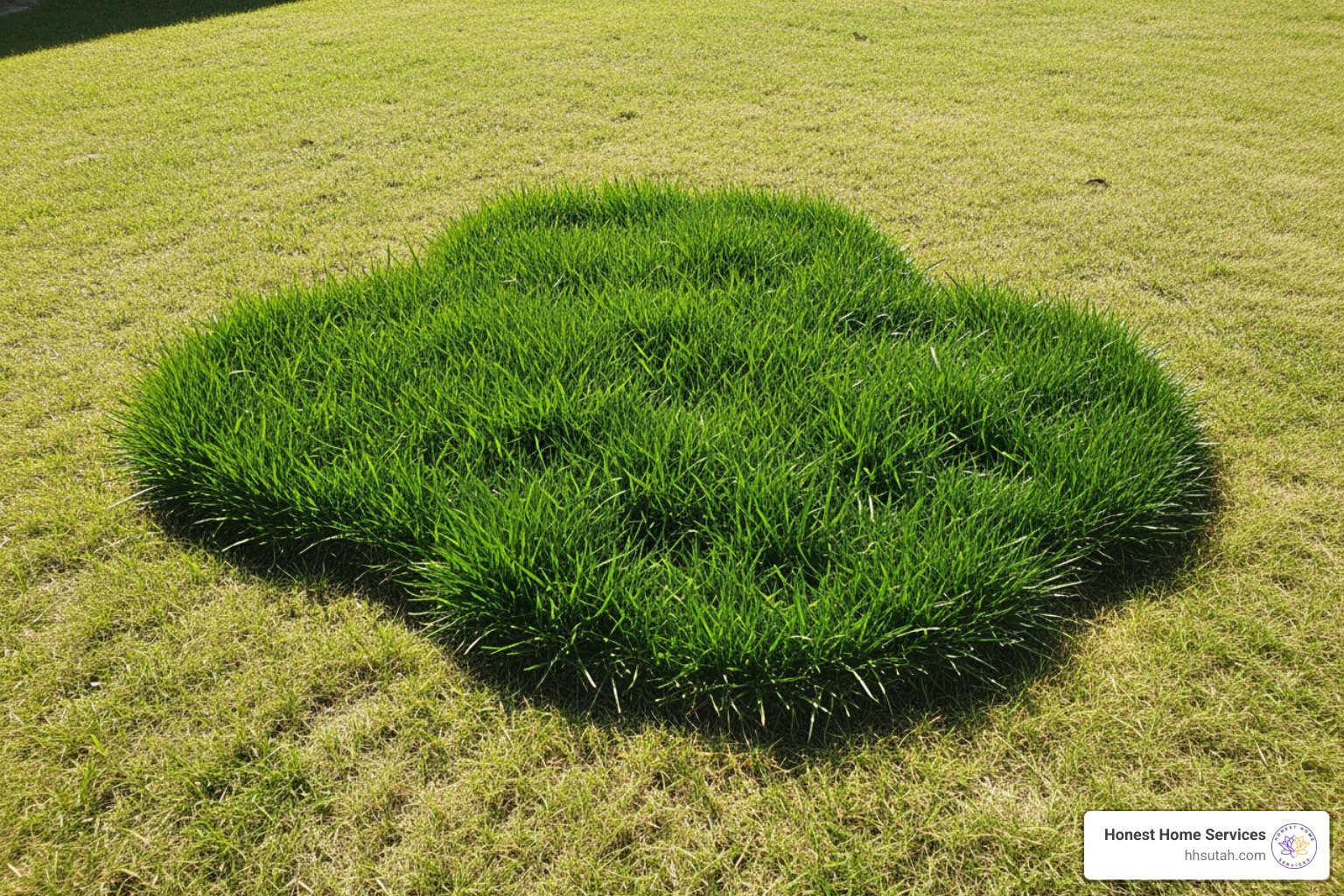
Lush, Green Patches in Your Yard: An unusually green and soggy patch of grass can signal a sewer line leak. Wastewater acts as a fertilizer, so if you notice this over your buried sewer line, it’s time to investigate.
-
Frequent Clogs and Slow Drains: While a single clog is a minor issue, persistent and widespread slow drains or backups throughout your home point to a problem in the main sewer line. This is one of the clearest Signs You Need Professional Drain Cleaning and a sewer inspection.
-
Gurgling Noises: Gurgling sounds from toilets or drains when not in use indicate trapped air in your plumbing. This often points to blockages or breaks in the sewer line affecting water flow.
-
Pest Problems: A sudden increase in rodents or insects can be a sign of sewer line damage. Pests can enter your home through cracks in the pipes.
-
Foundation Issues: A leaking sewer line can saturate the soil around your foundation, leading to costly structural problems like cracks in walls, ceilings, or the foundation itself.
-
Mold Growth: Hidden sewer leaks create a breeding ground for mold. A persistent musty odor or visible mold growth could be due to a slow leak. Some molds produce harmful Mycotoxins Toxic Mold Exposure (Mycotoxins), posing serious health risks.
If you notice these signs, don’t delay. A prompt professional inspection can diagnose the problem and help you avoid an Emergency Plumbing situation.
Understanding the Average Main Sewer Line Replacement Cost
The main sewer line replacement cost is not a one-size-fits-all figure. Here are the average costs you can expect in areas like Salt Lake City and across Northern Utah.
While basic repairs for small clogs cost around $150, full or partial replacement for broken lines is significantly more expensive.
Based on industry statistics, you can typically expect to pay $100 to $300 per linear foot for main sewer line replacement. For a common 40-foot project, the total cost could range from $2,000 to $10,000.
The broad range exists because a partial replacement (fixing one section) costs less than a full replacement (replacing the entire line from your home to the municipal connection). The extent of the work is a primary cost driver, especially with Common Plumbing Problems in Older Homes and How to Fix Them.
These are averages. The actual amount you pay will depend on several specific factors we’ll explore next.
Key Factors That Determine Your Final Bill
The average main sewer line replacement cost is a starting point; your final bill depends on your property’s unique factors. These elements can dramatically influence the cost for homeowners in Northern Utah.
Project complexity, accessibility, and location are significant factors. A line under a lawn is simpler to replace than one under a concrete driveway or mature landscaping.
Here’s a list of potential factors that can lead to unexpected costs:
- Extensive landscaping removal and restoration
- Driveway or sidewalk cutting and repaving
- Removal of large trees or tree roots
- Repairing damage to other underground utilities
- Unexpected rock or difficult soil conditions
- Emergency service surcharges for immediate repairs
Let’s break down the most influential cost drivers:
How Length and Depth Impact the Main Sewer Line Replacement Cost
The longer and deeper your sewer line, the more expensive the replacement. This is tied to the cost per linear foot.
- Length: A longer pipe requires more material and labor. If your home is set far back from the street, your line will be longer.
- Depth: Lines are typically buried at least 18 inches deep but can be much deeper. Deeper lines require more excavation, increasing labor costs and often requiring specialized equipment. Increased depth makes the job more complex and time-consuming, directly impacting your main sewer line replacement cost.
Replacement Method: Traditional vs. Trenchless
This choice significantly affects your main sewer line replacement cost. The two primary methods have different costs and levels of property disruption.
- Traditional (Open Trench) Method: This involves digging a trench along the damaged line. While straightforward, it’s highly disruptive to your yard and any structures above the line. Excavation and restoration costs add substantially to the total bill.
- Trenchless Methods: These modern techniques replace or repair lines with minimal digging, reducing restoration costs. While the per-foot cost may be higher, the overall savings on restoring landscaping and driveways can make it more cost-effective, especially in urban areas like Salt Lake City. Learn more on our Pipe Repair Salt Lake City page.
How Pipe Material Affects the Main Sewer Line Replacement Cost
The pipe material for your new sewer line affects both upfront cost and long-term durability. Modern materials offer advantages over older pipes found in Northern Utah.
- PVC (Polyvinyl Chloride): The most common and affordable option. It’s lightweight, durable, corrosion-resistant, and has smooth walls that reduce clogs, offering a great balance of cost and longevity.
- ABS (Acrylonitrile Butadiene Styrene): A black plastic pipe similar to PVC, also corrosion-resistant and easy to install.
- HDPE (High-Density Polyethylene): A flexible, robust plastic pipe often used for trenchless methods. It’s highly resistant to chemicals and abrasion, offering excellent durability.
- Cast Iron: Found in many older Salt Lake City homes, cast iron is durable but susceptible to corrosion, rust, and cracks. Replacing it with new cast iron is rare due to higher cost and complexity compared to modern plastics.
The material impacts your upfront main sewer line replacement cost and the system’s lifespan. While PEX (cross-linked polyethylene) is for water supply lines, PVC and HDPE are the standard for sewer lines.
Additional Costs to Budget For
Beyond labor and materials, other expenses add to your total main sewer line replacement cost. Budget for these to avoid surprises.
- Permits: Most municipalities, including Salt Lake City, require permits for sewer line work to ensure it meets code. Fees vary. Our team handles all permitting for you.
- Landscaping Repair: With traditional excavation, restoring your lawn, garden, or shrubs can cost from a few hundred to several thousand dollars.
- Driveway or Sidewalk Repair: Repairing concrete or asphalt cut to access the sewer line can be a significant additional expense.
- Video Camera Inspection Fees: A camera inspection is a crucial upfront cost to accurately diagnose the problem’s location and scope. This investment prevents unnecessary work and ensures the correct solution is applied, as detailed in our guide on 6 Telltale Signs You Need a Camera Drain Inspection.
Trench vs. Trenchless Replacement: A Cost and Method Comparison
Choosing between traditional and trenchless methods is a critical decision that impacts your main sewer line replacement cost, project timeline, and property disruption.
Here’s a comparison to help you understand the differences:
| Feature | Traditional (Open Trench) Method | Trenchless (Pipe Bursting/Lining) Method |
|---|---|---|
| Cost | Lower per linear foot for plumbing work, but higher overall with restoration. | Higher per linear foot for plumbing work, but lower overall due to minimal restoration. |
| Time | Longer project duration due to extensive excavation and restoration. | Shorter project duration, often completed in 1-2 days, as excavation is minimal. |
| Disruption | High disruption to yard, landscaping, driveways, and other structures. | Minimal disruption, typically only two small access points are dug. |
| Lifespan | New pipes can last 50-100+ years, depending on material. | New pipes (liner or bursting) can last up to 50 years, offering a durable, long-term solution. |
| Methodology | Digging a continuous trench to expose and replace the entire pipe. | Pipe Bursting: Pulling a new pipe through the old one, simultaneously breaking the old pipe apart. Cured-in-Place Pipe (CIPP) Lining: Inserting a resin-soaked liner into the old pipe and curing it to form a new pipe inside the old. |
| Use Cases | Suitable for severely collapsed pipes or when trenchless isn’t an option. | Ideal for most repairs, especially when preserving landscaping or structures is a priority. |
Let’s look at the trenchless options in more detail:
- Pipe Bursting: After digging two small access holes, a new HDPE pipe is pulled through the old one, fracturing and displacing it. This creates a new, seamless pipe in the old one’s place.
- Cured-in-Place Pipe (CIPP) Lining: This method inserts a flexible, resin-saturated liner into the damaged pipe via small access points. The liner is expanded and cured, creating a new “pipe within a pipe.” This restores structural integrity and can last up to 50 years.
- Point Repair: For very localized damage, a point repair might be possible using trenchless methods. This involves repairing only the specific damaged section rather than the entire line, often by inserting a short liner.
Though trenchless methods have a higher per-foot cost, the savings on restoring your property often make them more economical and less invasive overall. This is especially true in areas like Salt Lake City. Before any replacement, your line might benefit from Hydro Jetting to clear out debris or roots.
How to Get an Accurate Quote and Avoid Surprises
An accurate estimate for your main sewer line replacement cost is crucial to avoid surprises. We recommend a thorough process for transparency and peace of mind.
- Get Multiple Quotes: Contact at least three reputable plumbing companies in Northern Utah for comparative quotes to get a sense of the fair market value.
- Vetting Contractors: Do your homework. Check online reviews, ask for references, and verify their licensing and insurance. A reliable plumber will happily provide this. Find more tips on How to Find a Reliable Plumber in Salt Lake City.
- Ask Detailed Questions: Don’t be afraid to ask about every aspect of the job. A good contractor will explain everything clearly.
Here’s a list of questions to ask a plumber:
- What is the exact scope of work?
- What replacement method do you recommend and why? (Traditional vs. Trenchless)
- What type of pipe material will be used?
- Is the quote all-inclusive, or are there potential additional costs (e.g., permits, landscaping restoration)?
- How long will the project take?
- What kind of warranty do you offer on the work and materials?
- Can you provide proof of licensing and insurance?
- What are your payment terms?
- Who is responsible for obtaining permits and scheduling inspections?
The Importance of a Professional Diagnosis
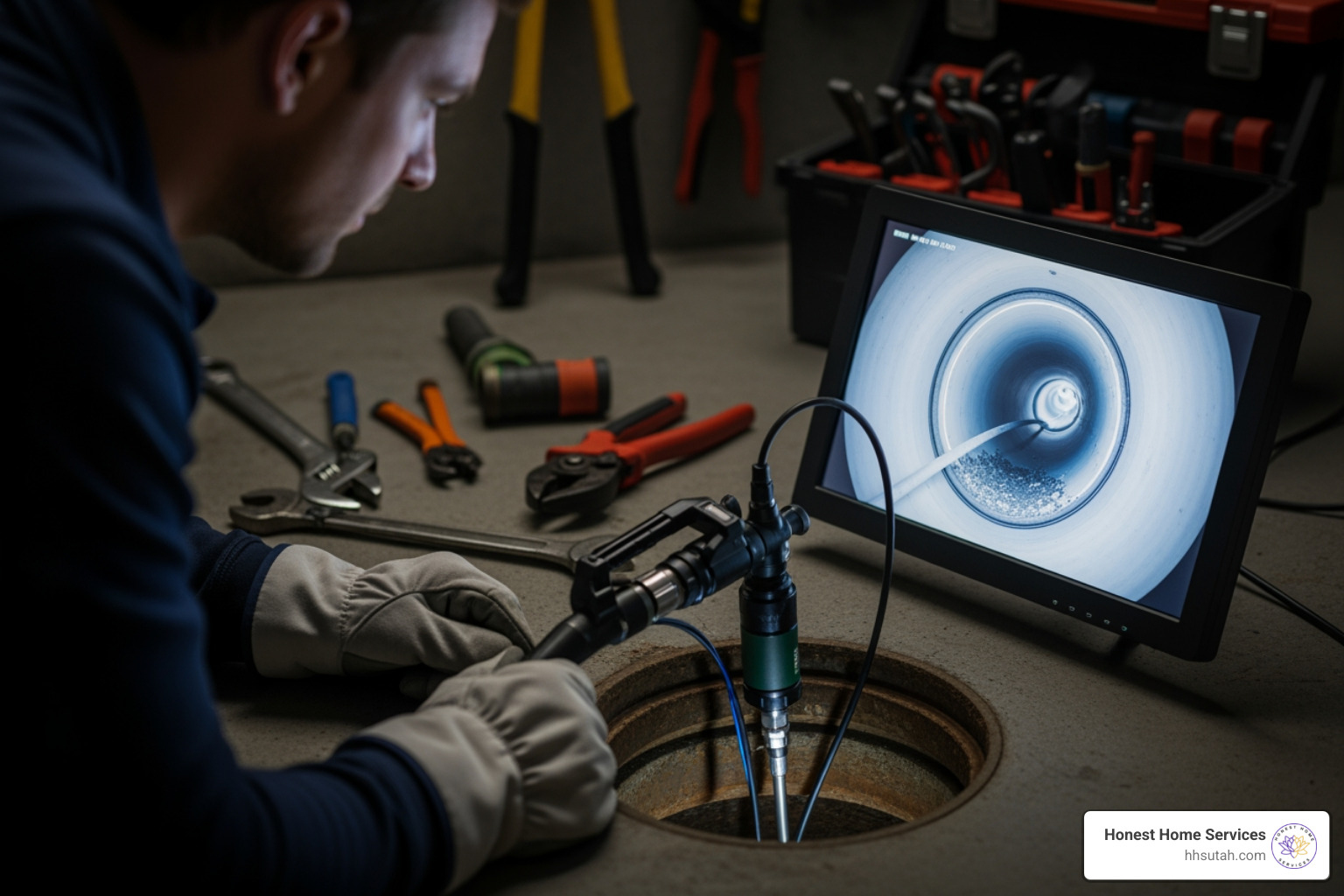
A reputable plumber will insist on a professional diagnosis before providing a quote for main sewer line replacement cost. This typically involves a video camera inspection, the gold standard for assessing your sewer line’s condition.
A camera is snaked through the line, allowing the plumber to see the exact problem. This inspection helps:
- Pinpoint the Exact Problem: Is it a crack, a collapse, tree root intrusion, or a blockage?
- Determine the Location and Extent of Damage: Knowing the precise location and length of the damaged section allows for accurate planning.
- Avoid Unnecessary Work: A camera inspection prevents guesswork, potentially saving you from a full replacement when only a partial repair is needed.
At Honest Home Services, a camera inspection is indispensable for any sewer line issue. It’s the first step to an accurate quote and the most cost-effective solution, similar to our approach for Leak Detection Salt Lake City.
Exploring Financing and Rebate Options
We understand the main sewer line replacement cost can be a burden, but options are available to make this repair more manageable.
- Payment Plans: Many plumbing companies, including Honest Home Services, offer flexible payment plans to spread out the cost.
- Home Improvement Loans: Banks and credit unions offer loans or lines of credit for home repairs.
- Local Utility Rebates or Programs: Check with your local utility authority in Northern Utah for potential rebates or financial assistance programs.
- Home Equity: A home equity loan or line of credit can be a way to finance the repair.
We believe in making repairs accessible and offer various Financing options to fit your budget. Ask us about the available options so you don’t have to delay a critical replacement.
The Long-Term Value: Why Replacing Your Sewer Line is a Smart Investment
While the upfront main sewer line replacement cost seems daunting, it’s a long-term investment in your home’s health, safety, and value.
Here’s why it’s a smart investment:
- Peace of Mind: A new sewer line eliminates worries about constant clogs, foul odors, or sewage backups, providing a reliable waste disposal system.
- Increased Property Value: A new sewer line is a significant asset that can increase your home’s market value. It removes a major red flag for potential buyers.
- Preventing Catastrophic Damage: Ignoring a failing line can lead to more expensive problems like foundation damage, basement flooding, and mold growth. Proactive replacement prevents these issues.
- Protecting Health: A new line protects your family from harmful bacteria, viruses, and gases from a compromised sewer, including mold that produces Mycotoxins Toxic Mold Exposure (Mycotoxins).
- Improved Drainage Efficiency: Modern PVC and HDPE pipes have smooth interiors that resist root intrusion and buildup, ensuring faster drainage and fewer clogs.
- Long-Term Durability: A new sewer line can last 50 to 100+ years, serving your home for generations. This upgrade is a fundamental part of The Ultimate Guide to Plumbing Maintenance in Your Home.
While the main sewer line replacement cost is a significant investment, the benefits far outweigh the risks and costs of continually patching an old, failing system. It’s an investment in your home’s foundation, your family’s health, and your long-term financial well-being.
Conclusion
Navigating the main sewer line replacement cost can be overwhelming, but this guide gives you the confidence to approach this repair. We’ve covered key cost factors, including line length, replacement methods, pipe materials, and additional expenses like permits and restoration.
Recognizing early signs like foul odors or frequent clogs is the first step. A professional diagnosis with a camera inspection is paramount to ensure you get the right solution.
While the upfront cost is substantial, the long-term benefits of a new sewer line—including peace of mind, increased property value, and protection against damage and health risks—make it a smart investment for any homeowner in Salt Lake City and Northern Utah.
At Honest Home Services, we are committed to empowering our customers with knowledge and providing transparent, fair pricing. For expert diagnosis and a transparent quote for your Salt Lake City Sewer Mainline Repair, contact our team today. We’re here to help you make informed decisions and get your home’s plumbing back in perfect working order.