
When Your Drains Are Telling You Something Is Wrong
Main sewer line clog symptoms can show up fast — and when they do, you need to know what you’re looking at.
Here are the most common signs your main sewer line is clogged:
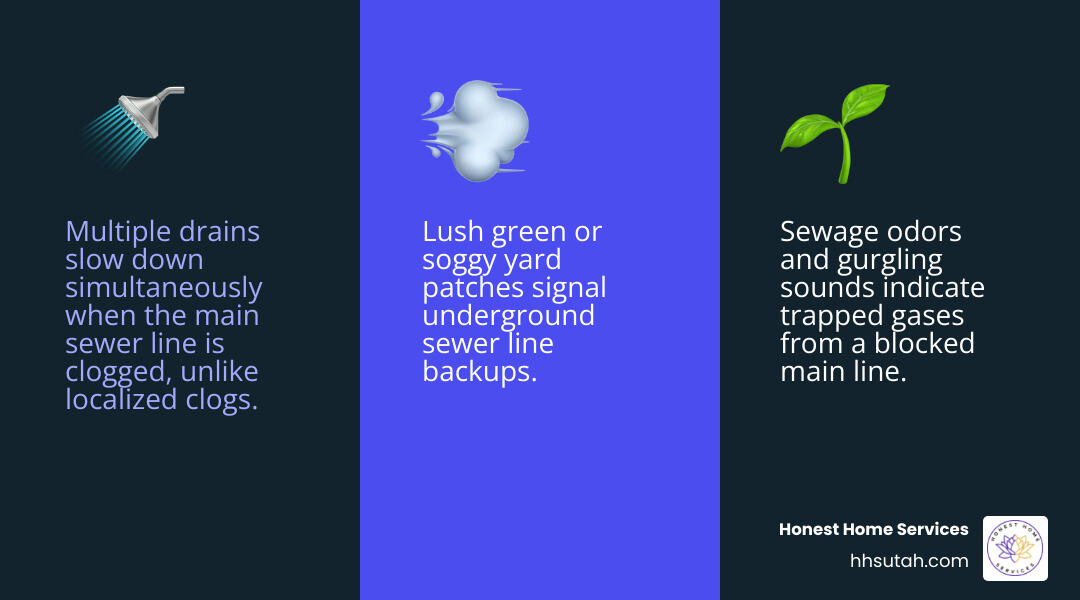
- Multiple slow drains throughout the house at the same time
- Water backing up in unexpected places (shower fills when you flush the toilet)
- Gurgling sounds coming from toilets, sinks, or floor drains
- Sewage odors rising from drains inside or outside your home
- Floor drain overflow in the basement or lowest level
- Soggy or unusually green patches of grass in your yard
- Sewage coming out of the sewer cleanout pipe outside your home
If you’re seeing two or more of these at once, there’s a strong chance the problem isn’t a single clogged drain — it’s your main sewer line.
Think of your home’s plumbing like a tree. Every sink, toilet, and shower is a branch. They all connect to one trunk: the main sewer line. When that trunk gets blocked, every branch feels it.
A main sewer line clog isn’t just an inconvenience. Left untreated, it can expose your family to sewage contaminated with harmful bacteria, cause serious water damage, and lead to repair bills that run into the thousands.
At Honest Home Services, we’ve spent over 20 years diagnosing and clearing main sewer line clog symptoms for homeowners and small businesses across Northern Utah. We know exactly what to look for — and how to fix it right the first time. Read on and we’ll walk you through every warning sign.
Easy main sewer line clog symptoms word list:
Understanding Your Home’s Plumbing “Trunk”
To understand why main sewer line clog symptoms are so disruptive, you have to understand the anatomy of your home’s waste disposal system. Every drop of water that goes down a drain in your house — whether it’s from the kitchen sink in Salt Lake City or a laundry room in Layton — eventually ends up in the same place: the main sewer line.
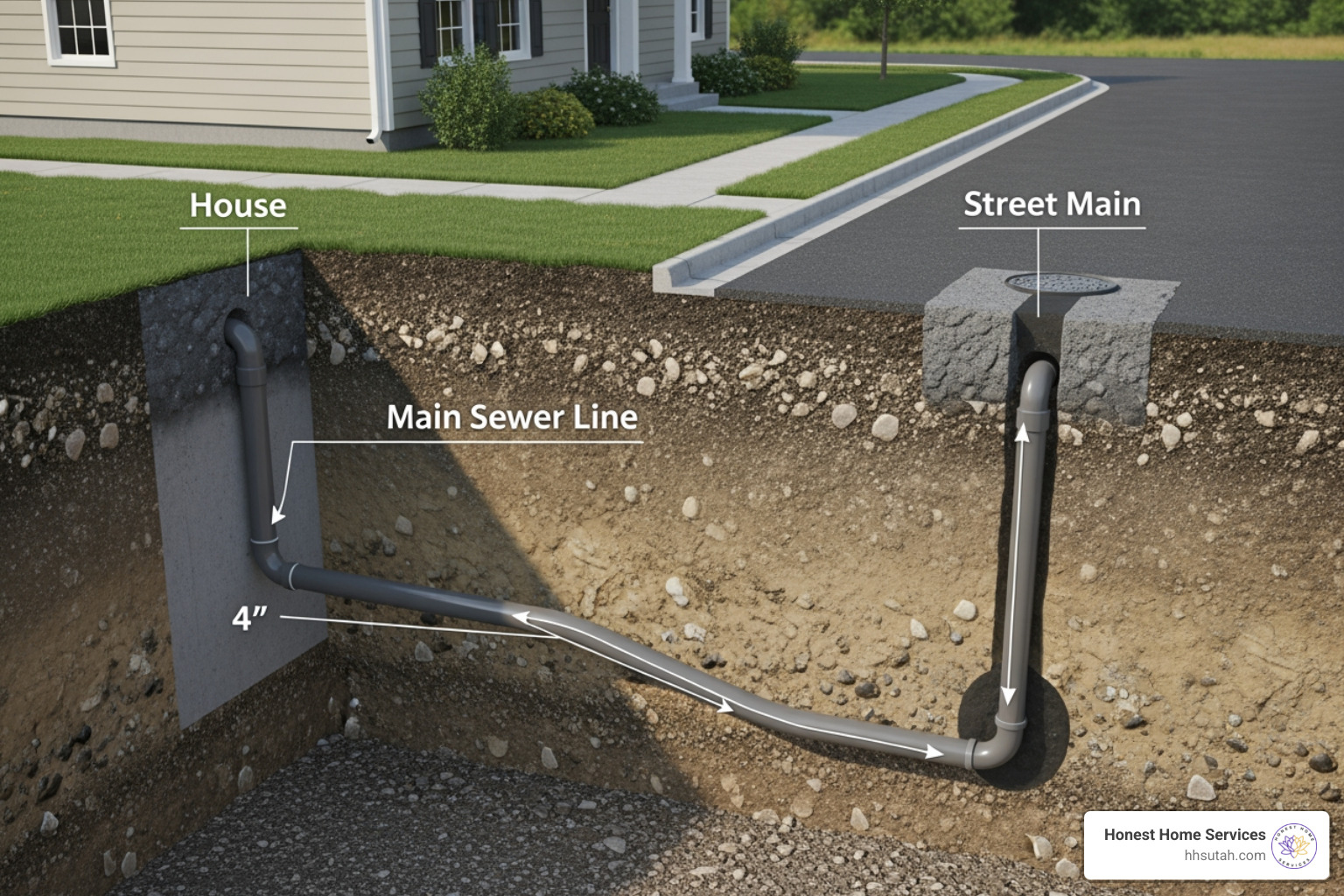
The main sewer line is typically a 4-inch diameter pipe buried deep underground. It relies entirely on gravity to pull wastewater away from your home and toward either a municipal sewer system or a private septic tank. In Northern Utah, many older homes in areas like Murray or Bountiful still use original clay or cast iron pipes that have served faithfully for decades but are now reaching the end of their lifespan.
According to the Salt Lake City Public Utilities: Sewer Maintenance guidelines, homeowners are generally responsible for the portion of the sewer line that runs from the house to the “main” in the street. This means if a clog happens anywhere on your property, it’s up to you to fix it.
One of the most important components of this system is the sewer cleanout. This is a dedicated access point, usually located near the foundation of your home or near the street, that allows plumbers to reach the main line directly. If you aren’t sure where yours is, our guide on Cleanout Clarity: Locating Your Home’s Main Sewer Line can help you find it before an emergency strikes.
7 Warning Signs of a Main Sewer Line Clog
Recognizing main sewer line clog symptoms early can save you from a “Class B” biological hazard. This is a technical way of saying that raw sewage is full of bacteria, viruses, and parasites that you definitely don’t want in your living room.
1. Multiple Slow Drains
If just your kitchen sink is slow, it’s probably a localized clog (likely grease or a stray bottle cap). But if the kitchen sink, the guest bath, and the laundry room are all draining at a snail’s pace, the “trunk” of your plumbing tree is likely the culprit.
2. Sewage Odors
Your plumbing system is designed to be air-tight, with vent stacks on your roof allowing gases to escape. If you start smelling rotten eggs or a “swampy” scent inside your home, it means methane and other sewer gases are being forced back through your P-traps because they can’t move down the main line.
3. Floor Drain Overflows
In many Northern Utah basements, the floor drain is the lowest point in the entire plumbing system. When the main line is blocked, wastewater follows the path of least resistance. This often means sewage will emerge from the basement floor drain first.
4. Gurgling Sounds
Do your pipes sound like they’re gasping for air? Gurgling noises happen when water tries to push past a blockage, trapping air bubbles in the process. If your toilet gurgles when you aren’t even using it, it’s a major red flag.
5. Water Backing Up in Unexpected Places
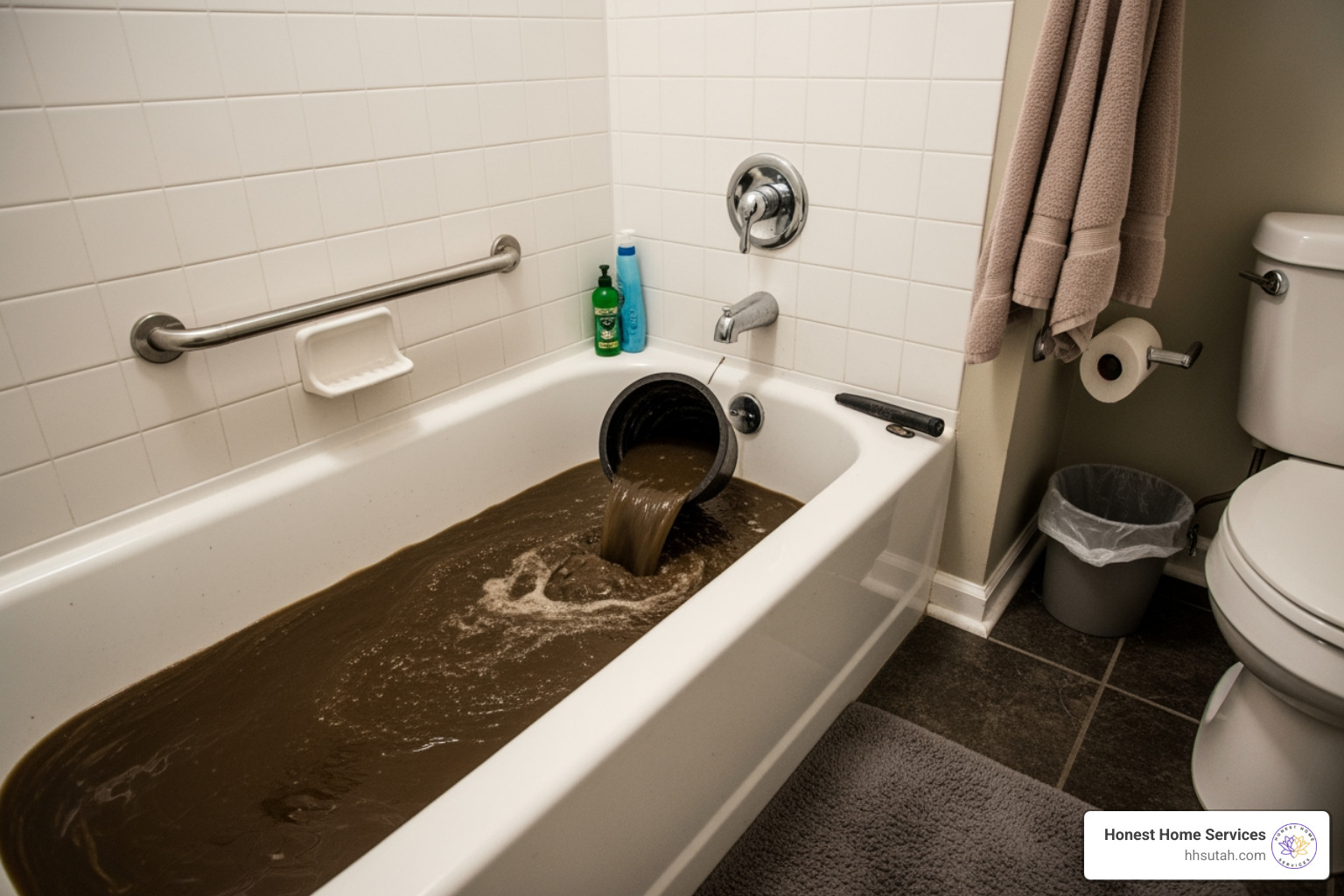
This is perhaps the most definitive of all main sewer line clog symptoms. If you flush the toilet and water starts rising in the shower, or if running the washing machine causes the kitchen sink to overflow, you have a mainline emergency.
6. Sewage at the Cleanout
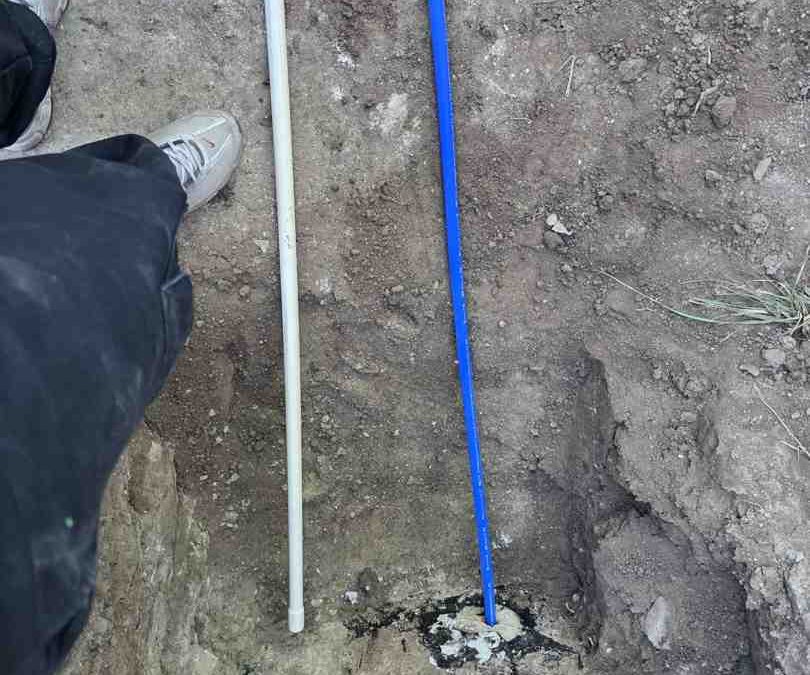
If you suspect a clog, go outside and find your sewer cleanout pipe. If you see water or raw sewage leaking out from under the cap, the blockage is definitely in the main line, somewhere between that point and the street.
7. Changes in Your Yard
Sometimes the signs aren’t inside the house at all. If a section of your lawn is suddenly much greener or “spongier” than the rest, it could be because a broken sewer line is acting as a fertilizer for your grass.
Cross-Fixture Reactions: A Key Main Sewer Line Clog Symptom
The “cross-fixture reaction” is the “smoking gun” of plumbing diagnostics. Because all your pipes are interconnected, a blockage in the main line creates hydrostatic pressure. When you introduce a large volume of water into the system — like flushing a toilet or a washing machine’s discharge cycle — that water has nowhere to go.
If you want to avoid a “lake” in your laundry room, check out our tips on Don’t Get Flooded: What to Do When Your Main Line Backs Up.
A common test we recommend is the “bubble test”:
- Fill your bathroom sink with water.
- Pull the plug.
- Watch the toilet bowl.
- If the toilet water bubbles or rises as the sink drains, you are witnessing a classic main sewer line clog symptom.
Exterior Indicators of Main Sewer Line Clog Symptoms
In May 2026, as Northern Utah homeowners head outside to start their spring landscaping in Davis County or South Jordan, they might notice some strange things in their yards.
- Lush, Vibrant Grass: If one patch of grass is growing twice as fast as the rest of the lawn, it’s likely feeding on the nitrogen and nutrients found in a leaking sewer line.
- Soggy Spots and Sinkholes: A significant leak can wash away the soil beneath your lawn, leading to “bouncy” sod or even dangerous sinkholes.
- Pest Infestations: Rodents and insects are attracted to the moisture and odors of a broken sewer line. If you have a sudden influx of roaches or rats near your foundation, your sewer line might be the “highway” they’re using to reach your home.
- Foundation Cracks: In extreme cases, a leaking sewer line can saturate the ground around your home’s foundation, causing the soil to shift and leading to structural cracks.
For more on how these sounds and sights translate to plumbing trouble, read From Gurgles to Gushers: Your Guide to Main Line Clogs.
Common Causes of Sewer Line Failure in 2026
Why do these clogs happen in the first place? In our experience serving the Wasatch Front, the causes usually fall into a few specific categories.
| Pipe Material | Typical Lifespan | Common Failure Mode |
|---|---|---|
| Clay Tile | 50–100 Years | Root intrusion at joints; cracking |
| Cast Iron | 75–100 Years | Internal corrosion and “scaling” |
| Orangeburg | 30–50 Years | Structural collapse (made of wood pulp/tar) |
| PVC / ABS | 100+ Years | Shifting soil; “bellies” or sags |
Tree Roots: This is the #1 cause of main sewer line clog symptoms in older neighborhoods like the Avenues in Salt Lake City. Roots don’t “seek out” sewage, but they are drawn to the moisture leaking from tiny cracks or joints in the pipe. Once inside, they grow into massive “root balls” that act as a net, catching toilet paper and grease.
Grease Buildup (FOG): Fats, Oils, and Grease (FOG) should never go down the drain. They might be liquid when they’re hot, but they solidify into a wax-like substance as they cool in your underground pipes.
Pipe Collapse and Shifting Soil: Northern Utah’s geography involves shifting soils and extreme temperature swings. This can cause pipes to “belly” (sag), creating a pool where solids collect, or even cause an old Orangeburg pipe to collapse entirely.
If you find yourself in the middle of a plumbing disaster, refer to When Your Main Line Breaks: A Homeowner’s Emergency Guide.
Professional Diagnostics and Immediate Response
If you suspect a main line clog, the very first thing you should do is stop using water. Don’t flush the toilet “one more time” and definitely don’t run the dishwasher. You should also locate your main water shut-off valve and turn it off to ensure no automated appliances (like a water softener or ice maker) add more water to the system.
When we arrive at a home in West Valley or Draper, we follow a specific diagnostic process:
- Locate the Cleanout: We find the access point to the main line.
- CCTV Camera Inspection: We use a high-definition, waterproof camera on a flexible cable to see exactly what’s happening inside the pipe. This takes the guesswork out of the repair. You can learn more about this in our article Picture Perfect Pipes: Everything You Need to Know About Main Line Camera Inspections.
- Hydro Jetting: If the clog is caused by grease or roots, we use high-pressure water (hydro jetting) to scour the pipe walls clean.
- Motorized Snaking: For heavy-duty obstructions, a mechanical auger can break through the blockage to restore flow.
Repair Costs and Long-Term Solutions
We believe in fair, upfront pricing. The cost to resolve main sewer line clog symptoms can vary depending on the severity of the issue:
- Standard Drain Clearing: In Utah, expect to pay between $100 and $500 for a professional snaking or hydro-jetting service.
- Sewer Line Repair: If a section of the pipe is broken, repairs typically range between $1,200 and $6,000.
- Full Replacement: If the entire line has collapsed, replacement costs usually fall between $50 and $125 per foot.
The good news is that in 2026, we rarely have to dig up your entire yard. Trenchless repair methods like Cured-In-Place Pipe Lining (CIPP) allow us to create a new, seamless pipe inside your old one. CIPP boasts an average lifespan of 50 years, making it a permanent solution to recurring root issues.
For a deeper dive into how we handle these repairs without destroying your landscaping, check out Mainline Mayhem: Tackling Home Sewer and Sewage Backup Repairs.
Frequently Asked Questions about Sewer Clogs
How can I tell the difference between a main line clog and a localized drain clog?
A localized clog only affects one fixture. If your bathroom sink is backed up but the toilet flushes perfectly, the problem is in the sink’s “branch” line. If multiple fixtures are acting up or you see water backing up into the shower when you flush, it’s a main line issue.
Are chemical drain cleaners safe for clearing a main sewer line?
Absolutely not. Chemical cleaners are heavy and rarely reach a main line clog 50 feet away. Instead, they sit in your pipes, eating away at the material and creating a toxic hazard for the plumber who eventually has to clear the line.
Is a main sewer line backup considered a plumbing emergency?
Yes. Because it prevents you from using any water in the house and creates a significant health risk from raw sewage, a main line clog is always an emergency that requires immediate professional attention.
Conclusion
Identifying main sewer line clog symptoms is the first step toward protecting your home and your wallet. Whether you’re dealing with a gurgling toilet in Saratoga Springs or a soggy yard in Clearfield, ignoring the signs will only make the eventual repair more expensive.
At Honest Home Services, we pride ourselves on being Northern Utah’s most reliable plumbing experts. We offer 24/7 emergency support because we know that sewer lines don’t wait for business hours to fail. Our local technicians are committed to fair pricing and guaranteed customer satisfaction.
Don’t let a clog drain your bank account or your peace of mind. If you’re seeing the signs, contact us today for more info about Salt Lake City sewer mainline repair or to schedule a professional camera inspection. We’ll get your “trunk” flowing freely again in no time!