
How Much Does Sewer Pipe Bursting Cost? (Quick Answer)
Sewer pipe bursting cost typically falls in the following ranges for Utah homeowners:
| Project Type | Cost Range |
|---|---|
| Per linear foot | $60 – $300 |
| Average residential project | $5,000 – $15,000 |
| Small/short line jobs | $3,500 – $6,000 |
| Complex or deep installations | Up to $20,000 |
These numbers sit lower than most homeowners expect — especially once you factor in what you’d spend on landscape restoration after traditional excavation.
When your sewer line fails, the last thing you want is a surprise bill. That’s why understanding sewer pipe bursting cost upfront matters so much. Pipe bursting is a trenchless method that replaces your damaged sewer line without digging a long trench across your yard. It sounds like something from the future, but it’s a well-established technology that’s been in use since the early 1980s — and it could save you thousands compared to traditional dig-and-replace methods.
Yet many homeowners still don’t know what to budget, what drives the price up or down, or whether pipe bursting is even the right call for their situation.
This guide walks you through everything you need to know — clearly and honestly — so you can make a confident decision.
At Honest Home Services, we’ve spent over 20 years helping Utah homeowners navigate sewer line repairs, including trenchless pipe bursting, and we know how confusing sewer pipe bursting cost can be when you’re getting quotes. We’re here to give you the straight answers you deserve before you sign anything.
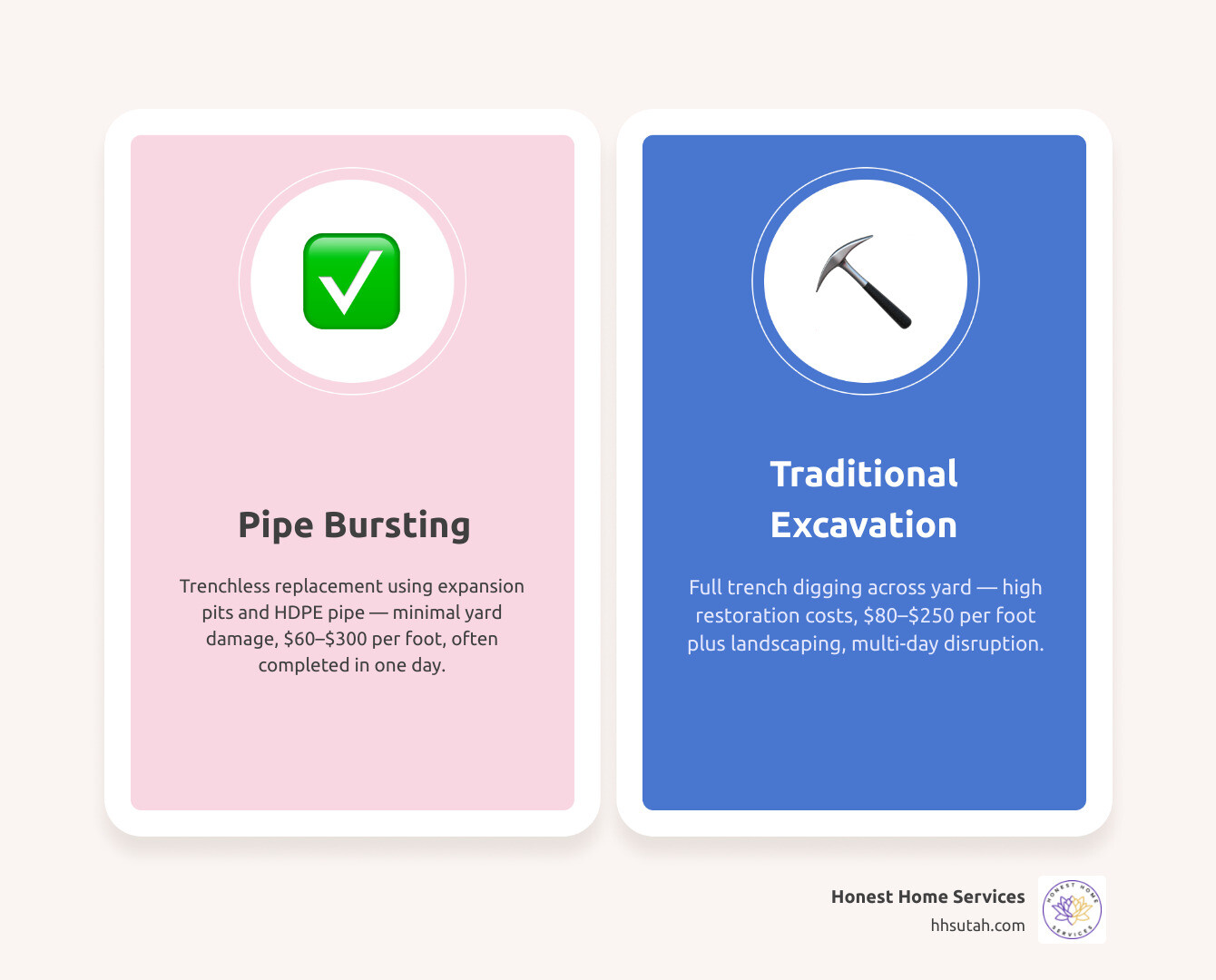
Know your sewer pipe bursting cost terms:
What Is Pipe Bursting and How Does It Work?
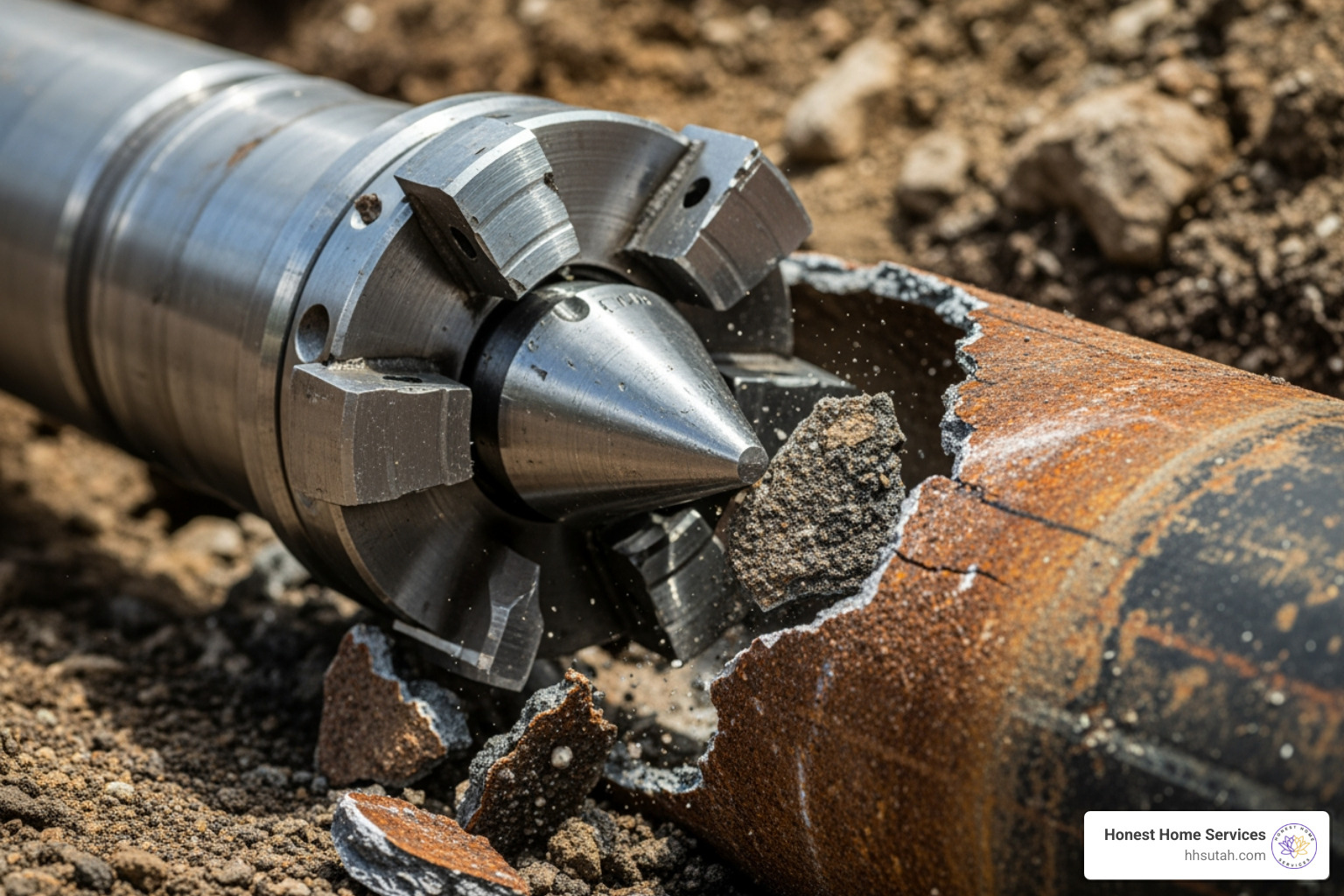
If the phrase “pipe bursting” sounds like a plumbing disaster, don’t worry-it is actually the solution to one! Pipe bursting is a highly efficient trenchless replacement method. Instead of digging up your entire lawn to remove a broken sewer pipe, we use specialized machinery to replace it from the inside out.
The entire trenchless pipe bursting process relies on a heavy-duty, cone-shaped expander head (called a bursting head). Here is how it works step-by-step:
- Access Pits: We dig two small excavation pits-one at the beginning of the damaged pipe segment (the insertion pit) and one at the end (the receiving pit).
- The Pulling Cable: A high-strength steel cable is fed through the old, damaged pipe from one pit to the other.
- The Bursting Head: We attach the steel cable to the nose of the cone-shaped bursting head. The back end of this bursting head is securely attached to a brand-new, seamless High-Density Polyethylene (HDPE) pipe.
- The “Burst”: Using a powerful hydraulic puller, we pull the bursting head through your old sewer line. Because the head is slightly larger than the old pipe, it fractures the old, brittle pipe (whether it is clay, cast iron, or old PVC) and forces the broken fragments outward into the surrounding soil.
- Seamless Integration: As the bursting head breaks the old line, it simultaneously pulls the brand-new, seamless HDPE pipe directly into the newly cleared pathway.
Once the pull is complete, we disconnect the equipment, make the final connections to your home plumbing and the city main, and backfill the two small pits. For a general overview of this trenchless replacement method, see Pipe bursting.
How the Trenchless Process Protects Your Property
The most significant advantage of this trenchless replacement method is that it keeps your home looking like a home-not an active archeological dig site.
Traditional sewer line replacement requires a backhoe to dig a continuous, deep trench straight through your yard, driveway, flower beds, or patio. This process can take a week or more and leaves you with a massive restoration bill. When weighing your Trenchless or Traditional Options, pipe bursting stands out because it requires zero long trenches. By keeping 90% of your yard completely untouched, you avoid the thousands of dollars you would otherwise spend replanting sod, rebuilding decks, or repaving your driveway.
Understanding Sewer Pipe Bursting Cost: The Complete Price Breakdown
To help you visualize how your budget breaks down, let’s look at how the sewer pipe bursting cost compares to other common sewer repair strategies:
| Cost Category | Pipe Bursting (Trenchless) | Traditional Open-Cut Excavation | CIPP Lining (Trenchless) |
|---|---|---|---|
| Average Cost Per Foot | $60 – $300 | $50 – $250 (Base price) | $80 – $250 |
| Typical Total Project Cost | $5,000 – $15,000 | $7,500 – $30,000+ (With restoration) | $6,000 – $12,000 |
| Yard Disruption | Minimal (2 small pits) | High (Full-length trench) | Very Minimal (1 access point) |
| Completion Timeline | 1 to 2 days | 5 to 10 days | 1 to 2 days |
| Average Lifespan | 50 to 100 years | 50+ years | 50+ years |
While the base per-foot cost of traditional digging sometimes looks cheaper on paper, it is a financial trap. Traditional excavation quotes rarely include the cost of rebuilding your yard. Once you add the expense of pouring new concrete, repairing damaged landscaping, or patching a paved driveway, the total price tag of a traditional dig quickly climbs past the cost of trenchless alternatives.
Average Sewer Pipe Bursting Cost per Foot
On average, pipe bursting costs between $60 and $300 per linear foot. For most residential homes in Northern Utah, the sewer lateral line running from the house to the street is between 50 and 100 feet long. This means a typical residential pipe bursting project will range from $5,000 to $15,000.
If your sewer line is exceptionally short or shallow, you might pay on the lower end of that spectrum ($3,500 to $6,000). Conversely, if you have a very long run or need to dig extremely deep to reach the connection points, the project cost can reach up to $20,000. You can learn more about how these lengths and depths impact your overall budget by reading our guide on Sewer Line Replacement Costs.
Hidden Fees That Can Inflate Your Sewer Pipe Bursting Cost
When comparing quotes from different plumbing contractors, it is crucial to ensure you are looking at all-inclusive pricing. Some lowball estimates exclude necessary steps that end up as expensive “add-ons” mid-project.
Watch out for these potential extra Sewer Line Repair Expenses:
- Permits and Municipal Fees: Most cities in Salt Lake County and Davis County require excavation and plumbing permits, which can add several hundred dollars to the job.
- Utility Line Locating: Before we can dig even a small pit, we must have all underground gas, power, and water lines marked. While the locating service itself is usually free, coordinating around complex utility webs can add labor time.
- Concrete and Asphalt Cutting: If one of your access pits must be dug in a driveway, sidewalk, or street, cutting through the concrete and subsequently patching it will add to your final invoice.
- Sewer Camera Inspections: A high-quality contractor will always perform a video camera inspection before and after the job. Ensure this inspection is included in your initial quote!
Pipe Bursting vs. Traditional Excavation vs. CIPP Lining
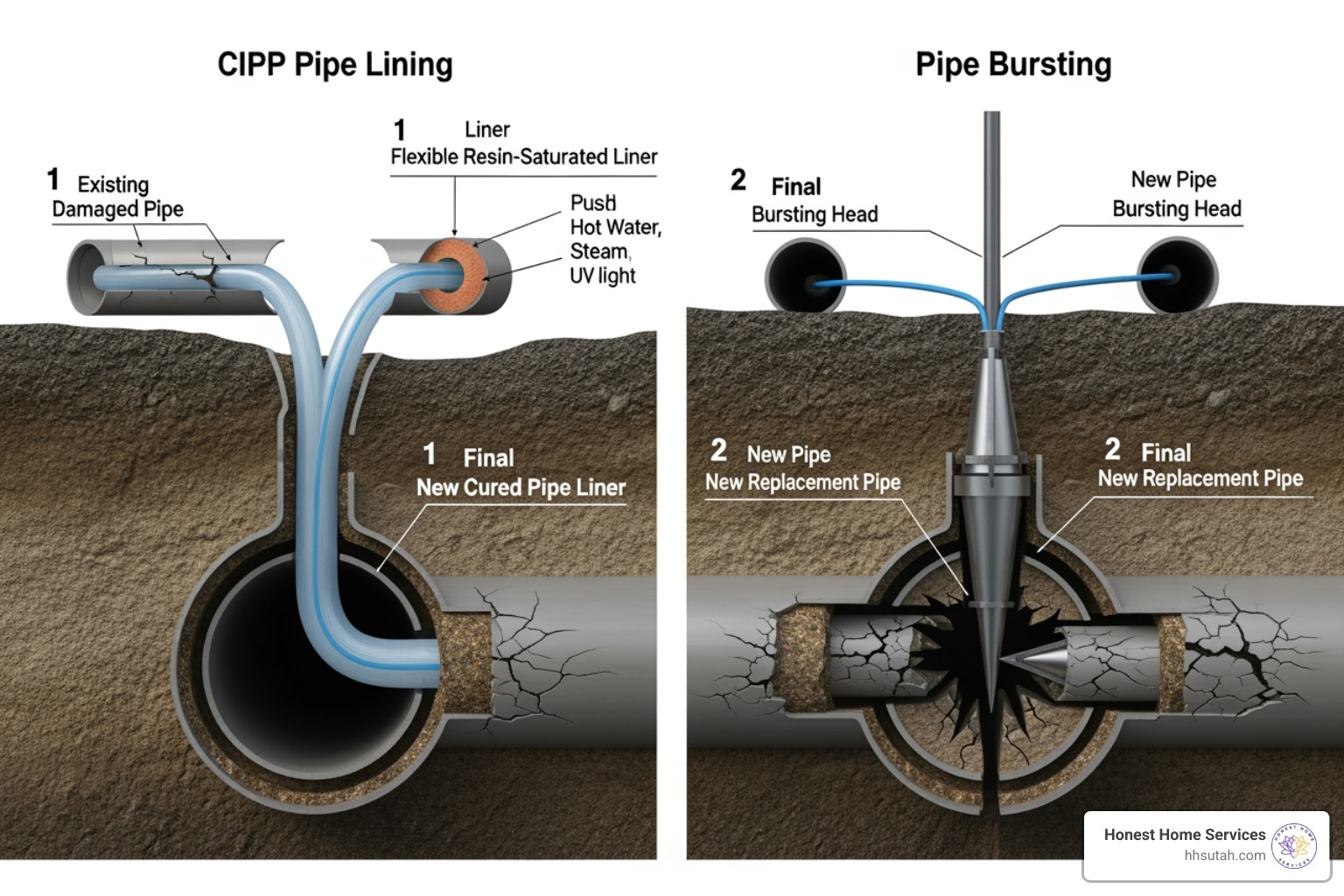
When it comes to modern sewer rehabilitation, you generally have three routes to choose from: traditional excavation, CIPP (Cured-in-Place Pipe) lining, and pipe bursting.
- Traditional Excavation: This is the old-school “dig-and-replace” method. It is highly invasive, destructive to your property, and takes a long time. However, it is sometimes the only option if your sewer line has severe “bellies” (sagging sections) or is buried beneath heavy obstructions that cannot be bypassed.
- CIPP Lining (Pipe Relining): This method involves inserting an epoxy-saturated fabric liner into your existing pipe. Once inside, the liner is inflated and cured, creating a brand-new, seamless “pipe within a pipe.” It is incredibly non-invasive because it often requires only a single access point. However, because it fits inside your existing pipe, it slightly reduces the overall diameter of your sewer line (typically by about 5%).
- Pipe Bursting: This method completely replaces the old pipe with a brand-new HDPE line. Unlike CIPP lining, pipe bursting does not reduce your pipe’s diameter. In fact, it even allows you to upsize your pipe to handle more volume.
If you live in Northern Utah, our team at Honest Home Services can help you determine the best fit for your specific property. We proudly serve homeowners across the region, and we handle these projects locally with expert care.
When to Choose Pipe Bursting Over CIPP Lining
While both are excellent trenchless options, CIPP lining and pipe bursting are not interchangeable.
Pipe bursting is hands-down the best choice when:
- The Existing Pipe Is Collapsed: CIPP lining requires a structurally sound “host” pipe to hold the inflated liner while it cures. If your pipe has completely collapsed, is missing large sections, or has been crushed by heavy tree roots, lining is impossible. Pipe bursting doesn’t care if the old pipe is crushed—the bursting head will shatter the debris and pull a brand-new pipe through anyway.
- You Need to Upsize Your Line: If you are remodeling your home, adding bathrooms, or converting a basement into an accessory dwelling unit (ADU), you may need a larger sewer line to handle the increased wastewater flow. Pipe bursting is the only trenchless method that allows for “upsizing”—for example, pulling a 6-inch pipe through an old 4-inch line.
- The Original Pipe Material Is Highly Deteriorated: Highly deteriorated clay or extremely corroded cast iron pipes are perfect candidates for pipe bursting, as they fracture easily under hydraulic pressure, leaving a clean path for the new HDPE line.
For a deeper dive into how underground sewer sleeves and alternative trenchless solutions compare, check out our guide on Sewer Pipe Repair Sleeves.
Key Factors That Influence Your Final Bill
No two sewer lines are identical, which means sewer pipe bursting cost varies from home to home.
Several critical sewer pipe bursting cost factors will determine where your final estimate falls:
- Pipe Length: Because HDPE pipe and pulling cables are priced by the foot, a longer run from your home to the city main naturally costs more.
- Access Pit Location: If we can dig the insertion and receiving pits in open soil or grass, labor costs remain low. If we have to cut through a concrete driveway, a paved road, or dig near a retaining wall, the complexity—and the price—goes up.
- Soil Conditions: Hard clay, rocky soil, or highly compacted dirt can resist the expansion of the bursting head, requiring higher-tonnage hydraulic pullers and more labor time.
- Depth of the Line: The deeper your sewer line is buried, the larger and safer the access pits must be. Extremely deep lines require shoring to protect our technicians, which increases labor costs.
How Pipe Material and Depth Affect the Price
The material of your existing pipe plays a major role in how easily the bursting head can do its job. Brittle materials like clay, concrete, and old cast iron fracture easily and cleanly. However, if your existing line was repaired in the past with thick PVC or ductile iron, it may require a specialized “slicing” head rather than a standard bursting head, which can slightly increase equipment costs.
Additionally, pipe depth is a major pricing variable. In many parts of Northern Utah, sewer lines can be buried anywhere from 4 feet to over 12 feet deep. Excavating a 12-foot-deep pit requires specialized safety equipment, heavy machinery, and extra hours of labor compared to a shallow 4-foot utility line.
To better understand how these material and depth variables impact your overall budget, take a look at our comprehensive Main Sewer Line Replacement Guide.
Frequently Asked Questions About Trenchless Sewer Repair
How long does a pipe bursting project take to complete?
Most residential pipe bursting projects are completed in just 1 to 2 days. The actual hydraulic pull of the new HDPE pipe usually takes only a few hours. This is a massive improvement over traditional excavation, which can leave your yard torn up and your water service turned off for a week or more.
Will pipe bursting damage my existing landscaping?
No! Because pipe bursting only requires two small access pits (typically about 3×3 feet each) at the ends of the pipe run, over 90% of your lawn, gardens, and pathways remain completely untouched.
How long does the new HDPE pipe last?
High-Density Polyethylene (HDPE) is incredibly durable. It is completely seamless, meaning there are no joints where tree roots can intrude or cause blockages. HDPE is also highly resistant to chemical corrosion and rust. It has an expected lifespan of 50 to 100 years, making it a permanent, lifetime fix for your home.
Conclusion
Dealing with a broken sewer line is stressful, but choosing the right repair method doesn’t have to be. Trenchless pipe bursting offers a faster, cleaner, and ultimately more cost-effective alternative to tearing up your beautiful Utah yard. By avoiding the massive secondary expenses of landscape and driveway reconstruction, pipe bursting provides incredible long-term value.
At Honest Home Services, we believe in providing our neighbors across Salt Lake City, Davis County, and the surrounding areas with honest advice, fair pricing, and expert craftsmanship. We will never upsell you on repairs you don’t need, and we always provide clear, transparent quotes with no hidden fees.
If you suspect your sewer line is failing or have been told you need a costly dig-and-replace job, get a second opinion from our local trenchless experts. Schedule Salt Lake City Sewer Mainline Repair with us today, and let us help you protect your home, your yard, and your wallet!