

When Your Whole House Drains Slowly: What to Know About Main Sewer Line Clog Cleaners
Finding the right main sewer line clog cleaner can mean the difference between a quick fix and a flooded basement. Here are the most effective options to consider:
Top main sewer line clog cleaners at a glance:
| Product | Type | Best For | Septic Safe |
|---|---|---|---|
| Main Line Drain Opener | Chemical (bleach-free) | Active clogs up to 50 ft | Yes |
| Instant Power Main Line Cleaner | Caustic (NaOH/KOH) | Tough grease/debris clogs | No |
| Roebic K-97 | Bacterial/Enzyme | Maintenance & septic lines | Yes |
| Green Gobbler Clog Dissolver | Enzymatic | Hair, grease, organic buildup | Yes |
| Drano Commercial Max Gel | Caustic (bleach-based) | Fixture drains (not main lines) | No |
A clogged main sewer line isn’t like a slow bathroom sink. When the main line is blocked, every drain in your home is affected — toilets gurgle, showers back up, and running your washing machine can send water bubbling up through a floor drain. It’s a whole-house problem that needs the right solution fast.
Some clogs respond well to a consumer-grade chemical or enzymatic cleaner. Others — especially those caused by tree roots, collapsed pipes, or years of grease buildup — need professional equipment to clear safely.
This guide covers both: the best products you can use yourself, and when it’s time to call in the pros.
At Honest Home Services, we’ve spent over 20 years clearing main sewer line clogs across Northern Utah — from routine drain cleaning to full sewer line repairs. We know exactly which situations a main sewer line clog cleaner can handle, and which ones need a camera inspection and a hydro-jet.
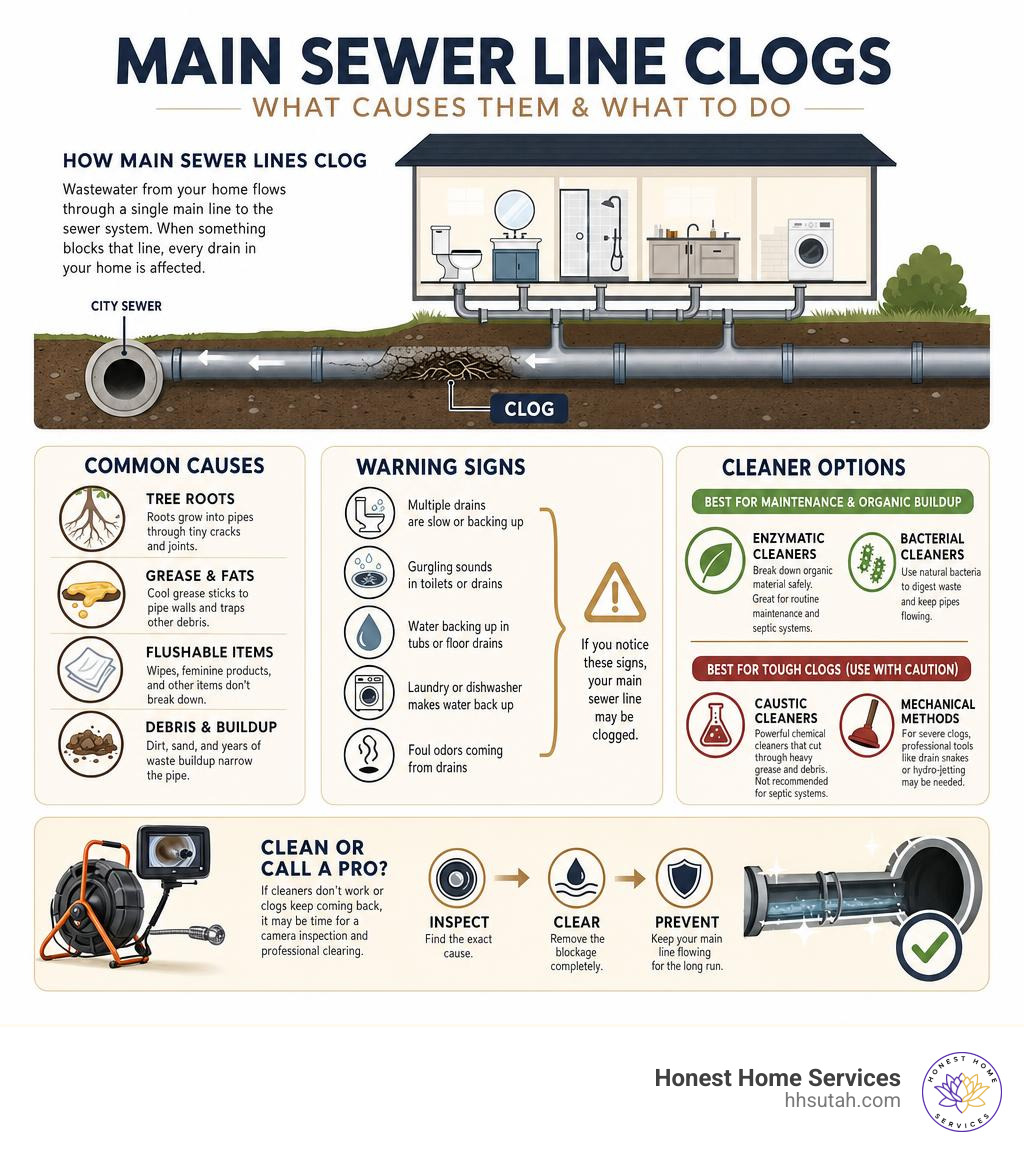
Main sewer line clog cleaner vocab explained:
Understanding Main Sewer Line Clogs vs. Localized Drains
Before pouring a whole gallon of chemical cleaner down your toilet, you need to know what you are dealing with. A localized drain clog occurs in a single fixture’s P-trap—like hair in your shower drain or grease in your kitchen sink. A main sewer line clog, however, is a deep, systemic blockage in the plumbing pipeline that carries all wastewater away from your home.
The Culprits Behind Main Line Blockages
Sewer line clogs typically develop gradually rather than happening overnight. Here are the most common causes:
- Tree Roots: This is the absolute leading cause of main line failures, especially in older Northern Utah neighborhoods with mature trees. Tiny roots seek out moisture, slip through small pipe joints or cracks, and grow into massive, debris-catching root balls inside your sewer lateral.
- Grease and Fat Buildup: Pouring bacon grease or cooking oil down the kitchen sink is a recipe for disaster. As the grease cools, it solidifies along the cold underground pipe walls, trapping hair, wet wipes, and toilet paper until the pipe is completely choked off.
- Foreign Objects and “Flushable” Wipes: Despite what the packaging claims, baby wipes, feminine hygiene products, and paper towels do not dissolve like toilet paper. They snag on pipe imperfections and build a physical wall inside your sewer line.
- Pipe Scale and Mineral Buildup: Over time, particularly in hard-water areas across Salt Lake County, minerals and pipe scale accumulate on the interior walls of cast iron or clay pipes, narrowing the pathway for wastewater.
Spotting the Signs of a Main Line Clog
How do you know if you have a main line backup rather than a simple clogged sink? Look out for these classic warning signs:
- Multiple Slow Drains: If your kitchen sink, guest shower, and laundry line are all draining at a snail’s pace simultaneously, the restriction is in the main line.
- Gurgling Toilets: When you run water in the bathroom sink or wash a load of laundry, do you hear a strange bubbling or gurgling noise coming from your toilet? That is air trapped in the system trying to escape.
- Sewage Backups in Low Fixtures: If flushing your toilet causes wastewater to bubble up into your bathtub or basement floor drain, you have a definitive main sewer line blockage.
- Unusual Lawn Changes: An underground sewer leak or major clog can cause soggy, sunken, or unusually lush, green patches of grass directly above your lateral line.
To protect your home from costly water damage, check out our comprehensive guide, Don’t Get Flooded: A Homeowner’s Guide to Main Line Backups. If you are already hearing strange sounds from your basement, read through From Gurgles to Gushers: Your Guide to Main Line Clogs to diagnose your situation.
Choosing the Right Main Sewer Line Clog Cleaner
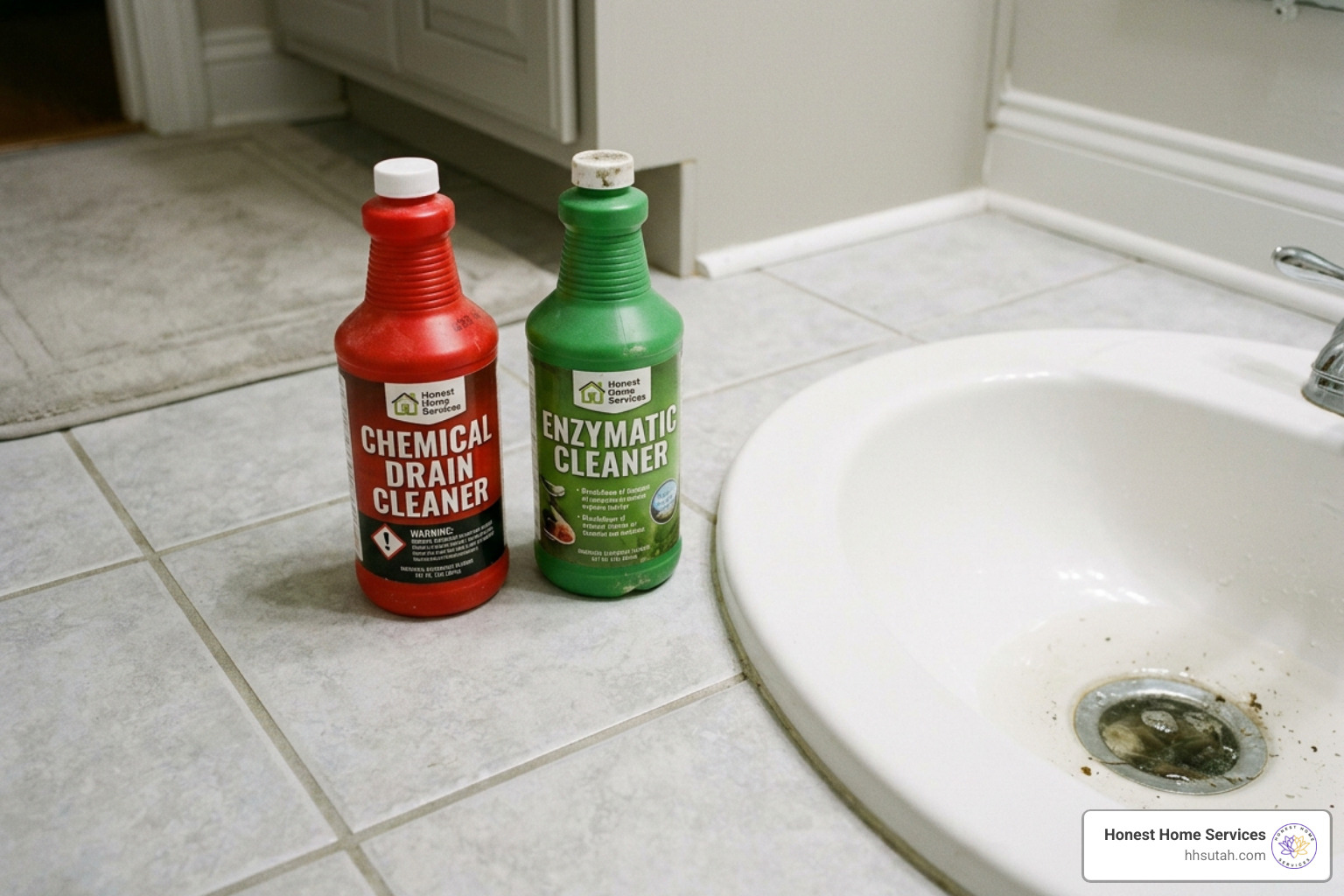
When you shop for a main sewer line clog cleaner, you will find two primary categories on the shelves: caustic chemical cleaners and enzymatic/bacterial cleaners. Using the wrong one can warp your pipes, ruin your septic system, or create toxic fumes.
Chemical vs. Enzymatic Cleaners: What’s the Difference?
Caustic chemical cleaners rely on powerful chemical reactions to dissolve blockages. They typically contain heavy concentrations of sodium hydroxide (lye) or potassium hydroxide. When mixed with water, these chemicals create intense heat (an exothermic reaction) that melts grease, hair, and organic matter in minutes. While highly effective at blasting through immediate blockages, they carry significant risks.
Enzymatic and bacterial cleaners use living, beneficial bacteria and enzymes to digest organic materials like fats, paper, and hair. Instead of a violent chemical reaction, these products slowly eat away at the sludge coating your pipes. They do not generate heat and are completely non-corrosive.
| Feature | Caustic Chemical Cleaners | Enzymatic / Bacterial Cleaners |
|---|---|---|
| Active Ingredients | Sodium Hydroxide, Potassium Hydroxide | Live Bacteria, Active Enzymes |
| Action Speed | Rapid (15 to 30 minutes) | Slow (requires 8 to 12 hours or multiple days) |
| Best For | Emergency grease, soap scum, and hair clogs | Preventive maintenance, sludge, and septic care |
| Pipe Safety | Can damage older cast iron, copper, and thin PVC | 100% safe for all pipe types (PVC, clay, cast iron) |
| Septic Safety | Destroys beneficial septic bacteria | Safe; actually rejuvenates septic systems |
| Environmental Impact | High; harsh chemicals can leach into soil | Low; biodegradable and eco-friendly |
Safety Hazards and Pipe Compatibility
Before choosing a product, consider your plumbing materials. Caustic chemical cleaners can easily warp or melt modern thin-walled plastic PVC pipes due to the extreme heat they generate. Conversely, if you have old, corroding cast iron or copper pipes, acidic or caustic cleaners can eat through the weakened metal, turning a simple clog into a major underground pipe leak.
Furthermore, roughly 25 percent of homes in the U.S. rely on septic tanks for their wastewater. If you are one of them, pouring a harsh chemical cleaner down the drain will kill the delicate ecosystem of bacteria inside your tank, leading to system failure and expensive repairs.
For a detailed walkthrough on how to safely apply these products without damaging your plumbing, read Don’t Get Drained: Your Step-by-Step Guide to Cleaning Your Main Sewer Line.
Top Consumer Products for Main Line Clearing

If you decide to tackle a main line clog yourself, you must use a product specifically formulated for larger lines. Standard bathroom sink gels are too thick and will lose their potency long before reaching a main line clog, which can sit dozens of feet from your home’s drains.
Most consumer-grade main line openers are designed to reach clogs up to 50 feet away from the point of application. To get the best results, always apply these products during a period of low water usage—such as right before bed—so the cleaner can sit undisturbed in the pipes for 8 to 12 hours.
To keep your plumbing flowing smoothly year-round, we recommend establishing a regular maintenance routine. Learn more about proactive pipe care in our guide to Mainline Magic: Keeping Your Drains and Sewers Sparkling Clean.
Chemical Main Sewer Line Clog Cleaner Options
If you have an active, stubborn clog and need a fast-acting chemical solution, these are the two most prominent retail products on the market:
- Green Gobbler Main Line Drain Opener: This high-density, bleach-free, and sodium hydroxide-free formula is specifically designed to clear main sewer lines. Because it is denser than water, it sinks directly through standing water to target the blockage. It is safe for PVC, copper, and cast iron pipes, as well as septic systems and basement sewer ejector pump wells. You can find it at Green Gobbler Main Line Drain Opener – 1 Gallon. For best results, pour the entire gallon into your first-floor toilet and flush to distribute it directly into the main line, then let it sit overnight.
- Drano Commercial Line Max Gel: This is a heavy-duty, professional-strength caustic gel designed to cut through standing water and dissolve hair, soap scum, and organic gunk in 15 to 30 minutes. It is available at Commercial Line 128 fl. oz. Max Gel Clog Remover. However, use caution: Drano Max Gel is highly caustic, is not safe for toilets, and should never be used if you have a septic system or older, fragile pipes.
Enzymatic and Bacterial Main Sewer Line Clog Cleaner Solutions
If you want a safer, eco-friendly approach to dissolve organic sludge or maintain your septic system, these bacterial options are highly effective:
- Roebic K-97 Main Line Cleaner: This specialized formula contains exclusive, fast-acting bacteria that digest paper, fats, grease, and sludge in sewer lines and septic systems. It is particularly effective at clearing the stubborn buildup associated with modern low-flow toilets. It is available at Roebic K-97 Drain Cleaner | Walmart Business. To use, shake well, pour 8 ounces into your toilet, and flush. Repeat this process daily for four consecutive days.
- Green Gobbler Drain and Toilet Clog Dissolver: This odorless, biodegradable formula dissolves organic materials, paper, and hair without damaging your pipes or killing septic bacteria. It comes in convenient premeasured applications, which you can find at Green Gobbler 31 oz. Drain and Toilet Clog Dissolver (2-Pack). It is safe for all household pipes and can be used in toilets, sinks, and showers alike.
Professional Methods and Heavy-Duty Equipment
While DIY chemical and enzymatic cleaners have their place, they have severe limitations. They cannot cut through thick tree roots, remove solid foreign objects, or repair a collapsed pipe. When a main line clog is deep or structural, professional plumbers rely on heavy-duty mechanical equipment to restore flow.
Professional Drain Snakes and Augers
A professional-grade drain snake uses a heavy steel cable with a cutting blade on the end to physically chop through blockages.
- Industrial Drain Machines: Equipment like the General Pipe Cleaners Speedrooter 92 features a 1/2 HP motor and 100 feet of heavy-duty, aircraft-quality Flexicore cable. It is designed to clear tough blockages in lines up to 10 inches in diameter.
- Consumer Sewer Snakes: For lighter residential clogs, tools like the VEVOR Sewer Snake Auger offer a 50-foot steel core cable and an air-activated foot switch to clear 2-inch to 4-inch pipes safely.
Hydro-Jetting: The Ultimate Pipe Cleaning Method
When a pipe is coated in decades of hardened grease, scale, or extensive tree roots, snaking only punches a temporary hole through the mess. That is where hydro-jetting comes in.
Hydro-jetting uses specialized machine pumps to blast water through your sewer line at pressures up to 4,000 PSI. This high-pressure water wall scrubs the interior of your pipes completely clean, restoring them to like-new condition.
To determine if this high-powered solution is right for your home, explore our guide on Main Line Magic: What You Need to Know About Hydro Jetting or review the 5 Signs You Need Hydro Jetting for Your Drains.
Frequently Asked Questions
How far can a main sewer line clog cleaner reach?
Most consumer-grade liquid main line openers are designed to reach clogs up to 50 feet away from the application point. For clogs located further down the lateral line near the municipal sewer connection, liquid cleaners lose their chemical potency and concentration.
To maximize their reach, always apply the product through your home’s primary sewer cleanout—the dedicated access pipe located in your basement, utility room, or yard. This bypasses your indoor plumbing and delivers the cleaner directly to the main line. For more on finding and using this access point, see Unclogging the Mystery: A Guide to Your Home’s Drain Cleanout and The Main Event: Everything You Need to Know About Your Sewer Cleanout.
Are chemical cleaners safe for all pipe types?
No. Caustic chemical cleaners containing sodium hydroxide or potassium hydroxide generate intense heat that can warp, soften, or melt thin-walled PVC pipes. They can also accelerate corrosion in older cast iron, lead, or copper pipes, eventually causing underground structural failures. Additionally, chemical cleaners will kill the beneficial bacteria in septic systems, which can lead to wastewater backups in the 25 percent of U.S. homes that rely on septic tanks. Enzymatic and bacterial cleaners are the only options guaranteed to be 100% safe for all pipe materials and septic systems.
When should I call a professional for a main line clog?
You should call a professional plumber immediately if you experience any of the following:
- Recurring Backups: If your main line clogs multiple times in a single season, you are likely dealing with a structural issue like tree root intrusion or a collapsed pipe rather than a simple clog.
- Water Backing Up in Multiple Fixtures: If flushing your toilet causes water to rise in your shower or laundry drain, the blockage is deep and requires industrial equipment.
- Foul Sewage Odors: Persistent sewer gas smells inside your home or a soggy, foul-smelling patch of lawn indicate a broken sewer lateral.
To learn more about the costs associated with these repairs, check out our guide on Main Sewer Line Clog Repair Cost.
Conclusion
A clogged main sewer line is a stressful plumbing emergency, but understanding your options can help you resolve it quickly and safely. While a high-quality consumer main sewer line clog cleaner like Green Gobbler or Roebic K-97 can clear minor organic sludge and maintain your system, they cannot fix structural damage, clear heavy tree roots, or repair collapsed pipes.
If you are dealing with a stubborn, recurring backup in Salt Lake City, Clearfield, Layton, Kaysville, Farmington, Bountiful, or anywhere else in Northern Utah, do not risk damaging your home’s plumbing with harsh chemicals.
At Honest Home Services, our team of licensed, local technicians is ready to help with state-of-the-art camera inspections, professional hydro-jetting, and reliable, fairly priced sewer line repairs. We back all our work with a customer satisfaction guarantee.
Don’t wait for a slow drain to turn into a flooded basement. Schedule Salt Lake City Sewer Mainline Repair with the trusted experts at Honest Home Services today!