

Why Your Drain Cleanout Matters More Than You Think
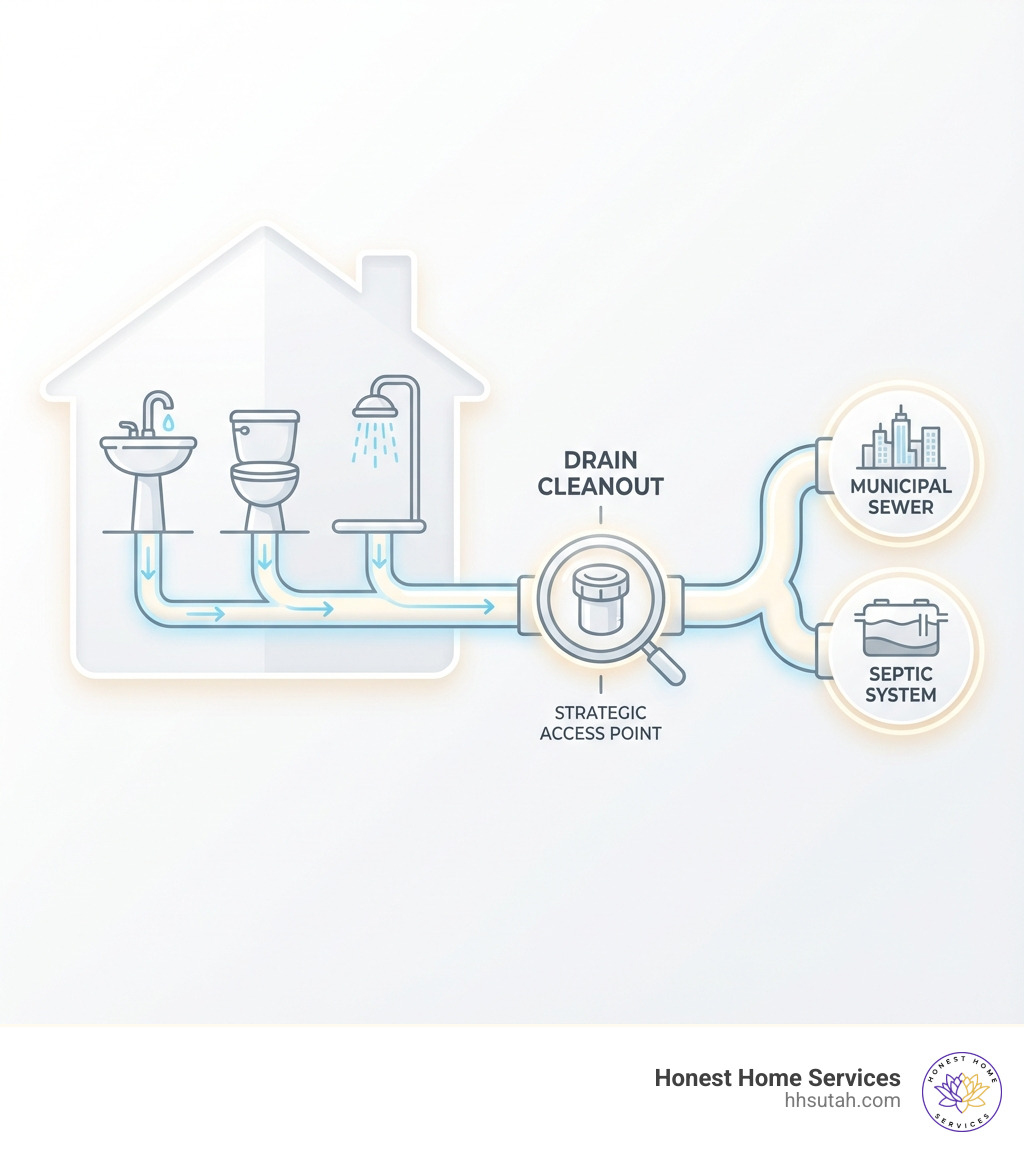
A drain cleanout is a capped access point on your home’s main sewer line that allows plumbers to clear blockages and inspect your plumbing system without digging up your yard or removing fixtures. Here’s what you need to know:
What is a drain cleanout?
- A direct access point to your main sewer line
- Usually a 3-6 inch capped pipe made of PVC, ABS, or cast iron
- Typically located in your yard, basement, garage, or utility room
Why it’s important:
- Allows quick access for clearing serious clogs
- Enables camera inspections to diagnose problems
- Prevents costly excavation work
- Essential for hydro-jetting and professional drain cleaning
Common locations:
- Outdoor: Near your foundation, in the yard between your house and the street, or aligned with your septic tank
- Indoor: Basement floor near the foundation wall, utility rooms, or garages
Imagine washing dishes when your kitchen sink starts backing up. Then your shower won’t drain. Then your toilet gurgles ominously. Multiple clogged drains at once aren’t separate problems—they signal a blockage in your main sewer line. That’s when your drain cleanout becomes your best friend, giving plumbers direct access to the problem without tearing up your home.
Many homeowners don’t even know where their cleanout is located, or if they have one at all. Homes built before the 1940s often lack cleanouts entirely, making repairs significantly more difficult and expensive. Even if your drains are working fine today, knowing where your cleanout is located can save you time, money, and stress during a plumbing emergency.
At Honest Home Services, we’ve been helping Northern Utah homeowners locate, access, and maintain their drain cleanouts for over 20 years, using this critical access point to quickly diagnose and resolve even the toughest sewer line clogs. Whether you’re dealing with an emergency backup or simply want to know where your drain cleanout is located, understanding this essential component of your plumbing system puts you in control.
Locating Your Drain Cleanout: An Indoor and Outdoor Search
Finding your drain cleanout is like finding a hidden treasure – a treasure that can save you a lot of grief and money during a plumbing crisis! This access point, sometimes called a “sewer cleanout” or “main house trap” when indoors, is crucial for maintaining your home’s plumbing health. Its location can vary depending on your home’s age, foundation type, and even the local climate in areas like Salt Lake City. For instance, homes in colder climates often have indoor cleanouts to prevent freezing, while those in warmer areas might have them exclusively outdoors.
The easiest way to start your search is by mentally tracing your home’s drainage pipes. All the drains from your sinks, toilets, washing machines, and dishwashers eventually converge into one main sewer line that exits your home. Your drain cleanout will be located somewhere along this main line. For a comprehensive guide on how to find yours, we often refer homeowners to resources like What Is a Sewer Cleanout? How to Find Yours at Home.
Finding Outdoor Cleanouts
If your home in Northern Utah has an outdoor drain cleanout, it’s typically situated in your yard. We often find them:
- Near the foundation perimeter: Often within a few feet of your house.
- Between your house and the street: In line with where your main sewer line would connect to the municipal sewer system.
- Aligned with your septic tank: If your home uses a septic system.
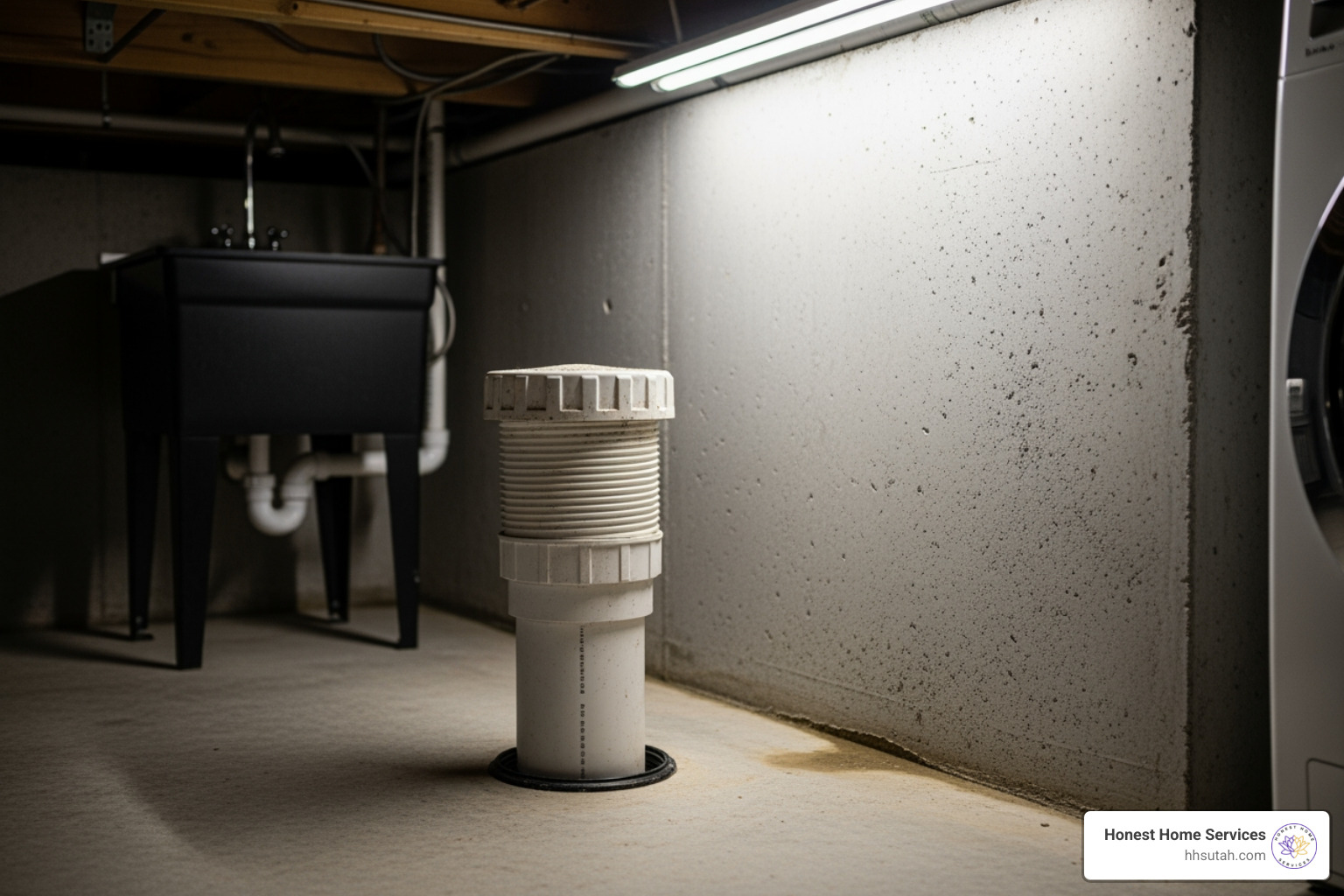
What exactly are you looking for? An outdoor drain cleanout usually appears as a white or black PVC pipe, or sometimes cast iron in older homes, protruding a few inches or more from the ground. It will have a removable cap, often with a square or round head, that can be unscrewed. Sometimes, especially in neatly landscaped yards, it might be hidden beneath bushes, lawn decorations, or even in a recessed box at ground level. Look for labels like ‘S’, ‘C.O.’, or simply ‘cleanout’ on the cap. If you suspect a drain cleanout is buried, you can carefully probe the ground with a long screwdriver in the estimated area, taking care not to damage any underground utilities. Once found, we recommend marking its location with a stake or flag for easy access in an emergency.
Finding Indoor Cleanouts
Indoor drain cleanouts are common, especially in homes with basements or crawl spaces, or those built on slab foundations in colder regions to protect the pipes from freezing. Common indoor locations include:
- Basement: Often found on the floor near a foundation wall, particularly where multiple drain lines converge.
- Garage: Sometimes located on the garage floor, especially if plumbing lines run through it.
- Utility room: Near water heaters, furnaces, or laundry hookups.
- Crawl space: Accessible within the crawl space itself, though this can make it harder to reach.
- Near bathrooms: Particularly in older homes, a cleanout might be near a main bathroom.
An indoor drain cleanout will typically look like a T-shaped or Y-shaped pipe fitting with a threaded cap or plug, usually 3 to 6 inches in diameter. These are distinct from smaller, individual drain traps you might find under sinks. If you live in an older home in an area like Salt Lake City, it’s worth checking out resources on Common Plumbing Issues in Older Homes and How to Address Them as some older plumbing systems might not have a readily apparent cleanout, or it could be hidden by renovations.
The Anatomy of a Drain Cleanout
Understanding the components of your drain cleanout can help you identify it and appreciate its role. These access points are essentially sections of pipe integrated into your main drainage system, designed for durability and accessibility. They consist of the pipe itself and a removable cap or plug.
Common materials for drain cleanouts include:
- PVC (Polyvinyl Chloride): Lightweight, durable, and corrosion-resistant. Common in newer homes.
- ABS (Acrylonitrile Butadiene Styrene): Similar to PVC, often black in color.
- Cast Iron: Very durable but susceptible to corrosion over time. Found in older homes, especially those built before the 1970s.
- Brass: Used for plugs in older cast iron systems, known for its longevity.
How to Identify Your Drain Clean Out
Identifying your drain cleanout involves looking for several key features:
- Size: Typically, the pipe will be 3, 4, or 6 inches in diameter. This is significantly larger than the drain pipes leading from individual fixtures.
- Threaded plug or cap: The top of the cleanout will have a removable cap or plug, often with a square or round head, designed to be unscrewed.
- Square nut on cap: Many caps, especially on outdoor cleanouts, feature a square nut that can be turned with a pipe wrench.
- Material differences: You might see a white or black plastic (PVC/ABS) pipe, or a darker, heavier cast iron pipe. The plug itself might be plastic, brass, or cast iron.
- Labels: As mentioned, some cleanouts are helpfully labeled ‘S’, ‘C.O.’, or ‘Cleanout’.
When we perform a Camera Drain Inspection for our Northern Utah customers, the drain cleanout is often our preferred entry point because it provides direct access to the main line. It’s a clear indicator that we’re looking at the right part of your plumbing system.
Types and Materials
The material of your drain cleanout often tells a story about your home’s age and plumbing system. For instance, about 76 million homes in America still have cast iron sewage lines, which means their cleanouts are likely also cast iron or brass.
Here’s a quick comparison of common cleanout materials:
| Material | Durability | Age (Typical Installation) | Appearance |
|---|---|---|---|
| PVC | Excellent, corrosion-resistant | Newer homes (post-1970s) | White plastic pipe with a threaded cap |
| ABS | Very good, similar to PVC | Newer homes | Black plastic pipe with a threaded cap |
| Cast Iron | Extremely durable, but prone to rust/corrosion over decades | Older homes (pre-1970s) | Dark, heavy metal pipe, often with a brass or cast iron plug |
Beyond the pipe material, the caps themselves can vary. Most common are threaded plugs that screw directly into the cleanout pipe. Less common are expansion plugs which use a rubber gasket to create a seal, or various types of covers that sit flush with the ground. Regardless of the type, the goal is always the same: a secure, watertight seal that can be easily removed for plumbing access.
The Role of a Drain Clean Out in Plumbing Maintenance
Your drain cleanout is arguably the most important access point in your home’s plumbing system for maintenance and emergency repairs. It’s the direct route to the heart of your drainage system, bypassing the twists and turns of smaller branch lines.
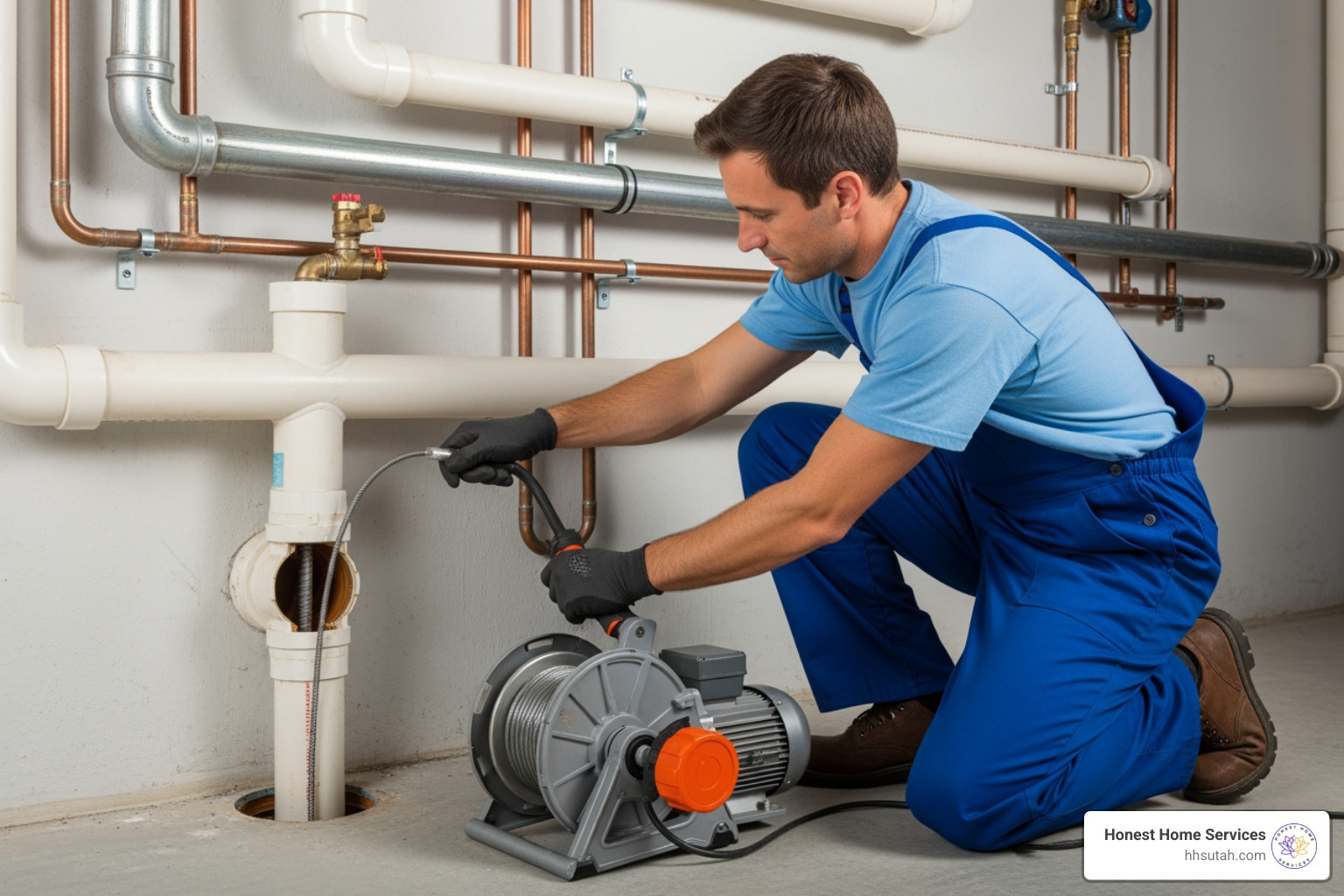
When we, at Honest Home Services, need to address a serious clog or inspect your main sewer line, the drain cleanout is our first choice for access. It allows us to:
- Direct access for tools: We can insert drain snakes, motorized augers, or specialized cutting blades directly into the main line without having to steer through toilets or roof vents, which can be less effective and more damaging.
- Facilitating inspections: The cleanout is the ideal entry point for our plumbing cameras. This allows us to perform a thorough Camera Drain Inspection to pinpoint the exact location and nature of a clog, whether it’s invasive tree roots, a buildup of grease, or a foreign object.
- Clearing major blockages: From stubborn tree roots that have infiltrated your pipes to years of grease buildup, the drain cleanout provides the clear path needed to deploy powerful tools and techniques to clear these obstructions.
This direct access is a cornerstone of effective Plumbing System Maintenance.
Benefits of Accessible Cleanouts
Having readily accessible drain cleanouts offers numerous advantages for homeowners in Northern Utah:
- Faster and cheaper repairs: When a plumber can quickly access the main line, it significantly reduces the time and labor required for diagnosis and repair. This translates directly into cost savings for you. Without a cleanout, plumbers might have to resort to more time-consuming and expensive methods.
- Accurate diagnosis with cameras: A cleanout allows for unobstructed entry of plumbing cameras, providing a clear view of the pipe’s interior. This means we can accurately identify the problem (e.g., specific type of clog, pipe damage) and recommend the most effective solution. This also enables us to offer warranties on our work, as we can verify the clog has been completely cleared.
- Enables Hydro Jetting: For severe clogs or stubborn buildup, Hydro Jetting is often the most effective solution. This high-pressure water blasting technique requires direct access to the main line, which the drain cleanout provides. Hydro-jetting can use up to 4,000 PSI of water pressure to blast away roots, grease, and other debris, leaving your pipes sparkling clean.
- Reduces need for excavation: In many cases, a serious main line clog would necessitate digging up your yard to access the pipe. An accessible drain cleanout often eliminates the need for disruptive and costly excavation, saving your landscaping and your wallet.
- Increases home resale value: A well-maintained home with accessible drain cleanouts is a positive selling point. It signals to potential buyers that the plumbing system is easy to maintain and that future plumbing issues can be addressed efficiently, potentially leading to smoother home inspections.
Potential Problems with a Damaged Drain Clean Out
While a drain cleanout is a plumbing superhero, a damaged one can cause its own set of problems:
- Leaking caps: A cracked or improperly sealed cap can allow sewage odors to escape, or worse, raw sewage to leak out, posing a health hazard and attracting pests.
- Stripped threads: If the threads on the cap or the cleanout pipe itself become stripped, the cap won’t seal properly, leading to leaks and difficulty accessing the line. This often happens if the cap is overtightened or forced.
- Cracked pipes: The cleanout pipe can crack due to shifting ground, impact, or age, leading to leaks and potential structural issues for your main sewer line.
- Buried or inaccessible cleanouts: A drain cleanout that’s been buried under landscaping, concrete, or a deck is essentially useless in an emergency. It forces plumbers to find alternative, less efficient, and potentially more destructive access points.
- Pest entry: An unsealed or damaged cleanout cap can become an open invitation for rodents and insects to enter your plumbing system and, eventually, your home.
Addressing these issues promptly is part of good Pipe Repair and maintenance, ensuring your cleanout remains a solution, not a source of problems.
Accessing Your Cleanout: A Guide for Homeowners
While locating and understanding your drain cleanout is empowering, actually opening it requires caution. The main sewer line carries all the wastewater from your home. If there’s a blockage, that line is under pressure, and opening the cleanout can lead to a sudden, unpleasant, and potentially hazardous release of raw sewage.
Safety first!
- Personal protective equipment (PPE): Always wear sturdy gloves and eye protection (goggles). You don’t want to come into contact with sewage or anything that might splash.
- Risks of opening: The biggest risk is a sewage backup. If the line is completely blocked, opening the cap can cause wastewater to spill out rapidly.
- Potential for sewage release: Be prepared for the worst. Have a large bucket or container nearby, and work quickly if you must open it.
- When to stop and call a professional: If you feel significant pressure when trying to unscrew the cap, or if you see water rising or flowing out as you loosen it, stop immediately. This indicates a severe blockage, and it’s time to call in the pros. Trying to force it further can cause a massive mess and potential health hazards.
Tools and DIY Maintenance
For basic inspection or to simply ensure the cap isn’t seized, you might need a few tools:
- Pipe wrench: Essential for loosening stubborn cleanout caps, especially those with square nuts.
- Bucket: To catch any small drips or to quickly cover the opening if there’s a minor backup.
- Rags: For wiping up any spills and cleaning threads.
When testing the plug, turn it counter-clockwise slowly. If it feels stuck, a little penetrating oil can help. Once open, you can inspect the threads for grime and clean them to prevent future seizing. However, any attempt to clear a clog yourself beyond simply checking the cap should be approached with extreme caution. We generally advise against using chemical drain cleaners, as they can corrode pipes over time and often only provide a temporary fix. For more on when to tackle a plumbing issue yourself, check out our guide: DIY Plumbing: When to Tackle It Yourself and When to Call a Pro.
When to Call a Professional Plumber
While a basic understanding of your drain cleanout is valuable, most serious issues require professional intervention. You should always call Honest Home Services, your trusted Salt Lake City plumber, if you notice any of these signs:
- Multiple drains clogged simultaneously: This is the clearest indicator of a main sewer line blockage, requiring access via the cleanout.
- Foul odors: Persistent sewage smells coming from drains or the cleanout area itself.
- Gurgling sounds: Gurgling from toilets or drains when other fixtures are used.
- Water backing up into showers or tubs: This often happens when a toilet is flushed, and the wastewater has nowhere to go but back up the nearest open drain.
- If you feel pressure or see water when opening the cap: As mentioned, this is a critical warning sign that the main line is severely blocked.
Don’t wait for a small problem to become a plumbing emergency. Our team is equipped with the right tools and expertise to handle any drain cleanout issue safely and efficiently. For more guidance on urgent situations, read our advice on When to Call an Emergency Plumber: Your Plumbing Guide.
Frequently Asked Questions about Drain Cleanouts
How often should I have my drain cleanout inspected?
We recommend having your main sewer line and drain cleanout inspected every 18 to 24 months. However, this can vary based on several factors:
- Tree proximity: If you have large trees near your sewer line, their roots can infiltrate pipes, necessitating more frequent inspections, perhaps annually.
- Age of plumbing system: Older homes with cast iron pipes may benefit from more frequent checks due to potential corrosion and pipe degradation.
- Household usage: Homes with high water usage or a history of recurring clogs might need more regular maintenance.
Regular inspections, as highlighted in The Benefits of Regularly Scheduled Plumbing Inspections, can help catch minor issues before they escalate into costly emergencies.
Can a house have more than one cleanout?
Yes, it’s quite common for a house to have more than one drain cleanout.
- Main cleanout: Almost every home should have at least one main cleanout for the primary sewer line.
- Secondary cleanouts: Some larger homes or properties with complex plumbing systems might have additional cleanouts strategically placed along branch lines to service specific areas (e.g., a dedicated cleanout for a kitchen line that frequently clogs).
- Homes on municipal sewer vs. septic: Homes connected to a municipal sewer system might have two main cleanouts: one closer to the house’s foundation and a second near the property line where it connects to the city’s main sewer. Homes with septic systems typically have one main cleanout leading to the septic tank.
What happens if my house doesn’t have a drain cleanout?
If your home, particularly an older property in Salt Lake City, doesn’t have a drain cleanout (which is common for homes built before codes made them standard in the 1940s), addressing a main sewer line clog becomes significantly more challenging and expensive.
- Alternative access points: Without a cleanout, plumbers might have to use less ideal access points, such as the roof vent or by removing a toilet.
- Difficulty of repairs: Accessing the main line via a toilet or roof vent can be more difficult for camera inspections and for maneuvering drain cleaning tools. It can also increase the risk of damage to fixtures or the roof.
- Cost implications: These alternative methods generally require more labor and time, driving up the cost of repairs. In some severe cases, if no other access is possible, minor excavation might even be necessary.
For older homes with outdated plumbing, it might be worth considering a Pipe Replacement or the installation of a new drain cleanout to prevent future headaches and save money in the long run.
Your First Line of Defense Against Major Clogs
Your drain cleanout might seem like an unassuming pipe with a cap, but it’s truly your first line of defense against plumbing disasters. Understanding its purpose, knowing where to find it, and respecting its power empowers you as a homeowner. Proactive maintenance, including regular inspections, can save you from the stress and expense of reactive repairs.
At Honest Home Services, we believe in empowering our Northern Utah community with knowledge and reliable service. Whether you’re dealing with persistent Clogged Drains or simply want a professional to locate and inspect your drain cleanout, our team of expert technicians is here to help. We provide honest, reliable, and affordable plumbing services, ensuring your home’s drainage system functions smoothly.
For expert help with any drain issue, or to schedule a professional inspection and cleaning in Salt Lake City, Salt Lake County, Davis County, Clearfield, Layton, Kaysville, Farmington, Bountiful, West Valley, Murray, West Jordan, South Jordan, Bluffdale, Herriman, Draper, Park City, Tooele, Lehi, or Saratoga Springs, contact our team for reliable service today!