

What Is a Drain Main Line (and Why It Matters for Your Home)
Your home’s drain main line is the single large pipe that collects all wastewater from every sink, toilet, shower, and appliance — and carries it out to the city sewer or your septic tank.
Here’s a quick breakdown of what you need to know:
| Drain Main Line | Secondary Drain Line | |
|---|---|---|
| Size | 3–6 inches wide | 1.5–3 inches wide |
| Function | Carries all household wastewater out | Carries waste from one fixture |
| Clog impact | Affects the whole house | Affects one sink, toilet, or shower |
| Location | Underground, runs to street or septic | Inside walls and floors |
| Access | Cleanout pipe (yard, basement, or foundation) | Behind walls or under fixtures |
When your main line backs up, nothing drains — and the problem shows up fast. Water backs up in multiple places at once, you hear gurgling from drains, and in serious cases, sewage can appear in your lowest-level floor drains.
This guide walks you through everything: how to spot a main line problem, what causes it, how it gets fixed, and when to call a pro.
At Honest Home Services, we’ve spent over 20 years helping Utah homeowners diagnose and repair drain main line problems — from routine cleanouts to full sewer line repairs. We’re here to help you understand what’s happening underground so you’re never left guessing.
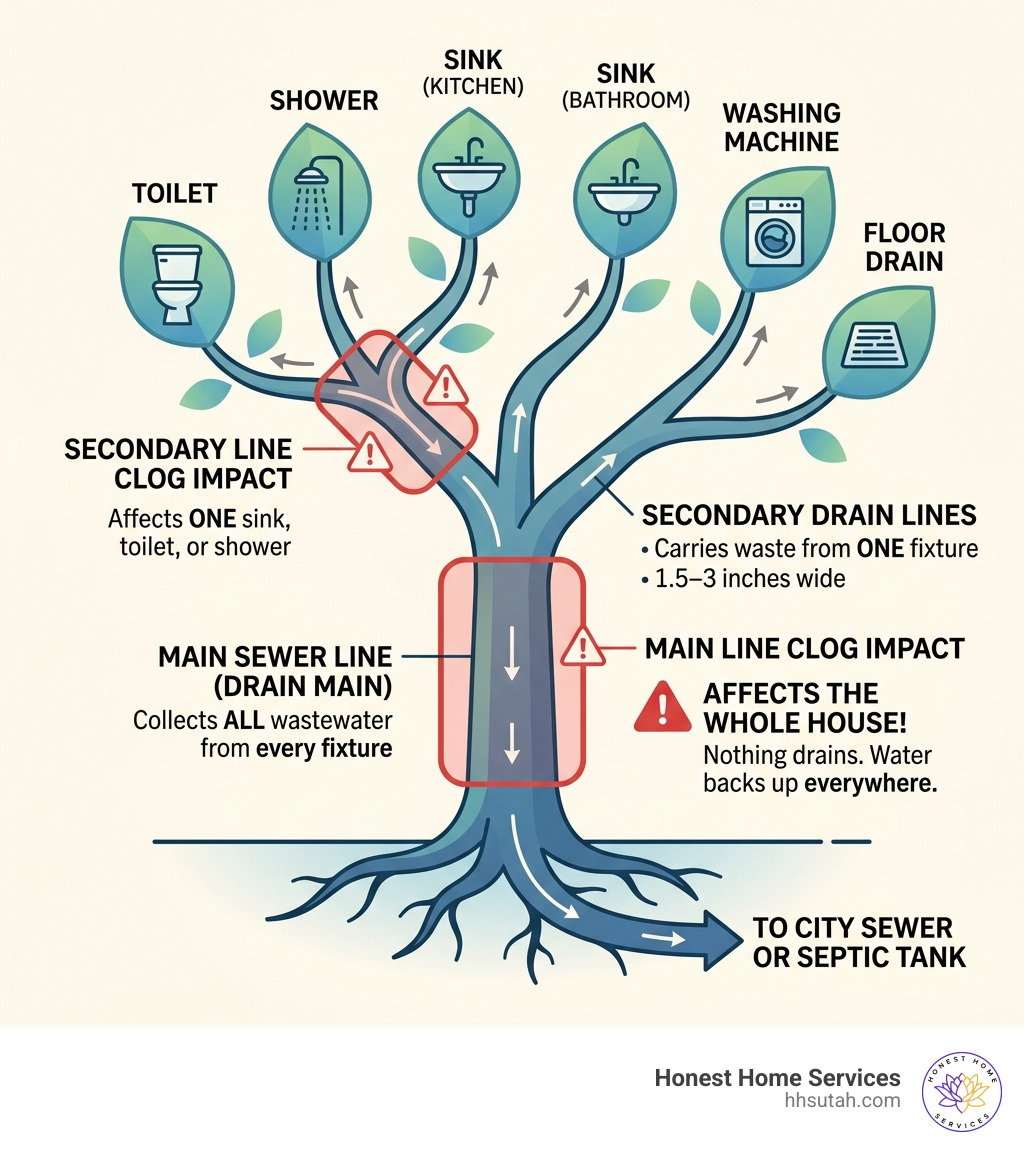
Drain main line terms explained:
Understanding Your Home’s Drain Main Line
Think of your home’s plumbing as a tree. The leaves and small twigs are your sinks and faucets. The branches are the secondary drain lines hidden in your walls. But the trunk? That is your drain main line.
In most Northern Utah homes, from Salt Lake City up to Layton, this pipe is usually 3 to 6 inches in diameter. It is the heavy lifter of your plumbing system. Whether you are flushing a toilet in the upstairs master bath or running the dishwasher in the kitchen, every drop of wastewater eventually meets in this central “trunk” before heading out to the municipal sewer system or a private septic tank.
Because this pipe is buried underground, it is often out of sight and out of mind — until it isn’t. When the drain main line fails, the consequences are much larger than a simple clogged kitchen sink. Since all fixtures rely on this one exit point, a blockage here creates a “logjam” that affects every room in the house. Understanding how your home connects to the sewer main line is the first step in being a prepared homeowner.
How Secondary Lines Connect to the Main Pipe
Every fixture in your home has its own dedicated drain line. These are smaller pipes, typically 1.5 to 3 inches wide, designed to handle the specific volume of a single sink or toilet. These lines use gravity to pull wastewater downward and away from your living spaces.
These “branch” lines eventually merge into larger pipes called soil stacks or waste stacks, which then dump everything into the drain main line. In modern homes, these connections are engineered with specific slopes and venting ratios to ensure water flows smoothly without trapping air. If that balance is off, you might start hearing those dreaded gurgling sounds. For those looking for expert drain repair and drainage solutions, understanding this connection is vital. If a secondary line is clogged, you have a localized problem. If the main line is clogged, you have a household emergency.
Identifying the Signs of a Clogged Main Sewer Pipe
How do you know if you are dealing with a simple hairball in the shower or a full-blown drain main line disaster? The key is looking for “multi-fixture” symptoms.
If your kitchen sink is slow, it’s probably just grease in that specific line. But if you flush the toilet and water starts bubbling up in the bathtub, you are likely looking at a main line issue. Because the main line is the lowest point of your home’s exit plumbing, a clog there causes water to back up into the next available opening — which is usually the floor drain in the basement or the shower stall on the ground floor.
Common signs include:
- Gurgling Noises: When air is trapped by a blockage in the drain main line, it has to escape somewhere. This often results in a “glug-glug” sound from your toilets or drains when you run water elsewhere.
- Multiple Backups: Sinks, tubs, and toilets all acting up at once.
- Sewage Odors: A foul, rotten-egg smell wafting from your drains is a clear indicator that wastewater isn’t moving out of the house as it should.
- Floor Drain Overflows: In Utah homes with basements, the floor drain near the HVAC system or water heater is often the first place you’ll see standing water or sewage during a backup.
For a deeper dive into these symptoms, check out our guide to main line clogs.
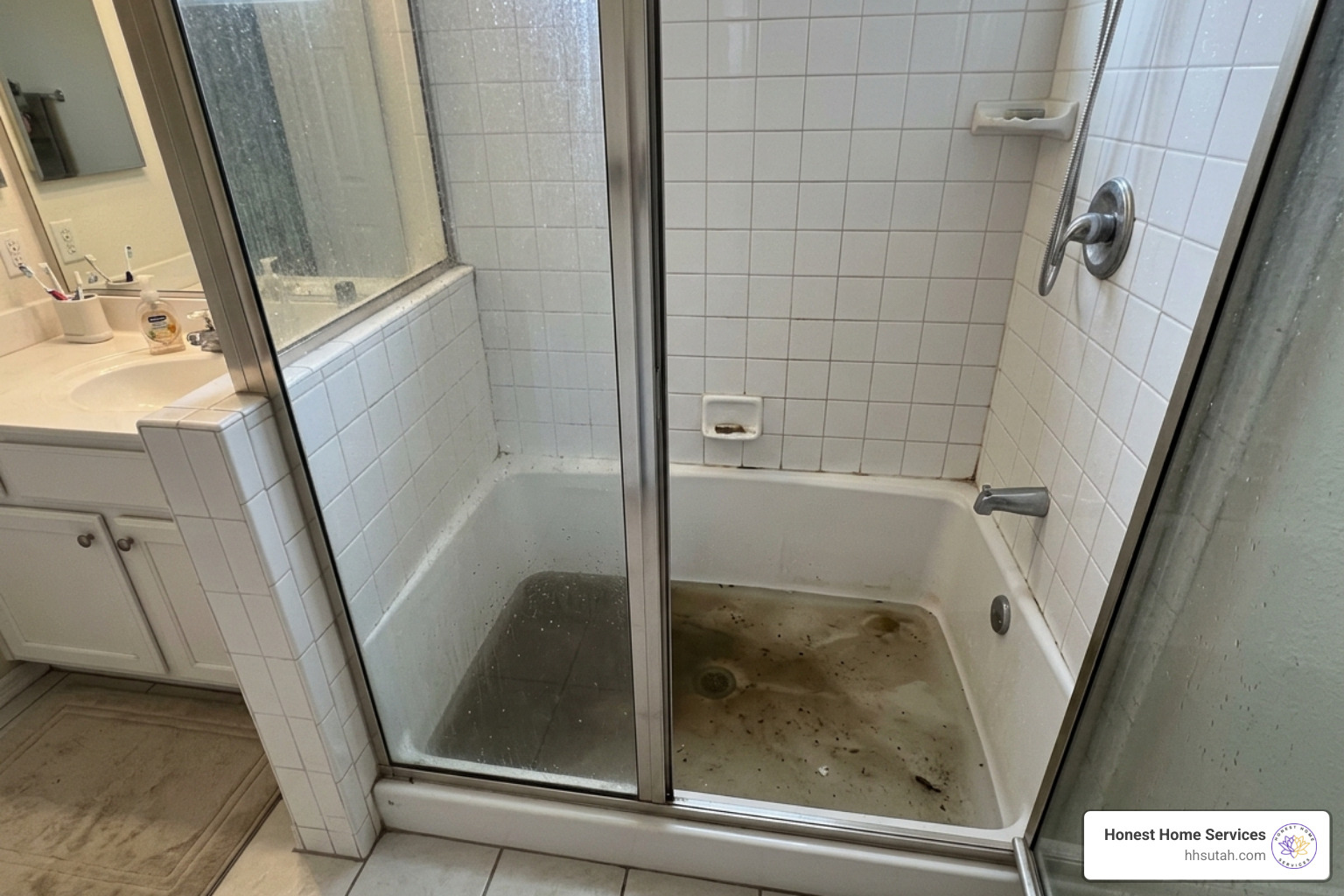
Signs of a Clogged Drain Main Line
One of the most distinct signs of a drain main line clog is “reactionary” plumbing. This is when using one fixture causes a reaction in another.
For example, if you run your washing machine and the nearby floor drain starts spitting out soapy water, the main line cannot handle the high volume of water the washer is discharging. Or, if you flush a toilet and the water level in the shower rises, the waste has nowhere to go and is being pushed back up the pipes. These issues are common in areas with aging infrastructure, and we see them frequently when providing sewer mainline services in Salt Lake City.
Common Causes and Locations of Sewer Blockages
What actually stops up a 4-inch wide pipe? It takes more than just a bit of soap scum.
- Tree Roots: This is the #1 cause of drain main line issues in Northern Utah. Trees love the nutrient-rich water flowing through your sewer pipes. Small cracks in older pipes allow tiny root hairs to enter. Once inside, they grow into massive “root balls” that act like a net, catching everything that passes by.
- Grease Buildup: Pouring bacon grease or cooking oil down the sink is a recipe for disaster. It might be liquid when it’s hot, but it solidifies into “fatbergs” once it hits the cold underground pipes.
- “Flushable” Wipes: Despite the labels, these do not break down like toilet paper. They snag on pipe imperfections and create massive blockages.
- Pipe Material Failure: Depending on when your home was built, your main line could be made of several different materials, each with its own weaknesses.
| Pipe Material | Common Issues | Estimated Lifespan |
|---|---|---|
| Vitrified Clay | Prone to root intrusion at joints | 50-60 years |
| Cast Iron | Corrodes and rusts from the inside out | 60-80 years |
| Orangeburg | Made of tar-soaked paper; collapses easily | 30-50 years |
| PVC / ABS | Very durable but can “belly” if ground shifts | 100+ years |
We often use mainline inspection services to determine exactly which of these culprits is causing your headache.
Where is the Main Sewer Line Located?
The drain main line typically starts under your home’s lowest level (basement or crawlspace) and exits through the foundation. From there, it runs underground — usually in a straight line — toward the street to connect with the city’s main sewer or toward your backyard septic tank.
To find it, look for your sewer cleanout. This is an access point with a threaded cap, usually located near the foundation of the house or out in the yard. In some older homes in Bountiful or Murray, the cleanout might be located in the basement floor. Knowing where this is can save you hours of searching during an emergency. For more details, read everything you need to know about your sewer cleanout.
Solutions and Professional Cleaning Methods
If you have a minor clog, you might be tempted to try a DIY fix. While running hot water or using a mixture of vinegar and baking soda can help with small grease clogs in secondary lines, they rarely have the “oomph” needed to clear a drain main line.
Some homeowners turn to chemical cleaners. Products containing Sodium Hydroxide or Potassium Hydroxide (often sold as “Main Line Cleaner”) are designed to sit in the pipe and dissolve organic matter. However, these should be used with caution, as they are highly caustic and can damage older pipes if used too frequently. If you’re looking for effective main line cleaners and root killers, always follow the safety instructions and wear protective gear.
Professional Methods for Clearing a Drain Main Line
When the DIY stuff fails, we bring in the heavy hitters. Modern plumbing technology allows us to clear clogs and repair pipes with minimal disruption to your yard.
- Camera Inspection: We send a waterproof, high-definition camera down your drain main line to see exactly what’s happening. This takes the guesswork out of the process.
- Hydro Jetting: This is like a pressure washer for your pipes. It uses extremely high-pressure water to blast away grease, scale, and even small tree roots, leaving the pipe walls sparkling clean. It’s part of what we call mainline magic.
- Plumbing Augers: Also known as “snakes,” these motorized cables have specialized heads that can cut through tough obstructions.
- Trenchless Repair: If the pipe is actually broken, we can often “reline” it from the inside without digging up your entire lawn.
Frequently Asked Questions about Main Lines
What does a main drain cleanout look like?
A cleanout is typically a 4-inch diameter pipe sticking slightly out of the ground or flush with your basement floor. It is capped with a threaded plug that usually has a square nut on top for a wrench to grip. In newer homes, the cap is often white PVC; in older homes, it might be black cast iron.
Is it safe to use chemical cleaners on a main line?
It depends on your pipes. While some cleaners are labeled as safe for all pipes and septic systems, the frequent use of harsh chemicals can accelerate the corrosion of cast iron pipes. We generally recommend professional cleaning over chemicals for long-term pipe health. For a safer approach, see our step-by-step guide to cleaning your main sewer line.
How much does it cost to clear a main line in 2026?
As of April 2026, the average cost for professional drain clearing in the Northern Utah area ranges from $100 to $500. The price depends on the severity of the clog, whether a camera inspection is needed, and if the technician can access the line via a cleanout. If the pipe is collapsed or severely damaged by roots, repair costs will be higher. You can find a detailed breakdown in our main sewer line clog repair cost guide.
Conclusion
Your drain main line is the unsung hero of your home. It works 24/7 to keep your living space clean and sanitary. By understanding the signs of a clog — like gurgling drains and multiple backups — and knowing where your cleanout is located, you can catch problems before they turn into expensive disasters.
Don’t wait for a “gusher” to take action. Regular maintenance, including professional inspections every 1-2 years, can keep your “plumbing trunk” healthy for decades.
If you are experiencing backups or suspect a broken pipe, Honest Home Services is here for you. We provide expert, reliable, and affordable plumbing to Salt Lake City, Davis County, and the surrounding Northern Utah areas. Whether it’s a routine cleaning or an emergency sewer mainline repair, our local technicians are ready to help. Give us a call today — we’ll get your pipes flowing again!