
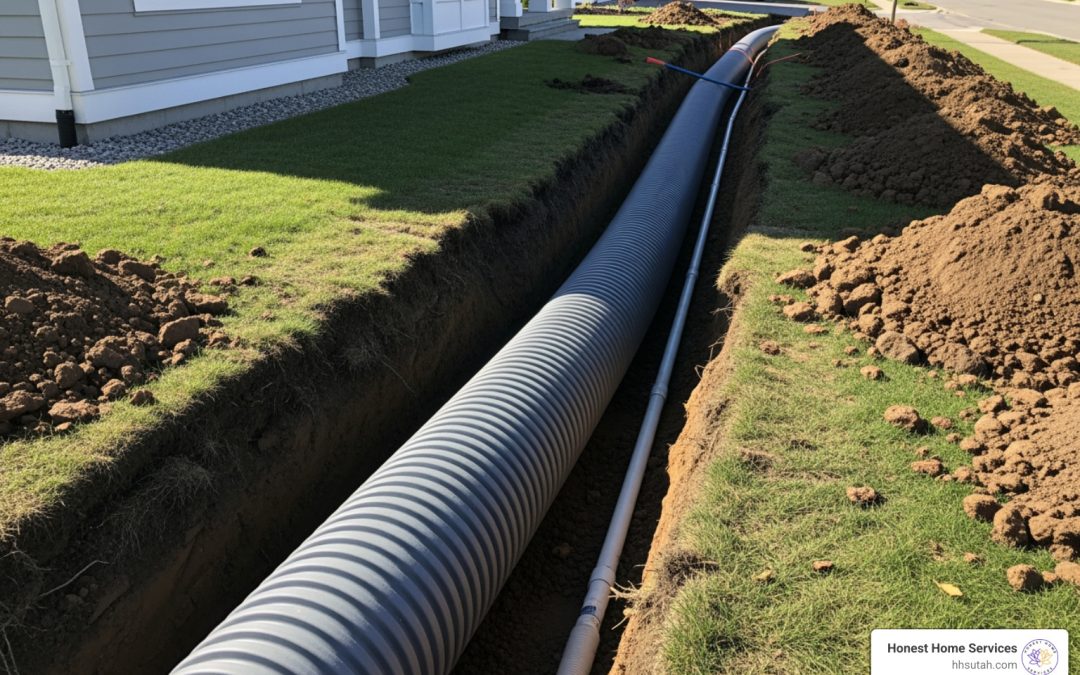
Why Your Sewer Mainline Matters More Than You Think
Sewer mainline issues are among the most disruptive plumbing emergencies a homeowner can face. Understanding this critical component of your home’s plumbing system can save you thousands of dollars and prevent sewage backups.
Quick Answer: What is a Sewer Mainline?
Your sewer mainline (also called a main sewer line) is the primary pipe that carries all wastewater from your home to either:
- The city’s sewer system – typically located in the street
- Your septic tank – if you’re not connected to municipal sewer
Key Points to Know:
- Size: Usually 4-6 inches in diameter
- Responsibility: You own from your house to the property line; the city owns from the property line to the street main
- Function: Acts as a “sewer highway” collecting wastewater from all your drains, toilets, showers, and sinks
- Common Problems: Tree root intrusion, blockages from debris, aging pipe materials, and corrosion
Your plumbing system works like a tree – smaller drain lines (branches) connect to your main sewer line (the trunk), which then connects to the city’s sewer main. When your mainline has a problem, it affects every drain in your home, not just one sink or toilet.
At Honest Home Services, we’ve helped countless Northern Utah homeowners steer sewer mainline emergencies and repairs over our 20+ years in business. We understand how stressful these situations can be, and we’re here to help you understand your system and keep it running smoothly.
Understanding Your Sewer System: Mainline vs. Lateral
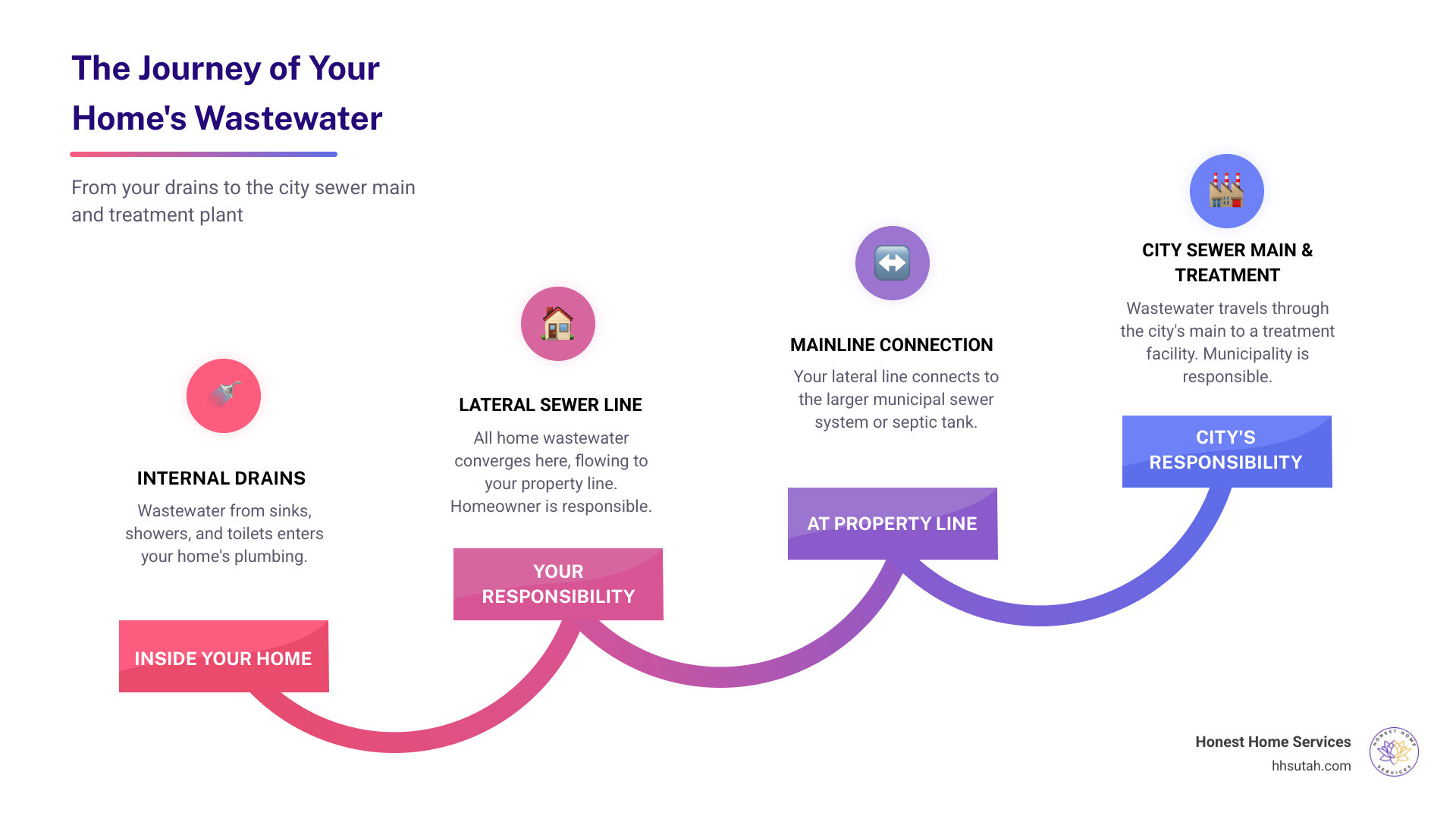
Let’s start with the basics. Every time you flush a toilet, drain a sink, or take a shower, that wastewater starts on a journey. It travels through your home’s internal drain pipes, then converges into one central artery: your sewer mainline. This crucial pipe is truly the “sewer highway” of your home, collecting all the wastewater from every fixture and directing it away from your property.
The sewer mainline then connects to the larger municipal sewer system, often located beneath the street, or to your private septic tank. Understanding this flow, and the distinction between your lines and the city’s, is the first step in becoming a savvy homeowner.
What is a main sewer line?
As we mentioned, the main sewer line is the primary conduit for all wastewater leaving your home. It’s typically a pipe ranging from four to six inches in diameter, designed to carry waste efficiently. This line is sloped downwards, relying on gravity to transport waste away from your home and towards the treatment plant or septic system.
In some specialized cases, particularly in more complex municipal systems, wastewater might be conveyed under pressure via what are known as “force mains.” These systems use pumps or pneumatic ejectors to move wastewater to a discharge point, especially when gravity flow isn’t feasible due to elevation changes. However, for most residential properties in Northern Utah, your sewer mainline will operate primarily on gravity.
The integrity of this utility pipe is paramount. If it fails, wastewater has nowhere to go but back into your home, creating a messy and unsanitary situation.
To learn more about your plumbing system, you can watch this video on sewer lines. For a broader understanding of your home’s plumbing, explore our resources on your Home Plumbing System.
Who is responsible for repairs?
This is a question we hear often, and it’s a critical one for homeowners in Salt Lake City, Layton, and throughout Northern Utah. Generally, the responsibility for sewer lines is divided between the homeowner and the city or municipality.
- Your Responsibility (The House Sewer): You, the property owner, are typically responsible for the sewer mainline from your home’s foundation all the way to your property line. This section is sometimes referred to as the “house sewer” or “private side” of the lateral line. This includes any cleanouts on your property. If this section needs Plumbing Repairs, the cost and arrangements fall to you.
- City/Municipality Responsibility (The House Lateral/Sewer Main): The city or local sewer district is usually responsible for the portion of the lateral line that runs from your property line to the main sewer line in the street (sometimes called the “house lateral” or “public side”). They are also responsible for the main sewer line itself, which serves multiple properties.
Specific regulations can vary slightly by municipality, so it’s always a good idea to confirm with your local utility department if you have questions about your exact property’s setup. However, the general rule of thumb is that what’s on your property is yours to maintain.
Red Flags: Recognizing Sewer Mainline Problems
Imagine a highway suddenly bottlenecking – traffic would back up quickly, causing chaos. The same principle applies to your sewer mainline. When a blockage occurs, wastewater can’t flow freely, leading to tell-tale signs that something is wrong. Ignoring these red flags can lead to a full-blown sewage backup, which is not only unpleasant but also a significant health hazard.
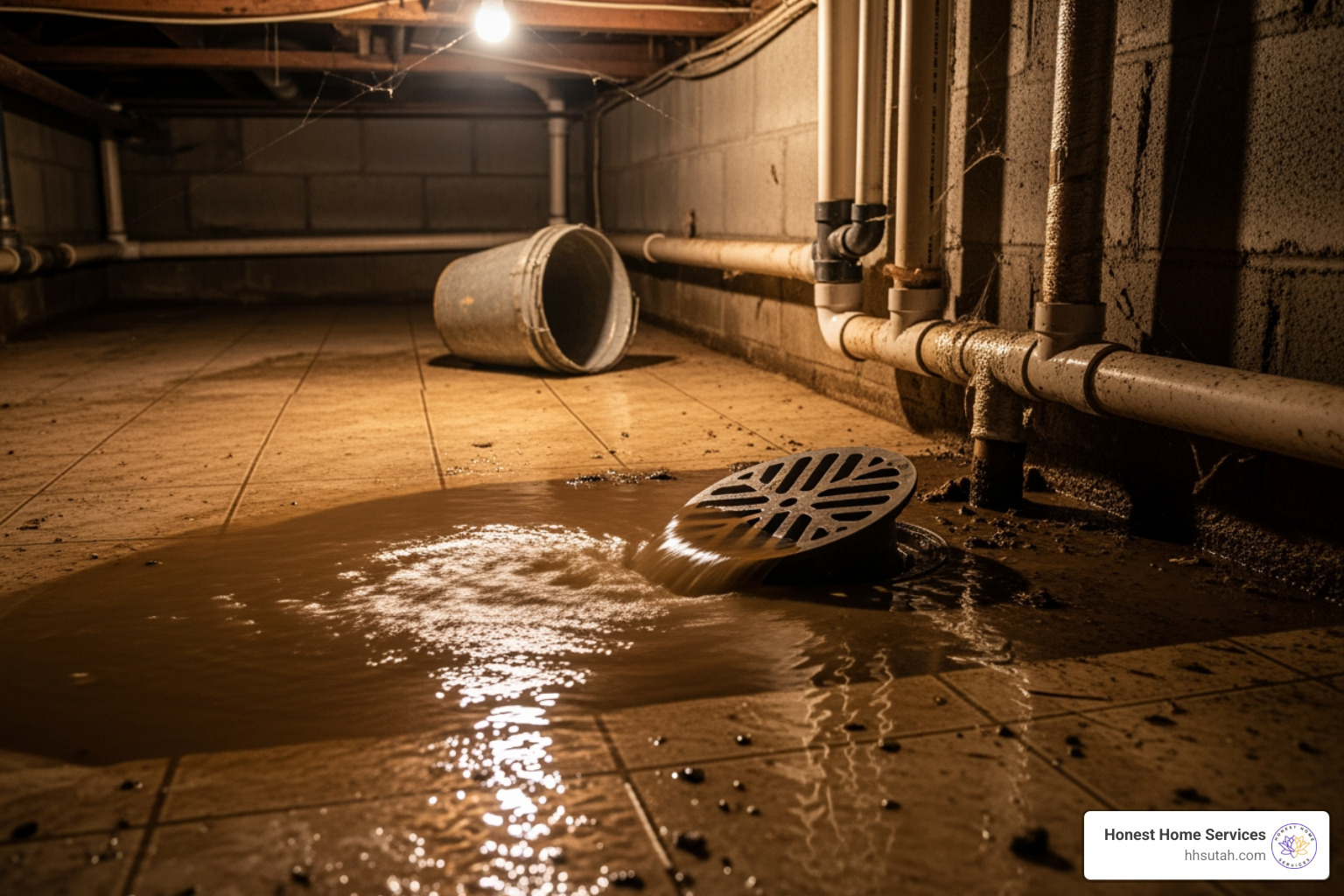
Common Signs of a Clogged Sewer Mainline
Unlike a simple sink clog, a sewer mainline blockage often manifests in multiple ways throughout your home. If you notice any of these symptoms, it’s time to call in the professionals at Honest Home Services:
- Multiple Slow Drains: If several drains in your home (sinks, tubs, showers) are draining slowly, or if all your drains are slow, it’s a strong indicator of a main line issue.
- Gurgling Noises: When you flush a toilet or use water, do you hear gurgling sounds coming from other drains or fixtures in your home? This can indicate air bubbles forming due to an obstruction, preventing proper water flow.
- Foul Odors: A persistent sewage smell in your home, especially around drains, can signal a break in your main line or a severe blockage causing sewage gases to escape.
- Sewage Backups: This is the most alarming sign. If sewage backs up into your lowest fixtures (like a basement toilet, shower, or floor drain) when you flush an upstairs toilet or run a washing machine, your sewer mainline is definitely clogged. The wastewater is looking for the path of least resistance to escape.
- Toilet Overflow/Shower Backup: If flushing a toilet causes water to back up into the bathtub or shower, or if running the washing machine causes sinks or toilets to overflow, your main line is struggling.
For more details on when to seek professional help for drain issues, check out our guide on Signs You Need Professional Drain Cleaning.
Typical Causes of Blockages
So, what causes these nasty blockages in your sewer mainline? It’s often a combination of factors, some preventable, others due to aging infrastructure:
- Debris and Buildup: This is the most common culprit. Things like feminine products, so-called “flushable” wipes (which aren’t truly flushable and can wreak havoc on sewer systems), paper towels, excessive toilet paper, and large food chunks should never go down your drains. Over time, these materials accumulate, creating stubborn blockages.
- Grease and Fats: Pouring cooking grease, oils, and fats down the drain is a major no-no. While liquid when hot, they cool and solidify in your pipes, sticking to pipe walls and catching other debris, leading to significant clogs. This is a leading cause of both private and public sewer spills.
- Tree Root Intrusion: Tree roots are relentless. They seek out moisture and nutrients, and even the tiniest crack or loose joint in your sewer mainline provides an entry point. Once inside, they grow, forming dense masses that block wastewater flow and can even crush or break pipes. Tree roots are a leading cause of pipe damage in the U.S.
- Aging Infrastructure: The U.S. has over 1.2 million miles of sewer mains, with an average age of 30-50 years. Older pipes, especially those made of materials like cast iron or clay, are more prone to corrosion, cracking, and root intrusion. As pipes age, they can deteriorate, sag, or collapse.
- Pipe Material Issues: Certain pipe materials are more susceptible to problems. For example, cast iron pipes can corrode over time, leading to blockages and rough interior surfaces that catch debris. Clay pipes, while durable, often had “dirt tight” rather than watertight joints, making them easy targets for roots.
- Improper Disposal of Waste: Beyond just grease and wipes, anything that isn’t human waste or toilet paper should ideally not be flushed. Even small items can contribute to a larger problem down the line.
Understanding these causes is key to prevention. Learn more about keeping your drains clear with our drain cleaning tips.
The Anatomy of a Sewer Line: Materials and Lifespan
Just like homes, sewer mainlines come in various styles – or rather, materials – depending on when your home was built and local plumbing codes. Each material has its own characteristics, affecting its lifespan, susceptibility to damage, and overall performance. Knowing what your sewer mainline is made of can give you a clue about potential issues you might face.
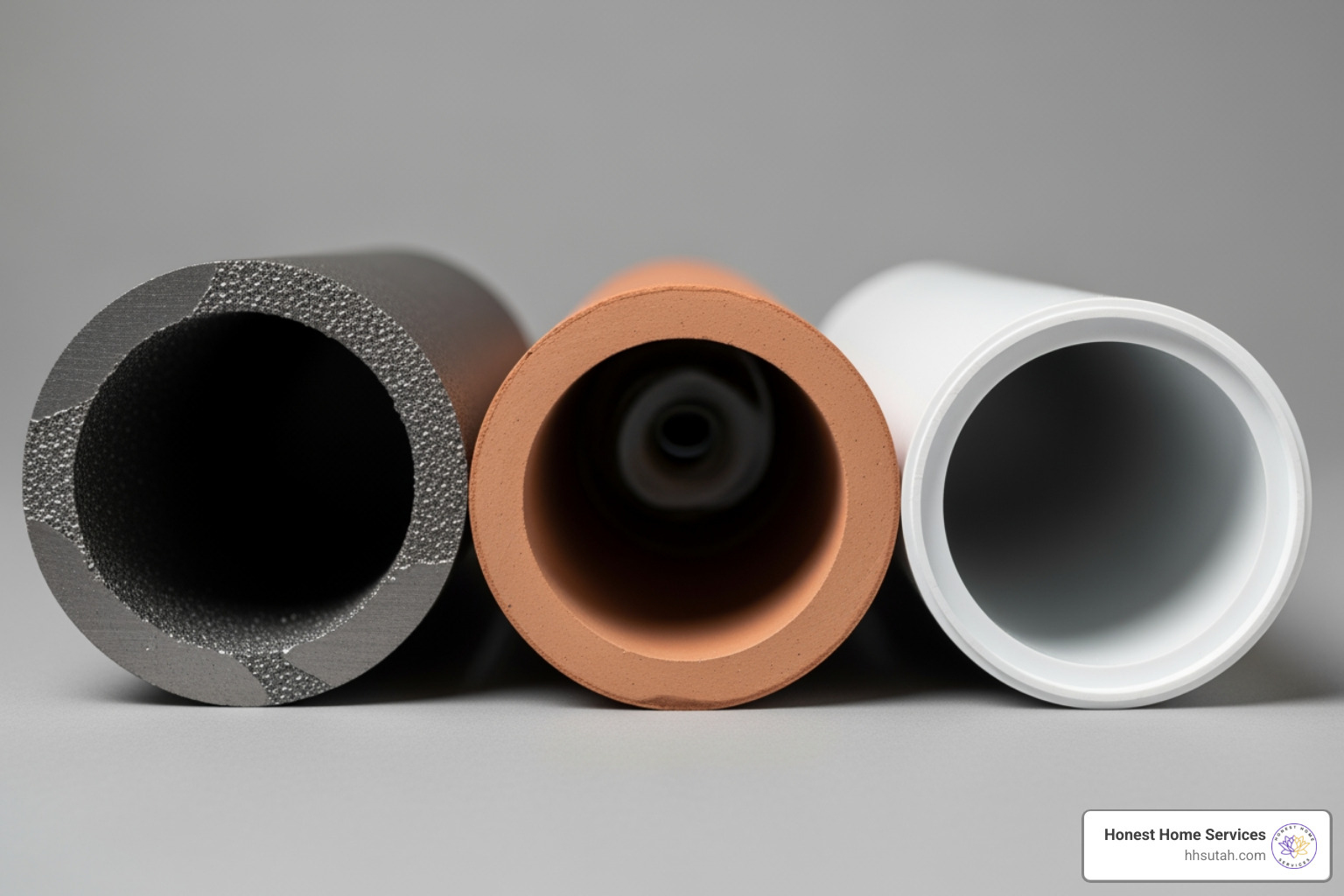
Common Materials Used for Main Sewer Lines
Here’s a look at the typical materials we encounter in Salt Lake City, Davis County, and other Northern Utah communities:
- Cast Iron: Popular from around World War II until the mid-20th century.
- Pros: Very strong and durable when new, capable of withstanding heavy loads. Can last 60 years or more if installed correctly.
- Cons: Prone to corrosion and rust from the constant flow of water, leading to blockages and rough internal surfaces that catch debris. Can crack if poorly cast or installed, or from shifting ground.
- Clay (Vitrified Clay Pipe – VCP): Common until the mid-1960s.
- Pros: Extremely inert and resistant to chemical corrosion. Can last a very long time if undisturbed.
- Cons: Brittle and easily cracked or broken by ground movement or heavy loads. Often had “dirt tight” rather than watertight joints, making them highly susceptible to tree root intrusion. Frequent joints due to heavy nature and size limitations also increased root entry points.
- Orangeburg (Fiber Conduit Pipe): Primarily used during World War II due to material shortages.
- Pros: Lightweight and inexpensive for its time.
- Cons: Made from wood fibers bound with tar. This material deteriorates rapidly, becoming oval-shaped under pressure, separating layers, and eventually collapsing. It’s highly vulnerable to root intrusion and can become saturated with water, causing it to fail completely. Many have collapsed, making them a significant problem in older homes.
- Plastic (PVC and ABS): The standard for modern homes.
- Pros: Non-corrosive, non-reactive, lightweight, strong, and can have much tighter, more secure fittings. If installed well, plastic lines can last 100 years. They offer excellent resistance to root intrusion with proper seals.
- Cons: While durable, improper installation can lead to issues like “bellies” (sags in the pipe where water collects) or cracks if the ground isn’t prepared correctly or pipes aren’t sealed well.
| Pipe Material | Pros | Cons | Typical Lifespan |
|---|---|---|---|
| Cast Iron | Very strong, durable | Corrodes, rusts, can crack, rough interior | 50-75+ years |
| Clay | Chemically resistant, long-lasting if undisturbed | Brittle, frequent joints, highly susceptible to roots | 50-100+ years |
| Orangeburg | Lightweight, inexpensive | Deteriorates, collapses, vulnerable to roots | 30-50 years (often fails sooner) |
| Plastic (PVC/ABS) | Non-corrosive, smooth, strong, tight seals | Can sag/crack if improperly installed | 100+ years |
When Does a Sewer Line Need to Be Replaced?
Even the most robust sewer mainline won’t last forever. While plastic pipes can last a century, older materials have a more limited lifespan. Here are the signs that your sewer line might be ready for replacement:
- Old Age: If your home has original pipes made of cast iron, clay, or Orangeburg, especially if they’re 50+ years old, they are likely nearing or past their expected lifespan. We often see these issues in older homes across Salt Lake City. The average age of U.S. sewer mains is 30-50 years, and many residential laterals are even older.
- Frequent Clogs: If you’re experiencing recurring, widespread clogs despite regular snaking or drain cleaning, it’s a strong indicator of a deeper structural problem.
- Root Damage: If tree roots are a constant problem, repeatedly infiltrating and damaging your pipes, replacement might be the only permanent solution. Roots grow back faster and stronger after being cut by a cable, so repeated cabling often worsens the underlying issue.
- Collapsed Pipe: A complete collapse means wastewater has no path, leading to immediate and severe backups.
- Leaking Joints: Older pipe materials, particularly clay, often have less secure joints that can leak, causing ground saturation and attracting roots.
- Sagging or “Bellied” Pipe: When a section of the pipe sinks, creating a low spot where waste and water collect, it’s called a “belly.” This prevents proper drainage and leads to frequent clogs. This usually requires replacement of the affected section.
If you suspect your pipes are past their prime, our team at Honest Home Services can assess your situation. You might be asking, “Does Your Salt Lake Home Need a Re-Pipe?” We can help answer that.
Solutions for Your Sewer Mainline: Repair and Replacement
Finding a problem with your sewer mainline can feel overwhelming, but don’t panic! We’re here to guide you through the process. The first step is always to stop using water in your home to prevent further backups. Then, it’s time to call in the professionals. Our team at Honest Home Services provides Emergency Plumbing services across Northern Utah, ready to tackle your sewer line issues.
The average cost to repair a sewer line can range from $1,000 to $10,000, with major replacements costing upwards of $20,000. These figures highlight why proper diagnosis and selecting the right repair method are crucial.
Diagnosing and Cleaning the Line
Before any repair or replacement, we need to understand the exact nature and location of the problem.
- Camera Drain Inspection: This is our go-to diagnostic tool. We insert a high-resolution camera into your sewer mainline to get a real-time, internal view of the pipe. This allows us to pinpoint the precise location of blockages, identify pipe material, assess damage (cracks, breaks, root intrusion, bellies), and determine the best course of action. It’s like an MRI for your pipes! For more information, check out our insights on Camera Drain Inspection.
- Snaking/Drain Cabling: For many routine clogs, a plumber’s snake (or drain auger) can be effective. It works by punching a hole through the blockage, allowing water to flow again. However, it’s important to understand its limitations. Cabling often only pokes a hole through a blockage; it doesn’t clean the pipe walls or remove all debris. If tree roots are the issue, cabling can provide temporary relief, but roots grow back faster and stronger after being cut, making the problem worse over time.
- Hydro Jetting: This is a powerful and thorough cleaning method. We use a high-powered stream of water (think of it as a “beefed-up” pressure washer for pipes) flushed through your sewer mainline. A multi-directional nozzle cleans the inner walls of the pipe, removing sludge, grease buildup, mineral deposits, and even stubborn tree roots. Hydro-jetting can restore your pipes to their original diameter and is a much more permanent solution for recurring clogs than snaking. It’s safe for plastic, steel, and copper pipes. If you’re experiencing recurring clogs, you might need Hydro Jetting.
Repair and Rehabilitation Methods
Once we understand the problem, we can recommend the most effective repair or replacement method. We’ll always discuss the pros and cons of each option with you, considering factors like cost, disruption, and long-term durability.
- Traditional Dig-and-Replace: This method involves excavating a trench along the entire length of the damaged sewer mainline to access and replace the faulty pipe section.
- Pros: Allows for a complete visual inspection of the pipe and surrounding soil. Can address severe damage like complete collapses or significant bellies.
- Cons: Highly disruptive to your yard, landscaping, driveway, and potentially other utilities. More labor-intensive and generally more expensive.
- Trenchless Technology: These innovative methods allow us to repair or replace your sewer mainline with minimal excavation, saving your yard and reducing costs.
- Pipe Bursting: This method involves pulling a new pipe through the old one. We dig small access holes at both ends of the damaged line. A bursting head is then pulled through the old pipe, fracturing it outwards while simultaneously pulling the new, seamless pipe into its place.
- Cured-In-Place Pipe (CIPP): CIPP involves inserting a flexible, resin-coated liner into the existing damaged pipe. Once in place, the liner is inflated and cured (often with heat or UV light), creating a new, strong, seamless pipe within the old one. This effectively creates a “pipe within a pipe.”
- Sliplining: Similar to CIPP, sliplining involves inserting a slightly smaller, new pipe into the existing damaged pipe. The space between the old and new pipes (annular space) is then typically filled with grout for structural integrity.
Trenchless methods require less restoration and cause less disturbance and environmental degradation compared to traditional digging. For more technical details on these methods, you can refer to the EPA’s Collection Systems O&M Fact Sheet: Trenchless Sewer Rehabilitation.
At Honest Home Services, we’re experts in Pipe Repair Salt Lake City and can help you choose the best solution for your home.
Proactive Care: Preventing Sewer Line Disasters
An ounce of prevention is worth a pound of cure, especially when it comes to your sewer mainline. While some issues, like aging pipes, are inevitable, many common problems can be avoided with consistent preventative maintenance and mindful habits. Protecting your sewer line means protecting your home and your wallet.
Homeowner Maintenance Tips
Here are some simple yet effective steps you can take to keep your sewer mainline clear and in good condition:
- Mindful Flushing: Only flush human waste and toilet paper down the toilet. Avoid “flushable” wipes (they’re not!), feminine hygiene products, paper towels, dental floss, cotton balls, and anything else that doesn’t quickly dissolve. These items are major contributors to blockages.
- Grease Disposal: Never pour cooking grease, oils, or fats down any drain. Instead, collect them in a disposable container, let them solidify, and throw them in the trash. Even small amounts can build up over time.
- Use Drain Screens: Install screens over all your drains (sinks, tubs, showers) to catch hair, food particles, and other debris before they can enter your pipes. Clean these screens regularly.
- Regular Professional Drain Cleaning: For homes with older pipes, recurring clogs, or a history of root intrusion, consider scheduling professional drain cleaning, such as hydro-jetting, every 1-2 years. This proactively removes buildup and keeps pipes flowing freely.
- Landscaping Awareness: Be mindful of where you plant trees and shrubs. Their roots can extend far beyond the visible canopy. If you have older pipes, avoid planting large trees near your sewer mainline. If you’re concerned about existing trees, consider using rooticides (chemical treatments designed to kill roots in pipes) applied by a professional, or schedule regular root cutting.
- Know Your Cleanouts: Locate your sewer mainline cleanout, which is typically a capped pipe sticking out of the ground near your house or property line. This access point is crucial for inspections and professional cleaning.
- Water Heater Maintenance: In addition to blockages, keeping your water heater in good shape is part of overall plumbing maintenance. Check out our guide on The Ultimate Guide to Plumbing Maintenance in Your Home for more comprehensive tips.
By taking these proactive steps, you can significantly reduce the risk of costly and disruptive sewer mainline problems.
Frequently Asked Questions about Sewer Lines
How do I know if the clog is in my line or the city’s main?
A clog in your lateral line will only affect your property. If your neighbors are experiencing similar issues simultaneously, the problem is likely in the city’s sewer mainline, and you should contact your local utility department. If only your home is affected, the issue is almost certainly within your private lateral line.
What should a homeowner do if they suspect a main sewer line issue?
The immediate steps are crucial. First, stop using all water in your home to prevent further backups. This means no flushing toilets, running faucets, or using washing machines. Next, call a professional plumbing service like Honest Home Services immediately. We will use a camera inspection to accurately diagnose the problem and recommend the best course of action, whether it’s a simple cleaning or a more extensive repair. Delaying can worsen the issue and increase repair costs.
Are chemical drain cleaners safe for my pipes?
Chemical cleaners can be harsh on pipes, especially older ones made of cast iron or clay, potentially worsening corrosion and causing further damage. They are also a temporary fix that doesn’t remove the entire blockage and can be harmful to the environment. Professional methods like hydro jetting are safer and more effective for thoroughly clearing clogs without damaging your pipes.
How much does a sewer line repair cost?
Costs vary widely based on the problem’s severity, location, and repair method. Minor repairs might cost $1,000, while a full trenchless replacement can exceed $10,000. For example, the U.S. average cost to repair a sewer line can range from $1,000 to $10,000, with major replacements costing upwards of $20,000. A camera inspection is the best first step to get an accurate diagnosis and quote custom to your specific situation in Northern Utah.
Your Local Experts in Sewer Line Services
Understanding your sewer mainline is key to a healthy, functioning home. From recognizing the early symptoms of a problem to implementing preventative care, being informed can save you significant stress and expense. We’ve seen how factors like tree roots, aging infrastructure, and improper waste disposal can affect sewer lines, leading to sanitary sewer overflows (SSOs) and costly damage. The U.S. Environmental Protection Agency (EPA) estimates that there are over 770,000 SSOs annually, underscoring the importance of proper maintenance.
At Honest Home Services, we pride ourselves on providing honest, reliable, and affordable plumbing solutions to our neighbors in Salt Lake City, Salt Lake County, Davis County, Clearfield, Layton, Kaysville, Farmington, Bountiful, West Valley, Murray, West Jordan, South Jordan, Bluffdale, Herriman, Draper, Park City, Tooele, Lehi, and Saratoga Springs, Utah. Our local, expert technicians are equipped with the knowledge and tools to diagnose and resolve any sewer mainline concern.
For any sewer line concerns, from a simple clog to a full replacement, trust the experts to keep your home’s plumbing flowing smoothly. Contact us today for Salt Lake City Sewer Mainline Repair. We’re here to ensure your plumbing system, and your peace of mind, are always in top shape.