

Why a Sewer Line Inspection in Herriman, Utah Could Save You Thousands
A sewer line inspection in Herriman, Utah is one of the smartest — and most overlooked — investments a homeowner can make. Here’s a quick answer if you need it fast:
What you need to know at a glance:
| Question | Quick Answer |
|---|---|
| What is it? | A camera is inserted into your sewer line to check for damage, blockages, or defects |
| Who needs it? | Any Herriman homeowner — new build or older home |
| When to get one? | Before buying a home, after slow drains appear, or every 2-3 years |
| Why Herriman specifically? | Local clay and sandy soils, rapid development, and aging infrastructure create unique risks |
| Who to call? | A licensed local plumber with sewer scoping equipment |
Herriman has grown fast. Thousands of homes have gone up in a short span, and older properties are quietly aging underneath their owners’ feet — literally. Whether your home was built last year or two decades ago, your sewer lateral (the pipe running from your home to the city main) can hide serious problems that no amount of surface-level maintenance will reveal.
The trouble is, sewer lines are underground and out of sight. By the time you notice something wrong — sewage backing up, foul odors, or soggy patches in the yard — the damage is often already expensive to fix.
At Honest Home Services, we’ve spent over 20 years helping Northern Utah homeowners protect their properties with expert sewer line inspection services in Herriman, Utah and across the region — and we’ve seen how a single inspection can prevent thousands of dollars in emergency repairs.
What is a Sewer Scope Inspection?
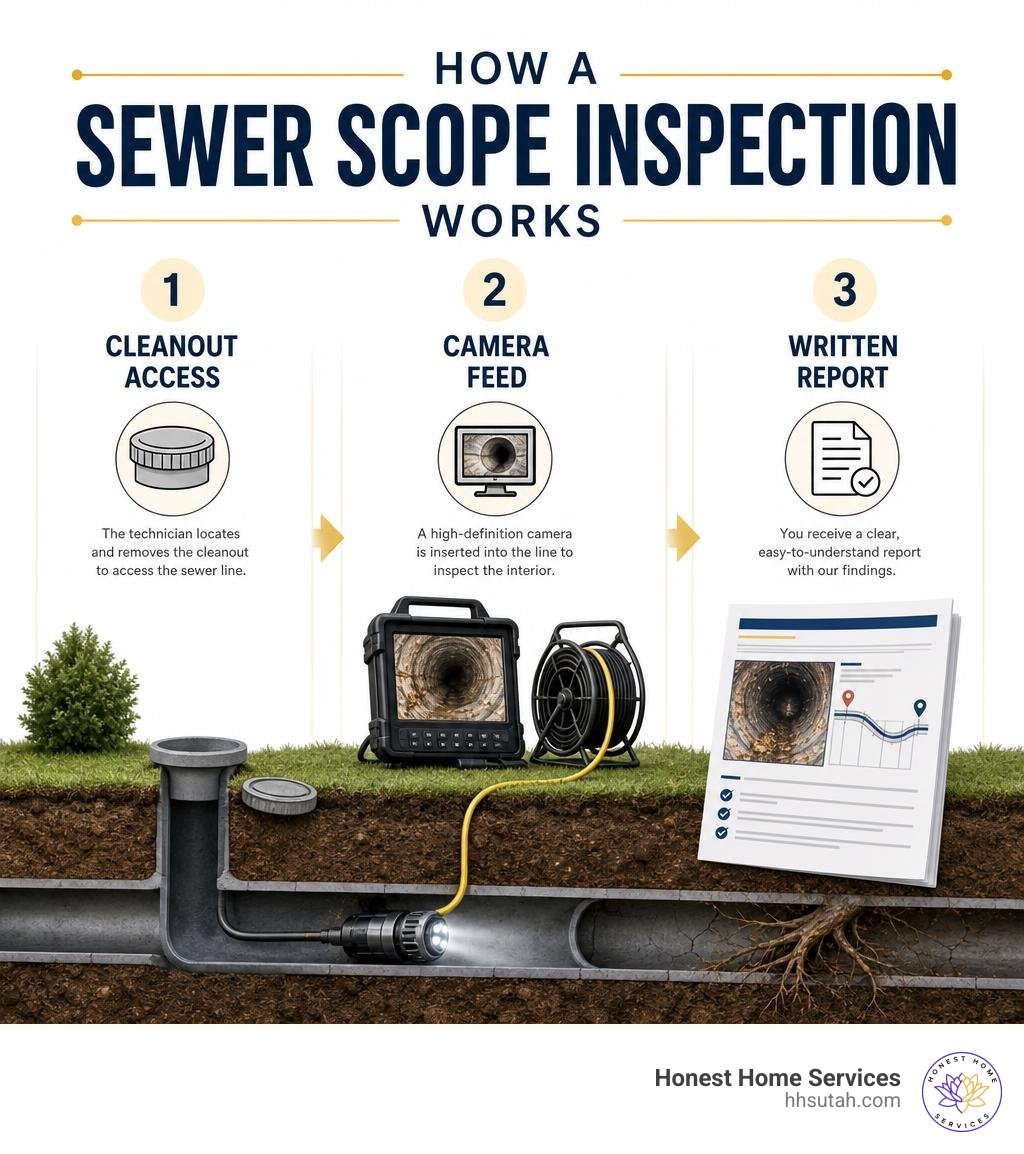
Think of a sewer scope inspection as a minimally invasive medical checkup for your home’s subterranean plumbing. Instead of digging up your entire front yard to see what is going on, a professional technician uses a specialized, high-definition, waterproof camera attached to a flexible, long-reaching fiber-optic cable.
This camera is inserted directly into your home’s main sewer line, usually through an easily accessible opening called a sewer cleanout. As the camera travels down the pipe, it transmits real-time video footage to a monitor above ground. This allows us to inspect the interior walls of your sewer lateral in vivid detail, traveling all the way from your home’s foundation to the municipal sewer main connection in the middle of the street.
It is a completely non-invasive process. There is no digging, no ruined landscaping, and no guessing.
Many homeowners do not realize that they are entirely responsible for the maintenance and repair of their sewer lateral. The city’s responsibility only begins where your lateral connects to the main municipal line under the street. If a pipe cracks, collapses, or gets choked out by roots in your yard, the financial burden falls squarely on your shoulders.
Recognizing when to call for help is crucial. There are several indicators that your system is struggling, which we detail in our guide on 6 Telltale Signs You Need a Camera Drain Inspection. Investing in this diagnostic tool offers immense peace of mind, as outlined in Don’t Get Drained: Understanding the Benefits of a Drain Pipe Camera Inspection. If you want to know exactly what happens during this process, read through Picture Perfect Pipes: Everything You Need to Know About Main Line Camera Inspections to demystify the technology.
Furthermore, keeping your private sewer line in good working order is not just a personal convenience; it also aligns with broader environmental standards, including the EPA Clean Water Act guidelines, which focus on preventing untreated wastewater from leaking into local soils and groundwater systems.
Why You Need a Sewer Line Inspection in Herriman Utah

Herriman, Utah is a beautiful place to live, nestled against the stunning Oquirrh Mountains. However, the very geography that makes our city so scenic also presents unique challenges for underground utilities.
As of July 2026, Herriman continues to experience rapid residential development. This means we have a mix of brand-new master-planned communities and older, more established neighborhoods. Both faces of Herriman’s housing market face distinct sewer line risks due to the local soil.
According to data and geological hazard maps from the Utah Geological Survey on soil hazards, the soil composition in Northern Utah, particularly around the foothills of the Oquirrh Mountains, varies wildly. In Herriman, we deal with two primary soil types that are notoriously tough on buried pipes:
- Clay Soils: High-clay soils are highly expansive. When it rains or the winter snow melts, the clay absorbs moisture and swells dramatically. During our dry, hot Utah summers, the clay shrinks and cracks. This constant shifting puts immense physical pressure on buried sewer lines, leading to pipe misalignment (where joints slip out of place) or outright pipe collapse.
- Sandy and Loose Soils: In other parts of Herriman, sandy soils dominate. Sandy soil drains water quickly but offers poor structural support over time. If a tiny leak develops in a sewer pipe joint, the escaping water quickly washes away the surrounding sandy soil. Without support, the pipe sags, cracks, or collapses under its own weight.
This geological instability makes a Sewer line inspection Herriman Utah a critical preventative measure for every local homeowner.
Why New Construction Homes Require a Sewer Line Inspection in Herriman Utah
If you are buying or have recently built a brand-new home in Herriman, you might think your sewer line is the last thing you need to worry about. After all, it’s brand new!
Surprisingly, new construction homes are some of the most common sites for sewer line failures. During the rapid building process, heavy machinery rolls over the property. It is incredibly common for heavy soil backfilling processes to puncture, crush, or misalign brand-new PVC pipes before the homeowner even moves in.
Additionally, construction crews occasionally drop construction debris, chunks of drywall, wood framing scraps, or heavy rocks down open drains. Standard builder water tests simply involve running water through the system to see if it drains. They do not load-test the pipes with solids, nor do they verify if the pipe is structurally compromised. A sewer scope is the only way to ensure your new build’s sewer line is actually pristine.
Signs You Need an Immediate Sewer Line Inspection in Herriman Utah
You shouldn’t wait until sewage is bubbling up into your bathtub to think about your sewer lateral. Keep an eye and an ear out for these early warning signs:
- Slow Drains Throughout the House: If only one sink is draining slowly, it’s likely a localized clog. If every drain in your house — sinks, showers, and toilets — is sluggish, the main sewer line is choked.
- Gurgling Sounds: When you flush a toilet or run the washing machine, do you hear strange gurgling or bubbling noises coming from your drains? This is air trapped in the line by an obstruction.
- Soggy, Lush Patches in the Yard: If a section of your lawn is suddenly much greener, faster-growing, or softer than the rest of your yard, it’s not a miracle — it’s a leak. Your grass is feeding on the nutrient-rich wastewater escaping from a broken sewer pipe.
- Foul Odors: Persistent sewer gas smells inside your home or around your yard indicate a crack or break in the line.
If you suspect an issue, you can learn how to diagnose it using Don’t Get Drained: How to Identify a Main Sewer Line Clog. Left unchecked, minor clogs can turn into full-blown emergencies. Protect your home by reading Don’t Get Flooded: A Homeowner’s Guide to Main Line Backups and From Gurgles to Gushers: Your Guide to Main Line Clogs to understand how to manage and prevent major backups.
Common Sewer Line Problems in Herriman Homes
Depending on when your Herriman home was built, your sewer lateral could be made of several different materials, each with its own set of common failure points.
| Pipe Material | Common Era of Use | Key Strengths | Primary Failure Points |
|---|---|---|---|
| Clay | Pre-1980s | Natural material, resistant to chemical corrosion | Fragile joints, highly susceptible to root intrusion and cracking under soil pressure |
| Cast Iron | Pre-1980s | Extremely strong, durable | Internal rusting, heavy pitting that snags debris, eventual bottom-channel rot |
| ABS / PVC (Plastic) | 1980s to Present | Flexible, smooth interior, rust-proof | Vulnerable to crushing during backfill, joint offsets due to shifting soil |
Root Intrusion
Tree roots are incredibly strong and persistent. In dry climates like Utah, trees will send their roots deep and wide in search of moisture. If there is even a microscopic crack or a loose joint in your clay or cast iron sewer pipe, roots will find it.
Once inside, they feast on the water and nutrients, growing into massive, thick root balls that completely block the flow of waste. If left untreated, the expanding roots will eventually shatter the pipe entirely. For a deeper look at tackling this green menace, check out Digging Deep: Your Guide to Effective Tree Root Removal.
Pipe Bellies (Low Points)
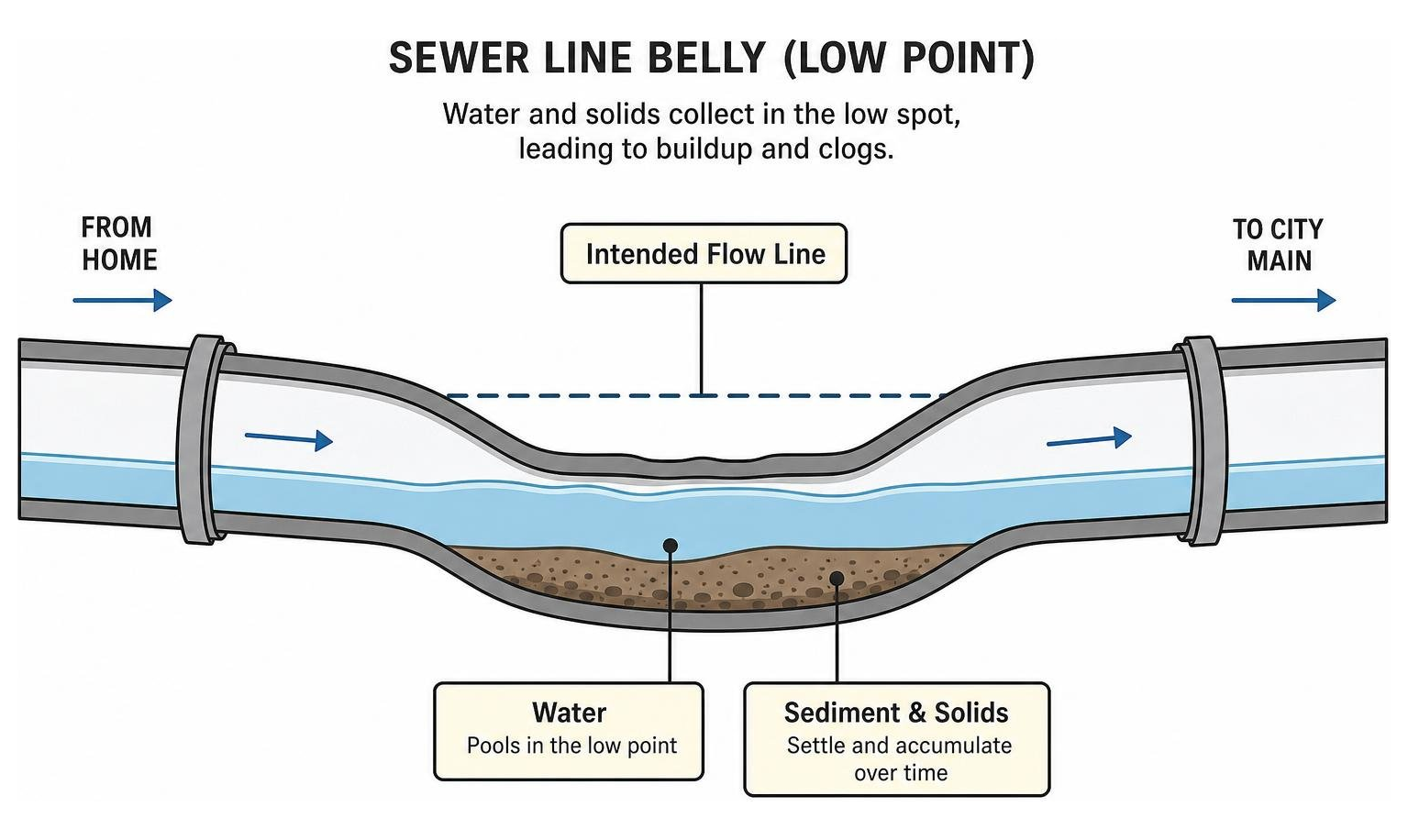
A “belly” is a sag or low point in the sewer line. This is almost always caused by soil settlement. When the soil underneath a section of pipe shifts or washes away, the pipe sinks.
Gravity is supposed to carry waste smoothly downhill to the city main. In a bellied pipe, water and heavy solids pool in the low spot. Over time, sediment accumulates, grease solidifies, and a major clog forms.
To understand how these issues affect homes in our neighboring communities, you can read Sewer Line Repair 101: What Draper Homeowners Need to Know. For a complete primer on how your underground plumbing is structured, refer to The Plumbing Pipeline: A Guide to Your Home’s Drain Main Line.
Modern Solutions: Trenchless Sewer Repair and Maintenance
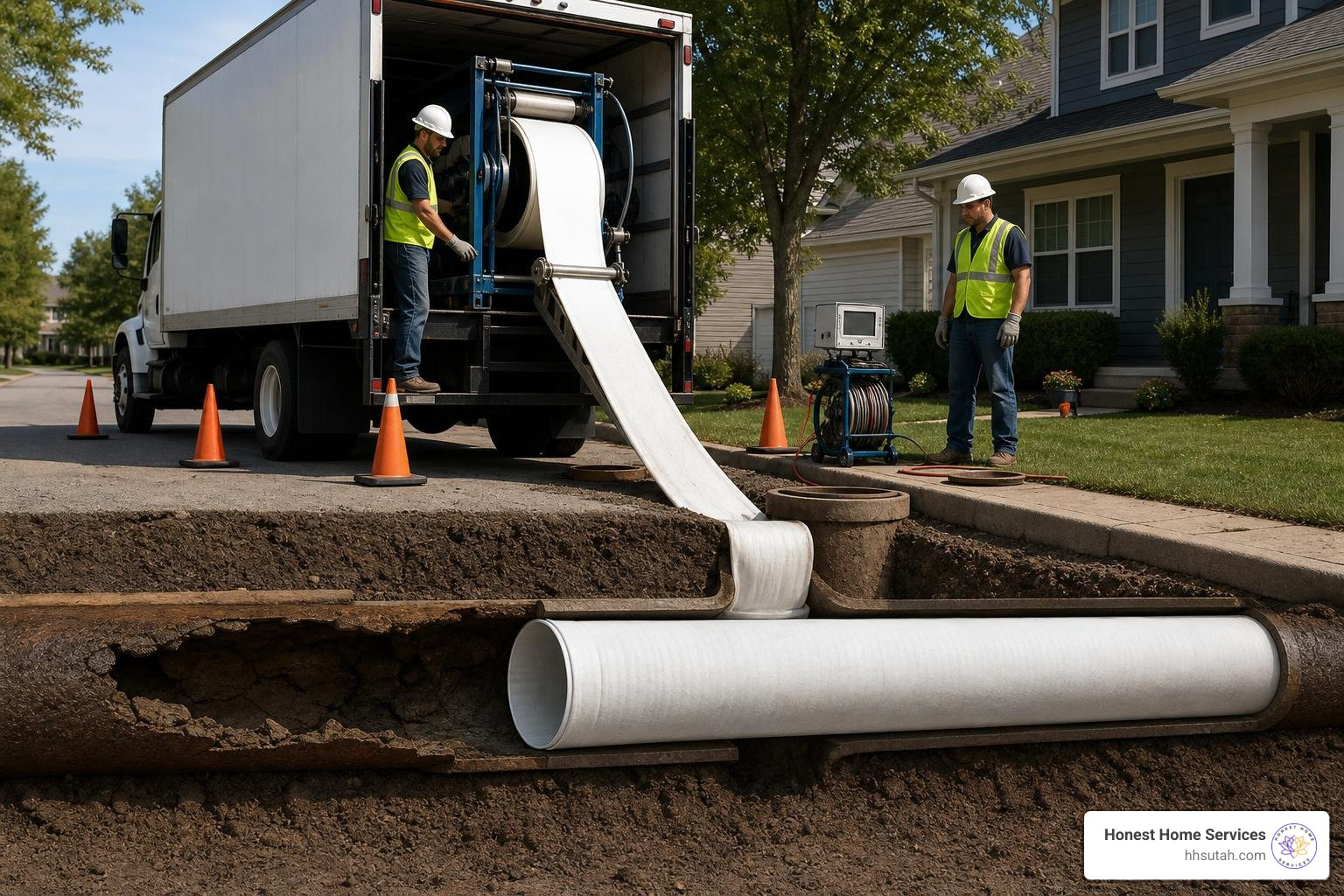
In the old days, repairing a broken sewer line meant bringing in a backhoe, digging a massive trench across your pristine lawn, tearing up your driveway, and leaving you with a giant mess and a massive bill.
Fortunately, technology has evolved. Today, we utilize cutting-edge trenchless technologies to repair sewer lines with minimal disruption to your property.
- Pipe Lining (CIPP): Cured-in-Place Pipe lining involves inserting a flexible, epoxy-saturated sleeve into your damaged pipe. Once in place, the sleeve is inflated and cured, creating a brand-new, seamless, durable “pipe within a pipe” without digging up your yard.
- Pipe Bursting: If your old pipe is too damaged for lining, pipe bursting can be used. A special pulling head is pulled through the old pipe, breaking it apart while simultaneously pulling a brand-new, high-density polyethylene (HDPE) pipe into its place. Learn more about this method in The Lowdown on Pipe Bursting: An Alternative to Traditional Sewer Repair.
- Hydro Jetting: If your pipe is structurally sound but choked with roots, grease, or scale, we use high-pressure hydro jetting to blast away obstructions and restore the pipe’s interior to like-new condition. Discover the power of this cleaning method in Main Line Magic: What You Need to Know About Hydro Jetting.
To decide which approach is right for your home, explore Trenchless or Traditional: Navigating Your Drain Pipe Replacement Options.
All of these advanced solutions are accessed through your home’s sewer cleanout. To understand where yours is and why it matters, check out The Main Event: Everything You Need to Know About Your Sewer Cleanout.
Frequently Asked Questions About Sewer Inspections
How much does a sewer line camera inspection cost in Utah?
The cost of a sewer scope inspection is incredibly affordable, especially when compared to the average cost of replacing a collapsed sewer line, which can run into thousands of dollars. Generally, a professional sewer camera inspection in Northern Utah ranges from $150 to $300, depending on the accessibility of the cleanout.
This small upfront investment can save you from catastrophic repair bills down the road. For a detailed breakdown of costs, read Unmasking the Mystery: How Much Does a Sewer Line Camera Inspection Cost? and protect yourself from unexpected plumbing bills by reviewing Don’t Get Flushed: Understanding Sewer Line Repair Expenses.
What should I look for in a sewer scope inspection report?
If you are buying a home or having your current line inspected, your technician should provide you with:
- A high-quality video recording of the entire camera run.
- A written report detailing the pipe material, the overall structural integrity, and the exact location and depth of any noted defects (such as cracks, root intrusions, or bellies).
- Clear, upfront recommendations for any necessary repairs or maintenance.
How often should Herriman homeowners schedule a sewer inspection?
If you live in an older home (built before 2000), we recommend scheduling a sewer inspection every 2 to 3 years to catch shifting soil damage or root intrusions early. For newer homes, an inspection every 5 years is typically sufficient, unless you notice slow drains or have large trees planted near your sewer line.
Regular checkups keep your home’s plumbing running smoothly. Explore The Benefits of Regularly Scheduled Plumbing Inspections to learn how routine maintenance saves you money in the long run.
Conclusion
Your sewer line is the unsung hero of your home’s plumbing system. Don’t wait for a costly, stressful backup to find out what state it’s in. Whether you are buying a new home in Herriman, dealing with slow drains, or simply want the peace of mind that comes with knowing your underground pipes are in perfect shape, we are here to help.
At Honest Home Services, we pride ourselves on delivering honest, reliable, and affordable plumbing solutions to Herriman and the surrounding Northern Utah communities. Our team of local, expert technicians is equipped with the latest high-definition camera technology to give you an accurate, unbiased look at your sewer system.
Protect your home and your wallet. Contact us today to schedule your professional Mainline Inspection Services and keep your home’s infrastructure running flawlessly!