
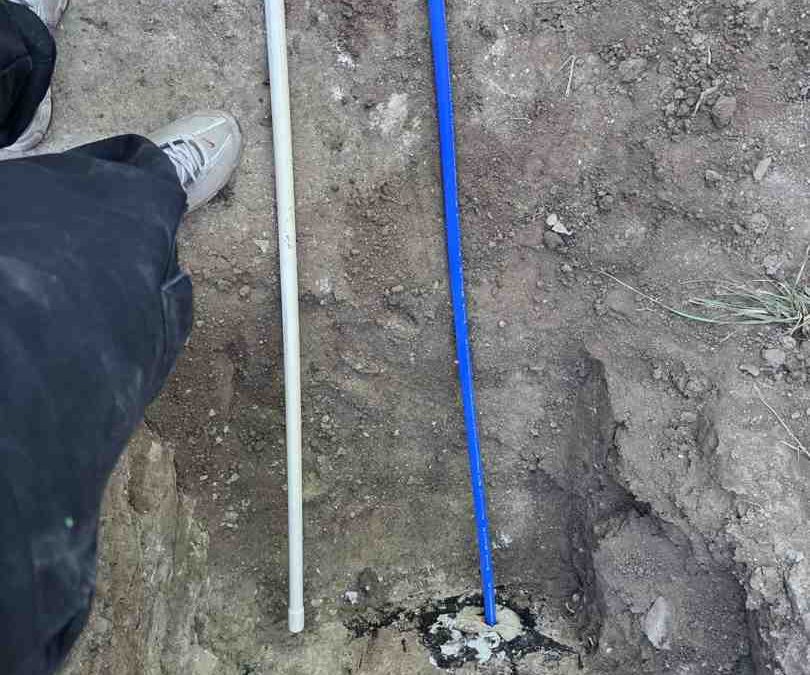
What Is a Main Line Sewer Clean Out — and Why Does It Matter?
A main line sewer clean out is a capped pipe connected directly to your home’s main sewer line that gives plumbers fast, direct access to clear blockages, run camera inspections, and perform maintenance — without digging up your yard.
Quick answer for homeowners:
- What it is: A short vertical pipe, usually 4 inches wide, with a removable cap — located near your foundation or property line
- What it does: Provides direct access to your main sewer line for clearing clogs, inspecting pipes, and running hydro jetting equipment
- Why it matters: Approximately 95% of sewer backups can be resolved faster and at lower cost when a functional cleanout is accessible
- Where to find it: Check near your home’s foundation (within 3–5 feet), along the front yard toward the street, or in your basement or crawl space
- When to use it: When multiple drains are slow, toilets gurgle, sewage odors appear, or water backs up into floor drains
Most homeowners never think about their sewer system — until something goes wrong. A backed-up toilet, a gurgling sink, or sewage pooling in the yard can turn a normal Tuesday into a stressful emergency. And if your plumber can’t quickly access your main line, a simple clog can turn into an expensive, time-consuming excavation job.
That’s exactly where your sewer cleanout becomes one of the most valuable — and most overlooked — parts of your home’s plumbing system.
At Honest Home Services, we’ve spent over 20 years helping Northern Utah homeowners and businesses tackle everything from routine main line sewer clean out maintenance to emergency sewer repairs. Whether you’re dealing with a sudden backup or just want to stay ahead of costly problems, we’re here to help you understand your system and keep it running right.
Main line sewer clean out vocab explained:
Understanding the Main Line Sewer Clean Out
Think of your main line sewer clean out as the “service bay” for your home’s plumbing. Just as a mechanic needs to pop the hood of your car to fix the engine, a plumber needs this access point to reach the “trunk” of your drainage system.
In most residential properties across the Salt Lake Valley and Davis County, the main sewer line is a 4-inch diameter pipe buried several feet underground. It carries every drop of wastewater from your toilets, showers, and sinks out to the municipal sewer main. The cleanout is a vertical pipe that intersects this horizontal main line, extending up to the surface where it is sealed with a threaded cap.
If you are curious about the different types of access points in your home, check out our guide on Unclogging The Mystery A Guide To Your Homes Drain Cleanout. Understanding these entry points is the first step in professional Mainline Plumbing Service.
Primary Function and Design
The primary function of a main line sewer clean out is to provide a non-destructive way to maintain your pipes. Without one, a plumber might have to remove a toilet or cut into your pipes indoors to reach a clog, which is messy, time-consuming, and expensive.
Beyond maintenance, the cleanout serves as a critical pressure relief valve. If the city sewer main backs up, a properly functioning outdoor cleanout might “burp” or overflow in your yard rather than pushing that raw sewage back up through your basement floor drains.
Modern cleanouts are typically made from durable ABS (black) or PVC (white) plastic, though older homes in places like Murray or West Valley might still have cast iron or brass caps. These pipes are designed to withstand the pressure of heavy-duty cleaning tools while keeping sewer gases trapped safely inside the system.
Cleanout vs. Floor Drain
It is a common mistake to confuse a floor drain with a main line sewer clean out. While both involve water and pipes, they serve very different masters.
- Floor Drains: Usually found in basements or laundry rooms, these are designed to collect surface water from localized flooding (like a leaky water heater). They are often smaller (about 2 inches) and have a U-shaped trap that holds water to block smells.
- Sewer Cleanouts: These are sealed, airtight access points directly connected to the 4-inch main line. They do not “collect” water from the floor; they are strictly for entry.
Using a floor drain to clear a main line clog is often impossible because the pipe diameter is too small for heavy-duty augers. For a deeper dive into these differences, read The Main Event Everything You Need To Know About Your Sewer Cleanout.
Locating and Accessing Your Sewer Cleanout
Locating your main line sewer clean out before an emergency happens can save you hundreds of dollars in “search time” labor costs. In Northern Utah, weather and landscaping can often hide these pipes over time.
Common Indoor and Outdoor Locations
Depending on when your home was built and its foundation type, your cleanout could be in a few different spots:
- Near the Foundation: Most modern homes feature at least one cleanout located within three to five feet of the foundation where the main line exits the house.
- The Property Line: You may have a second cleanout near the curb or sidewalk where your private line connects to the city’s system.
- Indoors (Basements/Crawl Spaces): In older homes or those with full basements, look for a T- or Y-shaped pipe with a screw cap near the main “stack” (the large vertical pipe that all your drains lead into).
- The Garage: In homes built on concrete slabs (common in parts of South Jordan or Herriman), the cleanout is often tucked away in a garage or utility closet.
If you are struggling to find yours, our Mainline Inspection Services can help map out your entire system.
Finding a Buried Main Line Sewer Clean Out
It is very common for cleanouts to go missing. Years of mulch, new sod, or decorative rock can bury the cap. Here is how we find them:
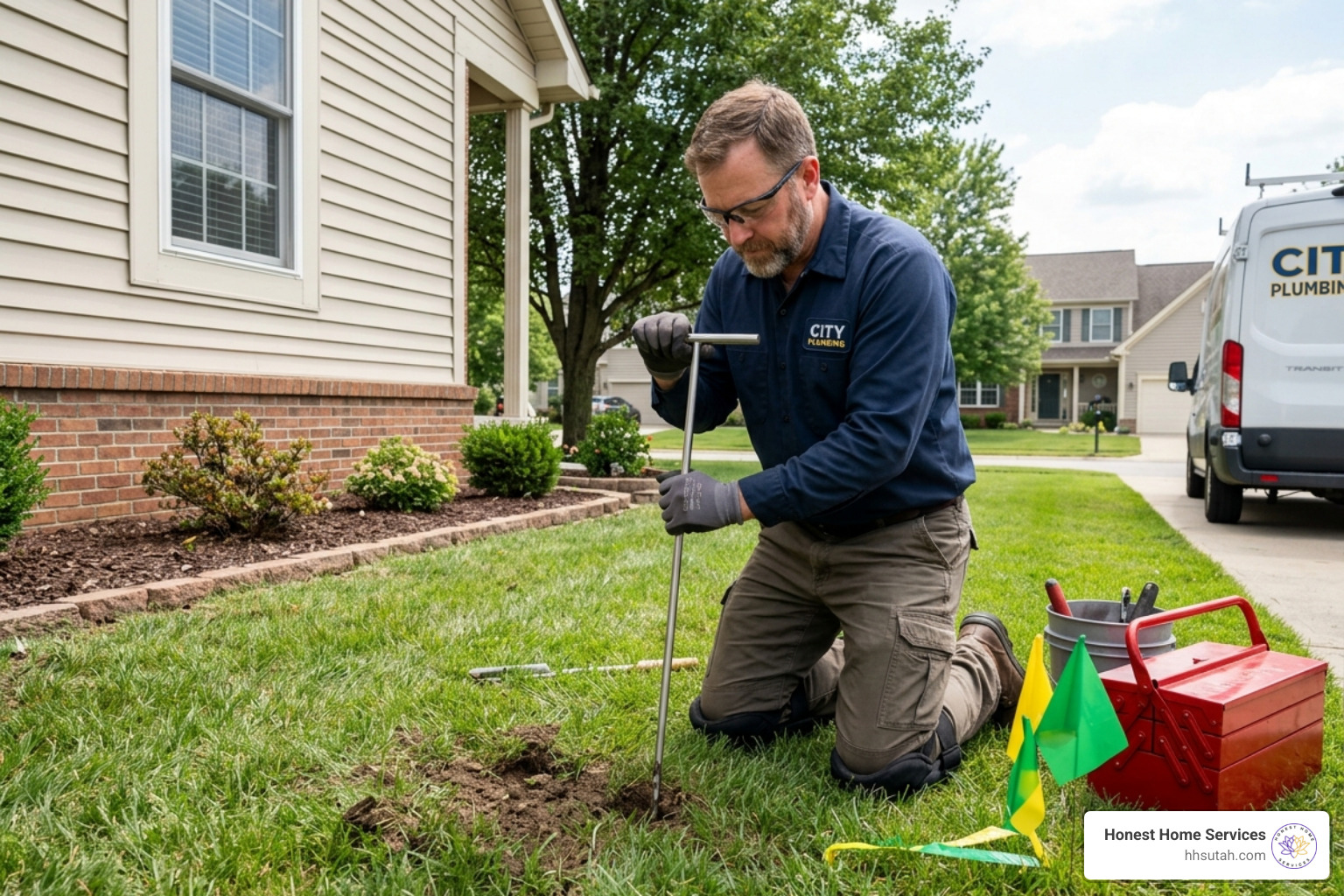
- Screwdriver Probing: We gently probe the ground with a thin metal rod or long screwdriver along the path from the house to the street.
- Plumbing Blueprints: If you have the original maps of your home, the cleanout location is usually marked.
- Electronic Locators: If the DIY methods fail, we use professional Mainline Inspection Services involving a high-tech transmitter. We “flush” a small beacon down the line or feed a camera cable with a “sonde” (transmitter) on the tip. We then use a handheld receiver on the surface to pinpoint exactly where the pipe is buried, even if it is 4 to 6 feet deep.
Professional Maintenance and Cleaning Methods
Once the main line sewer clean out is located and opened, it becomes the gateway for several high-tech cleaning methods. Keeping your drains clear is an art form we call Mainline Magic Keeping Your Drains And Sewers Sparkling Clean.
Camera Inspections and Hydro Jetting
The two most powerful tools in a plumber’s arsenal both require a cleanout:
- Video Camera Inspections: We feed a waterproof, high-definition camera into the cleanout to see exactly what is causing your trouble. Is it a “flushable” wipe clog? Tree roots? A collapsed pipe? This takes the guesswork out of the repair.
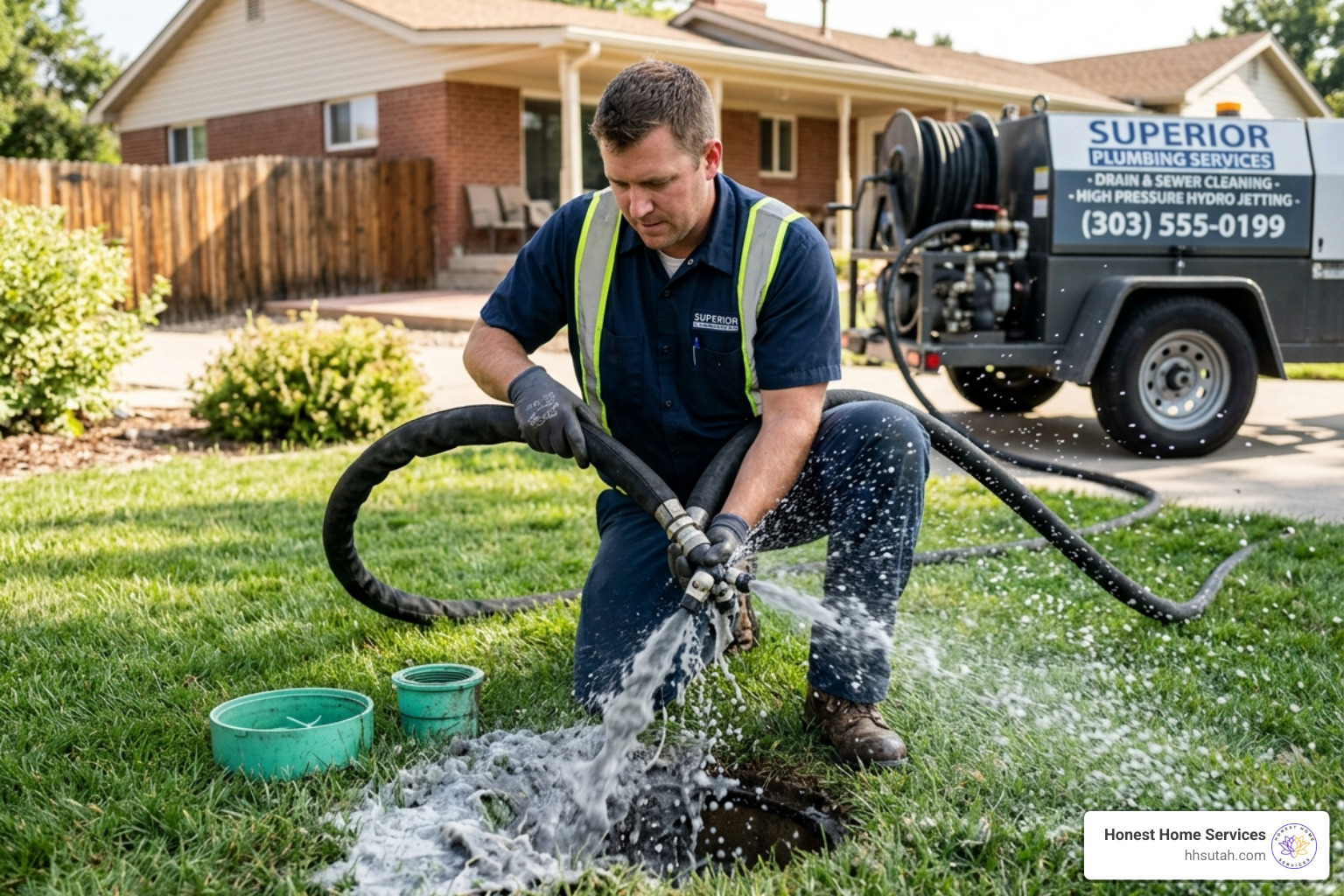
- Hydro Jetting: This is like pressure washing the inside of your pipes. We blast 4,000 PSI of water through the cleanout to scour away grease, mineral scale, and even thick root mats. It’s significantly more effective than traditional snaking for long-term results.
Learn more about how these tools are used in our Mainline Plumbing Service.
Benefits of an Outdoor Main Line Sewer Clean Out
If your home only has an indoor cleanout, you might want to consider installing an outdoor one. Master plumbers strongly recommend outdoor access for several reasons:
- Mess Prevention: If a main line is backed up, opening an indoor cap can cause a “sewage geyser” in your basement. With an outdoor cleanout, any overflow stays in the yard.
- Stronger Equipment: Heavy-duty hydro jetters and large motorized augers are difficult to maneuver into basements and can damage your flooring.
- Trenchless Repair: If your pipe is damaged, an outdoor cleanout is often the required starting point for Salt Lake City Sewer Mainline Repair using “pipe lining” technology, which fixes the pipe without digging a trench.
Costs, Codes, and Maintenance Requirements
Maintaining your main line sewer clean out is not just about convenience; it is often a matter of local building codes. In April 2026, Salt Lake City and surrounding municipalities have strict requirements, often based on the International Plumbing Code, to ensure the safety of the public sewer system.
Installation Costs and Local Regulations
Building codes typically require that a cleanout be located within 100 feet of any plumbing fixture. Furthermore, the maximum spacing between cleanouts on a long run should be between 100 and 150 feet.
If your older home lacks a cleanout, installing one involves excavating a small area above the main line and installing a “T” or “Y” fitting. You can find more details on budgeting for these projects in our Main Sewer Line Replacement Cost Guide.
| Method | Typical Time | Estimated Cost (Utah Avg) | Best For |
|---|---|---|---|
| Sewer Snaking | 30 – 60 Mins | $150 – $350 | Soft clogs, paper, hair |
| Hydro Jetting | 1 – 2 Hours | $350 – $700 | Grease, scale, heavy roots |
| Camera Inspection | 30 – 45 Mins | $100 – $300 | Diagnosis and verification |
Note: Prices vary based on accessibility and severity. Check our current specials for a Main Sewer Line Clog Repair Cost estimate.
Recommended Maintenance Schedule
We recommend that homeowners schedule a professional inspection and cleaning every 18 to 24 months. This is especially important if you live in older, tree-lined neighborhoods in areas like Bountiful or Draper, where invasive roots are a constant threat.
Your maintenance routine should include:
- Visual Checks: Ensure the cap is tight and hasn’t been cracked by a lawnmower.
- Root Foaming: If you have a history of roots, we can apply an herbicidal foam through the cleanout that kills roots without harming the tree.
- Annual Inspection: A quick camera run can catch a small crack before it becomes a $10,000 replacement job.
Frequently Asked Questions about Sewer Cleanouts
Is it safe to open my own sewer cleanout?
Generally, no, it is not recommended for homeowners to open a cleanout during an active backup. If the main line is clogged, the vertical pipe fills with wastewater, creating significant hydrostatic pressure. When you unscrew the cap, that pressure can release a “sewage geyser,” leading to health risks from bacteria like E. coli and a massive cleanup bill. Professionals wear protective gear and use specific techniques to “bleed” the pressure safely.
How often should a main line be cleaned?
For a standard household, every 18 to 24 months is the “sweet spot.” However, if you have massive silver maples or willows near your sewer line, or if you live in a multi-generational home with heavy water usage, you might need an annual “tune-up.”
What are the signs of a main line clog?
If you notice any of these, call us immediately:
- Multiple Slow Drains: If the kitchen sink, the shower, and the laundry are all slow, the problem is in the main line, not the individual pipes.
- Gurgling Toilets: If your toilet bubbles when you run the bathroom sink, air is being trapped by a main line blockage.
- Floor Drain Backups: Seeing water or sewage “burp” out of your basement floor drain is a classic sign of a main line emergency.
- Soggy Yard Patches: If one area of your lawn is unusually green or soggy (and it hasn’t rained), your main line might be leaking underground.
Conclusion
Your main line sewer clean out is the unsung hero of your home’s infrastructure. By keeping it accessible and maintained, you can avoid the “Mainline Mayhem” of sewage backups and ensure that repairs are fast, clean, and affordable.
At Honest Home Services, we pride ourselves on providing the most reliable Salt Lake City Sewer Mainline Repair and maintenance. Whether you’re in Layton, Kaysville, or Park City, our local experts are ready to help you keep your drains flowing freely.
Don’t wait for a “sewage geyser” to find out where your cleanout is. Contact us today for a preventative camera inspection and breathe easy knowing your home is protected.
Explore more of our sewer guides: