

Understanding the Lifeline of Your Home’s Plumbing
Connecting to sewer main line is one of the most critical infrastructure projects a property owner will undertake. Whether you’re building a new home, converting from a septic system, or dealing with aging pipes, understanding this process can save you money and prevent serious health hazards.
Quick Overview: The Sewer Connection Process
- Locate your municipal sewer main and connection point.
- Apply for permits through your local municipality (typically $500).
- Hire a licensed contractor for the physical installation.
- Connect your private lateral to the public main at the property line.
- Decommission your septic tank if converting ($500-$1,000).
- Pass a final city inspection before the system goes live.
Key Cost Ranges:
- New sewer line installation: $1,300-$4,700 (average $2,500-$2,900)
- Septic to sewer conversion: $3,000-$8,500 (average $5,700)
- Connection fees: $3,000-$15,000+ depending on location
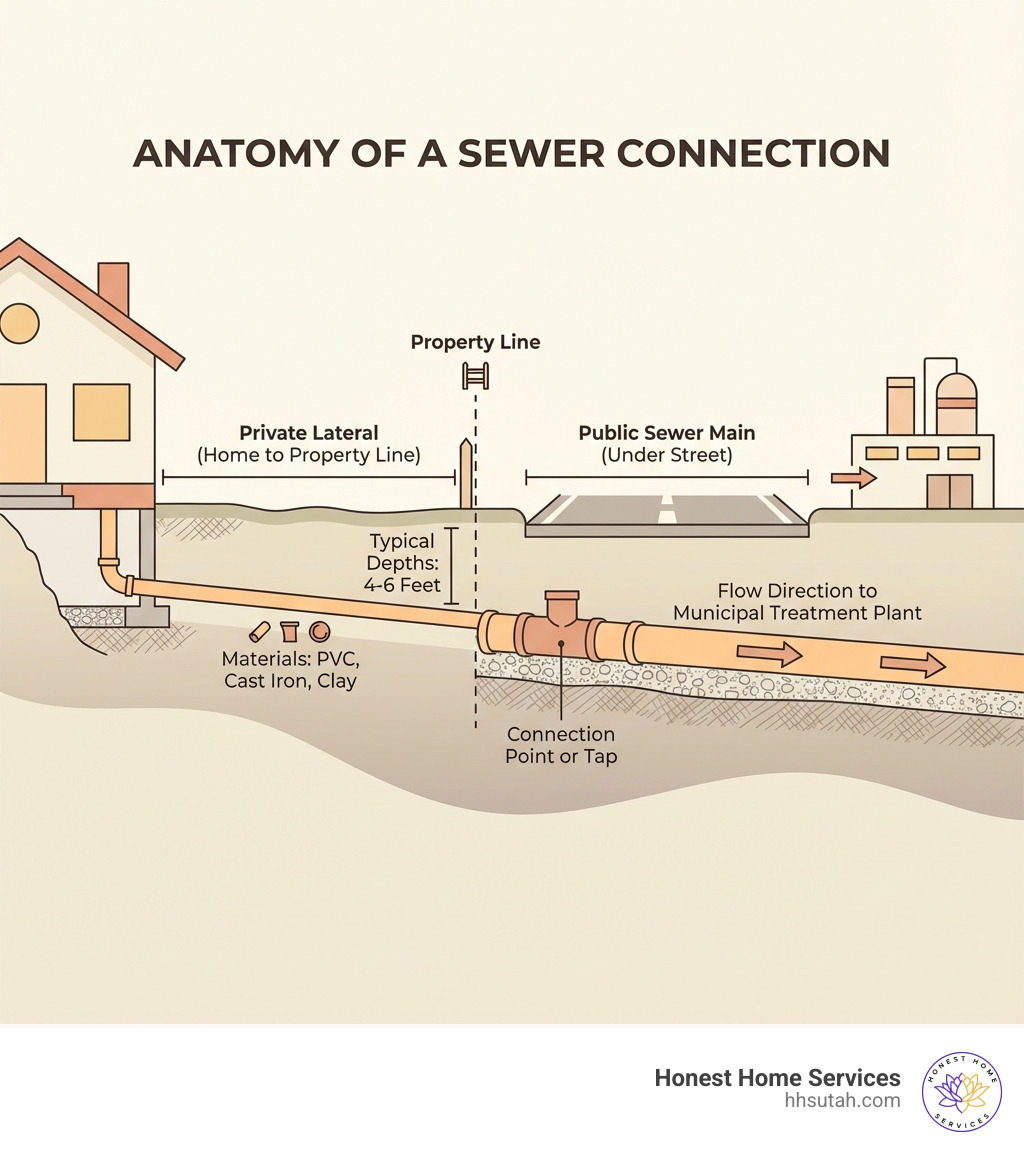
The process involves more than just digging a trench. Your home’s wastewater system connects to the municipal sewer main at your property line, where your private responsibility ends and the city’s begins. Each connection requires proper installation, inspection, and maintenance.
At Honest Home Services, we’ve spent over 20 years helping Northern Utah homeowners steer the complexities of connecting to sewer main line. From permits to final inspections, our licensed and insured team ensures this investment protects your property’s value and your family’s health.
Understanding Your Sewer System: The Basics
Your sewer system quietly whisks away wastewater from toilets, sinks, and showers. It’s a network designed to transport waste to either a municipal treatment plant or a private septic system.
The “main sewer line” is the primary pipe connecting all drain lines in your home to the municipal sewer, typically running from your house’s foundation to the public main under the street.
Understanding the difference between your private lateral and the city’s main line is crucial. As a property owner in Northern Utah, you are responsible for the maintenance and repair of your private sewer lateral—the pipe running from your home to the city’s connection point. The municipal main line, which collects wastewater from multiple properties, is the city’s responsibility.
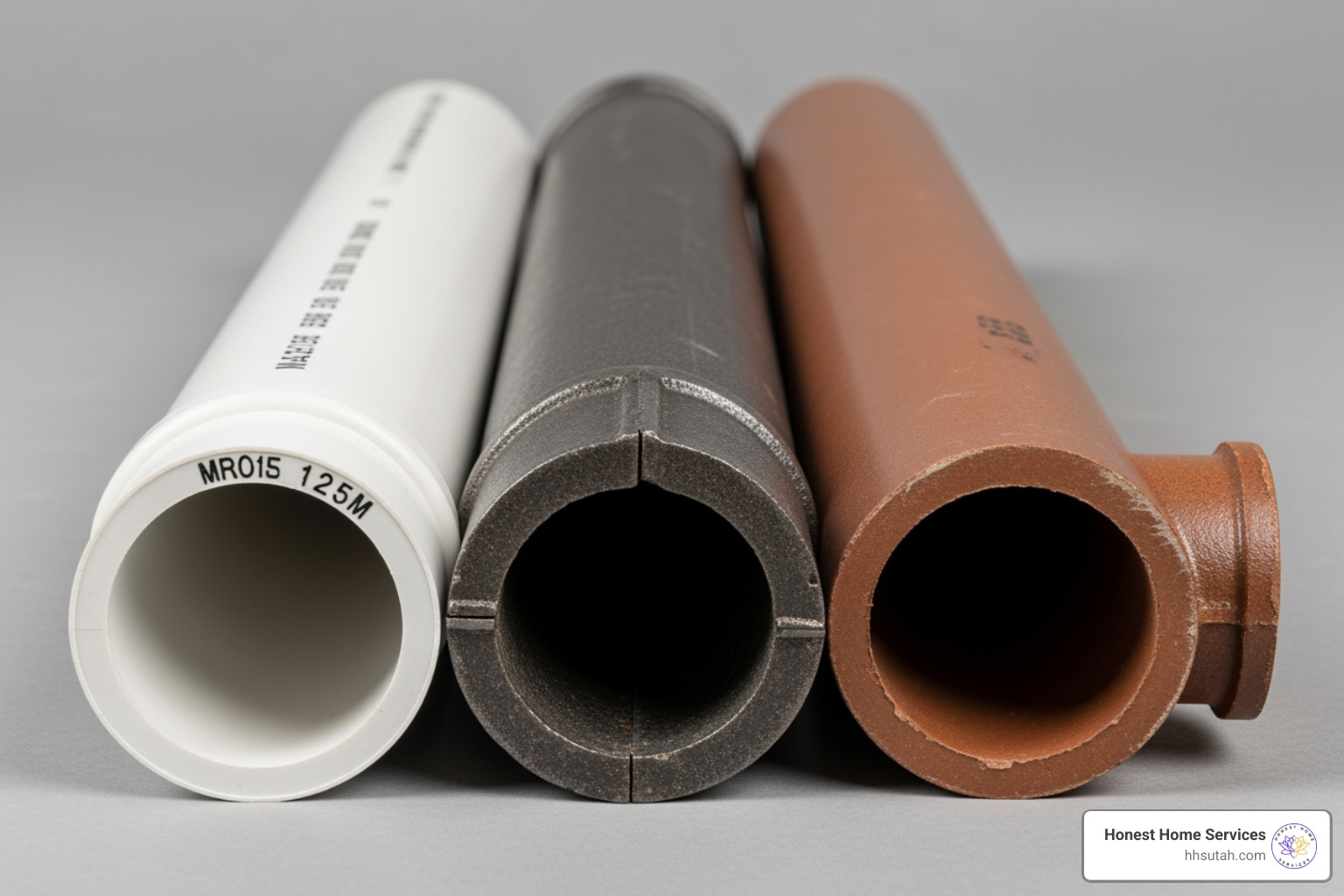
Sewer lines are built to last, but their lifespan varies by material:
- PVC (Polyvinyl Chloride): A modern, durable, and corrosion-resistant plastic pipe with a lifespan of 40+ years.
- Cast Iron: A strong, traditional material also lasting up to 40 years, but it can corrode and is susceptible to rust.
- Clay (Vitrified Clay Pipe – VCP): Found in older homes, these pipes are brittle and prone to cracking and root intrusion.
- ABS (Acrylonitrile Butadiene Styrene): Another durable plastic pipe, similar to PVC, used in drain, waste, and vent systems.
Residential main sewer pipes are typically 4 inches in diameter and buried 4 to 6 feet deep to protect them from freezing. They are installed at a slight downward angle (about 1/4 inch per foot) to ensure wastewater flows efficiently away from your home.
While we often think of “sewers” as one system, there are two types:
- Sanitary Sewers: Transport wastewater from drains, toilets, and sinks to a treatment plant.
- Storm Sewers: Capture rainwater and snowmelt to prevent localized flooding.
Knowing your plumbing system is vital. Learn more about maintaining your home’s water network with our guide on More info about your Plumbing System.
Types of Sewer Connections
Properties connect to the municipal sewer main in a few ways:
- Single Connection: The most common type, where one property has its own dedicated pipe to the main.
- ‘Y’ Connection: Two properties share a single connection point to the city sewer main.
- Header Connection: More than two properties feed into a larger private header pipe before joining the public system.
Early Warning Signs of Sewer Line Problems
Catching problems early can prevent costly emergencies. Look for these signs:
- Gurgling Sounds: Gurgling from toilets or drains can indicate trapped air from a clog in the main line.
- Slow Drains: If multiple drains throughout your home are slow, it points to a main sewer line issue.
- Multiple Clogs or Backups: Water backing up in unusual places (e.g., shower water in toilets) signals a significant blockage.
- Sewage Odors or Backups: The most obvious sign is sewage backing up into fixtures or a persistent sewage smell.
- Lush Grass Patches: Unusually green spots in your yard can indicate a leaking sewer line fertilizing the soil.
- Foundation Issues: Sinkholes or foundation cracks can be caused by a leaking sewer line eroding the soil beneath.
- Pest Infestations: An increase in rodents or sewer flies may mean a breach in your sewer pipes is providing an entry point.
- Wet Spots on Property: Unexplained soggy areas in your yard could indicate an underground sewer line leak.
If you notice these signs, it’s time to investigate. A professional camera inspection is the best way to see what’s happening underground. Learn more in our article: 6 Telltale Signs You Need a Camera Drain Inspection.
The Process of Connecting to a Sewer Main Line
Whether building a new home or converting from septic, the process of connecting to sewer main line is a multi-step journey requiring careful planning and professional expertise.
For new construction, connecting to the sewer is a standard part of the build. For existing properties, municipalities may expand sewer lines and issue a mandatory notice to connect, especially if septic systems are failing or causing environmental concerns.
This is not a DIY project. The complexity and health risks make professional assistance essential. Our licensed plumbers at Honest Home Services have the equipment and expertise to handle sewer line connections safely and correctly.
Step 1: Locating the Municipal Sewer and Your Connection Point
Before digging, you must know where the municipal sewer main is and where your private line will connect.
DIY Location Methods:
- Visual Cues: Look for a sewer cleanout (a capped pipe near your foundation), ground depressions, or the alignment of interior plumbing.
- Follow the Plumbing Stack: The main vertical drain pipe inside your house indicates where the sewer line exits.
- Check Property Records: Your local building department may have maps of municipal sewer systems. You can check property records for diagrams.
- Ask Previous Owners: They may have information about the sewer line’s location.
Professional Location Techniques:
For precise accuracy, professionals use advanced tools:
- Electronic Line Locators: These devices detect the exact position of underground pipes.
- Video Camera Inspection: A camera is sent through the pipe to inspect its condition and map its path, identifying connection points, blockages, or damage.
Municipalities typically don’t have records for lines on private property, so a plumber may be needed to locate the connection point accurately.
Step 2: The Application and Permitting Process for connecting to sewer main line
You must contact your local municipality’s public works or engineering department to get their specific rules and application forms. Permits are essential and typically cost around $500, covering inspections to ensure your connection meets local codes. You may need to submit site plans for review. City inspectors will visit the site to verify the installation adheres to approved plans before trenches are backfilled.
Step 3: The Physical Connection: What to Expect During Installation
With permits in hand, the physical work can begin. Here’s what the installation typically involves:
- Utility Locates: Before digging, we contact 811 to have all underground utilities (gas, water, electric) marked for safety.
- Excavation: A trench is dug from your home to the sewer main, ensuring the proper depth (typically 4-6 feet) and downward slope for gravity flow.
- Pipe Installation: We lay the appropriate pipe material (usually durable PVC) in the trench, ensuring precise alignment and sealed joints to prevent leaks and root intrusion.
- Backflow Preventer: We often install a backflow preventer to stop sewage from backing up into your home from the municipal line.
- Making the Tap Connection: This is the critical step where your new private lateral is securely connected to the municipal sewer main using specialized, watertight fittings.
- Testing and Inspection: The new line is tested for leaks. A city inspector must then approve the work before backfilling can begin.
- Backfilling and Restoration: The trench is carefully backfilled and compacted. We then restore the site, including landscaping or pavement.
Step 4: Decommissioning a Septic Tank (If Applicable)
If you’re converting from a septic system, the old tank must be properly decommissioned. This prevents future sinkholes and environmental contamination. The process involves:
- Pumping the Tank: A licensed professional pumps out all wastewater and sludge.
- Cleaning: The tank is thoroughly cleaned to remove residue.
- Filling: To prevent collapse, the tank is filled with a stable material like sand, gravel, or concrete slurry.
Decommissioning typically costs $500 to $1,000, in addition to the conversion costs.
Costs, Insurance, and Financial Considerations
Understanding the financial aspect of connecting to sewer main line is vital. Costs can vary significantly, so it’s important to budget appropriately.
Factors Influencing the Cost of Sewer Line Installation or Connection:
- Pipe Length and Depth: Longer and deeper lines increase excavation and material costs.
- Accessibility: Obstacles like driveways, landscaping, or existing structures increase labor and restoration costs.
- Permit Fees: These vary by municipality but are typically around $500.
- Labor Costs: The job’s complexity and duration impact labor expenses.
- Work in Public Right-of-Way: Working in the street requires extra permits and traffic control, raising costs.
- Contractor Choice: Quotes vary. Always choose a licensed and insured contractor like Honest Home Services for fair, transparent pricing.
- Septic Conversion: This adds the cost of decommissioning the old tank.
Typical Costs for Connecting to Sewer Main Line
Here’s a breakdown of average costs:
- New Main Sewer Line Installation: Expect to pay around $1,300 to $4,700, with an average of $2,500-$2,900.
- Septic to Sewer Conversion: Costs are higher, ranging from $3,000 to $8,500, with an average of $5,700.
- Sewer Line Repair vs. Replacement:
- Repair: Localized repairs typically cost between $3,000 and $8,000.
- Replacement: A full replacement can range from $3,000 to $10,000.
- Connection Fees: Municipalities charge connection fees that can range from $3,000 to $15,000 or more.
| Service Type | Typical Cost Range | Average Cost |
|---|---|---|
| New Sewer Line Installation | $1,300 – $4,700 | $2,500 – $2,900 |
| Septic to Sewer Conversion | $3,000 – $8,500 | $5,700 |
| Sewer Line Repair | $3,000 – $8,000 | (Varies by damage) |
| Sewer Line Replacement | $3,000 – $10,000 | (Varies by damage) |
| Decommissioning Septic Tank | $500 – $1,000 | (Included in conversion) |
| Connection Fees (Municipal) | $3,000 – $15,000+ | (Varies by municipality) |
Will Homeowner’s Insurance Cover Sewer Line Work?
Generally, homeowner’s insurance only covers sewer line damage if it’s sudden and accidental (e.g., from an earthquake). Damage from normal wear and tear, aging pipes, corrosion, root intrusion, or lack of maintenance is usually not covered.
Many insurers now offer optional service line coverage as an add-on. This specifically protects against damage to underground utility lines on your property. We highly recommend discussing this with your agent, especially if you have an older home. For more insights, check out Common Plumbing Problems in Older Homes and How to Fix Them.
Proactive Steps to Maintain a Healthy Sewer System
Once you’re connecting to sewer main line, the goal is to maintain that connection. Proactive maintenance extends the lifespan of your pipes, helps you avoid costly emergency repairs, and protects your home’s value.
Best Practices for Drain Care
Many sewer line problems start with what goes down your drains. Adopting these habits can significantly reduce the risk of blockages:
- Proper Disposal of Grease: Never pour grease, oils, or fats down the drain. Scrape it into the trash or a disposable container.
- What Not to Flush: Only flush human waste and toilet paper. Avoid “flushable” wipes, paper towels, feminine hygiene products, cotton balls, and dental floss.
- Garbage Disposal Usage: Avoid hard-to-grind items like coffee grounds, rice, pasta, eggshells, and fibrous vegetables.
- Avoiding Harsh Chemical Cleaners: These can corrode pipes and are often ineffective on major clogs. Use a plunger or snake for minor issues.
For more detailed tips, read our guide: Say Goodbye to Clogged Drains with These Effective Drain Cleaning Tips.
Professional Maintenance and Inspections
Regular professional maintenance is key to catching problems before they become major headaches.
- Routine Video Inspections: We recommend a sewer camera inspection every 1-5 years, especially for older homes, to spot issues like root intrusion or cracks early.
- Regular Drain Cleaning: Professional cleaning, like hydro jetting, is more effective and safer than chemical cleaners for removing buildup. Learn more about this powerful method: Hydro Jetting Salt Lake.
- Tree Root Management: Tree roots are a leading cause of sewer line issues. If you have large trees, consider professional root management. When planting new trees, choose non-invasive species and plant them far from your sewer line.
By combining smart daily habits with periodic professional care, you can ensure your sewer system remains healthy and reliable.
Frequently Asked Questions about Sewer Connections
Here are answers to some of the most common questions we hear from homeowners in Northern Utah.
How do I know if my property is connected to the municipal sewer system?
Here’s how to find out:
- Check Utility Bills: Your bill will list sewer service charges if you’re connected.
- Contact Public Works: Your local municipality can confirm if your address is connected to the sewer.
- Look for Septic Lids: The presence of large concrete or plastic lids in your yard indicates a septic system.
- Professional Inspection: A plumber can definitively trace your main drain line to confirm its destination.
What is the difference between sewer line repair and replacement?
The choice depends on the extent of the damage.
- Sewer Line Repair: This fixes specific, localized problems like a single crack or a small section of root damage. It’s best for isolated issues and is often quicker and less disruptive.
- Sewer Line Replacement: This is needed when the pipe is extensively damaged, corroded, or has multiple breaks. It involves installing an entirely new line and is the right choice when the system’s integrity is compromised.
Modern trenchless methods like pipe lining or bursting can often repair or replace lines with minimal digging. For expert services, visit Salt Lake City Pipe Repair.
What are the consequences of not repairing a damaged sewer line?
Neglecting a damaged sewer line can lead to severe problems:
- Property Damage: Leaks can erode soil, causing foundation cracks, sinkholes, and basement flooding.
- Health Hazards: Wastewater contains pathogens that can contaminate your soil and groundwater. Hidden leaks also promote mold growth, which can cause respiratory issues.
- Pest Infestations: Damaged pipes provide an easy entry point for rodents and insects into your home.
- Plumbing Issues: A main line problem will cause recurring clogs, slow drains, and backups throughout your home.
- Foul Odors: Persistent sewer gas smells inside or outside your home indicate a breach in the system.
Ignoring these issues can turn a manageable repair into an emergency. When in doubt, it’s always best to call a professional. Find out more in our guide: When It’s Time to Call a Plumber.
Conclusion
Connecting to sewer main line is a significant investment in your property’s health and longevity. From understanding your system and navigating permits to the physical installation, the result is a reliable and sanitary wastewater solution. We’ve covered the key steps, warning signs, costs, and the importance of proactive maintenance to protect your investment.
For residents in Northern Utah, Honest Home Services provides expert, reliable sewer line services. Our local technicians are committed to customer satisfaction and fair pricing. Whether you need an inspection, repair, or a full connection, we’re here to ensure your home’s lifeline is secure.
Don’t let sewer problems linger. Contact us for professional Salt Lake City Sewer Mainline Repair today for honest, reliable expertise.