
Introduction: Your Home’s Most Critical Connection
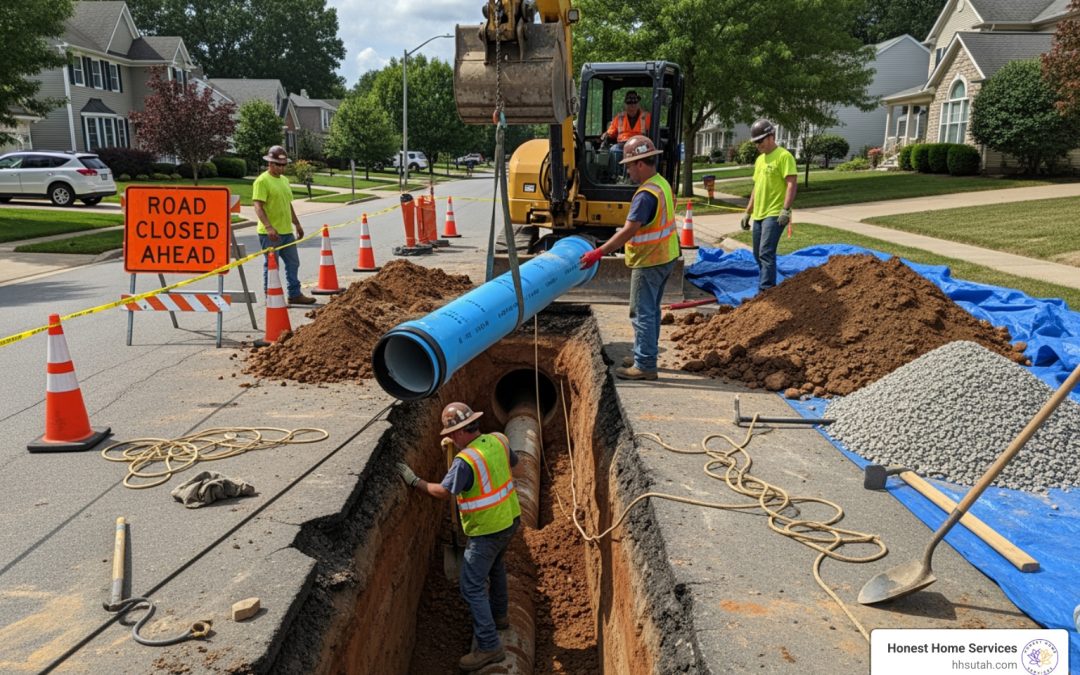
Mainline sewer replacement is the process of repairing or replacing the primary pipe that carries all wastewater from your home to the city’s sewer system. Here’s what you need to understand about your options:
Common Replacement Methods:
- Traditional Excavation – Full pipe removal with trenching ($50–$200 per linear foot)
- Trenchless Technologies – Pipe bursting or CIPP lining with minimal digging ($60–$250 per linear foot)
Typical Project Details:
- Average cost: $3,320 (range: $1,390–$5,320)
- Timeline: 1–3 days for most residential projects
- New line lifespan: 50–100+ years depending on material
When to Consider Replacement:
- Frequent backups or multiple slow drains
- Sewer gas odors or foundation cracks
- Pipes older than 50 years (especially clay, cast iron, or Orangeburg)
- Camera inspection reveals significant damage
Your home’s mainline sewer line is the single pipe responsible for carrying all the wastewater from every toilet, sink, shower, and appliance to the city’s public sewer system. When this critical connection fails, it doesn’t just cause inconvenience—it can lead to sewage backups in your home, foundation damage, and even health hazards from exposure to raw sewage.
Most homeowners don’t think about this underground pipe until something goes wrong. But here’s what many people don’t realize: you’re responsible for the entire sewer lateral from your home to the city main line, which typically sits at the street or property line. The city handles the public main, but everything from the curb to your house is on you—including excavation, repair, and restoration of streets, sidewalks, or landscaping if work is needed.
The stakes get higher when you consider the age of your home. The median home age in Denver is 50 years, and many homes in Northern Utah fall into similar age brackets. If your home was built before the 1980s, there’s a good chance your sewer line is made from outdated materials like clay, cast iron, or even Orangeburg (compressed wood fibers and tar)—all of which are prone to cracks, root intrusion, and eventual failure.
At Honest Home Services, we’ve helped countless Northern Utah homeowners steer the complexities of mainline sewer replacement with transparent pricing and guaranteed workmanship for over 20 years. Our licensed and insured team specializes in both traditional excavation and modern trenchless methods, ensuring you get the right solution for your home and budget.
Red Flags: Recognizing the Signs of a Failing Sewer Line
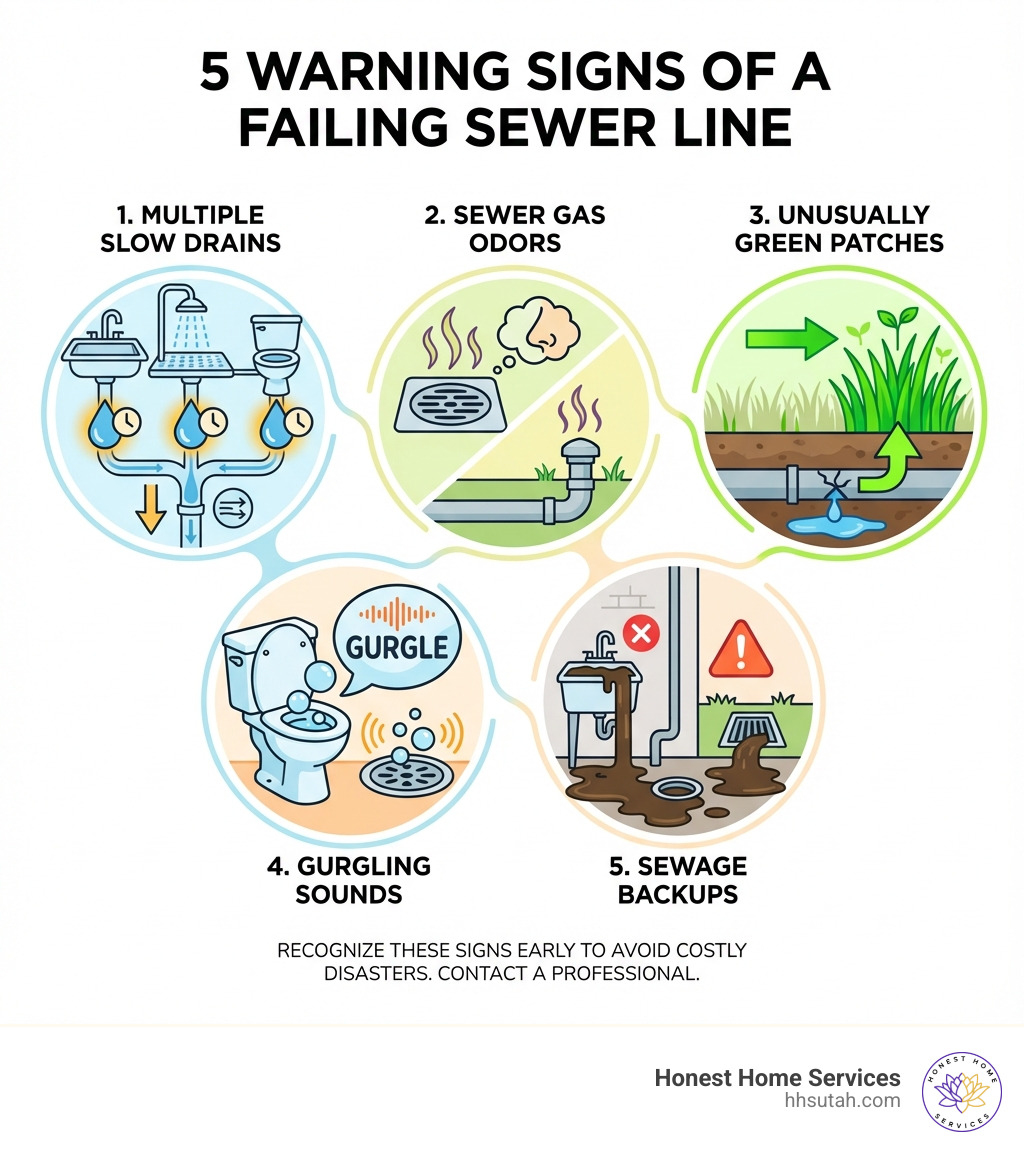
A failing mainline sewer isn’t always obvious until it’s a major problem. However, your home and yard often send out subtle distress signals. Learning to recognize these signs early can save you from a messy and costly disaster. When you notice any of these indicators, it’s time to call in the professionals for a thorough inspection.
Some of the most common signs that indicate your sewer line needs attention include:
- Frequent Backups or Multiple Slow Drains: If several drains throughout your home are slow, or you have frequent backups in lower-level fixtures, it points to a blockage in your main sewer line.
- Gurgling Toilets: Gurgling sounds from your toilet when you use other fixtures suggest air is trapped in the drain system due to a mainline blockage.
- Sewer Gas Odors: Foul odors near drains or in your yard are a clear sign of a breach in the sewer line, which should be airtight.
- Unusually Green or Lush Patches in Your Yard: Sewage acts as a fertilizer. A patch of grass that’s greener than the surrounding lawn could indicate a leaking sewer pipe underground.

- Yard Indentations or Sunken Areas: A continuously saturated ground from a broken sewer line can cause soil to dissipate, leading to dips or sinkholes in your lawn.
- Foundation Cracks or Settlement: Severe leaks can saturate the soil around your foundation, causing shifting, settlement, and cracks in foundation walls.
- Pest Infestations: An unexplained increase in pests like rats or insects might point to an underground issue, as they can enter through breaks in sewer lines.
- Wet Spots or Puddles in the Yard: Unexplained puddles in your yard, especially without recent rain, could indicate a sewer line leak.
When we investigate these signs, a crucial tool is the video camera inspection. This involves sending a high-resolution camera into your sewer line to pinpoint the exact location and nature of the problem—be it cracks, tree root intrusion, corrosion, or a collapse. This diagnostic step is essential for determining the most effective course of action.
Old vs. New: Understanding Sewer Pipe Materials
The material of your existing sewer line plays a huge role in its susceptibility to damage. Many homes in Northern Utah were built decades ago with materials now considered outdated, which helps explain why a mainline sewer replacement might be necessary.
Let’s take a quick trip through the history of sewer pipe materials:
- Clay Pipes (Vitrified Clay Pipe – VCP): Common in homes until the mid-1960s, clay pipes are durable but were installed in short sections with joints vulnerable to tree root intrusion, which causes blockages and cracks.
- Cast Iron Pipes: Popular into the 1960s, cast iron is strong but susceptible to corrosion and rust over time, leading to cracks and eventual collapse. We often see these Old Plumbing Pipes in older basements.
- Orangeburg Pipes (Fiber Conduit Pipe): Used during WWII due to metal shortages, this pipe is made of compressed wood fibers and tar. It has a very short lifespan, as it deforms, blisters, and disintegrates over time. Replacement is a matter of “when,” not “if.”
- Modern PVC (Polyvinyl Chloride) Pipes: Today, almost all new sewer lines use PVC. It’s durable, corrosion-resistant, and flexible, with watertight joints that are highly resistant to tree root intrusion.
Lifespan of Materials:
- PVC: With proper installation, modern PVC pipes can last 100 years or more.
- Cast Iron: Well-maintained cast iron pipes can serve for 75-100 years.
- Clay: The vulnerable joints often limit their effective lifespan to 50-60 years without significant maintenance.
- Orangeburg: These pipes rarely last more than 30-50 years and often fail much sooner.
The type of pipe material in your home’s sewer line is a key factor in assessing its condition and predicting its remaining service life.
Understanding the Mainline Sewer Replacement Process: Trench vs. Trenchless
When it comes to addressing a damaged mainline sewer, there are two primary approaches: traditional excavation and modern trenchless methods. Each has its own set of advantages and disadvantages, and the best choice for your Northern Utah home depends on the specific situation, your budget, and your property’s layout.
Here’s a comparison to help you understand the options:
| Feature | Traditional Excavation (Open-Cut) | Trenchless Methods (Pipe Bursting/CIPP) |
|---|---|---|
| Cost | $50–$200 per linear foot (lower initial pipe cost) | $60–$250 per linear foot (higher initial pipe cost) |
| Disruption | Extensive digging, landscape destruction, concrete/asphalt removal | Minimal digging (2 access pits), preserves landscaping |
| Time | Typically 1-3 days for replacement, plus restoration time | Often faster, 1-2 days for installation |
| Best Use Cases | Severely collapsed pipes, large diameter pipes, major grade issues, complete system overhaul, when trenchless isn’t feasible | Minor to moderate damage, root intrusion, desire to preserve landscaping/driveways, when minimal disruption is key |
The overall project timeline for a residential mainline sewer replacement typically ranges from 1 to 3 days, though complex projects may take longer.
It’s important to note that sometimes, a full replacement isn’t necessary. For minor damage, isolated cracks, or small blockages, Pipe Repair options like spot repairs or hydro-jetting might be sufficient. However, for extensive damage, frequent issues, or aging pipes, replacement offers a more permanent solution.
Traditional Excavation (Open-Cut) Method
The traditional excavation method, also known as “open-cut,” involves digging a trench along the entire length of the damaged sewer line to expose and replace the old pipe.
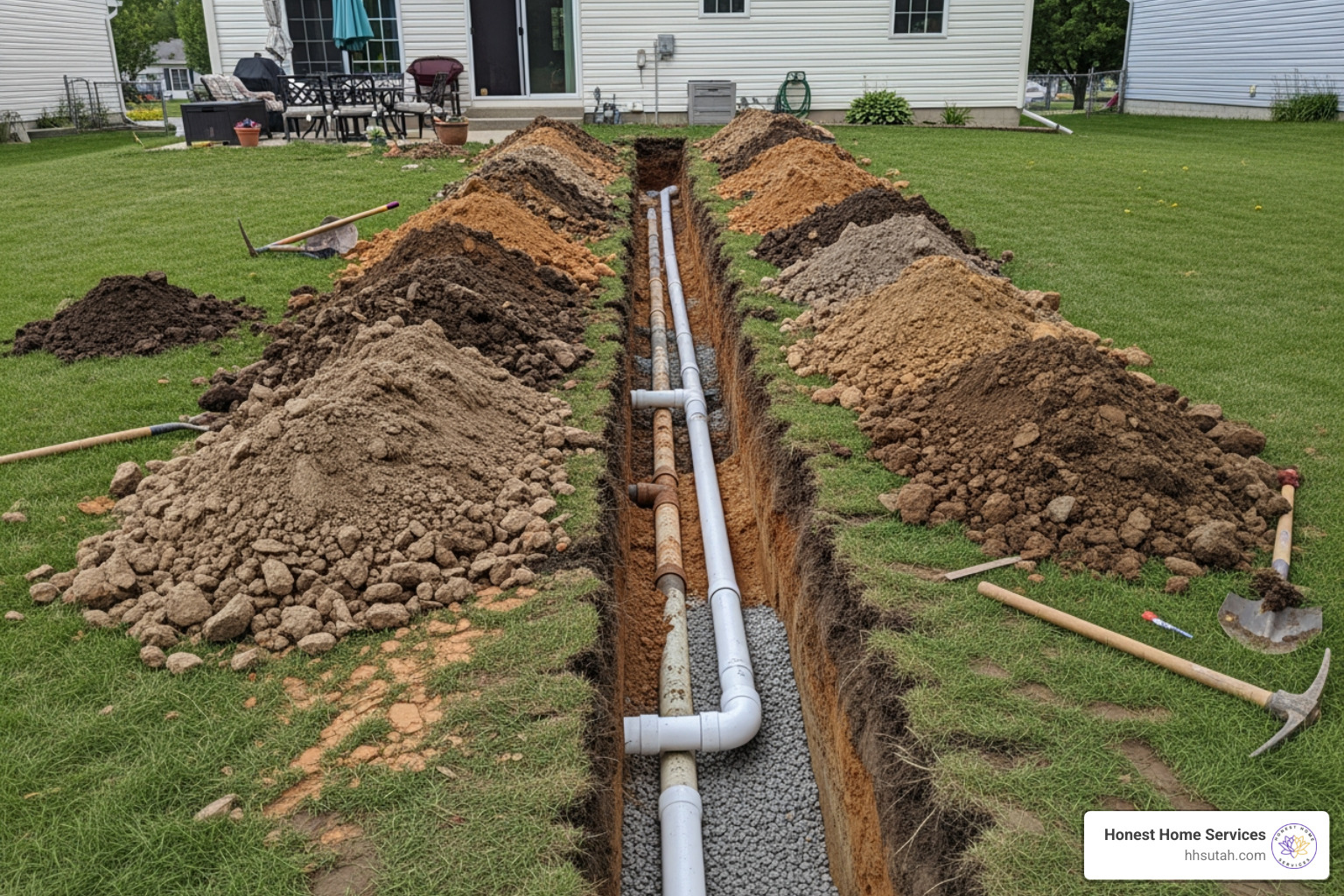
How it Works:
- Excavation: A trench is dug from your home to the city main, which may require removing landscaping or concrete.
- Pipe Replacement: The old, damaged pipe is removed, and a new, durable PVC pipe is installed. This is also an opportunity for Plumbing System Re-Piping if other lines are also failing.
- Inspection & Backfill: The new line is inspected by local authorities, then the trench is backfilled and the ground is restored.
Pros of Traditional Excavation:
- Complete Access: Ideal for severely collapsed pipes, major grade issues, or when the pipe’s location is uncertain.
- Lower Material Cost: The cost per linear foot for the pipe itself might be slightly lower than trenchless options.
- Versatility: Can be used for almost any sewer line problem, regardless of pipe condition.
Cons of Traditional Excavation:
- Extensive Disruption: Causes significant damage to your yard, landscaping, and driveway, leading to high restoration costs.
- Longer Process: The excavation and subsequent restoration can extend the project timeline.
- Higher Restoration Costs: Savings on pipe material are often offset by the cost of repairing your property (landscaping, concrete, etc.).
Modern Trenchless Methods
Trenchless sewer replacement technologies offer a less invasive alternative, minimizing damage to your property. These methods are a great option for many Northern Utah homeowners.
How it Works (Two Main Types):
-
Pipe Bursting:
- This method uses two small access pits. A new pipe is attached to a bursting head and pulled through the old pipe.
- The bursting head fractures the old pipe outwards, making space for the new pipe to be pulled into place.
- This effectively replaces the old pipe with a new one of the same or even slightly larger diameter.
- Pros: Minimal digging, replaces the entire pipe, can increase pipe capacity.
- Cons: Not suitable for all pipe types (e.g., heavily collapsed), requires two access points.
-
Cured-In-Place Pipe (CIPP) Lining:
- CIPP involves inserting a flexible, resin-saturated liner into the damaged pipe through a single access point.
- The liner is expanded and then cured with heat, creating a hard, seamless new pipe within the old one.
- This new pipe acts as a structural liner, extending the life of the existing system by 50 to 75 years.
- Pros: Very minimal digging, creates a jointless pipe, fixes multiple types of damage, fast curing times.
- Cons: Reduces the pipe’s internal diameter slightly, not ideal for completely collapsed pipes.
For more technical details from the EPA on trenchless methods, you can refer to their fact sheet.
Pros of Trenchless Methods:
- Minimal Disruption: Preserves your landscaping and driveway, saving you significant restoration costs.
- Faster Completion: Often quicker to install than traditional excavation.
- Long-Lasting: The new pipes or liners are durable and offer excellent longevity.
- Cost-Effective (Long-Term): While the initial cost per foot might be higher, the savings on property restoration can make trenchless methods 30-40% cheaper overall.
Cons of Trenchless Methods:
- Not Always Possible: May not be suitable for pipes that are completely collapsed or severely misaligned.
- Higher Initial Investment: The specialized equipment can lead to a higher upfront cost compared to just the excavation.
Choosing the right method for your home is a decision we’ll help you make based on a thorough camera inspection and evaluation of your property. We provide comprehensive Pipe Repair Solutions for any situation.
Decoding the Bill: What Influences Replacement Costs?
We know that facing a mainline sewer replacement can be daunting, especially when thinking about the cost. While it’s a significant investment, understanding what influences the price can help you feel more prepared.
According to industry data, a sewer line replacement averages around $3,320, with most homeowners paying between $1,390 and $5,320. However, these are just averages, and the actual cost for your Salt Lake City or Northern Utah home can vary widely based on several factors.
For instance, trenchless replacement methods typically cost $60 to $250 per linear foot, while traditional excavation ranges from $50 to $200 per linear foot. The “per linear foot” cost often doesn’t include the significant expenses of restoring your property after excavation.
At Honest Home Services, we believe in transparent pricing and providing Affordable Plumbing Repairs. We’ll give you a clear, upfront estimate so you know exactly what to expect.
Key Factors Influencing Mainline Sewer Replacement Costs
Let’s break down the main elements that contribute to the overall cost:
-
Pipe Material: Your choice of new pipe material impacts costs. PVC is the most common and cost-effective option, while premium cast iron is more expensive. Most homes use 4-inch diameter pipe.
-
Length and Depth of the Line: Longer lines cost more. Deeper pipes (common in Northern Utah to prevent freezing) increase excavation time, labor, and complexity.
-
Accessibility and Location: Lines under driveways, patios, or concrete slabs significantly increase costs due to the need for demolition and repair. Working around other utility lines also adds complexity.
-
Replacement Method (Trench vs. Trenchless): As discussed, traditional excavation has a lower per-foot installation cost but higher restoration costs, while trenchless methods have a higher installation cost but save money on restoration.
-
Labor Rates: Skilled plumbers and excavation crews are essential. Labor costs for sewer work typically range from $150–$500 per hour, depending on the job’s complexity.
-
Permit Fees: Local municipalities require permits for sewer line work to ensure it meets code. These fees can range from $100–$1,000.
-
Additional Costs:
- Camera Inspections: A pre-work inspection ($100–$500) is crucial for accurate diagnosis.
- Excavation & Cleanup: Factors like rock removal or debris disposal ($200–$500) can add to the cost.
- Yard and Property Restoration: This is the hidden cost of excavation, including repairing landscaping, concrete, or asphalt.
- Emergency Fees: After-hours or weekend service for emergencies can increase standard rates by 25-50%.
We understand that this can be a substantial expense. That’s why we offer various Financing options to help make your mainline sewer replacement manageable.
Preparing for Your Project: From Planning to Prevention
A mainline sewer replacement is a significant home improvement project. Proper preparation can make the process smoother, and proactive prevention can help extend the life of your new sewer line.
How to Choose a Reputable Contractor
Choosing the right contractor for your mainline sewer replacement is one of the most critical decisions you’ll make. You want a team that is not only skilled but also trustworthy and transparent, especially for an investment of this size. At Honest Home Services, we pride ourselves on being a leading Local Plumbing Company in Northern Utah, and we encourage you to ask these questions when selecting your professional:
- Are they licensed, bonded, and insured? This is non-negotiable. Licensing ensures they meet professional standards, and bonding/insurance protect you from liability in case of accidents or damage during the project.
- Do they specialize in sewer line work? While many plumbers offer drain services, some companies specialize in sewer line repair and replacement. This specialization often means they have more experience, specialized equipment, and in-depth knowledge of the complexities involved.
- Can they provide multiple references or testimonials? Look for companies with a strong track record and positive customer feedback.
- Do they offer a detailed, written estimate? A reputable contractor will provide a comprehensive quote that outlines all costs, including labor, materials, permits, and any potential restoration. Be wary of vague estimates or those that are significantly lower than others, as they might hide costs.
- What warranties do they offer on their work? A good warranty provides peace of mind that your investment is protected. We stand by our work with guaranteed customer satisfaction.
- Do they understand local codes and regulations? Sewer line work requires adherence to specific municipal codes. Ensure your contractor is familiar with the regulations in your Northern Utah city (e.g., Salt Lake City, Layton, Farmington).
- What methods do they offer (trenchless vs. traditional)? A versatile contractor will assess your situation and recommend the best method for your property, rather than pushing one solution.
- How long will the project take, and what is the communication plan? Get a clear timeline and understand how they will keep you informed throughout the process.
Before our team begins any work, we’ll guide you through the process, helping you understand what to expect. This includes locating all electrical and gas lines, and preparing the work area to minimize disruption. We’re here for all your Plumbing Repairs.
Preventative Measures to Extend Your Sewer Line’s Life
Once you’ve invested in a new mainline sewer replacement, you’ll want to do everything you can to protect it and ensure its longevity. Here are some preventative measures homeowners can take:
- Proper Disposal Habits: The sewer line is not a garbage disposal. Avoid pouring grease, oil, or fat down your drains, as these solidify and cause stubborn blockages. Also, never flush “flushable” wipes, paper towels, feminine hygiene products, or excessive toilet paper, as these do not break down in pipes and can lead to serious clogs.
- Strategic Tree Planting: Tree roots are a major culprit in sewer line damage. When planting new trees or shrubs, research their root systems and ensure they are planted a safe distance from your sewer line. If you have existing large trees, consider installing a root barrier.
- Regular Inspections: Proactive camera inspections (perhaps annually, or every few years) can catch minor issues like small cracks or early root intrusion before they escalate into major problems. This allows for timely, less expensive repairs rather than a full replacement.
- Professional Hydro Jetting: For pipes prone to buildup or minor root intrusion, professional hydro jetting can clear blockages and clean the pipe walls effectively without damaging the pipe itself.
- Scheduled Drain Cleaning Services: Regular professional drain cleaning, especially for frequently used drains or those with a history of slow drainage, can help prevent debris from accumulating in the main line.
Frequently Asked Questions about Mainline Sewer Replacement
We get a lot of questions about mainline sewer replacement, and it’s our job to provide clear, honest answers. Here are some of the most common inquiries from homeowners:
How long does a new sewer line last?
A new sewer line can last 50-100+ years, depending on the material. Modern PVC pipes have a lifespan of over 100 years, while cast iron can last 75-100 years with proper care.
Is sewer line replacement covered by homeowner’s insurance?
Typically, standard homeowner’s insurance does not cover sewer line replacement due to normal wear and tear, corrosion, or tree root damage over time. However, some policies may offer coverage for sudden and accidental events, or you can purchase specific service line endorsements.
What is my responsibility versus the city’s?
As a homeowner, you are typically responsible for the sewer lateral—the pipe that runs from your house to the city’s main sewer line at the street or property line. The city is responsible for the main line that serves the neighborhood.
The Long-Term Payoff: A Smart Investment for Your Home
While a mainline sewer replacement may seem like a significant undertaking, it’s truly one of the most impactful long-term investments you can make in your home. The benefits extend far beyond simply fixing a problem, offering peace of mind and protecting your property for decades to come.
Here’s a summary of the long-term benefits:
- Protection from Damage and Health Risks: A new, properly installed sewer line eliminates the risk of sewage backups, which can cause extensive property damage, foster mold growth, and expose your family to harmful bacteria and pathogens. It safeguards your home’s structural integrity by preventing soil saturation around the foundation.
- Increased Property Value: A modern, reliable sewer system is a major asset. It removes a significant point of concern for potential buyers, making your home more attractive and potentially increasing its market value. Many real estate transactions now include sewer line inspections, and a new line can be a huge selling point.
- Elimination of Recurring Problems: Say goodbye to frequent clogs, slow drains, and the constant worry of another backup. A new sewer line, especially one made from durable PVC, is designed to be trouble-free for generations.
- Improved Efficiency: Modern pipes are smoother and less prone to blockages, allowing wastewater to flow more efficiently.
- Peace of Mind: Perhaps the greatest benefit is the peace of mind that comes with knowing one of your home’s most critical systems is robust and reliable. You can flush, drain, and wash without a second thought.
For expert assessment and honest service in Northern Utah, trust the professionals at Honest Home Services. We’re committed to providing the right solution for your home, ensuring its vital connections are secure for years to come. Don’t let a failing sewer line turn your pipe dreams into a nightmare.
Contact Us today to learn more, or Get your mainline sewer replacement quote today!