
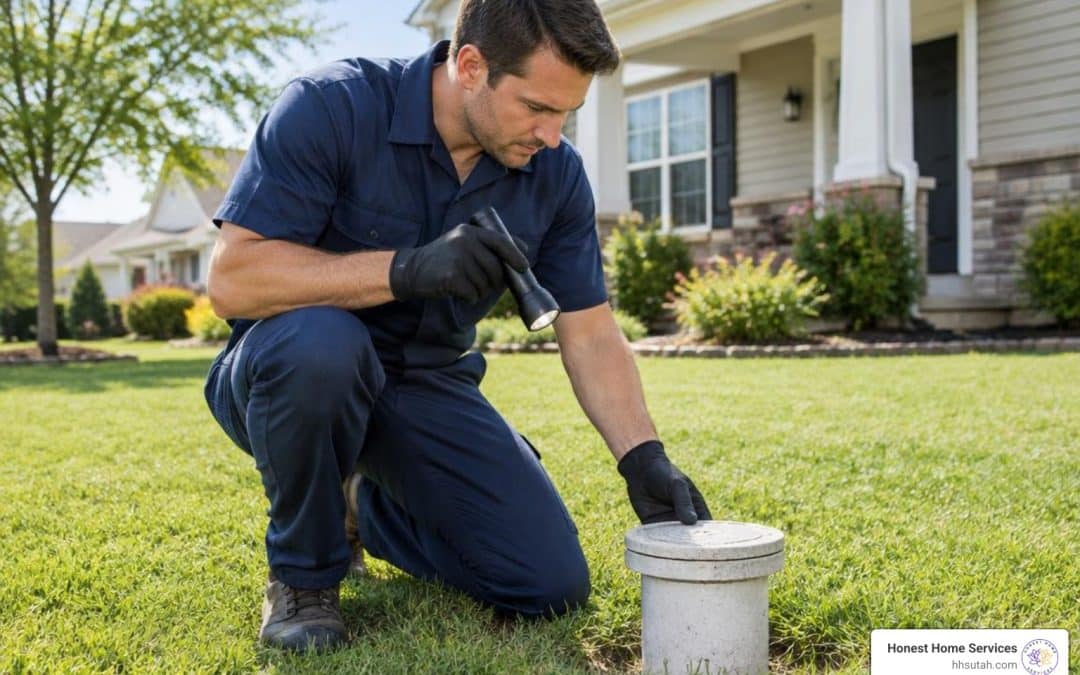
Sewer Blockage Clearing: What to Do First
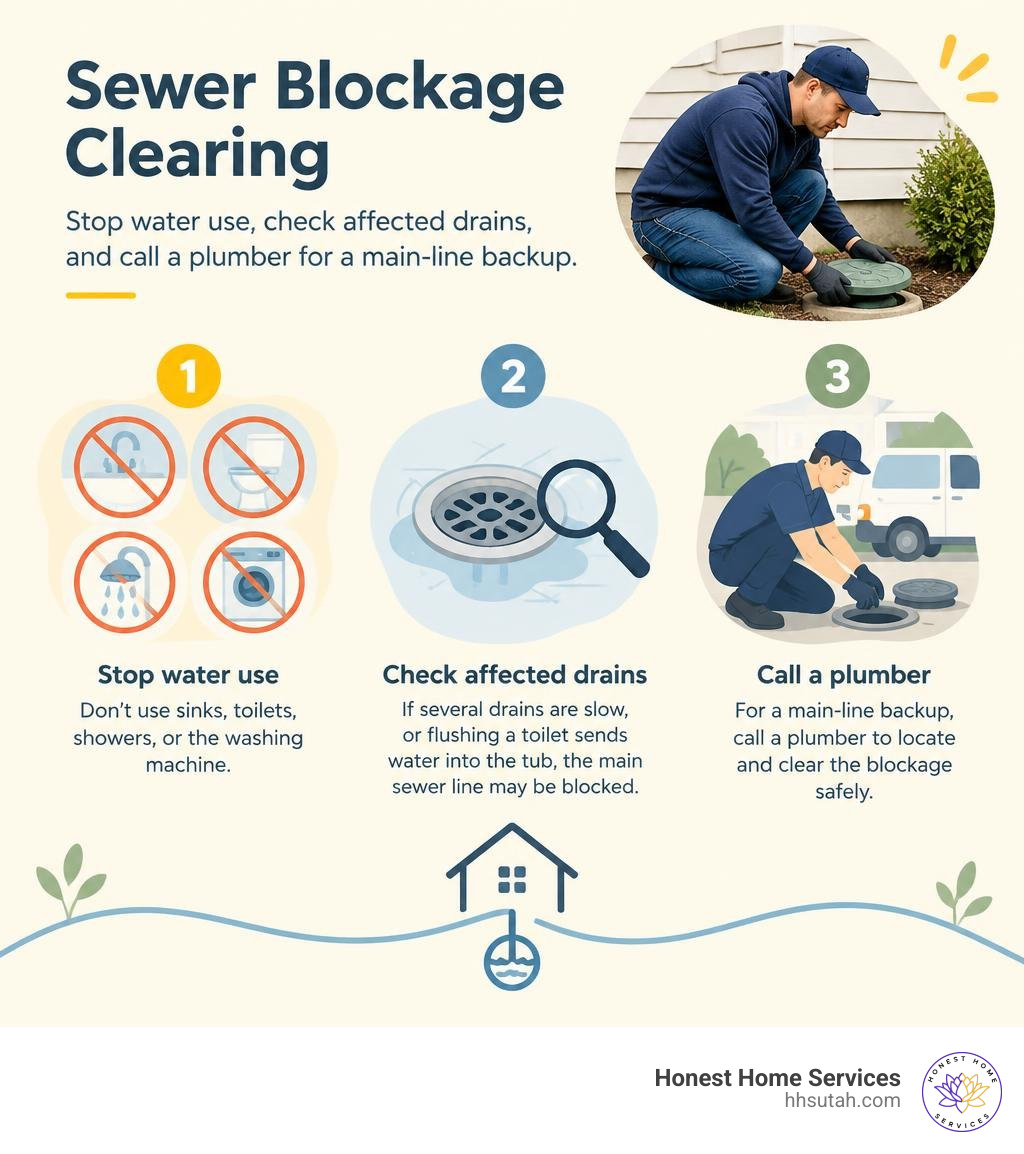
For sewer blockage clearing, first stop using sinks, toilets, showers, and the washing machine. If several drains are slow, or flushing a toilet sends water into the tub, the main sewer line may be blocked. Keep people and pets away from any sewage. Do not open a cleanout that may be backed up or pour chemical cleaner down a drain; call a plumber to locate and clear the blockage safely.
If only one fixture is clogged and there is no sewage backup, you can try a plunger or a hand auger made for that fixture. Stop if water backs up elsewhere or the clog returns.
We’re Honest Home Services, a licensed and insured Northern Utah plumbing team with over 20 years of experience in drain cleaning and sewer and main-line repairs. We bring that experience to sewer blockage clearing for homeowners and businesses in Salt Lake City and nearby communities.
Sewer blockage clearing vocab to learn:
Recognize the Signs and Causes of a Main Sewer Blockage
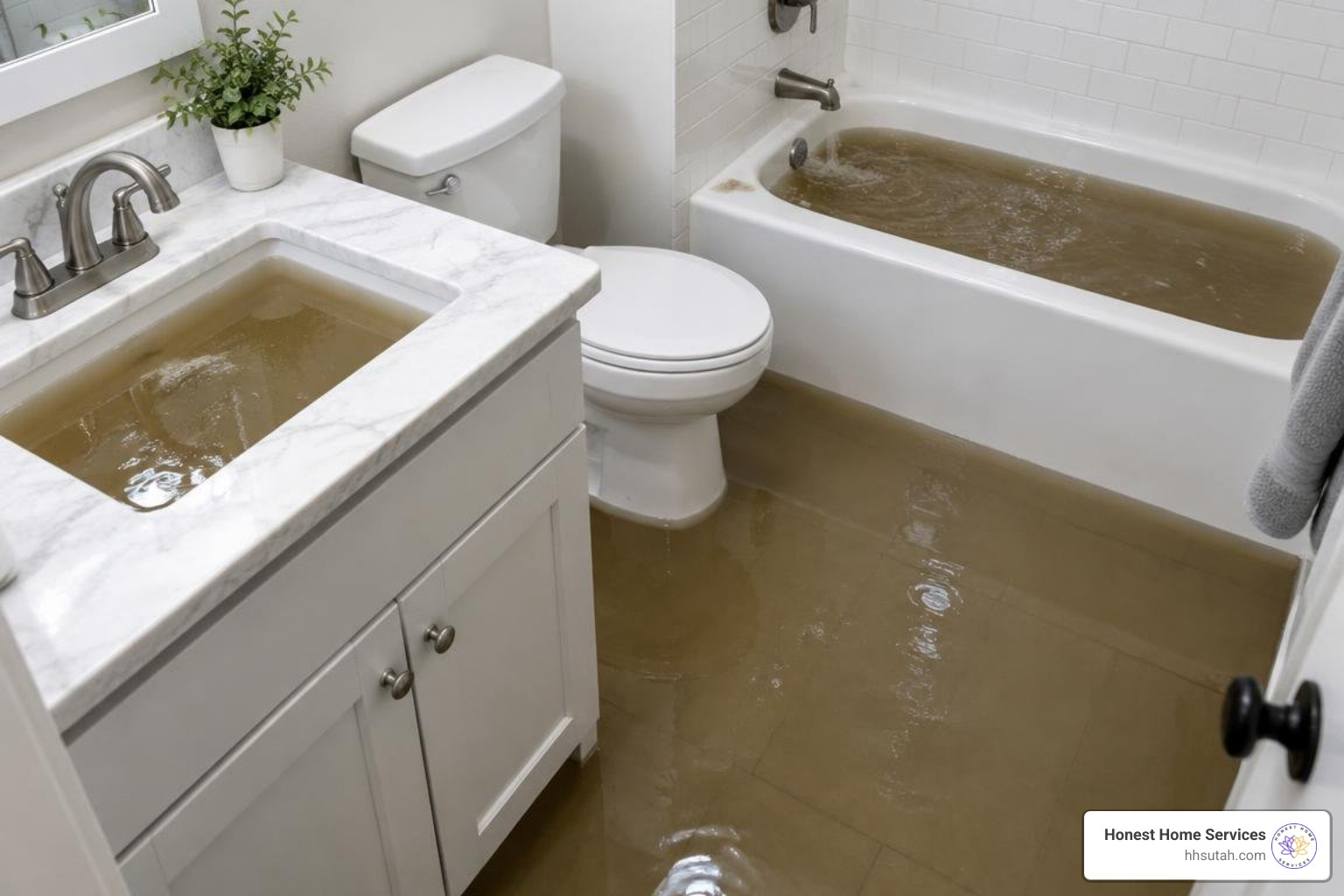
When an isolated sink clogs, the issue stays confined to that single pipe. A main sewer clog behaves differently: it stops wastewater from leaving the entire building. Understanding the reasons multiple drains can signal a main-line clog helps homeowners prevent minor drainage trouble from escalating into major property damage. Reviewing official guidance on sewer problems in the home underscores that whole-house symptoms require prompt, methodical attention.
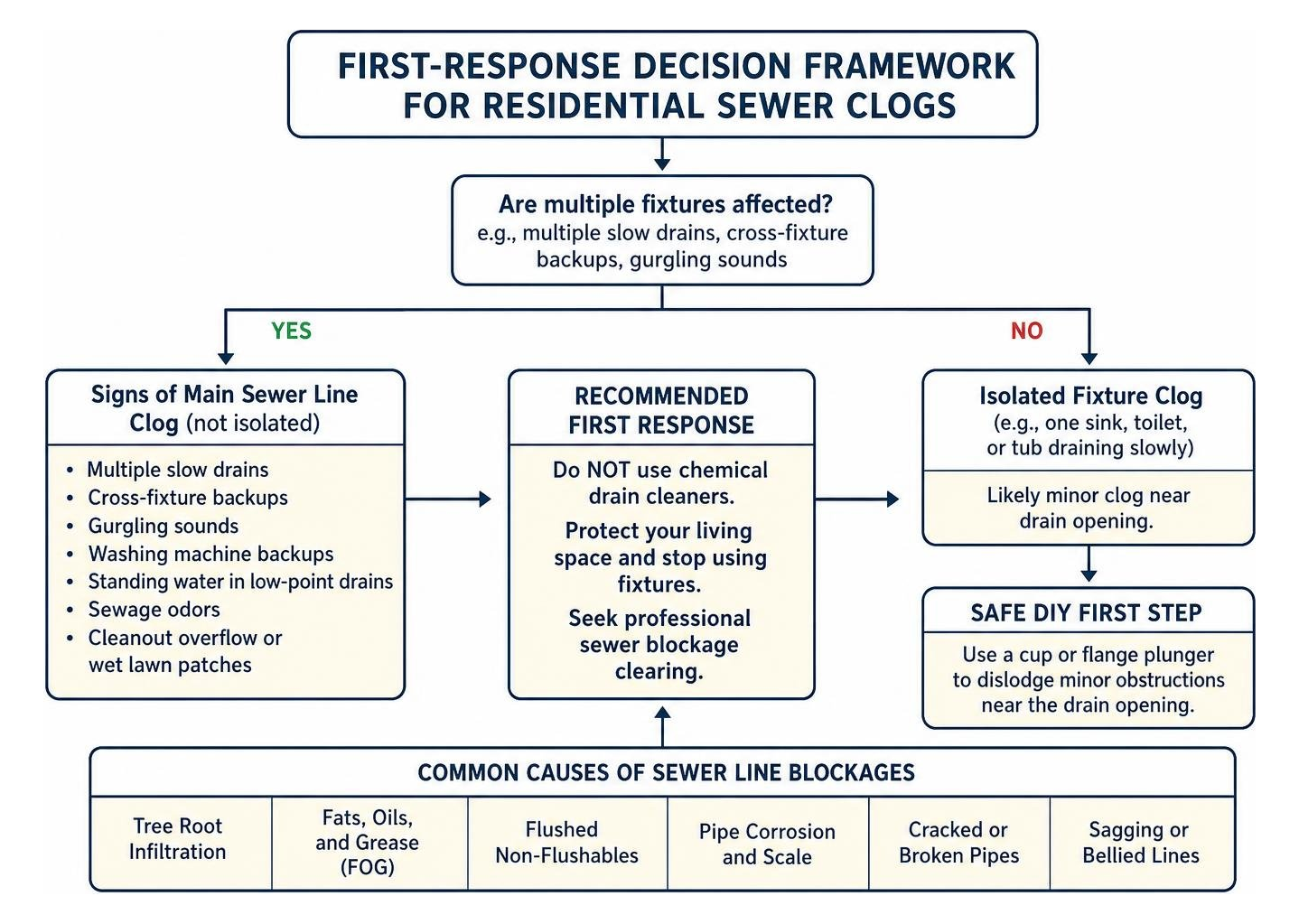
Signs the Main Sewer Line May Be Clogged
A mainline obstruction creates unmistakable warning signs:
- Multiple Slow Drains: Sinks, showers, and tubs throughout different levels of the property drain sluggishly at the same time.
- Cross-Fixture Backups: Flushing a toilet causes wastewater to surge into a nearby bathtub or shower basin.
- Gurgling Sounds: Trapped air escaping past an obstruction produces bubbling noises in toilets or sink traps when other fixtures run.
- Washing Machine Backups: Draining a heavy laundry load forces water to overflow into basement floor drains or lower-level toilets.
- Standing Water in Low-Point Drains: Wastewater pools around basement floor drains or lowest-level shower pans.
- Sewage Odors: A pervasive smell of sewer gas (hydrogen sulfide) lingers near interior drains or outside near foundation walls.
- Cleanout Overflow or Wet Lawn Patches: Wastewater leaks from the exterior cleanout pipe, or soggy, unusually green patches appear in the yard without rain.
Common Causes of Sewer Line Blockages
Several underlying issues commonly restrict or seal off underground sewer laterals:
- Tree Root Infiltration: Roots seek moisture through microscopic hairline cracks or loose pipe joints, expanding into dense root balls that trap solids.
- Fats, Oils, and Grease (FOG): Warm kitchen grease hardens as it cools along pipe walls, creating a sticky coating that narrows the pipe diameter.
- Flushed Non-Flushables: Wet wipes, feminine hygiene products, paper towels, and facial tissues do not break down in water like toilet paper and create dense obstructions.
- Pipe Corrosion and Scale: Older cast-iron pipes corrode and develop rough interior scaling that snags debris and toilet paper.
- Cracked or Broken Pipes: Age, ground settling, and physical pressure can crack structural walls and obstruct flow.
- Sagging or Bellied Lines: Soil movement or poor bedding causes sections of pipe to sag, forming low points where water and heavy waste settle and cause clogs.
Sewer Blockage Clearing: Choose a Safe First Response

When a main drain stops working, taking the wrong step can flood finished rooms with hazardous wastewater. Following a step-by-step guide to cleaning a main sewer line ensures you protect your living space before mechanical intervention starts.
DIY Sewer Blockage Clearing: What Homeowners Can Safely Try
Homeowners can safely tackle isolated fixture clogs using basic manual tools:
- Use a Cup or Flange Plunger: Create a firm seal over a clogged toilet, tub, or sink drain to dislodge minor obstructions near the drain opening.
- Clear the Sink Trap: Place a bucket beneath an accessible sink, loosen the slip nuts on the P-trap, clear out accumulated hair or soap buildup, and reassemble.
- Use a Small Hand Auger: Insert a light, manual hand cable into an individual sink or tub opening to snag debris close to the fixture.
- Wear Protective Gear: Always wear waterproof rubber gloves and protective eyewear, and thoroughly wash and disinfect tools afterward.
If plunging one fixture causes water to bubble up in another drain, or if water is standing across multiple rooms, stop immediately. Never force a manual tool past heavy resistance, and never loosen a pressurized cleanout cap if you suspect standing sewage is backed up behind it.
When DIY Clearing Is Unsafe
Mainline blockages present safety, structural, and health hazards that make DIY clearing unsafe:
- Direct Sewage Exposure: Raw wastewater contains harmful bacteria, viruses, and parasites that require strict containment and sanitation.
- Power Equipment Risks: High-torque motorized drum snakes can kink, snap, or whip violently if operated without proper training, risking severe hand or wrist injuries.
- Cross-Bore Hazards: Underground natural gas lines are sometimes inadvertently bored through older sewer lines during trenchless utility installations. Running a heavy mechanical cutting blade into a cross-bore can puncture a gas pipe and create an immediate explosion hazard. Always ensure lines are verified and call utility locating before heavy mechanical clearing.
- Pipe Structural Fragility: Forcing heavy cutters into brittle clay, thin PVC, or corroded cast iron can collapse sections of pipe, turning a clearing job into a full excavation repair.
Are Chemical Drain Cleaners Safe for Sewer Lines?
Liquid chemical drain openers are not safe or effective for mainline sewer blockages. Caustic and acid cleaners generate intense heat reactions that can soften PVC, crack porcelain toilet bowls, and accelerate corrosion in cast iron or copper lines.
When a main line is completely blocked, chemical cleaners sit in standing water without reaching the actual clog, filling the plumbing system with a toxic, corrosive fluid. This creates an extreme chemical burn hazard for any plumber who subsequently opens the line. For routine preventative maintenance in free-flowing pipes, monthly natural enzyme-based treatments are safe for pipes, humans, and septic systems, but no chemical cleaner can clear a fully blocked main sewer lateral.
Professional Sewer Blockage Clearing Methods and Costs
Professional technicians use specialized equipment to pinpoint obstructions and restore full pipe flow. Reviewing how main-line clogs are diagnosed and cleared shows how modern diagnostics eliminate guesswork.
Professional Sewer Blockage Clearing Methods
- High-Definition Video Camera Inspection: A waterproof, fiber-optic camera on a flexible push rod is inserted through the cleanout. It identifies root intrusion, pipe collapse, bellies, and physical foreign objects. However, when a pipe is completely flooded with opaque standing sewage, cameras cannot see clearly through murky water; mechanical clearing is performed first to establish flow, followed immediately by video inspection to assess the pipe’s internal condition.
- Mechanical Snaking and Rodding: Heavy-duty motorized augers use specialized steel blades to bore through obstructions, clear paper blockages, and slice away intrusive tree root systems.
- Hydro Jetting: High-pressure water equipment sprays forward and reverse water streams to scour away stubborn grease, scale, sand, and root fibers, restoring the pipe interior to like-new diameter.
- Targeted Pipe Repair and Trenchless Lining: If an inspection reveals structural damage, structural cures such as epoxy pipe relining or pipe bursting restore pipe integrity without digging up lawns.
Typical Sewer Clearing and Repair Costs
The table below outlines common professional services and their typical project scope:
| Service Type | Typical Project Scope | Common Application |
|---|---|---|
| Mechanical Snaking / Rodding | Targeted mechanical clearing | Clearing standard paper plugs, basic clogs, and light roots |
| Hydro Jetting | Full-circumference hydro scouring | Heavy grease removal, thick root clearance, scale cleaning |
| Video Camera Inspection | High-definition diagnostic survey | Locating blockages, identifying cracks, verifying pipe integrity |
| Tree Root Removal | Specialized mechanical cutters | Slicing aggressive root masses inside the lateral |
| Trenchless Pipe Repair / Relining | Cured-in-place pipe structural fix | Repairing cracked lines without excavating yards |
| Full Lateral Replacement | Complete pipe replacement | Replacing collapsed, severely bellied, or rotted lines |
Consulting main sewer line repair cost details helps homeowners understand the financial scope of various corrective measures. Depending on site access, depth, and whether repair costs without digging may be priced per foot, having a licensed technician provide a clear, on-site written assessment ensures you receive an accurate plan of action.
Respond to a Sewage Backup and Confirm Who Is Responsible
Dealing with a sewage backup requires quick, calm action to protect household health and properly establish repair responsibility.
What to Do if Sewage Backs Up Into Your Home
If wastewater begins backing up into your living spaces:
- Stop All Water Use: Do not flush toilets, run faucets, or use dishwashers or washing machines anywhere in the house.
- Evacuate the Affected Area: Keep all family members, children, and pets away from contaminated rooms.
- Assess Electrical Hazards: If standing water reaches electrical outlets, baseboard heaters, or appliances, do not walk through the water. Shut off power at the main breaker only if you can do so safely from a completely dry area.
- Call an Emergency Plumber: Reach out immediately to a licensed plumbing professional offering 24/7 emergency response.
- Document the Damage: Take clear photographs and video of standing water, affected furnishings, and structural building materials for insurance purposes.
- Contact Your Insurance Provider: Check your homeowners policy for sewer backup coverage to start cleanup and restoration claims.
Is the Homeowner or Municipality Responsible?
Responsibility for sewer clearing depends strictly on where the blockage is physically located. Consulting official guidance on clearing a blocked private or public sewer highlights the boundary standard used by utilities:
- The Private Lateral (Homeowner): The pipe running from the building foundation out to the property boundary or main connection belongs to the property owner. Any blockage, tree root intrusion, or pipe deterioration in this section is the homeowner’s responsibility to clear and maintain.
- The Public Main (Municipality): The large sewer mainline beneath the public street belongs to the local city or sewer district. If an obstruction in the public street main causes sewage to back up into multiple neighboring homes, the municipality is responsible for clearing the street pipe.
A licensed plumber can snake the lateral, inspect the line, and provide a written report documenting the exact footage and cause of the obstruction. If the blockage is verified to be in the municipal main, this documentation supports city claims and municipal reimbursement processes.
Prevent Future Sewer Line Clogs
Proactive care keeps your sewer lateral flowing smoothly and prevents unexpected emergencies. Adopting reliable sewer and drain maintenance tips preserves your plumbing system over the long term:
- Flush the “Three Ps” Only: Flush only pee, poop, and toilet paper. Never flush flushable wipes, paper towels, facial tissues, cotton balls, or dental floss.
- Dispose of Grease in the Trash: Allow cooking oils, pan drippings, and fats to cool in a container and throw them in the trash instead of washing them down the sink.
- Install Mesh Drain Strainers: Capture hair and soap particles in all shower, tub, and bathroom sink drains before they enter your drainage pipes.
- Manage Landscaping Near Laterals: Avoid planting fast-growing, water-seeking trees (such as willows, poplars, or large maples) near underground sewer lateral lines.
- Schedule Preventative Video Inspections: For homes with mature trees or older piping, schedule a professional video camera inspection every one to two years to catch root intrusion and structural wear before a complete backup occurs.
Frequently Asked Questions About Sewer Blockage Clearing
What are the clearest signs of a clogged main sewer line?
The most reliable indicators are multiple fixtures draining slowly at once, gurgling sounds from toilets when sinks drain, wastewater backing up into bathtubs when a toilet flushes, and sewage spilling from an exterior cleanout pipe.
Can I use a drain snake or chemical cleaner on a main sewer blockage?
Light hand snakes are safe for single fixture clogs, but you should avoid operating heavy, motorized power snakes without professional experience due to pipe collapse and injury risks. Chemical drain cleaners should never be poured into backed-up main lines, as they sit in standing water, damage pipe materials, and create hazardous conditions for repair technicians.
How much does sewer blockage clearing cost, and who pays?
Costs vary based on whether mechanical snaking, hydro jetting, or pipe repair is required. Property owners pay for all maintenance and clearing on the private sewer lateral between the building and the property line, while the local municipal utility covers clearing in the public street main.
Conclusion
A blocked sewer line is a serious plumbing problem that demands swift, safe action. Shutting off water use immediately, avoiding harsh chemical cleaners, and opting for professional video inspection and hydro jetting protects your home from hazardous backups and costly structural water damage.
When you need dependable, guaranteed drain cleaning in Salt Lake City and Northern Utah, our team at Honest Home Services is ready to help. We provide 24/7 emergency response, fair and transparent pricing, and expert local technicians equipped with advanced sewer diagnostic tools to restore your plumbing quickly and safely.