
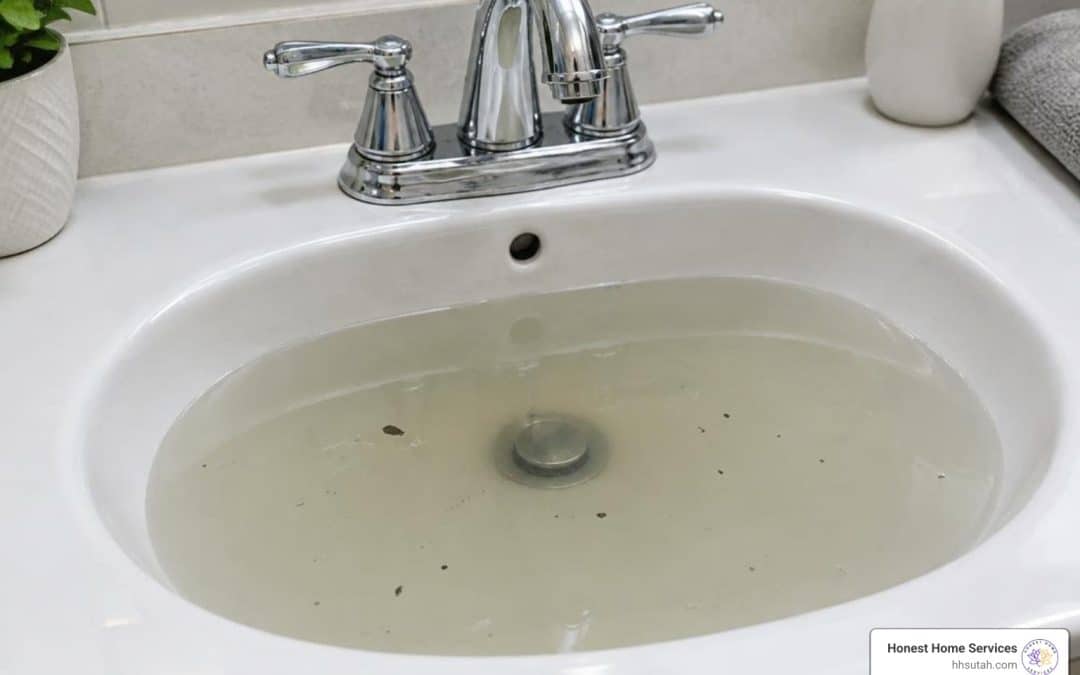
Fast Drain Cleaning Starts With the Right Tool
For a slow sink, tub, or shower, start drain cleaning by removing visible hair or debris. Then use a cup plunger with enough water to cover its rim, or pull out a nearby hair clog with a small drain snake. For a clogged toilet, use a flange plunger instead. If several fixtures back up at once, stop using water and call a plumber; the blockage may be in the main line.
We’re Honest Home Services, a licensed and insured Northern Utah plumbing team with over 20 years of experience in drain cleaning and repairs. Below, we’ll help you choose a safe next step when a clog does not clear quickly.
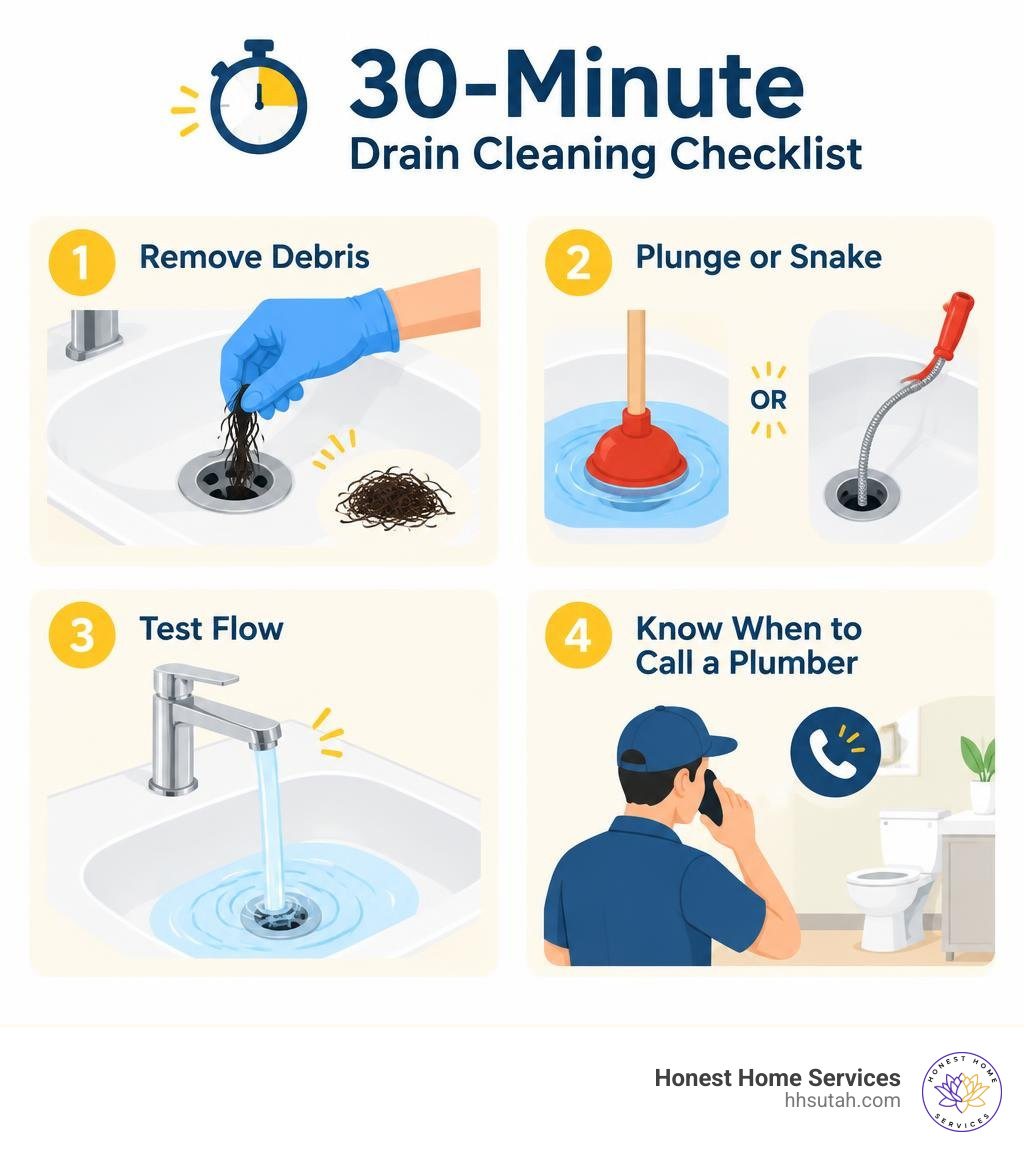
Simple drain cleaning glossary:
Common Causes of Drain Clogs and Foul Odors
When a sink drains at a snail’s pace or an unpleasant odor wafts up from your shower, understanding the source of the trouble saves you time and elbow grease. Most household drainage issues stem from everyday materials that accumulate gradually along the inner walls of your plumbing.
Organic matter such as hair, sloughed skin cells, and soap residue bind together to form sticky mats in bathroom pipes. In the kitchen, fats, cooking oils, and food particles coat interior pipe surfaces, creating a stubborn sludge layer known as biofilm. This sticky biofilm catches passing debris and provides a breeding ground for odor-causing bacteria.
Foul smells do not always point to a massive physical blockage. Every plumbing fixture relies on a curved section of pipe—the P-trap—which holds a small pool of standing water to block sewer gases from rising into your living spaces. When a guest bathroom or basement drain sits unused for weeks, that protective water barrier evaporates. Running water for a few moments replenishes the trap seal and stops sewer gases immediately.
Why Bathroom Fixtures Clog Fast
Bathroom plumbing handles an unforgiving combination of long hair strands, pet fur, dense conditioners, and bar soap fats. Because hair does not easily break down in water, it snags on pop-up stopper assemblies, crossbars, and mechanical pipe joints.
Within weeks, minor strands catch additional soap scum, narrowing the pipe diameter until water pools around your ankles during your morning shower. Mastering simple hair clog removal routines early prevents dense tangles from solidifying deep inside your wall lines. If your shower basin fills up faster than it empties, learning how to say goodbye to slow drains will keep your daily routine running on schedule.
Kitchen and Utility Line Blockages
Kitchen sinks face a completely different set of clog culprits. Pouring warm cooking grease or sauce down the drain might seem harmless, but liquefied fats cool quickly inside underground plumbing, solidifying into thick, waxy obstructions.
When food scraps from the disposal stick to this greasy lining, water flow slows to a crawl. Similar problems happen when lint, pet hair, and heavy sediment wash into utility sinks or when dishwasher drain troubleshooting reveals trapped food waste in the discharge line. Handling stubborn utility sink drain blockages right away prevents secondary overflows. If your kitchen sink produces persistent smells despite routine cleaning, following targeted steps for eliminating unpleasant drain odors will eliminate the bacteria feeding inside the drain line.
The Best DIY Drain Cleaning Tools and Fast Methods
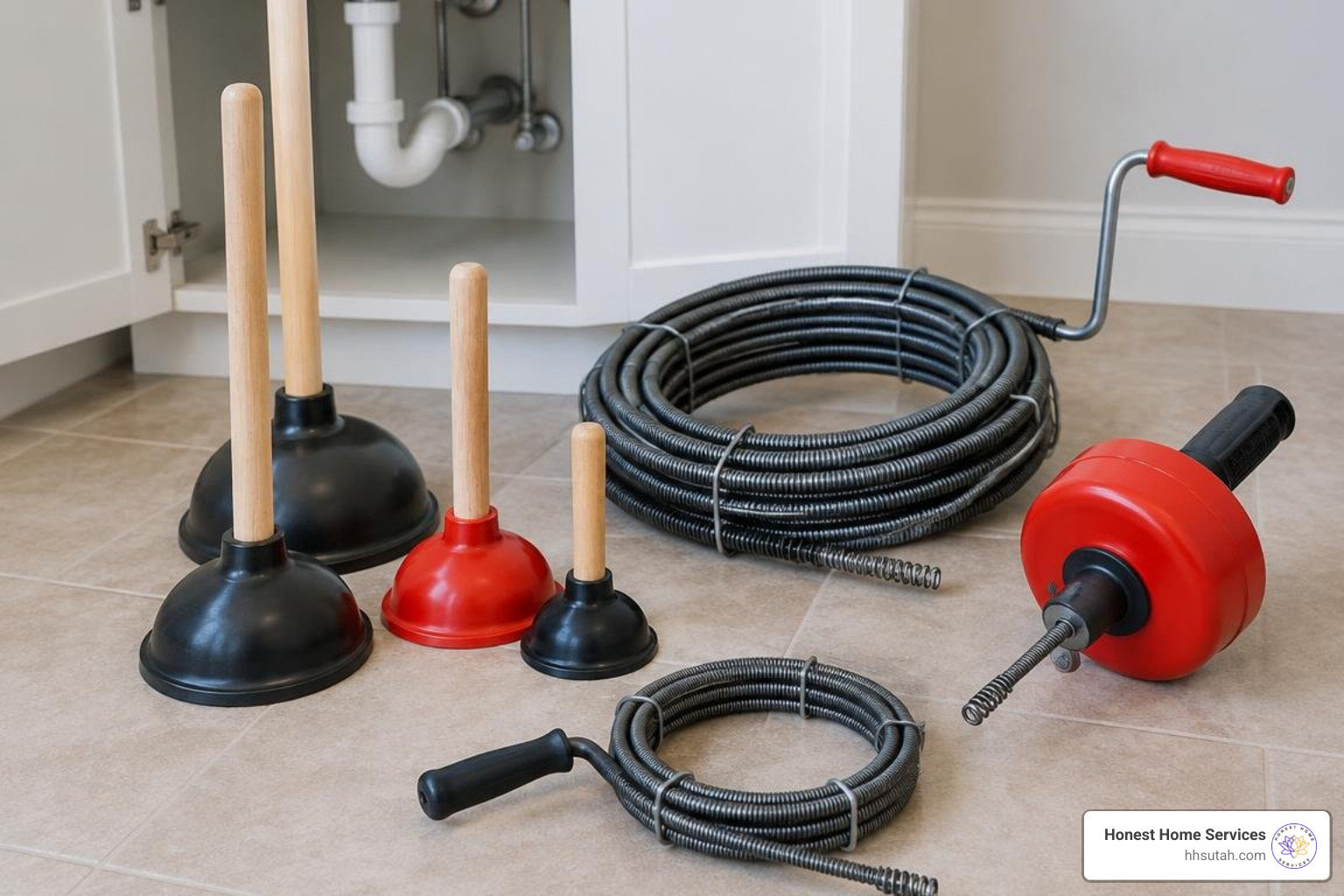
Clearing a localized stoppage takes less than an hour when you pair the right mechanical tool with the specific fixture. Relying on basic mechanical extraction tools avoids caustic chemical exposure and protects your plumbing infrastructure from accidental heat or acid damage.
For quick reference, authoritative guides like How You Can Unclog Any Drain: Sink, Toilet, and Tub emphasize that mechanical suction and physical retrieval should always be your first line of defense.
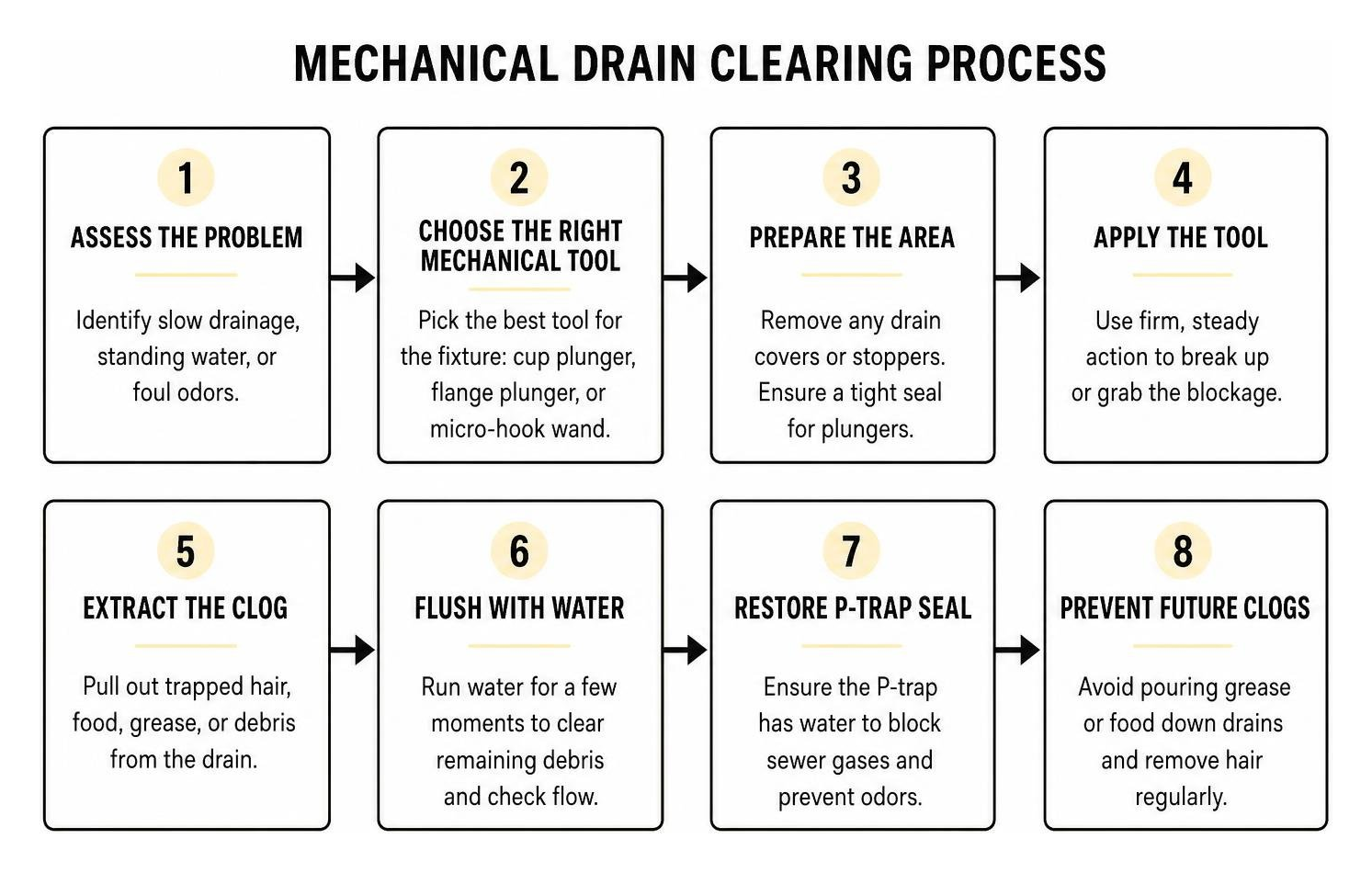
Here is a breakdown of the most reliable manual tools every homeowner should keep on hand:
- Cup Plungers: Feature a flat-bottomed rubber cup engineered to form a tight, airtight seal over flat sink, tub, and shower drain openings.
- Flange Plungers: Include an extended, narrower rubber sleeve (flange) beneath the dome, designed specifically to fit snugly into curved toilet bowl outlets.
- Micro-Hook Wands: Slim, ultra-flexible plastic tools lined with hundreds of tiny hooks that grab and extract dense hair clumps through existing drain grates without requiring stopper disassembly.
- Flexible 4-Claw Grabbers: Long, spring-loaded metal pick-up tools capable of snaking through curved P-traps to retrieve solid dropped objects, such as jewelry or small toys.
- Handheld Drum Augers: Flexible steel cables housed in a rotating canister that navigate pipe bends to break apart or retrieve deeper clogs up to 25 feet into the line.
Selecting the Right Tool for Drain Cleaning
Matching your tool to the fixture ensures you clear the stoppage without scratching finishes or damaging pipes. A flat cup plunger works wonders on a bathroom sink, but it fails in a toilet bowl because it cannot seal around the curved porcelain outlet.
For localized blockages, review this safe guide to clearing clogged drains to pick the safest method for your fixture. If you are debating between manual tools and liquid products, How to Choose and Use a Drain Cleaner – Consumer Reports highlights the importance of matching the clearing technique directly to the composition of the blockage.
When plunging a bathroom sink or bathtub, always seal the overflow opening with a damp washcloth. This forces the hydraulic pressure directly against the blockage rather than venting harmlessly into the room. When plunging, push down gently to expel trapped air, and pull upward sharply; the sudden negative pressure suction breaks apart the debris and lets gravity carry it away.
Eco-Friendly Home Remedies and Physical Clearing
For routine maintenance and minor organic sludge, eco-friendly home remedies clear away biofilm without harsh commercial chemicals. Combining household baking soda with distilled white vinegar creates a natural effervescent reaction that loosens organic grime along pipe walls.
To clean a sluggish line naturally:
- Pour several tablespoons of baking soda directly into the dry drain opening.
- Pour roughly half a cup of distilled white vinegar down the pipe.
- Allow the foaming mixture to work for 15 minutes.
- Flush the line thoroughly with hot tap water.
For deeper grease accumulation, substitute washing soda and citric acid, allowing the solution to sit for roughly an hour before rinsing. Following proven natural methods for fresh smelling drains breaks down organic buildup while protecting older pipe materials from thermal shock and chemical corrosion.
Comparing Chemical, Enzymatic, and Mechanical Cleaners
Choosing how to treat a clogged pipe often comes down to weighing speed against long-term plumbing safety. While commercial liquid cleaners promise instant results, their underlying chemical mechanisms carry hidden risks for residential pipes.
Chemical drain openers generally fall into two categories:
- Caustic Cleaners: Formulated with sodium hydroxide (lye) or potassium hydroxide. They generate intense exothermic heat to convert solid fats into soluble soaps.
- Oxidizing Cleaners: Contain concentrated bleach, nitrates, or peroxides designed to break down organic proteins and hair.
The primary danger of harsh chemical cleaners is the intense heat generated during the chemical reaction. This heat can soften and melt thin-gauge plastic drainage pipes, degrade rubber gasket seals, or crack fragile porcelain toilet fixtures. Furthermore, if the chemical fails to clear the obstruction, your sink fills with a standing pool of corrosive liquid that poses severe chemical burn hazards to anyone working on the pipe later.
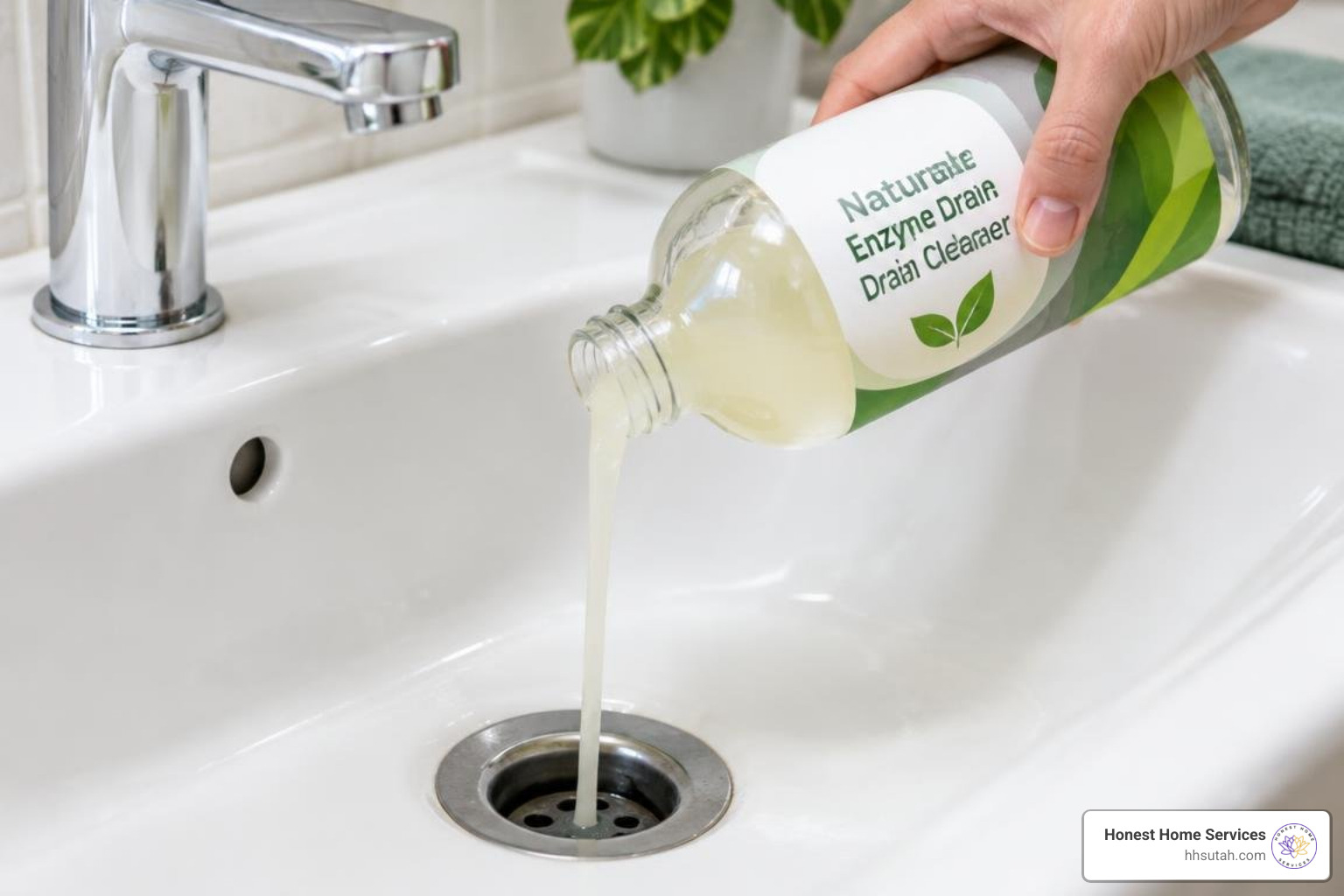
By contrast, biological enzymatic cleaners use live, beneficial bacterial cultures to digest organic matter, starches, and proteins naturally. While enzymatic treatments require several hours or an overnight dwell time to work, they are completely safe for all piping materials, environmentally friendly, and actively support healthy bacterial balance in home septic tanks.
| Cleaner Category | Primary Mechanism | Best For | Pipe Safety Risk | Environmental & Septic Impact |
|---|---|---|---|---|
| Mechanical (Snakes/Plungers) | Physical extraction or pressure disruption | Hair clumps, foreign objects, dense spot blockages | Very Low (when used correctly) | Neutral / 100% Eco-friendly |
| Enzymatic Cleaners | Biological digestion via natural bacteria | Organic sludge, biofilm, ongoing septic maintenance | None (Safe for all pipes) | Highly Beneficial for septic systems |
| Caustic Cleaners | Exothermic chemical breakdown (Lye/Potash) | Heavy grease, oils, organic kitchen waste | High (Can melt thin PVC or crack porcelain) | Harmful to aquatic life and septic bacteria |
| Oxidizing Cleaners | Protein oxidation (Bleach/Peroxides) | Light hair clogs, surface organic residue | Moderate (Corrosive to older metal pipes) | Disrupts septic tank digestion |
When to Call a Professional for Main Line Stoppages
While manual snakes and plungers resolve localized sink and shower clogs, deeper sewer line blockages require professional intervention. A localized clog affects only a single plumbing fixture. A main sewer line blockage, however, traps wastewater for the entire home.
Recognizing the warning signs of a main line issue protects your home from severe structural water damage. You should stop running water and review our guide on identifying when to call a professional plumber if you notice:
- Multiple fixtures backing up at the exact same time (such as water rising in the shower when a toilet flushes).
- Gurgling sounds bubbling up from floor drains or toilets when running the washing machine.
- Sewage odors emerging from multiple levels of your home.
- Standing wastewater pooling around basement floor drains.
For whole-home stoppages, professional plumbers access the sewer system through an exterior cleanout plug. Utilizing high-definition camera scope inspections, technicians locate the exact cause of the stoppage—whether it is an accumulation of flushed hygiene products, heavy grease buildup, pipe bellies, or invasive tree root intrusion.
To clear heavy buildup, professionals utilize high-pressure hydro-jetters that blast water at intense pressure along the entire circumference of the pipe wall, restoring original pipe diameter without damaging underground infrastructure. Homeowners can learn more about this process by understanding main sewer line clearing steps.
Understanding Costs and Certifications in Professional Drain Cleaning
When evaluating drain clearing services, quality plumbing contractors follow standardized industry protocols to protect your home’s underground utility lines. Authoritative organizations such as the National Association of Sewer Service Companies (NASSCO) provide specialized lateral drain cleaning certifications that ensure technicians clean sewer pipes thoroughly without compromising aged pipe structures.
Before hiring a plumbing contractor, ensure the technician is fully licensed, carries active liability insurance, and provides clear, upfront service quotes. Reviewing helpful homeowner resources like evaluating drain cleaning service costs and Drain Cleaning: A Homeowner’s Complete Guide | Angi helps you budget effectively for routine plumbing upkeep while avoiding unexpected surprises.
Frequently Asked Questions About Clearing Clogged Pipes
How often should household drains be cleaned?
Household drains benefit from proactive monthly maintenance rather than waiting for standing water to appear. Flushing your kitchen and bathroom drains with hot water once a month washes away loose surface grease and soap scum before it solidifies into biofilm.
Applying an enzymatic drain maintainer every four to six weeks keeps organic matter broken down naturally without eroding pipe walls. Installing simple mesh drain strainers in showers and tubs captures hair at the surface, preventing deep clogs from forming in the first place.
Can chemical drain cleaners damage residential plumbing?
Yes, chemical drain cleaners can cause serious structural damage to residential plumbing systems. The harsh chemical reactions produced by caustic lye and sulfuric acid cleaners generate intense heat that can warp, soften, and melt flexible plastic P-traps and thin-gauge undersink PVC lines.
In older homes with galvanized steel or cast-iron pipes, strong acidic cleaners accelerate interior corrosion, eating away at weakened metal joints. Chemical cleaners can also cause thermal shock in toilet bowls, leading to cracked porcelain and costly water leaks.
How do I know if a clog is in the fixture or the main sewer line?
Determining whether a clog is localized or in the main line comes down to how many fixtures are affected. If only your master bathroom sink drains slowly while the bathtub, toilet, and kitchen sink function normally, the clog is isolated to that specific fixture’s P-trap or branch pipe.
However, if running water in your kitchen sink causes your basement floor drain to gurgle, or if flushing a toilet forces water up into your shower basin, the blockage sits in the main sewer lateral. When multiple fixtures fail simultaneously, follow our instructions for tackling main sewer line blockages and shut off your main water supply until a professional technician inspects the line.
Conclusion
Handling slow or blocked drains does not have to eat up your weekend. By keeping the right mechanical tools on hand, applying natural enzymatic treatments, and steering clear of harsh chemical cleaners, you can keep your plumbing lines running smoothly in less than an hour.
When DIY methods do not resolve the issue or when you encounter stubborn, whole-house sewer line stoppages, our team at Honest Home Services is ready to help. We provide Northern Utah homeowners with prompt, honest, and reliable plumbing solutions backed by expert technicians and guaranteed customer satisfaction.
To schedule an inspection or clear a persistent blockage, book our expert Salt Lake City drain cleaning services today to keep your home’s plumbing flowing freely.