

When Your Utility Sink Won’t Drain: What You Need to Know
A clogged utility sink is one of the most frustrating plumbing problems a homeowner can face — and it happens more often than you’d think. In fact, clogged drains account for roughly 40% of all residential plumbing service calls in the United States.
Here’s how to fix a clogged utility sink fast:
- Remove visible debris from the drain opening
- Pour boiling water down the drain in stages (skip this for PVC pipes)
- Apply baking soda + white vinegar — let it fizz for 15–20 minutes, then flush
- Plunge the drain with 2–3 inches of water in the sink for a proper seal
- Snake the drain using a hand auger to break up deeper blockages
- Remove and clean the P-trap if the clog persists
- Call a plumber if multiple drains back up, you smell sewage, or every DIY method fails
Utility sinks take a beating. They handle washing machine discharge, muddy boots, paint water, and more — all without the benefit of a garbage disposal to break things down. That combination of heavy, varied use makes them especially prone to stubborn clogs from lint, detergent buildup, and debris.
Whether your sink is draining slowly or not draining at all, the fix is usually something you can tackle yourself with the right steps.
At Honest Home Services, we’ve spent over 20 years helping Northern Utah homeowners resolve clogged utility sink problems — from simple P-trap cleanouts to main line blockages. We’ll walk you through every DIY option worth trying, and let you know exactly when it’s time to call in a pro.
Clogged utility sink further reading:
Clogged Utility Sink: Common Culprits and Causes
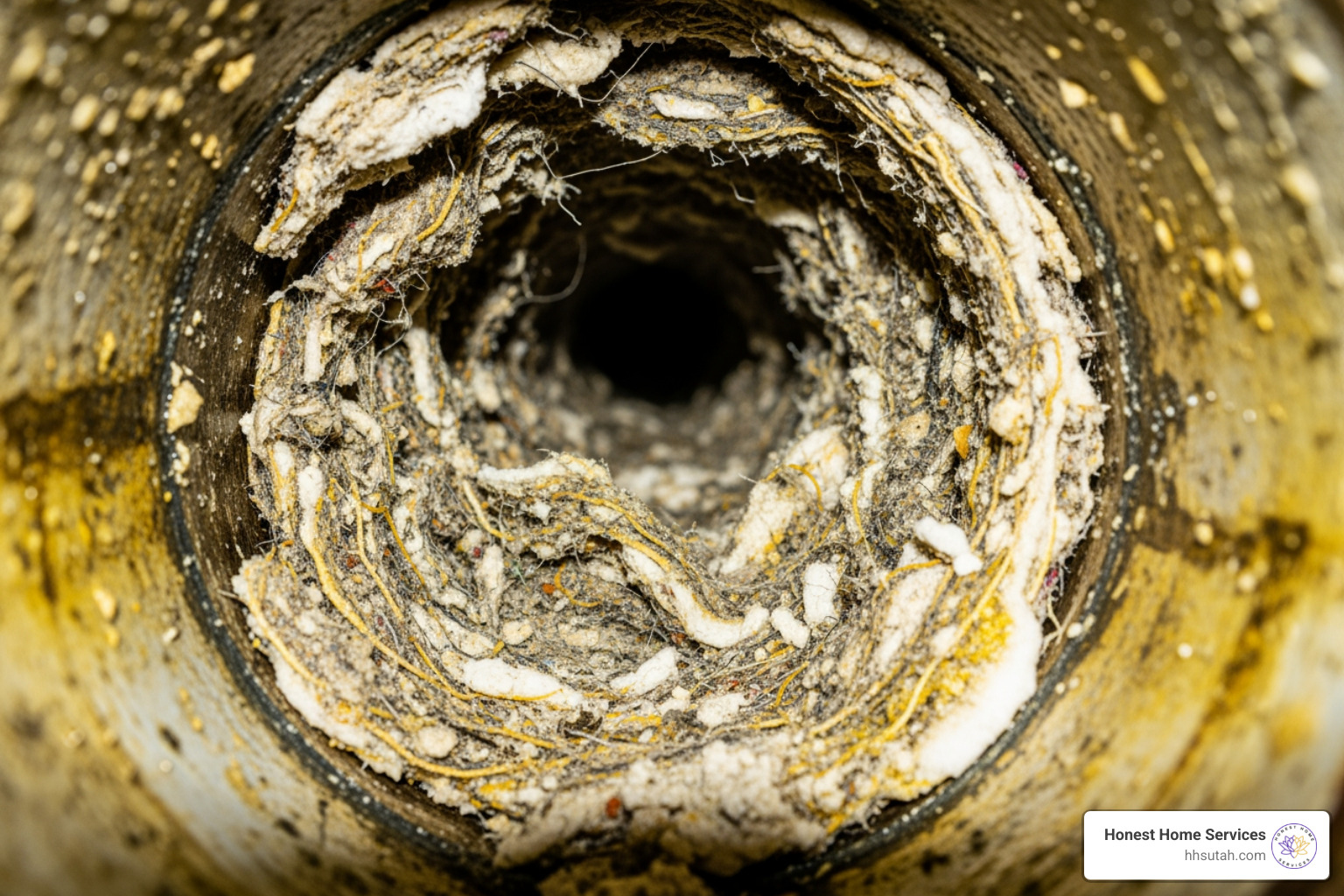
Understanding why your utility sink is rebelling is the first step toward a permanent fix. Unlike kitchen sinks that deal with food or bathroom sinks that deal with hair, the utility sink is the “catch-all” for the home’s messiest tasks.
Washing Machine Lint
In May 2026, many homeowners still use washing machines that discharge directly into a utility tub. Every load of laundry sheds thousands of tiny fabric fibers. Without a proper filter, this lint travels into the drain, where it clumps together like a wet wool sweater, creating a dense, impenetrable plug.
Detergent Scum and Hard Water
If you live in Salt Lake City or the surrounding areas like Layton and Kaysville, you likely deal with hard water. The minerals in our Utah water react with laundry detergents to create a sticky, waxy substance known as “detergent curd.” This film coats the inside of your pipes, narrowing the passage and acting like glue for any lint or hair that passes by. For more on managing these issues, check out Say Goodbye to Clogged Drains with These Effective Drain Cleaning Tips.
Pocket Debris
We’ve all been there—forgetting to check pockets before tossing jeans in the wash. Coins, tissues, hair ties, and even small screws from a workshop can find their way into the discharge hose. These solid objects often get lodged in the P-trap or at a pipe elbow, starting a “snowball effect” where debris builds up around them. Learn more about Fixing a Clogged or Slow-Draining Utility Sink – RiHot.
How to Diagnose the Location of the Blockage
Before you start taking pipes apart, you need to play detective. Determining where the clog is located will save you hours of unnecessary work.
| Symptom | Likely Location | Recommended Tool |
|---|---|---|
| Water stays in the sink only; other drains work fine | P-Trap or Sink Tailpiece | Plunger or P-Trap Removal |
| Sink drains slowly and gurgles when the washer runs | Branch Line | Drain Snake / Auger |
| Water backs up into the sink when you flush a toilet | Main Sewer Line | Professional Plumber |
| Multiple fixtures in the basement are backing up | Main Line or Septic Inlet | Professional Plumber |
Identifying a Clogged Utility Sink in the P-Trap vs. Main Line
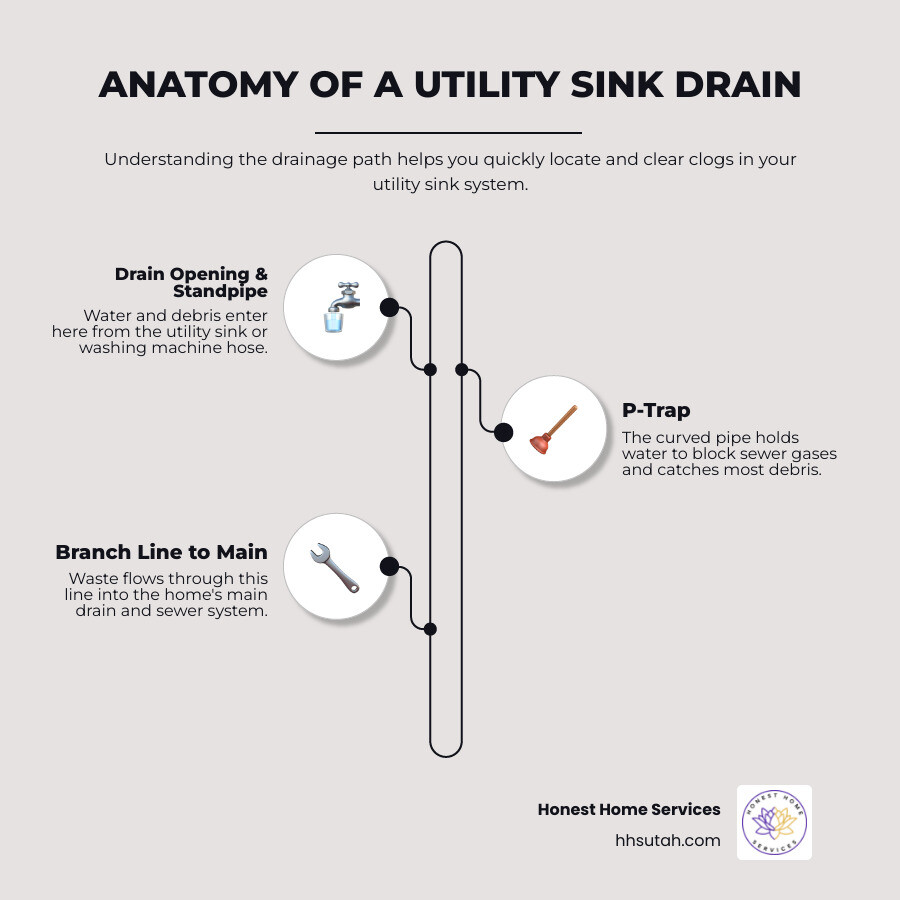
The P-trap is the U-shaped pipe directly under your sink. Its job is to hold a small amount of water to block sewer gases from entering your home. Because of its shape, it is the most common home for a clogged utility sink blockage. If you can clear the sink by plunging or by removing this U-shaped pipe, you’ve found the culprit.
However, if you remove the P-trap and the pipe leading into the wall is full of standing water, the problem is further down in the branch line. If you notice Signs You Need Professional Drain Cleaning, such as multiple fixtures backing up simultaneously, the issue has moved beyond a simple DIY fix. You can find more community discussions on this at the Clogged utility sink forum.
Understanding Ejector Pumps and Septic System Impact
For our neighbors in more rural parts of Davis County or homeowners with basement laundry rooms, your utility sink might drain into an ejector pump. This pump “pushes” wastewater up to the main sewer line. If the pump fails or the float switch gets stuck, your sink will stop draining immediately.
In homes with septic systems, a clogged utility sink can sometimes be a warning sign that the septic tank is full or the inlet pipe is blocked. Wastewater follows the path of least resistance; if the main line is blocked, it will push back up into the lowest fixture in the house—often that basement utility sink. Keeping your system clear is vital, as explained in Mainline Magic: Keeping Your Drains and Sewers Sparkling Clean.
Step-by-Step DIY Solutions for Clearing the Drain
Ready to get your hands dirty? Here is the hierarchy of DIY methods, starting from the easiest to the most intensive.
Mechanical Clearing with a Drain Snake
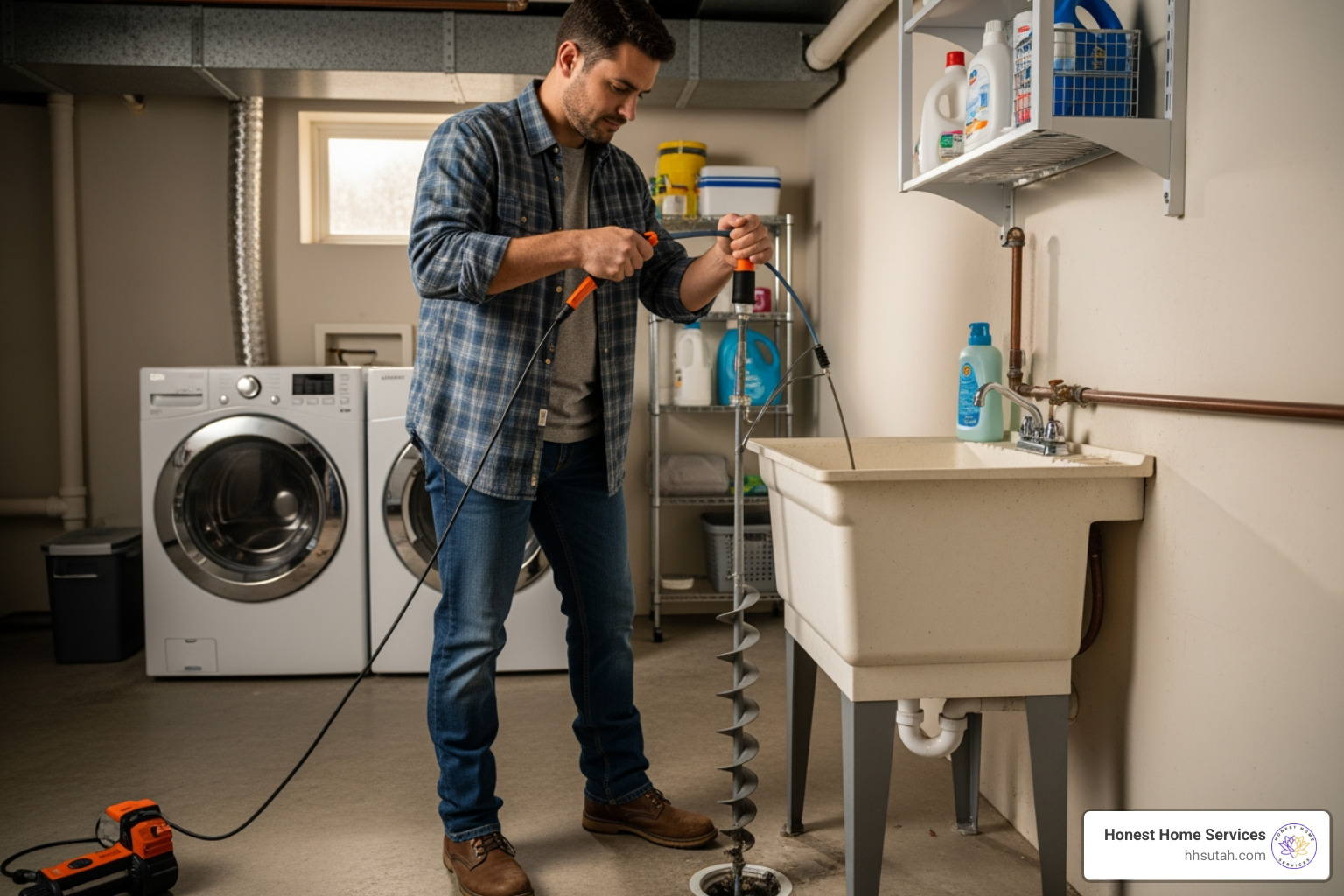
When the plunger fails, it’s time for the “plumber’s snake” or hand auger.
- Access the line: If possible, remove the P-trap and feed the snake directly into the pipe in the wall. This gives you a straight shot at the clog.
- Feed the cable: Push the cable in until you feel resistance.
- Rotate: Turn the handle clockwise while applying steady pressure. You aren’t trying to push the clog through; you’re trying to hook it or break it up.
- Retrieve: Pull the cable back slowly. Don’t be surprised if you pull out a “hair monster” or a thick plug of lint.
For a deeper dive into snaking techniques, see The Best Way to Clear a Clogged Drain: A DIY Guide and Blocked Pipe Blues: How to Clean Your Drains Like a Pro Without the Plumber.
Natural Dissolving Methods for Soap Scum
If your sink is just draining slowly, you might be dealing with detergent and grease buildup.
- Baking Soda and Vinegar: Pour 1/2 cup of baking soda down the drain, followed by 1 cup of white vinegar. The fizzing action helps break the bond between the gunk and the pipe walls. Let it sit for 20 minutes.
- Hot Water Flush: Flush with a gallon of very hot water. Safety Note: If you have PVC (plastic) pipes, do not use boiling water, as it can soften the joints. Use hot tap water instead.
This method is surprisingly effective for light organic clogs, similar to Hair Clog Removal techniques. You can also find professional insights on this at How to Unclog a Kitchen Sink, According to Master Plumbers.
Long-Term Prevention and Maintenance Strategies
The best way to deal with a clogged utility sink is to make sure it never happens again. Prevention is much cheaper than a Saturday night emergency call.
Preventing a Clogged Utility Sink from Detergent and Lint
- Install a Lint Trap: This is the single most important thing you can do. Buy a fine mesh lint catcher and secure it to the end of your washing machine’s discharge hose with a hose clamp. You’ll be shocked at how much lint it catches in just one week.
- Use a Drain Strainer: Keep a fine mesh strainer in the sink drain at all times to catch hair, pocket debris, and debris from cleaning projects.
- Reduce Detergent: Most modern high-efficiency (HE) washers require very little soap. Using too much leads to the “detergent curd” we mentioned earlier.
- Weekly Hot Water Flush: Once a week, run the hot water for 5 minutes to melt away any soap residue before it hardens.
For more expert advice, see Preventative Drain Cleaning Tips Every Homeowner Should Know and the Utility sink wont drain forum.
When to Call a Professional Plumber
We love a good DIY victory, but sometimes the pipes win. You should stop what you’re doing and call us at Honest Home Services if:
- The “Whole-House” Backup: If using the utility sink causes water to come up in the shower, or if flushing the toilet causes the utility sink to gurgle, you have a main line blockage.
- Sewage Odors: If you smell “rotten eggs” or sewer gas, there could be a broken vent pipe or a serious backup that poses a health risk.
- Recurring Clogs: If you snake the drain and it clogs again two weeks later, there is likely a structural issue, like a pipe belly or root intrusion, that needs a camera inspection.
- Corroded Pipes: If you have old cast iron pipes in an older Salt Lake City home, they can rust from the inside out. A snake might actually punch a hole through a weakened pipe.
In these cases, we may recommend 5 Signs You Need Hydro Jetting for Your Drains to completely scour the pipes clean. You can also explore Unclog Your Life: A Roundup of Effective Main Line Cleaners and Root Killers for more advanced solutions.
Frequently Asked Questions about Utility Sinks
Can I use chemical drain cleaners in my utility sink?
We strongly discourage it. Chemical cleaners like Drano are heavy, caustic liquids. If they don’t clear the clog, they sit in your pipes, eating away at PVC joints and corroding metal. Even worse, if you eventually have to call a plumber, that pipe is now full of “acid” that can burn the technician. Stick to mechanical methods or natural enzymes. For more info, check our Salt Lake City Drain Cleaning guide.
Why does my utility sink gurgle when the washer drains?
Gurgling is the sound of air being “sucked” through a partial blockage. It often means your drain is struggling to breathe because the vent stack (the pipe that goes through your roof) is blocked or the branch line is narrowed by buildup.
How often should I clean my utility sink P-trap?
For a high-use laundry room, we recommend removing and cleaning the P-trap once every six months. It only takes 10 minutes and a bucket, but it prevents the “sludge plug” that leads to a midnight flood.
Conclusion
A clogged utility sink doesn’t have to ruin your weekend. By understanding the common causes—like lint and detergent buildup—and following our step-by-step DIY guide, you can handle most blockages with simple household tools. The key to a healthy plumbing system is prevention; a $5 lint trap today can save you a $300 plumbing bill tomorrow.
If you’ve tried the plunger and the snake and that water still isn’t moving, don’t sweat it. Honest Home Services is here to help homeowners across Northern Utah, from Salt Lake City to Park City and everywhere in between. We provide honest, reliable, and affordable plumbing with 24/7 emergency support.
Don’t let a stubborn clog stand in your way. Give us a call today for expert Salt Lake City Drain Cleaning and get your home flowing smoothly again!