
Why Detecting Natural Gas Leaks Could Save Your Life
Detect natural gas leak issues quickly and you could prevent a catastrophic fire, explosion, or health emergency in your home. Natural gas powers more than half of American homes for heating, cooking, and hot water—making it an essential energy source—but a leak can turn deadly fast.
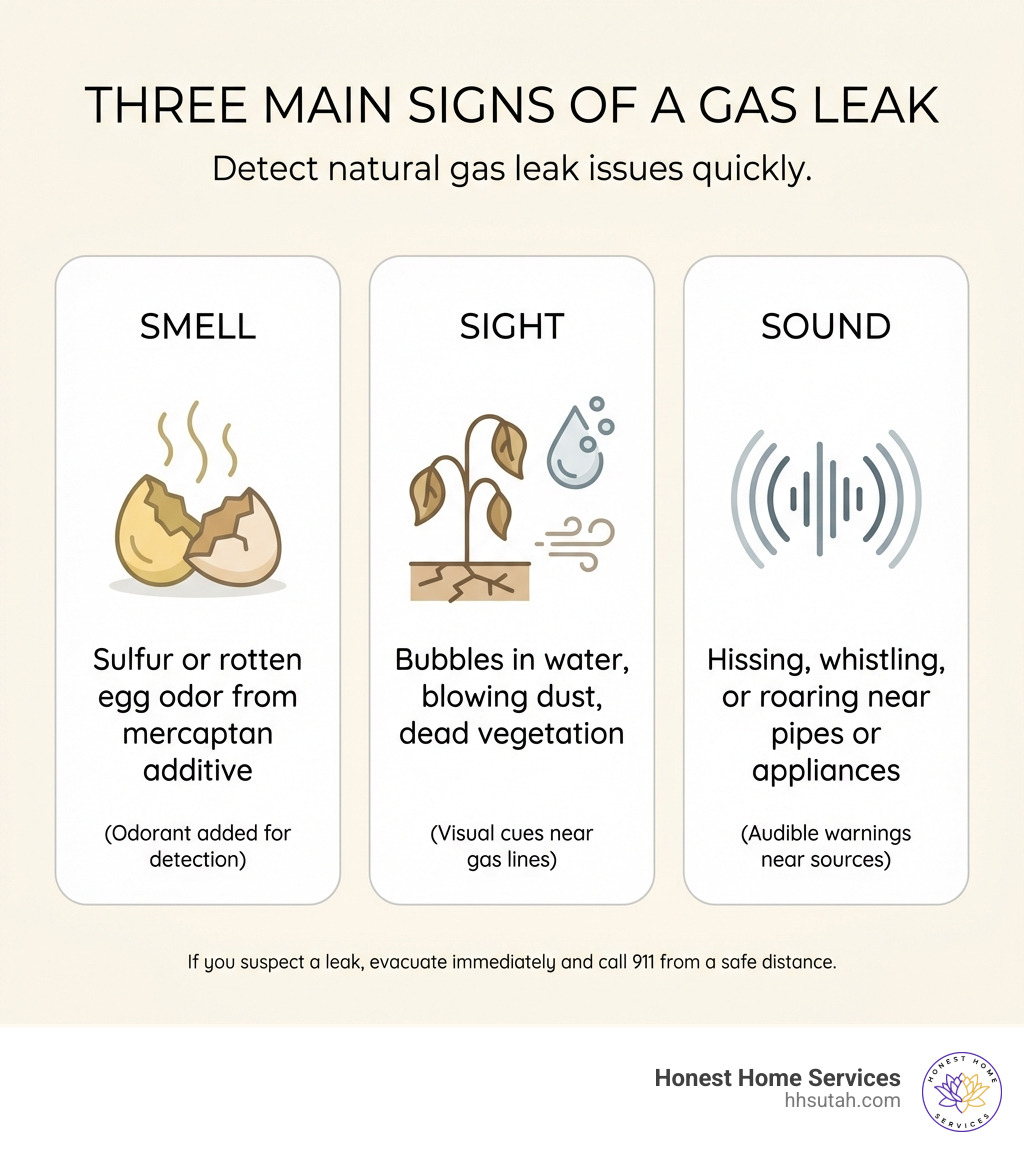
Here’s how to detect a natural gas leak immediately:
- Smell for a distinctive rotten egg or sulfur odor (the odorant added to natural gas)
- Look for bubbles in standing water, blowing dust, or dead vegetation near gas lines
- Listen for hissing, whistling, or roaring sounds near appliances or pipes
- Use a natural gas detector for reliable 24/7 monitoring
If you suspect a leak, evacuate immediately, avoid all ignition sources, and call 911 or your utility company from a safe distance.
Natural gas is odorless and colorless in its natural state, which is why utility companies add a chemical odorant called mercaptan to make leaks detectable. Even with this safety measure, many homeowners don’t recognize the warning signs until it’s too late. According to the CDC, around 100,000 Americans visit emergency rooms each year due to gas-related incidents and carbon monoxide poisoning.
At Honest Home Services, we’ve spent over 20 years helping Northern Utah families and businesses with plumbing and HVAC emergencies, including gas line inspections and repairs to detect natural gas leak problems before they become dangerous. Our licensed technicians understand the urgency of gas safety and provide the transparent, reliable service you need to protect your property.
What to Do Immediately If You Suspect a Gas Leak
The moment you suspect a natural gas leak—whether you smell that tell-tale rotten egg odor, hear an unusual sound, or see visual cues—your immediate actions are critical. Hesitation can turn a potentially dangerous situation into a catastrophic one. Our top priority is always safety, which means getting yourself and your loved ones to safety and preventing any potential ignition.

The “Stop, Leave, Call” Protocol
We recommend following a simple, yet life-saving, three-step protocol:
- STOP what you’re doing: This includes turning off any appliances, stopping any work, or ceasing any activity that could distract you or create a spark. Your full attention needs to be on safety.
- LEAVE the area immediately: Get out of the house or immediate vicinity as quickly and calmly as possible. Do not linger to gather belongings. Time is of the essence. If you’re indoors, open windows and doors as you exit to help ventilate the space, but only if it doesn’t delay your evacuation.
- CALL for help from a safe location: Once you are a safe distance away from the suspected leak (e.g., across the street, at a neighbor’s house), call 911 immediately. Then, notify your local natural gas utility company. Do not assume someone else has already called; every report helps emergency responders verify and address the situation promptly. Do not re-enter your property until emergency responders or the utility company have confirmed it is safe to do so.
For more guidance on handling urgent situations, you might find our article on When to Call an Emergency Plumber: Your Plumbing Guide helpful.
Key Safety Precautions to Avoid an Explosion
Natural gas is highly flammable and can ignite from the smallest spark. Avoiding ignition sources is paramount if you suspect a leak. Here are crucial precautions:
- No smoking, matches, or lighters: Absolutely avoid any open flames.
- Do not use electronics: This includes cell phones, landline phones, garage door openers, light switches, flashlights, or any appliance that could create an electrical spark. Even the static electricity from turning on a light switch can be enough.
- Do not operate switches: Resist the urge to turn lights on or off, or to adjust thermostats.
- Do not start vehicles or motors: If the leak is outdoors or near a garage, do not start your car, motorcycle, or any motorized equipment.
- Leave doors and windows open as you exit: If it’s safe to do so without delaying your exit, open doors and windows to promote ventilation.
- Warn others to stay away: Alert neighbors or passersby to the potential danger and keep them a safe distance from the area.
Acting quickly and calmly can make all the difference in a gas leak emergency. Trust your instincts and prioritize safety above all else.
How to Detect a Natural Gas Leak Using Your Senses
While modern technology offers advanced detection, your senses remain your first and most immediate line of defense against a natural gas leak. Natural gas utility companies go to great lengths to ensure that leaks are detectable through smell, sight, and sound. Being aware of these sensory clues can help you detect natural gas leak issues before they escalate.
Smell: The Rotten Egg Odor
Natural gas itself is naturally odorless, colorless, and non-toxic. However, for your safety, utility companies add a powerful chemical odorant called mercaptan to it. This additive gives natural gas its distinctive, unpleasant smell, often described as rotten eggs, sulfur, or even a dead animal or skunk. This strong, unmistakable odor is intentionally added to make even small leaks immediately noticeable.
If you catch a whiff of this odor, don’t dismiss it. It’s a clear warning sign that natural gas is present where it shouldn’t be. Trust your nose! For more information on gas safety, you can refer to More about gas safety from PG&E.
Sight: Visual Clues Indoors and Outdoors
Sometimes, a natural gas leak can be seen, either directly or through its effects on the environment. Keep an eye out for these visual indicators:
Indoors:
- Damaged connections: Look for visible damage, kinks, or disconnections on gas lines leading to appliances like your water heater, furnace, or stove.
- Dying houseplants: Unexplained wilting or death of indoor plants can sometimes indicate a gas leak, as natural gas can displace oxygen in the air.
- Discoloration on walls or puffiness near appliances: While less common, these can be signs of a subtle leak causing structural changes.
- A yellow or orange flame on a gas stove or appliance: A healthy natural gas flame should be blue. A yellow or orange flame indicates incomplete combustion, which could be a sign of an issue with the appliance or an imbalance of gas and oxygen, potentially related to a leak.
Outdoors:
- Bubbling in wet ground or puddles: If you see continuous bubbling in a puddle, creek, or wet area, especially near a gas line, it could be natural gas escaping from an underground pipe.
- Blowing dirt or dust from a hole: Gas escaping from an underground leak can cause dirt or dust to spray into the air.
- Dead or dying vegetation: Patches of dead grass, plants, or trees in an otherwise healthy area, particularly near utility easements or where gas lines run, can be a strong indicator of an underground gas leak. Natural gas can prevent roots from absorbing oxygen, leading to plant death.
- Ground frosting: In colder weather, escaping gas can cause the ground to appear frosty even when temperatures are above freezing.
Hearing: The Telltale Hissing Sound
In some cases, you might actually hear a gas leak. The sound depends on the size of the leak and the pressure of the escaping gas.
- Hissing noise: A small leak might produce a soft hissing sound, especially if it’s coming from a pipe connection, valve, or appliance.
- Whistling sound: Similar to a hiss, a whistling noise could indicate gas escaping through a small opening.
- Roaring sound: A larger, more significant break in a gas line can result in a much louder roaring sound, indicating a substantial volume of gas is rapidly escaping.
Always pay attention to unusual sounds coming from your gas appliances, gas meter, or gas lines. If you hear anything out of the ordinary, particularly a sound that suggests gas is escaping, it’s time to act. For more insights into common household issues, check out our article on Common Issues with Residential Plumbing.
Tools and DIY Methods for Detection
While your senses are crucial, relying solely on them isn’t always enough, especially for small or slow leaks, or in situations where odor fade might occur (more on that later). Fortunately, there are various tools and DIY methods that can help you detect natural gas leak issues more effectively, complementing your sensory observations. For a comprehensive overview of professional leak detection, you can refer to our Leak Detection Company: Complete Guide.
Using a Device to Detect a Natural Gas Leak
Residential Methane Detectors (RMDs) are electronic safety devices specifically designed to detect methane, the primary component of natural gas, in your home. They function similarly to smoke or carbon monoxide detectors, monitoring the air and sounding an alarm if methane concentrations reach unsafe levels (typically 0.5% by volume in air).
Here’s what you need to know about these vital devices:
- How they work: RMDs use sensors that react to the presence of methane. When a certain concentration is detected, the device triggers an audible alarm and often a visual alert. Some advanced models even offer smart connectivity, sending alerts to your smartphone.
- Installation requirements:
- Location: Install RMDs near gas appliances (stoves, ovens, water heaters, furnaces), in basements and utility rooms near gas lines and meters, and on each level of your home, especially near sleeping areas. If you have a gas appliance in your garage or an attached garage, consider placing one there too.
- Placement: Mount detectors on a wall at least a foot below the ceiling, as natural gas is lighter than air and rises. Keep them 3 to 10 feet away from gas-powered appliances.
- Avoid drafts: Mount RMDs away from drafty windows, vents, or forced-air returns, as these can affect their accuracy.
- Power sources: RMDs come in various power options, including plug-in models (often with battery backup), hardwired units, or battery-powered devices.
- Maintenance and replacement: We recommend testing your detectors weekly using the built-in test button. Replace batteries as recommended by the manufacturer. RMDs also have an End-of-Service-Life (EOL) alert, typically activating around 10 years after installation, indicating it’s time for a replacement unit as sensors can degrade over time. Regularly dust and wipe them clean.
- NTSB Recommendations: The National Transportation Safety Board (NTSB) recommends the installation of natural gas alarms that meet the specifications of National Fire Protection Association 715 (NFPA 715). This highlights the importance of these devices in preventing accidents and saving lives. You can read more about these recommendations at NTSB recommends natural gas alarms.
The Soapy Water Test: A Simple DIY Check
For specific, visible pipe connections or appliance fittings where you suspect a leak, the soapy water test can be a useful, albeit non-conclusive, DIY method to help detect natural gas leak issues.
- How to do it: Mix a small amount of dish soap with water to create a thick, bubbly solution. Apply this solution directly to the suspected leak points on gas pipes, fittings, or appliance connections.
- What to look for: If natural gas is escaping, it will cause bubbles to form and grow in the soapy solution, indicating a leak. Even a small “pin-hole” leak can be revealed by continuous bubbling.
- Effectiveness and limitations: While effective for identifying leaks at visible access points, this test has limitations. It won’t detect leaks within walls, underground, or inside appliances. Moreover, if you don’t see bubbles but still suspect a leak based on smell or other symptoms, you must take it seriously. Never rely on this test alone to confirm the absence of a leak.
If you identify a leak using this method, or if your suspicions persist, it’s always best to call a professional. For more on when to tackle DIY projects and when to call the experts, see our guide on DIY Plumbing Fixes: When to Call a Professional Plumber.
Natural Gas vs. Carbon Monoxide Detectors
Natural gas detectors and carbon monoxide (CO) detectors are designed for different purposes and detect different gases. While both are vital for home safety, one cannot substitute the other.
| Feature | Natural Gas Detector (Methane Detector) | Carbon Monoxide (CO) Detector |
|---|---|---|
| Gas Detected | Methane (CH4), the primary component of natural gas. | Carbon Monoxide (CO), an odorless, colorless, toxic gas. |
| Hazard | Flammable and explosive; can displace oxygen leading to asphyxiation. | Highly toxic; interferes with oxygen absorption in the blood. |
| Source | Leaks from gas lines, furnaces, water heaters, stoves, fireplaces. | Incomplete combustion from furnaces, water heaters, vehicles, generators, fireplaces. |
| Installation Height | Typically mounted higher on a wall (at least 1 foot below ceiling) as natural gas is lighter than air. | Typically mounted lower on a wall or ceiling (similar to smoke detectors) as CO mixes with air. |
| Alarm Trigger | High concentrations of methane (e.g., 0.5% by volume in air). | High concentrations of carbon monoxide (measured in parts per million). |
| Symptoms of Exposure | Suffocation, dizziness, nausea, headache, fatigue, memory problems. | Headache, dizziness, nausea, fatigue, confusion, chest pain, loss of consciousness. |
| Odor | Distinctive rotten egg smell (due to added mercaptan). | Odorless, tasteless, and invisible. |
As you can see, a carbon monoxide detector will not detect a natural gas leak, and vice-versa. Natural gas leaks directly pose a fire and explosion hazard, and can lead to suffocation. Carbon monoxide, often a byproduct of incomplete combustion from gas appliances, is a silent killer. Therefore, we strongly recommend having both types of detectors installed in your home for comprehensive safety.
Causes, Prevention, and Associated Risks
Understanding why natural gas leaks occur is the first step toward preventing them. While accidents can happen, many leaks are preventable with proper care and awareness. Knowing the causes and taking proactive steps can significantly reduce your risk, protecting your family and home in Northern Utah.
Common Causes and How to Prevent a Natural Gas Leak
Natural gas leaks can stem from a variety of sources, both internal and external to your home:
- Faulty or aging appliances: Over time, components in gas furnaces, water heaters, stoves, and dryers can wear out, crack, or become loose, leading to leaks. Improper installation of these appliances is also a major culprit.
- Damaged or corroded pipelines: Underground gas lines and even internal piping can corrode due to age, soil conditions, or chemical exposure. Physical damage from digging or shifting foundations can also compromise lines.
- Accidental damage during excavation: One of the most common causes of outdoor leaks is accidental damage to underground gas lines during digging projects (e.g., planting trees, installing fences, landscaping).
- Loose fittings and connections: Vibrations, temperature changes, or simply age can cause fittings and connections on gas lines to loosen over time.
- Mechanical failure: Valves, regulators, and meters can fail due to manufacturing defects or wear and tear.
How to Prevent Natural Gas Leaks:
- Annual appliance inspection: Have all your gas-powered appliances (furnace, water heater, stove, dryer, fireplace) inspected annually by a qualified professional. They can identify worn parts, ensure proper ventilation, and check for minor leaks before they become major problems.
- Call 811 before you dig: This is a critical step for any outdoor project that involves digging, no matter how small. Calling 811 a few business days beforehand will ensure that all underground utility lines, including gas lines, are marked, preventing accidental damage. For more information, visit Call 811 Before You Dig.
- Regular plumbing inspections: Our licensed plumbers at Honest Home Services can perform regular inspections of your gas lines and connections, identifying and addressing potential issues like corrosion or loose fittings. This proactive approach can save you a lot of trouble down the road. Learn more about the benefits of regular checks in our article on The Benefits of Regularly Scheduled Plumbing Inspections.
- Proper appliance installation: Always have gas appliances installed by certified professionals to ensure they are correctly connected and vented according to safety codes.
- Maintain your plumbing system: Regular maintenance of your entire Plumbing System Maintenance can help ensure all components, including gas lines, are in good working order.
Potential Health Risks of Natural Gas Exposure
While natural gas itself is non-toxic, exposure to a leak can pose significant health risks, primarily due to oxygen displacement and the potential for carbon monoxide buildup.
- Oxygen displacement (asphyxiation): Natural gas, when it leaks into an enclosed space, displaces the oxygen that we need to breathe. As oxygen levels drop, individuals can experience symptoms of asphyxiation.
- Symptoms of exposure:
- Mild exposure: Headaches, dizziness, nausea, fatigue, lightheadedness, and difficulty concentrating. These symptoms can often be mistaken for the flu or other common illnesses.
- Moderate to severe exposure: Increased heart rate, memory problems, severe headaches, confusion, loss of coordination, and eventually, unconsciousness and death.
- Vulnerable populations: Pets, children, older adults, and individuals with existing respiratory or cardiovascular conditions are often the first to show symptoms and are at higher risk. If your pet acts strangely or seems lethargic, it could be an early warning sign of a gas leak.
- Similar to Carbon Monoxide Poisoning: The symptoms of natural gas exposure can be alarmingly similar to those of carbon monoxide poisoning, which is also a serious threat. According to the Mayo Clinic, as gas levels increase and oxygen rates drop, symptoms associated with carbon monoxide poisoning may appear. It’s crucial to remember that both natural gas leaks and carbon monoxide exposure are emergencies requiring immediate action. Read more about these symptoms at Symptoms can be similar to carbon monoxide poisoning.
Never ignore these symptoms, especially if they appear suddenly, affect multiple people or pets, or improve when you leave the building. Your health and safety depend on swift action.
Frequently Asked Questions about Gas Leak Detection
We understand that gas leaks can be a frightening prospect. To help you feel more prepared and informed, we’ve compiled answers to some frequently asked questions about detect natural gas leak situations.
What should I do if a natural gas leak is burning?
This is an extremely dangerous scenario that requires immediate and precise action. If you encounter a natural gas leak that is already burning:
- Do not attempt to extinguish it: A burning gas leak is already consuming the gas. Attempting to put out the flame could allow unburned gas to accumulate, increasing the risk of a much larger explosion.
- Evacuate immediately: Get everyone out of the building and away from the area as quickly as possible.
- Call 911 from a safe distance: Once you are safely away, call emergency services (911). Clearly state that you have a burning gas leak.
- Let emergency responders handle the fire: Firefighters and utility crews are trained and equipped to manage burning gas leaks safely. They will assess the situation, shut off the gas supply, and allow the remaining gas to burn off in a controlled manner.
What is odor fade and why is it dangerous?
Odor fade is a critical safety concern where the distinctive rotten egg smell added to natural gas (mercaptan) diminishes or disappears. This makes it challenging to detect natural gas leak issues by smell alone, which is incredibly dangerous as the gas remains flammable and harmful.
Odor fade can occur due to several physical and chemical processes:
- Adsorption, absorption, or oxidation: The odorant can be absorbed by pipe materials, adsorbed onto rust or mill scale inside pipes, or chemically oxidized, losing its odor.
- Factors affecting odor fade:
- New steel pipes: New piping systems, especially those made of steel, can absorb more of the odorant initially.
- Higher gas pressure and intermittent flow: Systems with high pressure or those that experience intermittent gas flow can be more susceptible.
- Presence of contaminants: Substances like rust, moisture, air, cutting oil, pipe thread compound, liquids, and condensates within the gas line can strip away the odorant.
- Piping system design: The length and diameter of your gas piping system can also play a role.
- Human factors: Temporary loss of smell due to illness (like a cold), allergies, or age can also impair your ability to detect the odorant.
Because of the possibility of odor fade, it is extremely dangerous to rely solely on your sense of smell to detect a natural gas leak. This is why we emphasize the importance of using natural gas detectors and being aware of other sensory cues like sight and sound.
What is the role of the utility company in a gas leak?
Your local natural gas utility company plays a crucial role in responding to and managing gas leaks, ensuring public safety. In Northern Utah, this would be your local gas provider. Their responsibilities typically include:
- Emergency response: Utility companies have dedicated emergency crews available 24/7 to respond to gas leak reports. They arrive quickly to assess the situation.
- Shutting off gas supply: If a leak is confirmed, their primary action is to safely shut off the natural gas supply to the affected area or property to stop the flow of gas.
- Repairing lines up to the meter: Utility companies are responsible for the maintenance and repair of gas lines up to your gas meter. This includes main lines and service lines leading to your property.
- Ensuring public safety: They work in coordination with emergency services (fire department, police) to secure the area, evacuate residents if necessary, and ensure the environment is safe before gas service is restored.
- Investigation: They will investigate the cause of the leak to prevent future occurrences.
While the utility company handles the main gas lines, homeowners are typically responsible for the gas lines and appliances after the gas meter. This is where a qualified plumbing and HVAC service like Honest Home Services comes in, ready to inspect, repair, and maintain your internal gas systems.
Conclusion
Detecting a natural gas leak is a critical skill for every homeowner. By trusting your senses—smelling for that distinctive rotten egg odor, looking for visual cues like bubbling earth or dying plants, and listening for hissing sounds—you become your home’s first line of defense. Enhancing this vigilance with modern technology, such as residential methane detectors, provides an invaluable layer of continuous safety.
If you ever suspect a natural gas leak, the protocol is clear and unwavering: STOP what you’re doing, LEAVE the area immediately, and CALL 911 or your local utility company from a safe distance. Never re-enter your property until professionals have declared it safe.
At Honest Home Services, we are committed to helping homeowners in Salt Lake City, Davis County, and throughout Northern Utah stay safe. We understand the complexities of natural gas systems and the importance of timely, expert intervention. If you need a professional plumber to inspect your gas lines, repair an appliance connection, or perform routine maintenance, trust a local expert. Our experienced technicians are just a call away, providing honest, reliable, and affordable services. If you need urgent or routine assistance, schedule a Salt Lake City leak detection service today. Your safety is our priority.