

What Is Main Line Sewer and Drain Service — and Do You Need It?
Main line sewer and drain service covers the inspection, cleaning, repair, and replacement of the single pipe that carries all wastewater from your home to the city sewer system. If that pipe slows down or fails, every drain in your house is affected.
Here’s a quick overview of what this service typically includes:
| Service Type | What It Does | When You Need It |
|---|---|---|
| Camera Inspection | Shows the inside of your pipes in real time | Recurring clogs, before any repair |
| Drain Snaking | Breaks up soft blockages | Minor, localized clogs |
| Hydro Jetting | Scours pipe walls with up to 4,000 PSI | Grease, roots, heavy buildup |
| Pipe Lining (CIPP) | Seals cracks with epoxy from inside | Cracked or root-damaged pipes |
| Pipe Bursting | Replaces old pipe without full excavation | Severely damaged or collapsed lines |
| Emergency Service | Restores flow fast | Active sewage backup |
Most homeowners don’t think about their sewer main until something goes wrong. But by then — water backing up into a floor drain, a toilet gurgling when the washing machine runs, or a foul smell creeping up from the basement — the problem has usually been building for a while.
The sewer main is the backbone of your home’s plumbing. Every sink, toilet, shower, and appliance drains into it. When it’s healthy, you never notice it. When it’s not, your entire household stops functioning.
At Honest Home Services, we’ve spent over 20 years helping Northern Utah homeowners and businesses diagnose and resolve main line sewer and drain service issues — from routine cleanings to full sewer replacements. Whether you’re dealing with a slow drain or a full backup, we’ll walk you through your options clearly and honestly.
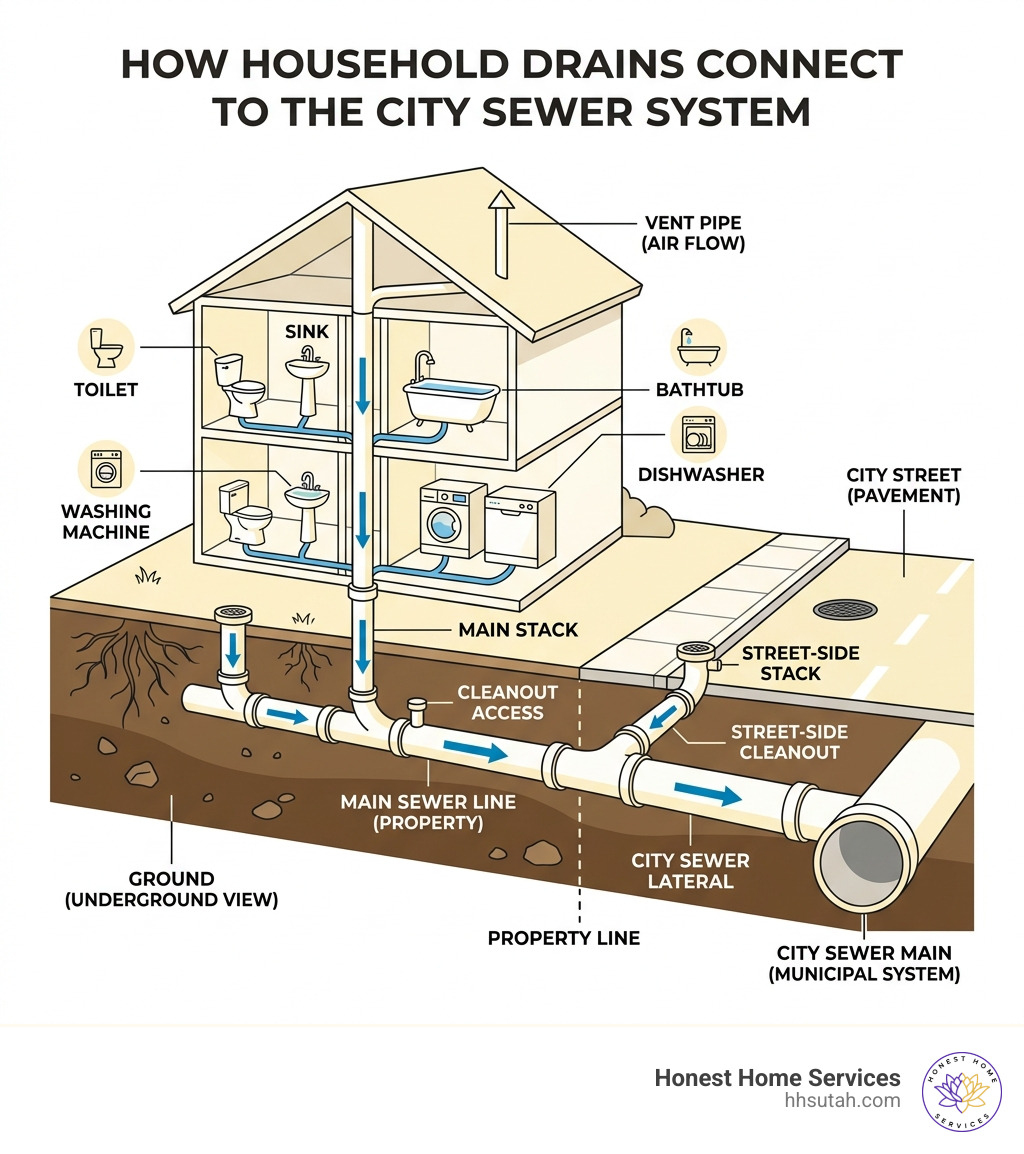
Simple guide to main line sewer and drain service terms:
Identifying the Signs of a Main Line Sewer and Drain Service Need
Recognizing a problem early can be the difference between a simple cleaning and a catastrophic basement flood. In our experience serving the Salt Lake Valley and Davis County, main line issues rarely happen in total silence. Your house will usually try to tell you something is wrong through a series of “unusual” behaviors.
One of the most common red flags is the “gurgle.” If you flush a toilet and hear a glug-glug sound coming from the shower drain, or if your kitchen sink bubbles when the dishwasher drains, you likely have a blockage in the main artery of your home. This happens because the air in the pipes is being pushed back by trapped water, looking for the nearest exit.
Another tell-tale sign is the “burping” floor drain. If you see water pooling around the floor drain in your basement or utility room, especially after running a load of laundry, that’s a classic symptom of a main line backup. Since the floor drain is often the lowest point in your home’s plumbing system, it’s the first place sewage will reappear when it has nowhere else to go.
You should also keep an eye (and a nose) out for:
- Multiple Fixture Backups: If only your bathroom sink is slow, it’s a local clog. If the sink, toilet, and tub are all acting up at once, it’s a main line sewer and drain service issue.
- Sewage Odors: A healthy sewer system is airtight. If you smell rotten eggs (hydrogen sulfide) in your yard or basement, you likely have a crack or a full-blown backup.
- Foundation Cracks or Sinkholes: In extreme cases, a leaking sewer line can wash away the soil under your home, leading to structural settling or mysterious wet spots in your lawn.
For more detailed help on self-diagnosing these issues, check out our guides on Don’t Get Flooded: A Homeowner’s Guide to Main Line Backups and From Gurgles to Gushers: Your Guide to Main Line Clogs.
When to Call a Professional vs. DIY
We love a good DIY project as much as anyone, but the main sewer line is where most homeowners should draw the line. While a plunger or a small hand-held snake can clear a bit of hair from a bathroom sink, they are virtually useless against a main line obstruction.
Standard homeowner snakes are typically only 15 to 25 feet long. However, a main sewer line clog is often located 50 to 100 feet away from the house, near the property line or the street. Attempting to force a small, hardware-store snake into a large main line can actually cause more harm than good. We’ve seen DIY snakes get permanently stuck in pipes or even puncture older, fragile materials like clay or Orangeburg.
Furthermore, chemical drain cleaners are a major “no-no.” These caustic liquids generate heat that can warp PVC pipes or accelerate corrosion in metal ones. If you have a total blockage, the chemical just sits on top of the clog, eating away at your pipes instead of the obstruction. If you’re struggling with a stubborn sink, read Don’t Get Flushed: How to Clear Kitchen Sink and Toilet Main Line Clogs before you reach for the chemicals.
The Dangers of Ignoring Sewer Backups
Ignoring a slow-moving main line is a recipe for disaster. What starts as a gurgling toilet can quickly escalate into a full sewage backup that floods your basement. This isn’t just a messy cleanup; it’s a genuine health hazard. Raw sewage contains bacteria, viruses, and parasites that can cause serious illness, as noted by the Environmental Protection Agency (EPA).
Beyond the immediate health risks, a leaking main line can lead to:
- Mold Growth: Even a small, hidden leak behind a wall or under a slab can trigger mold colonies within 24 to 48 hours.
- Structural Damage: Persistent leaks saturate the ground, leading to soil erosion that can compromise your foundation.
- Property Loss: Once sewage touches drywall, carpet, or hardwood, those materials usually have to be torn out and replaced.
If you are currently facing a backup, please refer to our When Your Main Line Breaks: A Homeowner’s Emergency Guide to mitigate damage immediately.
Common Causes and Material Vulnerabilities
Why do main lines fail? In Northern Utah, we see a few recurring villains. Tree roots are perhaps the most common. Trees love the nutrient-rich water inside your sewer pipes, and they can find their way through even the tiniest crack or joint gap. Once inside, they grow into thick “root mats” that catch grease and toilet paper, eventually sealing the pipe shut.
Grease buildup is another major culprit. Even if you don’t pour bacon grease directly down the drain, small amounts of fats and oils from dishwashing accumulate over time. These “fatbergs” solidify as they cool, narrowing the pipe’s diameter until nothing can pass through.
Finally, “pipe bellies” or sagging lines are common in areas with shifting soil, like the foothills of Salt Lake or the sandy soils in parts of Davis County. A belly is a low spot where water and debris pool, creating a constant bottleneck.
How Pipe Materials Impact Your Main Line Sewer and Drain Service
The age of your home in cities like Bountiful or Murray often dictates what your pipes are made of, and each material has its own set of “personality quirks.”
| Material | Common Era | Lifespan | Primary Weakness |
|---|---|---|---|
| Cast Iron | Pre-1960s | 60+ Years | Internal rusting, corrosion from static electricity |
| Vitrified Clay | Mid-1960s | 50-60 Years | Frequent joints that invite tree root intrusion |
| Orangeburg | WWII Era | 30-50 Years | Made of tar-soaked wood fiber; prone to crushing |
| PVC / ABS | 1970s-Present | 100+ Years | Poor installation leading to “bellies” or sags |
If you live in an older home, understanding these materials is vital. For instance, Orangeburg pipe (essentially “tar paper” pipe) was used as a metal substitute during World War II. It is almost always at the end of its life by now and tends to collapse rather than just clog. Cast iron, while durable, often develops “scaling”—rough patches of rust that catch debris.
For a deeper dive into what’s under your yard, see Pipe Dreams: Everything You Need to Know About Mainline Sewer Upgrades.
Professional Solutions: Advanced Tools and Methods
When we arrive for a main line sewer and drain service call, we bring more than just a bigger plunger. Modern plumbing technology allows us to solve problems with surgical precision.
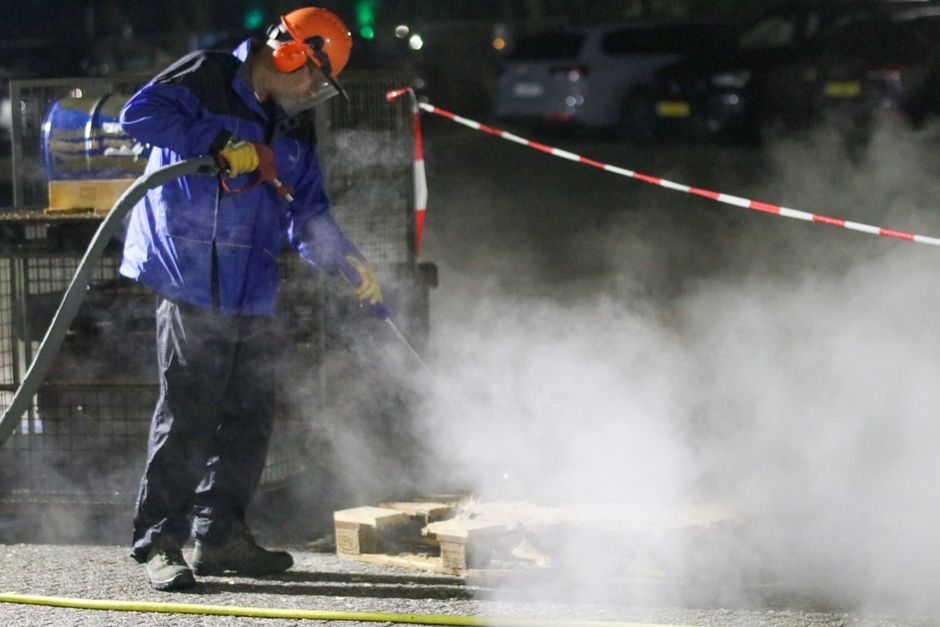
One of our most powerful tools is hydro jetting. Think of it as a pressure washer for the inside of your pipes. Using specialized nozzles and water pressure up to 4,000 PSI, we can scour the entire circumference of the pipe. While a traditional snake (mechanical auger) might just punch a hole through a clog, hydro jetting removes the grease, scale, and root mats entirely, restoring the pipe to its original diameter.
For many homeowners, this is the best way to hit the “reset button” on their plumbing. Learn more about this process in our guide: 5 Signs You Need Hydro Jetting for Your Drains.
The Role of Technology in Modern Main Line Sewer and Drain Service
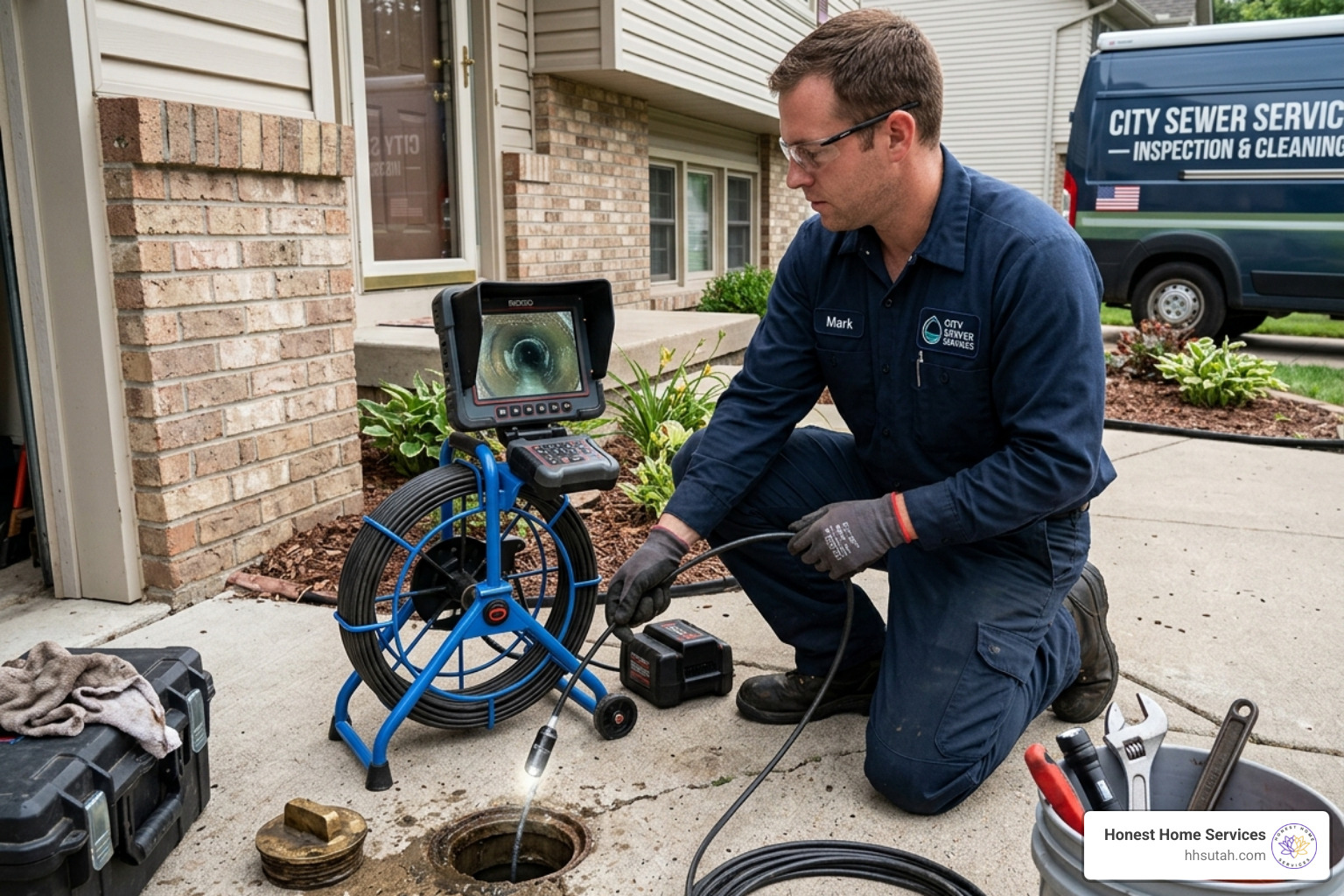
We don’t like to guess, and you shouldn’t have to pay for guesswork. That’s why almost every main line sewer and drain service we perform starts with a fiber-optic camera inspection.
We feed a high-definition, waterproof camera into your line to see exactly what’s going on. Is it a mass of roots? A collapsed section of pipe? Or perhaps a “toy car” that a curious toddler flushed? By seeing the problem in real-time, we can determine if you need a simple cleaning or a more significant repair. This non-invasive diagnostic tool saves you money by preventing unnecessary digging.
See the benefits for yourself: Don’t Get Drained: Understanding the Benefits of a Drain Pipe Camera Inspection or learn about our specific mainline inspection services.
Repair vs. Replacement: Trenchless Options and Costs
In the old days, a broken sewer line meant your yard, driveway, or patio had to be ripped up by a backhoe. Today, we offer trenchless sewer repair options that preserve your landscaping and save you from a massive restoration bill.
The two primary trenchless methods are:
- Pipe Lining (CIPP): We insert a felt tube saturated with structural epoxy into your existing pipe. Once the epoxy cures, it creates a “pipe within a pipe” that is seamless, root-proof, and rated to last for 50 years.
- Pipe Bursting: If the old pipe is too damaged for a liner, we pull a new, high-density polyethylene (HDPE) pipe through the old one. A heavy-duty “bursting head” breaks the old pipe apart as it pulls the new one into place.
These methods typically only require one or two small access pits, meaning your prize-winning rose bushes and paved driveway stay exactly where they are. For an idea of what to expect financially, read Don’t Get Flushed: Understanding Sewer Line Repair Expenses.
Understanding Main Sewer Line Service Costs
We believe in fair, transparent pricing. The cost of main line sewer and drain service can vary based on several factors:
- Depth of the Pipe: Deeper pipes require more labor and specialized equipment to access.
- Length of the Repair: Replacing 10 feet of pipe is naturally cheaper than replacing 100 feet.
- Accessibility: Is the pipe under a basement floor or an open lawn?
- Method: Hydro jetting is more affordable than a full trenchless replacement.
A simple main line cleaning might cost a few hundred dollars, while a full replacement can range into the thousands. To help you budget, we’ve put together a Main Sewer Line Clog Repair Cost guide and a Main Sewer Line Replacement Cost Guide.
Preventive Maintenance and Homeowner Habits
You shouldn’t have to deal with a sewer emergency every year. In fact, a properly functioning sewer system should rarely back up. However, preventive maintenance is the best way to avoid the $15,000 “surprise” replacement.
We recommend a professional inspection and cleaning every 18 to 24 months, especially if you live in an older home or have large trees on your property. This allows us to catch root intrusion or grease buildup while it’s still a minor issue.
Between professional visits, you can maintain your drains by:
- Managing Grease: Never pour fats, oils, or grease down the sink. Wipe greasy pans with a paper towel before washing.
- Using Enzyme Cleaners: Products like BioOne or Total-C use natural bacteria to “eat” organic residue in your pipes without damaging the plumbing.
- Watching What You Flush: “Flushable” wipes are rarely actually flushable. They don’t break down like toilet paper and are a leading cause of main line clogs.
For more tips on keeping your system sparkling, check out Unclog Your Life: A Roundup of Effective Main Line Cleaners and Root Killers and Mainline Magic: Keeping Your Drains and Sewers Sparkling Clean.
Locating and Maintaining Your Cleanout
Your “cleanout” is the designated access point for your sewer line. It’s usually a 4-inch pipe with a screw-on cap located in your yard or basement. Knowing where this is can save a technician a lot of time (and save you money) during an emergency.
If your home doesn’t have a cleanout, or if it’s buried under three feet of dirt, we highly recommend installing or upgrading one. It makes future inspections and cleanings much faster and less invasive.
Need help finding yours? Read Cleanout Clarity: Locating Your Home’s Main Sewer Line and The Main Event: Everything You Need to Know About Your Sewer Cleanout.
Frequently Asked Questions about Main Line Services
How often should I have my main sewer line cleaned?
For most homes in Northern Utah, a professional cleaning every 18 to 24 months is ideal. If you have older clay pipes and mature trees, an annual inspection is a smart investment to prevent root-related backups.
What is the difference between drain clearing and cleaning?
“Clearing” is a temporary fix—it means using a snake to punch a hole through a clog to get water moving again. “Cleaning” (like hydro jetting) is a long-term solution that scours the pipe walls to remove all residue, scale, and roots, returning the pipe to its full original diameter.
Are homeowners responsible for the main sewer line?
Yes. Most homeowners in Salt Lake and Davis County are responsible for the sewer lateral from the house all the way to the connection at the city main, which is often located under the street. This includes the portion under your sidewalk and parkway.
Conclusion
Plumbing problems can bring your daily routine to a screeching halt, but you don’t have to face them alone. Whether you’re in Salt Lake City, Layton, Bountiful, or anywhere in between, Honest Home Services is here to provide the expert, reliable, and affordable main line sewer and drain service you deserve.
We pride ourselves on our “Honest” name—we’ll never recommend a replacement when a cleaning will do, and we’ll always show you the camera footage so you can see the problem for yourself. With 24/7 emergency support and a commitment to customer satisfaction, we’re the local team you can trust to get things flowing again.
Don’t wait for a gurgle to become a gusher. Contact us today for a professional inspection or Salt Lake City Sewer Mainline Repair. We’re here to keep your home’s “backbone” strong and your drains sparkling clean!