
When Tree Roots Take Over: Why a Main Line Root Killer Matters
Main line root killer is the most practical first step for homeowners dealing with slow drains, gurgling pipes, or sewer backups caused by invading tree roots.
Here are the top options to know before you buy:
| Type | Active Ingredient | Best For | Septic Safe? |
|---|---|---|---|
| Foaming root killer | Dichlobenil | Severe, recurring clogs | Yes (except FL) |
| Copper sulfate granules | Copper sulfate pentahydrate | Preventive maintenance | Yes |
| Rock salt | Sodium chloride | Light, early-stage roots | Yes |
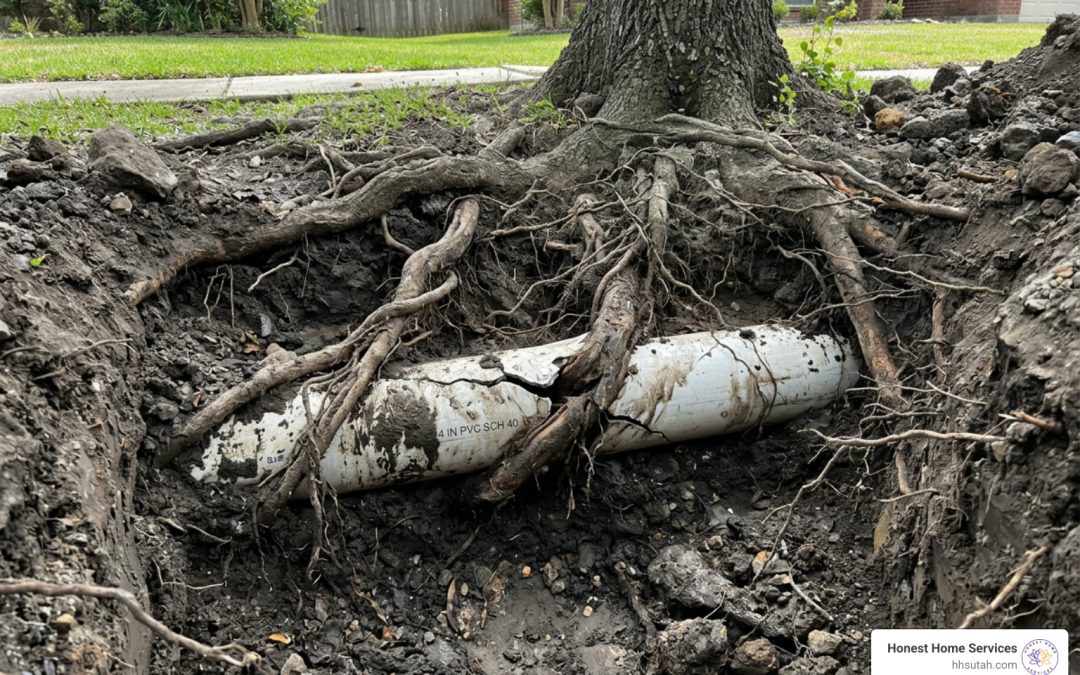
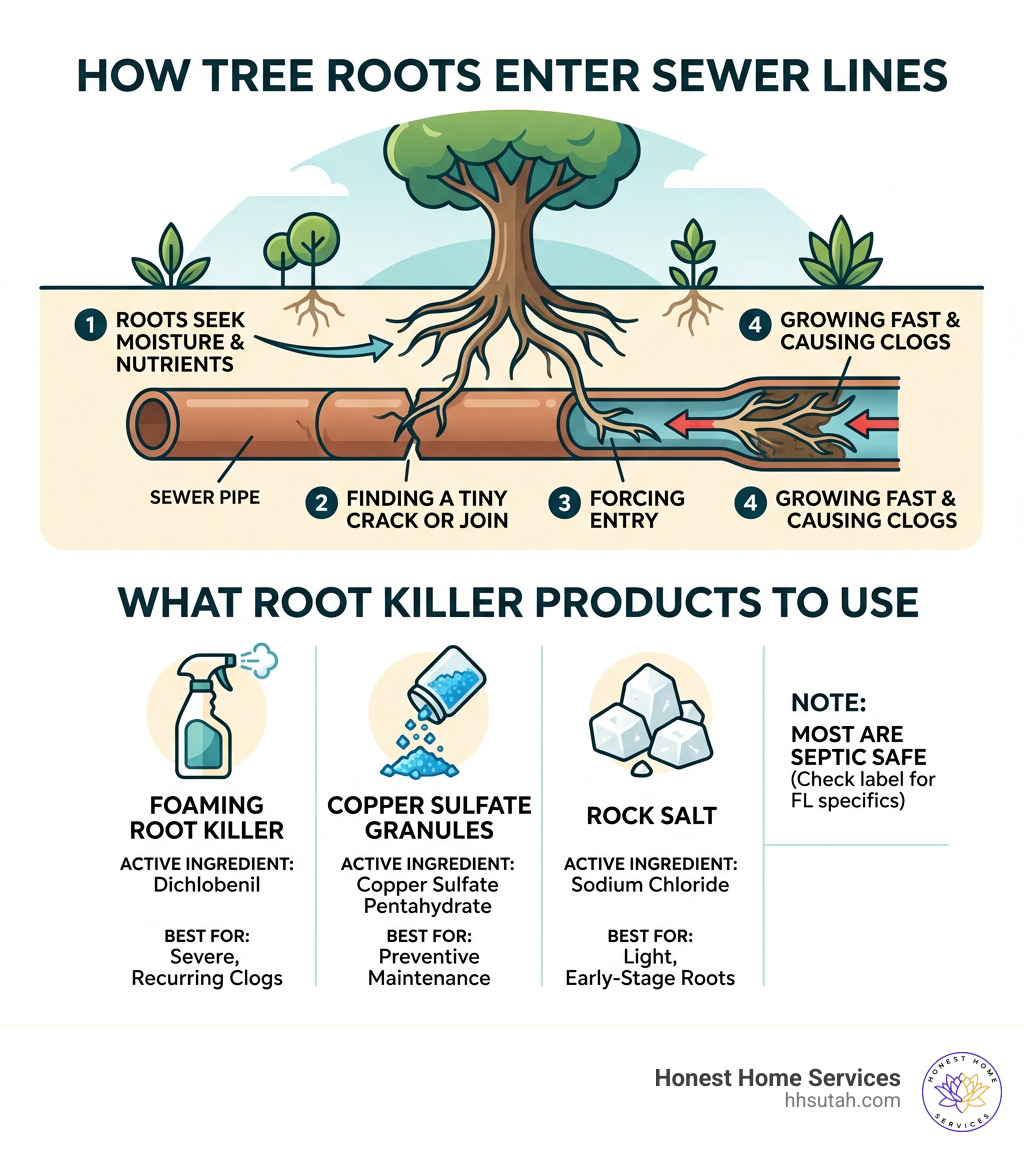
Tree roots are drawn to sewer lines because pipes offer exactly what roots need: warmth, moisture, and nutrients. Even a hairline crack in an aging clay pipe is enough for roots to force their way in. Once inside, they grow fast and can cause serious blockages — or worse, collapsed pipes.
The cost difference is stark. A bottle of root killer runs $10–$20 at your local hardware store. A full sewer line replacement? That can cost anywhere from $3,600 to $15,000 for an average 60-foot line. Treating early makes financial sense.
That said, root killer is not a fix for everything. It works best as a preventive tool or for early-stage intrusions — not for a four-inch root sitting 100 feet down your line.
At Honest Home Services, we’ve spent over 20 years clearing and repairing main sewer lines for homeowners and businesses across Northern Utah, and we know how the right main line root killer can save you thousands when used at the right time. In this guide, we’ll walk you through the best products, how to use them safely, and when it’s time to call in a pro.
Main line root killer helpful reading:
Understanding How a Main Line Root Killer Works
To understand why a main line root killer is so effective, we first have to look at what’s happening inside your pipes. Think of your sewer line as a buffet for local trees. Roots are incredibly sensitive to moisture and nutrient gradients. When they find a tiny leak or a “sweating” pipe joint, they latch on and begin to pry their way in.
Chemical Action and Dehydration
Most root killers work through targeted chemical action. When you pour a product like copper sulfate into your system, it creates a toxic environment specifically for the root tissue it touches. It essentially “cauterizes” the root tip, killing it off and preventing it from drinking. Over time, the dead root structure dehydrates, becomes brittle, and eventually breaks away to be washed down the line.
The Power of Dichlobenil
Products like FOAMING ROOT KILLER – Roebic often use an active herbicide called dichlobenil. This is a non-systemic chemical, meaning it kills the specific roots it touches within the pipe but doesn’t travel up the root system to kill the entire tree. This is a huge relief for homeowners who love their landscaping but hate their plumbing issues!
Why Foaming Matters
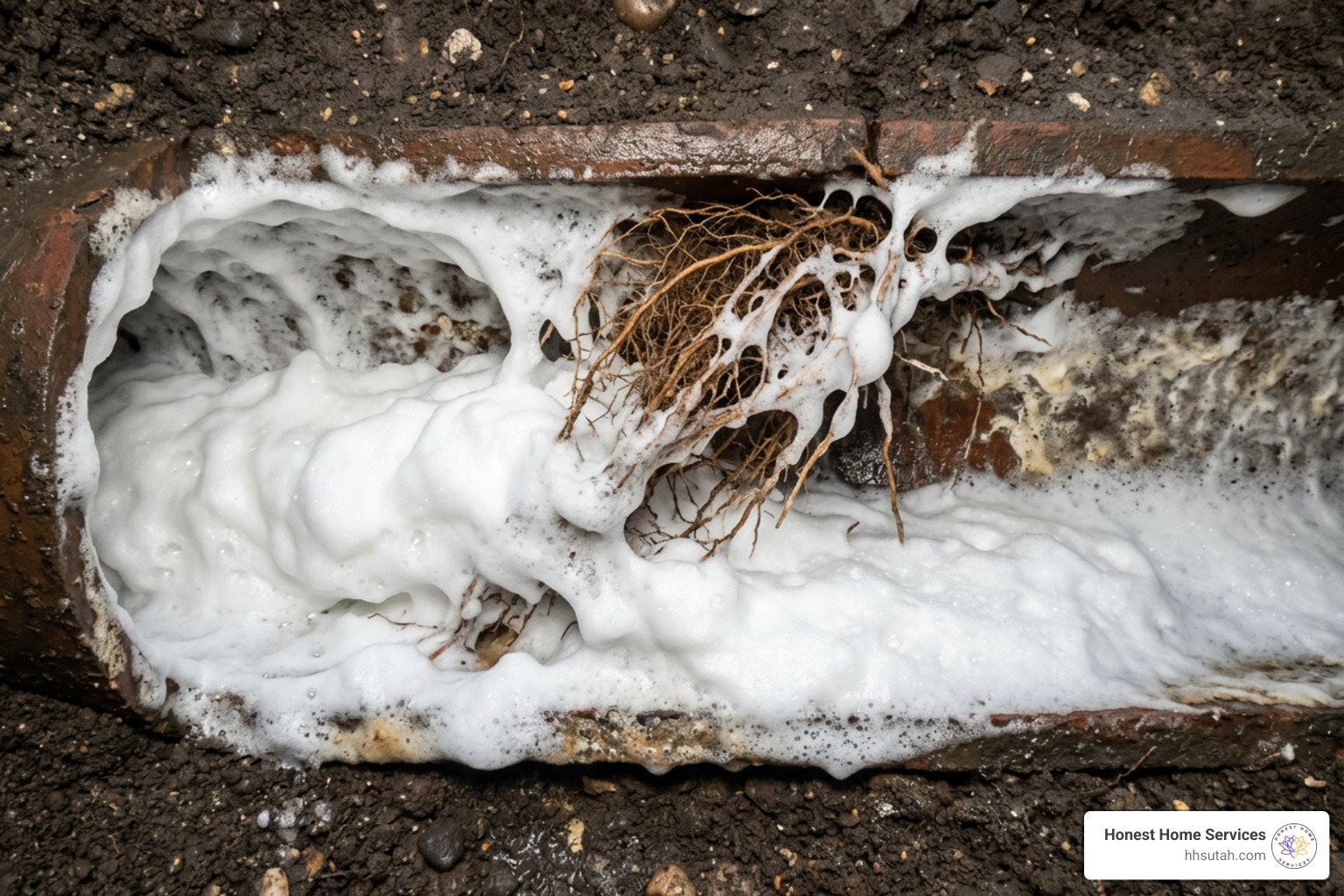
Gravity is usually a plumber’s best friend, but it can be an enemy when applying liquid chemicals. Liquid root killers flow along the bottom of the pipe. However, roots often enter through the top or sides of the joint. This is where foaming technology shines. Upon contact with water, the chemical expands into a thick foam that fills the entire diameter of the pipe, ensuring the herbicide reaches roots hanging from the “ceiling” of the sewer line.
Before you start dumping chemicals, it’s often wise to see what you’re up against. You can learn more info about mainline inspection services to see how we use cameras to pinpoint exactly where those thirsty roots are hiding.
Top Types of Main Line Root Killer for Homeowners
Choosing the right main line root killer depends on whether you are trying to stop a current backup or simply performing annual maintenance. Here is a breakdown of the most common formats you’ll find at the store:
| Feature | Foaming Agents | Copper Sulfate | Rock Salt |
|---|---|---|---|
| Application | Toilet flush / Cleanout | Toilet flush / Cleanout | Cleanout only |
| Coverage | Total pipe circumference | Bottom of pipe only | Bottom of pipe only |
| Active Ingredient | Dichlobenil | Copper Sulfate Pentahydrate | Sodium Chloride |
| Best For | Heavy growth / Top-entry roots | Prevention / Septic fields | DIY / Budget prevention |
| Duration | Prevents growth for 1 year | Needs 6-month re-application | Temporary / Short-term |
Foaming Main Line Root Killer Benefits
If you have a recurring problem, a foaming agent is your best bet. Because it uses dichlobenil, it leaves a residual barrier on the pipe walls. This barrier discourages new roots from entering for up to 12 months. Products like RootX: Root Killer for Drains, Septic Tank & Sewer Lines are highly regarded because they include degreasing agents. These agents strip away the “grime” and “slime” that usually coat roots, allowing the herbicide to penetrate deeper and work faster.
Granular and Copper Sulfate Main Line Root Killer
Copper sulfate is the “old reliable” of the plumbing world. It’s incredibly cost-effective—often around $13 to $15 for a 32 oz bottle. Brands like Zep Root Kill use copper sulfate crystals that dissolve and travel to the root mass. While it doesn’t foam, it is excellent for septic field lines and leach fields where the water spreads out over a large area.
For those looking for a comprehensive guide to effective tree root removal, it’s important to remember that these chemicals are “slow-acting” solutions. They won’t clear a total blockage instantly, but they are vital for long-term pipe health.
Step-by-Step Application and Safety Precautions
Applying a main line root killer isn’t complicated, but doing it wrong can lead to a mess or reduced effectiveness. Here is how we recommend our Salt Lake City neighbors handle the process:
- Locate the Access Point: The best place to apply root killer is the main sewer cleanout. This is usually a pipe with a cap located in your yard or basement. If you can’t find it, you can use the toilet closest to the exit of the house. Never use a sink or shower drain, as the chemicals can linger in the small “P-traps” and damage your fixtures.
- Timing is Everything: Apply the treatment at night or during a time when the family won’t be using water for at least 8 to 12 hours. This gives the chemical “contact time” to sit on the roots without being washed away by a shower or a load of laundry.
- The Application:
- For Foaming Killers: Pour the recommended amount into the toilet or cleanout and follow immediately with the amount of water specified on the label (usually a few gallons).
- For Copper Sulfate: Pour 1/2 lb increments into the toilet and flush repeatedly until the dose is gone.
- Safety First: Always wear gloves and eye protection. These are herbicides; they can irritate your skin and are toxic if swallowed. If you have a septic system, ensure the bottle explicitly states it is septic-safe to avoid killing the “good” bacteria your tank needs.
Understanding your plumbing layout is key to success. Check out our guide to your home’s drain cleanout to make sure you’re putting the product in the right spot. If you’re dealing with older clay pipes, you might also want to start understanding mainline sewer upgrades for a more permanent solution.
When to Use Root Killer vs. Calling a Professional
We love a good DIY win, but sometimes a main line root killer is like bringing a squirt gun to a house fire. You need to know when to put down the bottle and pick up the phone.
The “Signs” of Trouble
- The Gurgle: If your toilet bubbles when the shower drains, you have a partial blockage.
- Multiple Clogs: If the kitchen sink, the tub, and the toilet are all acting up, the problem is in the main line, not a single pipe.
- The Sinkhole: If you notice a soggy, extra-green patch of grass in your yard (or a literal sinkhole), your pipe has likely already collapsed.
Cost and Limitations
A bottle of Zep or Roebic is about $15. A professional camera inspection averages around $685. While that seems like a big jump, the camera can tell you if your pipe is cracked, offset, or completely crushed. A main line root killer cannot fix a broken pipe; it only kills the roots inside it.
If your line is 100% blocked, chemicals won’t work because they can’t reach the roots through the standing water. In this case, you need mechanical cleaning (an auger or hydro-jetting). You can check out current sewer line repair costs to budget for professional help. For middle-of-the-night disasters, keep our emergency guide for broken lines handy.
Frequently Asked Questions about Root Killers
How long does it take for root killer to work?
Patience is key here. While the chemical starts working on contact, the roots don’t just vanish. It typically takes 3 to 4 weeks for the roots to die, decay, and wash away. You might see some improvement in drainage within a few days, but full restoration of flow takes about a month.
Is root killer safe for my septic system and trees?
Most modern formulas, especially those containing copper sulfate or dichlobenil, are designed to be non-systemic. This means they only kill the tissue they touch. Your 40-year-old Oak tree will be just fine! Regarding your septic tank, most of these products are safe in recommended doses, but always check the label. Note: Some foaming killers are banned for septic use in Florida, but they are generally fine for our customers in Utah.
How often should I apply a main line root killer?
Prevention is much cheaper than repair. We recommend a “Spring and Fall” schedule. Apply main line root killer once in the early spring when plants are waking up and again in the late fall. This 6-month interval keeps the residual barrier strong and catches any new “hairline” roots before they become a “hairball” in your pipes.
Conclusion
Dealing with a main line clog is stressful, but it doesn’t always have to end in a massive excavation project. By using a high-quality main line root killer as part of your regular home maintenance, you can keep your pipes flowing and your yard beautiful.
Whether you choose a foaming agent for heavy-duty protection or copper sulfate for a quick preventive flush, the key is consistency. Roots never stop searching for water—so you can’t stop protecting your pipes!
If you’ve tried the DIY route and your drains are still sluggish, or if you just want the peace of mind that comes with a professional look, Honest Home Services is here to help. We provide expert Salt Lake City sewer mainline repair and maintenance across Davis, Salt Lake, and Utah Counties. We pride ourselves on fair pricing and local expertise. Don’t let a small root turn into a $15,000 headache—give us a call today!