

Why Water Leak Detection Sensors Matter
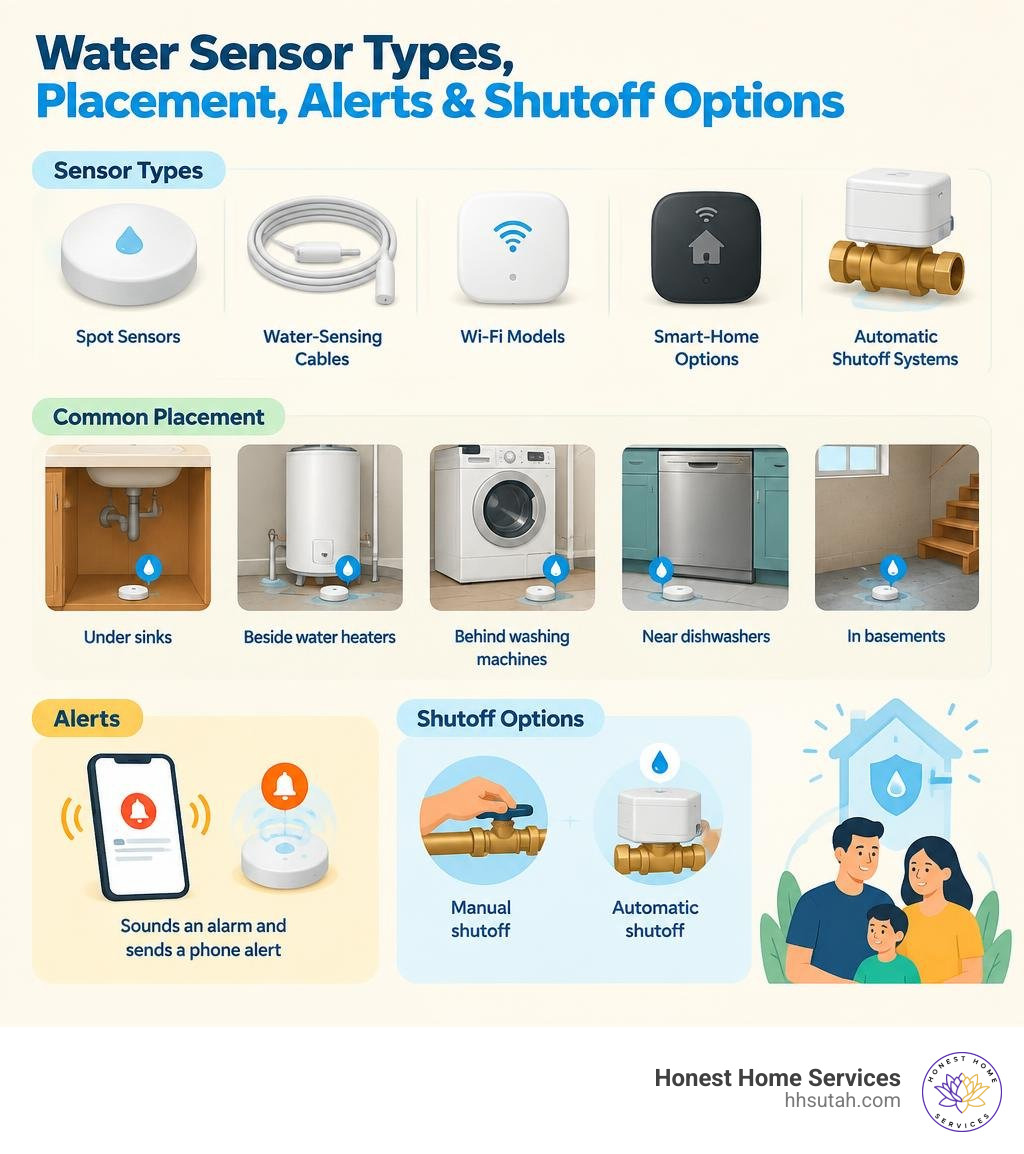
Water leak detection sensors are small devices that sense water where it should not be, sound an alarm, and, on smart models, send an alert to your phone. Place them under sinks, beside water heaters, behind washing machines, near dishwashers, and in basements to catch a drip or pooling water before it becomes major damage.
Water and freezing damage leads to an insurance claim for about 1 in 60 insured homes each year. A sensor cannot repair a broken pipe, but it can give you the early warning needed to shut off the water, move valuables, and call for help before a small leak spreads.
This guide compares spot sensors, water-sensing cables, Wi-Fi models, smart-home options, and automatic shut-off systems so you can choose coverage that fits your property.
At Honest Home Services, we have more than 20 years of experience helping Utah homeowners and businesses handle plumbing failures, pipe leaks, water-heater issues, and repairs. We can help you understand where leak detection sensors water systems fit into a practical plan for protecting your home or business.
Quick leak detection sensors water terms:
How Modern Leak Detection Sensors Water Systems Protect Your Home
Modern water leak sensors are designed to bridge the gap between an unnoticed drip and catastrophic property loss. Water damage is the second leading cause of property damage in residential structures, and it often begins silently behind walls, under cabinetry, or underneath utility equipment. By using dedicated moisture-sensing devices, you establish an automated monitoring layer across your entire property.
At their core, these devices operate on straightforward electrical principles: conductivity. Most point-of-use sensors feature exposed metallic contact pins made from corrosion-resistant materials such as gold-plated copper or nickel-plated brass. Under normal, dry circumstances, the air gap between these exposed pins acts as an open circuit, preventing electrical current from flowing.
When liquid escapes a supply line or drain, pooling water makes contact with two or more pins simultaneously. Because standard tap water contains dissolved minerals and electrolytes, it conducts electricity, closing the circuit. The device interprets this closed loop immediately, triggering onboard acoustic buzzers, flashing status LEDs, and initiating wireless alert sequences. To explore foundational monitoring concepts, check out our comprehensive guide to water leak detection.
Mechanical Conductivity vs Smart Flow Monitoring
While point sensors detect standing water at specific floor locations, whole-home water security frequently incorporates inline flow telemetry. Understanding the operational distinction between these two approaches helps you design a resilient leak mitigation strategy.
Point-of-use conductivity sensors wait passively for water to escape its intended containment and reach the sensor’s physical probes. They excel at identifying localized failures—such as a split braided hose on a washing machine or an overflowing condensation pan on an air handler.
In contrast, inline smart flow monitors are plumbed directly into the main municipal water incoming line. These units use ultrasonic transducers or internal turbine meters to measure water velocity, pressure drops, and continuous flow duration. If the inline monitor senses uninterrupted micro-flow when no fixtures are scheduled to run, it flags a hidden pressurized pipe failure within drywall or subflooring.

Combining perimeter spot sensors with inline monitoring gives you total coverage, helping you identify surface spills as well as finding hidden pipe problems buried deep within structural walls.
Smart Integration for Leak Detection Sensors Water Networks
Today’s smart leak sensors integrate smoothly into modern home automation ecosystems. Rather than acting merely as loud local sirens, they link with platforms like Apple HomeKit, Amazon Alexa, Google Home, SmartThings, and Home Assistant.
Integration is handled through cloud application programming interfaces (APIs) or local radio bridges. When a sensor reports moisture, home automation platforms can initiate multi-device routines:
- Audible Voice Broadcasts: Smart speakers announce the exact location of the leak (e.g., “Warning: Water detected in the master bathroom vanity”).
- Illumination Alerts: Smart bulbs throughout the home flash red to alert family members who are hard of hearing or wearing headphones.
- HVAC Shutdown: Air conditioning handlers and dehumidifiers can be shut down automatically to prevent condensation overflows.
- Power Cutoff: Smart electrical plugs supplying power to washing machines or dishwashers can switch off instantly to stop appliance pump cycles.
Comparing Sensor Types: Spot Probes vs Area Cables
Selecting the right device format depends entirely on the layout of your plumbing fixtures and the geometry of the surrounding floor space. The two primary physical form factors are point (spot) detectors and area (sensing cable) detectors.
| Sensor Architecture | Primary Detection Method | Best Use Case | Typical Range / Coverage | Key Advantage |
|---|---|---|---|---|
| Spot (Puck) Detector | Bottom-mounted contact pins | Under bathroom sinks, beneath toilet tanks, refrigerator bases | Localized point (1–2 inch radius) | Compact footprint; easy repositioning |
| Area (Cable) Detector | Braided conductive sensing rope | Basement foundation walls, water heater perimeters, laundry trays | 4 to 100+ continuous linear feet | Wide perimeter coverage; eliminates dead zones |
| Smart Inline Shut-Off | Ultrasonic flow and pressure drop sensing | Main municipal water supply line | Entire pressurized home plumbing network | Active mitigation; automatic water shutoff |
Spot vs Cable: Comparing Leak Detection Sensors Water Coverage Types
Spot detectors, commonly referred to as puck sensors, feature an enclosed plastic housing with downward-facing conductive pins. Many high-performance models, including advanced units from manufacturers like Aqara and SwitchBot, also incorporate top-facing probe terminals to catch overhead drips from drain traps before water pools on the floor. Spot sensors fit well in tight, clearly defined collection spots such as kitchen cabinets, beneath water filter housings, and adjacent to sump pump crocks.
Area cable detectors take a different approach by connecting a flexible, conductive braided rope directly to the transmitter body. The entire length of this sensing cable acts as a continuous contact probe. If moisture touches any section of the braided jacket, the internal wires bridge and register an alert.
Cable systems are essential for encircling bulky appliances like 50-gallon water heaters or tracking long basement foundation borders where weeping cracks occur. Units like the Leak Geek Area Detection Wi-Fi System use multi-foot braided ropes to protect extensive floor areas without requiring dozens of individual pucks. For deeper product reviews, see our breakdown of the best smart water leak detection systems.
Freeze and Humidity Monitoring Capabilities
Water damage isn’t only caused by pipe degradation—it is frequently triggered by freezing ambient temperatures and severe environmental shifts. Premium leak detection sensors frequently pack digital hygrometers and ambient temperature sensors directly onto their circuit boards.

During extreme winter cold snaps across Northern Utah, uninsulated pipes in crawlspaces, exterior walls, and unheated basements face severe freeze risks. When water freezes inside a copper, PEX, or galvanized pipe, it expands by approximately 9%, exerting thousands of pounds of pressure per square inch until the pipe wall bursts.
Sensors equipped with thermal threshold alerts warn you before freezing occurs, typically sending notifications when ambient conditions drop below 40°F (4.4°C). This allows you to open cabinet doors, apply heating tape, or set faucets to a slow drip before pipes freeze. Continuous relative humidity monitoring also helps identify chronic moisture, preventing toxic mold growth and dry rot in dark crawlspaces.
Wireless Communication Protocols and Power Management
A water sensor is only as dependable as the wireless communication link it uses to deliver emergency notifications. Sensor designers balance three competing technical requirements: transmission range, battery lifespan, and network infrastructure costs.
Wi-Fi, Zigbee, and Long-Range Radio Frequencies
Consumer and commercial leak sensors generally communicate through one of three primary wireless standards:
- Direct Wi-Fi (2.4 GHz): Devices connect straight to your residential wireless router without requiring an auxiliary hub. This simplifies initial setup and lowers entry costs. However, standard Wi-Fi draws substantial power, meaning these sensors must enter deep sleep states, waking periodically or only when triggered. Wi-Fi signals can also struggle to penetrate through heavy concrete basement foundations.
- Zigbee & Z-Wave: These low-power radio mesh protocols route signals through a centralized hardware bridge. Because the transceivers consume very little current, devices powered by small coin cells can last up to two or three years. In a mesh network, mains-powered smart plugs act as repeaters, extending coverage across large homes.
- Sub-GHz & Proprietary LoRa Protocols: For long-range applications, sub-gigahertz radio systems (such as 915 MHz in North America) and LoRaWAN Leak Detection Sensors transmit data across open distances exceeding several miles. Systems like the Leak Geek Pro Wi-Fi Alert System leverage dedicated low-frequency wireless bridges, allowing sensors located in remote detached garages, outdoor pump houses, or mechanical pits to communicate reliably without signal degradation.
Multi-Channel Alert Systems and Battery Longevity
During an emergency, an alert channel that goes unnoticed is a failed alert. Modern water leak networks use multi-channel notification systems to ensure you are alerted no matter where you are:
- Audible Sirens: High-output piezoelectric buzzers built into the sensor chassis produce local sirens ranging from 85 dB to 120 dB—loud enough to wake sleeping occupants or be heard through closed utility doors.
- Mobile Push Notifications: Cloud platforms dispatch instant smartphone push notifications with custom sound profiles that can bypass device “Do Not Disturb” settings.
- SMS and Automated Voice Calls: Critical services bridge alerts to cellular networks, dispatching urgent text messages or automated voice phone calls to multiple designated phone numbers.
- Email Dispatch: Detailed event logs, diagnostic battery flags, and wet/dry timestamps are sent via email for documentation and recordkeeping.
Power management determines how often you need to service your sensors. Most compact puck sensors run on replaceable CR2032 or CR2 lithium coin cells, providing 1 to 2 years of continuous operation. Larger units utilize standard AA or AAA alkaline/lithium batteries, delivering 2 to 5 years of battery life. In industrial and municipal settings, specialized D-cell lithium-thionyl chloride battery configurations can power sub-GHz sensors for up to 10 to 15 years.
Strategic Placement and Installation Best Practices
Effective leak detection depends on placing sensors where water is most likely to escape. Placing sensors haphazardly across flat floors often results in delayed warnings. Water follows gravity, surface tension, and floor grading, settling in specific low spots and seams.
When mapping sensor installations throughout your home, prioritize these high-risk areas:
High-Risk Appliance Zones
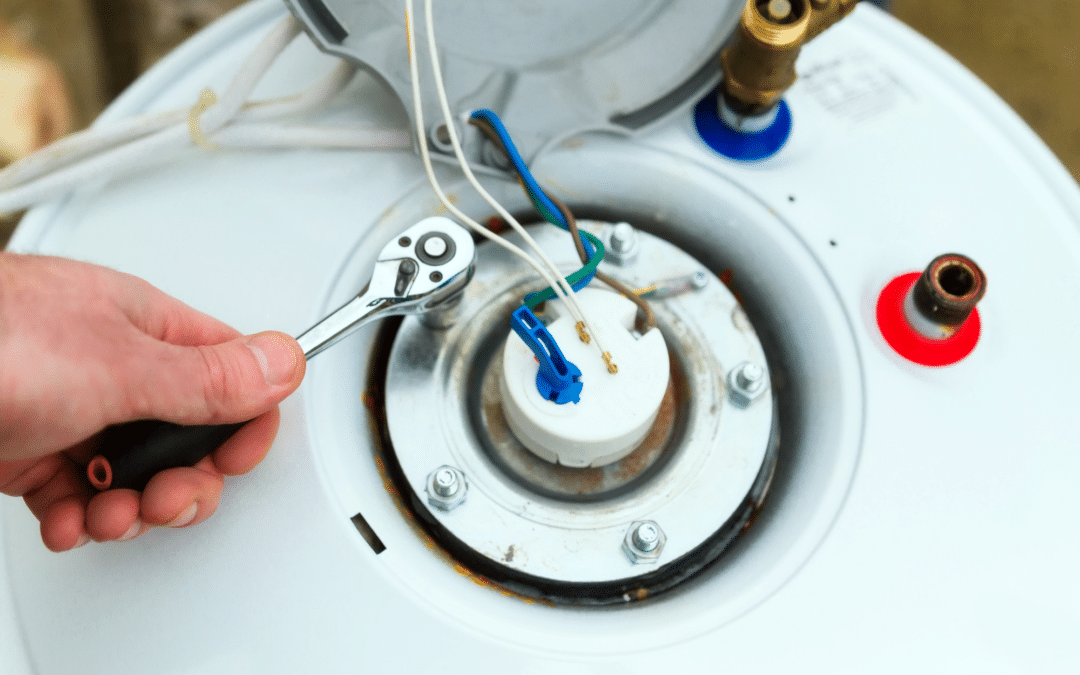
- Water Heaters: Tank-style water heaters face internal corrosion, thermal stress, and sediment buildup. Over time, sacrificial anode rods deplete, allowing acidic water to corrode steel tank walls and causing seam ruptures. Wrap an area sensing cable around the base of the tank or place a spot sensor inside the emergency catch pan.
- Washing Machines: Flexible rubber supply hoses operate under constant municipal water pressure and deteriorate over time, leading to sudden bursts. Position spot sensors directly beneath the rear supply connections and behind the drain standpipe.
- Dishwashers & Kitchen Sinks: Hidden supply lines, P-traps, and garbage disposal seals frequently develop slow, weeping leaks that rot cabinet subfloors before becoming visible. Place sensors beneath the main supply valves and below the dishwasher intake connection.
- Refrigerators with Icemakers: Plastic water lines feeding refrigerator icemakers and water dispensers can become brittle or crimped when pushed against drywall. Slide a slim sensor puck directly behind or beneath the compressor access panel.
- Sump Pump Basements: Sump pumps fail due to mechanical float binding, motor burnout, or storm power outages. Mount an external water sensor probe slightly above the high-water activation line inside the sump pit, as detailed in safety guides from the ADT water leak protection resource.
When mapping out whole-home leak protection, following a step-by-step leak detection process helps you identify hidden plumbing vulnerabilities. Homeowners in Davis County can also reference Farmington City municipal water department resources to monitor baseline conservation numbers and identify unexplained municipal water meter spikes.
Standalone Sensors vs Automatic Shut-Off Valves
While standalone sensors are cost-effective and simple to install, they are passive devices—they alert you to a flood, but cannot stop it. If a pipe bursts while you are away at work, traveling, or asleep, hours may pass before someone can manually shut the main water valve. During that time, a standard 3/4-inch residential supply pipe can dump 10 to 12 gallons of water per minute into your home, causing catastrophic structural and drywall damage.
Automatic water shut-off systems combine wireless sensors with an electronically actuated, motorized ball valve installed directly on your main incoming water line. When any paired moisture sensor detects pooling water, it sends an immediate wireless command to the motorized valve, shutting off the home’s water supply in seconds.
Upgrading to an integrated shut-off valve transforms passive alerting into active mitigation, preventing small leaks from turning into emergency situations that require urgent leaking pipe repair.
Essential Maintenance and Testing Routines
To ensure your leak detection network operates reliably when an emergency strikes, follow a consistent maintenance and calibration schedule. Neglected sensors with dead batteries or corroded contact pins provide a false sense of security.
Follow this routine testing and maintenance schedule:
- Conduct Semi-Annual Wet Testing: Every six months, test each sensor’s conductivity response. Dampen a paper towel with tap water and touch it across the bottom contact pins. Verify that the local siren sounds immediately, the LED indicator illuminates, and your connected smart application dispatches a push notification within 5 to 10 seconds.
- Clean Sensor Contact Pins: Hard water minerals, dust, lint, and floor cleaning chemicals can form an insulating film over exposed metal probe pins. Wipe the contact pins using a clean microfiber cloth dampened with isopropyl alcohol to remove oxidation and mineral scale.
- Inspect Sensor Cables for Contamination: Inspect braided area cables for physical crimps, dust accumulation, or chemical exposure. In dusty basements, vacuum along the cable length to prevent debris from absorbing ambient humidity and triggering false alarms.
- Track Battery Levels via App: Check the battery percentage indicators inside your smart device app every quarter. Replace alkaline or coin-cell batteries when they reach 20% capacity, rather than waiting for low-battery chirps to begin.
- Update Firmware Regularly: Check the manufacturer’s mobile application for wireless over-the-air (OTA) firmware patches. Updates often optimize RF communication stability, patch security vulnerabilities, and improve battery power management.
Frequently Asked Questions
How often do water leak sensors trigger false alarms?
Quality water leak sensors have very low false-alarm rates when installed and maintained correctly. False alarms typically stem from conductive debris bridging the pins, such as dust, metal shavings, or concentrated cleaning chemicals left after mopping. Sensors placed in unconditioned crawlspaces or high-humidity laundry rooms can occasionally trigger if condensation pools directly across closely spaced contact pins. To avoid false alarms, always mount sensor bodies on clean, dry surfaces, and elevate main transmitter pucks using remote extension probes in humid environments.
Can smart leak sensors work during power and internet outages?
Yes, basic local alarm functions will continue to operate. Because the majority of leak sensors run on internal battery cells, they will sound their onboard audible sirens regardless of municipal power status. However, smart Wi-Fi push notifications and remote phone alerts require your home router and internet modem to have power. If you use Zigbee or proprietary sub-GHz hubs backed by an uninterruptible power supply (UPS battery backup), local valve closure commands and smart-home routines will still execute reliably even during a total blackout.
Where is the most critical place to install a leak detector?
The single most critical place to position a leak detector is adjacent to your residential water heater, followed closely by the laundry washing machine supply box and finished basement mechanical rooms. Water heaters operate under continuous pressure and thermal stress, making them prone to sudden seam ruptures and tank failures that can release dozens of gallons of water in minutes. Installing a sensor puck with an extended perimeter cable directly beneath the water heater provides the fastest warning against catastrophic tank failure.
Protect Your Utah Home with Honest Home Services
A modern water leak sensor network provides dependable, 24/7 protection against costly plumbing failures and hidden leaks. However, when a sensor triggers or warning signs appear, having a trusted, local plumbing professional ready to respond makes all the difference.
At Honest Home Services, we provide honest, reliable, and affordable plumbing, heating, and air conditioning solutions across Northern Utah. Our team serves homeowners and businesses throughout Salt Lake City, Salt Lake County, Davis County, and surrounding communities including:
- Clearfield
- Layton
- Kaysville
- Farmington
- Bountiful
- West Valley
- Murray
- West Jordan
- South Jordan
- Bluffdale
- Herriman
- Draper
- Park City
- Tooele
- Lehi
- Saratoga Springs
Whether you need an automated whole-home shutoff valve installed, an aging water heater replaced, or emergency leak resolution, our local technicians are ready to help with guaranteed customer satisfaction and 24/7 emergency response.
Protect your property before a minor drip turns into a major flood. Contact our team today for professional Salt Lake City leak detection services and take control of your home’s water security.