
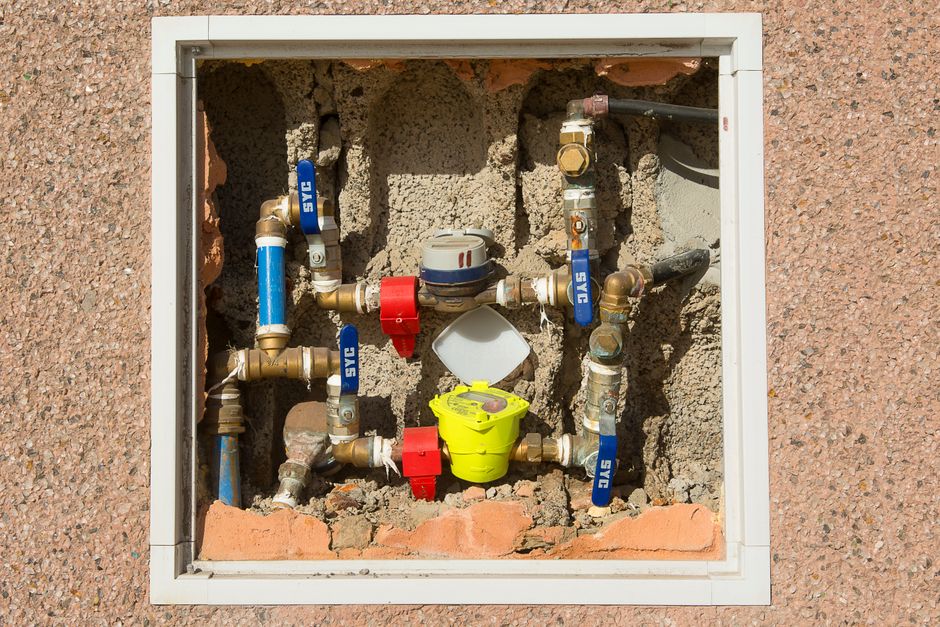
Water Damage Is Expensive — Here’s How to Stop It Before It Starts
Finding the best smart water leak detector for your home could be one of the most financially important decisions you make this year. Water damage and freezing accounted for 23.5% of all insurance losses in 2021, with the average claim costing over $12,000. A $20–$600 device can stand between you and that bill.
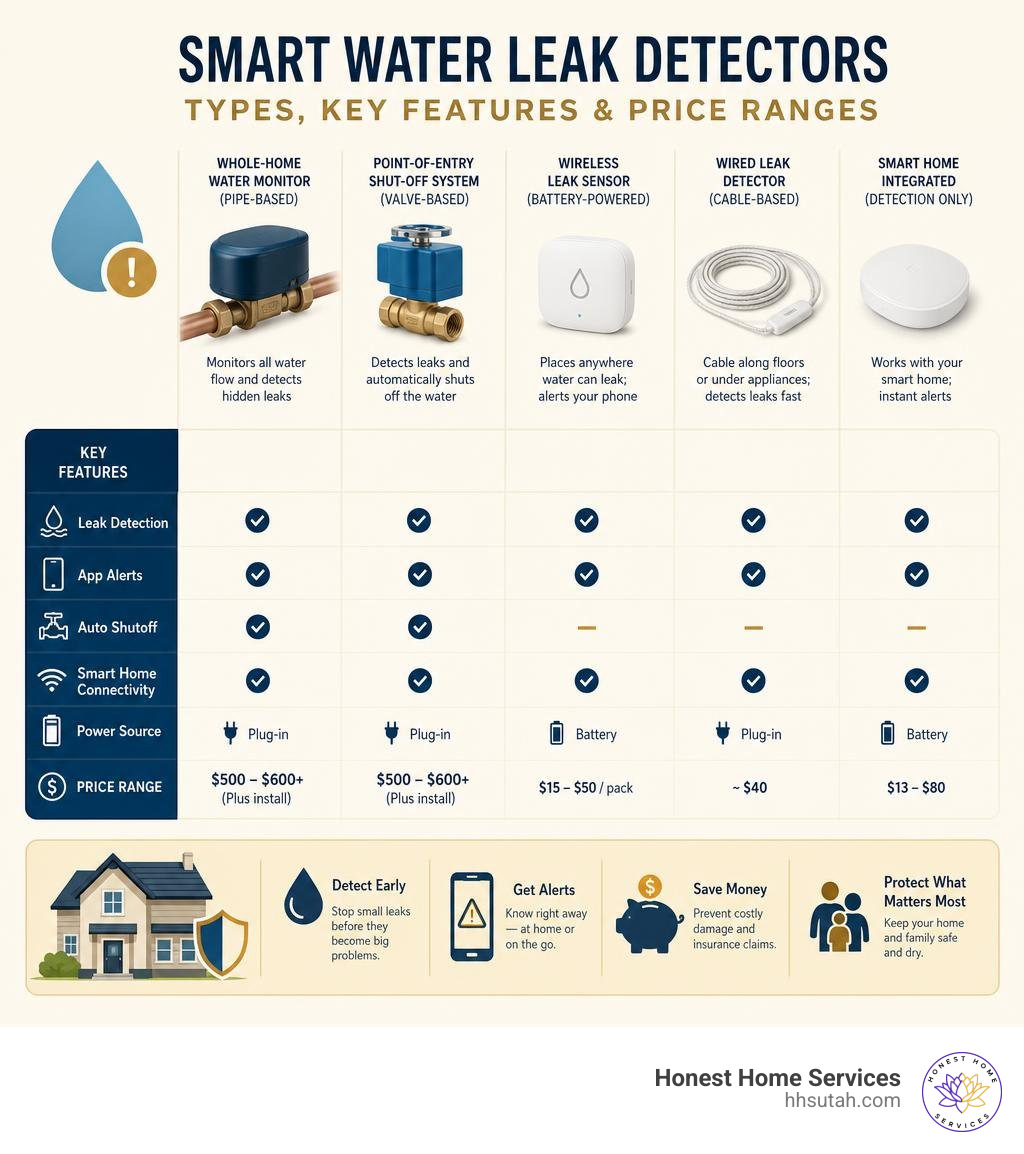
Here are the best smart water leak detectors at a glance:
| Detector | Best For | Price Range | Auto Shutoff |
|---|---|---|---|
| Phyn Plus 2nd Gen | Overall / Insurance rebates | ~$580 + install | Yes |
| Moen Flo | First-time users | ~$600 + install | Yes |
| GoveeLife Smart Leak Detector 1s | Budget / Long range | ~$15–$50/pack | No |
| Shelly Flood Gen4 | Cable-based / Multi-protocol | ~$40 | No |
| SwitchBot Water Leak Detector | Ecosystem integration | ~$18–$80 | No |
| IKEA KLIPPBOK | Affordable Matter/Thread | ~$13 | No |
Water can do serious damage fast. A slow drip behind a dishwasher or a silent toilet leak running for hours can destroy flooring, drywall, and personal belongings before you ever notice anything is wrong. Smart leak detectors give you an early warning — and the best ones can shut off your water automatically.
At Honest Home Services, we’ve spent over 20 years helping Utah homeowners deal with the aftermath of water leaks — and we know how much damage the right detector could have prevented. Helping our customers find the best smart water leak detector for their specific situation is part of how we go beyond the repair call. In this guide, we break down every major option so you can protect your home before a leak becomes a disaster.
Best smart water leak detector terms made easy:
What is a Smart Water Leak Detector and How Does It Work?
At its core, a smart water leak detector is an internet-connected device designed to identify the presence of unwanted water and send an immediate alert to your smartphone. Unlike traditional “dumb” alarms that simply sound a local siren, smart detectors ensure you know about a problem whether you are sleeping in your bed in Salt Lake City or vacationing miles away.
These systems rely on various technologies to catch water where it shouldn’t be. Some use local moisture-sensing metal contacts, while others monitor the actual movement of water through your pipes. For a deep dive into how these technologies operate, check out our Guide to water leak detection technology.
Passive vs. Active Smart Water Leak Detectors
When choosing the best smart water leak detector, the first major decision is whether you want a passive or an active system.
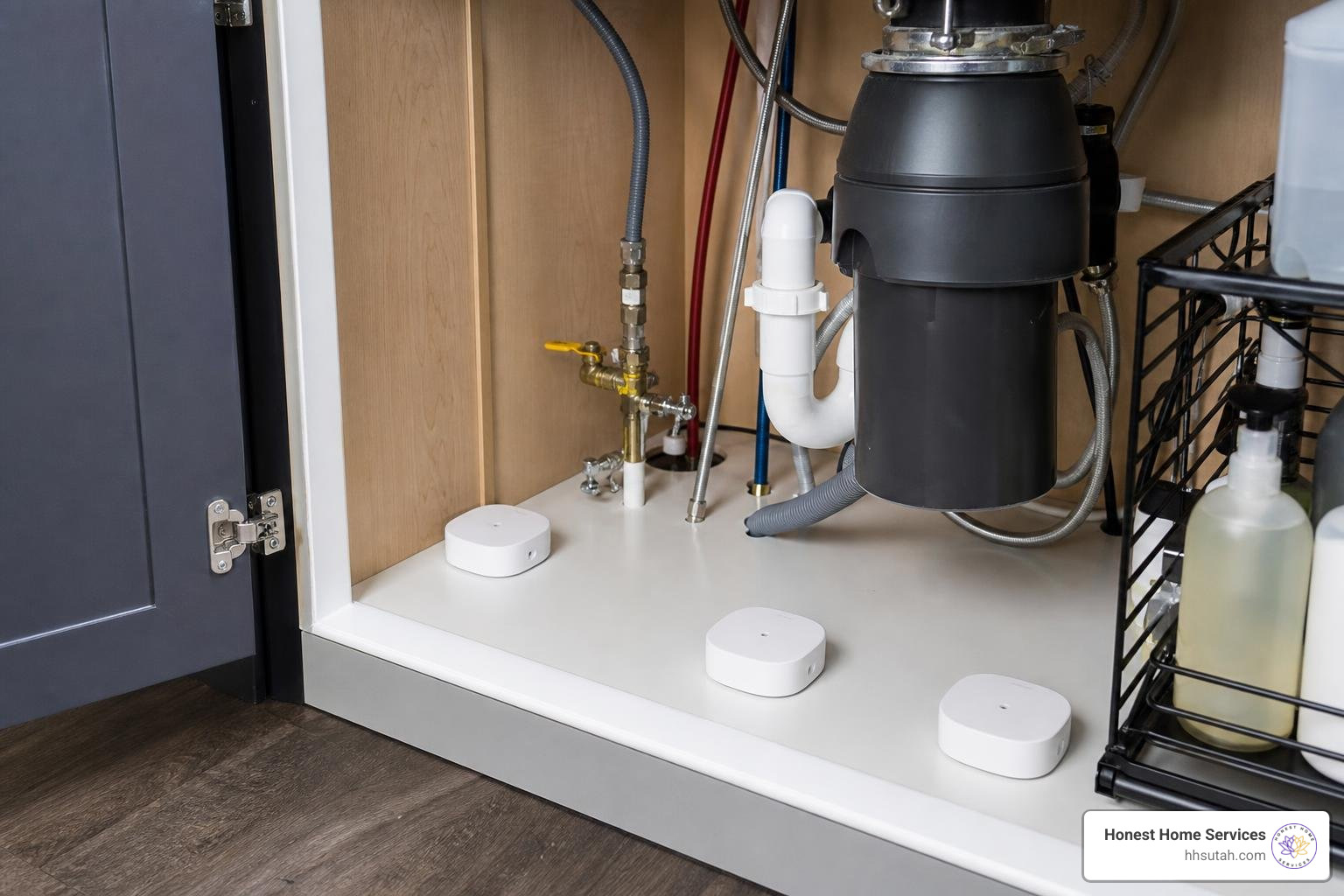
- Passive Smart Water Leak Detectors: These are small, battery-powered “point-of-leak” sensors. You place them on the floor near high-risk areas, such as under the kitchen sink, behind the washing machine, or next to the water heater. When water touches the metal contacts on the bottom (or sometimes the top) of the device, it completes an electrical circuit, triggering a loud built-in siren and sending a Wi-Fi notification to your phone. They are highly effective for localized monitoring but cannot stop the leak for you.
- Active Smart Water Leak Detectors: These systems include an automatic shutoff valve installed directly onto your home’s main water line. When the system detects a leak—either through connected point-of-leak sensors or by monitoring water flow patterns—it automatically closes the main valve, stopping the water supply to your entire house within seconds.
Understanding these differences is crucial for finding the right balance between budget and protection. You can read more about selecting the right level of coverage in the First Alert guide on finding the best water leak detector.
Flow-Based and Ultrasonic Leak Detection Systems
Active systems monitor your plumbing using two primary methods: flow-based turbines or ultrasonic sensors.
- Flow-Based Monitors: Devices like the Moen Flo use internal mechanical turbines to measure the physical movement of water through the pipe. They are incredibly sensitive and can detect tiny, slow drips by performing daily “microleak tests”—shutting off the water temporarily at night to see if the pressure drops.
- Ultrasonic Sensors: Premium monitors like the Phyn Plus 2nd Gen use ultrasonic flow sensors. Instead of moving mechanical parts that can wear out over time—especially in Utah’s hard-water regions like West Valley or Murray—ultrasonic systems send sound waves through the water to measure flow speed. They analyze microscopic pressure waves in your plumbing to detect leaks down to a single drop per minute.
To learn more about how plumbers locate hidden structural issues behind your walls using advanced tools, take a look at our expert guide on hidden pipe leak detection.
Key Features to Look For in the Best Smart Water Leak Detector
Investing in leak detection is all about buying peace of mind. To ensure you choose a system that won’t let you down when it matters most, keep these essential features in mind.
Connectivity and Smart Home Integration
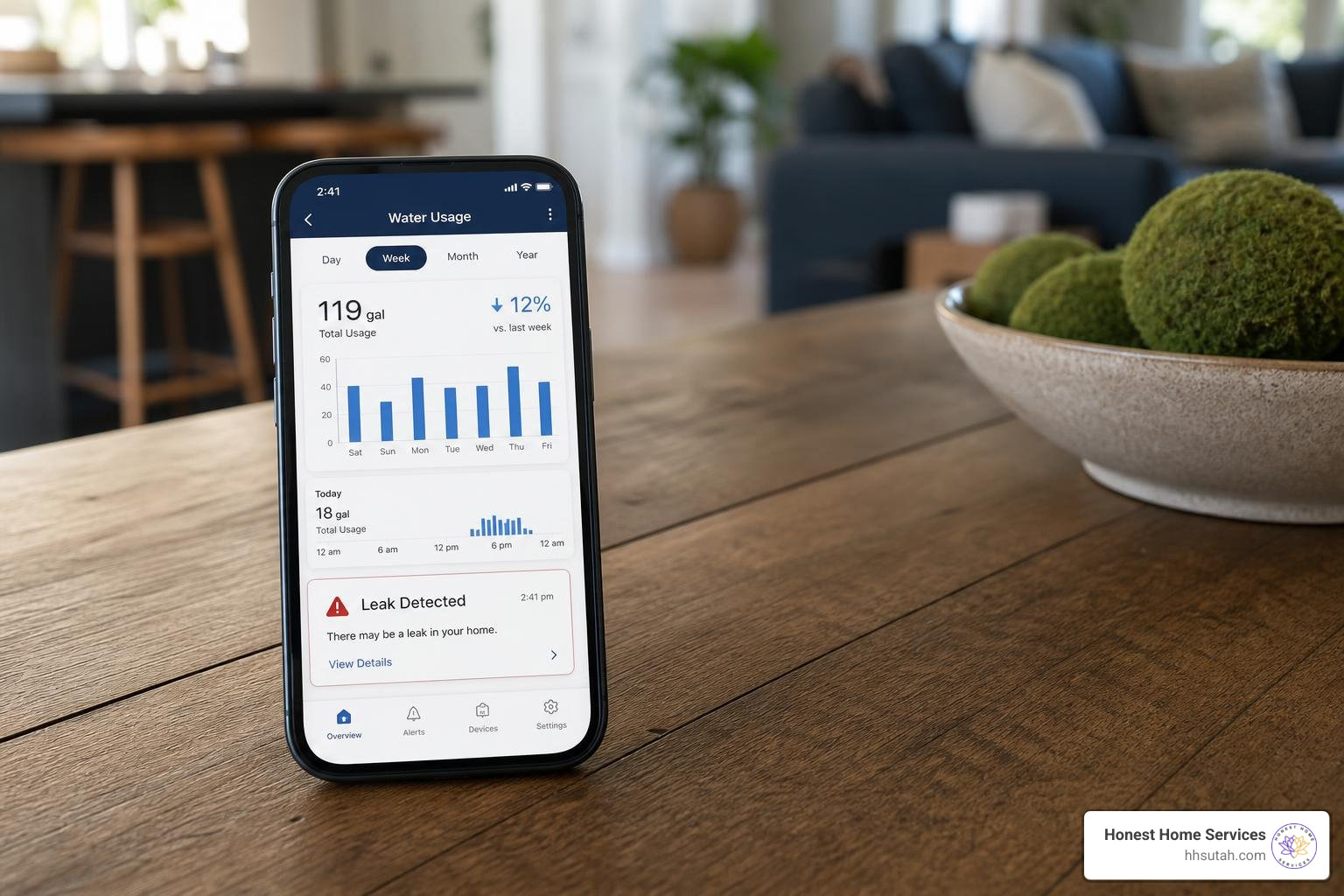
A smart detector is only as good as its connection. If a pipe bursts in your basement in Layton while you’re at work in Salt Lake City, you need an instant notification.
- Wi-Fi: Many standalone sensors connect directly to your 2.4GHz home Wi-Fi network, requiring no extra hubs. This makes setup incredibly simple, though it can drain battery life faster.
- Zigbee & Thread: Low-power protocols like Zigbee and Thread keep sensors connected for years on tiny batteries. They require a compatible smart home hub (like the IKEA DIRIGERA or a Samsung SmartThings hub) to bridge them to your home network.
- Matter Compatibility: Matter is the unified smart home standard. Devices using Matter over Thread integrate seamlessly with Apple Home, Amazon Alexa, Google Home, and Samsung SmartThings simultaneously, making your automation setup future-proof.
Power Options and Battery Longevity
Point-of-leak sensors are almost always battery-powered. Look for models that offer at least 2 to 5 years of battery life. The last thing you want is a dead sensor when a real leak occurs. Many modern sensors use standard AA or AAA batteries, which are cheap and easy to replace, while others rely on coin-cell batteries (like CR2032) to maintain a ultra-low profile.
For active main-line shutoff valves, AC power is required because turning a physical brass valve takes a significant amount of electrical power. Ensure your main water shutoff area has a nearby power outlet, or plan to have an electrician install one.
Top-Rated Models: Finding the Right Device for Your Home
Whether you are a renter looking for a quick DIY setup or a homeowner wanting professional-grade, whole-house security, there is a perfect option on the market.
Best Overall Smart Water Leak Detector: Phyn Plus 2nd Gen
If you want the absolute gold standard in whole-home water monitoring, the Phyn Plus 2nd Gen is our top recommendation. It is widely recognized as the industry leader, earning top marks in independent university studies and from professional plumbing associations alike.
- How it Works: Installed on your main water line, the Phyn Plus uses state-of-the-art ultrasonic sensors to analyze water pressure and flow rate 240 times per second.
- Key Features: It features a built-in automatic shutoff valve, detailed water usage tracking down to individual fixtures, and a 1,000-hour machine-learning phase that adapts to your household’s unique water habits.
- The Plumber’s Perspective: Because it uses ultrasonic waves rather than a physical turbine, it has no moving parts to get jammed by mineral scale or sediment. This makes it incredibly durable and reliable for long-term use.
- Cost: The device itself lists for around $580, and professional plumbing installation typically brings the total project cost to between $3,000 and $5,000 depending on your home’s pipe configuration.
- Insurance Perks: It is recognized by 15 major insurance carriers for premium discounts or installation rebates.
For more details on how it holds up in real-world testing, read Reviewed’s best smart water leak detectors of 2026.
Choosing the Best Smart Water Leak Detector for Apartments and Renters
If you live in a rental property or an apartment in West Jordan or South Jordan, you likely cannot cut into the main water line to install a Phyn or Moen system. That is where renter-friendly, point-of-leak sensors come in.
Brands like GoveeLife and SwitchBot offer multi-packs of small, battery-powered sensors that require absolutely no drilling or plumbing work. You simply place them on the floor under your sinks, behind your toilet, or next to your refrigerator. They pair to your phone in minutes, and if you move, you can pack them up and take them with you.
Best User-Friendly Shutoff: Moen Flo Smart Water Monitor
The Moen Flo Smart Water Monitor is the closest competitor to the Phyn Plus and is an exceptional choice for first-time smart home users.
- The Technology: It utilizes a mechanical turbine to monitor flow and pressure. It is highly sensitive, detecting leaks as small as a single drop per minute.
- User Experience: The Moen Smart Water App is widely considered the most intuitive and user-friendly on the market. It categorizes your daily water usage by fixture (showers, toilets, outdoor hose) and sends straightforward alerts.
- Standout Feature: In addition to app notifications, Moen Flo can send text messages and even make automated robocalls to your phone if it detects a critical pipe burst.
- Cost: The unit is priced around $600, with a typical total installation cost of $3,100 to $5,100. It is recognized by 7 major insurance carriers for discounts.
Best Budget and Long-Range Sensors: GoveeLife Smart Water Leak Detector 1s
For homeowners with large properties, detached garages, or deep basements, the GoveeLife Smart Water Leak Detector 1s is an incredible value.
- Unmatched Range: While most Wi-Fi sensors struggle to reach through concrete basement walls, GoveeLife uses Sub-1G RF technology to maintain a solid connection up to 1,804 feet from its gateway—even through 5 dense walls.
- Audible Alarm: The sensors feature an adjustable, ultra-loud siren that can reach up to 105 dB.
- Battery Life: It boasts an impressive 5-year battery life.
- Value: Sold in affordable multi-packs (usually under $50 for a gateway and 5 sensors), it’s the most cost-effective way to blanket a large home with point-of-leak protection.
Best Multi-Protocol and Cable-Based Sensor: Shelly Flood Gen4
The Shelly Flood Gen4 product page highlights a highly versatile sensor built for advanced smart home enthusiasts.
- Cable-Based Sensing: Instead of relying solely on the device’s bottom contacts, you can attach an extendable leak sensor cable that runs up to 150 meters. This allows you to wrap the cable around pipes or run it along the entire base of a kitchen cabinet.
- Connectivity: It supports Wi-Fi, Bluetooth, Zigbee, and Matter out of the box.
- Customization: It features three distinct alarm modes (Intense, Normal, and Economic) to balance response times with its 2-year battery life.
Best Ecosystem Integration: SwitchBot Water Leak Detector
The SwitchBot Water Leak Detector is designed to slot perfectly into an existing SwitchBot smart home setup.
- No Hub Required: It connects directly to your home Wi-Fi network for standalone remote alerts.
- IP67 Waterproof: The sensor is fully dustproof and waterproof, meaning it can be completely submerged during a flood and will still function perfectly once dried out.
- Versatility: It can detect dripping water from above, rising water levels, or standing water on the floor.
Best Affordable Matter-over-Thread Option: IKEA KLIPPBOK
The IKEA KLIPPBOK water leak sensor is a fantastic, ultra-budget entry point into modern smart home protocols.
- Price: At just $12.99, it is one of the most affordable smart sensors available.
- The Tech: It utilizes Matter over Thread, giving it lightning-fast response times and excellent battery efficiency.
- Requirement: It requires a compatible Thread Border Router, such as the IKEA DIRIGERA hub, to send smartphone notifications and integrate with Apple Home or Google Home.
Installation, Placement, and Preventing False Alarms
Once you have purchased the best smart water leak detector for your home, proper installation and strategic placement are key to ensuring it actually protects you when a pipe fails.
While point-of-leak sensors are simple DIY projects, active systems that require cutting into your copper or PEX water lines should always be handled by a licensed professional. To learn more about how comprehensive home protection systems are integrated, read our Complete guide to leak detection systems.
Strategic Sensor Placement for Maximum Protection
To get the most out of your point-of-leak sensors, you need to place them where water is most likely to pool first. Do not just throw them randomly in the middle of a room. For a step-by-step approach to finding hidden vulnerabilities in your home, check out The great leak hunt guide.
- Water Heaters: Place a sensor directly inside the metal drain pan under the water heater, or on the floor immediately next to it.
- Washing Machines: Position a sensor on the floor behind the machine, right under the hot and cold hose connections.
- Kitchen Sinks & Dishwashers: Place a sensor under the sink, directly beneath the P-trap, and slide another one under the kickplate of your dishwasher.
- Basements & Sump Pumps: Place a sensor near your sump pump pit or in the lowest corner of your basement floor where foundation water typically pools first.
How to Prevent False Alarms and Handle Alerts
A leak detector that constantly goes off for no reason is a nuisance that you will eventually ignore—defeating its entire purpose.
- Humidity and Condensation: High-humidity environments, like a damp crawl space or a small bathroom, can cause condensation to form on the sensor’s metal contacts, triggering a false alarm. Devices like the Shelly Flood Gen4 allow you to adjust the “state hold time” up to 60 seconds, meaning the sensor must detect continuous moisture before sending an alert.
- Conductive Surfaces: Never place a sensor directly on a metal drain pan or conductive surface, as this can complete the electrical circuit and trigger a constant false alarm. Use a small piece of electrical tape or a plastic barrier if needed.
- What to Do During an Alert: If your phone alerts you to a leak, do not panic. If you have an active system, verify if the water has been shut off automatically. If you have a passive system, locate your home’s main manual water shutoff valve immediately and close it.
If you are dealing with a persistent, hard-to-find issue behind your walls or under your concrete slab, read our guide on expert drain and pipe leak detection to see how our team tracks down the source.
Frequently Asked Questions About Smart Water Leak Detectors
Do smart water leak detectors require a monthly subscription?
Most point-of-leak sensors (like GoveeLife, SwitchBot, and IKEA) are completely free to use and do not require any monthly fees.
Active systems like the Moen Flo offer optional premium subscriptions (such as Moen’s FloProtect plan for $5/month). These subscriptions unlock advanced features like extended 5-year warranties, detailed water usage analysis, and even deductible reimbursement guarantees (up to $5,000) if your home suffers water damage while the system is active. However, the core leak detection and automatic shutoff features work perfectly fine without paying a dime.
Can smart water leak detectors lower my home insurance premiums?
Yes! Because water damage claims are incredibly expensive for insurance companies, many major carriers offer premium discounts of 5% to 15% if you have an active smart water shutoff system installed. Devices like the Phyn Plus 2nd Gen and Moen Flo are widely recognized by major national carriers, and some will even offer direct rebates to help cover the cost of the device.
What happens to my smart leak detector if the Wi-Fi goes down?
If your home’s Wi-Fi goes offline, passive sensors will still sound their built-in physical sirens if they detect water, but they won’t be able to send a notification to your smartphone.
Premium active systems are designed with local intelligence. If the Wi-Fi goes down, devices like the Phyn Plus and Moen Flo will still automatically shut off your water if they detect a major pipe burst, as their internal processors do not rely on the cloud to execute emergency shutoff commands. Some commercial-grade systems even use backup radio frequencies to communicate between sensors and the valve when the internet is completely dark.
Conclusion
When it comes to water damage, an ounce of prevention is worth thousands of dollars in repairs. Installing the best smart water leak detector for your household is one of the smartest, most cost-effective upgrades you can make to protect your home and your wallet.
Whether you need help choosing the right system, need an outlet installed near your water main, or require professional installation for an active shutoff valve like the Phyn Plus or Moen Flo, our team at Honest Home Services is here to help. We provide honest, reliable, and affordable plumbing support across Salt Lake City and Northern Utah. Schedule Salt Lake City leak detection services with us today, and let’s make sure your home stays dry, safe, and protected.