

When You Need a Clean Out for Sewer: What Every Utah Homeowner Should Know
A clean out for sewer is a capped pipe — usually 3 to 4 inches wide — that gives plumbers (and you) direct access to your main sewer line. Here’s what you need to know at a glance:
- What it looks like: A short pipe sticking out of the ground or wall, with a threaded plastic or brass cap on top
- Where it is: Outside near your home’s foundation, or inside in a basement, crawl space, or utility room
- What it does: Provides access to clear blockages without tearing up your yard or walls
- When it matters most: When multiple drains back up, toilets gurgle, or sewage smells appear indoors
One moment everything is fine. The next, your shower is backing up with soapy water every time the washing machine runs. That’s the moment most homeowners in Northern Utah first learn their sewer cleanout exists — and wish they’d found it sooner.
Knowing where yours is, and what it does, can save you hours of stress and hundreds of dollars in emergency service costs.
At Honest Home Services, we’ve spent over 20 years helping Utah homeowners locate, access, and maintain their clean out for sewer — from routine inspections to urgent main line backups. If you need help fast, we’re ready.
What is a Clean Out for Sewer and What Does It Look Like?
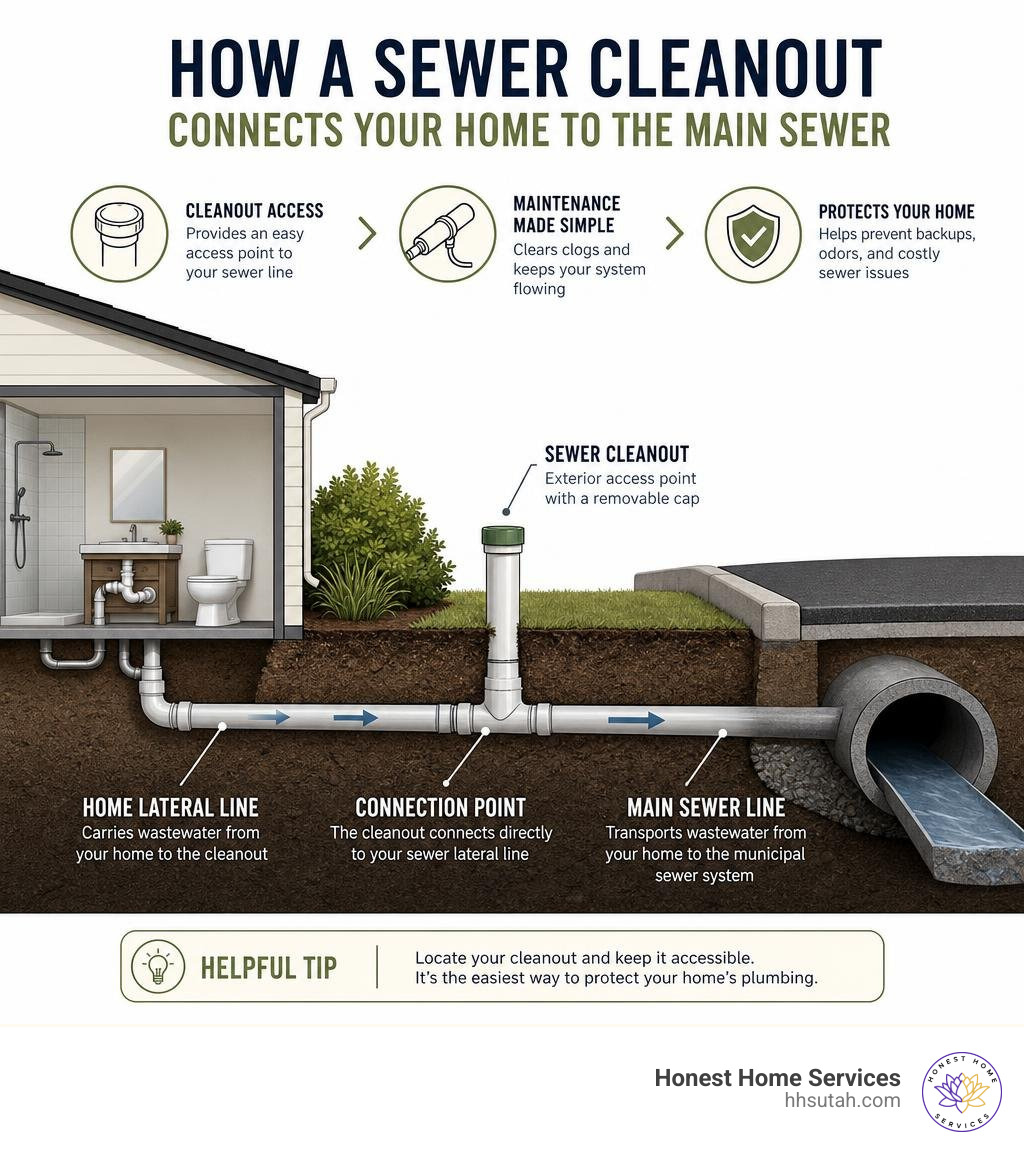
Every home has a network of drains designed to carry wastewater away from sinks, showers, toilets, and appliances. These smaller pipes eventually merge into a single, larger underground pipe called the sewer lateral, which carries the waste to the municipal sewer line under the street.
The clean out for sewer is your direct portal into this main lateral line. Think of it as an emergency hatch for your home’s wastewater system. When a major blockage occurs, this dedicated access point allows plumbers to diagnose and clear the line without having to dismantle your indoor plumbing fixtures or dig up your yard.
To dive deeper into the mechanics of this essential plumbing feature, check out the main event everything you need to know about your sewer cleanout as well as this helpful resource on Sewer Drain Clean-Out: What It Is and How to Use.
Understanding the Physical Appearance of a Clean Out for Sewer
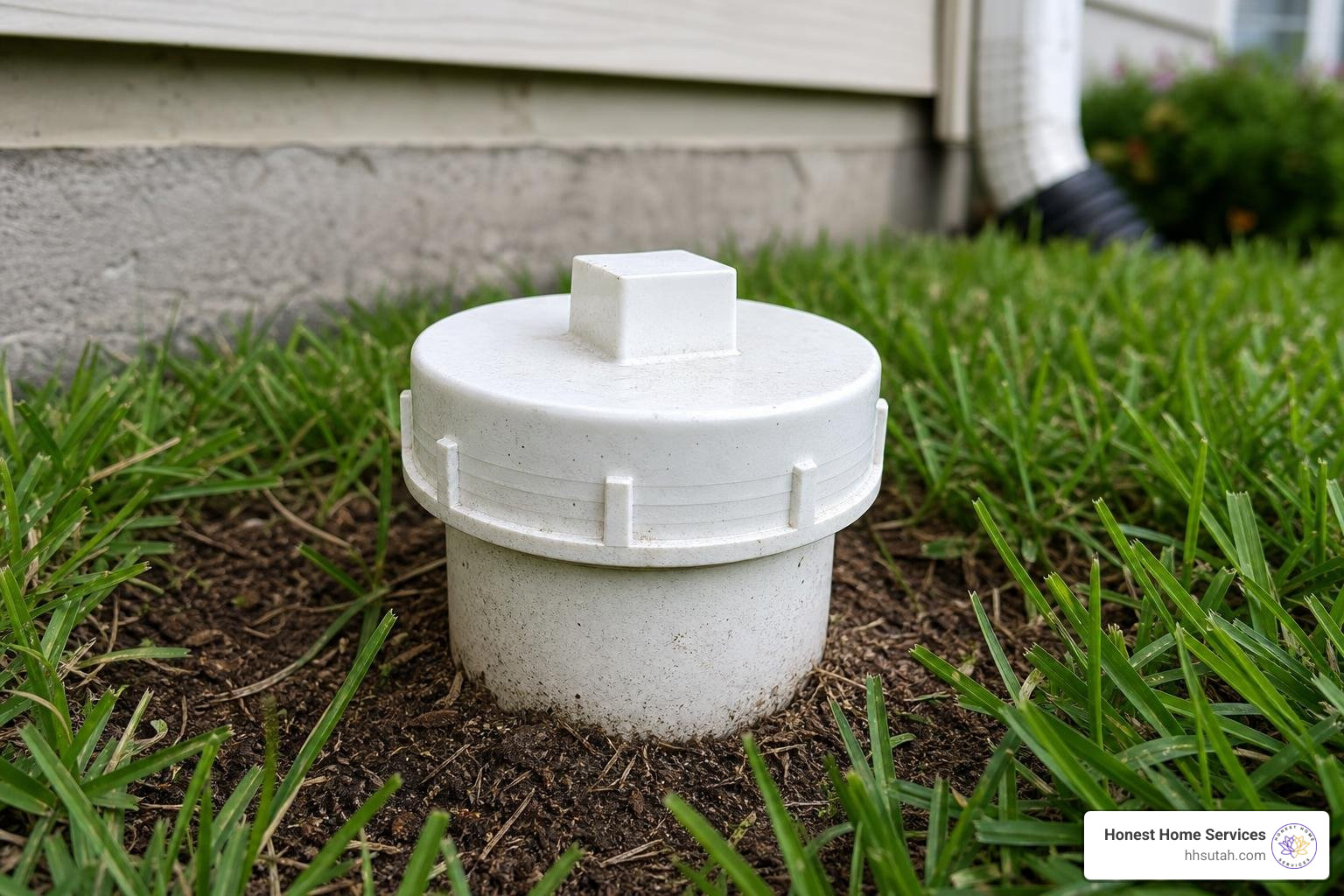
If you have never looked for your sewer cleanout, you might not know what to search for. In most residential properties, a cleanout consists of a pipe that is 3 to 4 inches in diameter. The pipe itself is typically constructed from one of three materials:
- White PVC: The modern standard for residential plumbing, highly durable and resistant to corrosion.
- Black ABS: Another common plastic pipe material used in newer construction.
- Cast Iron: Frequently found in older Utah homes, especially those built before the late 1970s.
The top of the pipe is sealed with a threaded cap or plug. This plug usually features a raised square or hexagonal nut on top, allowing it to be gripped and turned with a pipe wrench. In older systems, you might find a brass cap or even a heavy cast-iron “mushroom” cap sitting near the ground level. Under modern 2026 plumbing standards, new installations utilize high-impact, frost-resistant PVC cleanout adapters and threaded plugs to withstand freezing winter temperatures in Northern Utah.
Why Having an Accessible Clean Out for Sewer is Crucial
Having a cleanout that is easily accessible is one of the best preventative measures against catastrophic property damage. If your main line backs up, a clear access point allows our technicians to perform a rapid diagnosis.
Instead of guessing what is causing the blockage, we can run a specialized fiber-optic camera down the line to see the exact nature of the problem. To learn more about this technology, read about dont get drained understanding the benefits of a drain pipe camera inspection.
An accessible cleanout also makes it possible to use professional-grade clearing tools, such as mechanical sewer snakes or high-pressure hydro-jetting equipment. Without a cleanout, a plumber might have to temporarily remove a toilet or work from a risky roof vent to clear a clog, which increases labor time, mess, and overall service costs.
Where is the Sewer Cleanout Typically Located?
Finding your sewer cleanout before a plumbing emergency occurs is highly recommended. If you wait until sewage is backing up into your bathtub, searching through overgrown bushes in the dark can turn a stressful situation into a complete nightmare.
The exact location of your cleanout depends largely on when your home was built and local municipal building codes. For a comprehensive look at locating this line, explore our guide on cleanout clarity locating your homes main sewer line.
Finding an Outdoor Sewer Cleanout
In most Northern Utah homes, the primary sewer cleanout is located outside. Start by walking the perimeter of your house, staying within 3 to 5 feet of the foundation wall.
- Near the Foundation: Look closely around exterior bathroom walls, kitchen walls, or utility areas. The cleanout pipe often sticks up a few inches above the ground.
- Near Landscaping: Homeowners frequently hide these pipes behind bushes, under mulch, or beneath decorative planters.
- Near the Property Line: In some municipalities, a second cleanout is installed near the sidewalk or property line where the residential lateral connects to the city main.
- Near the Water Meter: Look in the general path between where the main water line enters your home and the street.
Locating an Indoor Sewer Cleanout
If your home has a basement or crawl space, you may have an indoor cleanout.
- At the Base of the Main Stack: Look for the thick vertical drain pipe (the main stack) that runs from the upper floors down through your basement or utility room. There is often a Y-shaped fitting with a cleanout plug near the bottom of this stack.
- In the Basement Floor: Some homes have a cleanout cap set flush with the concrete floor in the basement, garage, or utility closet.
- Inside Crawl Spaces: If your home is built on a crawl space, the cleanout may be located just inside the crawl space access point.
For more details on navigating indoor access points, check out unclogging the mystery a guide to your homes drain cleanout.
How to Find a Buried or Hidden Sewer Cleanout
It is incredibly common for outdoor cleanouts to become buried under layers of soil, mulch, gravel, or decorative landscaping over the years. If you cannot find yours visually, try these steps:
- Use a Soil Probe: Gently push a long, thin metal rod or a long screwdriver into the soil near the foundation where you suspect the pipe should be. If you strike plastic, brass, or cast iron a few inches down, you may have found the cap.
- Use a Metal Detector: If your cleanout has a brass plug or is made of cast iron, a metal detector can help pin down its exact location beneath the dirt.
- Check Your Property Sketch: Your local building department or county recorder’s office may have original plumbing blueprints or property sketches showing the exact path of the sewer lateral.
- Understand Building Codes: The International Residential Code (IRC) requires homes built after 1980 to have at least one cleanout within 5 feet of the building’s exterior wall. If your home was built after this period, it is almost certainly there, even if it is currently buried.
Diagnosing Sewer Line Clogs and Blockages
How do you know if you are dealing with a simple clogged sink or a full-blown main sewer line emergency? Recognizing the difference is key to protecting your home. If you want to know what to do when things go wrong, read dont get flooded what to do when your main line backs up.
Common Signs of a Main Sewer Line Blockage
A main sewer line blockage affects your entire home’s drainage system. Watch out for these classic warning signs:
- Multiple Backed-Up Drains: If your kitchen sink, shower, and washing machine drain are all slow or backing up simultaneously, the issue is in the main line.
- The Toilet Burp: When you flush the toilet, does water bubble up or gurgle in your bathtub or shower drain? This happens because air and wastewater are trapped in the pipe and forced to escape through the lowest available fixtures.
- Washing Machine Backups: Running your washing machine forces a large volume of water down the drain. If this causes your shower or basement floor drain to overflow, a main line clog is highly likely.
- Sewage Odors: A persistent, foul sewer gas smell rising from multiple drains or around the exterior of your home is a clear indicator of a backup.
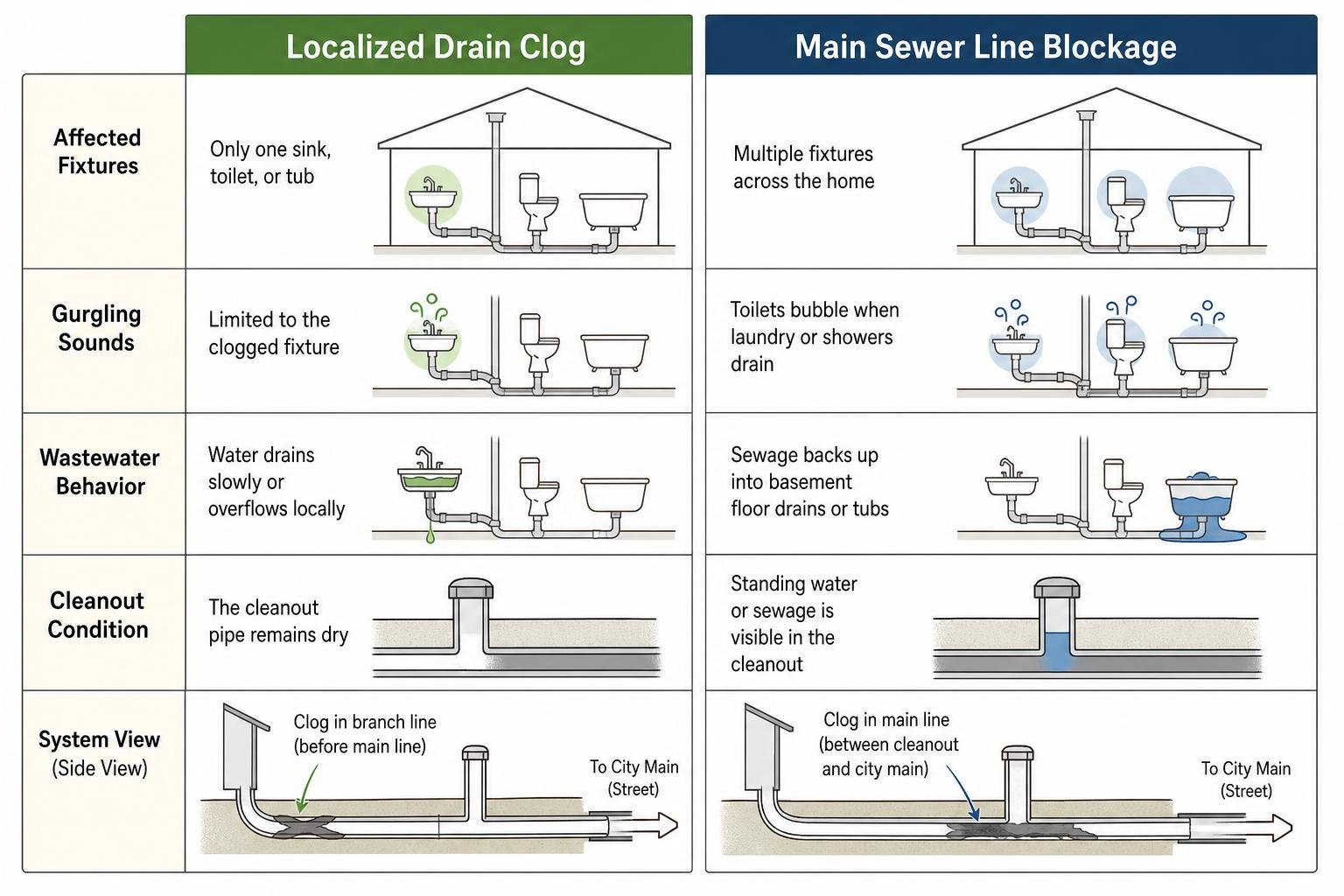
To help you distinguish between a simple, local clog and a major main line blockage, refer to the comparison table below:
| Feature | Localized Drain Clog | Main Sewer Line Blockage |
|---|---|---|
| Affected Fixtures | Only one sink, toilet, or tub | Multiple fixtures across the home |
| Gurgling Sounds | Limited to the clogged fixture | Toilets bubble when laundry or showers drain |
| Wastewater Behavior | Water drains slowly or overflows locally | Sewage backs up into basement floor drains or tubs |
| Cleanout Condition | The cleanout pipe remains dry | Standing water or sewage is visible in the cleanout |
How to Determine Clog Location Using Your Cleanout
Your cleanout is an excellent diagnostic tool. If you suspect a clog, put on safety glasses and heavy-duty rubber gloves, then slowly loosen the cleanout cap.
- If Water Spills Out or Stands in the Pipe: The blockage is downstream, meaning it lies between the cleanout and the city main under the street.
- If the Cleanout is Dry: The blockage is upstream, meaning it is located inside your home’s walls or under the floorboards before reaching the main lateral.
For a deeper dive into non-chemical diagnostics and clearing techniques, check out How To Clear Sewer Clean Out And Drain Without Chemicals?.
Who is Responsible for Clearing the Sewer Line Blockage?
A common question among homeowners in Salt Lake County and Davis County is who is responsible for paying to clear a blocked sewer line.
The rule of thumb is straightforward: the homeowner is responsible for the lateral sewer line from the house all the way to the property line (and often up to the connection at the city main). The local municipal utility company is only responsible for blockages and structural failures occurring within the main city sewer line itself.
How to Safely Clear and Maintain Your Sewer Cleanout
Maintaining your sewer line and keeping your cleanout clear can prevent major backups. If you are ready to tackle cleaning, check out our guide on dont get drained your step by step guide to cleaning your main sewer line.
Can I Clear a Sewer Cleanout Clog Myself?
For minor, soft blockages close to the cleanout, a DIY approach can sometimes work. You can rent a hand-crank or motorized drain auger (plumber’s snake) from a local hardware store in Layton or West Valley.
However, we strongly caution against using chemical drain cleaners. These harsh chemicals can sit in your pipes, generate extreme heat, and corrode your plumbing. In some cases, chemicals can even react with grease to form a solid, rock-hard mass that is nearly impossible to clear without professional excavation.
If you are dealing with a severe blockage, recurring backups, or tree root intrusions, it is always safest to call a licensed professional plumber.
Common Causes of Sewer Line Clogs
Understanding what causes these blockages is the first step in preventing them. To learn more about repairing damaged lines, read mainline mayhem tackling home sewer and sewage backup repairs.
- Tree Roots: The number one cause of sewer line failures in older Northern Utah neighborhoods. Tree roots naturally seek out moisture and can enter tiny cracks or loose joints in clay or cast-iron pipes, expanding until they completely block the flow.
- Flushable Wipes: Despite what the packaging claims, “flushable” wipes do not break down like standard toilet paper. They snag on pipe imperfections and create massive clogs.
- Cooking Grease: Pouring warm grease, oil, or fat down your kitchen sink is a recipe for disaster. As the grease cools, it solidifies inside your sewer lateral, catching other debris and narrowing the pipe over time.
- Pipe Collapse: Older clay or transit pipes can sag, shift, or completely collapse due to soil movement and age.
Immediate Steps to Take During a Sewer Emergency
If you experience a sudden, severe sewage backup in your home, follow these steps immediately to minimize water damage:
- Stop Using Water: Turn off all running faucets, appliances (like dishwashers and washing machines), and do not flush any toilets.
- Shut Off the Main Water Supply: If you cannot stop the water from running, locate your main water shutoff valve (usually in the basement, utility closet, or near the street) and turn it off.
- Open the Cleanout Carefully: Slowly loosen your outdoor cleanout cap to release the built-up pressure in the line, redirecting the backup outside rather than inside your home.
- Call an Emergency Plumber: Contact a professional team for rapid, 24/7 support.
For more emergency advice, check out dont get flooded a homeowners guide to main line backups.
Frequently Asked Questions about Sewer Cleanouts
How many cleanouts does a typical home have?
Most single-family homes have at least one main sewer cleanout located outside near the foundation. However, larger homes, properties with complex layouts, or homes built on sloped lots may have multiple cleanouts, including indoor stack cleanouts and additional access points near the property line.
What should I do if my home does not have a sewer cleanout?
Older homes built before the late 1970s often lack an outdoor sewer cleanout entirely. If your home does not have one, a professional plumber can install a new, modern PVC cleanout.
While installing an exterior cleanout typically costs between $600 and $2,000 depending on the depth of your sewer line, it is an excellent investment that quickly pays for itself by lowering future diagnostic and cleaning costs. To learn more about these expenses, read cleanout costs clogs what to know about your main sewer cleanout.
Why does water spill out when I open the cleanout cap?
If water or raw sewage spills out as soon as you loosen the cleanout cap, it means there is a complete blockage downstream (between the cleanout and the street). The standing water in the pipe is under pressure from gravity and the wastewater backed up from your home. Always stand to the side and wear protective gear when opening a cleanout cap.
Conclusion
Finding and maintaining your clean out for sewer is one of the most practical things you can do to protect your property from unexpected water damage. Whether you are located in Salt Lake City, Layton, Bountiful, or anywhere else in Northern Utah, keeping this access point clear and accessible ensures that any future plumbing issues can be resolved quickly and affordably.
At Honest Home Services, we are dedicated to providing reliable, honest, and high-quality plumbing support to our local communities. If you need help finding your sewer cleanout, suspect a main line blockage, or want to schedule a preventative camera inspection, we are here for you with 24/7 emergency services.
For more expert advice on maintaining your home’s plumbing, check out our detailed guide on cleanout clarity locating your homes main sewer line or contact us today to speak with a local professional!