

Why Pipe Repair in Salt Lake City Is More Urgent Than You Think
Pipe repair Salt Lake City homeowners need falls into a few clear categories. Here’s a quick overview to match your situation:
| Situation | Likely Solution |
|---|---|
| Dripping or leaking pipe | Spot repair or pipe clamp |
| Cracked or corroded sewer line | Trenchless CIPP lining |
| Burst pipe (emergency) | Shut off water, call a plumber immediately |
| Aging pipes (40+ years) | Full or partial repiping |
| Slab leak | Thermal imaging detection + targeted repair |
| Root intrusion in sewer line | Pipe bursting or lining |
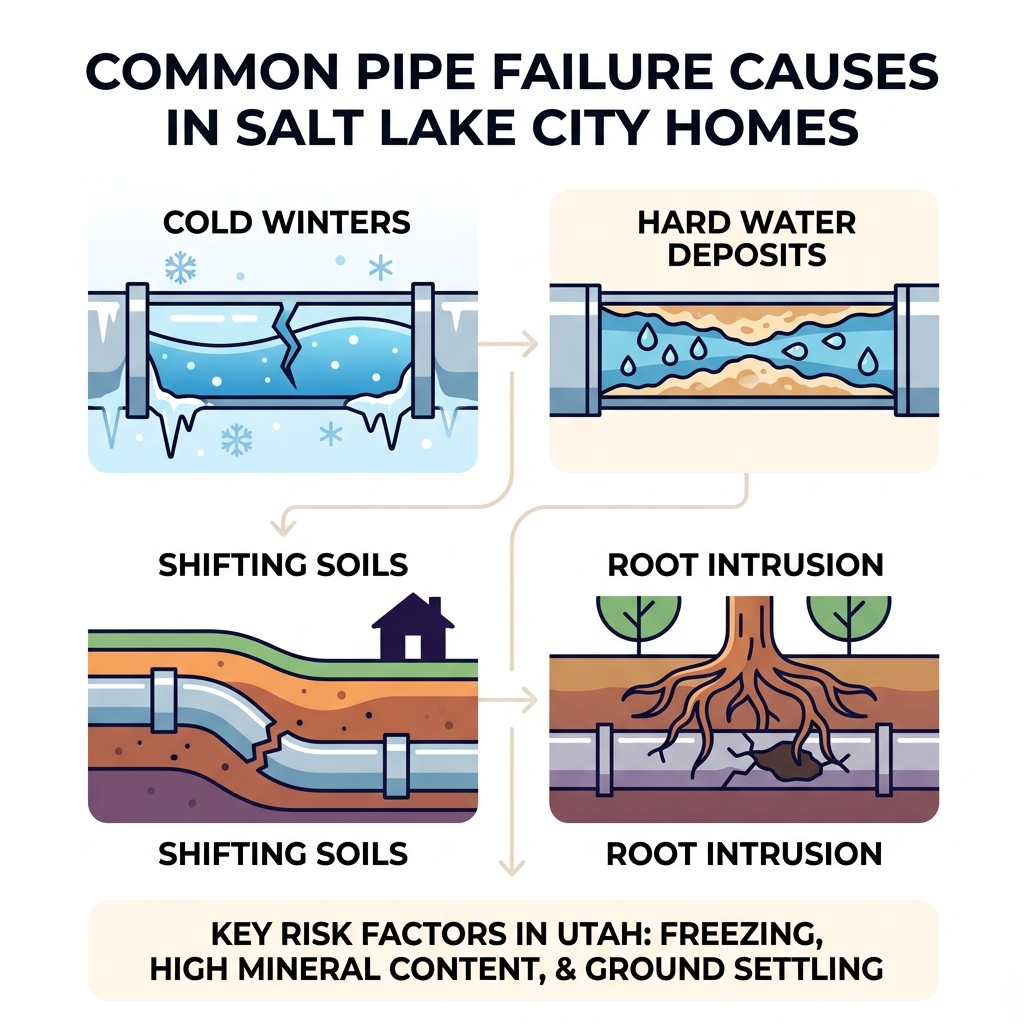
Salt Lake City’s cold winters create a serious risk for pipes. When water inside a pipe freezes, it expands and pushes outward — sometimes with enough force to split the pipe open entirely. Add in the area’s hard water, shifting soils, and older housing stock, and it’s easy to see why pipe problems are so common along the Wasatch Front.
The good news? Most pipe issues — even serious ones — can be fixed quickly with the right approach. Many repairs today don’t even require digging up your yard.
At Honest Home Services, we’ve spent over 20 years helping Utah homeowners and businesses solve exactly these problems, making us a trusted name for pipe repair in Salt Lake City and the surrounding areas. Whether you’re dealing with a slow leak or a full-blown plumbing emergency, we’ll walk you through your options clearly and honestly.
Learn more about pipe repair salt lake city:
Identifying Signs You Need Pipe Repair in Salt Lake City
Living in Northern Utah means our plumbing systems work overtime. Between the radical temperature swings and the mineral-heavy water, your pipes are under constant stress. Recognizing the early warning signs of trouble can be the difference between a simple patch and a $10,000 restoration project.
The most obvious sign is water damage. If you see yellow or brown staining on your ceiling or bubbling paint on your walls, you likely have a slow leak. However, many signs are more subtle:
- Rust and Corrosion: If you can see your pipes (in the basement or under sinks), look for visible rust, green “furry” buildup (verdigris), or flaking metal. These are indicators that the pipe wall is thinning.
- Low Water Pressure: If your morning shower has turned into a sad trickle, it could be a sign of a leak or significant mineral buildup restricting flow.
- Unexplained High Water Bills: If your usage hasn’t changed but your bill is climbing, water is escaping somewhere.
- Foul Odors and Mold: A musty smell or the sudden appearance of black mold in a corner usually points to trapped moisture from a leaking pipe.
- Noisy Pipes: Banging, whistling, or rattling sounds (often called “water hammer”) can indicate loose fittings or pressure issues that lead to bursts.
For more detailed information on pinpointing these issues, check out our guide on Salt Lake City leak detection and our overview of Salt Lake City pipe repair.
How to Detect Hidden Leaks Requiring Pipe Repair Salt Lake City
Not all leaks happen where you can see them. In many Utah homes, especially those built on concrete slabs, pipes run underneath the foundation. These are known as slab leaks, and they are notoriously destructive.
To find these “invisible” problems, we use advanced technology:
- Thermal Imaging: Infrared cameras allow us to see temperature differences behind walls or under floors. A hot water leak under a slab will show up as a glowing bloom on our screen.
- Electronic Acoustic Detectors: These are essentially high-powered microphones that “listen” for the hissing sound of pressurized water escaping a tiny crack.
- Physical Clues: Keep an eye out for “warm spots” on your floor (if a hot water line is leaking) or the sound of running water even when all faucets are off.
If you suspect a leak is hiding in your walls, you can learn more about locating pipes behind drywall to help narrow down the search area.
Modern Pipe Repair Salt Lake City: Trenchless vs. Traditional
In the old days, if your main sewer line broke, we had to bring in a backhoe and dig a giant trench through your prize-winning rose bushes or expensive driveway. Thankfully, those days are largely over. Modern pipe repair Salt Lake City services now favor “trenchless” technology.
Cured-In-Place Pipe (CIPP) Lining
CIPP is essentially “creating a pipe within a pipe.” We insert a flexible liner saturated with epoxy resin into the damaged pipe. Once in place, we inflate it and use heat or UV light to cure the resin. The result is a seamless, structural pipe that is often stronger than the original. This is a fantastic solution for mainline sewer upgrades.
Pipe Bursting
If the old pipe is too collapsed for lining, we use pipe bursting. We pull a heavy “bursting head” through the old line, breaking it apart while simultaneously pulling a brand-new HDPE (high-density polyethylene) pipe into the space behind it.
Pipe Repair Sleeves
For smaller, localized damage, we can use sewer pipe repair sleeves to patch a specific spot without needing to reline the entire length of the run.
Why Trenchless is the Best Choice for Pipe Repair Salt Lake City
Why do we recommend trenchless methods to our neighbors in Salt Lake, Davis, and Summit counties?
- Minimal Disruption: We usually only need two small access pits. Your landscaping, driveway, and porch stay intact.
- Longevity: Most CIPP and HDPE solutions have a lifespan of over 50 years.
- Speed: Many trenchless jobs are completed in a single day, meaning your water or sewer service is back up and running by dinner time.
- Cost-Effectiveness: While the technology itself is advanced, you save thousands of dollars by not having to pay for excavators or the cost of replacing your landscaping and concrete afterward.
Before any repair, we always perform a video pipe inspection to see exactly what we’re dealing with. This ensures we don’t just put a “band-aid” on a problem that requires a more robust solution.
Understanding Costs and Materials for Utah Homes
The type of pipe in your home dictates how long it will last and how much a repair will cost. In the Salt Lake Valley, we see a wide variety of materials.
| Material | Pros | Cons | Best Used For |
|---|---|---|---|
| Copper | Durable, bacteria-resistant | Expensive, can pit due to hard water | Main water lines, indoor supply |
| PEX | Flexible, freeze-resistant, cheap | Not for outdoor/UV use | Modern residential repiping |
| PVC | Cheap, won’t corrode | Can crack under high pressure or heat | Sewer and drain lines |
| CPVC | Heat resistant | Can become brittle over 20+ years | Hot water supply lines |
Utah’s soil and water quality play a huge role here. Our hard water is full of minerals that can lead to scaling and internal corrosion. Furthermore, certain areas like Liberty Wells or Rose Park have shifting soils that can snap rigid pipes like old cast iron or clay. If your home is over 40 years old, it might be time to consider if you need a re-pipe.
Factors Affecting Pipe Repair Pricing
When we provide an estimate for pipe repair salt lake city, several factors influence the final number:
- Pipe Depth: The deeper the pipe (especially for main lines), the more labor is involved.
- Material Type: Copper repairs are generally more expensive than PEX due to the cost of the metal.
- Repair Method: Trenchless lining has a higher upfront tech cost but lower restoration costs compared to traditional digging.
- Accessibility: Is the leak in an open basement or buried under a concrete foundation?
- Emergency Timing: 24/7 emergency support ensures your home is protected at 3:00 AM on a Sunday, but it may involve different labor rates than a scheduled Tuesday afternoon visit.
We believe in upfront pricing, so you’ll always know the cost before we start. This ensures effective pipe leak repair without the “sticker shock.”
Emergency Response and Winter Prevention Strategies
Winter in Utah is beautiful, but it’s the “final boss” for plumbing. When temperatures drop below freezing, water in uninsulated pipes can turn to ice. Because water expands by about 9% when it freezes, it exerts thousands of pounds of pressure against the pipe wall until—pop—you have a flood.
What to do if a pipe bursts:
- Shut off the main water valve immediately. Every adult in your home should know where this is.
- Turn off the electricity if the water is near outlets or your breaker box.
- Open faucets to drain the remaining water in the system.
- Call us for 24/7 emergency support.
If you are currently dealing with a frozen line that hasn’t burst yet, check our guide on unfreezing main water lines for safe ways to restore flow.
Preventive Maintenance for Salt Lake City Residents
An ounce of prevention is worth a gallon of water in your basement. Follow these tips to avoid the need for emergency pipe repair salt lake city:
- Insulate Pipes: Use foam sleeves on pipes in unheated areas like crawlspaces or garages.
- Drip Your Faucets: When the forecast calls for sub-zero temperatures, leave a tiny drip on faucets located on exterior walls. This relieves the pressure buildup that causes bursts.
- Know Your Pressure: High water pressure (above 80 psi) stresses your joints. We can install a pressure regulator to keep things safe.
- Annual Inspections: Having a professional look at your fittings and water heater once a year can catch a “weeping” joint before it becomes a spraying one.
- Learn the Basics: Read up on how to prevent frozen pipes to prep your home for the Wasatch winter.
Frequently Asked Questions about Pipe Repair
What is the most common cause of burst pipes in Salt Lake City?
Freezing temperatures are the #1 cause. However, aging infrastructure and high water pressure are close seconds. In older neighborhoods like The Avenues, simple corrosion over 50+ years often weakens the pipe until it can no longer hold the city’s water pressure.
How long does trenchless pipe lining last?
Cured-in-place pipe (CIPP) lining is designed to be a permanent solution. Most manufacturers and installers cite a lifespan of 50 years or more. Because the epoxy resin is resistant to corrosion and root intrusion, it often outlasts the original pipe material.
Is it better to repair or replace old copper pipes?
It depends on the condition. If you have a single “pinhole” leak caused by a specific flaw, a repair is fine. However, if the copper is showing signs of widespread pitting or thinning (common in Utah due to hard water), you’re better off replacing that section—or the whole house—with PEX to avoid a “Whack-A-Mole” situation with future leaks.
Conclusion
At Honest Home Services, we understand that needing a pipe repair salt lake city is stressful. Whether you’re in Bountiful, Draper, or right in the heart of Salt Lake City, our goal is to provide a solution that is as non-invasive and affordable as possible.
We pride ourselves on being a local, family-owned business that treats your home like our own. We offer 24/7 emergency support because we know that pipes don’t wait for business hours to break. With our guaranteed customer satisfaction and expert technicians, you can rest easy knowing your plumbing is in good hands.
Don’t wait for a small drip to become a major disaster. Schedule Salt Lake City Plumbing Services with us today, and let’s make sure your home’s “arteries” are flowing perfectly!