

When Your Yard Turns Into a Swamp: What You Need to Know About Water Main Line Repair
Water main line repair is the process of fixing or replacing the underground pipe that carries pressurized water from the city’s supply into your home. If your yard is suddenly wet and soggy for no obvious reason, this is likely the culprit.
Quick answer — here’s what to do if you suspect a water main leak:
- Check your water meter. Turn off all fixtures and watch the meter. If it’s still spinning, you have a leak.
- Look for signs. Soggy yard patches, low water pressure, discolored water, or a spike in your water bill are the most common warnings.
- Shut off your main valve if there is active flooding or a sudden pressure loss.
- Call a licensed plumber. Water main line work requires permits and professional equipment — this is not a DIY job.
- Do not ignore it. A slow leak can wash away soil, damage your foundation, and waste thousands of gallons of water every day.
Most main water lines last around 50 years, but older homes with galvanized steel or lead pipes can start failing much sooner — especially in Utah, where freeze-thaw cycles and shifting soils put extra stress on buried pipes.
The good news: not every problem means tearing up your whole yard. Many repairs are targeted and fast. But you need a clear diagnosis first.
At Honest Home Services, we’ve spent over 20 years helping Northern Utah homeowners tackle water main line repair — from small spot fixes to full replacements — with upfront pricing and no surprises. We’re here to walk you through exactly what’s happening under your yard and what it takes to fix it right.
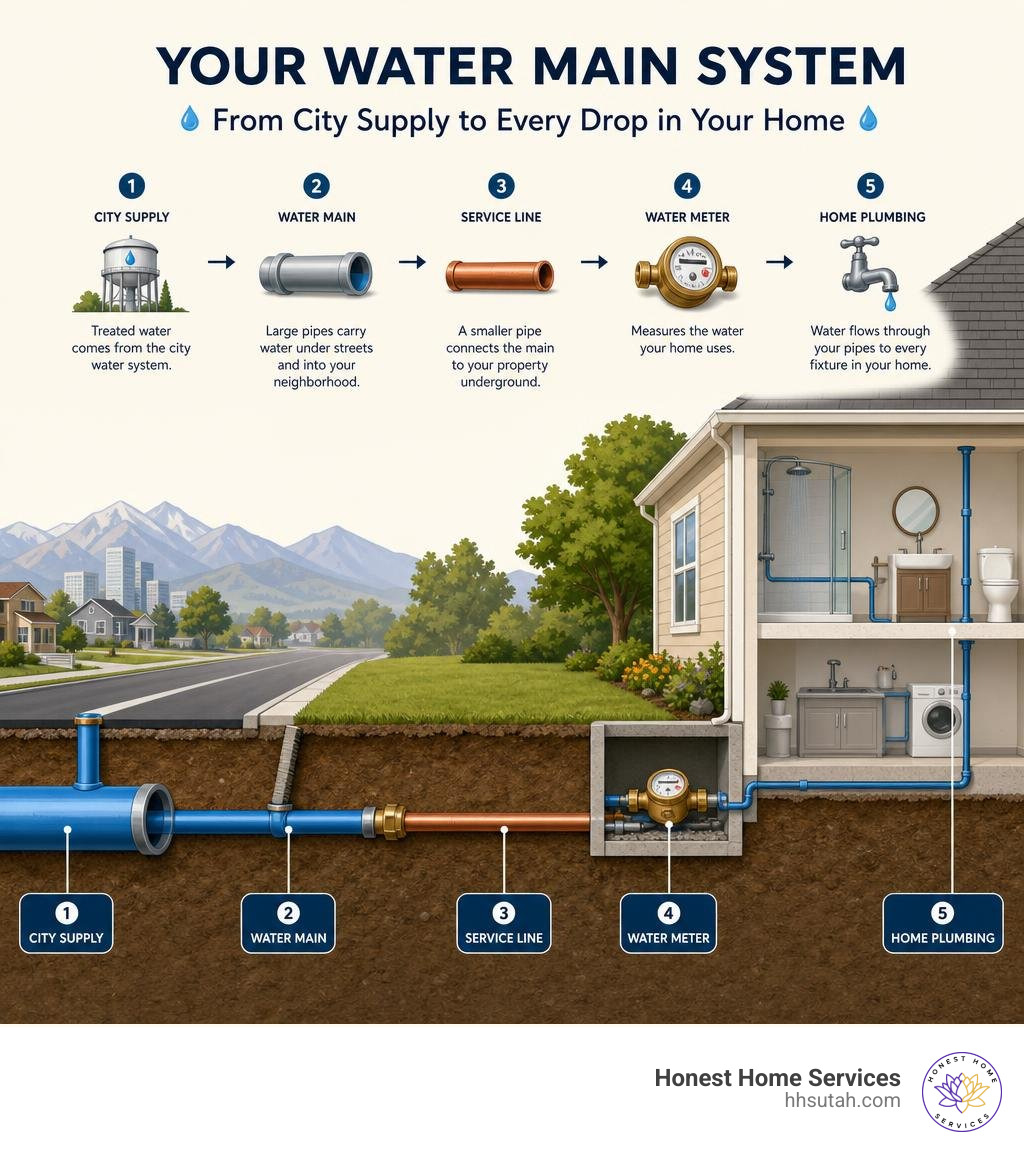
Water main line repair word guide:
The Ultimate Guide to Water Main Line Repair
Dealing with a broken water line can feel overwhelming. It is buried deep beneath your lawn, out of sight, and usually out of mind—until it decides to turn your manicured grass into a marshland. Understanding how this system works and how to address issues early can save you thousands of dollars in property damage.

Signs Your Home Needs Urgent Water Main Line Repair
Your main water line operates under constant pressure. When a crack or break occurs, that pressurized water has to go somewhere. While a swampy yard is the most obvious sign, there are several other indicators that you need professional help immediately.
- A Sudden Drop in Water Pressure: If your morning shower suddenly feels like a sad drizzle and you notice this low pressure throughout the entire house, your main line is likely losing water before it ever reaches your taps.
- Soggy, Unexplained Wet Spots in Your Yard: If it hasn’t rained in days but you have a localized swamp on your lawn, water is bubbling up from the buried line.
- Discolored, Rusty, or Muddy Water: A cracked pipe allows dirt and soil to enter your home’s water supply. If your tap water looks brown or yellow, your main line’s structural integrity is compromised.
- A Shocking Increase in Your Water Bill: A hidden water main leak can waste thousands of gallons of water a day. If your utility bill spikes dramatically without a change in your household usage, the underground pipe is likely leaking.
- Sounds of Running Water: If you hear water constantly rushing or hissing behind your walls or under your floors when all faucets are completely shut off, water is actively escaping the line.
If you notice any of these warning signs, check out When Your Main Line Breaks: A Homeowner’s Emergency Guide to learn the immediate steps you should take to protect your property before our team arrives.
What Causes Underground Water Line Failures?
Why do these heavy-duty pipes fail in the first place? In Northern Utah, our unique climate and soil conditions create a perfect storm for underground plumbing issues. Here are the most common causes of main water line failures:
- Freeze-Thaw Cycles: Utah winters are beautiful, but they are incredibly harsh on buried infrastructure. As the ground freezes and thaws, the soil shifts and expands. This ground movement puts immense physical stress on buried pipes, causing joints to loosen and older materials to crack.
- Tree Root Intrusion: Trees love water, and their roots are experts at finding it. Even a tiny, microscopic crack in an old pipe joint will release moisture. Nearby tree roots will grow toward that moisture, wrap around the pipe, and eventually force their way inside, causing massive blockages and structural failure.
- Soil Chemistry and Corrosion: The soil in areas like Salt Lake County can be highly corrosive. Over decades, aggressive soil chemistry eats away at metal pipes, causing them to thin, rust, and eventually leak.
- Pipe Age and Material Wear: No pipe lasts forever. If your home was built before the mid-1980s, you might still have original galvanized steel or lead lines. These outdated materials become brittle and corrode internally over time, severely restricting water flow and leading to frequent failures.
If you suspect your system is suffering from any of these issues, our team at Honest Home Services can perform a comprehensive inspection using our specialized Mainline Plumbing Service to pinpoint the exact location and cause of the failure.
Repairing vs. Replacing Your Water Service Line
When our licensed technicians diagnose a water main issue, the first question homeowners ask is: Can we just patch it, or do we have to replace the whole thing?
The answer depends on the age of your pipe, the material it is made of, and the overall extent of the damage.
| Feature / Factor | Spot Repair | Full Pipe Replacement |
|---|---|---|
| Typical Cost | $354 – $1,696 | $2,000 – $5,000+ |
| Average Lifespan | Temporary fix for old pipes; long-term for newer pipes | 50+ years (with modern materials) |
| Yard Disruption | Minimal (excavation limited to the leak site) | Variable (trenchless options minimize digging) |
| Best Used For | Tree root punctures or localized physical damage on a young pipe | Corroded galvanized steel, lead lines, or systemic cracking |
Sectional Repair vs. Full Water Main Line Repair and Replacement
A spot repair (or sectional repair) involves excavating only the specific area where the leak is located, cutting out the damaged section of the pipe, and splicing in a new, durable piece of piping. This is a fantastic, cost-effective option if your pipe is relatively new (such as copper or modern PEX) and the damage was caused by an isolated event, like a rogue tree root or accidental damage during landscaping.
However, if your pipe is made of galvanized steel or lead, a spot repair is not an option. In fact, in many municipalities, it is legally required to perform a full replacement if a lead or galvanized line fails. These materials degrade systemically; patching one spot simply increases the pressure on the next weakest link, leading to another leak just weeks or months later.
To help you weigh the financial aspects of this decision, read our detailed guide on Don’t Get Soaked: Understanding Water Main Replacement Costs.
Modern Materials: Copper, PEX, and HDPE
If you do need a full replacement, you will be happy to know that modern plumbing materials are incredibly durable, flexible, and completely resistant to the corrosion issues that plagued older homes.
- Copper: The gold standard of plumbing for decades. Copper is highly durable, naturally antibacterial, and has an incredible track record, often lasting 50 to 70+ years. However, it is rigid, expensive, and can still be vulnerable to highly acidic soils.
- PEX (Cross-linked Polyethylene): Specifically, high-quality options like Wirsbo AquaPEX have revolutionized the industry. PEX is incredibly flexible, meaning it can expand slightly if water freezes inside it, making it highly resistant to winter bursts. It does not rust, resists scale buildup, and can be pulled through tight spaces with minimal digging.
- HDPE (High-Density Polyethylene): This material is incredibly tough, flexible, and comes in long, continuous rolls. Because it requires fewer joints and fittings underground, the risk of future leaks at connection points is virtually zero. It is highly favored for trenchless installations.
Understanding these material options is key to making an informed decision. You can learn more about how material choices impact your bottom line in our resource on Uncovering the Cost of Water Main Line Repair.
If you are looking for local experts to handle these upgrades, our team at Honest Home Services is ready to help homeowners throughout Salt Lake City and Davis County with professional water main replacement.
Costs, Responsibilities, and the Repair Process
No one likes unexpected expenses, which is why we believe in complete transparency when it comes to the logistics, pricing, and execution of your water main service.

Understanding Water Main Repair Costs and Timelines
Let’s talk numbers. As of June 2026, the cost of water main line repair can vary widely based on the depth of your pipe, the excavation methods required, and your local municipal codes.
- Average Repair Cost: The typical cost to repair a localized section of a main water line ranges from $354 to $1,696, with a national average of $1,025.
- Average Replacement Cost: Replacing the entire line from the street to your home averages around $2,000, but can climb higher depending on the distance and excavation challenges. Prices typically range from $50 to $250 per linear foot.
- Labor Rates: Licensed plumbers generally charge between $70 and $120 per hour for main line work. If heavy machinery is required, excavator operators charge an average of $120 to $150 per hour for trenching.
- Timelines: A standard spot repair usually takes 4 to 8 hours once the pipe is accessed. A complete water main replacement typically takes 1 to 2 days, plus additional time for municipal inspections and landscaping restoration.
For comparison with other major underground utility repairs, you can read about Main Sewer Line Clog Repair Cost.
If you live in the northern suburbs, including Clearfield and Layton, our team is always nearby to provide prompt, professional service.
Who is Responsible: Homeowner vs. City Utility
A common source of confusion is determining who is responsible for paying for the repair.
As a general rule of thumb:
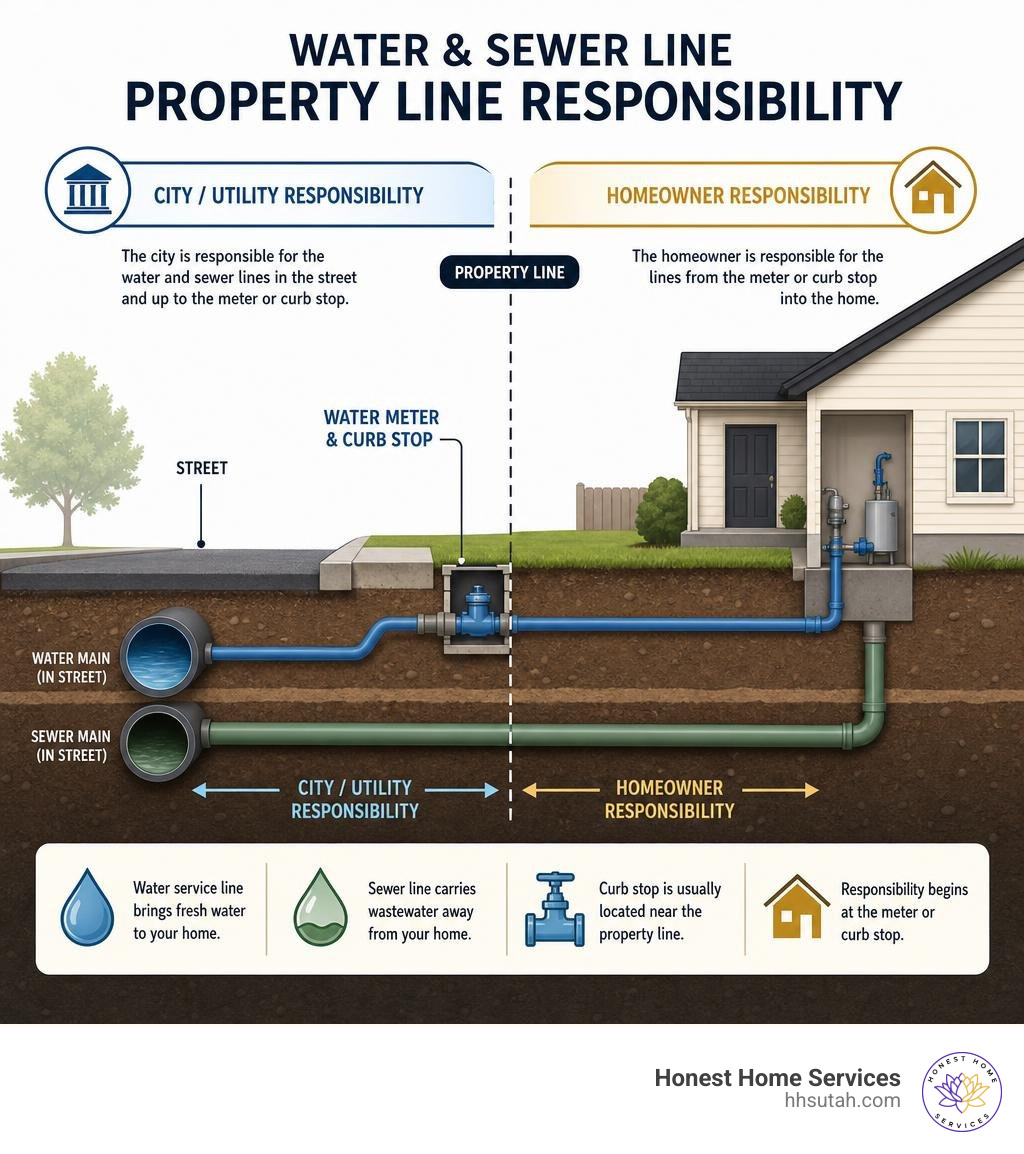
- The City/Utility Company is responsible for the main water distribution line running down the middle of the street, as well as the connection up to the water meter or the curb stop valve (usually located near your property line).
- The Homeowner is responsible for the entire length of the water service pipe that runs from the curb stop valve (or meter pit) all the way into the home’s mechanical room. This includes any valves, fittings, and pressure regulators inside your property boundary.
Before any excavation begins, our team will coordinate with local utility locating services by calling 811 to mark out underground gas, electric, and fiber optic lines, ensuring the job is done safely and legally. Homeowners can also learn more about safe digging requirements through Utah 811 Blue Stakes. For homeowners managing multiple utility connections, understanding these boundaries is crucial, especially when coordinating projects like Connecting to Sewer Main Line.
If you need emergency assistance in your specific neighborhood, whether you are in Kaysville, Farmington, or Bountiful, Honest Home Services is just a phone call away to restore your water service quickly and safely.
Frequently Asked Questions About Water Main Failures
What are the risks of ignoring a water main leak?
Ignoring an underground water leak is highly risky. Over time, pressurized water will wash away the supporting soil beneath your yard, driveways, and sidewalks, leading to sudden sinkholes or collapsed concrete. Even worse, if the leak is close to your house, it can saturate the soil surrounding your foundation, leading to basement flooding, severe structural cracking, and toxic mold growth.
To learn more about preventing water damage from underground backups, read Don’t Get Flooded: A Homeowner’s Guide to Main Line Backups.
How deep are residential water main lines buried?
In Northern Utah, water main lines must be buried below the local frost line to prevent the water inside them from freezing during freezing winter temperatures. Typically, this means your water line is buried at least 3 to 4 feet deep. In colder, high-elevation areas like Park City, they may be buried 5 feet deep or more.
Can homeowners insurance cover water main repairs?
Standard homeowners insurance policies typically do not cover water main repairs or replacements. Insurance is designed to cover sudden, accidental damage (like a pipe bursting inside your wall), whereas underground service line failure is usually classified as normal “wear and tear” or gradual deterioration. However, many insurance providers offer optional “Service Line Coverage” riders for a small monthly fee. We highly recommend checking with your insurance agent to see if you have this valuable add-on.
Conclusion
A swampy yard or a sudden drop in water pressure is never a welcome surprise, but resolving a main water line issue doesn’t have to be a nightmare. By identifying the signs early, choosing durable modern materials like PEX or HDPE, and working with a licensed professional, you can protect your home’s foundation and secure a reliable water supply for the next 50 years.
At Honest Home Services, we are proud to offer dependable, high-quality, and fairly priced plumbing support throughout Northern Utah, including Salt Lake City, Davis County, and the surrounding mountain communities. Whether you need an emergency repair in the middle of the night or want to schedule a preventive diagnostic check, our local, expert technicians are ready to help.
Don’t let a hidden leak damage your property. If you suspect your water or sewer lines are compromised, contact us today to schedule an expert inspection, or read more about our local services at Salt Lake City Sewer Mainline Repair.