
Is Your Sewer Main Line Toast? Here’s What Replacement Actually Costs
The cost of replacing sewer main line typically falls between $3,000 and $15,000 for most homeowners, with the national average sitting around $3,319 to $10,000 depending on several key factors.
Here’s a quick snapshot of what to expect:
| Scenario | Estimated Cost |
|---|---|
| Average full replacement | $3,000 – $10,000 |
| Per linear foot (traditional) | $50 – $250 |
| Per linear foot (trenchless) | $60 – $250 |
| Simple shallow job (10 ft, PVC) | $500 – $2,500 |
| Complex or deep job (40+ ft) | $2,000 – $10,000+ |
| Worst-case (long runs, obstacles) | Up to $30,000 |
A failing sewer line is one of those problems that sneaks up on you. One day it’s a slow drain. Then it’s a foul smell in the yard. Before you know it, raw sewage is backing up into your basement. Not fun.
The trouble is, most homeowners have no idea what a replacement actually costs until they’re already in the middle of a plumbing emergency — which is the worst time to be researching prices.
This guide breaks it all down clearly, so you can plan ahead instead of panic.
At Honest Home Services, we’ve spent over 20 years helping Northern Utah homeowners navigate the real cost of replacing sewer main line — from simple PVC swaps to complex trenchless jobs under driveways. We’ll walk you through everything you need to know to make a smart, informed decision.
Learn more about cost of replacing sewer main line:
What Influences the Cost of Replacing Sewer Main Line?
When we give an estimate for a sewer project in Salt Lake City or Draper, we aren’t just pulling numbers out of a hat. Several physical and regulatory factors dictate the final price.
- Pipe Depth: This is a major one. In Northern Utah, sewer lines are typically buried 5 to 6 feet deep to stay below the frost line. However, some lines can be as deep as 8 or 9 feet. The deeper the pipe, the more labor and heavy equipment are required. Depths over 9 feet can actually double the excavation costs due to the need for shoring (to prevent trench collapses) and larger machinery.
- Line Length: Most residential sewer runs are between 40 and 75 feet. Since materials and labor are often priced by the foot, a longer yard means a bigger bill. In rural parts of our service area, like Tooele or parts of Davis County, lines can exceed 80 or 100 feet.
- Soil Conditions: Rocky soil or heavy clay—both common in the Wasatch Front—are harder to dig through than sandy soil. If we hit large boulders or underground water, the time and equipment costs go up.
- Permit Fees and Inspections: You can’t just dig a hole and swap a pipe. Most municipalities in Utah require a permit for sewer work, which can cost anywhere from $150 to $1,000. After the work is done, a city inspector must verify the connection before we can bury the pipe.
- Excavation Labor: Traditional digging requires a crew and an excavator. Labor rates usually range from $45 to $200 per hour depending on the complexity of the job.
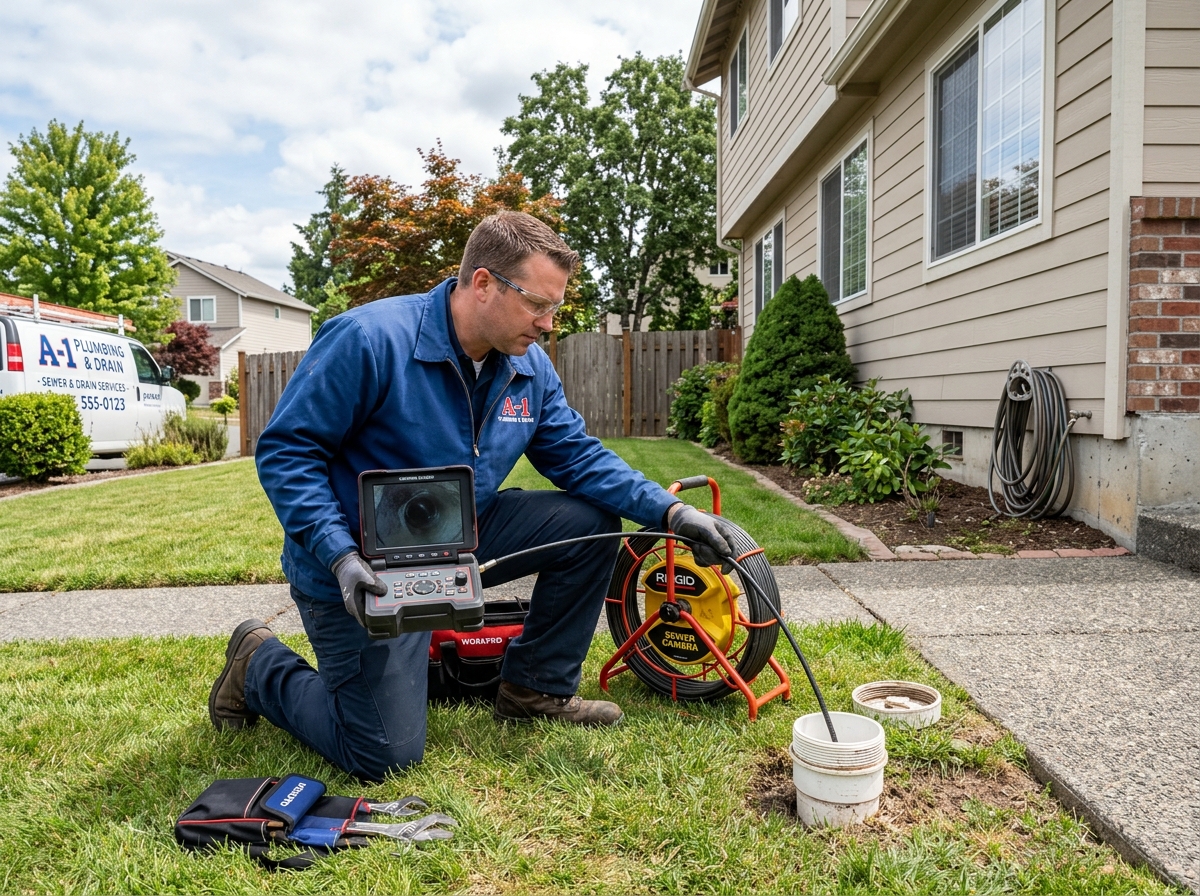
One of the most important steps in controlling these costs is a professional assessment. For more details, check out our mainline inspection services, which allow us to see exactly what’s happening underground before a single shovel hits the dirt.
Average Cost of Replacing Sewer Main Line per Linear Foot
If you are looking for a “rule of thumb,” most replacements cost between $50 and $250 per linear foot.
- Standard PVC Replacement: Usually on the lower end ($50–$100/ft) if the pipe is shallow and easily accessible.
- Complex Excavation: Can reach $150–$250/ft if we have to dig through concrete, navigate around other utilities, or deal with extreme depths.
- Partial Replacement: If only a 10-foot section is damaged, you might pay around $50 per foot for the pipe, but the “setup” costs for the machinery and permits will still make the total project cost at least $1,500 to $3,000.
For a deeper dive into these numbers, read our main sewer line replacement cost guide.
Additional Hidden Expenses to Budget For
The pipe itself is only one part of the equation. Homeowners are often surprised by the “restoration” phase of the project.
- Utility Marking: Before we dig, we must have Blue Stakes of Utah mark your gas, water, and power lines. While the marking is usually free, hitting an unmarked private line can be an expensive setback.
- Landscaping Restoration: Traditional digging creates a “trench” through your yard. Replacing sod, bushes, or sprinkler systems can add $500 to $2,500 to your total investment.
- Driveway and Hardscape Repair: If your sewer line runs under a concrete driveway or patio, we have to cut the concrete, dig, and then pour new concrete later. This can add $1,500 to $4,000 to the bill.
- Municipal Inspections: Some cities charge a separate fee for the final “sewer tap” inspection to ensure the connection to the city main is perfect.
Trenchless vs. Traditional: Comparing Replacement Methods
In the old days, the only way to fix a sewer line was to dig a massive trench from the house to the street. Today, we have “trenchless” options that save your rose bushes and your sanity.
| Feature | Traditional Excavation | Pipe Bursting (Trenchless) | CIPP Lining (Trenchless) |
|---|---|---|---|
| Digging Required | Full-length trench | Two small access pits | One small access point |
| Average Cost | $3,000 – $12,000 | $6,000 – $12,000 | $6,000 – $12,000 |
| Duration | 3 – 5 days | 1 – 2 days | 1 day |
| Best For | Collapsed/back-pitched pipes | Full replacement of old pipes | Cracked/leaking pipes |
| Property Impact | High (yard/driveway destroyed) | Minimal | Almost zero |
Trenchless vs. Traditional Cost of Replacing Sewer Main Line
At first glance, trenchless methods like Pipe Bursting ($60–$200/ft) or CIPP (Cured-In-Place Pipe) Lining ($90–$250/ft) might seem more expensive than a basic dig-and-replace job. However, the “upfront investment” often saves you money in the long run.
Think about it: if a traditional dig saves you $2,000 on plumbing but costs you $5,000 to replace your custom stamped-concrete driveway, you’ve actually lost money. Trenchless methods preserve your hardscaping and landscaping, often resulting in a lower total project cost.
For more on how these modern solutions work, see our guide on sewer pipe repair sleeves.
When Traditional Excavation is Unavoidable
As much as we love trenchless technology, it isn’t magic. There are times when we have to dig:
- Collapsed Pipes: If the pipe has completely pancaked, we can’t pull a new liner or a bursting head through it.
- Severe Offsets: If the ground has shifted so much that the pipe sections no longer align, trenchless methods won’t fix the “jump” in the line.
- Back-Pitching: If your house has settled and the pipe now runs “uphill,” we have to excavate to reset the slope so gravity can do its job.
- Utility Interference: If other utility lines are crossed directly over the sewer, “bursting” a new pipe could damage them.
How Pipe Materials Impact Your Total Investment
What your pipe is made of—and what we replace it with—changes the cost of replacing sewer main line.
- PVC (Polyvinyl Chloride): The modern gold standard. It’s affordable (about $4.50 per linear foot for the material), incredibly durable, and smooth, which prevents clogs. It can last 50 to 100 years.
- ABS (Acrylonitrile Butadiene Styrene): Similar to PVC but black in color. It’s slightly more expensive (around $6 per foot) and very common in newer Utah homes.
- Cast Iron: You’ll mostly find this in older homes in the Avenues or Liberty Park. It’s heavy, expensive ($50+ per foot), and prone to rusting over time. We almost always replace this with PVC.
- Copper: Rare for main sewer lines due to the extreme cost ($80–$90 per foot), but it’s sometimes used in high-end commercial applications or specific residential areas. It lasts forever but is rarely worth the premium for a standard home.
Upgrading your materials now prevents future headaches. Check out more about mainline sewer upgrades to see which material fits your home’s needs.
Red Flags: When to Choose Replacement Over Repair
How do you know if you need a full replacement or just a simple repair? Sometimes the signs are subtle, and sometimes they are… well, messy.
- Recurring Clogs: If you have to call a plumber to snake your drain every 3 to 6 months, you don’t have a clog problem; you have a pipe problem. Usually, this means tree roots have taken over or the pipe has structurally failed.
- The “Fertilizer” Effect: Is there a patch of grass in your yard that is greener and grows faster than the rest? That’s not luck—that’s sewage acting as a nutrient-rich fertilizer for your lawn. It’s a dead giveaway of a leak.
- Foul Odors: A healthy sewer system is airtight. If you smell rotten eggs (sewer gas) in your basement or yard, there’s a breach in the line.
- Foundation Cracks or Sinkholes: If a sewer line leaks long enough, it washes away the soil under your home. This can lead to foundation settling or literal holes opening up in your yard.
- Pipe Age: If your home was built before 1970 and still has the original clay or cast iron pipes, they are likely reaching the end of their 50-year lifespan.
If you’re noticing these signs, don’t wait for a total collapse. Read our guide on main line clogs to understand the progression of the problem, or learn what to do when things go south in our sewer backup guide.
Frequently Asked Questions about Sewer Replacement
Is sewer line replacement covered by homeowners insurance?
Standard policies usually do not cover sewer line replacement caused by “wear and tear” or age. However, if the damage was sudden and accidental (like an explosion or a third-party contractor hitting the line), you might have a claim. Many homeowners in Salt Lake County add a “Service Line Utility” rider to their insurance for about $40–$160 a year, which does cover these costs. It’s worth checking your policy!
How long does a new sewer main line typically last?
If we install a new PVC or HDPE (High-Density Polyethylene) line, you can expect it to last 50 to 100 years. These materials are resistant to the corrosion and root intrusion that destroyed the clay and cast iron pipes of the past. Trenchless CIPP liners are typically rated for a 50-year lifespan.
Do I need a permit for sewer line replacement?
Yes, absolutely. In every city we service—from Layton to Saratoga Springs—a permit is required. This ensures the work meets local building codes and that the waste is being disposed of safely. At Honest Home Services, we handle the permitting process for you so you don’t have to deal with the municipal paperwork.
Conclusion
Dealing with the cost of replacing sewer main line is never a “fun” way to spend a weekend, but it is an essential investment in your home’s health and value. Whether you’re in Salt Lake City, West Valley, or Park City, the key is to catch the problem early with a camera inspection before a small leak becomes a major excavation project.
At Honest Home Services, we pride ourselves on being the local experts Northern Utah trusts. We provide fair, upfront pricing and guaranteed satisfaction, ensuring your sewer project is handled with the expertise it deserves. Don’t let a “toast” sewer line ruin your home—schedule your Salt Lake City sewer mainline repair today and let us get things flowing smoothly again.