

Why Water Main Line Replacement Costs Matter to Utah Homeowners
The cost to replace water main line to house typically ranges from $1,500 to $12,000, with most homeowners paying between $2,000 and $5,000 for a standard replacement. Here’s what drives that price:
- Length of pipe: $50-$250 per linear foot
- Installation method: Trenchless ($75-$150/ft) vs. Traditional trenching ($175-$225/ft)
- Pipe material: PEX ($0.40-$2/ft), PVC ($0.50-$5/ft), Copper ($2-$10/ft)
- Labor costs: 35%-60% of total project
- Permits and inspections: $100-$500
- Additional costs: Landscaping restoration, valve replacement, driveway repair
A sudden drop in water pressure, unexplained wet spots in your yard, or a jump in your water bill are often the first signs that your underground water main is failing. Your home’s main water line carries fresh water from the city supply, and when it fails, the damage can escalate quickly. A small leak today can mean a flooded basement or a sky-high water bill tomorrow. Understanding replacement costs helps you budget wisely and act before an emergency.
With over 20 years of experience, Honest Home Services has helped countless Northern Utah homeowners manage the cost to replace water main line to house with transparent pricing and guaranteed workmanship. We understand that unexpected plumbing expenses can be a strain, so we’re committed to providing clear estimates and quality work that lasts.
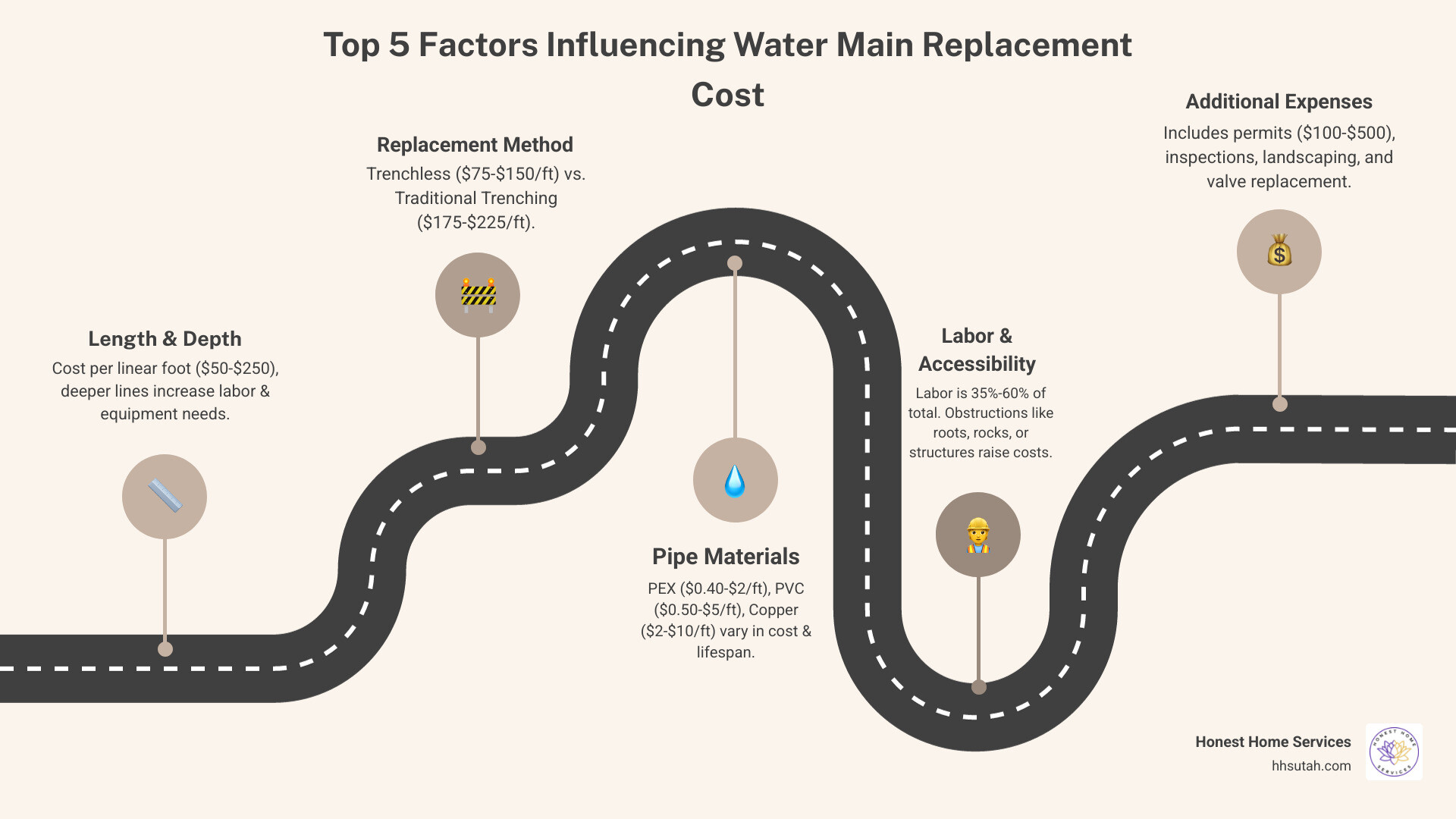
Key Factors That Influence the Cost to Replace Water Main Line to House
Facing a water main replacement can be overwhelming. Understanding the key factors that influence the final bill helps you make informed decisions. Let’s break down the primary variables that determine your investment.
Length and Depth of the Water Line
The longer and deeper your water line, the more it will cost to replace. The line runs from the city’s connection point (near the street) to your home, and its length varies based on your home’s setback.
The cost per linear foot for a trenched replacement ranges from $50 to $250. For a 50-foot line, this could be $2,500 to $12,500. Deeper lines, common in Northern Utah to protect pipes from freezing (the frost line), require more excavation. This increases labor time and may require specialized equipment. If your home in Salt Lake City, Layton, or Park City has a deep line, expect labor and equipment costs to reflect that.
For more information on keeping your pipes in top shape, check out our insights on pipe repair.
Replacement Method: Trench vs. Trenchless
The replacement method significantly impacts both cost and property disruption. We use two main approaches:
- Traditional Trenching: This involves digging an open trench along the entire path of the water line. It’s often straightforward and sometimes the most economical option where property disruption isn’t a major concern.
- Trenchless Replacement: This modern approach minimizes excavation, often requiring only two small access holes. Common trenchless techniques include:
- Pipe Bursting: A new pipe is pulled through the old one, breaking the old pipe apart.
- Directional Boring: A new pipe is installed by boring a path underground without disturbing the surface.
Trenchless methods are ideal for preserving landscaping and driveways but often have a higher upfront cost. The best choice depends on your property layout, soil, and any obstacles. We’ll assess your situation and recommend the best approach for your Northern Utah home.
Learn more about comprehensive plumbing system overhauls in our guide to plumbing system re-piping.
Pipe Materials and Their Impact on Cost
Pipe material is a crucial cost factor, influencing both the initial expense and long-term durability. Material costs range from $0.40 to $10 per linear foot, but the choice goes beyond just price.
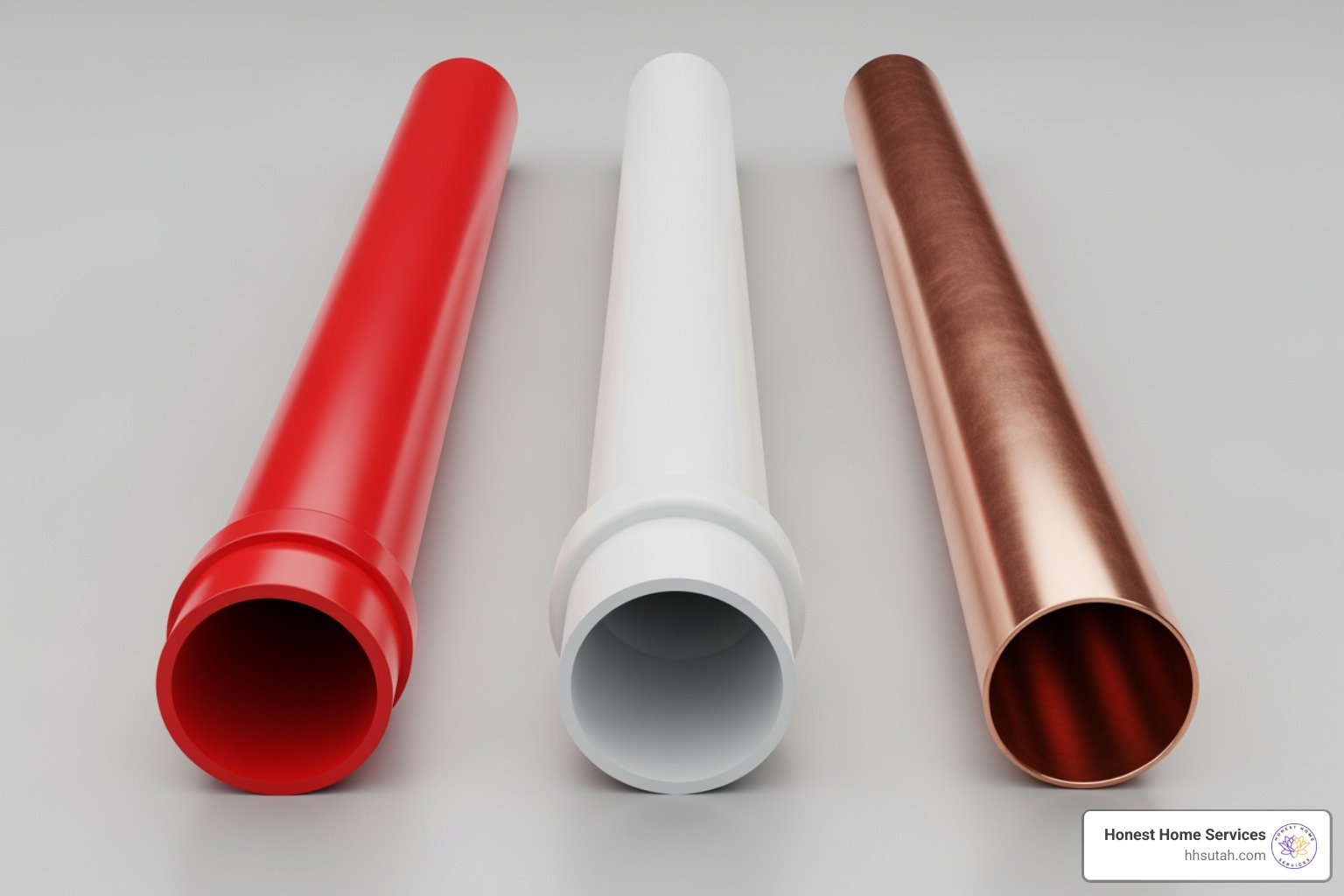
Here are the most common materials we use in Northern Utah:
- PEX (Cross-linked Polyethylene): A flexible plastic piping popular for its durability, corrosion resistance, and ease of installation. PEX material costs typically range from $0.40-$2 per linear foot. It has a long lifespan (40-50 years) and is resistant to freezing.
- PVC (Polyvinyl Chloride): A rigid, durable, and cost-effective plastic option, often ranging from $0.50-$5 per linear foot. It’s resistant to corrosion and roots, with a lifespan of 75+ years.
- Copper: A traditional choice, copper is highly durable, corrosion-resistant, and can last 70 years or more. It’s also the most expensive option, with material costs between $2-$10 per linear foot.
Older homes may have lead pipes. Lead is a toxic heavy metal, and replacing lead service lines is a critical health priority. The Environmental Protection Agency (EPA) has set the maximum contaminant level goal for lead in drinking water at zero, as there is no safe level of lead exposure. We prioritize your family’s safety by recommending replacement of any lead pipes. You can find more details on lead safety information from the EPA.
Upgrading pipe materials can improve water quality, pressure, and system reliability. For insights into managing older plumbing, see our articles on old plumbing pipes.
Labor, Accessibility, and Obstructions
Labor is a significant project cost, often 35% to 60% of the total bill. This percentage fluctuates with job complexity, and certain site conditions can increase the labor required:
- Obstructions: Tree roots, large rocks, or existing utility lines can make excavation difficult and time-consuming.
- Accessibility: If the water line runs under a sidewalk, driveway, or patio, it will require specialized techniques (like boring), adding to labor and equipment costs.
- Soil Conditions: Rocky or clay-heavy soil, common in Northern Utah, is harder to excavate than soft soil, increasing the time and effort needed.
According to the Occupational Employment and Wage Statistics from the U.S. Bureau of Labor Statistics, plumbing requires skilled labor, which contributes to these costs. Our local, expert technicians are trained to handle these challenges efficiently. When you need skilled hands for a complex job, finding an experienced plumber is key.
Comparing Replacement Methods: Trenching vs. Trenchless
Choosing the right replacement method is a critical decision that balances cost, efficiency, and property impact. Here’s a detailed look at the two main approaches we use at Honest Home Services:
| Feature | Traditional Trenching | Trenchless Replacement |
|---|---|---|
| Cost per Foot | $50 – $250 per linear foot (can be $175 – $225 for full install) | $70 – $250 per linear foot (can be $75 – $150 for full install) |
| Yard Disruption | High (open trench along entire line) | Low (minimal excavation, usually two access holes) |
| Project Time | Typically 1-3 days (can be longer for restoration) | Often quicker, 1-3 days for pipe work |
| Ideal Scenarios | Easy access, soft soil, budget-conscious, when other utilities are being replaced, or when the pipe needs visual inspection | Extensive landscaping, under driveways/sidewalks, rocky terrain, desire for minimal property impact |
Traditional Trenching uses equipment like a backhoe to dig an open trench from the water meter to your house. This straightforward method allows for visual inspection of the pipe and soil. While more disruptive, it’s a viable option, especially if other underground work is being done simultaneously.
Trenchless Replacement techniques, such as pipe bursting or directional boring, install a new pipe with minimal surface disruption. Instead of digging a long trench, we create small access pits at the beginning and end of the pipeline.
- Pipe Bursting: This technique feeds a new pipe through the old, damaged pipe. A “bursting head” breaks apart the old pipe while pulling the new pipe into place.
- Directional Boring: This method uses a steerable drilling rig to create a horizontal bore path underground, through which the new pipe is pulled.
While trenchless methods may have a higher upfront cost per foot, the savings on landscaping restoration can make the overall project cost comparable or even less. For example, if your water line runs under a driveway or mature trees, the trenchless option can save you significant money on post-project repairs.
Our team will help you weigh the pros and cons of each method for your Northern Utah property, ensuring you get the most cost-effective solution. For a comprehensive look at updating your home’s entire plumbing system, explore our article on re-piping a home.
Don’t Forget These Additional Expenses
The pipe and labor are the core costs, but several other factors can add to your final bill. We provide upfront, honest estimates that account for all potential expenses to prevent surprises for our Northern Utah customers.
Permits and Inspections
Replacing a main water line involves local municipal requirements and safety standards. In Salt Lake City, Layton, and our other Northern Utah service areas, obtaining permits and undergoing inspections is mandatory for code compliance.
- Permit Costs: These typically range from $100 to $500, varying by municipality.
- Inspection Fees: A city inspector will verify that the installation meets all local building codes. Inspection fees can range from $150 to $500.
We handle the permit process for you, ensuring all paperwork is correctly filed and inspections are scheduled. This step is non-negotiable for your safety and to avoid potential fines or future property issues. For more details on maintaining plumbing integrity, check out our insights on plumbing inspections.
Landscaping and Surface Restoration
A significant additional cost, especially with traditional trenching, is property restoration. If your water line runs through your lawn, garden, or under paved surfaces, you’ll need to factor in the cost to return them to their original condition.
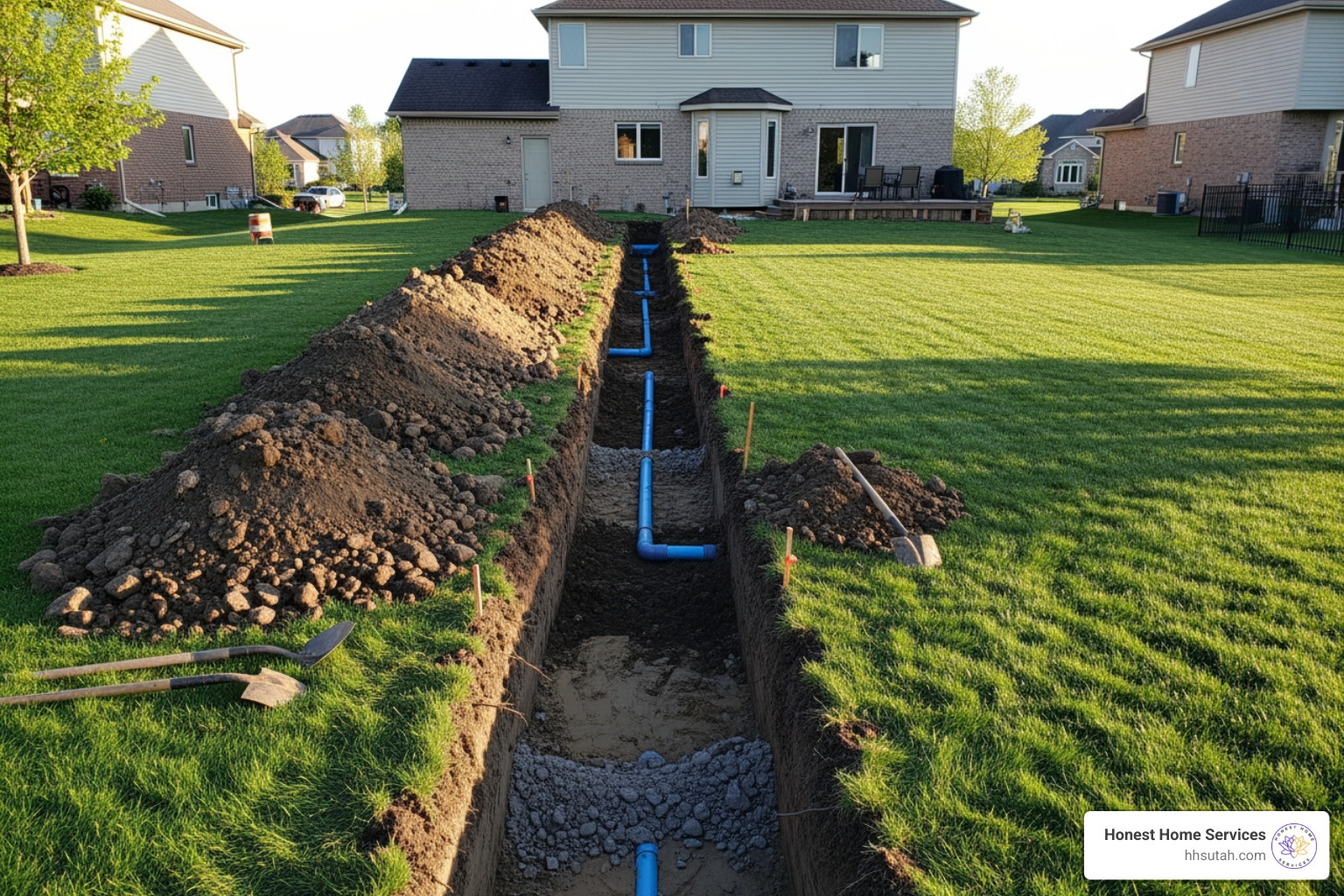
- Lawn and Garden Restoration: After a trench is backfilled, your lawn will need re-sodding or reseeding. Landscaping repair costs can range from $50-$100 per hour, or average around $3,700 for a typical project.
- Paved Surface Repair: If the water line runs under a concrete driveway, asphalt path, or patio, these surfaces will need to be cut, removed, and then professionally repaired. This is where trenchless methods shine, as they often avoid damaging these expensive features.
While trenchless methods reduce the need for extensive landscaping repair, some restoration around the access points may still be necessary. We’ll discuss these potential costs with you upfront. Proper plumbing system maintenance extends to caring for your property surrounding the pipes.
Main Shut-Off Valve and Other Components
A water main replacement may involve more than just the pipe. Other components might need attention if they’re old, damaged, or incompatible:
- Main Shut-Off Valve Replacement: This critical valve controls all water entering your home. If it’s old, corroded, or faulty, replacing it during the water main project is a smart move. The average replacement cost is $400 to $800, depending on its age, accessibility, and material. Replacing it now can save you from a future emergency and separate service call fees.
- Pressure Regulator: If your home has inconsistent water pressure or an old regulator, replacing it while the system is open can be a cost-effective upgrade.
- Tap Replacement: The “tap” is the connection point to the city’s main water line. If this component is old or corroded, replacing it can prevent future problems and ensure a robust connection.
Considering these additional components during a water main replacement is a wise investment, addressing potential future issues and ensuring your entire water supply system is up to modern standards. In the event of a plumbing crisis, knowing how to handle a plumbing emergency is essential.
Is It Time for a Replacement? Signs, Timeline, and Benefits
Ignoring the signs of a failing water main can lead to bigger headaches and higher costs. Knowing when to act and what to expect from the replacement process can save you stress and money.
Telltale Signs Your Water Main is Failing
Your home’s water main often gives subtle clues before a major failure. Being aware of these signs can help you catch a problem early:
- Sudden Drop in Water Pressure: If your showers feel weak or faucets trickle, it could indicate a significant leak or blockage.
- Unexplained Wet Spots in the Yard: Patches of unusually green grass or soggy areas that don’t dry out often point to an underground leak.
- Discolored Water: Rusty or brown tap water could be a sign of corrosion within your pipes.
- High Water Bills: A sudden, unexplained spike in your water bill is a strong indicator of a hidden leak.
- Bubbling Noises: Gurgling or whistling sounds from your pipes when no water is running can signal air entering the system from a leak.
- Foundation Cracks: In severe cases, major leaks can saturate the soil around your foundation, leading to shifting and cracking.
If you notice any of these symptoms, it’s time to call in the professionals. Catching a problem early can prevent more extensive damage. For guidance on when to seek expert help, refer to our article on when to call a professional plumber.
Project Timeline: How Long Does It Take?
We understand a disrupted water supply is a major inconvenience. While the exact timeline for a replacement can vary, we strive for efficiency and clear communication.
- Typical Duration: For most standard replacements, the actual plumbing work can often be done in one to three days. This is influenced by the line’s length and depth, the replacement method, and any obstructions.
- Permitting Delays: While we handle the paperwork, the approval process from local authorities in Northern Utah can sometimes add a few days or a week to the project start time.
- Restoration Time: Restoring your landscaping or paved surfaces will add to the overall project duration, ranging from a few hours to several days.
- Emergency Situations: For a catastrophic failure, we prioritize emergency services to restore your water supply as quickly and safely as possible.
Our goal is to minimize disruption and get your home’s water flowing reliably again. We also offer emergency plumbing services for urgent situations.
The Long-Term Payoff: Increasing Home Value
While the cost to replace water main line to house is a significant expense, it’s a long-term investment in your property. A new water main offers several benefits that can increase your home’s value and appeal:
- Improved Insurability: Homes with outdated infrastructure can be harder or more expensive to insure. A new water main can improve your home’s insurability, especially if you opt for service line coverage.
- Buyer Perception: When selling, a recently replaced water main is a huge selling point. It gives buyers peace of mind, signaling that the home is well-maintained and reducing the likelihood of unexpected repairs for the new owner. Homes with recently replaced main water lines often command stronger negotiating positions.
- Peace of Mind: There’s the invaluable benefit of knowing your water supply is reliable and free from potential issues like lead contamination or frequent leaks.
- Proactive Upgrade: Replacing an aging water main before it fails prevents emergencies, potential property damage, and the associated stress. It’s an investment in your home’s future.
For many older homes in Northern Utah, upgrading the water main is a significant improvement that contributes to the overall health and value of the property. Learn more about addressing issues in older properties with our guide to common plumbing problems in older homes.
Frequently Asked Questions about Water Main Replacement
We know you have questions, and we’re here to provide honest answers. Here are some of the most common inquiries we receive.
Does homeowners insurance cover a main water line replacement?
This is a common question. Unfortunately, most standard homeowner’s insurance policies do not cover the cost of main water line replacement. Here’s why:
- Wear and Tear Exclusion: Standard policies typically exclude damage from normal wear and tear, corrosion, or gradual deterioration.
- Sudden Damage vs. Wear and Tear: Insurance generally covers sudden and accidental damage. However, if a burst is the result of long-term corrosion, it might not be covered.
- Service Line Coverage Add-on: Many insurance providers offer an optional “service line coverage” endorsement. This add-on specifically covers the repair or replacement of exterior utility lines. If you don’t have this coverage, we highly recommend looking into it.
We advise our Northern Utah clients to review their specific policy or contact their insurance agent to understand their coverage options.
Is replacing a water main a DIY project?
While we admire the DIY spirit, replacing a main water line is not a DIY project. This complex job requires professional expertise for several reasons:
- Specialized Equipment: Excavation equipment, pipe bursting tools, or directional boring machines are not standard homeowner tools.
- City Codes and Permit Requirements: Permits are mandatory. Improper installation can lead to fines, forced re-do’s, and future legal issues.
- Risk of Costly Mistakes: Incorrect installation can lead to leaks, contamination, or damage to other underground utilities (gas lines, electrical conduits), which can be dangerous and expensive to fix.
- Health and Safety: Working with water lines involves potential exposure to contaminants and requires careful handling to ensure your drinking water remains safe.
A licensed plumber, like those at Honest Home Services, has the training, tools, and insurance to perform the job safely and in compliance with all local regulations. For any significant plumbing work, it’s always best to hire a professional plumber.
How long should a new water line last?
The lifespan of your new water line depends on the material, installation quality, and local soil conditions. When professionally installed by our team, you can expect:
- Copper: Known for its durability, copper pipes can last 70 years or more.
- PEX (Cross-linked Polyethylene): This flexible plastic piping typically has a lifespan of 40-50 years.
- PVC (Polyvinyl Chloride): Another robust plastic option, PVC pipes can last 75 years or even longer.
Proper installation by experienced professionals ensures the longest possible lifespan for your new water main. We use high-quality materials and adhere to best practices to give you decades of reliable water service.
Get an Honest Quote for Your Water Main Replacement
Understanding the cost to replace water main line to house is the first step toward a secure water supply. The total price depends on factors like line length, materials, installation method, and other expenses like permits and landscaping.
For a precise, transparent estimate for your Northern Utah home, consult a local expert. At Honest Home Services, we provide clear, upfront pricing and guaranteed customer satisfaction. Our local technicians serve homeowners across Salt Lake City, Salt Lake County, Davis County, Clearfield, Layton, Kaysville, Farmington, Bountiful, West Valley, Murray, West Jordan, South Jordan, Bluffdale, Herriman, Draper, Park City, Tooele, Lehi, and Saratoga Springs.
Don’t let a failing water main soak your budget. The team at Honest Home Services provides fair pricing and guaranteed satisfaction for all Salt Lake City sewer and water main line repairs. Contact us today for a professional assessment and an honest quote. We’re here to help you make the best decision for your home and peace of mind.