

What to Do When You Have a Frozen Water Main Line
A frozen water main line can leave your entire home without water — and if it bursts, the damage can cost tens of thousands of dollars. Here’s what to do right now:
Quick action steps:
- Check if it’s the main line — turn on faucets throughout the house. No water anywhere means the main line is likely frozen, not just a branch pipe.
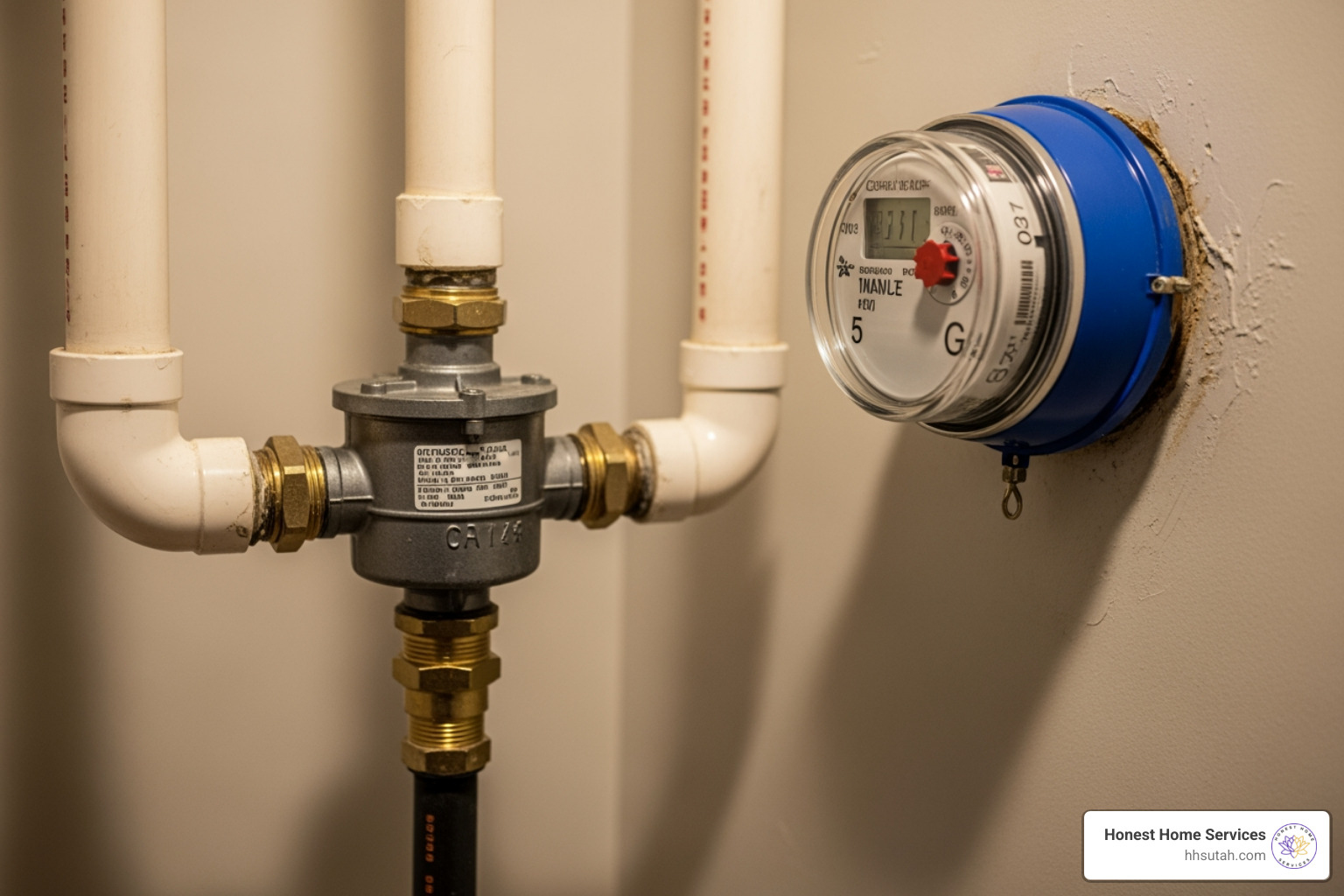
- Locate your main shut-off valve — usually near the water meter in your basement or utility area. Turn it off.
- Open all faucets — this relieves pressure and reduces the risk of a burst.
- Apply gentle heat — use a heating pad, hair dryer, or space heater near where the line enters your home.
- Call a plumber — if you can’t access the frozen section or the line is underground, stop DIY attempts and call a pro.
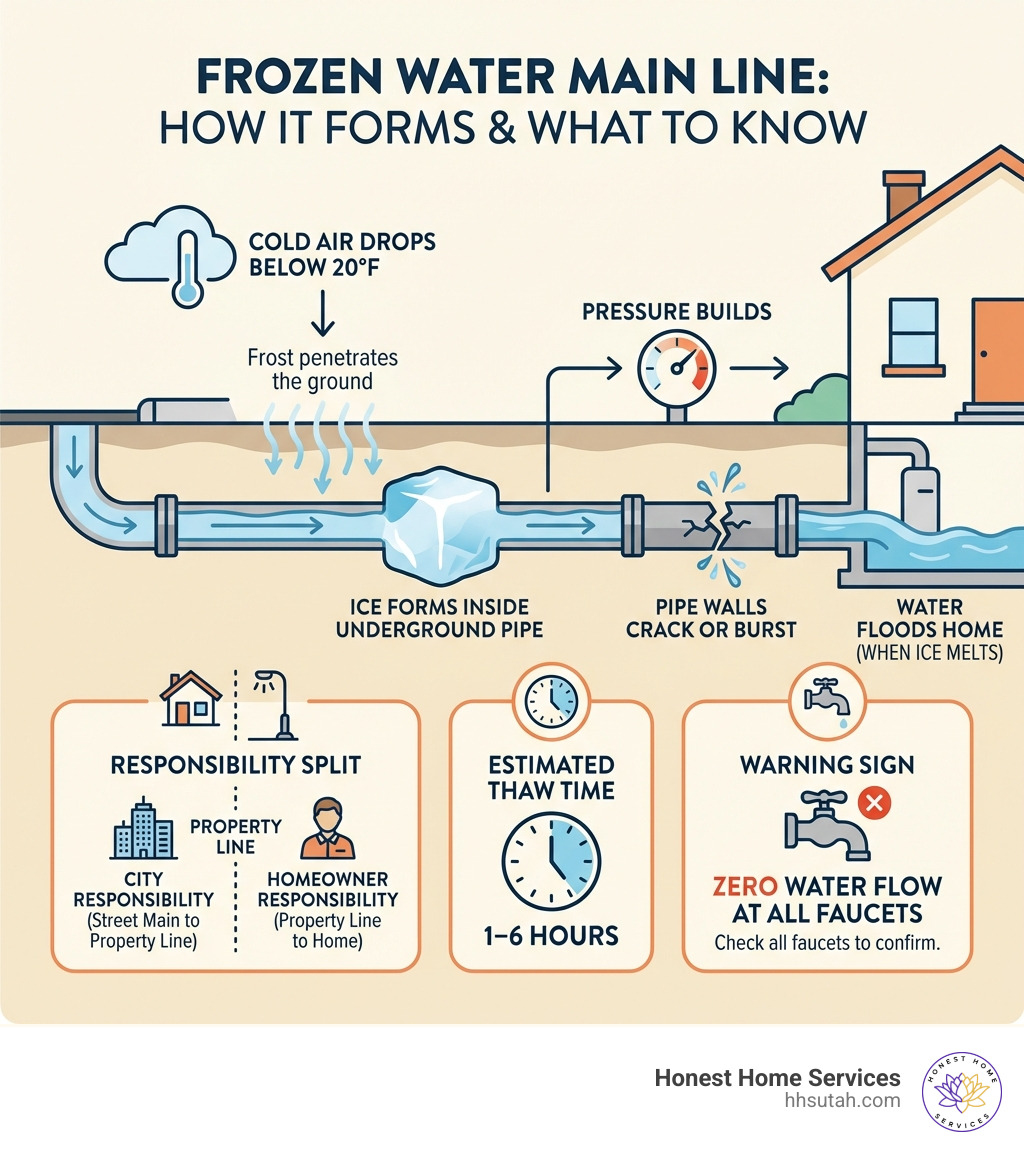
The main line is the pipe that carries water from the city’s street main all the way to your home. Unlike the smaller pipes inside your walls, this line runs underground — and it typically only freezes in extreme cold, usually below 20°F. When it does freeze, you lose water to your entire home at once.
This is urgent. Ice expands inside the pipe and puts enormous pressure on the pipe walls. If that pressure has nowhere to go, the pipe cracks or bursts entirely.
At Honest Home Services, we’ve spent over 20 years helping Northern Utah homeowners and businesses deal with frozen water main line emergencies and the damage they cause. Keep reading — we’ll walk you through exactly how to handle this situation safely and prevent it from happening again.
Easy frozen water main line glossary:
Is Your Frozen Water Main Line the Culprit?
When you turn on the tap on a frigid Utah morning and nothing happens, your first instinct might be panic. But before you start ripping apart drywall, we need to determine if the problem is a localized pipe in a cold crawl space or if your frozen water main line is the real offender.
The “main line” (also called the service line) is the heavy-duty pipe that connects your home to the municipal water supply. In places like Salt Lake City or Bountiful, these lines are buried deep underground to stay below the “frost line.” However, during prolonged periods of sub-zero temperatures, the frost can penetrate deeper than usual, reaching the service line.
One of the best ways to diagnose the issue is a simple neighbor check. If your neighbors have running water, the issue is likely contained within your property or your specific service line. If the whole block is dry, there might be a city-wide main break. If it’s just you, and no faucet in the house—upstairs, downstairs, or in the basement—is producing a drop, you are likely dealing with a frozen main. For more tips on early detection, check out our guide on how to prevent frozen pipes.
Identifying a frozen water main line vs. interior pipes
Distinguishing between a frozen branch pipe and a frozen water main line is all about the “all or nothing” rule.
- Interior Pipe Freeze: Usually affects only one area of the house. For example, the kitchen sink on an exterior wall won’t run, but the upstairs bathroom works fine. You can often find these by tracing the pipes and looking for frost on the exterior of the copper or PEX.
- Main Line Freeze: No water flows to any fixture in the home. You might hear a faint “clunk” or whistle when you open a tap, but the pressure is gone.
According to the Minneapolis guide to frozen service lines, a frozen main line typically occurs where the pipe enters the foundation or in the unheated area near your water meter. If your master shut-off valve is open but no water is coming through the meter, the blockage is upstream in the main service line.
Temperature thresholds for main line freezing
While standard interior pipes can freeze when the thermometer dips to 32°F (especially in drafty areas), your frozen water main line is much more resilient. Because it is buried and carries a larger volume of water, it typically only freezes in extreme cold situations.
Industry data suggests that main service lines generally only freeze when temperatures drop below 20 degrees Fahrenheit for an extended period. Wind chill can accelerate this process by stripping heat from the ground or the exposed foundation where the pipe enters the home. In Northern Utah, we often see these issues during “deep freezes” where the temperature stays in the single digits for several days, allowing the frost depth to creep lower into the soil. For more on regional protection, the Toronto pipe protection tips emphasize that sustained sub-zero temperatures are the primary catalyst for deep-soil freezing.
Immediate Steps and Responsibility
If you suspect your main line is frozen, you need to act fast. The goal is to prevent a “burst,” which happens when the pressure between the ice blockage and your closed faucets becomes too much for the pipe to handle.
First, locate your main water shut-off valve. In most Utah homes, this is in the basement or a utility closet near the front of the house. Turn it off immediately. Next, open every faucet in the house—sinks, tubs, and showers. This relieves the internal pressure. Even if no water is coming out now, leaving the taps open ensures that as the ice melts, the water has an escape route, preventing a pressure-cooker effect inside your plumbing.
If you are unsure about the state of your main line, you can find more info about mainline plumbing service on our dedicated service page. If you suspect the leak is on the city’s side, you may need to contact your local utility. While we don’t serve DC, the DC Water emergency contact page provides a good example of how municipal utilities handle street-side emergencies.
What to do if your main water shut-off valve is inaccessible
In Northern Utah, snow is a way of life. Sometimes, your outdoor shut-off (the curb stop) or even the indoor valve is blocked by feet of snow or ice. If you can’t get to your valve, don’t wait for the snow to melt. Shovel it out immediately.
If the valve is seized or buried under frozen ground, you may need the help of your local water department to shut the water off at the street. For residents in our service area, contacting the local public works department is the first step. For example, Fairfax Water emergency info outlines how utilities can assist when a homeowner cannot control their own shut-off.
Homeowner vs. City Responsibility Table
| Component | Responsibility | Who Pays for Repair? |
|---|---|---|
| Street Main Pipe | City/Utility | City |
| Service Line (Street to Property Line) | City/Utility | City |
| Service Line (Property Line to House) | Homeowner | Homeowner |
| Water Meter | Utility (usually) | Utility (unless tampered with) |
| Interior Plumbing | Homeowner | Homeowner |
Determining ownership: Homeowner vs. Utility
One of the most common questions we get at Honest Home Services is: “Is this my problem or the city’s?”
The general rule is the “Property Line Split.” The city is responsible for the massive water mains under the street and the portion of the service pipe that runs from the street to your property line (often marked by a “curb stop” valve near the sidewalk). From that point into your house, the pipe belongs to you. If your frozen water main line is located under your front lawn, the repair bill usually falls on the homeowner. The Seattle Public Utilities frozen pipe guide confirms this standard: homeowners are responsible for the pipes from the property line to the home, including the shut-off valves.
How to Safely Thaw Your Main Line
If the freeze is located where the pipe enters your home—perhaps in a cold basement or crawl space—you might be able to thaw it yourself. The keyword here is gentle.
Start by keeping the affected faucets open. Use a hair dryer, an electric heating pad, or a space heater to apply heat to the section of pipe nearest the faucet and work your way back toward the frozen area. This allows the melting ice to flow out through the open tap. Never use an open flame. A blowtorch can cause the water inside the pipe to boil, leading to an explosion, or it could start a fire in your walls.
For long-term protection, learning how to winterize your plumbing system is essential. You can also look at the Calgary water line protection guide for ideas on how to keep your meter and entry pipes warm during the winter.
Risks and potential damages of a burst main line
A frozen water main line that bursts is a nightmare scenario. Because the main line is under high pressure and connects directly to the city supply, a rupture can dump hundreds of gallons of water into your home in minutes.
- Structural Damage: Water can weaken foundation walls and rot floor joists.
- Mold Growth: Even a small, undetected leak from a cracked main line can lead to toxic mold in crawl spaces.
- High Utility Bills: A “silent” underground leak can cause your water bill to skyrocket.
- Landscaping Ruin: An underground burst can turn your front yard into a sinkhole.
The Salt Lake City thawing guidelines warn that the most significant damage often occurs after the pipe thaws, as the ice was previously acting as a plug. Once it melts, the full force of the water escapes through the crack.
When to call a professional for a frozen water main line
DIY thawing is great for a frozen pipe under your kitchen sink, but a frozen water main line is a different beast. You should call Honest Home Services immediately if:
- The frozen section is underground or beneath your concrete slab.
- The pipe is behind a finished wall.
- You see signs of a crack or leak.
- The hair dryer isn’t working after 30–60 minutes.
Professionals use specialized equipment like “thaw machines”—portable units that send a safe, low-voltage, high-amperage current through metal pipes to melt ice deep underground. If you need to find a licensed contractor, ensure they have experience with main line repairs and are familiar with Northern Utah’s specific building codes.
Prevention and Insurance Coverage
The best way to handle a frozen water main line is to make sure it never freezes in the first place. Prevention is significantly cheaper than emergency repairs.
Does homeowner’s insurance cover frozen main lines?
This is a tricky area. Most standard homeowner’s insurance policies will cover the damage caused by a burst pipe (like ruined carpet or drywall), but they may not cover the cost of repairing the pipe itself if the freeze was deemed preventable.
According to The Balance Small Business insurance advice, insurance companies often require you to prove that you maintained heat in the building (usually above 55°F) and took reasonable steps to prevent freezing. Document everything—take photos of the frozen pipe, keep receipts for insulation, and record the temperatures. If you’re a landlord, having a property manager can help ensure these preventive steps are documented across multiple units.
Long-term measures to prevent future freezing
If your main line freezes once, it will likely freeze again unless you change something. Here is our winterize your home plumbing checklist for long-term protection:
- Insulate: Use foam pipe sleeves or heat tape on any exposed sections of the main line in your garage, basement, or crawl space.
- Seal Drafts: Use spray foam or caulk to seal gaps where the water line enters the foundation.
- Maintain Heat: Never set your thermostat below 55°F, even when you’re away on vacation.
- Deepen the Line: If your line freezes every year, it may not be buried deep enough. Hiring a professional to re-bury the pipe below the frost line is a permanent fix.
- Trickle Method: During extreme cold (below 20°F), leave a faucet farthest from the main entry point dripping at a “pencil-lead” thickness. Moving water is much harder to freeze.
The Lincoln service line prevention guide also recommends disconnecting all garden hoses in the fall, as trapped water in a hose can back up and freeze the pipe inside the wall.
Frequently Asked Questions about Frozen Main Lines
Can a frozen water main line cause a sewer backup?
Technically, no. Your water main and your sewer line are two separate systems. However, in extreme cold, sewer lines can freeze if they are shallow or have standing water due to a clog. Because sewer lines aren’t pressurized, they freeze less often, but if they do, you’ll notice foul odors or slow drains throughout the house. The Ottawa drinking water advisories note that while rare, deep frost can impact multiple underground utilities simultaneously.
How long does it take for a main line to thaw naturally?
If you choose to wait for Mother Nature, it could take a while. Depending on the ground temperature and how deep the freeze is, a main line can take anywhere from 1 to 6 hours to thaw once heat is applied. If you are waiting for the ground to thaw naturally in the spring, you could be without water for weeks. The Minneapolis water treatment distribution team points out that soil holds onto the cold long after the air warms up, meaning your pipes could stay frozen even on a 40°F day.
Is it safe to use a heat lamp on my water meter?
We generally advise against this. Heat lamps can get incredibly hot and pose a fire risk if they are near insulation or wooden floor joists. A safer alternative is a small space heater or a specialized “heat tape” designed for pipes. As the WSSC water emergency info mentions, you should never leave any high-heat electrical device unattended while thawing pipes.
Conclusion
A frozen water main line is more than just an inconvenience; it’s a threat to your home’s foundation and your wallet. By identifying the signs early, shutting off your water, and applying gentle heat, you can often avoid the worst-case scenario of a burst pipe.
At Honest Home Services, we are the Northern Utah experts in winter plumbing emergencies. Whether you’re in Salt Lake City, Layton, or Park City, our local technicians are ready 24/7 to help you get your water flowing again. We pride ourselves on fair pricing and a satisfaction guarantee that keeps our neighbors coming back.
Don’t let a freeze turn into a flood. Contact us for Salt Lake City water main line repair or emergency thawing services today. We’ll handle the cold so you can stay warm!