
What Determines Drain Cleaning Cost?
Drain cleaning cost depends on where the clog is, how hard it is to reach, and what it takes to clear it. A simple sink or shower clog usually costs less to clear than a main sewer line blockage. If several drains are slow or sewage is backing up, ask a plumber to diagnose the cause before agreeing to a cleaning method.
We’re Honest Home Services, a licensed and insured Northern Utah plumbing team with over 20 years of experience in drain cleaning and sewer line repairs. Drain cleaning cost is easier to plan for when you know what work is needed, so this guide starts with the factors that shape your bill.
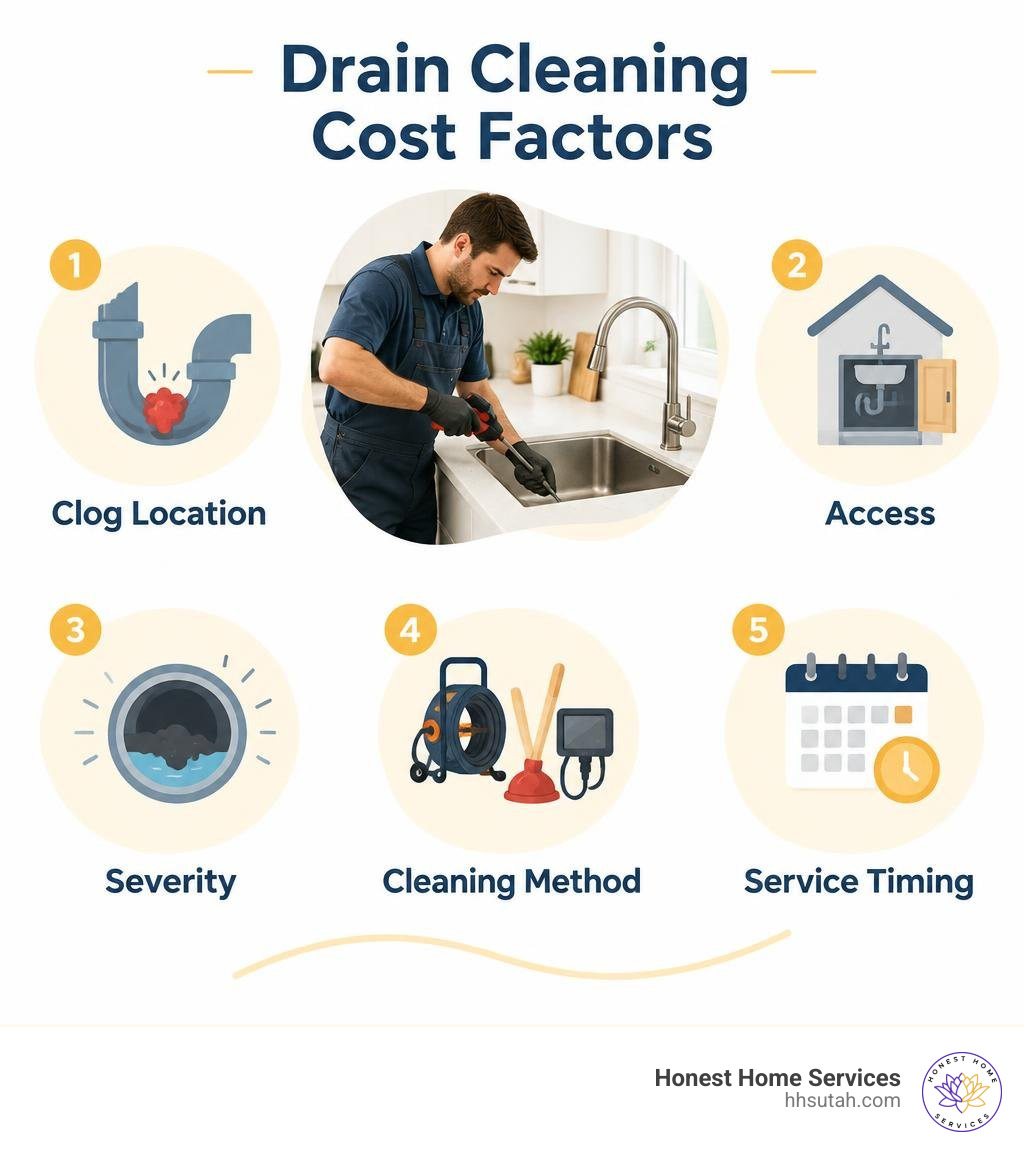
Basic Drain cleaning cost terms:
Drain Cleaning Cost Breakdown: What Homeowners Pay in 2026
When budgeting for plumbing repairs, it helps to know how professional service pricing is structured. A minor fixture obstruction takes minimal time and standard tools, while stubborn blockages buried deep within underground lateral pipes require advanced commercial machinery and specialized labor. According to industry cost data for unclogging drains, overall project pricing reflects the balance between labor hours, diagnostic tools, and the equipment required to clear the obstruction.
| Service Category | Typical Fixture / Line | Common Equipment Used | Job Complexity Level |
|---|---|---|---|
| Simple Fixture Clearing | Kitchen Sink, Bathroom Basin, Bathtub | Hand auger, small motorized snake | Low |
| Intermediate Branch Line | Toilet stoppage, Laundry standpipe | Heavy motorized auger, drop-head tool | Moderate |
| Main Sewer Line Clearing | Main cleanout to municipal lateral | Continuous-cable drum machine | High |
| Comprehensive Pipe Jetting | Full sewer run, heavy scale/grease | High-pressure hydro jetter | Advanced |
| Diagnostic Video Survey | Full line scoping to property line | CCTV fiber-optic sewer camera | Diagnostic |
Drain Cleaning Cost by Fixture and Location
Individual plumbing fixtures present unique challenges based on pipe layout, trap design, and the type of debris that collects inside them.
- Kitchen Sinks: Kitchen lines regularly deal with solidified fats, food scraps, and soap scum buildup. Clearing a kitchen sink requires navigating small-diameter pipes and tight P-traps under the counter.
- Toilets: Unlike sinks, toilet clogs are often caused by excessive paper, foreign objects, or non-dispersible bathroom items wedged in the internal trapway. A specialized closet auger is typically used to dislodge the obstruction without scratching the porcelain.
- Bathtubs and Showers: Hair and soap scum binding together form tough, fibrous knots inside narrow shower traps. Effective drain blockage removal targets these stubborn clogs directly at the trap.
- Washing Machine Standpipes: Laundry drains endure heavy discharges packed with clothing lint, residual detergents, and hair, which can choke standpipes over time and trigger floor backups.
Main Sewer Line Drain Cleaning Cost
The main sewer line serves as the central artery for your entire home plumbing system, collecting wastewater from every interior branch line and carrying it away to the municipal main. When this underground line clogs, waste cannot exit, causing water to back up into the lowest drains inside your home.
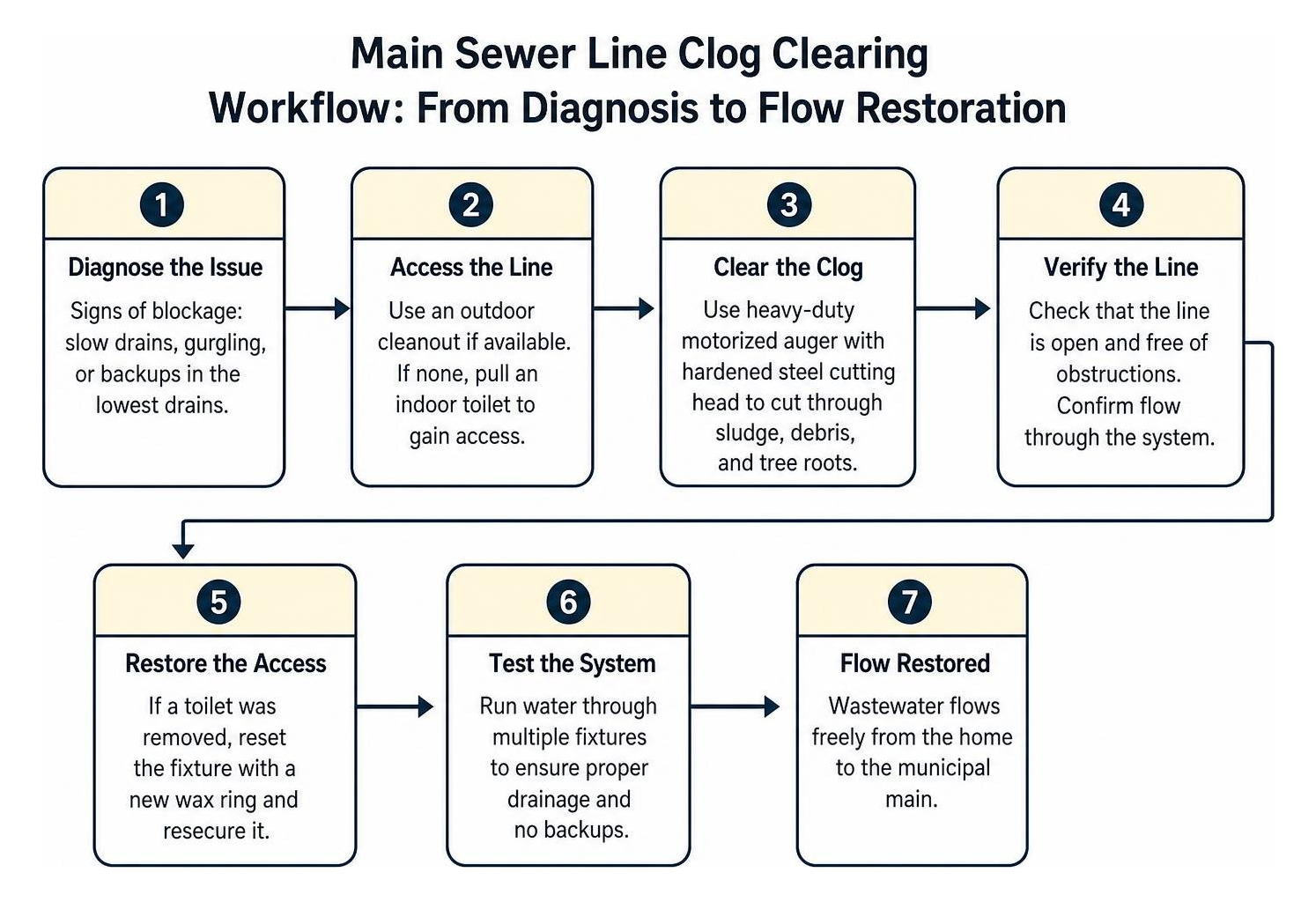
Clearing a main sewer line requires heavy-duty motorized augers equipped with hardened steel cutting heads that can slice through accumulated sludge, compacted debris, and intrusive tree roots. If your home has an accessible ground-level cleanout, service technicians can feed equipment directly into the line. However, if no cleanout is present, a technician may need to pull an indoor toilet to gain access, which requires extra labor to uninstall, reset, and reseal the fixture with a new wax ring. Homeowners evaluating their sewer system can explore main sewer line clog repair cost considerations as well as cleanout costs and clogs to better understand these line requirements.
Key Factors Influencing Drain Cleaning Prices
Plumbing rates vary from home to home because no two clogs or plumbing layouts are identical. Several factors shape the overall service invoice:
- Clog Severity and Density: Soft blockages like loose soap scum yield quickly, while solid grease plugs or invasive tree roots require robust equipment and extended labor.
- Pipe Materials: Modern PVC lines feature smooth interior walls, whereas aging cast iron or galvanized steel lines develop scale and corrosion, requiring gentler, more methodical handling.
- Trip and Diagnostic Fees: Professional plumbing providers standardly charge an initial dispatch or diagnostic assessment fee to cover vehicle transit, technician labor, and an initial on-site evaluation.
- Labor Time: Difficult access points or extended root blockages naturally increase the on-site labor time required to fully clear the pipe.
To see how regional considerations affect these variables across different neighborhoods, explore our breakdown on drain cleaning price variations.
Pipe Accessibility and Cleanout Availability
The ease with which a technician can reach your plumbing blockage plays a significant role in total service time. Modern residential properties typically feature an exterior sewer cleanout—a dedicated access point with a threaded cap leading straight into the primary sewer run.
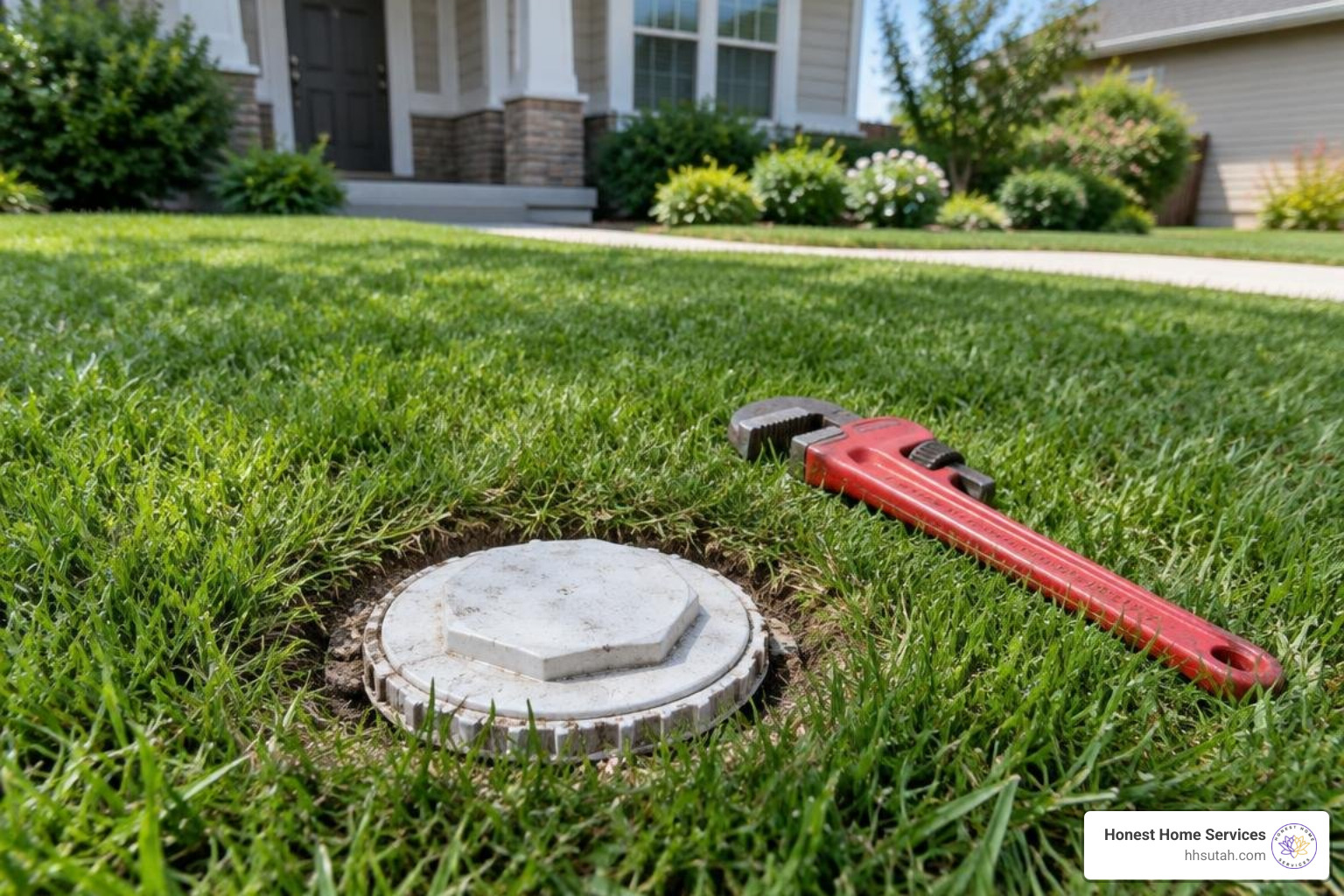
When an exterior cleanout is accessible, technicians can quickly deploy heavy machinery without hauling dirty cables through living spaces. If a cleanout is buried, missing, or blocked by landscaping, technicians must access the sewer network via indoor fixture drains, basement cleanouts, or rooftop plumbing vents. Working through roof vents or pulling interior plumbing fixtures involves extra setup and labor. Additionally, hard water mineral deposits in older lines can narrow the pipe’s internal diameter, making tool navigation more demanding.
Diagnostics and Camera Inspections
When drains back up repeatedly, clearings without visual diagnosis only provide temporary relief. A closed-circuit television (CCTV) sewer camera inspection allows technicians to run a high-definition, illuminated camera directly through the interior of the line.
Camera diagnostics pinpoint:
- The exact distance and depth of pipe blockages
- Structural collapses, bellies (low spots holding standing water), or misaligned joints
- Aggressive tree root intrusions penetrating pipe seams
- Severe mineral scaling or heavy internal grease coatings
Investing in a camera inspection ensures that you are treating the underlying problem rather than repeatedly snaking an undiagnosed pipe defect. For a detailed look at this diagnostic process, see our drain camera inspection guide.
Drain Cleaning Methods and Equipment Compared
Different types of drain obstructions demand distinct mechanical solutions. Reputable plumbers choose equipment based on pipe condition, pipe diameter, and the underlying cause of the clog, as outlined in this comprehensive guide to clearing pipe blockages.
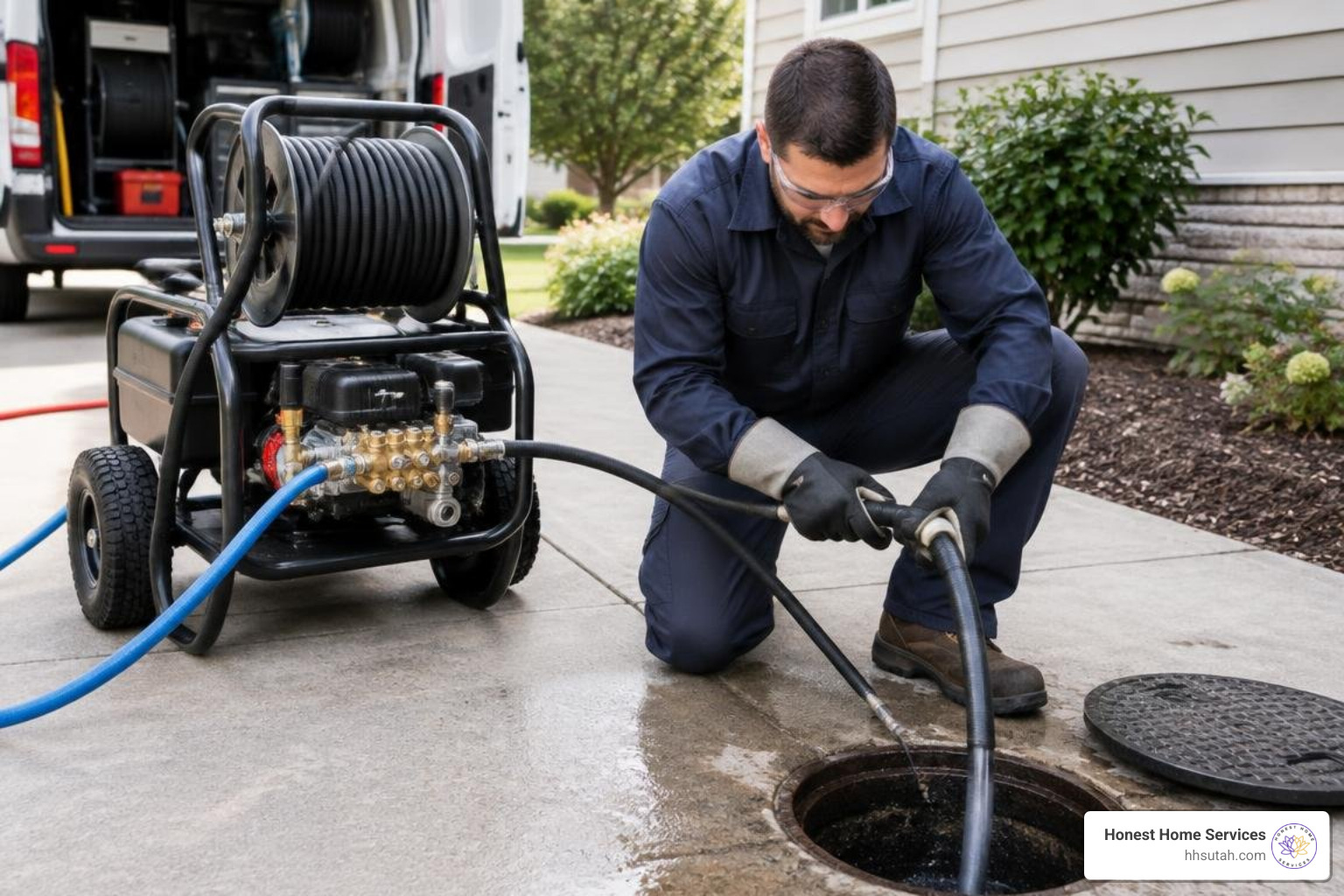
Hydro Jetting vs. Snaking Drain Cleaning Cost
Mechanical snaking and hydro jetting are the two primary methods used by professional plumbers to clear stubborn drain lines:
- Mechanical Snaking (Motorized Augers): Uses a flexible steel cable with a specialized cutting blade that rotates through the line. It punches a hole through blockages, breaks up solid obstructions, and retrieves objects like tangled hair. Snaking is ideal for isolated clogs in branch lines and straightforward obstructions.
- Hydro Jetting: Employs high-pressure water streams directed through a specialized multi-directional nozzle. The powerful spray scours the entire inner circumference of the pipe, pulverizing tree roots, stripping away mineral scale, and flushing out heavy grease coatings.
While hydro jetting involves higher-grade equipment and specialized setup, it restores older, grease-laden pipes close to their original internal diameter, helping prevent recurring clogs.
DIY vs. Professional Drain Clearing: When to Call an Expert
Minor surface clogs can often be handled with simple DIY measures:
- Plastic Drain Snakes: Inexpensive barbed plastic strips work well for pulling hair and soap buildup out of bathroom sink and shower pop-up assemblies.
- Cup and Flange Plungers: Plunging creates pressure differentials that can dislodge localized soft blockages in sinks, tubs, and toilets.
- Hot Water and Baking Soda Flushes: A simple mix of baking soda, vinegar, and hot water helps dissolve minor grease films in kitchen sink traps.
However, DIY methods have clear limits. You should call an experienced plumbing technician when you encounter:
- Multiple fixtures backing up at the same time (e.g., the bathtub fills with water when the washing machine drains)
- Gurgling sounds coming from toilet bowls or sink traps when another fixture runs
- Persistent sewer gas odors around floor drains, basements, or exterior foundation walls
- Water or sewage pooling around basement floor drains
For a detailed review of when to set aside home tools, read our guide on when to call a plumber for a clogged drain.
How to Avoid Overpaying for Drain Services
Protecting your household budget requires working with transparent, professional service providers. You can avoid inflated service invoices and surprise fees by following these best practices:
- Request Clear Estimates: Always ask for clear pricing before any work begins, making sure the quote outlines diagnostic fees, labor, and cleanout access requirements.
- Verify Credentials: Ensure the plumbing contractor is fully licensed, insured, and verified by local trade standards.
- Prioritize Diagnostics Over Quick Guesses: Avoid providers who recommend costly pipe replacements without first showing you real-time camera footage of the line’s condition.
For more tips on selecting a trusted local contractor, consult our guide on finding top-rated clogged drain services.
Before authorizing a drain technician to begin work, ask these straightforward questions:
- Does your quoted rate include clearing through an accessible cleanout or a pulled fixture?
- Will you perform a camera inspection after clearing to confirm the line is fully open?
- What type of service guarantee or warranty do you offer on the cleared line?
- Are there any extra disposal, diagnostic, or equipment fees not listed on the initial estimate?
Frequently Asked Questions About Drain Cleaning Costs
How often should residential drains be professionally cleaned?
Most residential plumbing systems benefit from professional maintenance every 18 to 24 months. Homes with mature trees near sewer laterals, older cast iron pipes, or large households using garbage disposals may require annual preventative cleanings to stop grease and roots before they cause a full backup.
What are typical emergency or after-hours surcharges for drain service?
Emergency service calls placed late at night, on weekends, or during holidays typically involve after-hours dispatch surcharges and higher hourly rates compared to standard weekday appointments. Scheduling a professional inspection at the first sign of slow drainage helps you avoid urgent after-hours service calls.
Is a video camera inspection really worth the extra cost?
Yes. A camera inspection eliminates guesswork by identifying the exact nature of the blockage. It confirms whether a problem is a simple obstruction, root intrusion, or structural pipe failure, helping you choose the right fix and avoid paying for repeated clearings.
Conclusion
Understanding what goes into professional drain clearing helps you protect your home plumbing system and your household budget. Whether dealing with a simple shower hair clog, heavy kitchen grease buildup, or an invasive sewer root intrusion, matching the right diagnostic tools and cleaning methods ensures lasting results. Transparent diagnostics, straightforward estimates, and experienced technicians keep your drains flowing smoothly without unexpected costs.
When you need dependable, high-quality plumbing solutions backed by honest service and local expertise, schedule an appointment with our team for professional Salt Lake City drain cleaning.