
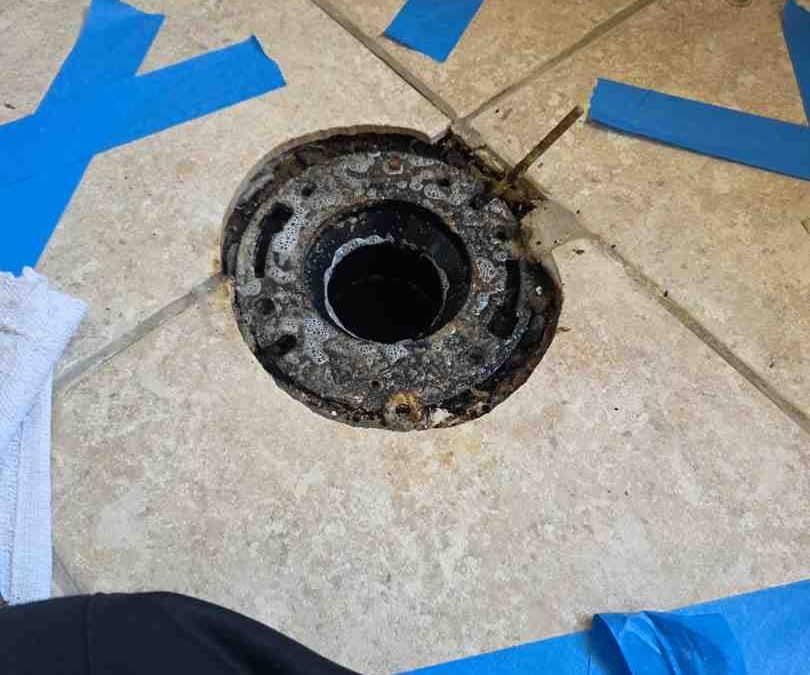
When You Need Clogged Drain Repair Near Me: What to Do First
If you need clogged drain repair near me right now, here’s a quick guide to help you act fast:
- Stop using the affected fixture to prevent overflow or water damage.
- Check if multiple drains are slow — if yes, you likely have a main sewer line blockage (call a plumber immediately).
- Try a plunger for a single, isolated clog with no standing water or sewage smell.
- Skip the chemical drain cleaners — they can damage your pipes and often don’t fully solve the problem.
- Call a licensed local plumber if the clog is recurring, multiple fixtures are affected, or you notice foul odors or gurgling sounds.
A slow drain rarely announces itself at a convenient time. One moment your kitchen sink is draining fine — the next, you’re standing in ankle-deep water while cooking dinner or getting ready for work. Most household drain clogs build up gradually over weeks or months, caused by everyday things like hair, grease, and soap residue quietly accumulating inside your pipes until water has nowhere to go.
The good news? Most clogs are fixable quickly when you know what you’re dealing with and who to call.
At Honest Home Services, we’ve spent over 20 years helping Northern Utah homeowners and businesses resolve clogged drain repair near me searches with fast, honest, and affordable plumbing solutions — and we’re here to walk you through everything you need to know.
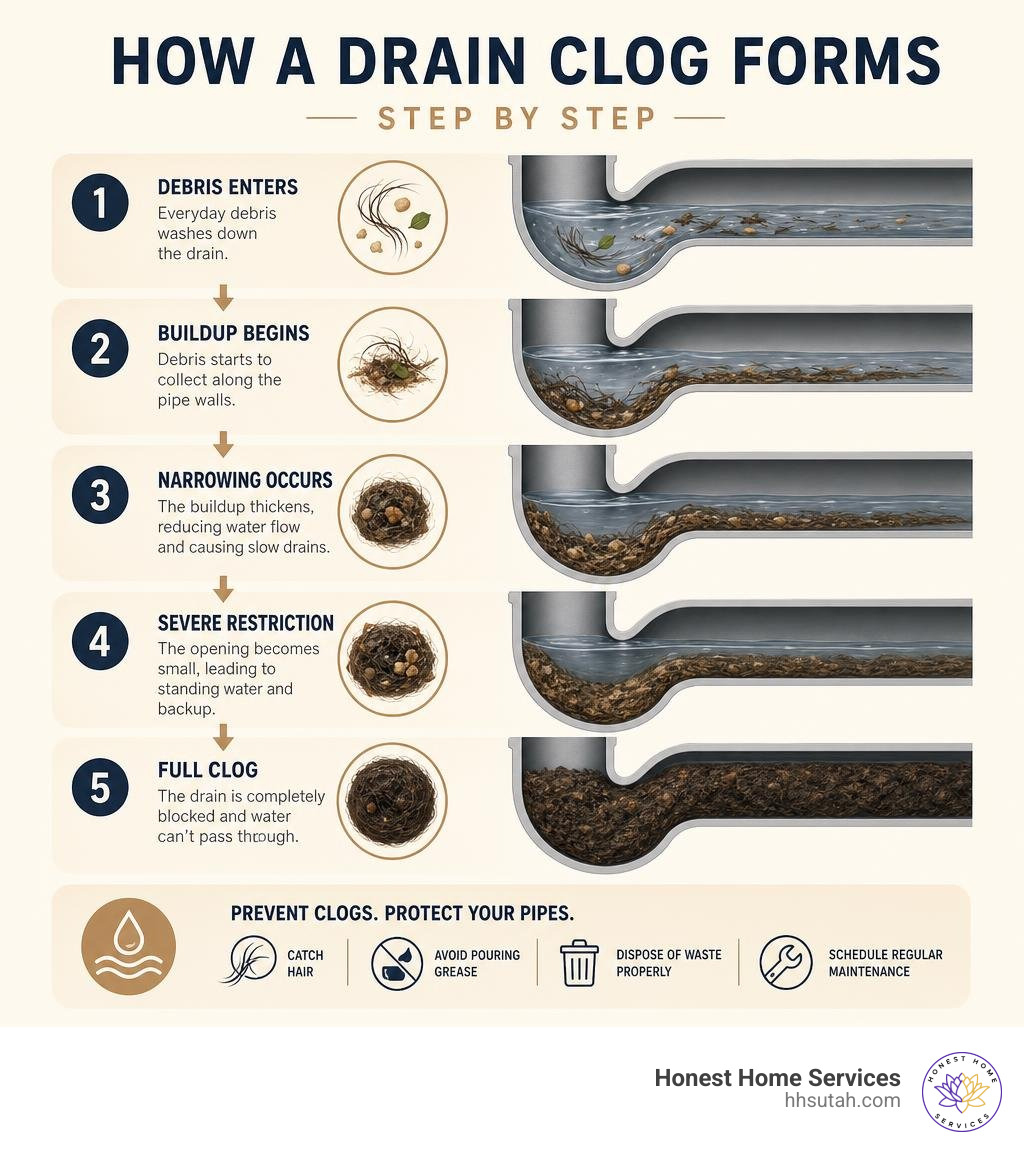
Easy clogged drain repair near me word list:
Common Causes and Warning Signs of Blocked Pipes
To keep your home’s wastewater flowing smoothly, it helps to understand what goes on behind your drywall and beneath your floors. Drains are the unsung heroes of our daily routines, but they are constantly subjected to materials they simply weren’t designed to handle.
In Northern Utah, our unique climate and geological features also play a role. The hard water common in Salt Lake County and Davis County deposits minerals like calcium and magnesium along the interior walls of your pipes. Over time, this mineral scale narrows the pathway for water, making it much easier for everyday debris to snag and create a stubborn blockage.
The most common culprits behind residential drain clogs include:
- Hair and Soap Scum: In bathroom showers and sinks, hair binds with the sticky fats in bar soaps and body washes, forming dense, net-like blockages just below the drain grate.
- Fats, Oils, and Grease (FOG): When poured down the kitchen sink, warm liquid grease cools rapidly, solidifying into a wax-like trap that catches food scraps, even if you run a garbage disposal.
- Foreign Objects and Flushed Hygiene Products: Wet wipes (even those labeled “flushable”), cotton swabs, feminine products, and small children’s toys frequently lodge in toilet traps.
- Tree Root Intrusion: Underground, tree roots naturally seek out moisture. They can slip through tiny cracks or joints in older clay or cast-iron sewer lines, growing into thick, pipe-blocking masses.
Recognizing the early warning signs of these issues can save you from a major household disaster. For a detailed breakdown of these indicators, check out our guide on Signs You Need Professional Drain Cleaning.
Recognizing When You Need Clogged Drain Repair Near Me
Clogs rarely go from non-existent to a complete backup overnight. Your plumbing system will usually send out several SOS signals before a total failure occurs. Paying attention to these subtle changes can help you address the issue before it escalates into costly water damage.
- Slow Drainage: If water pools around your feet during a shower or takes several minutes to empty from your kitchen sink, a partial blockage is already restricting flow.
- Gurgling Sounds: Bubbling or glugging noises from your drains or toilet bowl mean that air is trapped behind a blockage, forcing sewer gas to bubble back up through the standing water.
- Foul Odors: Persistent, musty, or rot-like smells coming from your sink drains often point to decomposing food debris or hair trapped in the P-trap.
- Water Backups: The most severe sign is water backing up into a tub or shower when you run the washing machine or flush a nearby toilet. This indicates that wastewater cannot escape your home and is seeking the lowest exit point.
Simple Drain Clogs vs. Main Sewer Line Blockages
It is vital to distinguish between a localized clog in a single fixture and a systemic issue in your main sewer line.
A simple drain clog is isolated to one pipe—for example, a bathroom sink that drains slowly due to hair buildup, while the shower and toilet in the same bathroom work perfectly. These are typically easy to resolve and do not threaten the rest of your home’s plumbing.
A main sewer line blockage, however, is a plumbing emergency. Because your main sewer lateral carries all the wastewater from your home to the municipal sewer system, a blockage here affects every single drain.
Key signs of a main sewer line blockage include:
- Multiple plumbing fixtures backing up simultaneously.
- A toilet bubbling or overflowing when your washing machine drains.
- The smell of raw sewer gas in your basement or yard.
- An unusually lush, green, or rapidly growing patch of grass on your lawn, which often indicates an underground sewer line leak acting as an accidental fertilizer.
To pinpoint the exact location and cause of these deep blockages, professional plumbers utilize advanced diagnostic cameras. This process allows us to see inside the pipe without tearing up your lawn or basement floor.
DIY Troubleshooting vs. Professional Clogged Drain Repair Near Me
When faced with a slow drain, many homeowners instinctively reach for a plunger or a store-bought hand snake. While minor, localized clogs can occasionally be managed with a bit of elbow grease, it is important to know your limits. For safe, step-by-step instructions on managing minor blockages at home, read The Best Way to Clear a Clogged Drain: A DIY Guide.
Using the wrong tool or applying too much force can easily push a clog deeper, puncture aging cast-iron pipes, or scratch delicate porcelain fixtures.
| Method | Best Used For | Safety Risk | Long-Term Effectiveness |
|---|---|---|---|
| Plunger | Minor, shallow clogs in sinks or toilets | Very Low (if used gently) | Temporary (clears immediate path only) |
| Hand Snake / Zip-It | Hair clogs near sink or shower strainers | Low | Moderate (removes localized debris) |
| Chemical Cleaners | Not recommended | High (pipe corrosion, chemical burns) | Low (often melts a small hole without clearing the clog) |
| Professional Snaking | Stubborn blockages, deep traps | Low (when performed by a licensed pro) | High (fully clears the pipe diameter) |
| Professional Hydro-Jetting | Heavy grease, mineral scale, tree roots | Low (safe for sturdy, inspected pipes) | Very High (restores pipes to like-new condition) |
The Hidden Dangers of Chemical Drain Cleaners
It is tempting to pour a bottle of liquid drain cleaner down a slow sink and hope for the best. However, professional plumbers strongly advise against this.
Chemical drain cleaners rely on harsh, caustic ingredients like sodium hydroxide or sulfuric acid to dissolve blockages. These chemicals generate intense heat through chemical reactions inside your pipes. If you have older metal pipes, the acid can accelerate pipe corrosion, leading to pinhole leaks behind your walls. If you have PVC pipes, the heat can soften or warp the plastic joints, causing them to separate.
Furthermore, if the chemical cleaner fails to clear the blockage, you are left with a sink full of highly toxic, standing water. This creates a severe safety hazard for any plumber who must later dismantle the pipe to clear the clog manually. For general guidance on choosing safer household chemical products, the U.S. Environmental Protection Agency’s Safer Choice program is a helpful resource.
Preventative Steps to Avoid Future Clogs
The best way to handle a clogged drain is to prevent it from forming in the first place. By adopting a few simple habits, you can protect your plumbing system and avoid the stress of unexpected backups.

- Install Drain Strainers: Place mesh strainers in all shower, tub, and bathroom sink drains to catch hair and soap chips before they enter your plumbing. Clean them out regularly.
- Dispose of Grease Properly: Never pour cooking fats, oils, or grease down the kitchen sink. Let them cool in a disposable container, then throw them in the trash.
- Use the Garbage Disposal Sparingly: Your disposal is meant for small, leftover food scraps rinsed off plates, not for large quantities of potato peels, celery stalks, coffee grounds, or eggshells, which can easily bind together and clog your drain.
- Flush with Hot Water: Once a week, pour a kettle of boiling water down your kitchen sink to help melt away any minor grease buildup along the pipe walls.
For more expert advice on keeping your plumbing system running smoothly, explore our guides on Preventative Drain Cleaning Tips Every Homeowner Should Know and Say Goodbye to Clogged Drains with These Effective Drain Cleaning Tips.
Professional Methods Plumbers Use to Clear Drains
When DIY methods fall short, professional plumbers bring specialized equipment to resolve blockages safely and permanently.
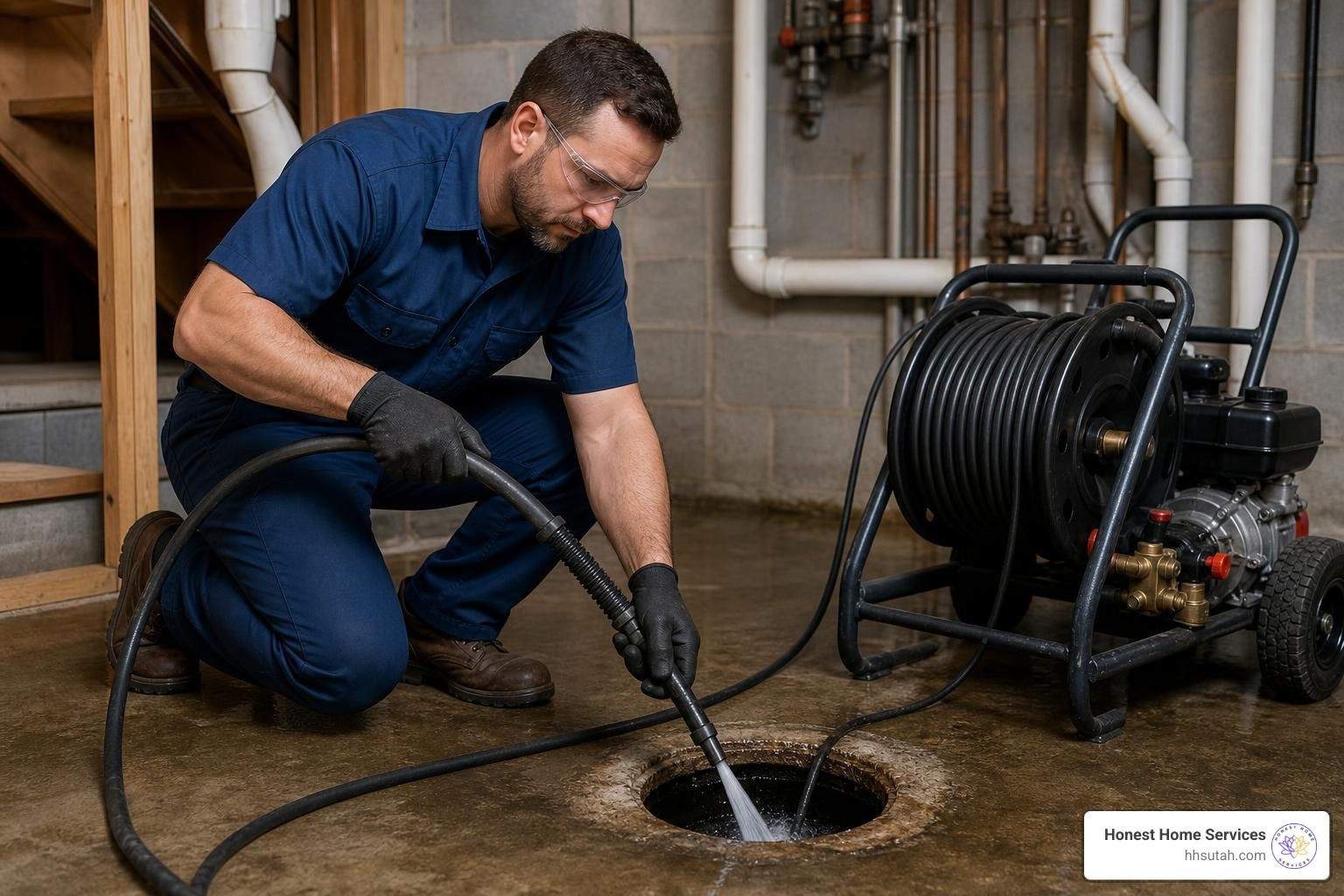
Depending on the location and severity of the clog, we typically use one of two primary mechanical methods:
- Drain Snaking (Sewer Rodding): For standard household clogs, we use motorized drain snakes equipped with flexible steel cables and specialized cutting heads. As the cable rotates through the pipe, it physical breaks up solid obstructions like compacted hair, wet wipes, or small tree roots, restoring immediate flow.
- Hydro-Jetting: For heavy grease buildup, mineral scale, or extensive root intrusion, hydro-jetting is the industry gold standard. This method uses a specialized machine to blast highly pressurized water through your pipes, thoroughly scrubbing the interior walls clean.
If you are dealing with a stubborn issue in Davis County or Salt Lake County, you can count on Honest Home Services for professional drain cleaning in Clearfield, Farmington, and Salt Lake City.
Hydro-Jetting and Camera Inspections for Deep Blockages
Before performing any heavy-duty drain cleaning, we always conduct a professional sewer camera inspection. This step is crucial because it allows us to see the exact nature of the blockage and assess the structural integrity of your pipes.
If a pipe is cracked, collapsed, or severely corroded, running a high-pressure hydro-jetter or a heavy motorized snake could cause further damage. Once we confirm the pipe is structurally sound, we proceed with the appropriate clearing method.
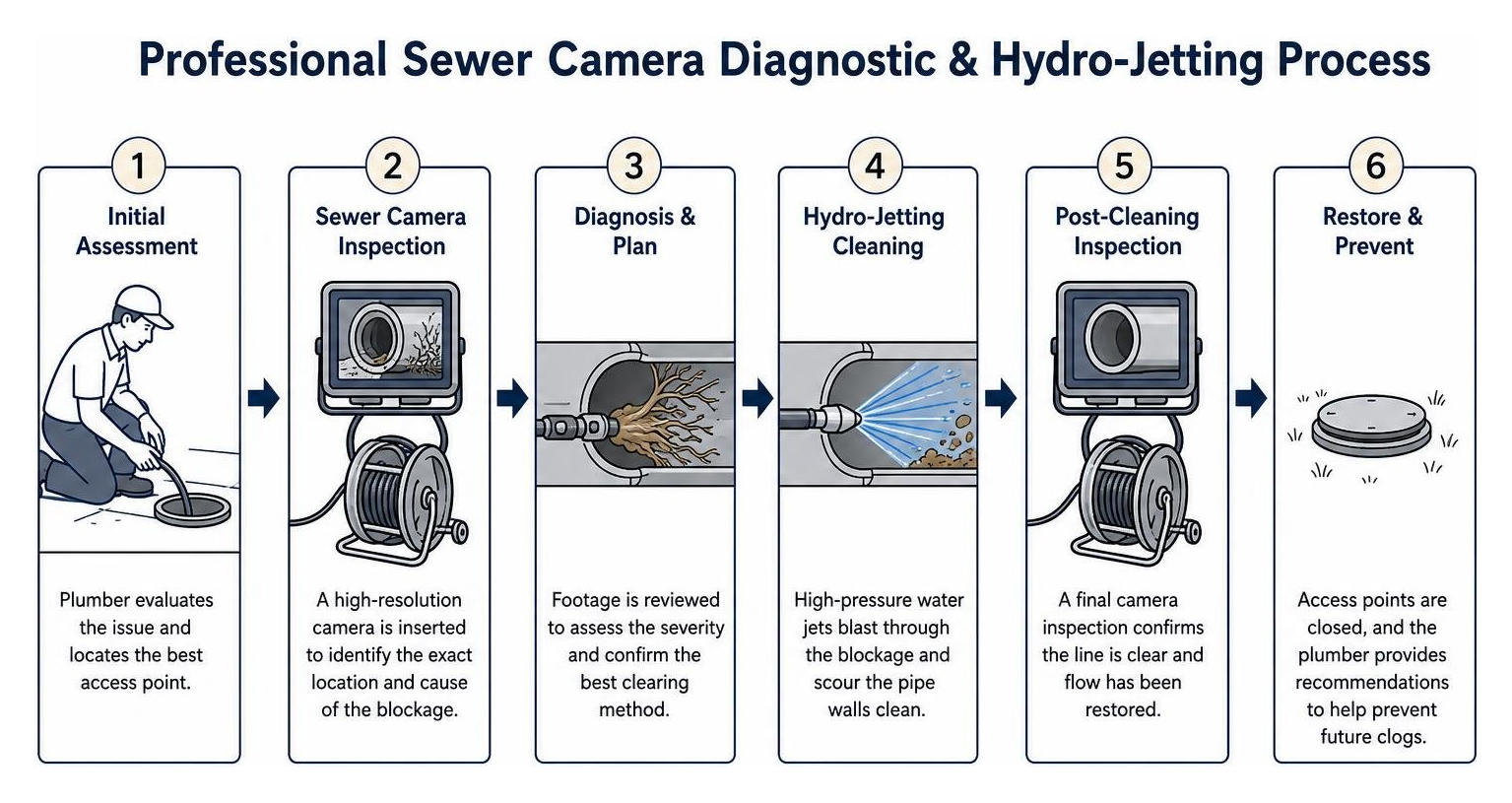
Hydro-jetting is highly effective for main sewer lines because it doesn’t just punch a hole through the clog—it restores the pipe to its original interior diameter, making it much harder for debris to catch and cause a recurring blockage in the future.
Frequently Asked Questions About Clogged Drain Repair
How much does professional clogged drain repair typically cost?
The cost of professional drain cleaning in Northern Utah depends on several factors, including the severity of the clog, its location within your plumbing system, and the tools required to clear it. A simple kitchen sink snaking is generally quick and affordable, while clearing a deep main sewer line blockage with hydro-jetting or resolving tree root intrusion requires more time and advanced equipment.
For reliable local rates and expert service, you can consult with Honest Home Services to get a transparent, upfront estimate for your home.
What should I look for in a clogged drain repair near me?
When searching for clogged drain repair near me, it’s important to choose a service provider you can trust inside your home. Always look for:
- Proper Licensing and Insurance: Ensure the company is fully licensed to perform plumbing work in Utah and carries comprehensive liability insurance.
- Upfront, Transparent Pricing: A reputable plumber should provide a clear, written estimate before starting any physical work, with no hidden fees or surprise surcharges.
- Strong Local Reviews: Check online platforms like Google and the Better Business Bureau (BBB) to see what other homeowners in your community have to say about their experiences.
Do professional plumbers offer emergency or same-day service?
Yes, because plumbing emergencies don’t stick to a standard 9-to-5 schedule. A backed-up sewer line or an overflowing toilet can quickly cause thousands of dollars in water damage if left unaddressed.
At Honest Home Services, we offer rapid-response, same-day plumbing support throughout our Northern Utah service areas. If you are facing an urgent drainage issue, you can connect with our local teams for fast assistance in Layton, Kaysville, Bountiful, and surrounding communities.
Conclusion
A clogged drain can bring your entire household to a grinding halt, but resolving the issue doesn’t have to be a stressful or overly expensive process. By recognizing the early warning signs of a blockage, avoiding harsh chemical cleaners, and knowing when to call in the professionals, you can protect your home’s plumbing system and keep your daily routine on track.
At Honest Home Services, we are proud to provide homeowners and businesses across Salt Lake City, Davis County, and the surrounding Northern Utah communities with honest, reliable, and expert plumbing support. Whether you need a quick sink snaking or a comprehensive main line sewer camera inspection, our local technicians are ready to help.
Don’t let a slow drain turn into an expensive plumbing emergency. Contact us today or visit our dedicated Salt Lake City Drain Cleaning page to schedule your service and restore perfect flow to your home!