

See What Is Happening Inside Your Drains
A drain camera inspection uses a small waterproof camera on a flexible cable to show the inside of a drain or sewer line in real time. It helps a plumber find the likely cause and location of a problem without digging up your yard, opening walls, or relying on guesswork.
| What it does | What it can reveal |
|---|---|
| Sends a lighted camera through a drain access point | Clogs, grease buildup, tree roots, cracks, shifted joints, and damaged pipe sections |
| Displays live footage on a monitor | Whether a recurring drain problem is fully cleared or still present |
| Records the pipe’s condition and location | Clear evidence to guide the next repair decision |
For Northern Utah homes and small businesses, this can be especially useful when drains keep backing up, odors return, or a main sewer line has a problem that is not visible from above ground. A camera does not fix the pipe by itself, but it gives the plumber and property owner a clear view of what needs attention.
At Honest Home Services, our licensed and insured team brings more than 20 years of plumbing experience to every drain camera inspection, drain repair, and main-line concern. We help Utah homeowners and businesses get clear answers first, so the next step can be based on facts rather than assumptions.
How a Drain Camera Inspection Works and What It Detects
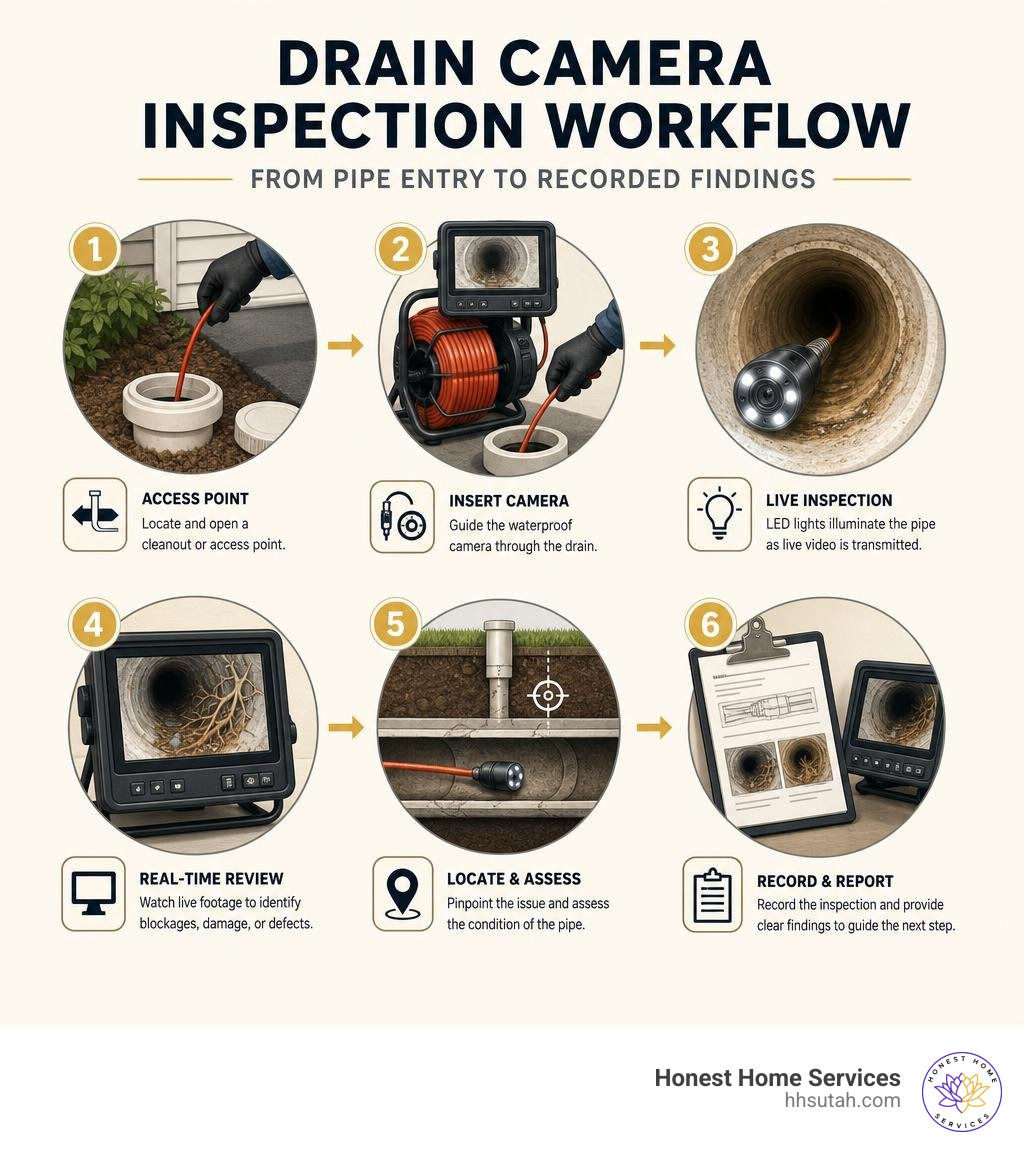
Modern plumbing relies heavily on high-definition closed-circuit television (CCTV) technology to view what is happening inside subterranean piping. A drain camera inspection works by threading a rigid yet flexible pushrod equipped with an optically clear camera head through an accessible cleanout port, drain line, or toilet stack. High-intensity LED lights surrounding the lens illuminate the interior of dark, damp plumbing channels, transmitting crystal-clear live video directly to an above-ground monitor.
As the pushrod travels down the pipe, our technicians observe the structural integrity of the line in real time. By understanding the benefits of a drain pipe camera inspection, property owners avoid destructive exploratory excavation. Rather than tearing up pristine landscaping, concrete driveways, or subflooring to find a suspected clog or leak, video scoping pinpoints the issue non-invasively.

Signs It’s Time for a Drain Camera Inspection
Plumbing problems rarely resolve on their own; instead, minor warning signs escalate into costly sewer backups if left unaddressed. Recognizing the early indicators allows property owners across Salt Lake City, Herriman, and surrounding Northern Utah communities to intervene before emergency conditions strike.
You should schedule a video inspection if you notice any of these symptoms:
- Slow-Draining Fixtures: When sinks, tubs, and showers across multiple rooms drain sluggishly, the restriction is typically deep in the main waste lateral rather than an isolated fixture branch.
- Recurring Clogs: If you find yourself using a plunger or chemical cleaner repeatedly on the same line, an underlying structural defect or tree root ball is likely catching debris. Review our guide on 6 telltale signs you need a camera drain inspection for deeper insights.
- Foul Sewer Odors: Persistent smells of hydrogen sulfide gas indoors or near outdoor cleanouts indicate a cracked sewer pipe, dried-out trap, or venting blockage.
- Soggy Spots in the Lawn: Unexplained patches of lush, vivid green grass or wet, sunken ground in your yard often point to an underground sewer pipe leak feeding water and nutrients into the surrounding soil.
- Sewage Backups: Wastewater overflowing through basement floor drains or lower-level plumbing fixtures signals a severe main-line obstruction or structural line collapse.
What Plumbing Issues Can Be Found During an Inspection?
Subterranean pipes endure constant soil movement, freeze-thaw cycles, aggressive tree roots, and decades of corrosive wastewater flow. A comprehensive drain camera inspection reveals various physical defects that compromise pipe performance:
- Tree Root Intrusion: Fast-growing tree and shrub roots enter pipes through microscopic hairline fractures or loose joint seals in search of moisture. Once inside, they expand into thick, hair-like mats that catch toilet paper and solid waste.
- Pipe Offsets and Disjointed Sections: Shifting soil, clay compaction, or seismic settling can push adjacent pipe segments out of alignment, creating ledges where solids snag and cause blockages.
- Cracks and Structural Collapses: Older pipe materials like clay, cast iron, or corroded Orangeburg can crack, fragment, or collapse entirely under external load pressures.
- Grease and Scale Buildup: Kitchen grease, soap scum, and mineral scale narrow the inner diameter of lines over time, restricting flow capacity and causing chronic backups.
- Pipe Bellies (Sagging Lines): When soil settles beneath a pipe section, it creates a downward dip or “belly.” Gravity causes standing water and sediment to accumulate in this low point, leading to frequent paper jams.
To learn more about evaluated main lateral conditions, explore everything you need to know about main line camera inspections.
Key Features and Technology in Pipe Inspections
High-end video pipe diagnostic equipment incorporates sophisticated optics and sensor technologies to provide sharp visuals, even in murky, submerged environments.

Key Technology Used in a Drain Camera Inspection
Modern commercial sewer inspection systems include advanced hardware designed to make line evaluation precise and straightforward:
- High-Definition (HD) Optics & Adjustable LEDs: High-resolution camera sensors (ranging from standard 640×480 up to 1080p HD) work alongside ultra-bright, dimmable LED ring lights to eliminate shadows and illuminate pitch-black pipes.
- Integrated 512Hz Sonde Transmitters: A small radio transmitter built directly into the camera probe emits a precise 512Hz signal through soil, concrete, and asphalt. Paired with an above-ground locator wand, our technicians can trace the camera’s exact position and depth beneath your property down to the inch.
- Self-Leveling Camera Heads: Internal gravity-balanced bearings keep the video feed automatically upright on the monitor as the camera rotates through winding bends. This eliminates disorienting, upside-down visual feeds during inspections.
- On-Screen Distance Counters: Digital encoders measure how many feet or meters of pushrod cable have been deployed into the line, displaying exact footage counts on screen to measure distance to an obstruction.
High-performance inspection systems like the SeeSnake Mini Camera with TruSense utilize specialized High Dynamic Range (HDR) image sensors to balance light and dark areas, preventing washed-out reflections inside wet pipes. Furthermore, units such as the 24pcs LED Lights Sewer Camera with Locator offer high-intensity illumination setups capable of lighting up large-diameter residential and commercial mains.
Basic vs Professional Inspection Systems
Property owners often wonder whether consumer-grade borescopes or entry-level rental cameras match the performance of professional diagnostic equipment. While DIY cameras can inspect short distances inside exposed 1.5-inch sink drains, professional-grade systems are engineered for long distances, tough turns, and underground main lines.
| Feature / Capability | Entry-Level / Consumer DIY Cameras | Professional-Grade Inspection Systems |
|---|---|---|
| Pushrod Cable Length | 15 ft – 50 ft (thin, flexible wire) | 100 ft – 400 ft (heavy-duty, flexible fiberglass core) |
| Pushrod Rigidity | Buckles easily in main lines; cannot push past bends | Engineered stiffness; navigates multiple 90° elbows and P-traps |
| Locating Capability | None | Integrated 512Hz sonde transmitter for precise depth tracing |
| Image Orientation | Fixed lens; output tilts and spins upside down | Self-leveling gravity head or digital auto-image flip |
| Illumination & Clarity | Low-lumen fixed LEDs; basic 480p output | High-lumen dimmable LEDs; 1080p HD with HDR anti-glare |
| Data Recording | Basic phone screen view or minimal storage | Integrated DVR with text overlay, distance logging, & SD export |
Attempting to diagnose main sewer lines with low-grade rental tools often results in stuck cables or unclear images. Before deciding on equipment options, review your guide to video pipe camera rentals to understand the differences in cable rigidity and diagnostic accuracy.
Equipment Selection, Care, and Troubleshooting
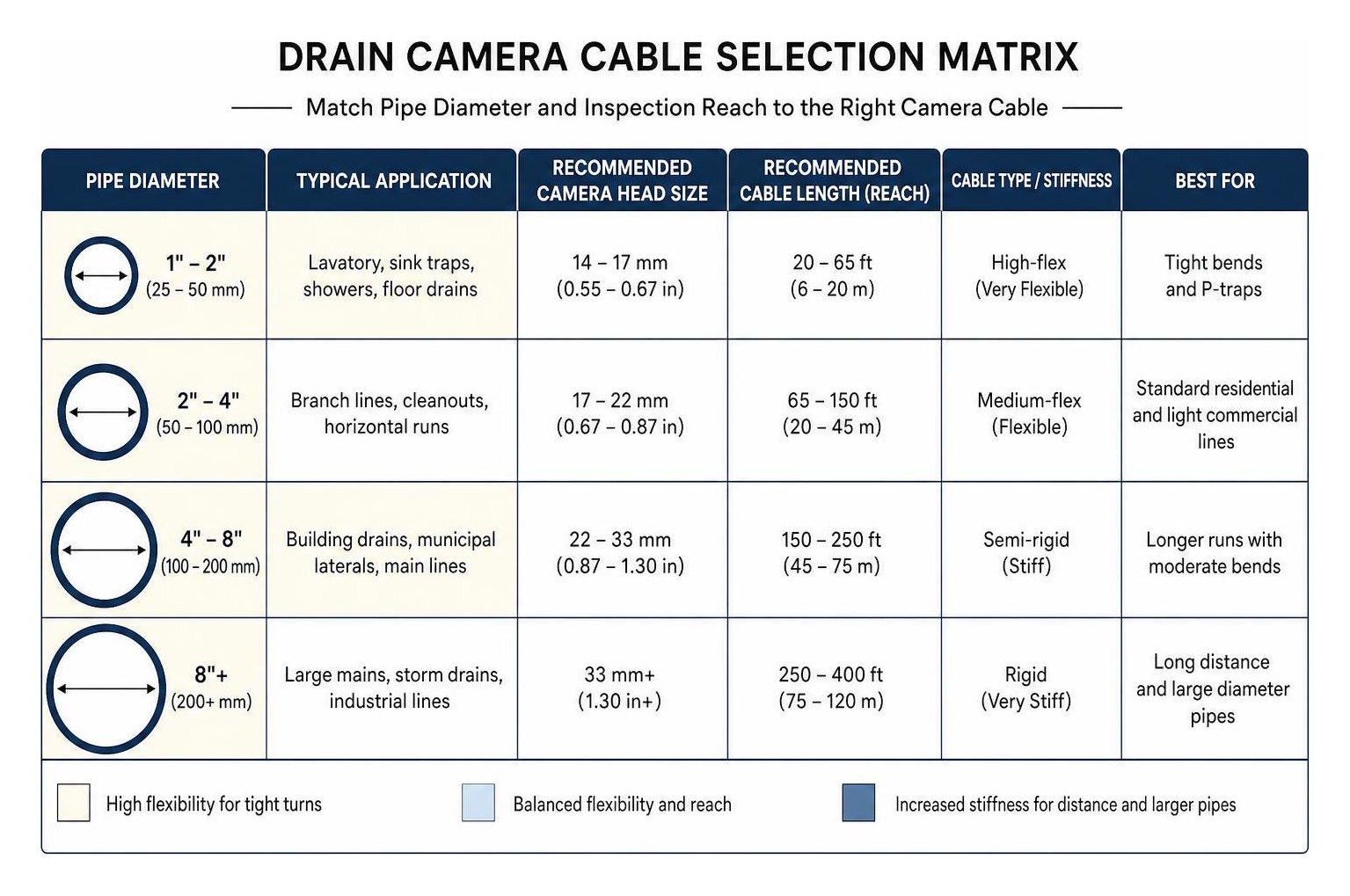
Professional plumbers select camera configurations based on pipe diameter, line material, distance requirements, and access constraints.
Cable Lengths, Waterproofing, and Battery Life
Matching camera head size and cable specs to the pipe is critical for a smooth inspection:
- Small Branch Line Systems: Compact units such as the SeeSnake microDrain APX Inspection Camera utilize a small 22mm camera head paired with a high-flex 65-foot push cable. This design easily navigates tight 1.25-inch to 3-inch household drain lines and P-traps without binding.
- Main Lateral Systems: Standard sewer scopes like the Garvee Sewer Inspection Camera with 512Hz Locator utilize 100-foot to 165-foot fiberglass cables with 23mm self-leveling heads optimized for 3-inch to 6-inch residential lateral lines.
- Commercial & Industrial Systems: Heavy-duty reels feature push cables spanning 200 to 400 feet with 9mm to 11mm cable coils, pushing through large 8-inch to 12-inch commercial lines.
Waterproofing is paramount for working in flooded pipes. Quality inspection camera probes carry an IP68 waterproof rating, ensuring continuous operation underwater at depths up to 330 feet. Additionally, rechargeable 4500mAh lithium-ion battery packs power modern field monitors for 6 to 10 hours of continuous operation per charge.
Equipment Maintenance, Lifespan, and Common Fixes
Professional inspection gear is designed for harsh, dirty environments, but regular maintenance is vital to preserve image clarity and equipment health. SANYIPACE and similar commercial drain inspection cameras carry an average operational lifespan of 3 to 5 years under regular residential and light industrial usage.
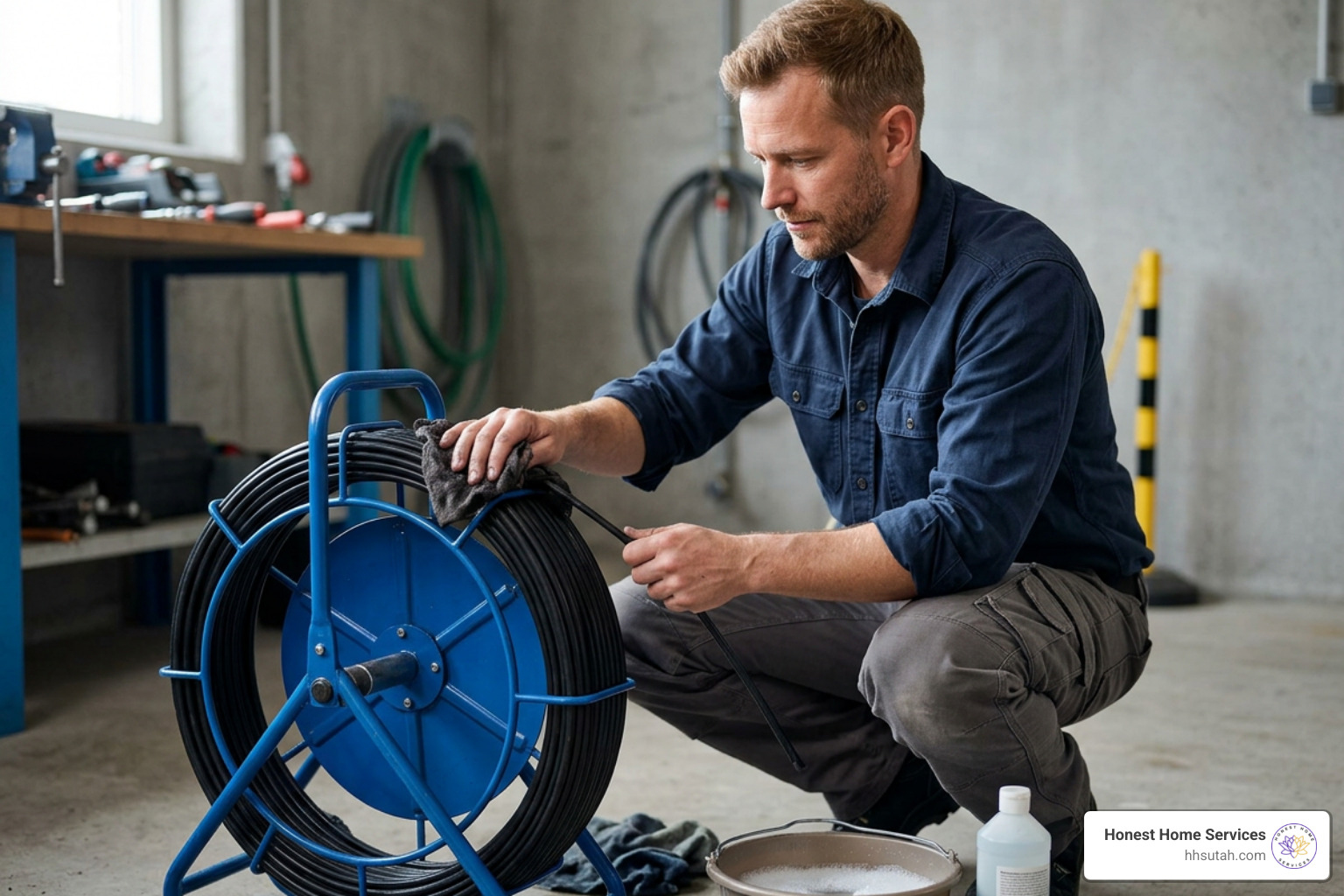
To extend equipment service life, technicians perform routine maintenance after every job:
- Rinse and Sanitize: Push cables and camera probes are scrubbed clean of sewage, grease, and abrasive grit using disinfectant solution after each run.
- Inspect Electrical Contacts: Gold-plated pushrod pins and monitor connectors are kept free of moisture and corrosion to prevent video signal degradation.
- Calibrate Distance Counters: Measuring wheels and encoder blocks are cleaned regularly to prevent slippage and ensure precise footage logging.
Troubleshooting Blue Screens or Blank Footage
If a monitor suddenly displays a blue screen or loses signal while pushing cable into a line, the issue usually stems from a loose connection or distance counter block interference rather than a destroyed camera sensor. Checking and tightening slip-ring quick-connect points or bypassing the distance encoder often restores video output immediately.
Reliable manufacturers like the makers of the DrainPangolin DP09D1 Professional HD Sewer Camera provide field-replaceable modular parts and standard multi-year warranties to ensure diagnostic tools remain job-ready.
Frequently Asked Questions
Can I record and share footage from a sewer inspection?
Yes, professional sewer cameras incorporate built-in digital video recorders (DVRs) that capture high-definition AVI video files and JPG photos directly to an internal SD card or USB flash drive. Modern monitors also support microphone audio recording, allowing technicians to add voiceover explanations while navigating the pipe.
We provide property owners, real estate agents, and insurance adjusters with digital video files and written reporting. Having clear visual proof verifies line conditions before work begins and confirms that hydro-jetting or cable clearing successfully opened the pipe.
Is a camera inspection suitable for both residential and commercial lines?
Yes. Video inspection systems are designed for both residential branch drains and heavy-duty commercial mains.
- Residential Applications: Perfect for inspecting 1.5-inch kitchen sink drains, 2-inch shower lines, 3-inch toilet stacks, and 4-inch main sewer laterals leading out to city connections.
- Commercial Applications: Essential for evaluating grease trap interceptor lines, roof drains, stormwater culverts, commercial kitchen waste pipes, and multi-unit apartment laterals up to 8–12 inches in diameter.
For commercial and municipality-level piping, specialized crawler rigs with 360-degree pan-and-tilt heads navigate long lines effortlessly. Read more about our capabilities on our mainline inspection services page.
What does a typical sewer scope inspection cost?
Throughout the United States, a standard residential sewer scope inspection performed by a licensed plumber generally ranges between $150 and $300 on average. Factors affecting the total cost include line accessibility, pipe distance, location, and whether the service is bundled alongside hydro-jetting or drain cleaning services.
A professional camera inspection delivers an exceptional return on investment. By identifying exact pipe defect coordinates above ground, property owners avoid paying thousands of dollars in unnecessary exploratory trenching or blanket sewer line replacements. To read more about diagnostic value, check out how much does a sewer line camera inspection cost.
Conclusion
A drain camera inspection takes the guesswork out of plumbing repairs, delivering absolute visual clarity on the hidden condition of your underground waste lines. From detecting stubborn tree root balls and grease buildup to locating bellies, offsets, and line fractures, CCTV video technology ensures every repair recommendation is supported by real-time visual proof.
Whether you are dealing with chronic line backups in Salt Lake City, buying a home in Bountiful, or maintaining a commercial building in Park City, getting an accurate diagnosis first saves time, protects landscaping, and prevents unexpected expenses.
At Honest Home Services, we are committed to providing transparent, reliable, and affordable plumbing solutions across Salt Lake County, Davis County, and Northern Utah. If your drains are backed up or giving off foul odors, do not guess what lies underground. Take the next step by learning how you can understand the benefits of a drain pipe camera inspection, and contact our expert team to schedule your professional line evaluation today!