
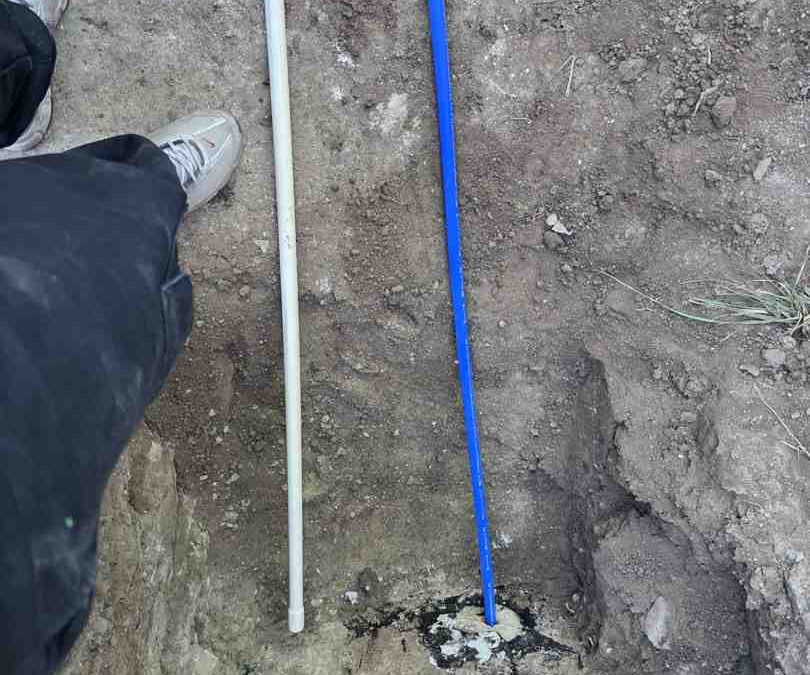
What Is a Sewer Connection to the Main Line?
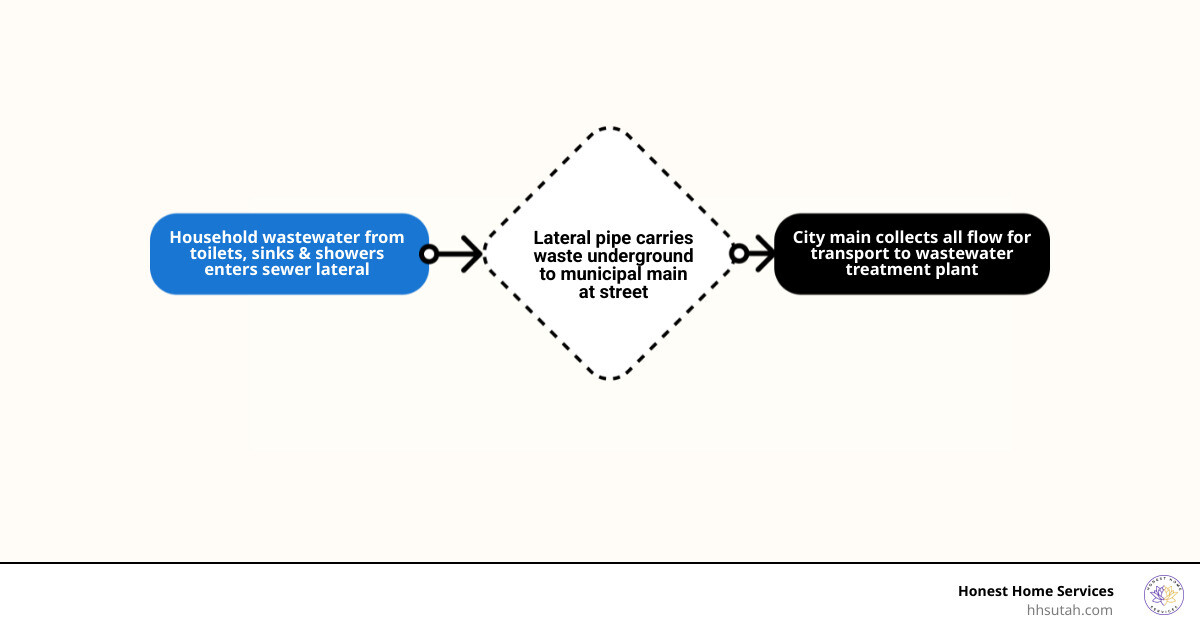
A sewer connection to the main line is the private pipe that runs from your home to the city’s public sewer system, carrying all household wastewater away from your property.
Here’s the quick answer:
- Your home’s plumbing drains into a single pipe called the sewer lateral
- That lateral runs underground from your house to the municipal main in the street
- Wastewater flows by gravity — no pumps needed in most cases
- You own and maintain the lateral; the city owns the main
- Connecting or repairing this line requires a permit in most municipalities
Most Utah homeowners don’t think about this pipe until something goes wrong — a backed-up toilet, slow drains throughout the house, or a soggy patch of yard that won’t dry out. By then, the problem has often been building for a while.
Understanding how your sewer hookup works — and who’s responsible for what — can save you from a costly emergency down the road.
At Honest Home Services, we’ve spent over 20 years helping Northern Utah homeowners diagnose, repair, and properly connect their sewer lines to the main line, and we know exactly what it takes to do the job right. Read on for everything you need to know before any work begins.
Simple guide to sewer connection to main line:
Understanding the Sewer Connection to Main Line

When we talk about a sewer connection to main line, we are looking at the critical bridge between your private home life and the public infrastructure of cities like Salt Lake City or Layton. This pipe system is designed to work silently and efficiently, but its engineering is quite specific.
A connecting to sewer main line project involves more than just sticking two pipes together. It requires a precise understanding of elevation, soil conditions, and municipal standards. In Northern Utah, our soil can be tricky, and our winters are harsh, meaning these connections must be buried deep enough to avoid frost issues while maintaining a consistent downward slope.
Defining the Sewer Lateral vs. the Main Line
It is easy to get confused by the terminology, but here is the breakdown:
- The Sewer Lateral: This is the pipe that belongs to you. It starts where your home’s internal plumbing exits the foundation and ends where it meets the city’s pipe.
- The Main Line: This is the large-diameter municipal pipe, usually located under the center of the street or in a public easement. It collects wastewater from dozens or hundreds of laterals and carries it to a treatment plant.
The property line is often the mental “boundary,” but legally, your responsibility usually extends all the way to the actual physical connection at the street main.
Key Differences Between Water and Sewer Hookups
Many homeowners assume that because they have a water line, the sewer line works the same way. This couldn’t be further from the truth.
| Feature | Main Water Line | Sewer Main Line Connection |
|---|---|---|
| Flow Method | Pressure (Pumped by the city) | Gravity (Sloped downward) |
| Pipe Size | Typically 3/4″ to 1″ | Typically 4″ (minimum 3″ in some cases) |
| Material | Copper, PEX, or HDPE | PVC, ABS, or older Cast Iron/Clay |
| Direction | Into the home | Out of the home |
Because sewer lines rely on gravity, the “pitch” or slope is everything. If the pipe is too flat, solids settle and cause clogs. If it’s too steep, the water outruns the solids, also causing clogs. We aim for a “Goldilocks” slope of 2% (about 1/4 inch of drop per foot of pipe). To ensure your system is running correctly, you should understand the main event: everything you need to know about your sewer cleanout, which is your primary access point for maintenance.
Permitting and Regulatory Requirements for Hookups
You can’t just dig a hole in the street and tap into the city’s sewer. Doing so is not only illegal but can result in massive fines and damage to the public system. In places like Salt Lake County and Davis County, the process is strictly regulated to protect the environment and public health.
Obtaining Necessary Approvals
Before we even touch a shovel, we have to navigate the paperwork. Most municipalities require an S-Permit (Sewer Permit) for any new sewer connection to main line or major repair.
- Utility Plan Review: The city reviews your site plan to ensure the new line won’t interfere with gas, power, or water lines.
- Pre-Permit Review: This involves checking that the proposed materials and methods meet current standards.
- Inspections: A city inspector must view the pipe while it is still uncovered in the trench to verify the slope and connection integrity.
If you are dealing with an older home, you might be facing a Salt Lake City sewer mainline repair that requires specific historical compliance. Each city, from Bountiful to West Jordan, has its own nuances in their sewer connection manual or local equivalent.
Safety and Excavation Guidelines
Excavation is one of the most dangerous parts of plumbing. Because sewer mains are often 8 to 15 feet deep, the risk of a trench collapse is real.
- OSHA Shoring: Any trench deeper than 5 feet must have shoring or “trench boxes” to protect workers.
- 811 (PA One Call/Blue Stakes): In Utah, we call Blue Stakes at least two full business days before digging. They mark the locations of underground utilities so we don’t accidentally hit a gas line.
- Peak Hour Restrictions: If the connection requires cutting into a major road in Murray or Sandy, the city may restrict work to “off-peak” hours to avoid traffic chaos.
Technical Standards: How a Sewer Connection to Main Line Is Made
Making the actual physical connection is a feat of engineering. We use several methods depending on whether we are working with a brand-new installation or a repair.
Methods for Sewer Connection to Main Line
- Saddle Tap: If there isn’t an existing “wye” (a Y-shaped fitting) on the main line, we use a saddle. This involves core-drilling a hole into the municipal pipe and strapping a curved fitting (the saddle) over it with heavy-duty stainless steel clamps.
- Wye Fitting: In new developments, the city often installs a wye fitting every 50 feet or so. We simply find the “stub” and connect our lateral to it.
- Pipe Bursting: This is a trenchless method. We pull a new high-density polyethylene (HDPE) pipe through the old, broken one. The “bursting head” breaks the old pipe apart and makes room for the new one. This is a popular choice for pipe dreams: everything you need to know about mainline sewer upgrades.
- Trenchless Technology: Methods like Cured-in-Place Pipe (CIPP) lining allow us to “re-sleeve” an existing lateral without digging up the whole yard.
Materials and Slope Requirements for Sewer Connection to Main Line
Modern standards are very specific. In 2026, we almost exclusively use Schedule 40 PVC or ABS plastic for residential laterals. These materials are smooth (to prevent clogs) and resistant to the corrosive gases found in sewage.
- Depth: The pipe must be at least 4 feet underground at the property line to prevent freezing and damage from vehicles.
- Slope: A minimum of 2% slope is required.
- Bedding: The pipe shouldn’t sit on raw dirt. We lay it on a bed of crushed stone or sand to prevent the pipe from settling or “bellied” sections where water pools.
To verify these technical standards are met, we highly recommend mainline inspection services where a camera is sent down the line to ensure there are no offsets or cracks.
Homeowner Responsibilities and Maintenance
One of the biggest shocks for homeowners is learning that they own the pipe all the way to the street. If a tree root in the “parkway” (the grass between the sidewalk and the street) crushes your sewer line, that is usually your bill to pay, not the city’s.
Ownership Boundaries and Repairs
In most of Northern Utah, the homeowner is responsible for the lateral from the house to the “tap” on the main. This includes:
- Clearing blockages.
- Repairing cracks caused by shifting soil.
- Replacing the line if it collapses.
If your line runs through a neighbor’s yard, you likely have a private easement. This legal agreement allows you to access their property for repairs, but it also means you are responsible for restoring their landscaping afterward. When an emergency happens, knowing when your main line breaks: a homeowner’s emergency guide can help you act fast.
Preventing Clogs and Root Intrusion
Prevention is worth its weight in gold.
- Hydro Jetting: This uses high-pressure water to scrub the inside of your pipes. It’s like a pressure washer for your sewer. It’s the most effective way to remove grease and small roots. Learn more about don’t get drained: your step-by-step guide to cleaning your main sewer line.
- Root Barriers: If you have a beautiful oak or willow tree near your line, we can install physical barriers or chemical inhibitors to keep roots away from the pipe joints.
- Grease Disposal: Never pour fat, oil, or grease (FOG) down the drain. It hardens like concrete inside your lateral, eventually leading to a total blockage.
Identifying and Solving Main Line Issues
How do you know if your sewer connection to main line is failing? Your house will usually tell you, but you have to know how to listen.
Warning Signs of a Failing Connection
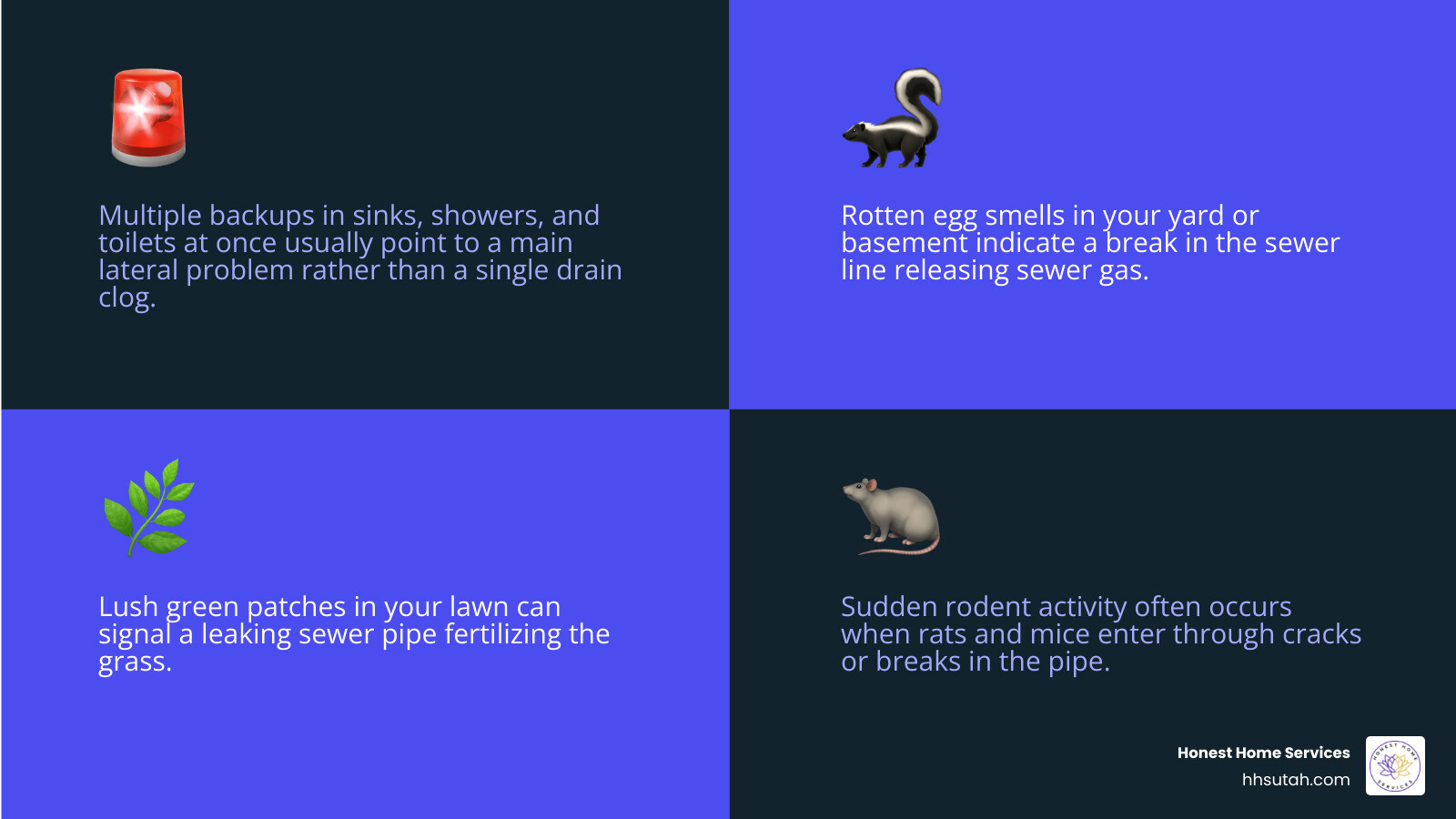
- Multiple Backups: If your kitchen sink, shower, and toilet all gurgle or back up at the same time, the problem isn’t in one drain—it’s in the main lateral.
- Sewage Smells: Sewer gas is distinctive (rotten eggs). If you smell it in your yard or basement, you likely have a break in the line.
- Lush, Green Patches: Is one part of your lawn suspiciously green and fast-growing? It might be getting “fertilized” by a leaking sewer pipe.
- Rodent Activity: Rats and mice love sewer lines. If you have a sudden infestation, they may be entering through a cracked pipe.
If you notice these signs, check out our guide from gurgles to gushers: your guide to main line clogs for immediate steps to take.
Professional Solutions for Main Line Clogs
When the plunger fails, it’s time for the pros. We use a three-step approach:
- Video Inspection: We send a waterproof camera down the line to see exactly what is happening. No more guessing.
- Hydro Jetting: If it’s a clog, we blast it away. You can find out why this is so effective in our post on mainline magic: what you need to know about hydro jetting.
- Trenchless Repair: If the pipe is physically damaged, we can often fix it from the inside out using epoxy liners, saving your driveway and your rose bushes.
Frequently Asked Questions about Sewer Connections
Can I connect my own sewer line to the main?
Technically, some jurisdictions allow homeowners to do their own work, but we strongly advise against it. Connecting a sewer line to the main line involves hazardous waste, strict engineering codes, and high-stakes excavation. In most Utah cities, a licensed and bonded master plumber is required to sign off on the permit and be present for the inspection. One mistake can lead to raw sewage backing up into your basement—or your neighbor’s.
How long does a new sewer connection take to complete?
For a standard residential lot, the physical work usually takes 1 to 3 days.
- Day 1: Excavation and exposing the main.
- Day 2: Laying the pipe and making the connection.
- Day 3: City inspection and backfilling the trench. However, the permitting and planning phase can take 1–2 weeks depending on how fast the local building department moves.
Who is responsible for a sewer blockage in the street?
If the blockage is in the municipal main (the big pipe), the city is responsible for the cleanup and repair. However, if the blockage is in your lateral, even if that lateral is physically located under the street, it is your responsibility. We can help you determine the location of the blockage with a camera inspection to see if you should be calling us or the city.
Conclusion
Managing a sewer connection to main line isn’t something most people want to spend their weekends thinking about. But in Northern Utah—from the busy streets of Salt Lake City to the quiet neighborhoods of Kaysville and Farmington—having a reliable sewer system is the foundation of a healthy home.
At Honest Home Services, we believe in fair pricing and expert work. We provide 24/7 emergency support because we know that sewer lines don’t wait for business hours to break. Whether you need a simple camera inspection or a full trenchless mainline upgrade, our local technicians are ready to help.
Don’t wait for a backup to turn into a flood. Schedule your Salt Lake City Sewer Mainline Repair today and let us give you the peace of mind that comes with a perfectly connected home.