
What Does a Gas Water Heater Repair Actually Cost?
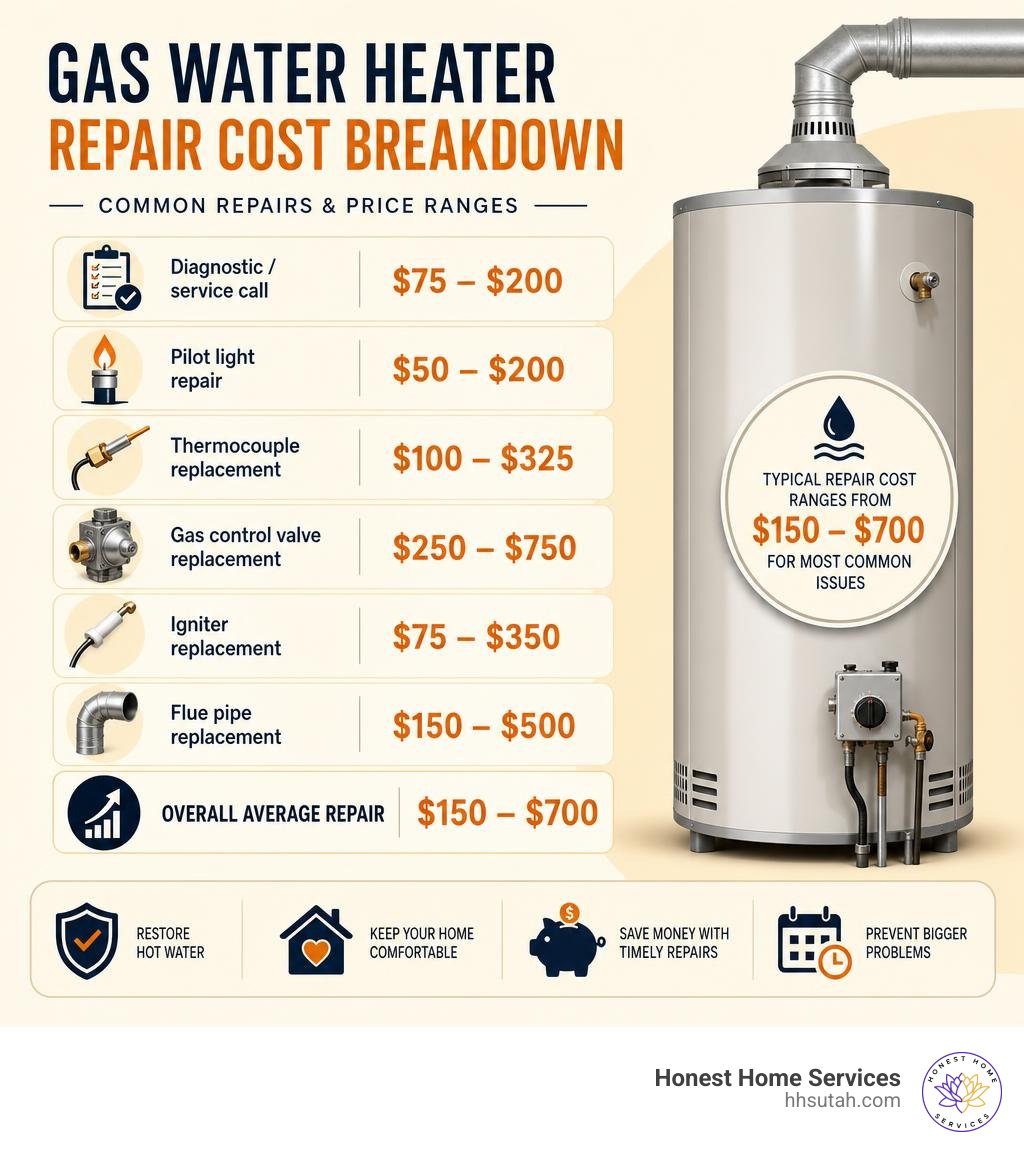
Gas water heater repair cost typically ranges from $150 to $700 for most common issues on a standard tank unit. Here’s a quick snapshot so you can gauge where your situation might fall:
| Repair Type | Typical Cost Range |
|---|---|
| Diagnostic / service call | $75 – $200 |
| Pilot light repair | $50 – $200 |
| Thermocouple replacement | $100 – $325 |
| Gas control valve replacement | $250 – $750 |
| Igniter replacement | $75 – $350 |
| Flue pipe replacement | $150 – $500 |
| Overall average repair | $150 – $700 |
Most homeowners land somewhere in the middle of that range. A minor fix like relighting a pilot or swapping a thermocouple is on the lower end. A gas control valve replacement or anything requiring extensive labor pushes costs higher.
You step into the shower expecting hot water — and get an ice-cold surprise instead. It’s one of those moments that immediately raises two questions: What’s broken? And how much is this going to cost me?
The honest answer is: it depends. The final bill is shaped by which part failed, how old your unit is, where it’s located in your home, and whether you’re calling on a Tuesday afternoon or a Sunday morning. Understanding those variables before a plumber shows up puts you in a much stronger position.
At Honest Home Services, we’ve spent over 20 years diagnosing and fixing gas water heaters for homeowners and small businesses across Northern Utah — so we know how much gas water heater repair cost can vary and what actually drives that number. In the sections below, we’ll walk you through everything you need to make a smart, informed decision.
Gas water heater repair cost word roundup:
Introduction
No one plans for their water heater to break down. It usually happens at the worst possible moment—right before a big work presentation, during a freezing Utah winter storm, or when you have out-of-town guests staying at your home in Salt Lake City or Bountiful. When that cold water hits your skin, the initial panic is quickly followed by the stress of diagnostic steps and repair bills.
Before you assume you need an entirely new system, it is important to realize that many gas water heater problems can be resolved with a targeted repair. Gas water heaters are highly durable machines, but they rely on a delicate balance of combustion, ventilation, and plumbing mechanics to deliver that steady stream of hot water. Understanding how these parts interact can save you hundreds of dollars in unnecessary diagnostics.
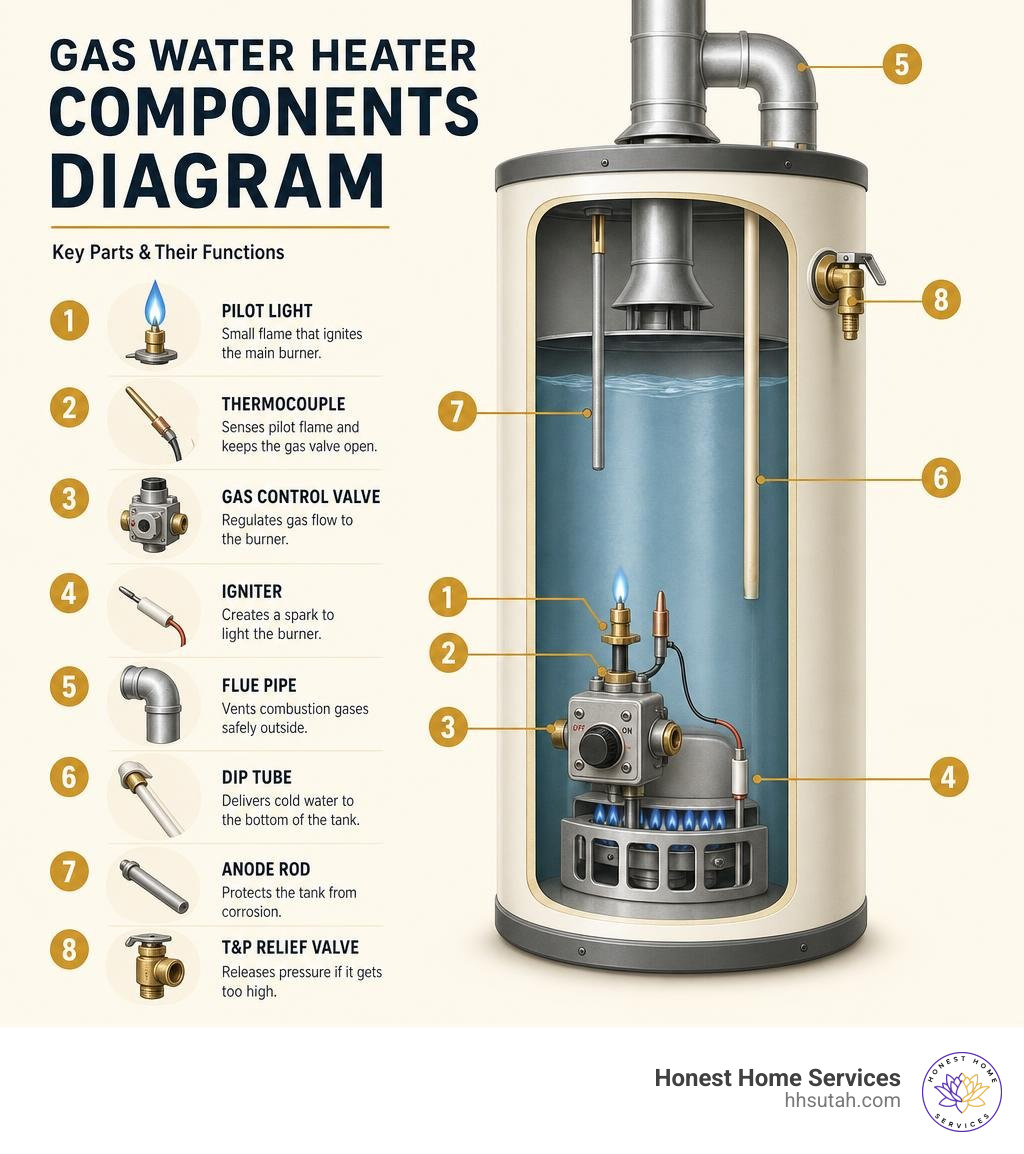
When a technician arrives at your home, they will systematically check the primary components: the pilot light assembly, the gas valve, the thermocouple, and the tank itself. By understanding these systems, you can better communicate with your plumber, avoid getting overcharged, and make the best financial choice for your household.
Average Gas Water Heater Repair Cost in 2026
As we navigate the year 2026, the national average cost to repair a water heater hovers around $600, though total costs can range from $100 to over $1,000 depending on the severity of the issue, the type of unit (tank vs. tankless), and local labor rates.
To help you budget, here is what you can realistically expect to pay for professional repairs:
- Minor Repairs ($100 to $350): These include simple component swaps like a thermocouple, pilot light relighting, or replacing a faulty pressure relief valve.
- Medium Repairs ($200 to $750): These involve more complex components, such as replacing a gas control valve, swapping out a damaged burner assembly, or repairing a flue pipe.
- Severe Issues ($750 to $1,775+): These are typically reserved for tankless heat exchanger replacements, extensive gas line modifications, or repairing major leaks in hard-to-access areas.
Before any work begins, most reputable plumbing companies will charge a diagnostic or trip fee ranging from $75 to $200. This fee covers the technician’s time, travel, and expertise to accurately pinpoint the problem. At Honest Home Services, we believe in complete transparency, which is why we always outline these costs upfront.
For a deeper dive into national cost benchmarks, you can check out the comprehensive How Much Does Water Heater Repair Cost? (2026) guide. If you are trying to decide whether a specific repair is worth the investment, our article on How Much Will Your Broken Water Heater Cost to Fix? provides excellent context for local Utah homeowners.
Common Gas Water Heater Repairs and Pricing
To give you a clearer picture of what you might pay, let’s break down the most common gas-specific plumbing repairs. Because gas units rely on combustion to heat your water, they feature specialized safety and ignition components that electric models simply do not have.
Here is a direct comparison of common gas water heater repairs and their typical professional costs:
| Repair Category | Specific Component | DIY Part Cost | Professional Cost Range |
|---|---|---|---|
| Ignition & Safety | Pilot Light Relight / Cleaning | $0 – $10 | $50 – $200 |
| Ignition & Safety | Gas Thermocouple / Flame Sensor | $15 – $30 | $100 – $325 |
| Ignition & Safety | Spark Igniter Replacement | $20 – $50 | $75 – $350 |
| Gas Control | Gas Control Valve / Thermostat | $100 – $250 | $250 – $750 |
| Ventilation | Flue Pipe Repair / Replacement | $30 – $100 | $150 – $500 |
| Maintenance | Tank Flush & Sediment Removal | $10 – $20 | $100 – $300 |
Thermocouple Replacement and Gas Water Heater Repair Cost
The thermocouple is one of the most critical safety features on a gas water heater. It is a simple metal probe that sits right next to the pilot light flame. Its job is to detect whether the pilot light is lit. If the flame goes out, the thermocouple cools down, sending an electrical signal to the gas valve to shut off the gas supply. This prevents dangerous gas leaks from filling your home.
If your water heater’s pilot light refuses to stay lit, a worn-out or dirty thermocouple is almost always the culprit. Over time, soot and carbon buildup coat the sensor, preventing it from detecting the flame’s heat.
- DIY Cost: If you are a handy homeowner, a replacement thermocouple costs about $20 at a local home improvement store in Layton or West Valley.
- Professional Cost: Hiring a licensed plumber to safely replace and test the thermocouple typically costs between $150 and $350.
Because gas lines are involved, many homeowners prefer the peace of mind that comes with professional installation. For a step-by-step breakdown of how this process works, read our guide: Fix Your Hot Water: The Ultimate Guide to Thermocouple Replacement.
Gas Control Valve Replacement and Gas Water Heater Repair Cost
The gas control valve (often referred to as the thermostat assembly) is the “brain” of your gas water heater. It regulates the flow of gas to the burner, monitors water temperature, and houses the safety controls for the pilot light.
When a gas control valve fails, you may experience erratic water temperatures, a complete lack of hot water, or a system that refuses to ignite. Because this part directly manages gas flow and combustion safety, replacing it is not a recommended DIY project. It requires professional calibration, precise gas pressure testing, and strict adherence to local Utah building codes.
- Professional Cost: Replacing a gas control valve typically ranges from $250 to $750, with most standard tank models averaging around $350 to $550.
If your water heater is approaching the end of its lifespan, investing in a new gas control valve may not be the most cost-effective choice, as we will discuss in the replacement section below.
Key Factors Influencing Your Repair Bill
When a plumber provides a quote, they aren’t just looking at the price of the replacement part. Several “behind-the-scenes” variables can cause prices to swing significantly, even for the exact same repair.
- Unit Accessibility: If your water heater is easily accessible in an open basement in Salt Lake City, the repair will take less time. If it is tucked away in a tight crawl space in Park City, a cramped utility closet, or a low attic, the technician will have to charge more for the extra labor hours required to navigate the space.
- Emergency and After-Hours Fees: Plumbing emergencies rarely happen during standard business hours. If your water heater springs a major leak on a Sunday morning or a holiday, expect to pay emergency rates. This premium typically adds 1.5x to 2x to the standard hourly labor rate.
- Permit and Code Requirements: In many Northern Utah municipalities—including Davis County and Salt Lake County—certain repairs or component upgrades require a local permit and inspection. Permits can add $50 to $250 to the total bill but ensure your system is entirely safe and compliant.
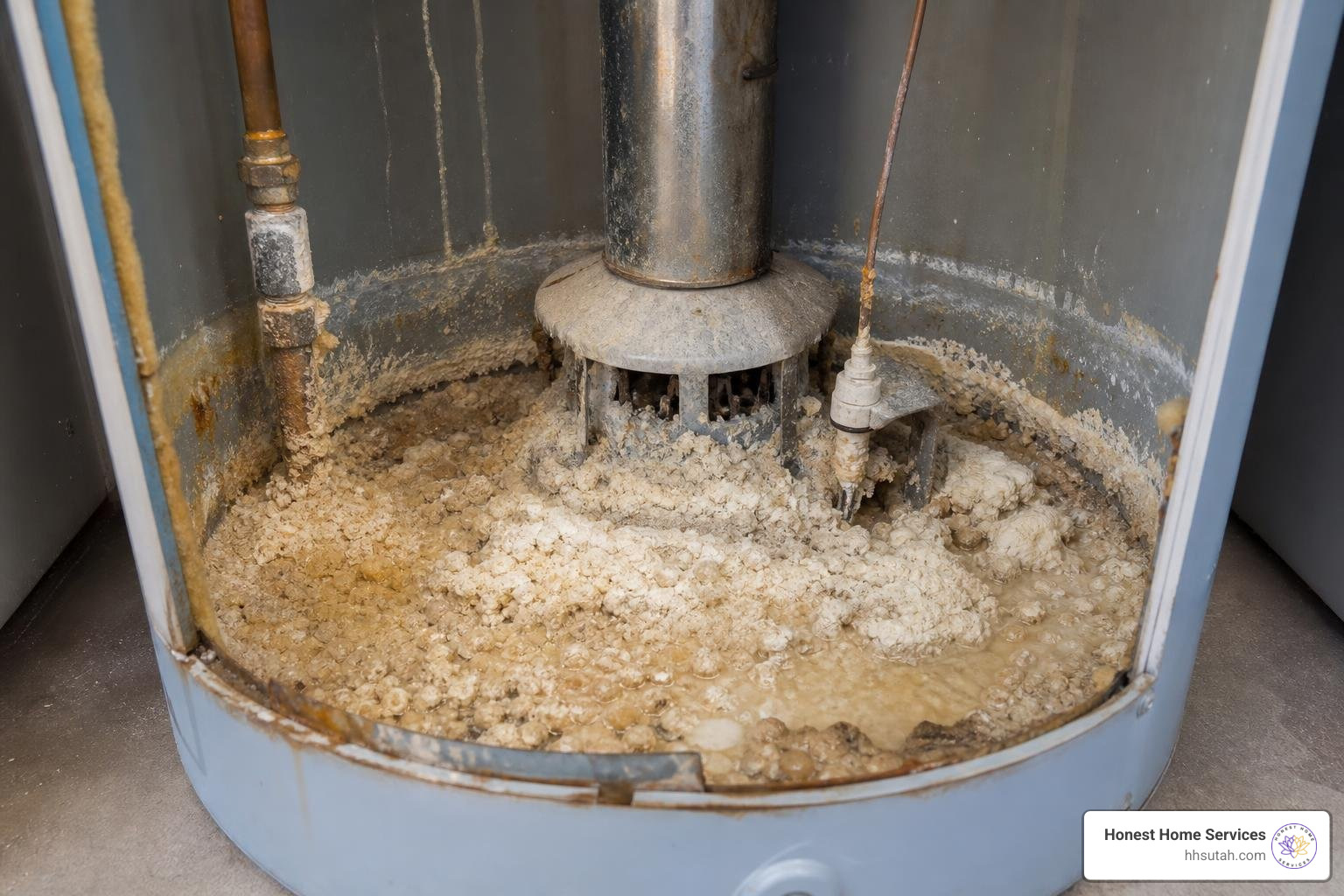
- Hard Water and Sediment: Utah is famous for its hard water. Mineral deposits (calcium and magnesium) naturally settle at the bottom of your water heater tank over time. This sediment acts as a barrier between the gas burner and the water, forcing the burner to run longer and hotter. This extra strain accelerates component failure and increases the time required to flush and service the unit.
To avoid unexpected surprises on your final invoice, check out our guide on Don’t Get Burned: Understanding Gas Water Heater Service Costs.
Gas vs. Electric Water Heater Repair Costs
Homeowners often ask whether gas or electric water heaters are cheaper to maintain. While both systems serve the same purpose, their internal mechanics are entirely different.
- Electric Water Heaters: These units are mechanically simpler. They rely on upper and lower electric heating elements controlled by individual thermostats. Because there is no combustion, there are fewer safety sensors. Standard electric repairs (like swapping a heating element) are relatively straightforward and typically cost between $150 and $400.
- Gas Water Heaters: These systems feature a combustion chamber, gas control valves, pilot assemblies, thermocouples, and dedicated venting systems to safely exhaust carbon monoxide. Because of these safety-critical components, gas repairs require specialized training, carbon monoxide testing, and stricter safety protocols. Consequently, gas repairs tend to run slightly higher, averaging $200 to $700.
For a detailed side-by-side financial comparison of these two systems, you can read our breakdown of Hot Water Repair Cost.
Repair vs. Replacement: Making the Right Financial Choice
At some point, continuing to repair an old water heater becomes a classic case of throwing good money after bad. How do you know when it’s time to stop repairing and start shopping for a replacement?
We recommend using two simple rules of thumb:
- The 10-Year Rule: Traditional tank water heaters have an average lifespan of 8 to 12 years (gas models tend to fail slightly faster, around 6 to 10 years, due to the intense heat of the gas burner). If your unit is over 10 years old, any major repair is likely just a temporary band-aid before the next component fails.
- The 50% Threshold: If the cost of a single repair exceeds 50% of the cost of a brand-new water heater installation, replacement is almost always the smarter financial choice. For example, spending $600 to repair a 9-year-old water heater that would cost $1,500 to replace is not a wise investment.
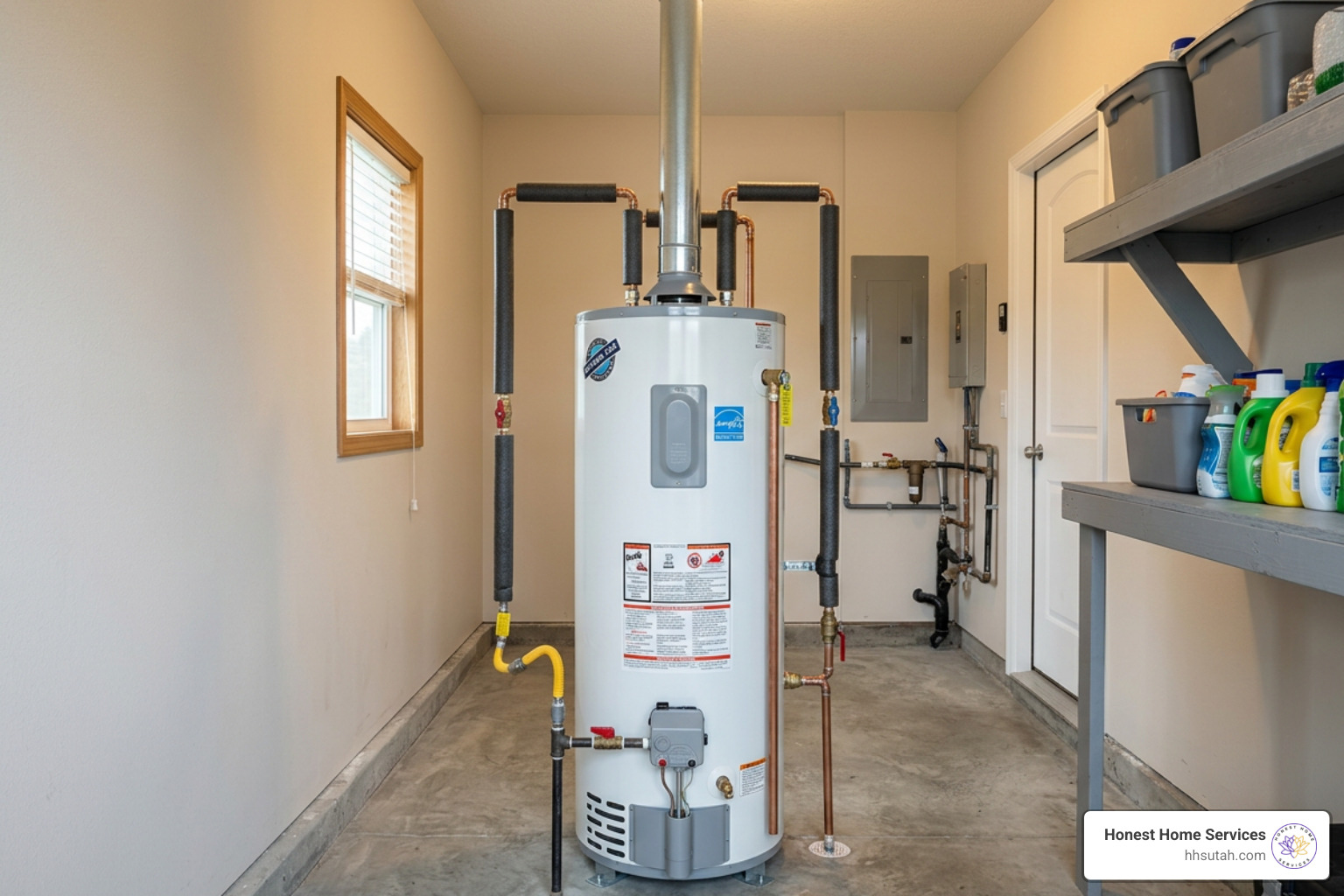
Additionally, if your tank itself is leaking from the bottom, it means the inner glass lining has corroded. A leaking tank cannot be repaired; it must be replaced immediately to prevent catastrophic water damage to your home.
If you decide replacement is the best path forward, a new energy-efficient gas model can reduce your monthly utility bills by 10% to 30%. To estimate the upfront costs of a standard tank, tankless, or hybrid system, use the Water Heater Cost Calculator (2026) | Tank, Tankless, Heat Pump.
Frequently Asked Questions About Gas Water Heater Repairs
Why is my gas water heater pilot light constantly going out?
A pilot light that repeatedly extinguishes is typically caused by one of three issues:
- A Faulty Thermocouple: As discussed, if the thermocouple is bent, dirty, or worn out, it won’t detect the flame and will shut off the gas.
- Drafts or Ventilation Issues: Strong drafts in your basement or utility closet can physically blow the pilot flame out. This often points to a problem with your flue pipe or combustion air supply.
- A Clogged Pilot Orifice: Dirt, dust, or rust can accumulate in the small nozzle where the pilot gas exits, causing a weak, unstable flame that easily goes out.
How can I prevent high gas water heater repair costs?
The single best way to avoid expensive repairs is consistent, preventative maintenance. We recommend performing these three simple tasks annually:
- Flush the Tank: Drain and flush your water heater at least once a year to remove sediment buildup. This keeps your burner running efficiently and prevents tank corrosion.
- Inspect the Anode Rod: The anode rod is a sacrificial metal rod that attracts corrosive elements in the water, rusting so your tank doesn’t. Replacing a worn anode rod every 3 to 5 years can double the lifespan of your water heater.
- Check the Pressure Relief Valve: Briefly lift the lever on the temperature and pressure relief (T&P) valve to ensure water flows freely and shuts off completely.
For a comprehensive checklist on maintaining your system like a professional, explore our guide: Don’t Get Left in the Cold: How to Service Your Gas Water Heater.
What are the signs that my gas water heater needs immediate repair?
Do not wait for a complete system failure to call a plumber. Watch out for these early warning signs:
- Rusty or Discolored Water: This indicates internal tank corrosion or a failing anode rod.
- Popping, Rumbling, or Banging Noises: This is the sound of steam bubbles escaping through thick layers of sediment at the bottom of the tank.
- Water Pooling Around the Base: Even a small drip can quickly escalate into a major flood.
If you notice water pooling, read our emergency guide on Why Your Gas Water Heater Is Leaking and How to Stop the Flood to minimize property damage.
Conclusion
A broken gas water heater doesn’t have to ruin your week or drain your savings account. By understanding the common repair costs, recognizing the early warning signs of component failure, and practicing regular maintenance, you can keep your hot water flowing safely and efficiently.
At Honest Home Services, we are committed to providing Northern Utah homeowners with fair pricing, clear explanations, and expert plumbing solutions. Whether you live in Salt Lake City, Layton, Kaysville, or any of our surrounding communities, our local, certified technicians are ready to help you navigate your water heater repairs with zero stress.
If your water heater is giving you the cold shoulder, don’t wait for a small leak to become a major headache. Contact us today to schedule your professional Salt Lake City Water Heater Repair and get your home’s comfort back on track!