

When Your Hot Water Fails: Understanding Common Gas Water Heater Problems
Gas water heater problems are more common than most homeowners realize — and they almost always show up at the worst possible time.
Here are the most frequent issues you may be dealing with right now:
| Problem | Most Likely Cause |
|---|---|
| No hot water | Pilot light out, faulty thermocouple, or gas supply issue |
| Pilot light won’t stay lit | Dirty or failing thermocouple, bad gas valve, or venting problem |
| Inconsistent water temperature | Sediment buildup, damaged dip tube, or thermostat issue |
| Water heater shuts off after 10-30 min | Failing gas control valve or overheating thermocouple |
| Strange popping or rumbling noises | Sediment buildup at the bottom of the tank |
| Rusty or discolored water | Depleted anode rod or internal tank corrosion |
| Rotten egg smell | Bacteria in tank or pilot light issue |
Most of these problems have a clear cause — and many can be fixed before you need a full replacement.
Your water heater quietly handles every hot shower, load of laundry, and dishwashing cycle in your home. When it starts acting up, it disrupts everything fast. The good news is that knowing what to look for puts you well ahead of a costly emergency.
At Honest Home Services, we’ve spent over 20 years diagnosing and fixing gas water heater problems for homeowners and businesses throughout Northern Utah — so we know exactly what goes wrong and how to solve it right the first time.
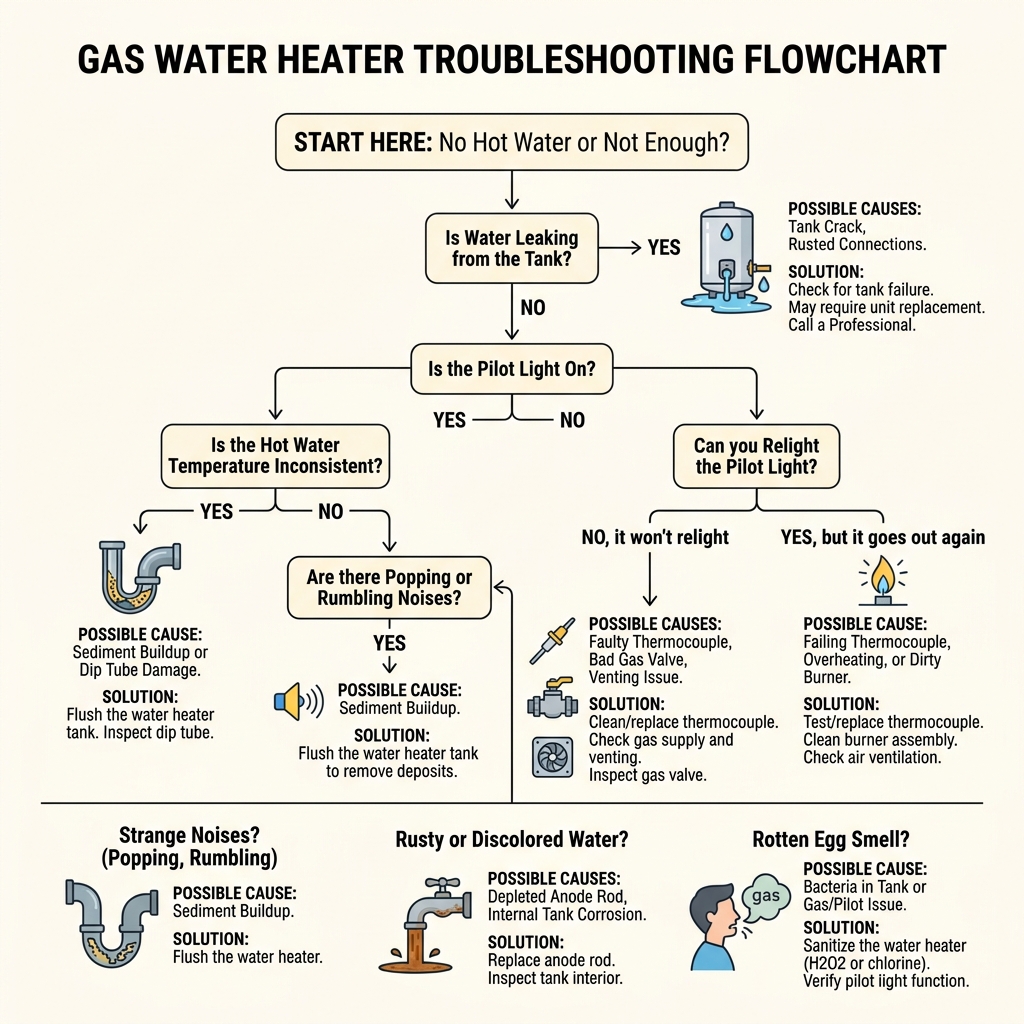
Gas water heater problems terms to remember:
Diagnostic Guide for Common Gas Water Heater Problems
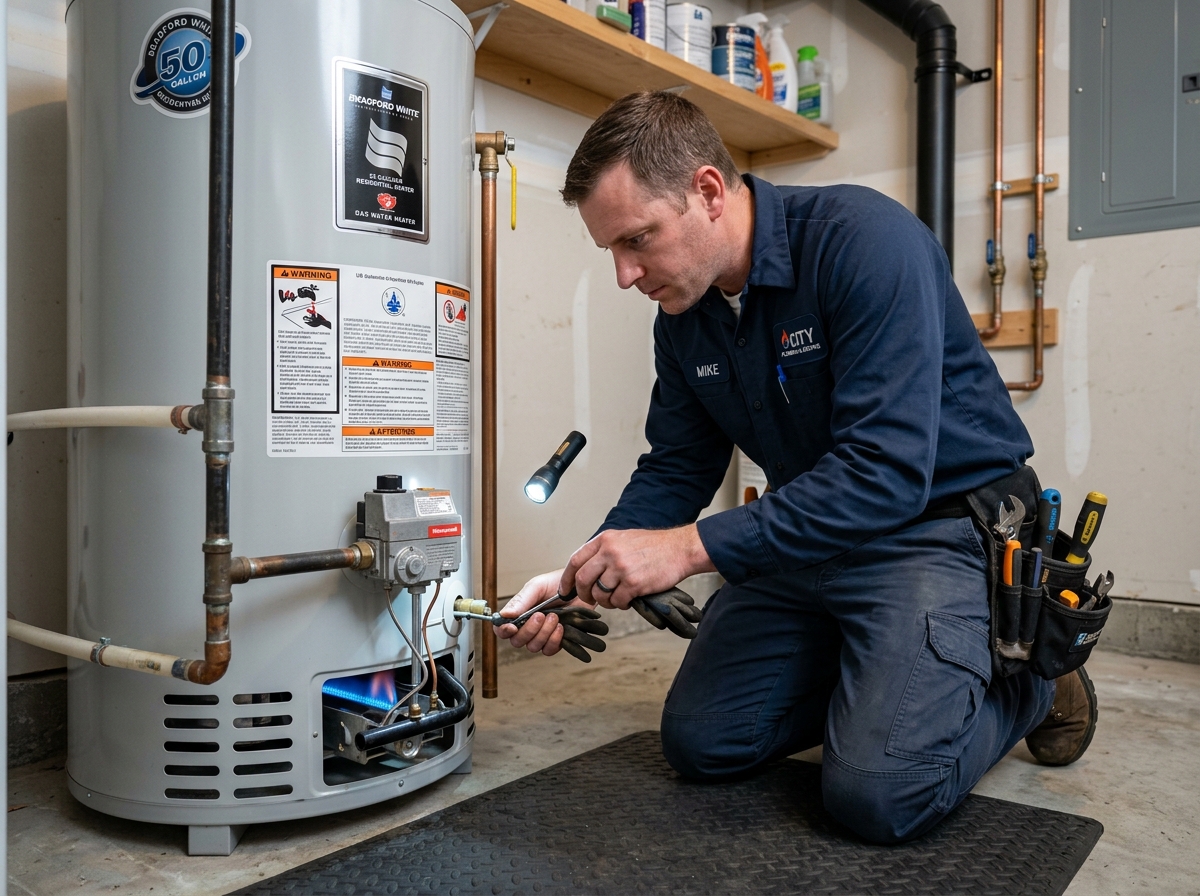
When you realize your morning shower is more “Arctic Blast” than “Tropical Oasis,” it’s time to play detective. Diagnosing gas water heater problems starts with checking the basics: the pilot light, the gas supply, and the burner ignition.
First, we check if the gas is actually on. It sounds simple, but you’d be surprised how often a shut-off valve is accidentally bumped. If the lever is parallel to the pipe, you’re in business. If it’s perpendicular, the gas is off. If the gas is on but the burner won’t ignite, we look at the pilot light. A healthy pilot flame should be a steady, crisp blue. If it’s yellow or orange, or if there’s no flame at all, you’ve found your first clue.
Understanding how much it costs to repair a water heater can help you decide your next move, but identifying the common water heater problem early is the best way to keep those costs down.
Solving Gas Water Heater Problems Related to the Pilot Light
The most notorious villain in gas appliances is the failing pilot light. If your pilot light refuses to stay lit, the primary suspect is almost always the thermocouple.
The thermocouple is a small safety device—a copper rod that sits right in the pilot flame. Its job is to generate a tiny electrical current (millivolts) when heated. This current tells the gas control valve that it’s safe to stay open. If the thermocouple is dirty, misaligned, or burnt out, it won’t send that signal, and the gas valve will snap shut as a safety precaution.
Before you assume the worst, sometimes the pilot orifice is just clogged with a bit of dust or soot. A quick cleaning might save the day. However, if the pilot won’t stay lit even after a cleaning, you’re likely looking at a thermocouple replacement. If the thermocouple is new and the pilot still fails, the gas control valve itself may have an internal failure.
Why Your Gas Water Heater Problems Include Inconsistent Temperatures
Few things are as frustrating as a shower that fluctuates between scalding and freezing. This “yo-yo” effect is often a sign of a damaged dip tube. The dip tube is a plastic pipe that directs cold incoming water to the bottom of the tank to be heated. If it cracks or breaks, cold water mixes with the hot water at the top of the tank, leading to lukewarm results.
Another factor is thermostat calibration. Over time, the internal sensors can wear out. We recommend keeping your water heater set to 120°F. This is the “sweet spot” that provides plenty of heat while avoiding tap water scalds. If your settings are correct but the water is still inconsistent, it’s time to learn how to service your gas water heater to check for deeper component failures.
Addressing Strange Noises and Sediment Buildup
Does your water heater sound like it’s making popcorn or hiding a small percussion band in the basement? Those popping, rumbling, or banging sounds are the classic calling cards of sediment buildup.
In Northern Utah, our water contains minerals like calcium and magnesium. Over time, these minerals settle at the bottom of the tank, forming a thick layer of “scale.” When the burner at the bottom kicks on, it has to heat through that layer of rock. This causes water trapped underneath the sediment to superheat and turn into steam bubbles that “pop” as they escape.
Not only is this noisy, but it’s also incredibly inefficient. It forces your tank to work harder, which can lead to the metal overheating and eventually cracking. Regular flushing is the best way to prevent this. If you ignore the noise, you might soon be looking for a guide to fixing your leaky water heater because the tank has finally given up.
Critical Safety Risks: Venting and Gas Leaks
While a cold shower is an inconvenience, venting issues are a genuine emergency. Gas water heaters produce carbon monoxide (CO) as a byproduct of combustion. In a properly functioning system, these fumes are carried safely out of your home through a vent pipe.
However, poor ventilation can lead to “backdrafting,” where these deadly fumes are pushed back into your living space. This can happen due to a blocked chimney, a disconnected vent pipe, or even a powerful exhaust fan elsewhere in the house pulling air the wrong way.
One subtle sign of a problem is the “rotten egg” smell. Natural gas is odorless, but utility companies add a chemical called mercaptan so you can detect leaks. If you smell this, or if you notice your hot water has a strange odor, it could be related to temperature impacts on the plumbing microbiome or, more seriously, a gas leak. In these cases, you need to know how to handle emergency water heater repairs immediately.
Identifying Poor Ventilation and Backdrafting
You don’t always need a high-tech sensor to spot venting trouble—though we highly recommend having a working carbon monoxide detector on every floor.
Visual cues are often present. Look at the draft hood on top of the water heater. Is there soot or charring around the edges? That’s a sign that heat and exhaust are escaping into the room instead of going up the vent. On modern power-vented units, look at the PVC piping. If the white plastic is discolored—turning pink, red, brown, or black—it is a sign that the vent pipe is overheating and requires immediate service.
Other signs include “weeping” or excessive condensation on the windows near the heater, or a melted plastic ring on top of the tank where the pipes connect. If you see any of these, shut the unit off and call a pro.
When to Repair vs. Replace Your Gas Water Heater
Deciding whether to sink money into a repair or buy a new unit is a common dilemma. We generally follow the “50% Rule”: if the repair cost is more than 50% of the price of a new unit, and the heater is over 8 years old, replacement is usually the smarter investment.
| Feature | Repair | Replacement |
|---|---|---|
| Cost | Lower upfront ($150 – $600) | Higher upfront ($1,200 – $2,500+) |
| Lifespan | Extends current unit slightly | Restarts 10-12 year clock |
| Efficiency | Remains the same | Significant improvement (lower bills) |
| Reliability | Other old parts may fail soon | Full warranty protection |
Most conventional tank heaters last about 10 years. If your tank is leaking from the bottom, there is no “fixing” it—the inner lining has corroded, and the unit must be replaced. To understand the long-term benefits, check out our guide on the advantages of water heater replacement.
Signs of Internal Tank Failure
The most critical part of your water heater you never see is the anode rod. This “sacrificial” rod is designed to corrode so your steel tank doesn’t. Once the anode rod is fully dissolved, the water starts eating the tank itself.
Signs of this internal war include rusty or metallic-tasting water. You might also notice a “weeping” Temperature and Pressure (T&P) relief valve. This valve is a safety feature that releases water if the pressure gets too high. If it’s constantly dripping, it could be a faulty valve or a sign that your tank is under too much stress.
You can often extend your water heater’s life by simply swapping the anode rod every few years. But if the rust has already taken hold of the tank walls, a new unit is the only safe path forward.
Frequently Asked Questions about Gas Water Heaters
Why does my gas water heater shut off after 20 minutes?
This is a specific and frustrating gas water heater problem. If the burner lights and runs for 10 to 30 minutes but then shuts off—taking the pilot light with it—it usually indicates a failing gas control valve. As the valve heats up during operation, an internal electrical fault may cause it to trip and cut the gas supply. Another possibility is a lack of “combustion air,” where the heater “suffocates” because it can’t get enough oxygen to keep the flame going.
How often should I flush my gas water heater?
For most homes in Salt Lake City and the surrounding Davis County areas, we recommend flushing your tank once a year. If you have particularly hard water and don’t have a water softener, every six months is even better. This prevents the “popcorn” noises and keeps your energy bills from skyrocketing.
Can I replace a gas water heater thermocouple myself?
While some handy homeowners can manage a thermocouple swap, we generally advise caution. Working with gas lines and combustion chambers carries risks of leaks and carbon monoxide exposure if things aren’t sealed perfectly. For safety and peace of mind, it’s usually best to let a licensed technician handle it.
Conclusion
Dealing with gas water heater problems doesn’t have to be a nightmare. By recognizing the signs of sediment buildup, thermocouple failure, and poor venting early, you can save yourself from a flooded basement or a dangerous gas situation.
At Honest Home Services, we are proud to serve Northern Utah, from Salt Lake City and West Valley to Layton, Bountiful, and beyond. We provide honest, reliable, and affordable plumbing and heating services with a guarantee of customer satisfaction. Whether you need a quick flush, a complex repair, or a full system upgrade, our local expert technicians are available 24/7 to help.
Don’t let a faulty heater ruin your day. If you’re in need of Salt Lake City water heater repair, give us a call today. We’ll get your hot water flowing again with the fair pricing and expertise you deserve!