

Why Mainline Sewer Cameras Are a Smart Investment for Your Business
Mainline sewer cameras are specialized inspection tools used to visually diagnose the inside of large sewer pipes — typically 6 inches in diameter and larger. Here’s a quick breakdown of what they are and who needs them:
| Type | Best For | Price Range |
|---|---|---|
| Portable push camera | Small contractors, residential mainlines | $10,000 – $70,000 |
| Trailer-mounted system | Mid-size municipalities and contractors | $50,000 – $200,000+ |
| Truck-mounted system | Large municipal programs | $150,000 – $300,000+ |
Key benefits at a glance:
- Find blockages, root intrusions, and pipe damage without digging
- Pinpoint exact repair locations using built-in 512Hz sonde locators
- Generate documented video reports for clients, insurers, or municipalities
- Reduce diagnostic time by up to 70% compared to traditional methods
Standard residential drain cameras simply aren’t built for the job when you’re inspecting large-diameter municipal or commercial sewer lines. Those pipes demand purpose-built equipment — robotic crawlers, high-definition camera heads, and long cable runs that can reach 600 feet or more between manholes. The gap between a $579 consumer drain camera and a $100,000+ professional crawler system isn’t just about price. It’s about what you can see, how far you can reach, and how well the data holds up for real infrastructure decisions.
At Honest Home Services, we’ve spent over 20 years diagnosing and repairing sewer mainlines for homeowners and businesses across Northern Utah, giving us hands-on experience with the mainline sewer cameras and inspection methods that actually deliver results. In this guide, we’ll walk you through the equipment options so you can make a confident, informed choice.
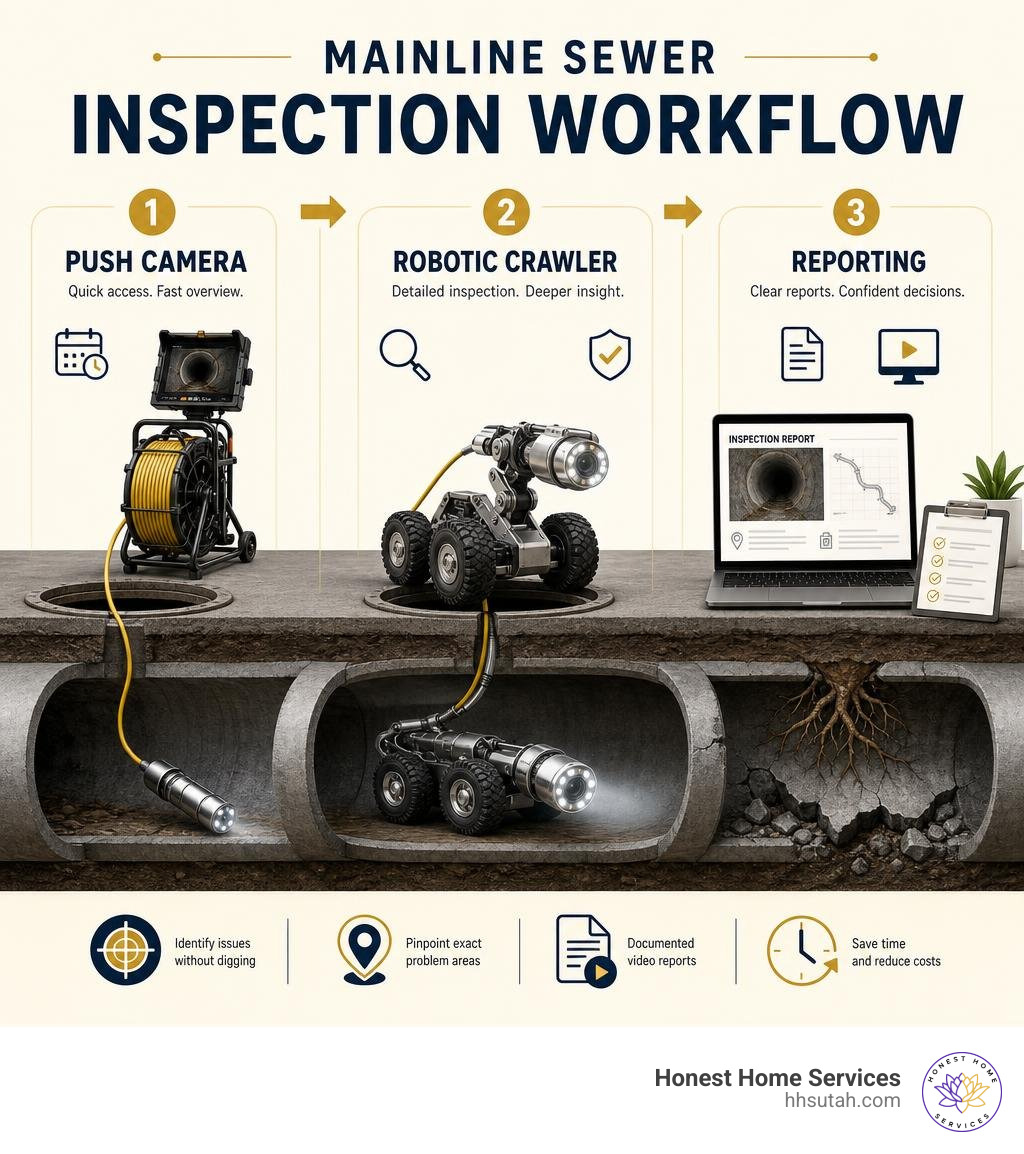
Simple guide to mainline sewer cameras terms:
What is a Mainline Sewer Inspection Camera?
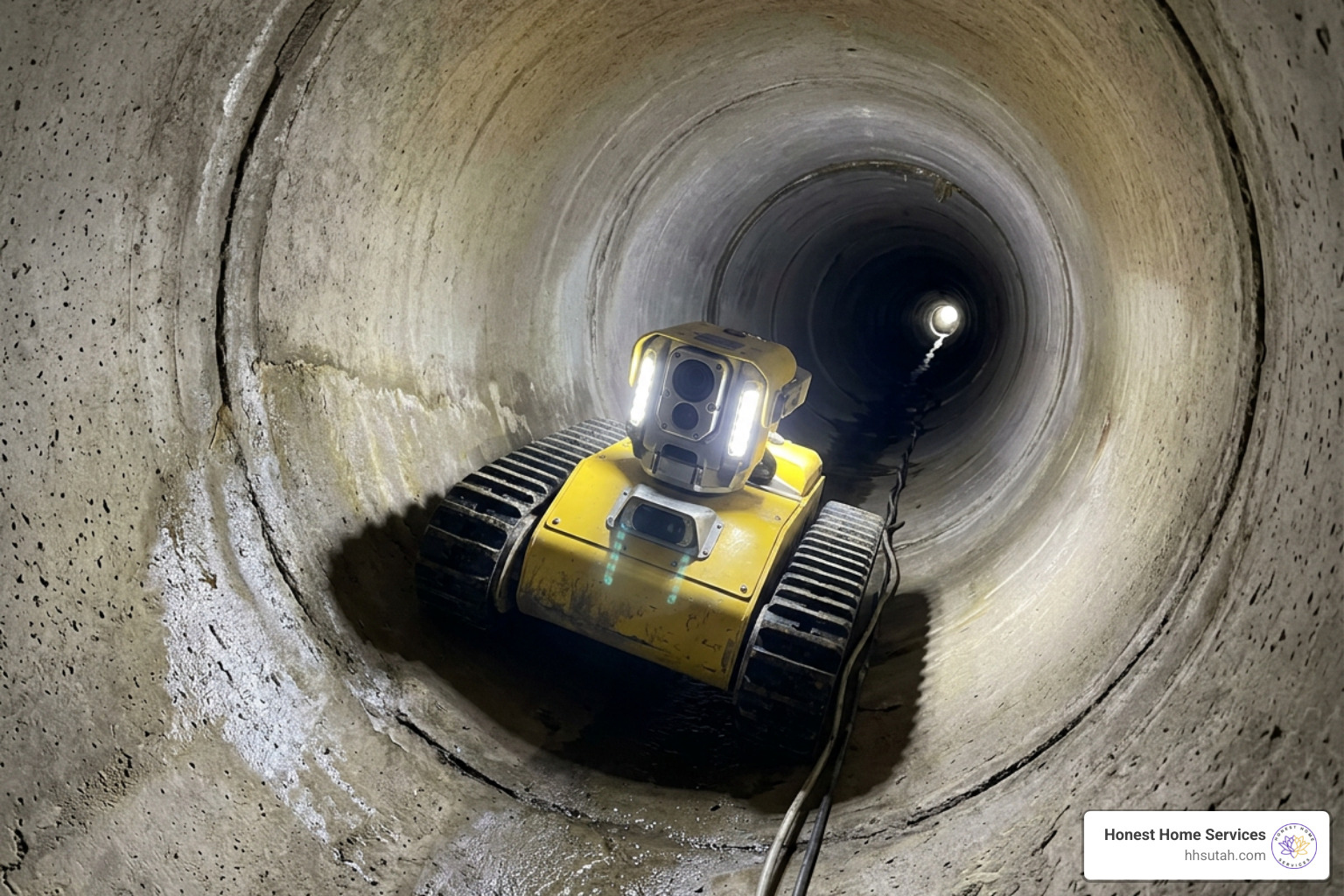
When we talk about mainline sewer cameras, we are stepping out of the realm of standard residential plumbing and entering the heavy-duty world of municipal and commercial infrastructure. While a residential plumber might use a flexible hand-pushed rod to inspect a 2-inch to 4-inch kitchen or bathroom drain, mainline systems are engineered to handle the massive pipes that run under our streets, commercial complexes, and industrial parks.
These heavy-duty systems are designed specifically to capture high-quality images in pipes that are 6 inches (including relined pipes) up to 120 inches or more in diameter. Standard push cameras simply lack the structural rigidity, illumination power, and physical reach required to navigate these massive environments.
To get a clearer picture of how these tools differ, let’s look at the primary mechanics of these systems:
- Standard Push Cameras: These systems rely on the physical strength of the operator to push a fiberglass coaxial cable through the pipe. While highly effective for shorter runs, they generally top out at 150 to 200 feet before the cable begins to buckle under its own friction. They are perfect for localized residential diagnostics, such as checking a home cleanout.
- Robotic Crawlers (Tractors): These are motorized, wheeled, or tracked vehicles that carry the camera head through the pipe. Controlled remotely by an operator via a joystick, these crawlers can weigh over 40 pounds and use steerable multi-wheel or multi-axle drives to navigate over offsets, thick sludge, and heavy debris. They can travel distances of 1,000 to over 1,600 feet from a single entry point.
- Lateral Launch Systems: This is the ultimate peak of mainline technology. A lateral launch system consists of a primary robotic crawler that travels down the main sewer line. When it reaches a junction, it launches a smaller secondary push camera directly up into the connecting lateral pipe (the pipe connecting a home or business to the city main). This allows operators to inspect lateral lines directly from the street mainline without needing to access the private property.
For contractors and utility providers looking to expand their commercial capabilities, selecting the right equipment is key. If you are starting out, a heavy-duty mainline push camera with pan and tilt can bridge the gap, allowing you to inspect pipes up to 18 inches in diameter before transitioning to fully motorized crawlers.
Whether you are performing municipal checks or offering specialized mainline inspection services to commercial properties in Salt Lake City or Layton, understanding these mechanical differences ensures you don’t bring a push-rod to a crawler job.
Types and Costs of Mainline Sewer Inspection Systems
Investing in mainline sewer inspection equipment is a significant capital decision. Because these systems are highly technical, prices vary wildly based on portability, range, and vehicle integration.
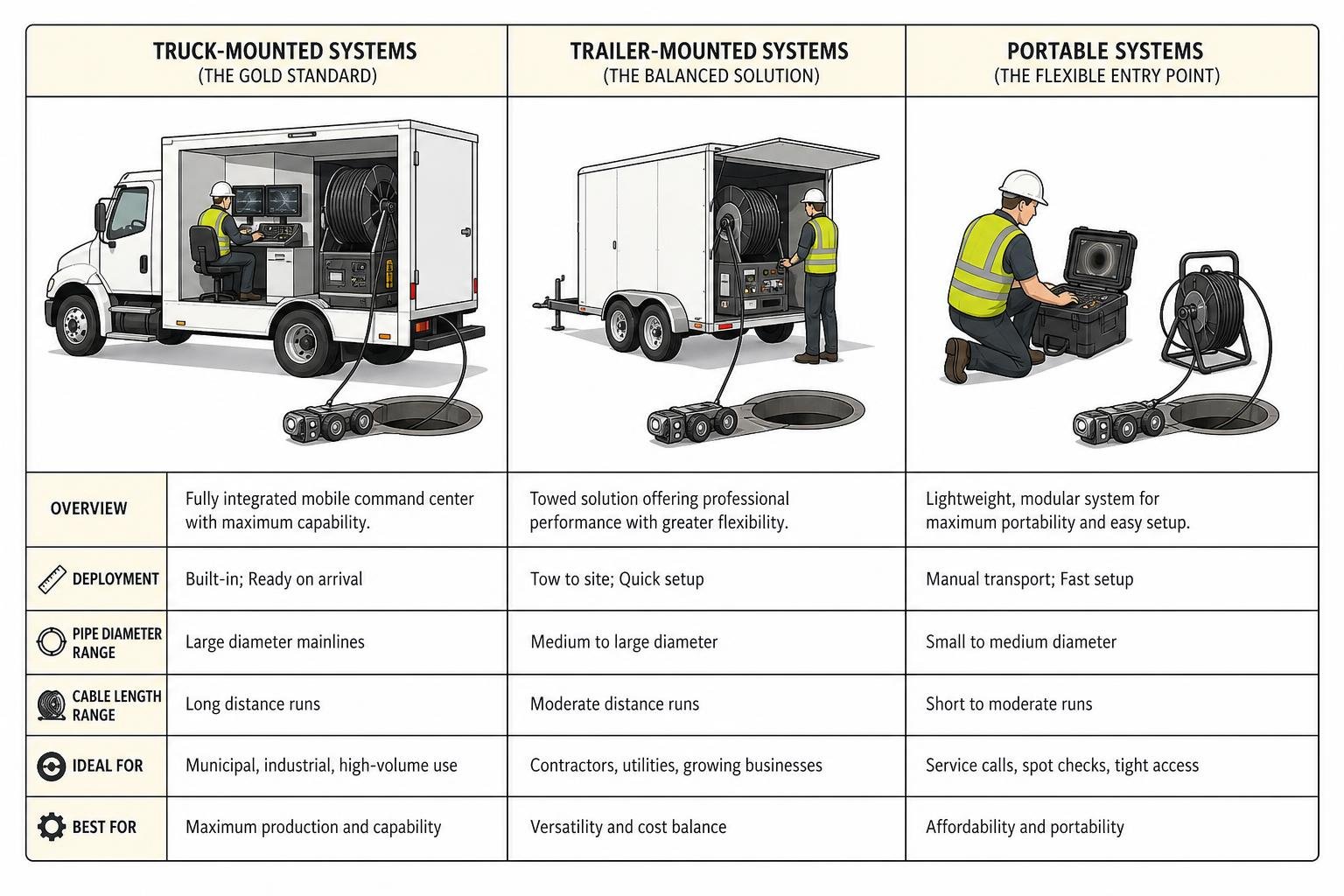
To help you evaluate your options, let’s break down the three primary configurations available on the market today:
1. Truck-Mounted Systems (The Gold Standard)
A fully integrated, truck-mounted system is a complete mobile diagnostic office. Typically built inside a heavy-duty step van or box truck, these rigs feature a climate-controlled operator studio separated from a rear wet-well work area. The rear compartment houses motorized cable reels with up to 1,600 feet of cable, heavy-duty generators, wash-down stations, and storage for multiple robotic crawlers.
- Typical Price Range: $150,000 to $300,000+ (fully outfitted turnkey rigs can easily surpass $200,000 for a single vehicle).
- Best For: Large municipalities, utility districts, and major industrial contractors performing high-volume, daily mainline diagnostics.
2. Trailer-Based Systems (The High-Value Alternative)
Trailer-based systems deliver virtually 100% of the diagnostic power, comfort, and functionality of a dedicated truck rig but at roughly 70% to 80% of the cost. Built inside enclosed cargo trailers (typically 8×12 to 8×16 feet), these systems feature the same dual-room layout with a control desk and rear cable reel station. The massive advantage here is vehicle independence; you can unhitch the trailer at a job site or park it in the yard, freeing up your tow vehicle for other tasks.
- Typical Price Range: $50,000 to $200,000 (depending on whether you buy used or custom-built new).
- Best For: Mid-sized contractors and growing public works departments that want a dedicated mobile studio without the purchase and maintenance costs of an additional commercial truck.
3. Portable Mainline Systems (The Agile Solution)
If your work takes you off-road, down narrow easements, or into tight commercial basements where a vehicle cannot park, a portable mainline system is indispensable. These battery-powered, compact systems pack crawler controls, a high-brightness monitor, and a manual or compact motorized cable reel onto a rugged wheeled handcart.
- Typical Price Range: $10,000 to $70,000. (For example, a compact mainline crawler kit like the Pearpoint flexitrax is priced around $60,000 for a base package, while budget-conscious robotic crawlers like the Gemini II system start around $25,995).
- Best For: Residential plumbers expanding into light commercial work, emergency backup crews, and projects in remote or off-road locations.
For many local plumbing businesses in areas like Salt Lake County or Davis County, jumping straight into a six-figure truck rig isn’t necessary. Many find that starting with a portable crawler or a high-end push system is the most practical way to offer commercial-grade services.
When establishing your pricing or evaluating ROI, it helps to understand the typical cost of sewer line camera inspections in the local market, ensuring your equipment selection aligns with your business’s financial goals. For those looking to explore specific commercial equipment options, checking out specialized listings on Mainline Cameras for Pipeline Inspection can provide a solid baseline of what is currently available.
Key Features to Look For in Mainline Sewer Cameras
Selecting the right camera system requires looking past the glossy brochures and examining the exact engineering specifications. Sewer environments are dark, corrosive, highly abrasive, and incredibly damp.
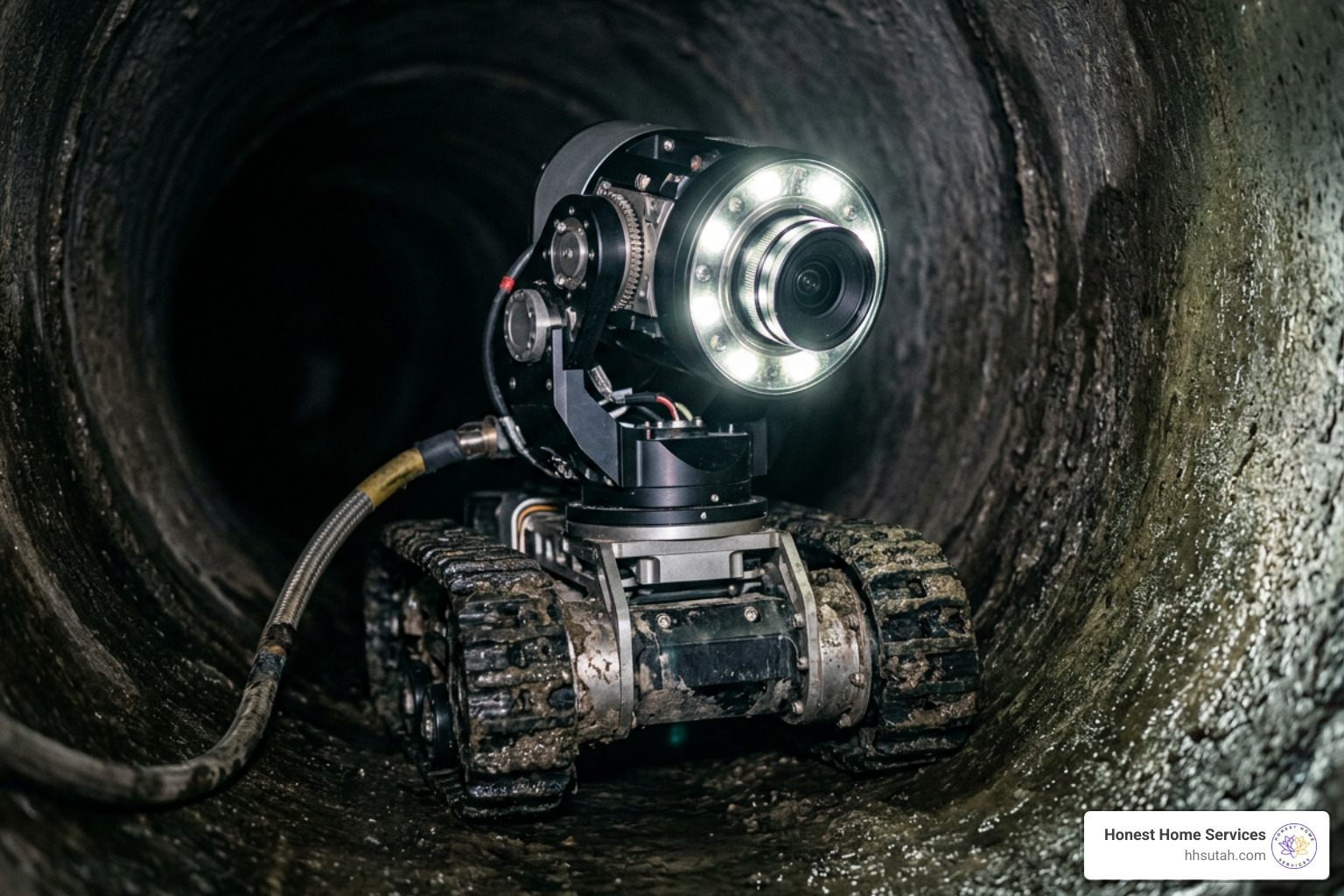
To ensure your investment survives the daily grind, prioritize these critical features:
Pan, Tilt, and Zoom (PTZ) Capabilities
In large mainlines, a fixed, straight-ahead camera lens will miss critical structural issues along the pipe walls. Look for a camera head that offers continuous 360-degree rotation and at least 270 degrees of tilt (such as the Aries WiperCam or the Rausch KS 135 HD, which features a 280-degree pan and infinite rotation). This allows you to look directly into lateral connections and inspect joint seals. Furthermore, a high optical zoom (up to 10x optical and 12x digital) lets you inspect distant defects clearly without driving the crawler into unstable, collapsed sections of the pipe.
Lens Protection and Self-Cleaning Systems
Sewer pipes are coated in grease, slime, and debris. If your lens gets smeared, your inspection is over until you pull the camera back out—unless you have a self-cleaning system. Look for camera heads equipped with active wiper blades (like the field-replaceable WiperCam system) or fluid-wash systems. Additionally, ensure the lens window is made of scratch-proof, crack-resistant sapphire glass to withstand abrasive clay and concrete pipe walls.
High-Definition (HD) Resolution
The industry has rapidly shifted away from fuzzy analog video. Over half of the professional mainline systems sold today utilize full 1080p high-definition cameras. HD video is no longer a luxury; it is a necessity for accurate defect coding and is required by most municipal contracts.
Internal Pressurization and Moisture Protection
To protect sensitive internal electronics, professional mainline cameras are nitrogen-pressurized and feature built-in sensor-leak detection. This positive internal pressure prevents moisture from seeping past the seals, even when the camera is fully submerged under several feet of sewer water.
Integrated Sonde and Locating Beacons
When you spot a structural crack, offset joint, or complete collapse, you must know exactly where it is above ground before any excavation begins. A built-in 512Hz sonde (transmitter) in the camera head is the industry standard. This beacon sends a signal through cast iron, clay, and concrete, allowing technicians on the surface to use a locator receiver to pinpoint the exact depth and path of the pipe.
If you are looking for a highly versatile, professional-grade push system that incorporates these premium features, a pan and tilt sewer camera systems with an 11mm fiberglass cable and built-in sonde is an exceptional choice.
For smaller commercial applications or larger residential mainlines across Farmington or Bountiful, utilizing these high-tech features maximizes the benefits of a drain pipe camera inspection, saving clients thousands of dollars in unnecessary excavation. If you require a highly detailed, mid-range solution with an integrated counter and screen, systems like the S810ASMKT 10″ Large Sewer Inspection Camera with 512Hz Sonde & Meter Counter offer an excellent balance of visibility and portability.
Municipal vs. Contractor Needs and Software Integration
The ideal mainline camera setup looks very different depending on whether you are buying for a city’s public works department or a private contracting business.
Municipal Buyers: Standardized Asset Management
For cities like Salt Lake City or Murray, sewer inspections are part of a long-term, multi-decade asset management strategy. Municipalities must catalog thousands of miles of underground pipes systematically.
- PACP Compliance: Municipal buyers almost always require that their camera systems integrate seamlessly with NASSCO (National Association of Sewer Service Companies) standards, specifically the Pipeline Assessment Certification Program (PACP). Software like CUES GraniteNet (which is NASSCO v8.0 certified) allows operators to code pipe defects (like root intrusion, cracks, and sags) using standardized codes.
- Procurement: Municipalities typically purchase equipment through cooperative purchasing programs (such as Sourcewell or Canoe Procurement Canada) to bypass lengthy, complicated bidding processes while ensuring compliance.
Private Contractors: Speed, Versatility, and ROI
For private contractors, the primary goals are speed, high equipment utilization, and immediate return on investment.
- Versatility: A contractor needs a modular crawler system that can adapt to different pipe sizes quickly. A single tractor platform (like the Rausch L 135) that can handle pipes from 4 inches up to 120 inches by swapping out wheels and adding camera lifts is highly valuable.
- Rapid Reporting: Contractors need to generate instant, easy-to-read PDF reports and share high-definition video files with property owners immediately to secure repair authorization on-site.
Regardless of who is operating the camera, the industry is moving away from physical media like thumb drives and toward all-digital, cloud-based workflows. Modern systems allow field technicians to upload inspection footage directly to cloud platforms from the truck, enabling engineers or managers in the office to review pipe conditions in real-time.
For those looking to offer professional municipal-grade reporting or high-end commercial diagnostics in the Salt Lake Valley, understanding everything you need to know about main line camera inspections is critical.
If you are a commercial property manager looking for professional underground mapping or structural assessments, partnering with a qualified local team ensures your infrastructure meets modern standards and remains fully compliant with municipal codes.
Frequently Asked Questions About Mainline Sewer Cameras
Navigating the technical landscape of mainline sewer inspection equipment can be challenging. Below are some of the most common questions we hear from business owners, municipal managers, and technicians.
What support and training are needed for mainline sewer cameras?
Operating a six-figure robotic crawler system is not a plug-and-play job; it requires specialized training and reliable support.
- Operator Training: Technicians must learn how to navigate offsets, manage cable tension, avoid rollovers, and perform basic field maintenance (like cleaning seals and replacing wiper blades). Standardized training, such as PACP certification, is highly recommended.
- Vendor Support & Warranties: When purchasing high-end equipment, look for manufacturers that offer robust warranties, rapid technical support, and—most importantly—loaner equipment programs. If your mainline camera is down for repair, your crew is sidelined. A vendor that can ship a loaner crawler or controller overnight is worth their weight in gold.
- Preventative Inspections: For business owners, knowing the signs you need a camera drain inspection can prevent catastrophic backups and emergency shutdowns.
What is the typical pipe diameter range for mainline sewer cameras?
Mainline sewer cameras are highly adaptable, but their effective application range depends on the crawler and camera head configuration.
- Standard Range: Most professional modular mainline crawler systems are designed to inspect pipes ranging from 6 inches up to 36 inches in diameter.
- Extended Range: By utilizing large-diameter wheel kits, pneumatic tires, and motorized camera lift carriages, heavy-duty tractors (like the Rausch USA L 135) can extend their application range to inspect massive storm drains and trunk lines up to 120 inches in diameter.
- Small-Diameter Mainlines: For smaller lateral lines and residential connections (typically 2 to 4 inches), a dedicated push camera is still the best tool. Understanding the layout of guide to your home’s drain main line is essential for selecting the correct equipment for residential diagnostic work. For those interested in standard commercial or residential line checks, professional drain line camera inspections can help clarify how smaller systems operate in the field.
What are the benefits and risks of buying used equipment?
Buying used mainline equipment can be an incredibly smart way to save capital, but it requires careful evaluation.
- The Benefits (Major Savings): The depreciation on high-end pipeline inspection equipment is steep. For example, a pre-owned 8×16 trailer package equipped with an Aries Pathfinder crawler, cable reel, and supporting gear was recently sold for $135,000. Compared to a brand-new $250,000 trailer setup, that represents an immediate savings of $115,000.
- The Risks: Used equipment often lacks a manufacturer’s warranty and may feature outdated analog technology that is incompatible with modern cloud software or PACP standards. When evaluating a used rig, pay close attention to the hours of use, the maintenance history of the seals and cable reel, and whether the manufacturer still supports and stocks replacement parts for that specific model.
Conclusion
Investing in the right mainline sewer camera system can transform your business or municipality, turning blind guesswork into precise, high-definition diagnostics. Whether you deploy a portable crawler for tight commercial spaces or operate a fully integrated trailer-mounted studio, having the right technology ensures your projects are completed safely, efficiently, and with absolute accuracy.
If you are a business owner, property manager, or municipality in Northern Utah—from Salt Lake City and West Valley to Layton, Farmington, and Park City—and you need expert mainline diagnostics, we are here to help. At Honest Home Services, our local, expert technicians utilize state-of-the-art diagnostic equipment to locate, assess, and resolve pipe issues quickly.
We offer fair, transparent pricing, guaranteed customer satisfaction, and 24/7 emergency support to keep your critical infrastructure running smoothly. Don’t leave your underground pipes to guesswork. Contact us today for professional Salt Lake City sewer mainline repair and comprehensive pipeline diagnostics!