
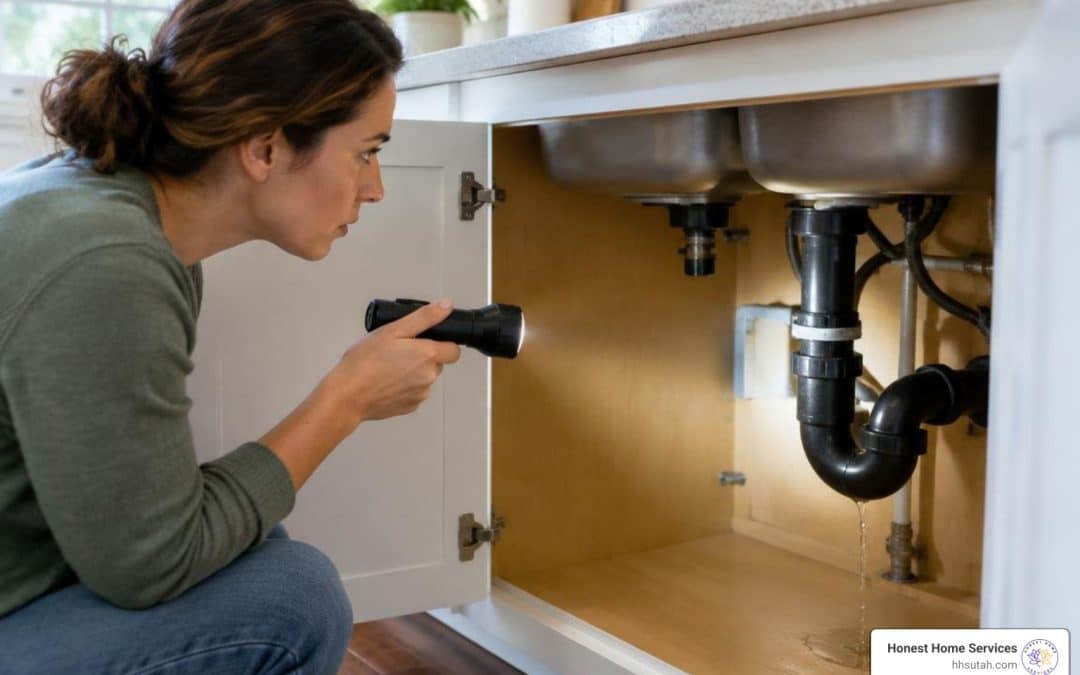
Need an Emergency Plumber Near Me? Stop the Water First
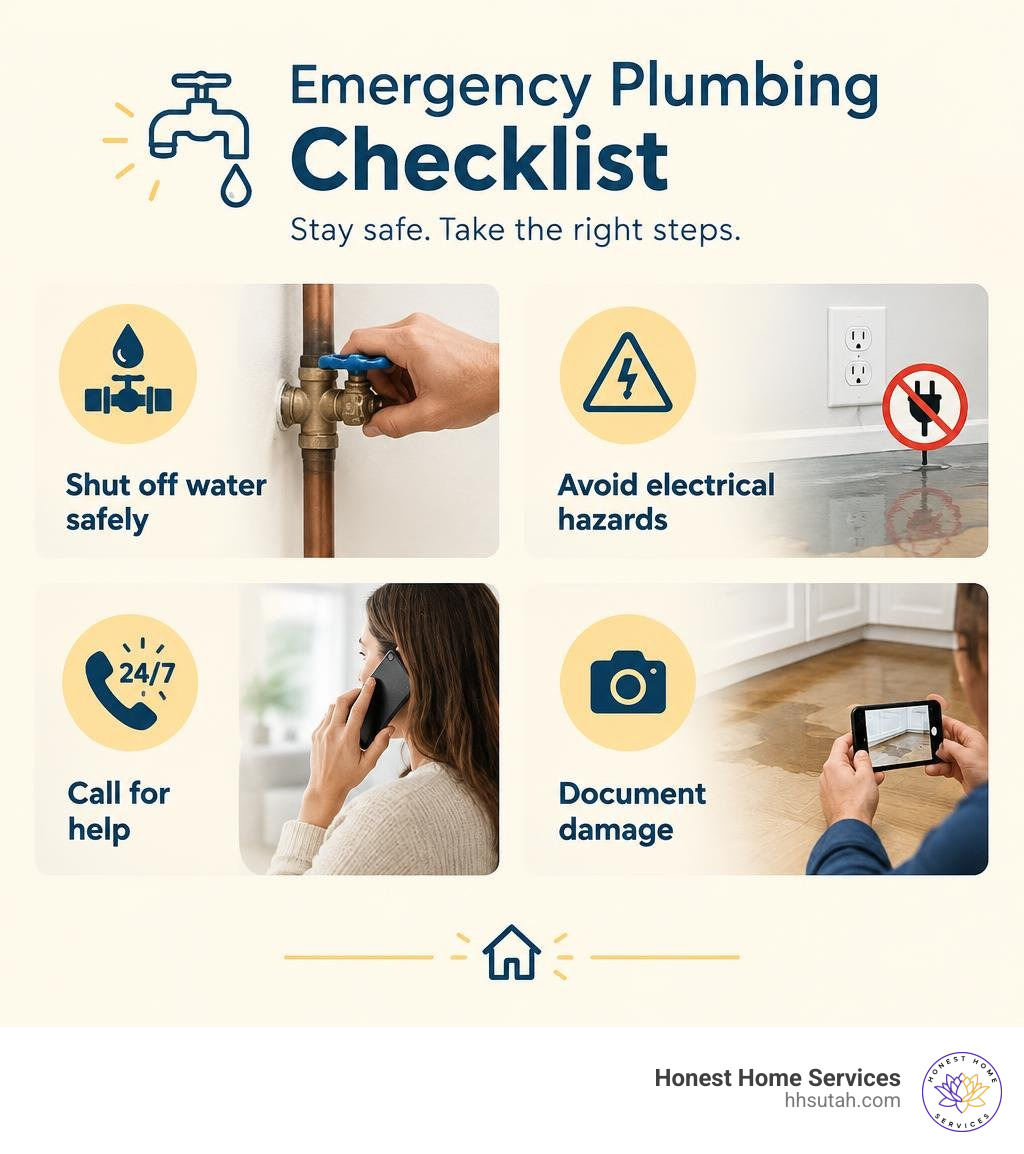
If you need an emergency plumber near me because water is spreading or sewage is backing up, shut off the nearest water valve or the main supply if you can do so safely. Stay clear of standing water near outlets or electrical equipment. Then call a 24/7 plumber and tell them where the problem is, whether the water has stopped, and if sewage is involved.
While you wait, move valuables away from the water and take photos of the damage. Do not use a drain that is backing up.
We’re Honest Home Services, and we’ve served Northern Utah homes and businesses for over 20 years with plumbing repairs, including urgent leaks, drains, and water heaters. If you’re looking for an emergency plumber near me in Salt Lake City or elsewhere in Northern Utah, our local team offers 24/7 support; use this checklist while you wait.
Emergency plumber near me helpful reading:
Identifying True Crises: When to Call an Emergency Plumber Near Me
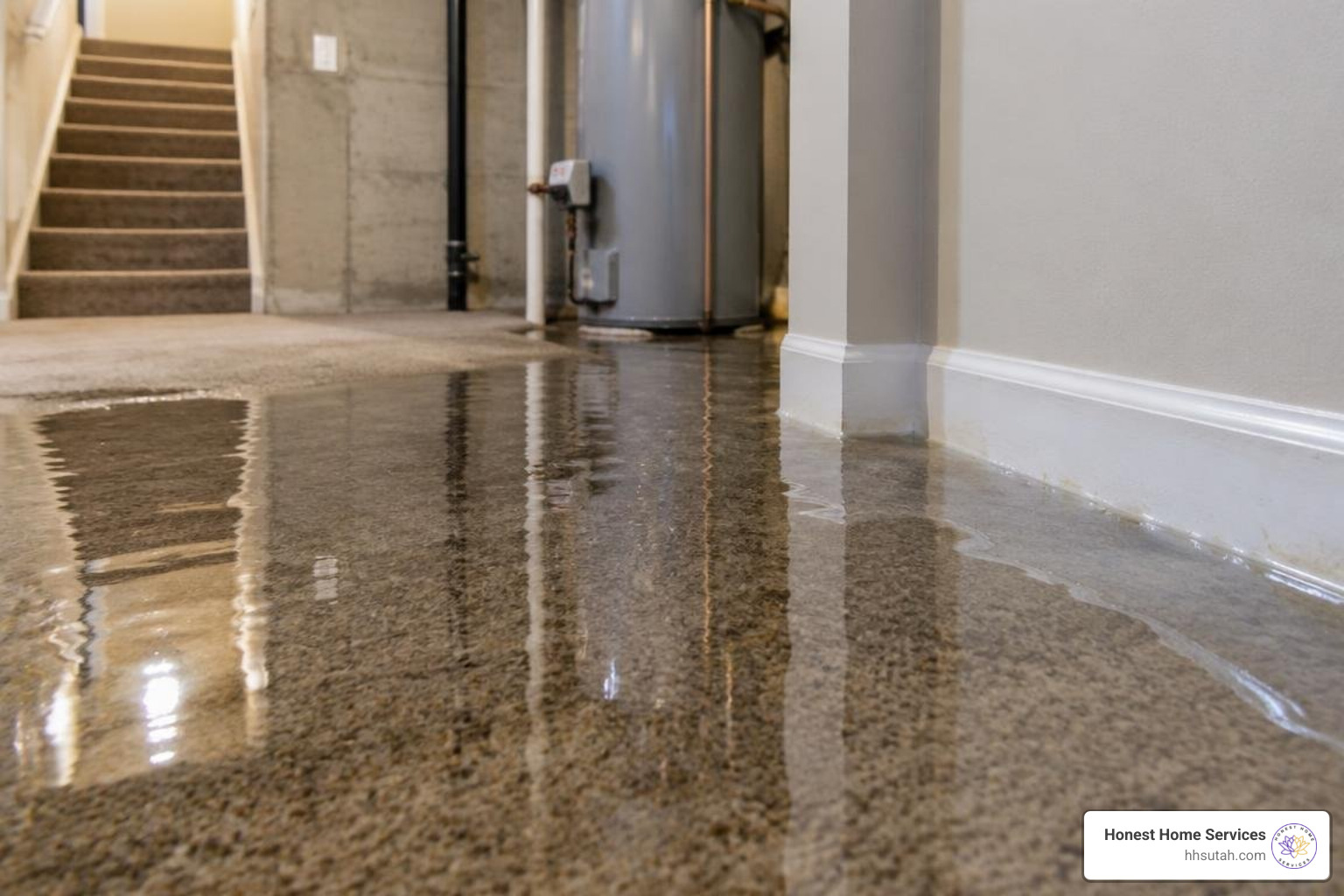
Plumbing disasters rarely check your schedule before striking. They have an uncanny knack for happening at 11:00 PM on a Sunday or right as you are preparing a holiday dinner. When water starts pooling, it can be tempting to panic, but understanding the difference between an immediate crisis and an issue that can safely wait until normal business hours will save you stress and protect your home.
A true plumbing emergency presents an imminent threat to your home’s structural integrity, poses a severe health and contamination risk, or leaves your household entirely without essential sanitation. If water is actively flowing and cannot be isolated by an individual fixture shutoff, or if hazardous wastewater is entering living spaces, you need professional intervention immediately. In these high-stakes moments, getting urgent leaking pipe repair is critical to stopping structural damage before it spreads into subflooring and framing.
To help you decide your next move, use this quick comparison table:
| Plumbing Situation | Classification | Immediate Action Needed |
|---|---|---|
| Burst Supply Pipe | True Emergency | Shut off main water valve; call 24/7 plumber immediately |
| Raw Sewage Backing Up | True Emergency | Stop running all water; evacuate contaminated rooms; call immediately |
| Active Water Heater Rupture | True Emergency | Shut off water inlet and power/gas to tank; call immediately |
| Slow-Draining Bathroom Sink | Non-Urgent | Avoid using the sink; schedule a routine daytime service visit |
| Dripping Faucet (Contained) | Non-Urgent | Place a container beneath; schedule normal business-hours repair |
| Running Toilet (Shuts off via valve) | Non-Urgent | Turn local chrome valve behind bowl clockwise; call during standard hours |
Signs of a Burst Pipe Behind Walls or Under Slabs
Not every pipe rupture announces itself with a cinematic geyser in the center of your living room. Often, pipes freeze, crack, or corrode out of sight behind drywall, inside crawlspaces, or deep under concrete slab foundations. Catching these hidden failures early is essential to preventing dry rot, toxic mold colonization, and foundation settling.
Watch for these subtle indicators of hidden pipe failure:
- Unexplained Water Pressure Drops: If your faucets suddenly lose pressure across the entire home without municipal notice, water is likely escaping through a rupture elsewhere in the system.
- Spiking Water Utility Bills: A sudden, inexplicable surge on your monthly statement indicates a constant pressurized leak.
- Damp Drywall and Peeling Paint: Soft, spongy drywall, blistering paint, or dark water rings on ceilings point directly to active hidden leaks.
- Hissing or Dripping Sounds: If you hear running water, whistling, or ticking sounds within your walls when all fixtures are firmly turned off, a pipe is actively leaking.
- Warm Spots on Floors or Musty Odors: A warm patch on a tile or hardwood floor often signals a hot-water slab leak beneath the foundation.
When freezing winter temperatures arrive in Northern Utah, ice expansion inside copper or PEX supply lines poses an extreme threat, requiring immediate burst pipe repair in Salt Lake to secure the line before the thaw causes extensive flooding.
Distinguishing Utility Main Issues from Household Plumbing Failures
Before scheduling an emergency service call, it is critical to determine whether the failure belongs to your private plumbing system or the public utility. As a general rule, property owners are financially and structurally responsible for the service lines running from the property boundary or water meter into the home. The city or county utility manages the street mains and the municipal supply.
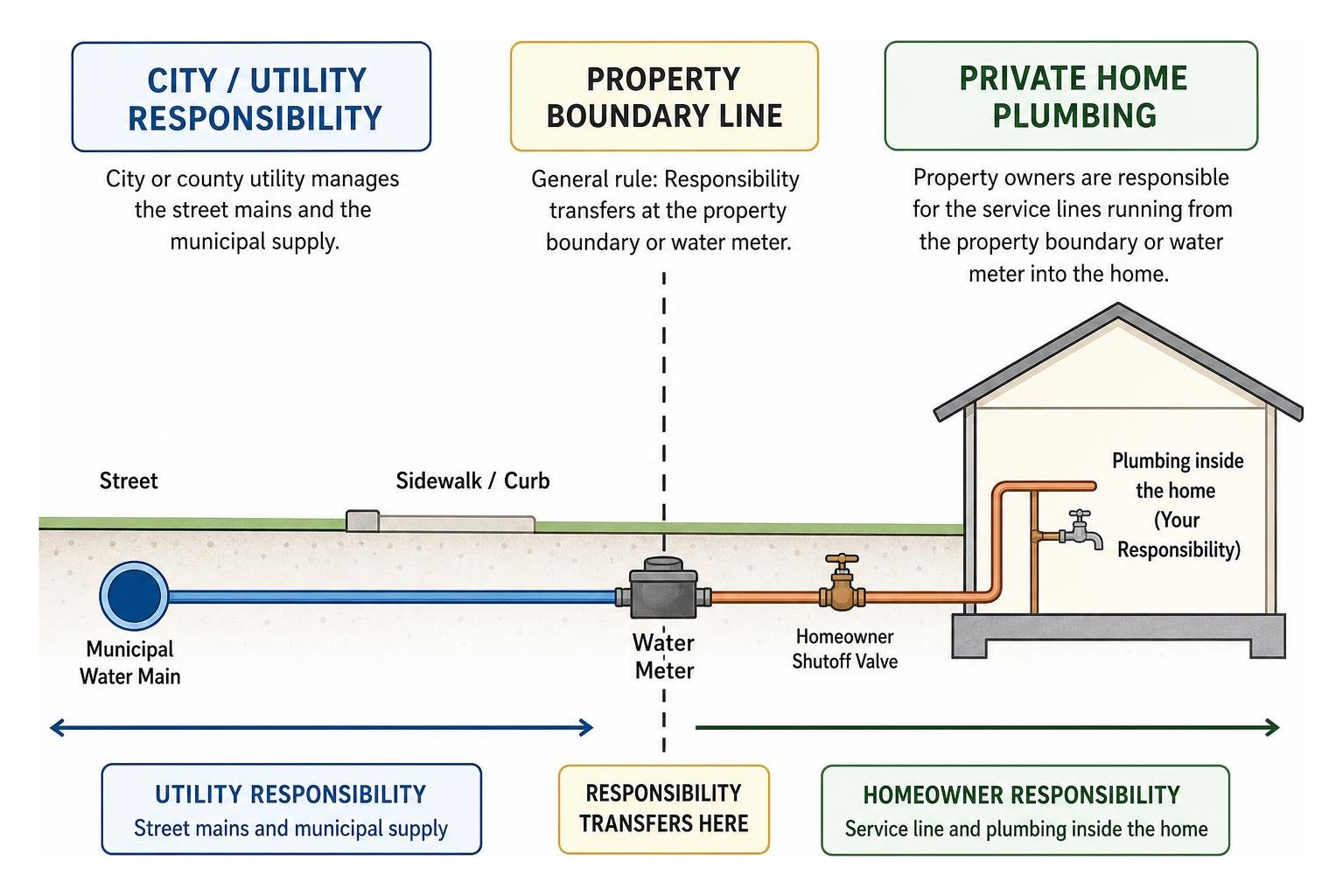
If you turn on your tap and get zero water, take a moment to look out the window. Check if your neighbors are experiencing the same issue, or look for municipal work trucks on your street. If the entire neighborhood has lost water, the municipal main has likely suffered a break, and calling your city water authority is the proper step. However, if your home alone lacks water—or if water is bubbling up specifically on your front lawn between the meter and your foundation—understanding the exact steps for when your main line breaks will ensure you coordinate properly with municipal crews and private technicians.
Immediate Action Plan: What to Do While Waiting for Dispatch
Once you have contacted our dispatch team, the clock is ticking. What you do during the 30 to 60 minutes before our technician pulls into your driveway can save thousands of dollars in restoration costs.
- Prioritize Electrical Safety: Never walk through standing water if it has reached electrical baseboards, wall outlets, or appliances. If the electrical panel is safely accessible in a dry area, shut off power to the affected rooms immediately.
- Contain and Divert Active Flow: Place heavy-duty buckets, storage bins, or cooking pots beneath active ceiling drips. Use old towels or blankets to build barriers, preventing water from traveling into carpeted hallways or hardwood rooms.
- Elevate and Protect Valuables: Lift furniture legs onto foil squares or wood blocks, and move electronics, area rugs, and important documents to dry, upper levels.
- Begin Safe Water Extraction: If the water is clean supply water (Category 1) and electrical hazards are eliminated, use a wet/dry shop vacuum or towels to remove standing pools from subfloors.
- Document the Damage Thoroughly: Before wiping everything down, take clear, wide-angle photos and video of standing water, soaked drywall, ruined personal items, and the source of the leak. This evidence is vital for subsequent insurance claims.
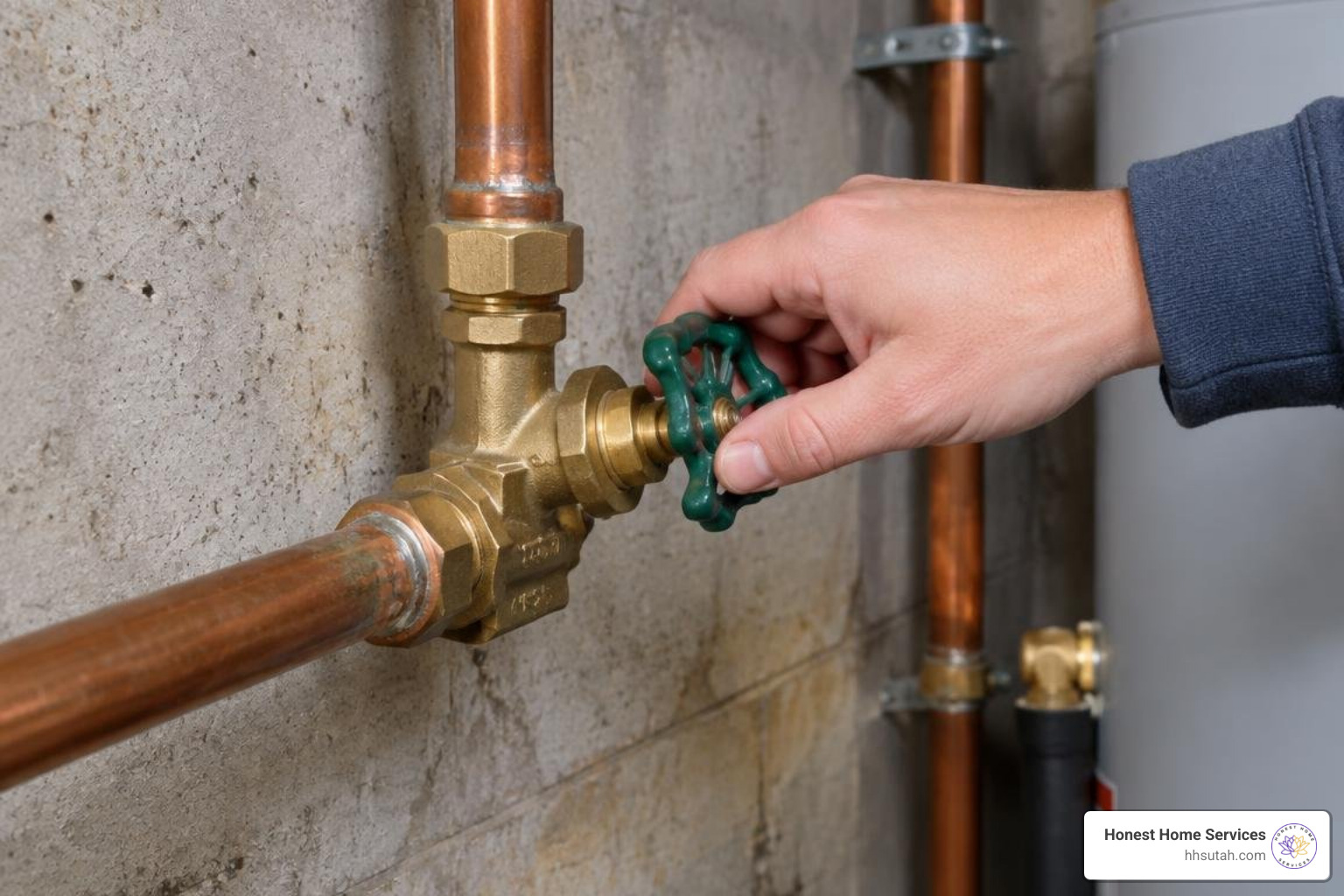
How to Find and Shut Off the Main Water Valve Fast
The single most effective action you can take during a plumbing crisis is cutting off the home’s main water supply. Every adult in your household should know the exact location of this valve.
In modern homes or residences built on basements, the main shutoff is typically located near the front foundation wall where the municipal line enters the home, often directly next to the water heater or water softener. In homes on crawlspaces or slabs, it may be located in a utility closet or inside the garage.
- Ball Valves (Lever Handle): Turn the lever 90 degrees so that it sits perpendicular to the pipe. When the handle forms a cross with the pipe, the water is 100% off.
- Gate Valves (Round Wheel Handle): Turn the wheel clockwise (“righty-tighty”) until it stops completely. Never force an older, corroded gate valve if it feels stuck, as excessive force can snap the internal stem.
Once the main valve is shut, go to the lowest level of your home (such as a basement utility sink or an outside hose bib) and open the faucet fully. Then, open a faucet on the highest floor. This introduces air into the lines and drains the remaining pressurized water safely out of the plumbing system rather than through the rupture. Taking these steps enables you to stop the flood fast with burst pipe repair protocols while the technician is in transit. Additionally, remember to switch off the circuit breaker or turn the gas control knob to “Pilot” on your water heater to prevent the heating elements from burning out while the tank drains.
Why Chemical Drain Cleaners Are Dangerous During an Emergency
When a toilet, main sewer drain, or kitchen sink severely clogs and backs up, pouring liquid chemical drain openers down the pipe is one of the worst mistakes you can make.
These consumer chemical solutions rely on caustic sulfuric acid or sodium hydroxide to dissolve organic matter. In a completely blocked pipe, the chemical cannot reach the obstruction; instead, it sits in standing wastewater, creating a toxic, boiling soup.
Chemical drain cleaners pose three major dangers:
- Pipe Destruction: The chemical reaction generates intense thermal heat that can soften and warp PVC pipes or accelerate corrosion in older cast-iron and galvanized lines.
- Severe Injury Risks to Technicians: When our plumbers arrive to mechanically clear the line with a motorized auger or drum snake, trapped caustic chemicals can splash backward onto the technician’s eyes, skin, and hands.
- Toxic Fume Accumulation: In unvented or poorly ventilated emergency scenarios, volatile fumes can fill living spaces, irritating respiratory systems and creating hazardous air quality.
If you have already used a chemical drain cleaner before calling, inform your dispatcher and technician immediately so they can wear appropriate personal protective gear before opening the line.
Emergency Plumbing Costs, Service Call Fees, and Pricing Factors
Plumbing emergencies naturally involve different pricing dynamics than standard daytime maintenance. When you request immediate service during the middle of the night, on a weekend, or over a holiday, companies mobilize dedicated on-call technicians, specialized equipment, and direct dispatch coordination.
Most emergency plumbing estimates are determined by four core variables:
- Time and Urgency: True 24/7 emergency dispatch incurs after-hours labor rates because technicians are working non-standard shifts and responding immediately.
- The Nature of the Failure: Clearing a single localized fixture clog requires significantly less labor and tooling than excavating a collapsed sewer lateral or repairing a high-pressure line.
- Accessibility and Location: A leak located openly beneath an exposed sink is far simpler to access than a ruptured PEX fitting buried behind tiled shower walls or beneath a four-inch concrete basement slab.
- Specialized Materials and Heavy Machinery: Jobs requiring hydro-jetters, sewer inspection cameras, pipe-thawing machines, or large-diameter replacement piping will carry different material and equipment requirements.
Understanding diagnostic assessments and understanding water main replacement costs ensures you receive clear, honest communication when extensive line replacements are necessary.
How to Vet Quotes and Verify an Emergency Plumber Near Me
In the middle of a stressful plumbing crisis, homeowners can be vulnerable to price-gouging, unvetted handymen, or rogue operators looking to capitalize on urgent situations. Even when time is of the essence, taking two minutes to vet your service provider protects your property and wallet.
Follow this vetting framework before authorizing major work:
- Verify State Contractor Licensing: Ensure the company holds an active, valid plumbing contractor license through your state’s occupational licensing division. Licensed contractors are tested on safety standards and international plumbing codes.
- Confirm Comprehensive Insurance: A legitimate plumbing company carries active general liability insurance and workers’ compensation coverage. If an uninsured worker is injured on your property or accidentally causes a flash flood, you could be held liable.
- Demand Upfront, Transparent Pricing: Never allow a technician to begin cutting walls or replacing equipment without a clear, written diagnostic explanation and an approved estimate. Trustworthy professionals explain your options clearly.
- Check Verified Local Reviews: Search for recent feedback across trusted third-party review platforms. Pay special attention to how the company handles emergency calls, punctuality, cleanliness, and warranty follow-through.
Permitting Requirements, Inspections, and Homeowners Insurance Coverage
When managing an urgent plumbing disaster, building permits might seem like the last thing on your mind. However, local municipal building codes require permits for major plumbing alterations, including full water heater replacements, main sewer line repairs, extensive repiping, and backflow preventer installations.
Skipping required municipal permits creates serious long-term consequences:
- Insurance Claim Denials: If unpermitted, non-code-compliant plumbing work causes subsequent water damage, your insurance carrier can legally deny the entire payout.
- Complications During Home Resales: Municipal building inspectors and buyer home inspectors uncover unpermitted structural or plumbing work during title transfers, requiring costly tear-outs and retroactive permitting.
- Safety and Code Hazards: Permitted work undergoes an impartial safety inspection by a municipal code official, guaranteeing that venting, drainage slope, and pressure ratings meet safety requirements.
For critical infrastructure failures, partnering with a licensed provider for compliant emergency sewer line repair ensures that the excavation, pipe bedding, slope, and inspections adhere strictly to local city codes.
When it comes to insurance, standard homeowners policies typically cover sudden and accidental water damage (such as a clean supply pipe bursting without warning). However, insurance carriers routinely exclude gradual damage caused by ongoing leaks, neglected maintenance, or normal wear and tear. Furthermore, basic policies rarely cover external sewer line collapses unless you have added a specific sewer and water line backup rider. Always obtain an itemized repair invoice from your plumber detailing the precise physical point of failure to support your insurance claim.
Seasonal Preventive Measures to Stop Future Plumbing Disasters
The most affordable plumbing emergency is the one that never happens. Many high-stress midnight calls stem from small maintenance oversights that compound over time. By implementing a proactive seasonal checklist, you can protect your plumbing infrastructure throughout the year.
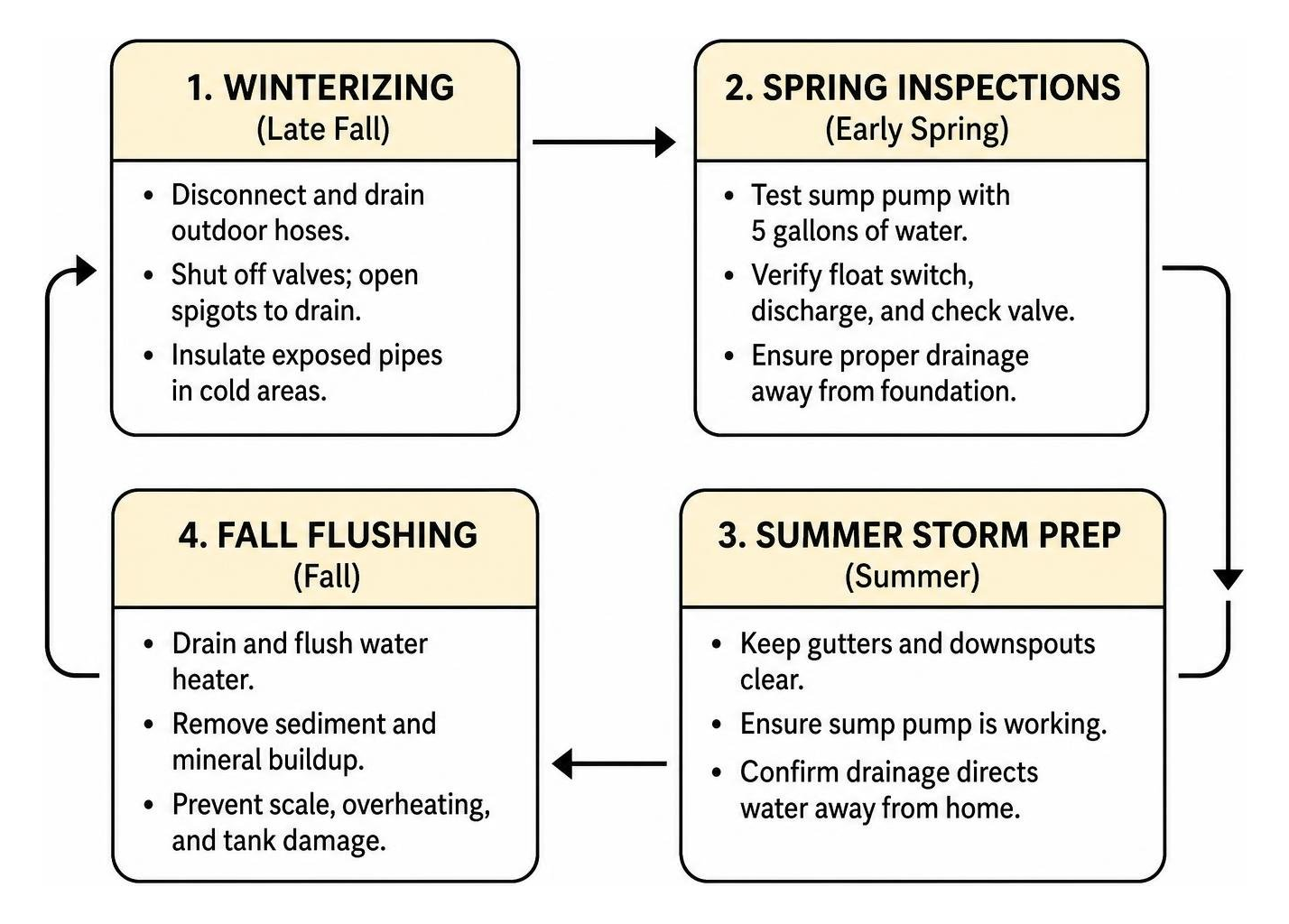
- Winterization Steps (Late Fall): Disconnect, drain, and store all outdoor garden hoses before the first freeze. Shut off interior isolating valves for external hose bibs and open the outside spigots to drain lingering water. Ensure unheated basements, crawlspaces, and garages have foam pipe insulation wrapping all exposed copper and PEX lines.
- Water Heater Maintenance (Annual): Drain and flush your water heater tank annually to remove hardened sediment, scale, and mineral buildup. Sediment insulation causes the tank bottom to overheat, leading to premature metal fatigue, burner failure, or catastrophic bottom-tank rupture. If your tank is leaking from the base or showing pilot failures, schedule emergency water heater repair right away.
- Sump Pump Testing (Early Spring): Before spring snowmelt and seasonal rains saturate the ground, pour five gallons of water into your sump basin. Verify that the float switch activates smoothly, the pump expels water cleanly away from your foundation, and the check valve operates without backflow.
- Drain and Fixture Care (Monthly): Avoid pouring cooking grease, fats, oils, fibrous vegetable scraps, coffee grounds, and “flushable” wipes down your drains. Treat drains monthly with enzymatic, non-caustic cleaners to maintain clean pipe walls without eroding internal materials.
Scheduling 24/7 Assistance with an Emergency Plumber Near Me
When an unexpected disaster strikes your home, speed and reliability are essential. Our dispatch operations are structured to handle critical plumbing crises efficiently across our service area. When you call, our dispatchers gather key details: where the leak is located, whether you have successfully stopped the water flow, and whether hazards like wastewater or electrical equipment are present.
Our technicians arrive fully prepared in mobile service units stocked with industrial drain cameras, commercial augers, pipe fittings, leak-detection gear, and replacement parts to solve the majority of crises on the spot. For late-night pipe failures, reviewing our guide on finding 24 hour plumbing in Salt Lake will help you prepare for arrival and understand how dispatch teams triage urgent calls across Northern Utah communities.
Frequently Asked Questions About Emergency Plumbing
How much does an emergency plumber visit typically cost?
The final investment for an emergency plumbing visit depends on the specific nature of the problem, the time of day, and the labor and materials needed for repair. Emergency calls typically involve a diagnostic service call fee covering the technician’s travel, physical arrival, and thorough assessment. After diagnosing the failure, the technician provides a clear, itemized quote based on parts, specialized equipment (like hydro-jetters or cameras), pipe accessibility, and total repair time.
What qualifies as an emergency that cannot wait until morning?
A plumbing situation is a true emergency if it causes active, uncontainable water leaks, creates a severe health and sanitation hazard, or leaves your home without water or sewer service. Key examples include:
- A burst supply pipe that cannot be isolated at the fixture.
- Raw sewage backing up into bathtubs, showers, or basement floor drains.
- A water heater tank rupture actively leaking onto your floor.
- A total water outage throughout the entire home.
- Standing water encroaching on electrical panels, baseboard heaters, or appliances.
If a leak can be stopped by shutting off an individual valve beneath a single sink or toilet, or if a fixture is simply draining slowly, it is generally safe to schedule a standard daytime visit.
Does homeowners insurance cover burst pipe repair and leak detection?
Most standard homeowners insurance policies cover water damage resulting from sudden, accidental pipe failures, such as a frozen pipe rupturing in winter. Coverage typically applies to structural repairs (drywall, subfloors, framing) and water remediation services. However, the policy often excludes the actual plumbing component that broke due to standard wear, age, or corrosion. Gradual leaks that have been dripping unnoticed for months are frequently denied due to maintenance exclusions. Check your policy for specific water damage limits and consider adding a dedicated water backup rider.
Conclusion
Plumbing emergencies are stressful, disruptive, and potentially damaging, but taking fast, decisive action helps you protect your home. Knowing how to locate your main shutoff valve, safely clearing water away from electrical hazards, avoiding harmful chemical cleaners, and calling a trusted 24/7 professional makes all the difference in a crisis.
At Honest Home Services, we pride ourselves on providing prompt, reliable, and fair emergency solutions across Northern Utah. Whether you are dealing with a burst pipe in the dead of winter or a sudden sewer backup, our experienced, licensed plumbers are ready to restore your home’s safety and comfort. For fast, reliable help with all your residential plumbing needs, schedule our expert Salt Lake City plumbing services today.