

What Determines Water Heater Sensor Replacement Cost?
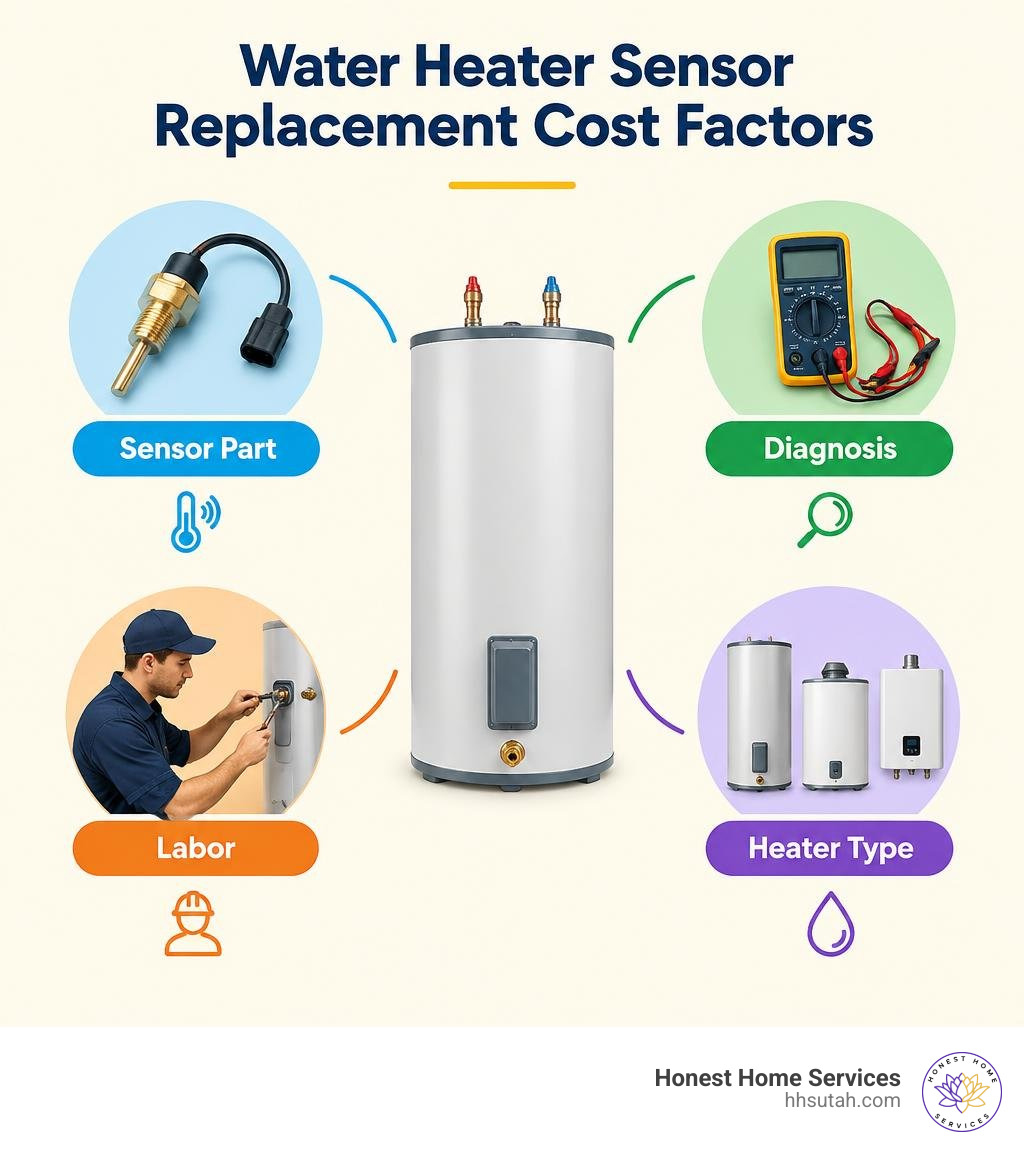
Water heater sensor replacement cost depends on the sensor, the heater type, and the time needed to confirm the fault. A small sensor may be inexpensive, but diagnosis and labor can make up much of the bill. Ask for an estimate that separates the part, diagnostic fee, and labor before you approve the repair.
A failed sensor can cause uneven water temperature, no hot water, or a safety lockout. Those signs can also point to other problems, so testing the sensor first helps you avoid paying for the wrong fix.
We are Honest Home Services, and our Northern Utah plumbing team has over 20 years of experience with water heater repairs. We use that experience to help you understand your water heater sensor replacement cost and whether the repair makes sense.
Understanding Common Water Heater Sensors and Signs of Failure
Modern water heaters rely on a network of safety and monitoring components to heat your water safely and efficiently. When one of these components malfunctions, your system may shut down entirely or behave erratically. Knowing what each part does is the first step when troubleshooting cold water issues before booking a service call.
The primary monitoring devices in residential systems include:
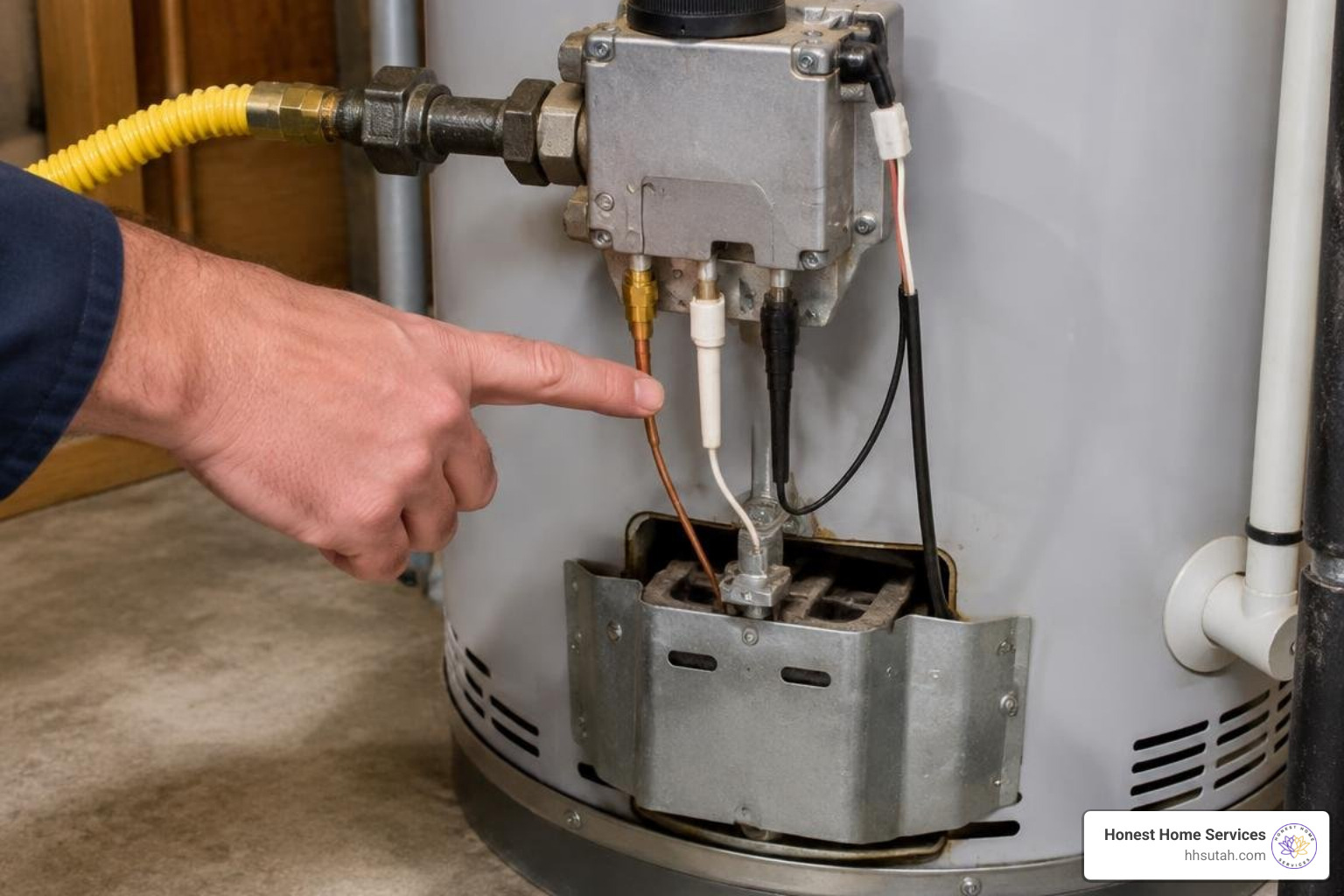
- Thermocouple or Thermopile: Found in standing-pilot gas units, this component generates a small electrical voltage when heated by the pilot flame. It tells the gas control valve that a flame is present, allowing main burner operation.
- Thermistor: An electronic temperature sensor whose electrical resistance changes predictably with temperature. Electronic and hybrid models use thermistors to monitor internal water heat levels.
- Flammable Vapor (FV) Sensor: Mandated for safety on modern gas models, this ceramic or solid-state device detects combustible fumes (such as paint thinners or gasoline) near the base of the heater and triggers a safety lockout to prevent accidental ignition.
- Outlet Water Temperature Sensor: Common in tankless units, this sensor monitors outgoing water as it leaves the heat exchanger to ensure rapid, consistent temperature modulation.
- High-Limit Switch (ECO): An emergency safety cutoff that halts electrical power or shuts the gas valve if tank temperatures climb dangerously high.
When sensors begin to fail, symptoms range from subtle to immediate. You might notice rapid temperature fluctuations during showers, water that never reaches set temperatures, or blinking status LEDs. On digital units, specific lockout codes will appear on the display, preventing the unit from firing until the underlying problem is resolved.
Diagnosing Gas Water Heater Sensor Issues
In gas water heaters, sensor problems frequently manifest as a pilot light that refuses to stay lit once you release the control knob. When you hold down the pilot button, you are manually forcing gas to flow; releasing the button requires the thermocouple to take over and hold the internal magnetic valve open via millivolt current.
If the thermocouple tip is corroded, bent away from the flame path, or worn out internally, it cannot generate sufficient voltage. As a result, the valve snaps shut instantly. When simple cleaning does not restore functionality, fixing pilot thermocouple problems with a fresh replacement is necessary. If a known-good thermocouple still fails to keep the pilot active, the internal electromagnet within the gas control valve itself may have failed, requiring a valve replacement.
Identifying Electric and Tankless Sensor Malfunctions
Electric tank units typically use upper and lower thermostats with integrated thermal sensors, while advanced electronic units utilize upper and lower thermistors pressed against the tank wall. If a thermistor drifts out of its calibrated resistance range, the internal control module misreads tank temperature, resulting in lukewarm water or continuous overheating that trips the manual high-limit reset button.
For example, reading Whirlpool E03 diagnostic codes points directly to an upper thermistor circuit fault. In continuous-flow tankless heaters, the unit relies on an outlet water temperature sensor to adjust gas burn rates dynamically. If an outlet thermistor scales over or degrades, users often experience the “cold water sandwich” effect, where water alternates between hot and icy. When dealing with standard electric tanks, it is also important to verify whether lukewarm output stems from a sensor fault or if you are actually due for replacing water heater heating elements.
Water Heater Sensor Replacement Cost Breakdown by Sensor Type
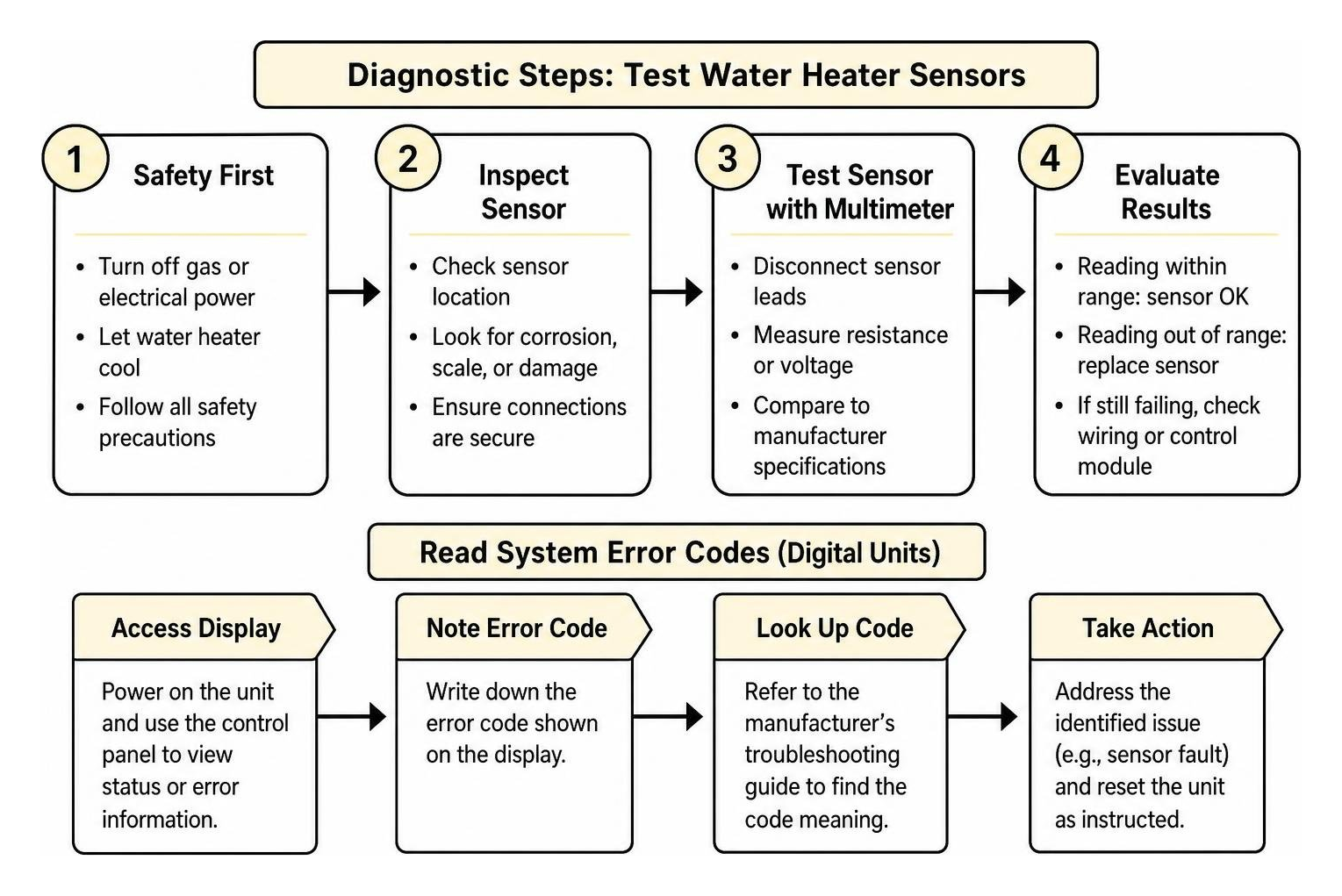
The overall expense of replacing a water heater sensor combines the cost of the replacement part with diagnostic and labor expenses. Sensor components themselves are relatively modest in price, but accessing the part, testing the circuit with a multimeter, draining lines if needed, and safely reconnecting gas or high-voltage electric lines require professional skill.
| Sensor Component | Typical Part Cost | Typical Labor Time | Estimated Installed Range |
|---|---|---|---|
| Standard Gas Thermocouple | Low | 30 to 45 minutes | Modest |
| Electric Thermistor Probe | Low | 30 to 60 minutes | Modest |
| Flammable Vapor (FV) Sensor | Low to Moderate | 30 to 45 minutes | Modest to Moderate |
| Tankless Outlet Temperature Sensor | Low to Moderate | 45 to 60 minutes | Modest to Moderate |
| Gas Control Valve Assembly | Moderate to High | 1 to 2 hours | Moderate to Substantial |
| Tankless Main Control Board | High | 1 to 2 hours | Substantial |
For a comprehensive perspective on repair rates across the industry, review our water heater repair estimates guide to see how various plumbing repairs are structured.
Thermocouple and Thermistor Water Heater Sensor Replacement Cost
Standard thermocouples and thermistors represent the most straightforward sensor repairs. A replacement thermocouple or electric thermistor is a low-cost component. When installed by a professional, the overall fee covers diagnostic testing, burner assembly removal, burner chamber vacuuming, and post-installation combustion checks.
Because replacing an electric thermistor or dual thermostat assembly involves working inside high-voltage service panels, checking our breakdown on thermostat repair and replacement pricing helps clarify what goes into electrical safety checks and thermal calibration.
Flammable Vapor and Control Board Water Heater Sensor Replacement Cost
Flammable vapor sensors are specialized safety devices. While an OEM sensor kit is generally inexpensive, resolving an FV lockout requires careful inspection. If chemical fumes, paint vapors, or water pooling near the base triggered the device, the sensor may be permanently chemically altered or shorted, requiring a full replacement and a digital control reset.
If the main logic board on an advanced gas or tankless unit sustains an electrical surge or water damage, replacing the motherboard is significantly more involved. Electronic control boards require complete wire-harness transfers, parameter programming, and exhaustive safety testing to verify proper flame rectification and draft induction.
Key Factors Influencing Water Heater Sensor Replacement Cost
Multiple real-world variables dictate where your final invoice lands within typical repair ranges:
- Heater Type and Architecture: Standard atmospheric gas water heaters feature open access to the burner deck, making sensor swaps straightforward. Sealed-combustion power-vent units and dense tankless cabinets require disassembling exhaust blowers, air intake baffles, or heat exchanger jackets to reach sensor ports.
- Accessibility and Installation Location: Water heaters tucked into tight crawlspaces, attic access areas, or finished closets require extra labor time to safely access and service.
- Diagnostic Complexity: An intermittent sensor fault that only shows up during peak load takes longer to verify than a dead thermocouple that shows zero millivolts on a meter.
- Code and Safety Compliance: Modern plumbing codes require proper expansion tanks, sediment traps, and combustion clearances. If servicing the sensor exposes critical safety violations, addressing them may alter your overall service scope.
When unexpected cold water hits your household, getting fast repair cost estimates from a qualified local plumber ensures you receive transparent options without high-pressure sales tactics.
Sensor Repair vs. System Replacement: When to Upgrade
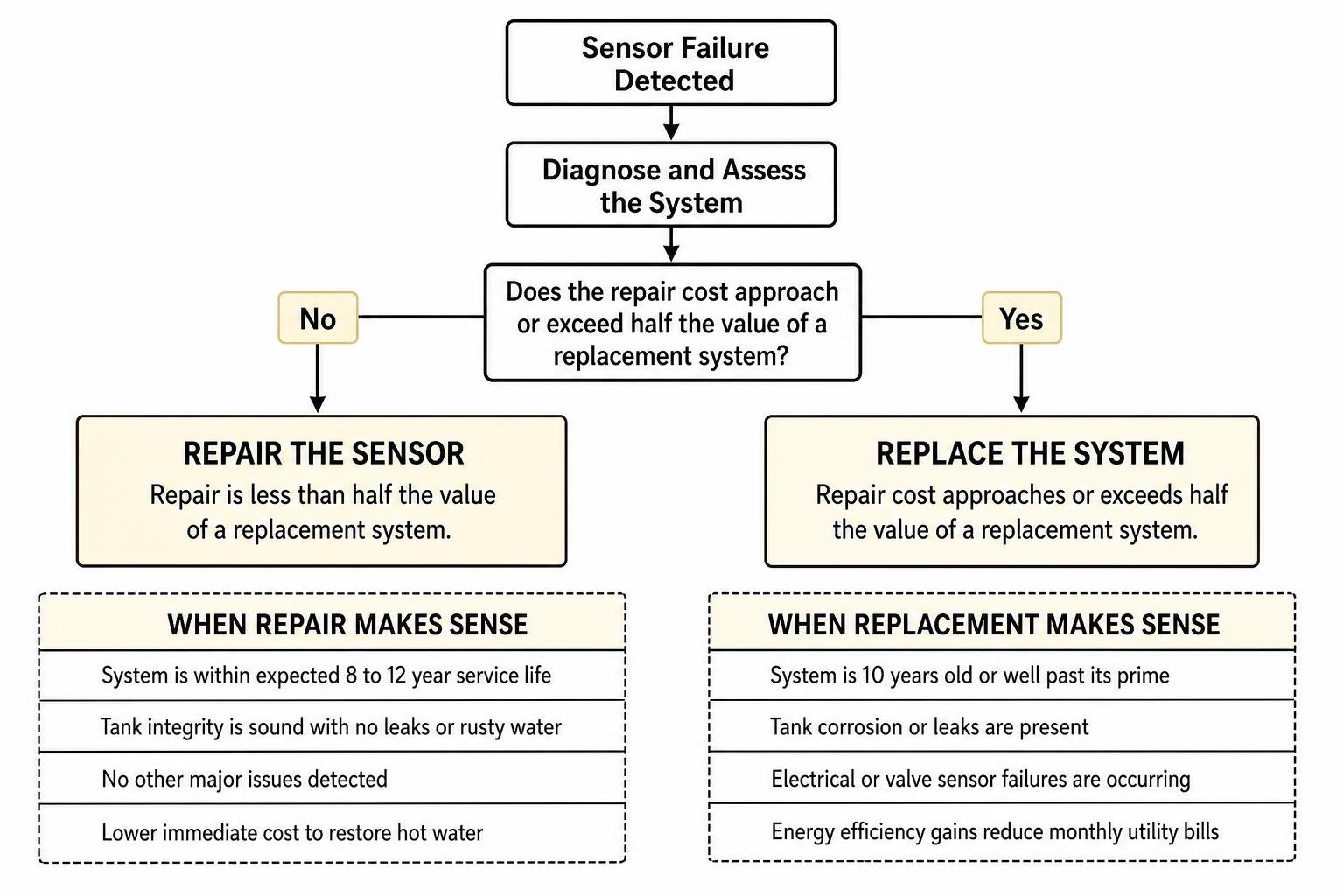
When facing a sensor failure, you must decide whether repairing the component makes financial sense over the long term. A practical guideline used throughout the plumbing industry is the 50-percent rule: if the cost of the repair approaches or exceeds half the value of a replacement system—or if the unit is well past its prime—investing in a new water heater is often the wiser financial move.
Consider these critical benchmarks during your evaluation:
- System Age: Standard residential tank water heaters carry an expected service life of 8 to 12 years. If your heater is 10 years old and experiencing electrical or valve sensor failures, additional component breakdowns are likely imminent.
- Tank Integrity: Sensors can be swapped, but internal tank corrosion cannot be reversed. If you notice rusty hot water or weeping around fittings, review calculating water heater replacement costs rather than spending money on new electronics for a failing vessel.
- Energy Efficiency Gains: Modern heat pump water heaters and high-efficiency tankless models dramatically reduce monthly utility bills compared to aging standard atmospheric tanks. Exploring a comprehensive guide to new water heaters helps you compare ongoing operating efficiency against immediate repair expenses.
Frequently Asked Questions About Water Heater Sensor Costs
Can I replace a water heater sensor myself to save on labor?
Homeowners with DIY experience and a reliable digital multimeter can handle simple exterior repairs, such as unhooking an electric thermistor or clipping in an FV sensor kit. If you are comfortable following strict electrical lock-out and tag-out procedures, swapping water heater thermostats DIY is possible.
However, any repair involving the gas supply line, burner chamber seals, or high-voltage circuitry carries serious safety risks. Improper burner gasket reassembly can lead to dangerous carbon monoxide leaks, while incorrectly wired thermostats can boil tank water and trigger high-pressure blowouts. When in doubt, professional installation guarantees safety and keeps your equipment up to code.
Does a water heater warranty cover sensor replacement?
If your water heater is within its original manufacturer warranty period (typically 6 to 10 years depending on the model), replacement sensor parts are usually covered at no cost from the manufacturer. However, standard factory warranties rarely cover the labor and diagnostic fees charged by the plumbing technician to identify the failure and install the replacement part. To maintain valid coverage, manufacturers require genuine OEM components rather than generic universal aftermarket parts.
How long does a water heater sensor replacement typically take?
Once a technician arrives on-site and accurately isolates the faulty component, the physical replacement of a thermocouple, thermistor, or FV sensor typically takes 30 to 60 minutes. Additional time may be necessary if the technician must clear heavy sediment buildup, replace seized burner bracket screws, or perform comprehensive combustion analysis on sealed systems.
Conclusion
A cold shower does not automatically mean your water heater is destined for the scrap heap. In many cases, a simple sensor swap restores dependable hot water quickly without the expense of an entire system replacement. Accurately testing thermocouples, thermistors, and safety switches prevents you from paying for major parts you do not need.
At Honest Home Services, we believe in upfront pricing, thorough diagnostics, and straightforward advice for homeowners across Salt Lake County, Davis County, and surrounding Northern Utah communities. Whether you need a quick sensor test or an honest evaluation of an aging system, schedule a professional hot water repair cost evaluation with our licensed plumbing team today.