

Why Gas Water Heater Servicing Should Be on Every Homeowner’s Radar
Gas water heater servicing is one of the most important — and most overlooked — maintenance tasks in any home.
Here’s a quick overview of what routine gas water heater servicing involves:
| Task | Frequency | DIY or Pro? |
|---|---|---|
| Flush sediment from tank | Every 6–12 months | DIY |
| Test T&P relief valve | Annually | DIY |
| Inspect anode rod | Every 3 years | DIY |
| Check thermocouple | As needed | Pro recommended |
| Inspect venting and combustion air | Annually | Pro |
| Check gas supply pressure | Annually | Pro |
| Relight pilot light | As needed | DIY |
Water heaters account for roughly 17% of a home’s total energy costs. Yet most homeowners don’t think about their water heater until something goes wrong — no hot water, strange noises, or a puddle on the floor.
The reality is that a gas water heater works hard every single day. Without regular care, sediment builds up, parts wear out, and efficiency drops. A typical tank-style water heater lasts around 10–12 years, but with proper maintenance that lifespan can stretch significantly further.
Small, simple tasks done once a year can save you from a costly emergency replacement.
At Honest Home Services, we’ve spent over 20 years helping Northern Utah homeowners and businesses with gas water heater servicing, repairs, and replacements. In this guide, we’ll walk you through exactly what to check, what to do yourself, and when to call a pro.
Basic gas water heater servicing glossary:
- fix broken water heater
- hot water cylinder element replacement
- hot water cylinder thermostat replacement
Why Regular Gas Water Heater Servicing Matters
Leaving your water heater to fend for itself in a dark closet or utility room is a recipe for high utility bills and sudden cold showers. The primary culprit behind most performance issues is mineral scaling.
Approximately 85% of the United States has hard water, and here in Northern Utah—from Salt Lake City up through Davis County—our water is packed with dissolved minerals like calcium and magnesium.
As water is heated inside the tank, these minerals solidify and settle to the bottom. This creates a thick layer of sediment that acts as a thermal barrier between the gas burner and the water.
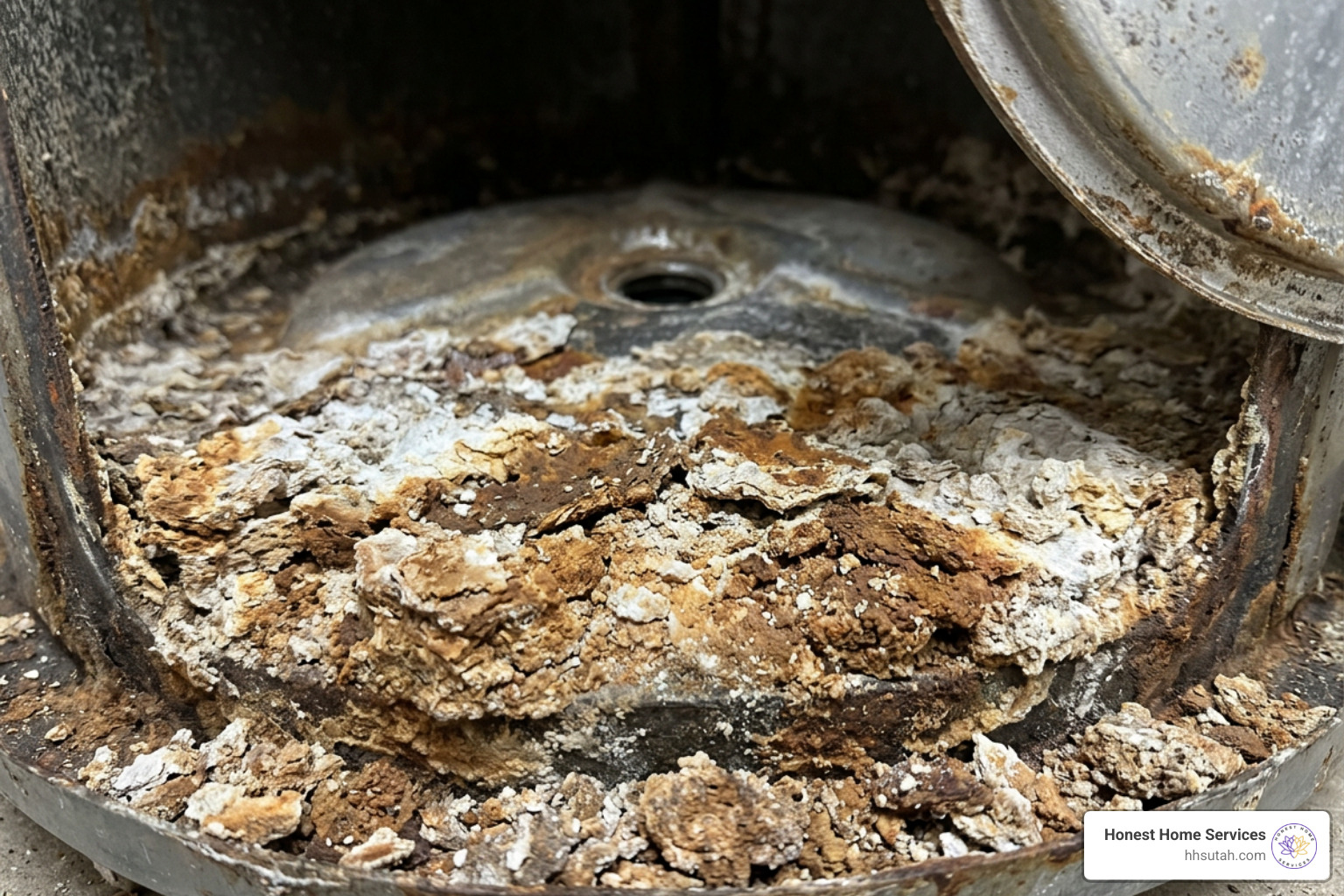
When this barrier forms, your water heater has to run longer and hotter to heat the same amount of water, which drives up your gas bill. Over time, this localized overheating weakens the steel tank, leading to tiny cracks, leaks, and eventually a catastrophic tank failure.
Investing a little time in routine maintenance keeps your energy bills low, prevents unexpected flooding, and extends the life of your equipment. To learn more about what to expect financially, read our guide on understanding gas water heater service costs.
DIY Maintenance vs. Professional Gas Water Heater Servicing
Many homeowners wonder how much of this checklist they can handle on their own. The good news is that basic preventative tasks are highly accessible for the average DIYer.
Homeowners can easily handle:
- Flushing sediment from the tank.
- Visually inspecting the unit for leaks or corrosion.
- Testing the temperature and pressure (T&P) relief valve.
- Checking and replacing the sacrificial anode rod.
- Safely relighting the pilot light.
However, certain technical tasks should always be left to a licensed professional. Working with natural gas or liquid propane carries significant safety risks, including gas leaks, fires, carbon monoxide poisoning, and explosions.
You should call a licensed plumber for:
- Testing and adjusting gas supply pressure.
- Replacing a gas control valve or internal burner assembly.
- Correcting complex combustion air or drafting issues.
- Any repairs required to keep your manufacturer’s warranty valid.
If you want to understand the limits of DIY care, check out our article on how to service your gas water heater.
Essential Safety Precautions Before You Begin
Before you touch any valves or pull out your toolbox, you must establish a safe working environment. Gas water heaters combine water, high temperatures, flammable gas, and open flames—meaning safety is not optional.

Always follow these critical safety precautions:
- Turn Off the Gas: Locate the gas control dial on the front of the water heater tank and turn it to the “OFF” position. For added safety, locate the manual gas shutoff valve on the incoming gas pipe and turn it perpendicular to the pipe to stop the gas flow completely.
- Turn Off the Water: Shut off the cold water supply valve located on the pipe above the water heater.
- Let It Cool: Never attempt to drain or service a hot water heater. Water heated to 140°F can cause third-degree burns in less than 5 seconds. Let the system sit for several hours, or run hot water from a faucet until the tank cools down.
- Ensure Proper Ventilation: Make sure your utility room is well-ventilated. Never store aerosol cans, gasoline, paint thinners, or other flammable liquids near your gas appliances.
- Check the Manual: Every manufacturer has specific guidelines. Keep the Rheem Residential Gas Water Heaters Manual or your specific unit’s handbook close by for reference.
Step-by-Step Gas Water Heater Maintenance Checklist
To keep your system running optimally, we recommend establishing an annual maintenance routine. The steps required vary depending on whether you have a traditional tank or a modern tankless unit.
| Maintenance Task | Tank-Style Heater | Tankless Heater |
|---|---|---|
| Flush System | Annually (or every 6 months for hard water) | Annually (using a descaling pump and food-grade vinegar) |
| Check Anode Rod | Inspect every 3 years; replace when worn | N/A (no storage tank to protect) |
| Clean Inlet Filter | N/A | Inspect and clean every 6–12 months |
| Test T&P Valve | Annually | Annually (if installed) |
| Inspect Venting | Annually | Annually |
Flushing Sediment From the Tank
Flushing your tank is the single most effective way to combat the effects of Northern Utah’s hard water. If you ignore this step, sediment can harden to a gravel-like consistency, making it incredibly difficult to remove later.
Follow these steps to flush your tank:
- Complete the safety shutoff steps (gas off, water off, let the water cool).
- Attach a standard garden hose to the drain valve at the bottom of the water heater. Route the other end of the hose to a floor drain, utility sink, or outside.
- Open a hot water faucet upstairs (such as in a bathroom) to break the vacuum inside the tank, allowing water to flow freely.
- Slowly open the drain valve. Be prepared for the water to look brown, rusty, or full of white mineral flakes.
- Once the tank is empty, turn the cold water inlet valve back on for a minute or two. This “cold water flush” stirs up any remaining sediment at the bottom of the tank and pushes it out.
- Close the drain valve, remove the hose, turn the cold water supply back on, and let the tank fill completely before turning the gas back on.
If you notice water around the base of your unit while performing these steps, read our guide on why your gas water heater is leaking to determine if it is a simple valve issue or a cracked tank.
Checking and Replacing the Thermocouple
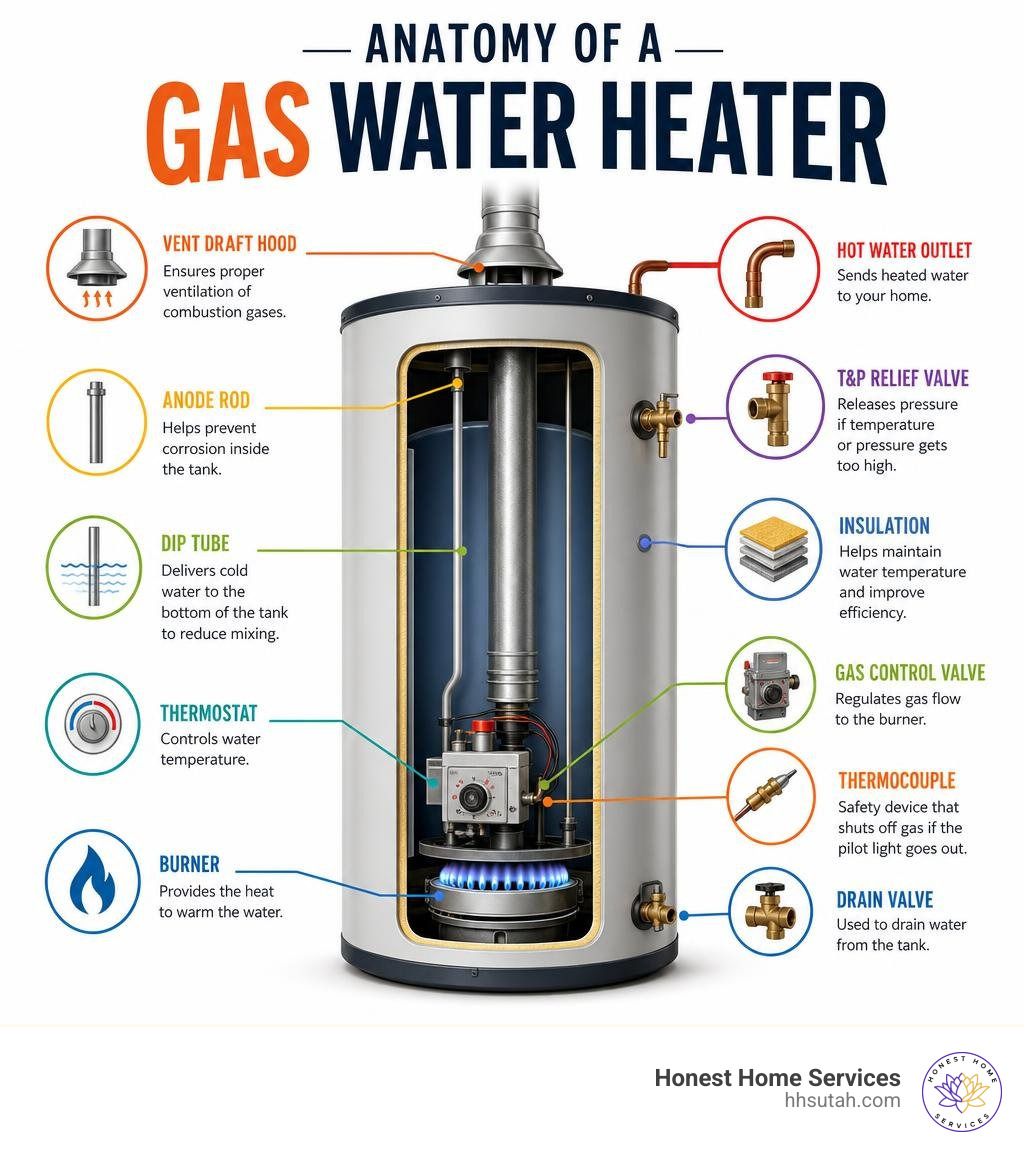
The thermocouple is a simple but vital safety device. It sits next to the pilot flame and generates a tiny electrical current (measured in millivolts) when heated. This current tells the gas valve that a flame is present, keeping the gas safety valve open. If the pilot goes out, the thermocouple cools down, stopping the current and immediately shutting off the gas supply to prevent a dangerous buildup of unburned gas.
If your pilot light won’t stay lit, the thermocouple is often the culprit. A technician can test the thermocouple’s millivolt output using a multimeter. A healthy thermocouple should produce between 20 and 30 mV (or at least 13 mV on some sealed systems). If it reads lower, or if the safety valve closes in under 180 seconds after the pilot is extinguished, the thermocouple needs to be replaced.
Modern Flammable Vapor Ignition Resistant (FVIR) water heaters feature sealed combustion chambers. Accessing and replacing the thermocouple on these units requires removing the burner manifold assembly and replacing the delicate thermal cut-off (TCO) parts. For detailed technical specifications on these assemblies, refer to the A.O. Smith Standard Residential Gas Water Heater Manual.
Testing the Temperature and Pressure (T&P) Relief Valve
The T&P valve is your water heater’s ultimate safety net. If your thermostat fails and the water overheats, or if pressure builds up dangerously, this valve opens to release water and relieve pressure, preventing a catastrophic explosion.
To test the T&P valve:
- Ensure the discharge tube connected to the valve is properly directed toward a floor drain or the floor.
- Gently lift the lever on the valve. Water should flow out of the discharge tube.
- Release the lever. The water should stop immediately.
If no water flows, or if the valve continues to drip after you release the lever, the valve is faulty and must be replaced immediately. Additionally, if you live in an area with a closed water system (often caused by backflow preventers), thermal expansion can cause your T&P valve to drip constantly. In these cases, installing an expansion tank is highly recommended. Learn more about diagnosing these safety components in our guide to fixing broken water heater issues like a pro.
Inspecting the Sacrificial Anode Rod
The sacrificial anode rod is a long metal rod (usually made of magnesium or aluminum) suspended inside your water heater tank. Its sole purpose is to corrode so your tank doesn’t have to. Through a process called galvanic corrosion, corrosive elements in the water attack the anode rod instead of the steel walls of your water heater.
You should inspect the anode rod every three years:
- Shut off the water and drain a few gallons from the tank to lower the water level.
- Use a 1-1/16 inch socket wrench to unscrew the hex head of the anode rod on top of the tank.
- Pull the rod straight up and out.
- If the rod is rusted down to its thin steel core wire (less than 1/2 inch thick) or covered in heavy calcium buildup, replace it with a new one.
Neglecting the anode rod leads directly to rusty water and tank corrosion. For more information on how replacing this rod can save your unit, read about the advantages of water heater replacement.
Troubleshooting Common Gas Water Heater Issues
Even with regular gas water heater servicing, you may occasionally run into performance issues.
Here’s how to diagnose and resolve the most common problems:
- No Hot Water: Usually caused by an extinguished pilot light, a faulty thermocouple, or a tripped thermal cut-off switch.
- Slow Recovery/Insufficient Hot Water: Often caused by heavy sediment buildup at the bottom of the tank, a broken dip tube (which directs cold water to the bottom of the tank), or an undersized unit for your home’s needs.
- Rusty or Smelly Water: A clear sign that your anode rod has completely degraded and the steel tank is beginning to rust.
For a deeper dive into diagnosing these symptoms, check out our guide on the top 7 gas water heater problems and how to solve them.
How to Safely Relight the Pilot Light
If you find yourself without hot water, the first thing to check is the pilot light.
To safely relight it:
- Turn the gas control knob to “OFF” and wait at least 5 minutes. This allows any accumulated gas to dissipate safely.
- Turn the gas control knob to “PILOT.”
- Press and hold down the gas control knob (or the dedicated pilot button). This manually overrides the safety valve to send gas to the pilot burner.
- While holding the knob down, press the spark igniter button repeatedly until you see the pilot flame light through the viewing window.
- Continue holding the gas control knob down for about 60 seconds to allow the thermocouple to heat up.
- Slowly release the knob. If the flame stays lit, turn the knob to the “ON” position.
If the pilot goes out immediately after you release the knob, your thermocouple may be dirty, misaligned, or dead. If you are using a propane-fueled system, check out our tips on how to choose a propane water heater repair service.
Checking Gas Supply Pressure and Combustion Air
For a gas water heater to burn cleanly and safely, it needs the correct gas supply pressure and an adequate supply of combustion air.
A licensed plumber checks the manifold gas pressure using a manometer connected to the gas control valve. If the pressure is off by more than ±0.3″ W.C. (Water Column) from the manufacturer’s specifications, it can lead to poor combustion, high utility bills, or dangerous carbon monoxide production.
Additionally, atmospheric vent water heaters rely on a natural draft to carry combustion gases up the chimney. You can perform a quick draft test by holding a match or smoke pen near the draft hood at the top of the water heater while the burner is running. If the smoke is blown away rather than drawn up into the vent, your venting system is blocked or restricted, which is a major safety hazard.
Furthermore, modern FVIR water heaters use a Lint, Dust, and Oil (LDO) screen and a flame arrestor at the bottom of the unit to filter combustion air. If these screens become clogged with household dust, the burner will starve for oxygen, causing a yellow, lazy flame, sooting, or pilot outages. Cleaning these filters is a crucial step in modern gas water heater servicing. For a complete breakdown of modern system designs, read everything you need to know about new water heaters.
Signs You Need Professional Gas Water Heater Servicing
While DIY maintenance is great, you must know when to put down the wrench and call in the experts.
Contact a professional immediately if you notice:
- The Smell of Gas: If you smell rotten eggs, do not touch any electrical switches, use a phone, or attempt to light any appliances. Evacuate the home immediately and call your gas provider or emergency services.
- A Yellow or Orange Burner Flame: A healthy burner flame should be a crisp, steady blue. A yellow, flickering flame indicates incomplete combustion, which produces dangerous carbon monoxide.
- Sooting: Black soot accumulating around the burner access door, draft hood, or venting pipes indicates a severe combustion air blockage.
- Persistent Pilot Outages: If your pilot light goes out repeatedly despite cleaning or replacing the thermocouple, there may be an issue with the gas valve or the internal thermal switch.
For help finding trusted, local support in Northern Utah, refer to our local guide to gas water heater service.
Frequently Asked Questions About Gas Water Heaters
How often should a gas water heater be serviced?
For optimal performance and safety, we recommend flushing your water heater tank every 6 to 12 months, especially if you live in Northern Utah where hard water is common. A comprehensive professional inspection of the venting, gas pressure, and combustion system should be performed annually.
Why is my gas water heater making a knocking sound?
A knocking, popping, or rumbling noise is a classic sign of heavy sediment buildup. When water gets trapped beneath the layer of mineral scale at the bottom of the tank, it boils and turns to steam, escaping through the sediment layer with a loud popping sound. Flushing the tank regularly prevents this issue.
What temperature should my gas water heater be set to?
The U.S. Department of Energy recommends setting your water heater thermostat to 120 degrees Fahrenheit. This temperature is hot enough to meet all household needs, prevents scalding (water at 140°F can burn skin in under 5 seconds), and maximizes energy efficiency.
Conclusion
Routine gas water heater servicing is the key to keeping your hot water flowing safely and efficiently. By following this checklist, you can protect your home from water damage, lower your monthly natural gas bills, and get the maximum lifespan out of your investment.
When you need professional help, Honest Home Services is here for you. We provide honest, reliable, and affordable plumbing and heating services to communities across Northern Utah—including Salt Lake City, Davis County, Layton, Kaysville, Farmington, Bountiful, and the surrounding areas. Whether you need a routine safety inspection, a complex repair, or a complete system replacement, our local, expert technicians are dedicated to keeping your home comfortable and safe.
Don’t wait for a cold shower to take action. Schedule expert Salt Lake City water heater repair with Honest Home Services today!