

What to Do When You Have a Broken Water Heater
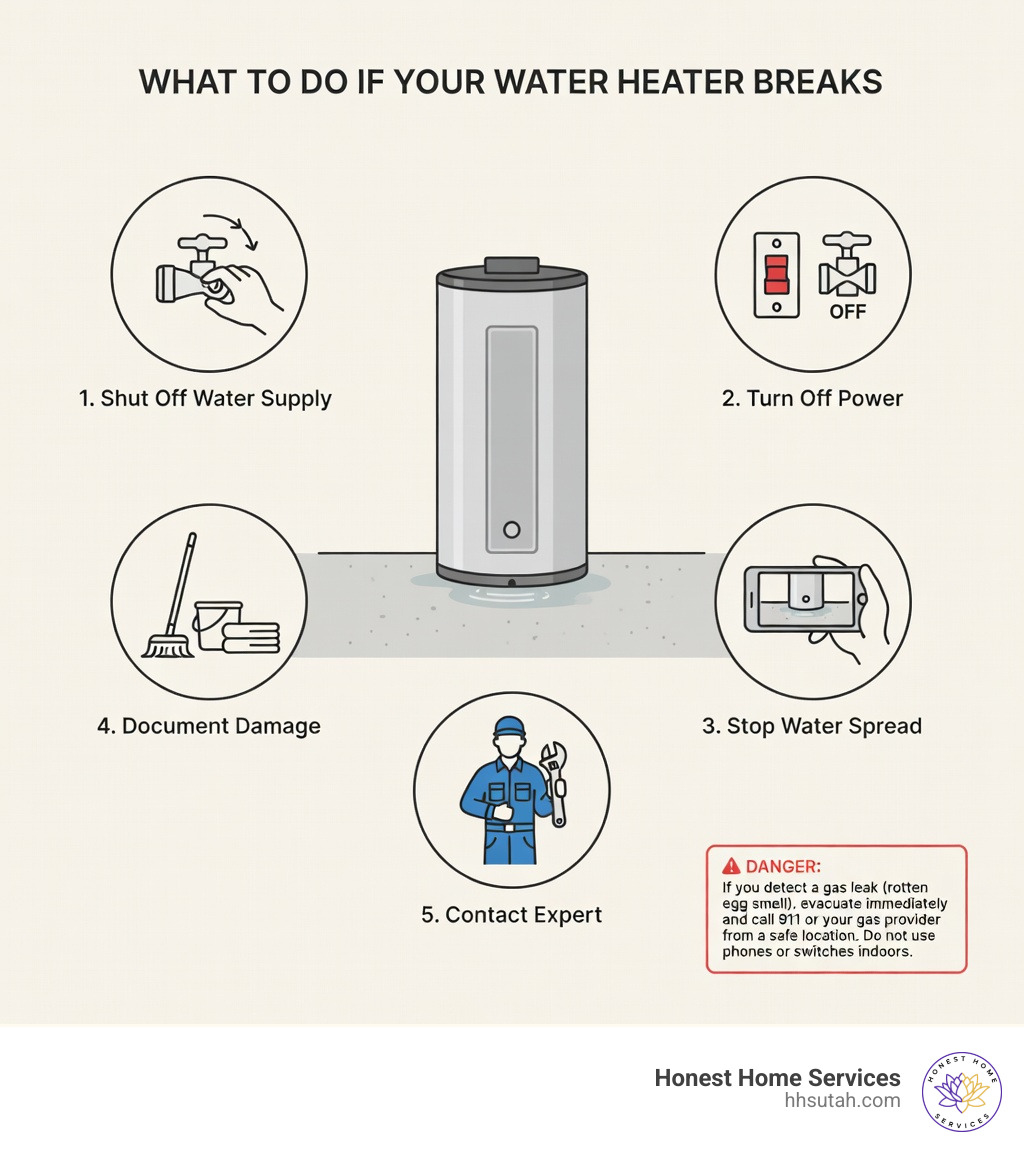
A broken water heater can disrupt your entire household in minutes — no hot showers, no clean dishes, and potentially water spreading across your floor. Here’s what to do right away:
- Turn off the cold water supply valve (turn it clockwise until it stops)
- Shut off power — flip the breaker for electric units, or turn the gas valve to OFF for gas units
- Contain any water with towels or a wet/dry vacuum
- Take photos of all visible damage for your insurance claim
- Call a licensed plumber if you see gas, smell rotten eggs, or the tank is actively leaking
If you smell gas, leave the house immediately and call your gas company before doing anything else.
These five steps apply whether you have a slow drip or a full-blown flood. The sections below walk through each one in detail — plus how to spot warning signs early, decide between repair and replacement, and keep your water heater running longer.
At Honest Home Services, we’ve spent over 20 years helping Northern Utah homeowners and businesses deal with every kind of broken water heater situation — from minor fixes to full emergency replacements. We’re ready to help you get your hot water back fast.
Broken water heater word list:
Immediate Steps to Take for a Broken Water Heater
When you realize you have a broken water heater, your first instinct might be to panic—especially if you’ve just stepped into a freezing shower or found a lake in your basement. However, taking a calm, methodical approach is the best way to minimize damage to your home in Salt Lake City or the surrounding areas.
Shutting Off the Water Supply
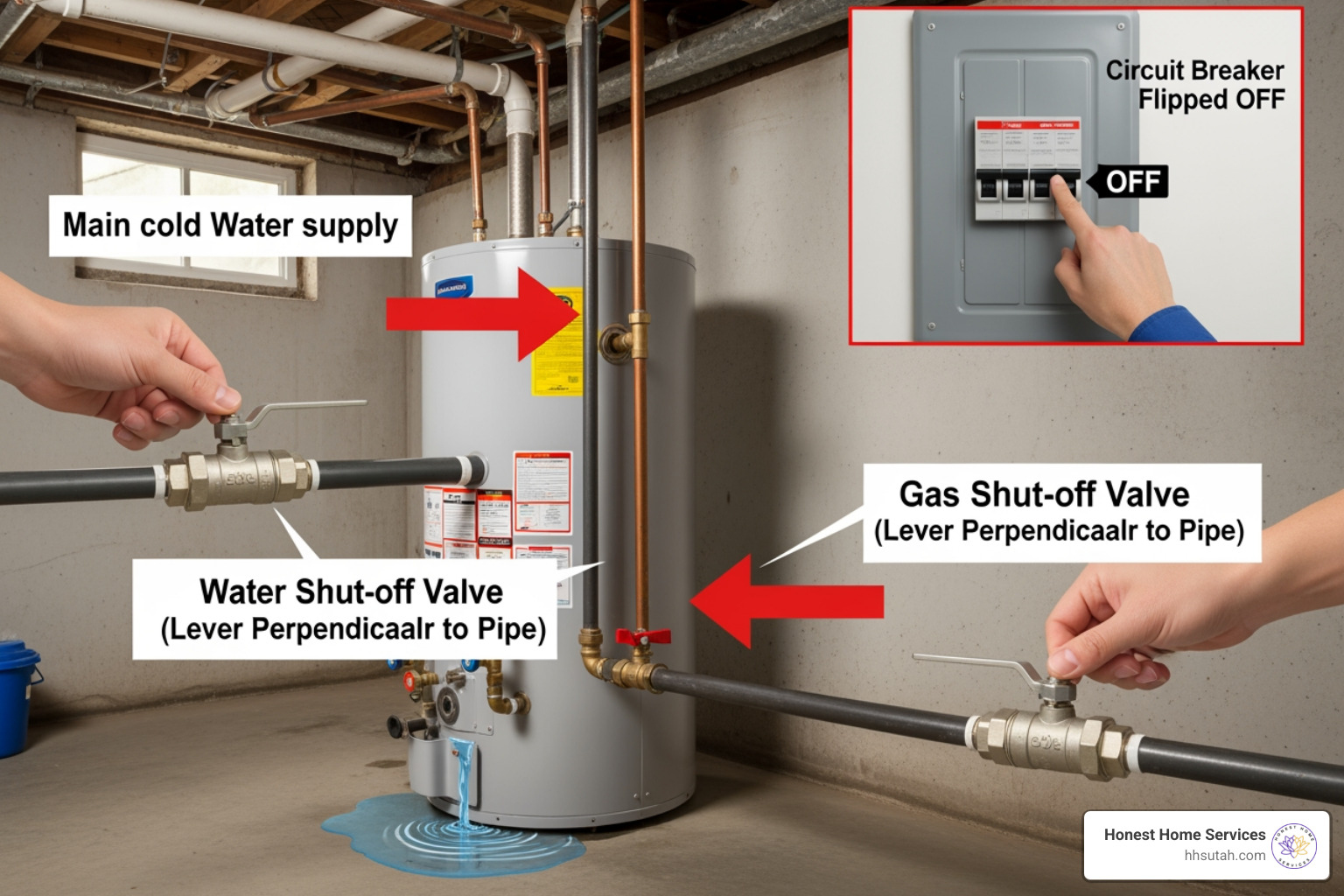
The very first thing we recommend is stopping the flow of water. Most tank-style water heaters have a cold water inlet pipe located at the top of the unit. Look for a handle or a dial. If it’s a lever-style handle, turn it 90 degrees so it is perpendicular to the pipe. If it’s a circular dial, turn it clockwise until it is tight. By cutting off the supply, you prevent the tank from continuing to leak or overflow, which is the number one cause of expensive flooring and drywall damage.
Cutting the Power and Gas
Safety is our top priority. For an electric broken water heater, head to your home’s electrical panel and flip the circuit breaker labeled for the water heater to the “off” position. If you leave the power on after the tank has leaked dry, the heating elements can burn out or even become a fire hazard.
For gas units, locate the gas shut-off valve on the supply line leading to the heater. Turn the valve until it is perpendicular to the pipe. If you smell a “rotten egg” odor, do not touch any switches or phones inside the house; get everyone out immediately and call for help from a safe distance. Handling emergency water heater repairs safely is the most important part of the process.
Cleanup and Damage Control
Once the utilities are off, it’s time for damage control. Use a wet/dry vacuum to suck up standing water and lay down towels to prevent moisture from seeping under baseboards. If the leak was significant, we suggest running a dehumidifier in the area. Mold can begin to grow within 24 to 48 hours, so getting the space dry quickly is essential.
Safety Hazards of a Broken Water Heater
A broken water heater isn’t just an inconvenience; it can pose real risks to your family.
- Carbon Monoxide (CO): This is a silent killer. Gas water heaters that are improperly vented or have damaged burners can leak carbon monoxide into your home. According to national statistics, CO poisoning not linked to fires kills over 400 Americans every year.
- Electrical Risks: If water from a leak comes into contact with the electrical components of the heater or nearby outlets, it creates a high risk of short circuits or fire.
- Explosion Risk: While extremely rare, if the Temperature and Pressure (T&P) relief valve is blocked or fails while the heater continues to fire, pressure can build up until the tank ruptures violently.
- Mold Growth: As mentioned, moisture trapped in carpets or drywall after a leak leads to mold, which can cause respiratory issues for your family.
Understanding these Common water heater problems can help you stay alert to the dangers before they become disasters.
Troubleshooting a Broken Water Heater vs. Normal Wear
Not every puddle at the base of a unit means you have a broken water heater. Sometimes, it’s just condensation. This is common in Northern Utah during the winter when cold water enters the tank and hits the warm air in your utility room.
To check, try the paper towel test: wipe up the water and place fresh paper towels around the base. If they stay dry for several hours, you likely just had a condensation issue. However, if the water returns, check the T&P valve and the drain valve. Sometimes a leak is just a loose connection that needs Fixing the flow through a simple tightening or valve replacement.
Common Signs Your Water Heater is Failing
Most water heaters don’t just “quit” without warning. They usually send out distress signals for weeks or months beforehand. Recognizing these signs early can save you from a major cleanup.
Strange Noises and Sediment Buildup
Does your water heater sound like it’s popping popcorn or rumbling like a freight train? These noises are usually caused by sediment buildup. Over time, minerals like calcium and magnesium (which are common in our Utah water) settle at the bottom of the tank. As the burner heats the water, air bubbles trapped under the sediment layer burst through, creating those knocking or popping sounds. This sediment acts as an insulator, forcing your heater to work harder and eventually causing the tank to overheat and crack.
Inconsistent Heat and Rising Bills
If your morning shower starts hot but turns lukewarm after five minutes, your unit is struggling. This could be a failing heating element (in electric models) or significant sediment displacement. You might also notice your monthly energy bills creeping up. Since water heaters account for about 18% of a home’s total energy usage, an inefficient unit will hit your wallet long before it completely breaks down.
Rusty Water and Metallic Tastes
If you turn on the hot water and it looks brown or tea-colored, you likely have internal corrosion. If the rust only appears when the hot water is running (and the cold water stays clear), the problem is inside your tank, not your pipes. This is a clear sign that you are moving from cold showers to comfort and need to address the unit immediately.
Identifying Internal Tank Corrosion
The “sacrificial” anode rod is your water heater’s best friend. It’s a metal rod that hangs inside the tank and attracts corrosive elements so they eat the rod instead of the steel tank. When the rod is completely dissolved, the tank starts to rust. Checking this rod every few years is the best way to ensure tank longevity. For those with gas units, our Gas water heater anode guide provides a deeper look at how this part protects your investment.
Repair vs. Replace: Making the Right Choice
Deciding whether to fix a broken water heater or buy a new one is a common dilemma. Here is how we help our customers in places like Layton and West Valley make that choice.
The 50% Rule and Age Factor
As a general rule of thumb, if the repair cost is more than 50% of the price of a new unit, it’s time to replace it. You should also look at the age. Most standard tank water heaters are designed to last 8 to 12 years. If your unit is 10 years old and has a major issue, spending money on a repair is often just delaying the inevitable.
Cost Comparisons
According to data from HomeAdvisor, the average cost to repair a water heater is $501, with most homeowners spending between $203 and $800 for a single fix. In contrast, a new unit is an investment in your home’s future efficiency.
| Factor | Repair | Replace |
|---|---|---|
| Age | Under 8 years | Over 10-12 years |
| Cost | Less than $300 | Over $500 (on an old unit) |
| Efficiency | Remains the same | Increases (saves ~18% energy) |
| Reliability | May break again soon | New warranty included |
You can find more detailed Average repair cost data to help you budget for these unexpected events.
Advantages of Replacement
A new water heater offers peace of mind and lower utility bills. Modern units are much better insulated than those made a decade ago. If you decide to upgrade to a tankless model, you could even see a longer lifespan of 20+ years. Exploring the Advantages of water heater replacement is often the best path for long-term savings.
When to Call a Professional for a Broken Water Heater
While we love a good DIY project, some things require an expert touch. You should always call Honest Home Services if:
- The tank is leaking from the bottom: This usually indicates a crack in the inner lining, which cannot be patched.
- You smell gas: This is an emergency.
- Electrical issues: If your breaker keeps tripping, there could be a short in the wiring or a grounded heating element.
- No hot water after troubleshooting: If you’ve reset the breaker and checked the pilot light but still have no heat, the issue is likely a complex part like the thermostat or gas control valve.
Our Water heater repair services are available 24/7 for these exact scenarios.
Preventative Maintenance to Extend Lifespan
You wouldn’t drive your car for 100,000 miles without an oil change, and your water heater shouldn’t be ignored either. Proper maintenance can easily add several years to the life of your unit.
Annual Flushing
We recommend flushing your water heater once a year to remove sediment.
- Turn off the power/gas.
- Connect a garden hose to the drain valve at the bottom.
- Run the other end of the hose to a floor drain or outside.
- Open the valve and let the water run until it comes out clear. This simple step prevents the “popping” noises and protects the tank from overheating.
The Anode Rod Swap
Checking your anode rod every 2 to 3 years is the single most effective way to prevent a broken water heater. If the rod is more than 50% depleted or the core wire is visible, replace it immediately. We’ve put together a Step-by-step anode rod swap guide to help you do it yourself, or we can handle it during a routine service call.
Temperature and Pressure Settings
Keep your thermostat set to 120°F. This is hot enough for comfortable showers and killing bacteria but cool enough to prevent scalding and reduce the rate of mineral buildup. Also, test your T&P valve once a year by lifting the lever briefly. If water flows out and then stops when you release it, the valve is working. If it leaks or doesn’t move, it needs to be replaced. For more tips, check out our guide on Servicing your gas water heater.
Frequently Asked Questions About Water Heater Failure
What should I do if a leak causes water damage and will insurance cover it?
If your broken water heater floods your basement, call your insurance agent immediately. Most homeowner’s insurance policies cover the “sudden and accidental” water damage caused by a burst tank (like ruined flooring or drywall). However, they typically do not cover the cost of the water heater itself. Make sure to take plenty of photos and keep the old tank for the adjuster to inspect. For immediate help with the cleanup and repair, our Emergency water heater repair fast service is just a phone call away.
Why is there no cold water in my shower after I shut off the hot water valve?
This is a confusing one for many homeowners! If you shut off the hot water supply to your heater and suddenly you have no water at all in certain fixtures, it’s usually due to an anti-scald valve. These valves are designed to balance the pressure between hot and cold water. When they detect a total loss of hot water pressure, they may shut down the cold side as well to prevent you from getting a “pressure shock.” Running other faucets can sometimes clear airlocks and restore flow.
How long does a standard water heater typically last?
Most tank-style water heaters last between 8 and 12 years. Factors that shorten this lifespan include hard water (very common in Salt Lake County and Davis County), high water pressure, and lack of maintenance. Tankless units can last significantly longer, often 20 years or more, because they don’t hold standing water that causes rust.
Conclusion
Dealing with a broken water heater is never fun, but you don’t have to face it alone. Whether you’re in Salt Lake City, Murray, or Park City, Honest Home Services is here to provide honest, reliable, and affordable solutions. From simple pilot light relighting to complex emergency replacements, our local expert technicians are committed to your satisfaction.
We serve a wide range of Northern Utah locations, including:
- Salt Lake City & West Valley
- Davis County (Layton, Kaysville, Farmington, Bountiful)
- West Jordan, South Jordan, & Herriman
- Draper, Bluffdale, & Lehi
- Park City, Tooele, & Saratoga Springs
Don’t let a cold shower ruin your day. If you suspect your unit is failing or you’re currently standing in a puddle, contact us for expert Salt Lake City Water Heater Repair. We’ll get the hot water flowing again with fair pricing and 24/7 emergency support.